 Small batches, high standards. Our rapid prototyping service makes validation faster and easier —
  EN
EN


Aluminum CNC Service Secrets: What Shops Won't Tell You About Costs
What Aluminum CNC Service Actually Delivers
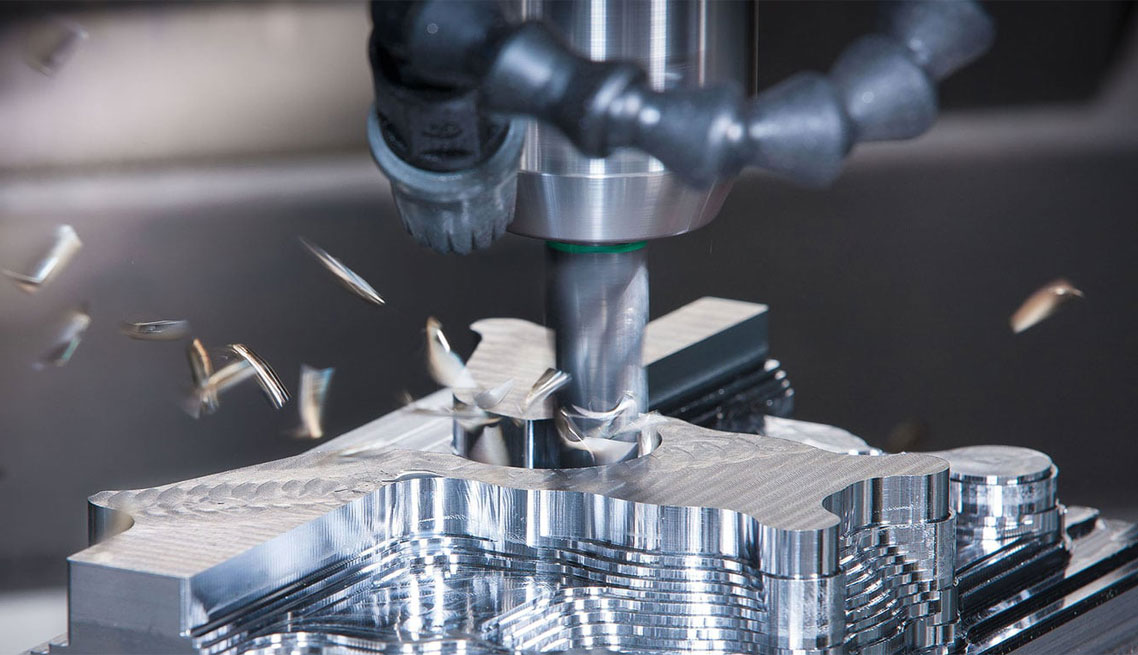
Ever wondered how that sleek smartphone case or aircraft component gets its precise shape? The answer lies in a manufacturing process that has revolutionized how we work with one of the world's most versatile metals. An aluminum CNC service uses computer-controlled machines to transform raw aluminum blocks into precision-engineered parts with remarkable accuracy.
Aluminum CNC machining is a subtractive manufacturing process where computer-controlled cutting tools remove material from solid aluminum blocks to create parts with tolerances as tight as 0.01 mm, making it essential for aerospace, automotive, medical, and electronics industries.
But what is CNC aluminium machining really about? Think of it as sculpting with extreme precision. Instead of an artist's hands guiding the chisel, sophisticated software directs cutting tools along exact pathways to carve out complex shapes that would be impossible to achieve manually.
How Computer-Controlled Machining Transforms Raw Aluminum
The magic of an aluminum CNC machine begins with digital instructions. Pre-programmed software using G-codes and M-codes tells the machine exactly where to cut, how fast to move, and how deep to go. This eliminates human error and delivers consistency that traditional methods simply cannot match.
Why has aluminum become the go-to material for precision manufacturing? Consider these properties:
- Lightweight strength: Aluminum offers an exceptional strength-to-weight ratio, critical for aerospace and automotive applications
- Excellent machinability: Compared to steel or titanium, manufacturers can machine aluminium at higher feed rates, boosting productivity
- Natural corrosion resistance: A protective oxide layer forms automatically, extending part life
- Superior thermal conductivity: Perfect for heat sinks and electronic enclosures
- Cost-effectiveness: Lower material costs compared to titanium while maintaining impressive performance
According to industry projections, the global CNC machining market is expected to reach USD 129.9 billion by 2027, growing at a CAGR of 6.8%. This growth reflects how essential CNC aluminum has become across manufacturing sectors.
The Precision Manufacturing Process Explained
The journey from raw material to finished part follows a systematic workflow. First, engineers create a computer-aided design (CAD) file containing every dimension and specification. This digital blueprint captures the exact geometry needed for the final component.
Next comes material selection. Different aluminum grades offer varying properties, so choosing the right alloy affects everything from machinability to final part performance. Once selected, the CAD file converts into machine-readable code that guides every cutting operation.
The actual machining involves several techniques:
- CNC Milling: Rotary cutters remove material to create flat surfaces, slots, pockets, and complex geometries
- CNC Turning: The workpiece rotates while cutting tools shape cylindrical components like shafts and bushings
- CNC Drilling: Automated drilling creates precise holes with consistency impossible through manual methods
Real-world applications demonstrate why this process matters. In automotive manufacturing, CNC aluminum parts reduce vehicle weight and improve fuel efficiency through components like engine blocks and transmission housings. Aerospace manufacturers rely on these services for aircraft fuselage parts that must meet rigorous safety standards. Electronics companies depend on precision aluminum enclosures that dissipate heat effectively while protecting sensitive components.
The ability to achieve tight tolerances while maintaining production efficiency makes this manufacturing approach invaluable. Whether you need a single prototype or thousands of identical parts, the process delivers consistent quality that traditional methods struggle to replicate.
Aluminum Alloy Selection Guide for CNC Projects
Choosing the wrong aluminum grade can tank your project budget or compromise part performance. Yet most shops won't walk you through the decision-making process that determines whether your parts succeed or fail. Understanding aluminum machining starts with knowing which alloy matches your specific requirements.
Here's the comprehensive comparison that helps you make informed decisions:
| Alloy Grade | Tensile Strength | Machinability Rating | Corrosion Resistance | Typical Applications | Relative Cost |
|---|---|---|---|---|---|
| 5052-H32 | 228 MPa | Good | Excellent | Marine components, fuel tanks, sheet metal work | $ |
| 6061-T6 | 310 MPa | Good | Good | Structural frames, aerospace fittings, automotive parts | $$ |
| 2024-T3 | 483 MPa | Good | Fair | Aircraft skins, gears, engine components | $$ |
| 7075-T6 | 572 MPa | Fair | Fair | Aerospace structures, high-stress components, tooling | $$$ |
Notice how strength and corrosion resistance often work against each other? The 7075 grade delivers steel-like strength but sacrifices the corrosion protection you get with 5052. This tradeoff shapes every alloy machining decision you'll make.
Grade 6061 vs 7075 Performance Breakdown
When engineers debate aluminum for machining, the conversation usually centers on these two heavyweights. Understanding their differences saves you from costly specification errors.
AL 6061T6 earns its reputation as the workhorse alloy for good reason. With silicon and magnesium as primary alloying elements, it offers:
- Excellent weldability for assemblies requiring joined components
- Superior corrosion resistance for outdoor or marine environments
- Good machinability at standard cutting parameters
- Heat treatability to achieve various strength levels
- Wide availability and competitive pricing
According to Fictiv's materials analysis, 6061-T6 experiences strength reduction at high temperatures and requires experience to weld properly, but remains the most versatile option for general-purpose applications.
7075-T6 represents aerospace-grade performance. Zinc serves as the primary alloying element, pushing strength levels comparable to many steel alloys. However, this ultra-high strength comes with tradeoffs:
- Higher material costs that impact project budgets
- Reduced corrosion resistance requiring protective finishes
- Fair machinability demanding more precision and experience
- Limited weldability restricting assembly options
The practical question becomes: does your application genuinely need 7075's strength? Many projects specify it when 6061 would perform identically at lower cost.
Matching Alloy Properties to Project Requirements
Heat treatment designations dramatically affect how aluminum behaves during machining and in final service. The letter-number codes following alloy grades aren't arbitrary—they define critical material properties.
Understanding Temper Designations:
- T3: Solution heat treated, cold worked, and naturally aged. Common for 2024 aluminum in aerospace skins.
- T6: Solution heat treated and artificially aged. Standard temper for maximum hardness in 6061 and 7075.
- T651: T6 temper with stress relieving through controlled stretching. Offers improved dimensional stability during machining.
- T6511: Combines T6 properties with cold working and minor straightening for exceptional dimensional accuracy.
The aluminum 6061 T651 vs T6511 decision often confuses buyers. According to Tuofa's engineering analysis, both tempers share identical mechanical properties—310 MPa tensile strength and 276 MPa yield strength. The difference lies in dimensional stability during machining 6061 aluminum.
T651 undergoes 1-3% stretching after quenching, releasing internal stresses that would otherwise cause distortion during cutting operations. For complex geometries requiring tight tolerances, aluminium T6511 provides the best straightness and stability, though at premium pricing.
Decision Framework Based on Project Needs:
Choose 5052 when:
- Corrosion resistance matters more than strength
- Parts require bending or forming operations
- Budget constraints limit material spending
- Marine or outdoor exposure is expected
Choose 6061-T6/T651 when:
- Structural applications demand reliable strength
- Welding or joining is part of the assembly process
- Balanced performance across multiple criteria is needed
- Standard tolerances meet your specifications
Choose 7075-T6 when:
- Maximum strength-to-weight ratio is non-negotiable
- Individual components don't require welding
- Aerospace or high-stress applications justify premium costs
- Protective coatings will address corrosion concerns
International standards provide additional specification guidance. ASTM B209 covers aluminum sheet and plate requirements, while aerospace applications often reference AMS 4173 for 6061 alloys. These standards ensure material consistency across suppliers and manufacturing processes.
The cost difference between grades typically ranges from 20-50%, making alloy selection a significant budget factor. Spending extra on 7075 when 6061 meets every requirement wastes money that could fund tighter tolerances or better surface finishes—factors that often matter more to final part performance.
Design for Manufacturability in Aluminum Machining
Here's a secret most shops won't tell you: the biggest cost driver in aluminum CNC machining isn't material or machine time—it's your design. Parts that ignore manufacturability principles can double your quote overnight. Yet understanding a few practical guidelines transforms expensive headaches into smooth production runs.
Design for manufacturability (DFM) simply means creating parts that machines can actually produce efficiently. When you design with CNC machining aluminum constraints in mind, you reduce cycle times, improve part quality, and keep costs predictable. Think of it as speaking the same language as your cnc machine for aluminum.
Wall Thickness and Corner Radii Guidelines
Thin walls cause more machining failures than almost any other design issue. When walls get too thin, cutting forces create vibration, deflection, and sometimes complete part failure. The material literally flexes away from the cutting tool, producing inconsistent dimensions and poor surface finish.
Minimum wall thickness recommendations by part size:
- Small parts (under 50mm): 0.8–1.0 mm minimum wall thickness
- Medium parts (50-150mm): 1.5–2.0 mm minimum wall thickness
- Large parts (over 150mm): 2.5–3.0 mm minimum wall thickness
Can you go thinner? Technically yes, but cost and risk increase dramatically. According to Momaking's DFM guide, pushing below these thresholds requires slower feed rates, specialized fixturing, and often multiple finishing passes.
Internal corner radii present another common pitfall. CNC cutting tools are cylindrical, which means they physically cannot create sharp 90-degree internal corners. The smallest achievable radius equals half the tool diameter being used.
Corner radii best practices:
- Specify internal corner radii at least one-third of the pocket depth
- Match radii to standard tool sizes (1mm, 2mm, 3mm) when possible
- Larger radii allow faster cutting speeds and better surface finish
- Consider T-bone or dogbone fillets when mating parts require sharp corners
| Corner Radius Size | Surface Finish Quality | Machining Time | Tool Wear | Best For |
|---|---|---|---|---|
| Small (0.5mm) | Poor | Long | High | Tight geometries requiring precision |
| Medium (1-2mm) | Good | Moderate | Moderate | Standard designs with balanced requirements |
| Large (2mm+) | Excellent | Short | Low | High-volume production, cost optimization |
According to Onustec's engineering analysis, optimizing internal corner radii can reduce machining time by as much as 30%. That's real money staying in your pocket.
Optimizing Hole Depths and Thread Specifications
Deep holes and threads create unique challenges for aluminum milling machine operations. The deeper you go, the more difficult chip evacuation becomes—and trapped chips cause tool breakage, poor surface finish, and dimensional errors.
Hole depth guidelines for cnc aluminum parts:
- Standard drilling: Keep depth-to-diameter ratio below 4:1 when possible
- Deep hole drilling (over 4:1 ratio): Requires peck drilling cycles, increasing cycle time
- Blind holes: Add 0.5× diameter extra depth for drill point clearance
- Through holes: Preferred when design allows—easier to machine and inspect
Thread specifications deserve careful attention. Many designers specify threads without considering manufacturability, leading to unnecessarily expensive parts.
Thread design best practices:
- Minimum thread engagement: 1× nominal diameter for adequate strength
- Tapped blind holes: Specify minimum 1.5× diameter depth to allow for chip clearance
- Thread relief: Add 2-3 pitch lengths of relief at thread termination
- Standard thread sizes: Use common sizes (M3, M4, M5, M6, M8) to reduce tooling costs
- Helicoil inserts: Consider for high-cycle applications or when thread repair may be needed
Additional DFM rules that save money on aluminum parts:
- Keep pocket depth ≤ 4× width to prevent tool deflection
- Add ribs or gussets to support thin sections—keep rib height ≤ 3× wall thickness
- Avoid slots or holes smaller than 1mm unless absolutely necessary
- Specify fillets on external edges to eliminate stress concentrations
- Design symmetric features when possible to balance material removal
These guidelines connect directly to achievable tolerances and surface finish. Parts designed with proper DFM principles hold ±0.05mm tolerances easily, while poorly designed aluminum cnc machining jobs struggle to maintain even ±0.1mm. Surface finish follows the same pattern—proper wall thickness and corner radii enable consistent Ra 1.6μm finishes, while thin walls and tight corners produce variable results.
The bottom line? Investing time in DFM during the design phase pays dividends throughout production. Your machinist can focus on precision rather than fighting your geometry, and that efficiency translates directly into lower per-part costs.
Machining Parameters That Determine Part Quality
Ever wonder why two shops quote the same aluminum part with wildly different quality guarantees? The answer often comes down to machining parameters—the cutting speeds, feed rates, and tooling choices that most competitors never discuss openly. Getting these settings wrong doesn't just affect surface finish; it can cause tool failure, dimensional errors, and scrapped parts that blow your budget.
Understanding how cnc milling aluminum parameters work gives you the knowledge to evaluate quotes intelligently and ask the right questions before production begins.
Cutting Speeds and Feed Rates by Alloy Grade
Here's a fundamental truth about machining aluminum: faster isn't always better, but too slow is almost always worse. According to Ceratizit's machining guide, the softer the aluminum alloy, the faster the recommended cutting speed. But unlike cutting wood or plastic, the optimal window for aluminum is surprisingly narrow.
The relationship works like this: aluminum's low melting point means chips can quickly overheat and fuse to your cutting tool. When feed rates run too slow relative to spindle speed, the tool spends more time rubbing than cutting. This generates friction heat, accelerates wear, and creates the dreaded built-up edge that ruins surface finish.
| Aluminum Type | Cutting Speed (m/min) | Feed Rate Guidelines | Depth of Cut |
|---|---|---|---|
| Soft Alloys (1000, 5000 series) | 300–500 | 0.02–0.03 mm/tooth (2-4mm cutter) | Shallow passes preferred |
| Hard Alloys (6000, 7000 series) | 100–200 | 0.05 mm/tooth (5-8mm cutter) | Moderate depth acceptable |
| Free-machining (2011, 6012) | 200–400 | 0.10 mm/tooth (9-12mm cutter) | Aggressive cuts possible |
Notice how feed rate scales with cutter diameter? This relationship prevents the tool from dwelling in one spot too long. For cnc aluminum cutting operations, maintaining proper chip load keeps heat moving away from the cutting zone instead of building up in your workpiece.
Key parameter relationships to remember:
- Higher cutting speeds produce smoother surfaces but increase tool wear
- Feed rates too slow cause rubbing, heat buildup, and poor tool life
- Depth of cut affects chip evacuation—shallow passes help clear chips from deep pockets
- Spindle speed must match your specific cutter diameter and material hardness
An aluminum milling cnc machine running optimized parameters can achieve surface finishes below Ra 1.6μm consistently. The same machine with incorrect settings might struggle to hit Ra 3.2μm while burning through cutters at triple the normal rate.
Tooling Selection for Optimal Surface Finish
Your parameter settings only work when matched with appropriate tooling. According to CNC Solutions, the most important factor in choosing cutting tools for aluminum is maximizing space for chip evacuation.
Why does this matter so much? Aluminum produces long, stringy chips that love to wrap around cutters and pack into flutes. When chips can't escape, they re-cut, generate heat, and eventually weld themselves to your tool. The result? Catastrophic failure or milled aluminum parts with unacceptable surface quality.
Tool selection guidelines for aluminum milling:
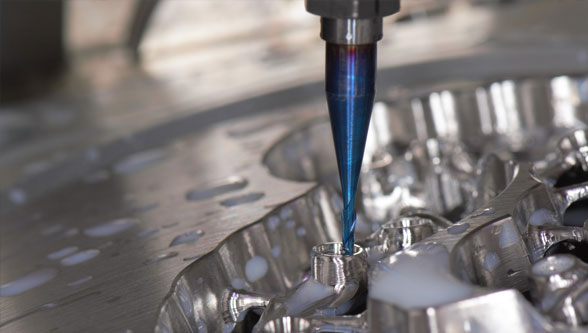
- Flute count: Two-flute end mills provide maximum chip clearance; three-flute tools offer a compromise between clearance and rigidity
- Material: Carbide tools outperform HSS significantly—they stay sharper longer and handle aluminum's required speeds
- Coating: Avoid TiN, TiAlN, and TiCN coatings—they're rougher and more chemically reactive with aluminum. Use uncoated carbide, ZrN, or DLC (Diamond-Like Carbon) instead
- Geometry: High helix angles (45°+) improve chip ejection; polished flutes reduce friction and adhesion
The DLC coating deserves special mention. This high-performance option permits dry cnc machine aluminum cutting when coolant isn't desirable. Everything runs as if lubricated, even without cutting fluid—a significant advantage for certain applications.
Troubleshooting Common Machining Challenges
Even with correct parameters and tooling, aluminum machining presents challenges that separate experienced shops from amateurs. Knowing how to diagnose and fix these issues prevents costly scrap and delays.
Built-up edge (BUE): This occurs when aluminum welds to your cutting edge, creating an irregular surface that damages workpiece finish. Solutions include increasing cutting speed, using cutting fluid or ethanol cooling, switching to polished or DLC-coated tools, and verifying feed rates aren't too conservative.
Poor chip evacuation: Packed chips cause re-cutting, heat buildup, and potential tool breakage. Combat this with compressed air blast systems, reduced depth of cut for deep pockets, two-flute tools instead of four-flute, and peck drilling cycles for deep holes.
Dimensional inaccuracy: When parts measure outside tolerance, thermal expansion is often the culprit. Aluminum expands more than steel under heat, so effective cooling during cnc machine aluminum cutting operations keeps workpieces stable. Emulsion-based coolants or ethanol provide excellent thermal management while preventing chip clumping.
Surface finish problems: Rough or inconsistent surfaces typically indicate parameter mismatches. According to Ceratizit's recommendations, higher cutting speeds generally produce smoother aluminum surfaces—but only when matched with appropriate feed rates and sharp tooling. Dull cutters create tearing rather than clean shearing.
The interplay between these factors explains why experienced shops deliver consistent quality while others struggle. Every parameter decision affects cycle time, tool life, and final part quality. Understanding these relationships helps you evaluate whether a shop truly knows aluminum—or just claims to.
Tolerance Specifications and Surface Finish Standards
Here's something most aluminum CNC service providers won't tell you upfront: the tolerance you specify can double your part cost without improving function. Understanding what precision levels are actually achievable—and which ones your application genuinely requires—saves money while ensuring your aluminum machined parts perform exactly as intended.
Machined aluminum tolerances vary significantly based on the operation type, machine capability, and how much you're willing to invest. Let's break down what's realistic versus what's marketing hype.
Standard vs Precision Tolerance Capabilities
Not every aluminum machining part needs aerospace-grade precision. According to Protocase's tolerance specifications, CNC machining capabilities fall into three distinct tiers:
| Precision Level | Tolerance Range | Typical Applications | Cost Impact |
|---|---|---|---|
| Standard Precision | ±0.005" (0.13mm) or greater | General enclosures, brackets, non-critical components | Baseline |
| Premium Precision | ±0.001" to ±0.005" (0.025–0.13mm) | Mechanical assemblies, sliding fits, functional interfaces | 1.5–2× baseline |
| Ultra Precision | ±0.0001" to ±0.001" (0.0025–0.025mm) | Aerospace components, optical mounts, precision instruments | 3–5× baseline |
What does this mean practically? Standard routing and milling operations on a cnc milling machine for aluminium typically achieve ±0.005" (0.13mm) without special measures. This covers the vast majority of aluminium machined parts where functional requirements don't demand tighter control.
Tolerance capabilities by operation type:
- CNC Milling: ±0.005" standard, down to ±0.001" with premium processes
- CNC Turning: ±0.002" typical, ±0.0005" achievable for precision work
- CNC Drilling: ±0.005" for standard holes, tighter with reaming operations
- CNC Routing: ±0.005" standard tolerance
The relationship between tolerance and cost isn't linear—it's exponential. Jumping from ±0.005" to ±0.001" might add 50% to machining time, but achieving ±0.0001" could require temperature-controlled environments, specialized fixturing, and multiple verification passes. Before specifying ultra-tight tolerances, ask yourself: does my aluminum precision machining application truly require it?
Surface Finish Grades and Their Applications
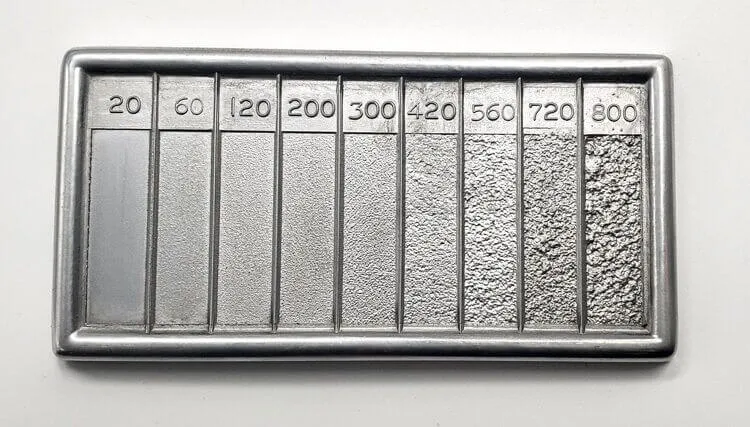
Surface finish specifications confuse many buyers because the numbers seem arbitrary without context. The Ra value—Roughness Average—measures the arithmetic average of surface peaks and valleys in microinches or micrometers. Lower numbers mean smoother surfaces.
According to Sonic's machining analysis, typical aluminum surface finish callouts range from 63 Ra for general-purpose parts down to 16 Ra or finer for aerospace and medical applications.
Surface finish options for aluminum machining parts:
| Finish Type | Ra Value (μin) | Ra Value (μm) | Appearance | Applications |
|---|---|---|---|---|
| As-Machined (Roughing) | 125+ | 3.2+ | Visible tool marks | Hidden surfaces, pre-finishing |
| Standard Machined | 63 | 1.6 | Light tool marks | General functional parts |
| Fine Machined | 32 | 0.8 | Smooth, minimal marks | Sealing surfaces, visible components |
| Precision Finished | 16 | 0.4 | Very smooth | Aerospace, medical devices |
| Mirror Polish | 8 or less | 0.2 or less | Reflective surface | Optical, cosmetic applications |
Achieving mirror finishes on aluminum requires going beyond standard machining. Light finishing passes with polished-flute tools get you to 16-32 Ra, but true mirror quality demands secondary operations—polishing, buffing, or specialized abrasive finishing. This adds significant cost and time.
Here's what affects your achievable surface finish:
- Cutting speed (higher speeds generally produce smoother surfaces)
- Feed rate and step-over (lighter passes leave fewer marks)
- Tool geometry and sharpness (polished flutes reduce adhesion)
- Workholding rigidity (chatter creates visible patterns)
- Coolant application (proper lubrication prevents tearing)
Inspection Criteria and Quality Verification
How do you know your machined aluminum parts actually meet specifications? According to machining quality inspection standards, verification involves multiple measurement methods depending on what's being checked.
Dimensional inspection methods:
- Coordinate Measuring Machines (CMM): For complex geometries and GD&T verification
- Calipers and micrometers: For standard linear dimensions
- Gauge pins and thread gauges: For hole and thread verification
- Optical comparators: For profile and contour inspection
Surface quality verification:
- Profilometers: Stylus-type instruments that measure actual Ra values
- Surface roughness comparators: Reference blocks for visual/tactile comparison
- Visual inspection: For scratches, burrs, and obvious defects
Reputable shops maintain inspection documentation for every aluminum machining part, including dimensional reports and surface finish verification. This traceability matters especially for regulated industries where audit trails are mandatory.
The key takeaway? Specify tolerances and finishes based on actual functional requirements—not assumptions about what "precision" should mean. A well-designed part with appropriate specifications costs less, machines faster, and often performs better than an over-specified design that pushes equipment beyond practical limits.
Understanding Aluminum CNC Machining Costs
Want to know what really drives your quote up—or keeps it reasonable? Most aluminum CNC service providers won't break down their pricing structure, leaving you guessing why one shop quotes $15 per part while another asks $45 for the same geometry. Understanding the actual cost drivers transforms you from a passive buyer into an informed negotiator who can optimize designs for budget without sacrificing performance.
According to RapidDirect's cost analysis, the fundamental aluminum machining cost formula looks like this:
Total Cost = Material Cost + (Machining Time × Machine Rate) + Setup Cost + Finishing Cost
Sounds simple? The complexity hides in how each component interacts with your design decisions. Let's break down what actually moves the needle on your custom aluminum parts pricing.
Material Costs vs Machining Complexity
Material cost establishes your baseline—but it's rarely the largest portion of your quote. The real cost multiplier? How long your part keeps the machine running.
Primary cost drivers for aluminum machining service projects:
- Material grade selection: 6061 aluminum costs less than 7075, and specialty alloys command premium pricing. According to HM's engineering guide, aluminum typically ranges $2–5/kg compared to $8–15/kg for stainless steel
- Part complexity: Deep pockets, thin walls, tight internal radii, and multi-axis features extend cycle time dramatically. Each additional setup or tool change adds minutes that compound across production runs
- Tolerance requirements: Standard tolerances (±0.1mm) machine quickly; precision tolerances (±0.01mm) require slower feeds, additional passes, and more inspection time
- Surface finish specifications: As-machined finishes add minimal cost, while mirror polish or specific Ra requirements demand secondary operations
- Quantity: Setup costs spread across more parts reduce per-unit pricing significantly
- Lead time: Rush orders may require overtime labor or schedule disruption premiums
Here's what many buyers miss: machining time typically accounts for 50–70% of total cost. A part designed without considering manufacturability might require five tool changes and three setups when a slight geometry adjustment could accomplish the same function with two tools and one setup. That difference translates directly to your invoice.
How design decisions impact your custom aluminum machining quote:
| Design Choice | Cost Impact | Why It Matters |
|---|---|---|
| Deep pockets (>4× width) | +20–40% | Requires multiple roughing passes, slower speeds |
| Thin walls (<1.5mm) | +15–30% | Risk of deflection requires slower feeds, special fixturing |
| Tight internal corners ( | +10–25% | Small tools cut slower, wear faster |
| Multiple setups required | +25–50% | Each reorientation adds setup time and alignment verification |
| Non-standard tolerances | +30–100% | Precision work demands slower machining and extensive inspection |
Custom machine parts with complex geometries requiring 5-axis machining face significantly higher hourly rates—sometimes double what 3-axis operations cost. Before defaulting to complex designs, ask whether simpler geometry achieves the same functional outcome.
How Quantity Affects Per-Part Pricing
Setup cost creates the most dramatic pricing swings between prototype and production quantities. Whether you order one part or one thousand, the shop still performs the same machine preparation, fixture installation, program verification, and first-article inspection.
According to RapidDirect's analysis, a typical setup for aluminum parts might run $200–400. That cost structure creates striking per-unit differences:
- Prototype (1 unit): Full setup cost absorbed by single part—highest per-unit price
- Small batch (10–50 units): Setup cost distributed, but manual handling still significant
- Medium batch (100–500 units): Cycle time optimization begins, dedicated fixturing justified
- Production run (500+ units): Maximum efficiency—custom fixtures, optimized toolpaths, lowest per-unit cost
The economics work like this: if setup costs $300 and machining runs $10 per part, ordering one prototype costs $310 per unit. Order 100 parts and that same setup spreads to $3 per unit, dropping total cost to $13 per part. That's a 96% reduction in setup burden alone.
Prototyping vs. production economics for aluminum parts manufacturing:
Prototypes serve a different purpose than production parts—they validate designs before committing to volume. Expect to pay premium per-unit costs for single parts or small quantities. This isn't price gouging; it reflects the genuine resource allocation required regardless of quantity.
Smart buyers use this knowledge strategically:
- Consolidate prototype orders when multiple design iterations are needed
- Request quote breakdowns showing setup versus per-part costs
- Evaluate whether slightly larger batch sizes dramatically improve unit economics
- Consider design finalization before committing to production quantities
Lead Time Expectations and Quote Evaluation
Lead time affects pricing in ways many buyers overlook. Standard lead times for aluminum machining service typically range from 5–15 business days depending on complexity and shop capacity. Rush orders compress this timeline but usually carry premiums of 25–50% or more.
Factors affecting production timelines:
- Current shop capacity and workload
- Material availability (common grades ship faster than specialty alloys)
- Finishing requirements (anodizing, plating add days to timeline)
- Inspection and documentation needs
- Shipping method and destination
Framework for evaluating aluminum machining cost quotes:
When comparing quotes from different shops, look beyond the bottom-line number. A transparent quote should break down:
- Material type, grade, and estimated weight
- Machining time or hourly rate assumptions
- Setup and programming fees (often listed separately)
- Finishing and secondary operations
- Inspection and documentation costs
- Lead time and any expedite options
Red flags include single lump-sum pricing without breakdown, vague material specifications, or unusually low quotes that might indicate hidden fees or quality compromises. Reputable shops explain their pricing logic because they understand informed buyers make better long-term partners.
The bottom line? Aluminum CNC machining costs reflect real resource consumption—machine time, skilled labor, quality materials, and precision tooling. Understanding these drivers helps you optimize designs for cost efficiency while ensuring your custom aluminum parts meet every functional requirement.
Industry Applications and Certification Requirements
Think all aluminum CNC machining services deliver the same results across industries? That assumption could cost you rejected parts, failed audits, or worse—product recalls. Different sectors impose radically different requirements on aluminum cnc machining services, and understanding these distinctions separates successful projects from expensive failures.
The automotive industry doesn't just want quality parts—they demand systematic proof that every single component meets specifications. Aerospace takes traceability to another level entirely. Electronics manufacturers care less about paperwork and more about thermal performance. Knowing what your industry actually requires helps you select custom cnc machining services that deliver without unnecessary overhead.
Automotive and Aerospace Component Requirements
Automotive manufacturing operates on razor-thin margins with zero tolerance for inconsistency. When you're producing thousands of identical components, even small defect rates create massive problems downstream. That's why the industry developed its own quality management standard—and why working with the right aluminium parts manufacturer matters enormously.
IATF 16949 certification requirements for automotive:
According to Xometry's certification guide, IATF 16949 builds upon ISO 9001 with automotive-specific requirements that emphasize defect prevention and waste reduction. This isn't optional for serious automotive suppliers—customers and OEMs often refuse to work with uncertified shops.
- Documented quality management system: Every process must be recorded, measured, and continuously improved
- Statistical Process Control (SPC): Production data tracks variation and catches problems before they become defects
- PPAP submissions: Production Part Approval Process validates that manufacturing processes can consistently replicate approved samples
- Traceability requirements: Material certifications and lot tracking enable recall management if issues arise
- Customer-specific requirements: Major OEMs add their own specifications beyond baseline IATF standards
The certification process involves both internal and external audits examining context of organization, leadership commitment, planning, support systems, operational controls, performance evaluation, and improvement processes. According to American Micro's certification analysis, IATF 16949 certification is binary—you're either certified or you're not, with no partial compliance.
Aerospace certification and traceability demands:
Aerospace components face even more stringent oversight. AS9100 extends ISO 9001 with requirements specific to aviation, including enhanced risk management, documentation control, and product integrity throughout complex supply chains.
- Material certifications: Every batch of aluminum requires mill test reports verifying chemical composition and mechanical properties
- Process documentation: Complete manufacturing records must trace each part from raw material to finished product
- NADCAP accreditation: Special processes like heat treating, chemical processing, and nondestructive testing require separate accreditation
- First Article Inspection (FAI): Comprehensive dimensional verification documents every feature on initial production parts
- Configuration management: Engineering changes must be controlled and traceable throughout production lifecycle
Why does aerospace demand such rigorous oversight? A single defective component at 35,000 feet creates catastrophic consequences. The paperwork burden reflects genuine safety imperatives—not bureaucratic preference. Aluminum parts assembly service providers working in aerospace must maintain meticulous records that can survive regulatory audits years after production.
Electronics Enclosures and Heat Sink Applications
Electronics manufacturing prioritizes different characteristics entirely. While certifications matter, thermal management and dimensional consistency often drive cnc service selection more than quality system documentation.
Electronics industry requirements for aluminum parts:
- Thermal conductivity optimization: Heat sink applications demand alloy selection and surface treatments that maximize heat dissipation
- EMI/RFI shielding: Enclosures must provide electromagnetic interference protection through proper material selection and grounding provisions
- Dimensional stability: Tight tolerances ensure proper component mounting and sealing
- Surface finish requirements: Anodizing or other treatments provide both protection and aesthetic appearance
- Volume consistency: Consumer electronics demand identical parts across large production runs
Heat sink applications deserve special attention. Aluminum's thermal conductivity makes it ideal for dissipating heat from processors, power electronics, and LED assemblies. But not all aluminum grades perform equally—6061 and 6063 offer excellent thermal properties while maintaining machinability, while high-strength alloys like 7075 sacrifice some thermal performance for mechanical strength.
Full project lifecycle considerations across industries:
Regardless of industry, successful aluminum machining services projects follow a consistent pattern from concept to completion:
- Material selection: Match alloy grade to application requirements—strength, corrosion resistance, thermal properties, machinability
- Design optimization: Apply DFM principles appropriate to production volumes and tolerance requirements
- Process planning: Define machining operations, tooling, and quality checkpoints
- Production execution: Maintain documented controls throughout manufacturing
- Quality verification: Inspect against specifications using appropriate measurement methods
- Documentation delivery: Provide inspection reports, material certifications, and process records as required
The key insight? Industry requirements aren't arbitrary obstacles—they reflect genuine quality and safety imperatives developed through decades of manufacturing experience. Working with certified, experienced partners who understand your specific industry's expectations prevents costly surprises and ensures your aluminum parts perform exactly as intended in their final application.
Post-Machining Finishing and Quality Verification
Your cnc machined aluminum parts aren't truly finished when they leave the machine. What happens next—the deburring, surface treatments, and quality checks—often determines whether parts perform flawlessly or fail prematurely. Yet most aluminum cnc machining service providers gloss over these critical post-machining steps, leaving you unaware of options that could dramatically improve part durability and appearance.
Understanding secondary operations helps you specify exactly what your application needs without overpaying for unnecessary treatments—or worse, discovering too late that skipped finishing steps caused field failures.
Deburring and Edge Finishing Techniques
Every machining operation leaves burrs—those tiny raised edges and sharp corners that can cause assembly problems, safety hazards, and premature wear. Aluminum screw machining operations and milling alike produce burrs that require removal before parts are ready for service.
Common deburring methods for cnc machined aluminum:
- Manual deburring: Hand tools and files remove burrs on low-volume or complex parts—labor-intensive but precise
- Tumbling/vibratory finishing: Parts rotate with abrasive media, removing burrs while creating uniform edge breaks—ideal for high volumes
- Thermal deburring: Controlled combustion removes burrs from internal passages and complex geometries inaccessible to other methods
- Chamfer and corner-rounding end mills: On-machine deburring during final passes reduces secondary handling
Engine turned aluminium finishes and other decorative surfaces require especially careful deburring to avoid scratches that would show through final treatments. The deburring method you choose affects both cost and surface quality—tumbling works great for functional parts but may not suit cosmetic applications.
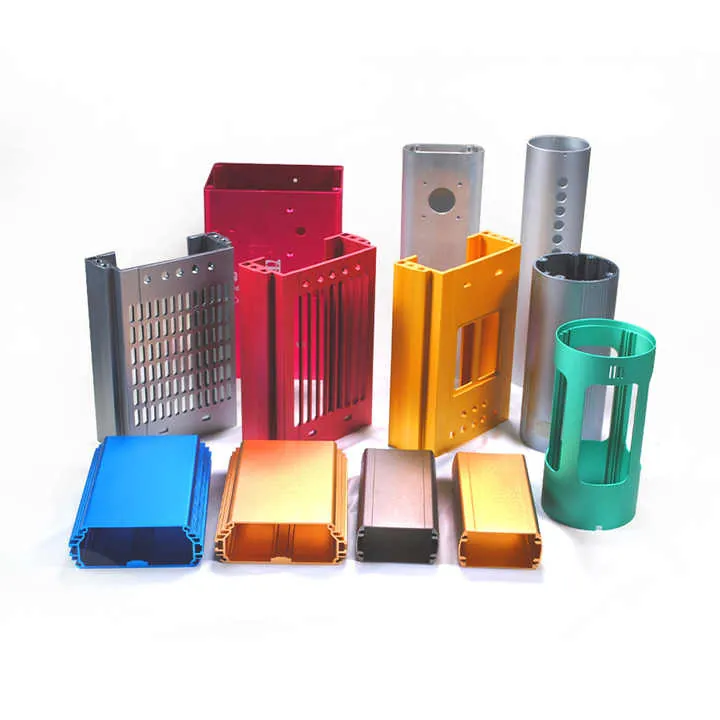
Anodizing and Protective Coating Options
Raw aluminum corrodes over time—that's simply chemistry. Surface treatments transform this vulnerability into lasting protection while adding aesthetic appeal or functional properties your application demands.
According to Protolabs' anodizing guide, anodizing doesn't just coat the surface—it physically changes the aluminum's molecular structure by creating a controlled oxide layer that becomes part of the metal itself.
| Anodizing Type | Layer Thickness | Protection Level | Aesthetics | Best Applications |
|---|---|---|---|---|
| Type II | 0.00007-0.001 in. | Good corrosion/wear resistance | Dyeing possible for colors | Consumer products, visible components |
| Type III (Hard Coat) | 0.0005-0.006 in. | Excellent protection | Generally non-decorative | Aerospace, marine, high-wear parts |
Type III hard coat creates protection approximately 10 times thicker than Type II—ideal for cnc machined aluminum parts facing harsh environments. However, dyeing isn't recommended for Type III, and sealing may limit wear resistance. Choose based on whether you need appearance or maximum durability.
Alternative finishing options with primary benefits:
- Chromate conversion coating: Enhances corrosion resistance, improves paint adhesion, maintains electrical conductivity—popular in aerospace and military applications
- Powder coating: Durable colored finish with excellent impact and chemical resistance—thicker than paint for demanding environments
- Passivation: Chemical treatment that enhances natural oxide layer without significantly changing dimensions
- Electroless nickel plating: Uniform coating even on complex geometries—adds hardness and corrosion protection
Remember that finishing operations add lead time. Unless you're validating environmental performance on prototypes, consider waiting until production to add these treatments—it saves money during iterative design phases.
Quality Control and Final Verification
Post-finishing inspection ensures your parts meet specifications after all processing steps complete. Dimensional verification confirms that anodizing or plating didn't push critical features out of tolerance—coatings add thickness that must be accounted for in design.
Reputable shops document every step, providing traceability from raw material through finished part. This verification chain proves especially critical for regulated industries where audit trails are mandatory. When evaluating an aluminum cnc machining service, ask about their inspection protocols and documentation practices—the answers reveal much about their commitment to quality.
Selecting a Reliable Aluminum CNC Service Partner
You've mastered alloy selection, optimized your design for manufacturability, and understand exactly what tolerances and finishes your project demands. Now comes the decision that determines whether all that preparation pays off—choosing the right aluminium cnc service provider. The wrong choice can turn a well-designed project into a nightmare of missed deadlines, quality issues, and budget overruns.
Here's what most shops won't tell you: their capabilities on paper don't always match reality. A provider advertising tight tolerances might struggle to maintain them consistently. Quick turn cnc machining promises mean nothing if quality suffers. The key lies in knowing which evaluation criteria actually predict reliable performance—and which are just marketing noise.
Evaluating Manufacturing Capabilities and Certifications
Certifications serve as your first filter. They don't guarantee perfection, but they establish minimum competency thresholds that separate serious manufacturers from hobbyist operations. According to Kesu Group's evaluation guide, requesting documentation of quality control procedures reveals whether a provider follows systematic processes or operates ad hoc.
Essential evaluation criteria for online cnc machining services:
- Quality certifications: ISO 9001 establishes baseline quality management systems adopted by over one million organizations worldwide. For automotive applications, IATF 16949 certification is non-negotiable—it demonstrates defect prevention capabilities and systematic process control that automotive OEMs require
- Statistical Process Control (SPC) implementation: Real-time production monitoring catches variations before they become defects. Ask potential providers how they track process capability indices (Cpk) and what control limits trigger corrective action
- Equipment capabilities: Verify machine accuracy through calibration records and repeatability specifications. According to industry standards, positioning accuracy should fall within ±0.005mm for precision work, with repeatability even tighter
- Inspection capacity: Look for Coordinate Measuring Machines (CMM), profilometers, and documented inspection protocols. A provider without proper measurement equipment cannot verify the tolerances they promise
- Material expertise: Request case studies involving your specific aluminum grade. Experience machining 6061 doesn't automatically translate to 7075 competency
According to industry certification analysis, ISO 9001 certified organizations report 66% improved product and service quality, 60% reduced error rates, and 57% increased new customer acquisition. These aren't arbitrary numbers—they reflect the systematic discipline that certification requirements instill.
Red flags when evaluating cnc aluminum service providers:
- Vague answers about calibration schedules or inspection methods
- Inability to provide sample inspection reports from previous projects
- No documented quality management system or process controls
- Reluctance to discuss reject rates or corrective action procedures
- Quotes that seem too good to be true—they usually are
From Rapid Prototyping to Production Scale
Your project needs today might be ten prototypes—but what happens when validation succeeds and you need ten thousand? Choosing a partner who can scale with you eliminates painful supplier transitions that reset learning curves and quality baselines.
According to JLCCNC's scaling analysis, effective online cnc services should support the complete journey from design validation through volume production. The best providers offer:
- Lead time flexibility: Prototype validation demands speed—72-hour delivery or faster for initial samples. Production runs prioritize consistency and cost optimization over raw speed
- Quantity scalability: From single-piece prototyping to thousands of identical parts without quality degradation. The transition should feel seamless, not like starting over with a new supplier
- Technical support availability: Design optimization feedback during prototyping phases prevents expensive discoveries during production. Look for providers who offer DFM guidance, not just order processing
- Automated quoting systems: Modern platforms generate quotes within hours, not days. Fast quotation with less than 5% error indicates robust process understanding
For automotive applications specifically, Shaoyi Metal Technology exemplifies these criteria with their IATF 16949 certification, implemented Statistical Process Control systems, and lead times as fast as one working day. Their facility demonstrates how aluminum cnc milling service providers can scale from rapid prototyping to mass production while maintaining the quality controls automotive OEMs demand.
Questions to ask potential providers before committing:
- What quality certifications do you hold, and can you provide current certificates?
- How do you implement Statistical Process Control in production?
- What's your typical lead time for prototypes versus production quantities?
- Can you share inspection reports or case studies from similar projects?
- What happens if parts don't meet specifications—what's your corrective action process?
- Do you offer design optimization feedback before production begins?
The answers reveal whether you're dealing with a true manufacturing partner or simply an order-taker. Providers who invest in certifications, equipment, and process controls aren't just checking boxes—they're building capabilities that translate directly into consistent, reliable results for your projects.
Ultimately, selecting the right aluminum CNC service partner comes down to alignment between your requirements and their genuine capabilities. The evaluation criteria above help you see past marketing claims to the operational reality that determines whether your parts arrive on time, on spec, and on budget—every single time.
Frequently Asked Questions About Aluminum CNC Service
1. What is the cost of aluminum CNC machining?
Aluminum CNC machining costs depend on material grade selection, part complexity, tolerance requirements, surface finish specifications, quantity, and lead time. Material typically accounts for a smaller portion while machining time drives 50-70% of total cost. Setup costs range $200-400 and significantly impact per-unit pricing for small batches. Design choices like deep pockets, thin walls, and tight tolerances can increase costs by 20-100%. Production runs over 500 units achieve the lowest per-part pricing as setup costs spread across more units.
2. Where can I order custom aluminum CNC milled parts?
Custom aluminum CNC milled parts can be ordered from online CNC machining services like Xometry, Protolabs Network, and specialized manufacturers. When selecting a provider, evaluate their quality certifications (ISO 9001, IATF 16949 for automotive), equipment capabilities, inspection capacity, and material expertise. For automotive applications requiring IATF 16949 certification and Statistical Process Control, Shaoyi Metal Technology offers precision machining services with lead times as fast as one working day at https://www.shao-yi.com/auto-machining-parts/.
3. What aluminum alloy is best for CNC machining?
The best aluminum alloy depends on your application requirements. 6061-T6 is the most versatile choice offering excellent weldability, good corrosion resistance, and balanced machinability at competitive pricing. 7075-T6 delivers aerospace-grade strength comparable to steel but costs more and has limited weldability. 5052-H32 excels in marine environments requiring superior corrosion resistance. 2024-T3 provides high strength for aerospace skins and engine components. Match alloy properties to your specific strength, corrosion, and budget requirements.
4. What tolerances can aluminum CNC machining achieve?
Standard CNC machining achieves ±0.005 inch (0.13mm) tolerances without special measures. Premium precision work reaches ±0.001 to ±0.005 inch (0.025-0.13mm) for mechanical assemblies and functional interfaces. Ultra-precision applications like aerospace components can achieve ±0.0001 to ±0.001 inch (0.0025-0.025mm) but cost 3-5 times more than standard work. CNC turning typically achieves tighter tolerances (±0.002 inch standard) than milling operations. Tighter tolerances require slower machining speeds and extensive inspection.
5. What surface finishes are available for CNC machined aluminum parts?
Surface finish options range from as-machined (Ra 125+ μin) with visible tool marks to mirror polish (Ra 8 μin or less). Standard machined finish (Ra 63 μin) suits general functional parts, while fine machined (Ra 32 μin) works for sealing surfaces. Post-machining treatments include Type II anodizing for corrosion resistance with color options, Type III hard coat anodizing for maximum wear protection, chromate conversion coating for electrical conductivity, and powder coating for durable colored finishes.