 Small batches, high standards. Our rapid prototyping service makes validation faster and easier —
  EN
EN


Why History Of Automotive Forging Matters for Your Business
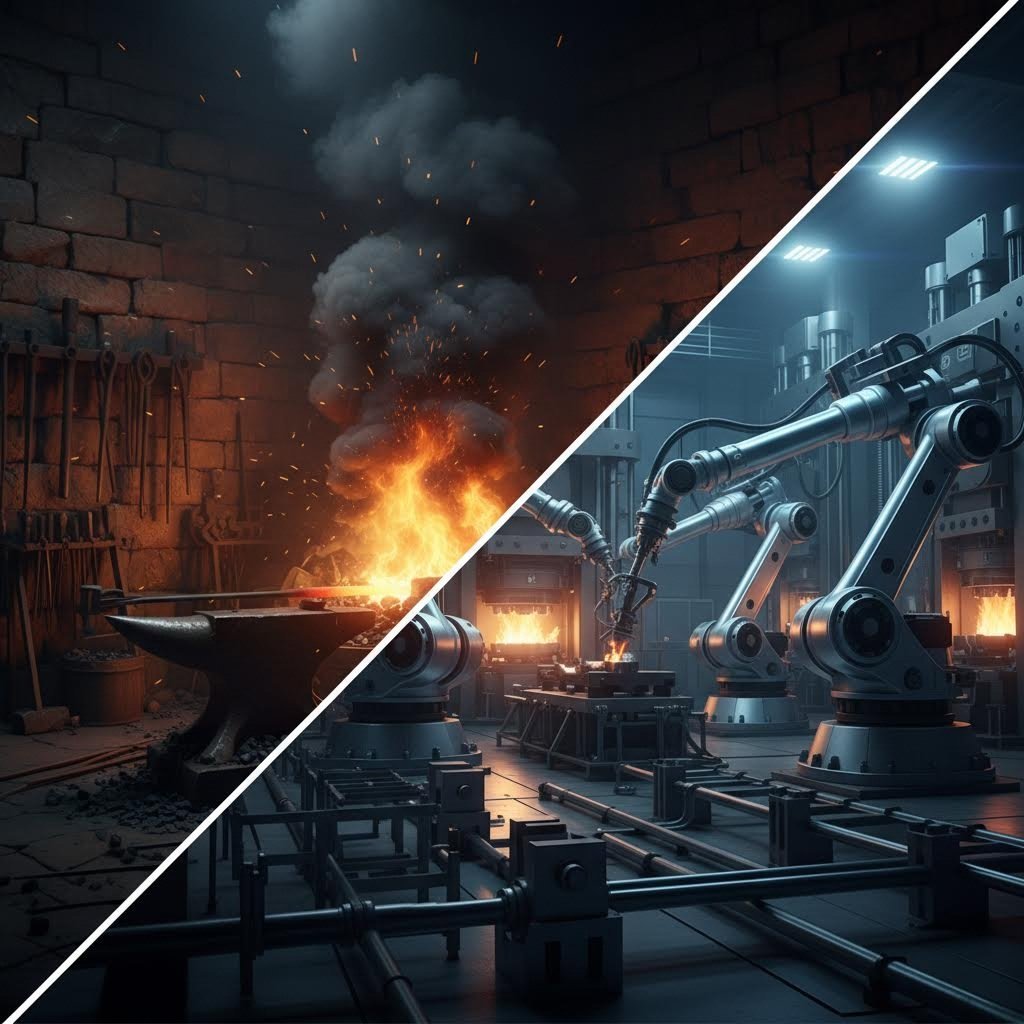
The Ancient Art That Powers Modern Vehicles
Imagine standing in a Mesopotamian workshop around 4000 BC, watching a craftsman heat metal in a primitive furnace before shaping it with deliberate hammer strikes. Fast forward to today, and you'll find that same fundamental principle powering the production of components in your car's engine, suspension, and drivetrain. The history of automotive forging isn't just an interesting tale—it's the story of how an ancient craft evolved to become indispensable to modern vehicle manufacturing.
From Ancient Anvils to Assembly Lines
So what is forging exactly? At its core, the forging definition describes a manufacturing process that uses heat and high pressure to shape metal into desired forms. When metal is heated to elevated temperatures, it becomes malleable, allowing manufacturers to reshape it using manual force, hydraulic presses, or specialized equipment. Unlike casting, which pours molten metal into molds, forging plastically deforms solid metal with compressive forces—and this distinction makes all the difference.
When you ask "what does forged mean" in the context of automotive parts, you're really asking about a process that refines metal at the molecular level. The compressive forces align and consolidate the metal's grain structure, closing internal voids and minimizing defects. This creates components with remarkable strength characteristics that cast alternatives simply cannot match.
Why Forging Became the Backbone of Automotive Manufacturing
The forged definition extends beyond mere shaping—it represents a commitment to superior mechanical properties. According to industry data, forged parts often exhibit approximately 26% higher tensile strength and 37% greater fatigue resistance compared to cast counterparts. For automotive applications where components face repeated stress cycles, shock loads, and safety-critical demands, these improvements aren't optional luxuries—they're essential requirements.
Consider this: a single car or truck may contain more than 250 forged components. From crankshafts and connecting rods to suspension arms and steering knuckles, forged steel appears wherever strength, reliability, and safety matter most. The automotive forging process creates parts free from defects such as porosity, cracks, and blowholes that can plague cast alternatives.
Forging provides unparalleled material integrity. Under immense pressure, the metal's internal micro-voids are compacted and eliminated, creating a continuous, unbroken grain flow that follows the contour of the part—offering exceptional resistance to fatigue and cracking under repeated stress.
Throughout this article, you'll discover how forging evolved from simple hammering techniques discovered by early humans to the sophisticated hot forging, warm forging, and cold forging processes used in modern automotive production. You'll trace the journey from ancient blacksmith shops through the Industrial Revolution's mechanization, into the early automobile era when pioneers like Henry Ford recognized forging's potential, and finally to today's automated production lines producing precision components for electric vehicles.
Understanding this evolution isn't merely academic—it equips engineers and procurement professionals to make informed decisions about component sourcing, appreciate why certain specifications exist, and recognize the enduring value that forging brings to vehicle safety and performance.
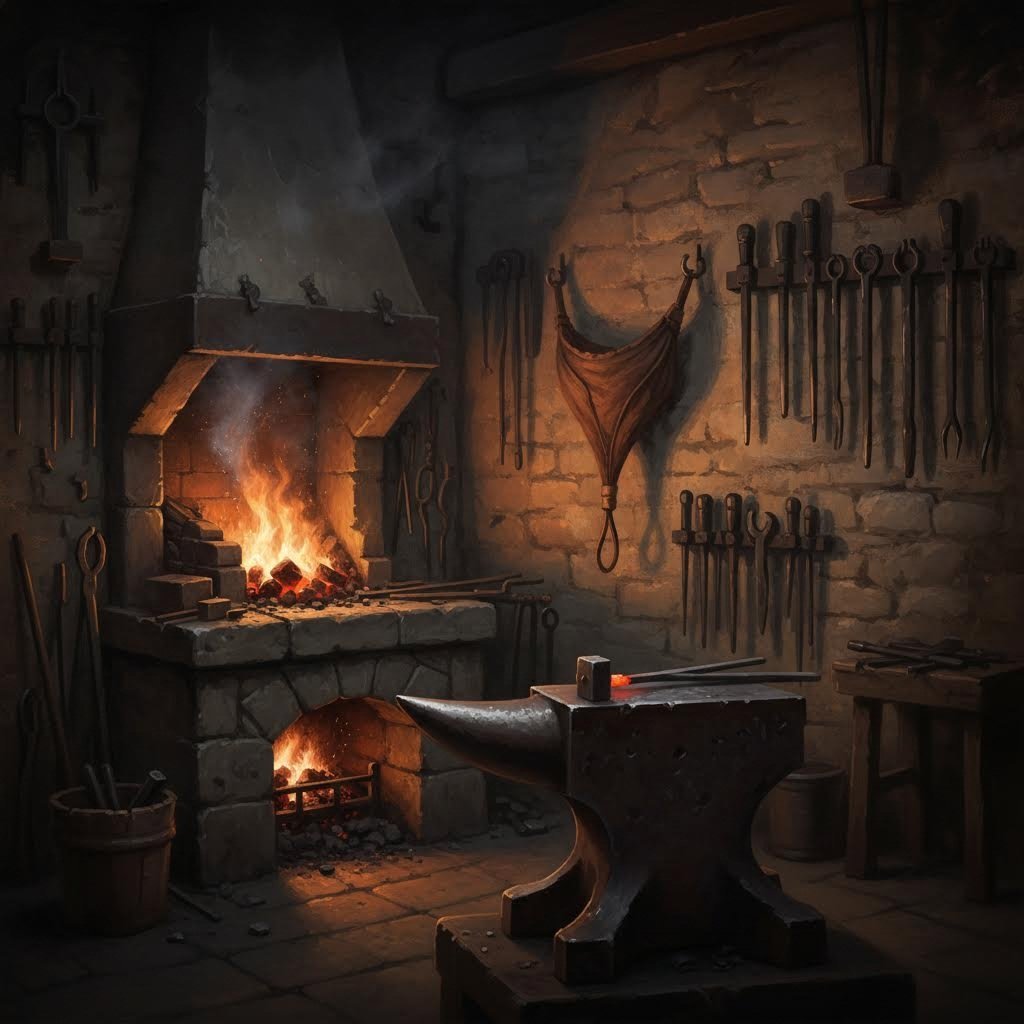
Ancient Forges and the Birth of Metalworking Mastery
Long before assembly lines and hydraulic presses existed, ancient craftsmen were laying the groundwork for everything we now consider essential in automotive manufacturing. The techniques they developed through centuries of trial and error—working metal with heat, pressure, and remarkable intuition—would eventually become the foundation for producing crankshafts, connecting rods, and countless other vehicle components.
Bronze Age Beginnings and Iron Age Innovations
The story of ancient forging begins around 4500 BC in Mesopotamia, where early settlements first discovered they could shape copper using heat and force. Picture those first forge setups: simple wood-burning fires and rocks used to heat metal before hammering forging it into tools and weapons for survival. These humble beginnings marked humanity's first steps toward controlled metalworking.
The real breakthrough came with the discovery of alloying. When ancient metallurgists learned to combine copper with tin to create bronze, they produced stronger, more durable materials suitable for tools, weapons, and art. This innovation heralded the Bronze Age—a period of significant technological growth that spread from Sumerian workshops to Mycenaean artisan centers across the ancient world.
By approximately 1500 BC, the Hittites of Anatolia made another pivotal discovery: smelting iron ore. This advancement ushered in the Iron Age and provided the crucial foundation for blacksmith forging as we understand it. Iron proved more abundant than copper and tin, making metal tools accessible to broader populations. However, working with iron presented new challenges—it required higher temperatures and more sophisticated techniques than bronze.
- 4500 BC – First Copper Forging: Mesopotamian settlements used primitive fires to heat copper, establishing the fundamental principle of thermal softening before shaping hammered metal into hand tools.
- 3300 BC – Bronze Alloying: The combination of copper and tin created bronze, demonstrating that metal properties could be intentionally enhanced through material science.
- 1500 BC – Iron Smelting Discovery: Hittite metallurgists developed techniques to extract iron from ore, requiring temperatures exceeding 1100°C and marking the first forge operations capable of such intense heat.
- 1200-1000 BC – Emergence of Blacksmithing: Specialized craftsmen began using charcoal fires with bellows to achieve consistent high temperatures, enabling more reliable hot forging processes.
- Iron Age Bloomery Furnaces: Clay and stone furnaces with tuyeres (air pipes) replaced open fires, allowing controlled heating that ancient smiths discovered empirically produced superior results.
Medieval Blacksmiths and the Mastery of Metal
During the Medieval Ages, blacksmith forging evolved from mere survival craft to essential infrastructure. Every town or village had at least one blacksmith—often several. The demand for stronger weapons, armor, tools, and everyday items meant these craftsmen were as vital as farmers or builders to community life.
Medieval smiths refined their understanding of temperature through empirical observation. They learned to judge metal readiness by color: dull red indicated lower temperatures suitable for certain operations, while bright yellow-white signaled metal ready for significant shaping. This intuitive understanding of hot forging temperature classifications—developed centuries before thermometers existed—mirrors the scientific approach modern manufacturers use today.
The introduction of charcoal as the primary forging fuel represented a major advancement. Charcoal burned hotter and more consistently than wood, allowing smiths to achieve the temperatures needed for working iron and early steel. According to historical records from Cast Master Elite, coal didn't become readily available until the nineteenth century when forests across Britain and the United States had been depleted.
Specialized smiths also emerged during this era, focusing on specific items such as locks, silverware, nails, chains, and armor components. This specialization drove innovation—each craftsman pushing techniques further within their domain. The guild system ensured these hard-won techniques passed from master to apprentice, preserving and refining metallurgical knowledge across generations.
Perhaps the most transformative medieval innovation came in the 13th century with the discovery of water power for forging operations. Waterwheels could power the bellows continuously, creating hotter, larger bloomery furnaces and dramatically improving forging production. This mechanization—while primitive compared to later steam power—represented the first steps toward industrial-scale metalworking that would eventually serve automotive manufacturing needs.
These ancient forges and medieval workshops established principles that remain fundamental today: proper temperature control enables workability, compressive force refines grain structure, and specialized techniques produce superior results for specific applications. When modern automotive engineers specify forged components for safety-critical parts, they're building on knowledge accumulated over thousands of years of metalworking mastery.
Industrial Revolution Transforms Metal Forging Forever
The medieval blacksmith, skilled as he was, could only produce so many horseshoes, tools, or weapons in a day. His forge hammer swung by human muscle, his bellows pumped by hand or waterwheel—the output remained fundamentally limited. Then came the Industrial Revolution, and everything changed. The transformation that swept through Europe and America in the 19th century didn't just improve forging—it completely reinvented the process, setting the stage for the mass production that automotive manufacturing would eventually demand.
Steam Power Transforms the Forge
The pivotal moment arrived in June 1842 when James Hall Nasmyth received his patent for the steam hammer. According to Canton Drop Forge, this invention "began a new era for forging" that still influences modern techniques today. Imagine the difference: instead of a blacksmith swinging a hammer forge with limited force and precision, steam power could drive massive rams with controlled, repeatable strikes.
A steam hammer uses high-pressure steam to raise and power the ram, delivering blows far more powerful than any human could achieve. Several—perhaps many—strikes shape each part to achieve proper dimensions and metallurgical properties. This wasn't just faster; it was fundamentally different. The industrial forge could now produce components that were simply impossible before: larger, stronger, and manufactured to tighter specifications.
Steam power brought other innovations too. Manipulators were developed to hold larger forgings that exceeded human handling capabilities. As noted by Weldaloy Specialty Forgings, peddling—a metallurgical process discovered in Great Britain during this era—allowed forgers to heat metals to higher temperatures than ever before. These advances combined to produce more durable parts on a larger scale in significantly less time.
The Rise of Industrial Forging Equipment
The steam hammer was just the beginning. The development of drop forging and open die forging techniques during the Industrial Revolution created distinct processes for different applications. Drop forged components, produced when a hammer falls onto heated metal in a die, offered excellent repeatability for standardized parts. Open die forging, where metal is shaped between flat dies without complete enclosure, proved ideal for larger components requiring substantial deformation.
The forging press emerged as another game-changing technology. Unlike hammers that deliver impact force, a forging press applies continuous pressure—slower but capable of producing parts with superior dimensional accuracy. Mechanical presses found their niche in forging equipment lines producing small parts in high volume, while hydraulic presses demonstrated versatility across material types.
Another critical 19th-century development was the ability to produce cheap steel at industrial scale. The creation of pig iron (crude iron with high carbon content) in Great Britain made steel affordable for mass applications. This material quickly became popular in construction and manufacturing, providing the raw material that forging operations would transform into precision components.
| Capability | Pre-Industrial Forging | Industrial Forging |
|---|---|---|
| Power Source | Human muscle, waterwheels | Steam engines, mechanical systems |
| Scale of Parts | Limited to hand-manageable sizes | Large components via manipulators |
| Precision | Dependent on craftsman skill | Repeatable die-controlled dimensions |
| Output Volume | Individual pieces per day | Hundreds or thousands per day |
| Temperature Control | Visual estimation by color | Higher temperatures via peddling process |
| Material Options | Iron, limited steel | Mass-produced steel, various alloys |
The Industrial Revolution effectively made blacksmiths "mostly a thing of the past," as Weldaloy notes. But more importantly, it established the foundation for industries that would soon emerge and demand forged parts unlike anything seen before. The growing requirement for standardized metal components—identical parts that could be assembled interchangeably—drove forging operations toward the precision and repeatability that early automobile manufacturers would soon require.
By the late 1800s, the forging industry had transformed from scattered artisan workshops into organized industrial operations. Steam-powered forge hammers, hydraulic forging presses, and sophisticated forging equipment stood ready. The stage was set for the automobile revolution—and forging technology was prepared to meet the challenge.
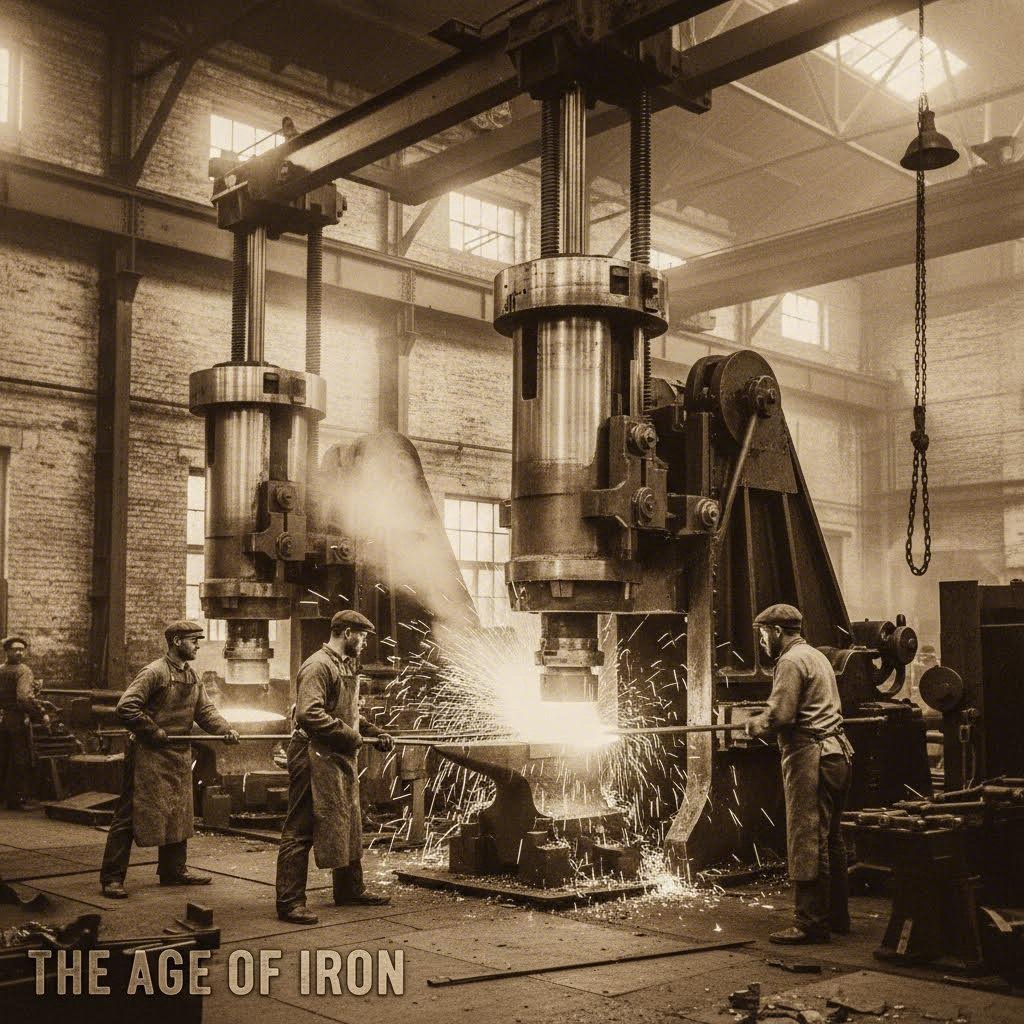
Early Automobiles Demand Forged Strength
Picture yourself in Detroit circa 1908. Henry Ford has just unveiled the Model T, and suddenly the automobile isn't a plaything for the wealthy—it's becoming transportation for the masses. But here's the challenge that kept early automotive engineers awake at night: how do you build components strong enough to survive thousands of miles on rutted dirt roads, yet affordable enough for everyday Americans? The answer, as pioneers quickly discovered, lay in steel forgings.
Henry Ford and the Forging Revolution
When Ford launched mass production at the Highland Park plant, he faced engineering challenges that had never existed at scale before. The Model T's engine, according to the Ford Dealers Handbook, featured precision components that needed to withstand remarkable stresses—pistons traveling at speeds that created 40 to 60 pounds of compression pressure, crankshafts spinning thousands of times per minute, and axles bearing the full weight of the vehicle over rough terrain.
Cast components simply couldn't survive these demands reliably. Casting introduces porosity, shrinkage cavities, and inconsistent grain structures—flaws that become failure points under repeated stress cycles. Early automakers learned this lesson quickly and often painfully. A cracked crankshaft didn't just mean an inconvenient breakdown; it could destroy an entire engine block and potentially endanger passengers.
Ford's solution? Embrace forging at unprecedented scale. The company developed sophisticated supply chains for forged components, recognizing that the forged meaning in automotive terms translated directly to reliability and customer satisfaction. Steel forging became the backbone of Model T production, enabling Ford to deliver on his promise of affordable, dependable transportation.
Understanding what is forged metal helps explain why this decision proved so critical. When steel undergoes forging, the compressive forces align the metal's grain structure along the contours of the finished part. This creates a continuous, unbroken flow of material that resists fatigue and cracking far better than the random crystalline structure found in castings.
Why Early Automakers Chose Forged Steel
The transition from casting and forging debates to forging-first engineering wasn't immediate—it came through hard experience. Early automobile manufacturers experimented with various manufacturing methods, but the demands of mass production clarified which approach delivered superior results.
Closed die forging emerged as a particularly important technique during this era. Unlike open die forging where metal is shaped between flat surfaces, closed die forging uses precisely machined dies that completely enclose the workpiece. This process produces near-net-shape components with consistent dimensions—exactly what assembly line production required.
The Ford Model T's rear axle assembly illustrates the complexity that forging enabled. According to Ford's technical documentation, the drive shaft measured 1.062 to 1.063 inches in diameter and ran more than 53 inches in length. The differential assembly contained bevel gears keyed to axle shafts, with tolerances measured in thousandths of an inch. Cast alternatives couldn't achieve this precision reliably, and the fatigue loading would have caused premature failures.
- Crankshafts: The heart of any engine, crankshafts convert reciprocating piston motion into rotational power. They experience tremendous bending and torsional stresses with every engine cycle. Forged steel provided the fatigue resistance necessary to survive millions of stress cycles without failure—something cast alternatives couldn't guarantee.
- Connecting Rods: These components link pistons to the crankshaft, experiencing alternating tension and compression loads at high frequencies. The Model T's connecting rods needed to transmit power reliably at speeds exceeding 1000 RPM. Steel forgings ensured consistent grain flow along the rod's length, eliminating weak points where cracks could initiate.
- Front and Rear Axles: Ford's technical specifications reveal that Model T axles were made from "Ford alloy steel" and heat-treated to achieve tensile strengths of 125,000 to 145,000 pounds per square inch. Cast axles couldn't match these properties. The documentation notes that under testing, "the Ford axle has been twisted, cold, several times without fracturing"—a testament to forging's superior ductility.
- Steering Components: The spindle assembly, steering arms, and related components required precise dimensions and exceptional toughness. As Ford's specifications noted, "toughness is more desired than hardness, for the whole mechanism is forced to undergo, generally, sudden and severe shocks." Forging delivered this toughness consistently.
- Differential Gears: The bevel gears in the differential assembly transmitted power while allowing wheels to rotate at different speeds during turns. These gears needed precise tooth geometry and fatigue resistance that only forging could provide economically at production volumes.
- Universal Joints: The male and female knuckle joints in Ford's universal joint assembly transmitted power at angles up to 45 degrees. The shock loads during gear changes and acceleration demanded forged components capable of absorbing sudden stress without cracking.
The evolution of forges during this period reflected automotive demands. Forging operations scaled up dramatically, with specialized equipment designed specifically for automotive component production. Manufacturers developed new steel alloys optimized for forging characteristics—materials that could be heated, formed, and heat-treated to achieve the precise mechanical properties each application required.
Heat treatment became increasingly sophisticated as well. Ford's own specifications reveal the precision involved: front axles were heated to 1650°F for 1-1/4 hours, cooled, reheated to 1540°F, quenched in soda water, then annealed at 1020°F for 2-1/2 hours. This careful processing transformed raw steel forgings into components with optimized strength and toughness.
By 1940, the automotive industry's reliance on forging was firmly established. Every major manufacturer specified forged components for safety-critical applications. The lessons learned during these formative decades—that forging provided unmatched strength, fatigue resistance, and reliability—would carry forward through wartime production and into the modern era of automotive manufacturing.
Post-War Innovation Accelerates Automotive Forging
When World War II ended in 1945, something remarkable happened. The massive forging infrastructure built to produce aircraft engines, tank components, and artillery shells didn't disappear—it pivoted. Military advances in metal forging technology flowed directly into civilian automotive manufacturing, launching an era of unprecedented innovation that would reshape how vehicles were built across three continents.
Military Innovation Meets Civilian Manufacturing
The war years had pushed forging steel capabilities far beyond peacetime requirements. Military aircraft demanded components that could withstand extreme temperatures, vibrations, and stress cycles that would have destroyed pre-war materials. Tank tracks and drivetrain components needed to survive battlefield conditions while remaining field-repairable. These demands drove metallurgists to develop new alloys and forging engineers to perfect processing techniques.
After 1945, this knowledge transferred rapidly to automotive applications. Factories that had produced crankshafts for B-17 bombers began manufacturing components for Chevrolets and Fords. Engineers who had optimized hot forging processing technology for military specifications now applied those same principles to civilian vehicle production. The result? Automotive components with dramatically improved performance characteristics at lower costs.
The forging process itself evolved during this transition. Manufacturers discovered that techniques developed for aircraft-grade aluminum could produce lighter automotive parts without sacrificing strength. Cold forge methods refined for precision military components enabled tighter tolerances in steering and transmission assemblies. The lessons learned during wartime production became competitive advantages in the emerging global automotive market.
Hot and Cold Forging Find Their Automotive Roles
The post-war era clarified when to use each forging approach. Hot forging machine tool manufacturing advanced significantly, enabling production of larger, more complex components. According to The Federal Group USA, hot forging involves pressing metal at extremely high temperatures, which allows recrystallization that refines the grain structure and improves ductility and impact resistance.
Meanwhile, cold forging carved out its own essential role. This process, performed at or near room temperature, preserves the metal's original grain structure. The result? Higher strength, hardness, and dimensional precision compared to hot-worked alternatives. For automotive applications requiring tight tolerances and excellent surface quality—think transmission gears and small precision components—cold forging became the preferred method.
The global expansion of automotive forging accelerated through the 1950s and 1960s. American manufacturers dominated initially, but European companies—particularly in Germany and Italy—developed sophisticated forging capabilities to support their growing auto industries. Japan's emergence as an automotive powerhouse brought new innovations in both hot and cold forging techniques, emphasizing efficiency and quality control.
| Characteristic | Hot Forging | Cold Forging |
|---|---|---|
| Temperature Range | Above recrystallization point (typically 1000-1250°C for steel) | Room temperature to below recrystallization point |
| Typical Automotive Parts | Crankshafts, connecting rods, large suspension components, axle shafts | Transmission gears, steering pinions, small precision fasteners, valve bodies |
| Material Behavior | Metal becomes malleable; undergoes recrystallization | Retains original grain structure; work-hardens during forming |
| Key Advantages | Improved ductility, reduced porosity, better impact resistance, suitable for complex shapes | Superior dimensional accuracy, better surface finish, higher hardness, reduced material waste |
| Best Materials | Steel alloys requiring significant deformation | Aluminum, magnesium, and softer steel grades |
| Post-Processing Needs | Often requires machining to achieve final dimensions | Near-net-shape; minimal secondary operations |
Forging steel alloys evolved dramatically during this period to meet increasing performance demands. Automotive engineers worked closely with metallurgists to develop materials optimized for specific applications. High-strength low-alloy steels emerged for suspension components. Microalloyed forging steels offered improved machinability without sacrificing strength. Each advancement enabled vehicles to become lighter, faster, and more fuel-efficient.
The integration of hot and cold forging into comprehensive manufacturing strategies became standard practice. A single vehicle might contain hot-forged crankshafts for strength, cold-forged transmission components for precision, and specialized alloys tailored to each application's unique demands. This sophisticated approach to metal forging represented the culmination of wartime innovations applied to peacetime manufacturing—and it set the foundation for the automation revolution that would soon transform the industry once again.
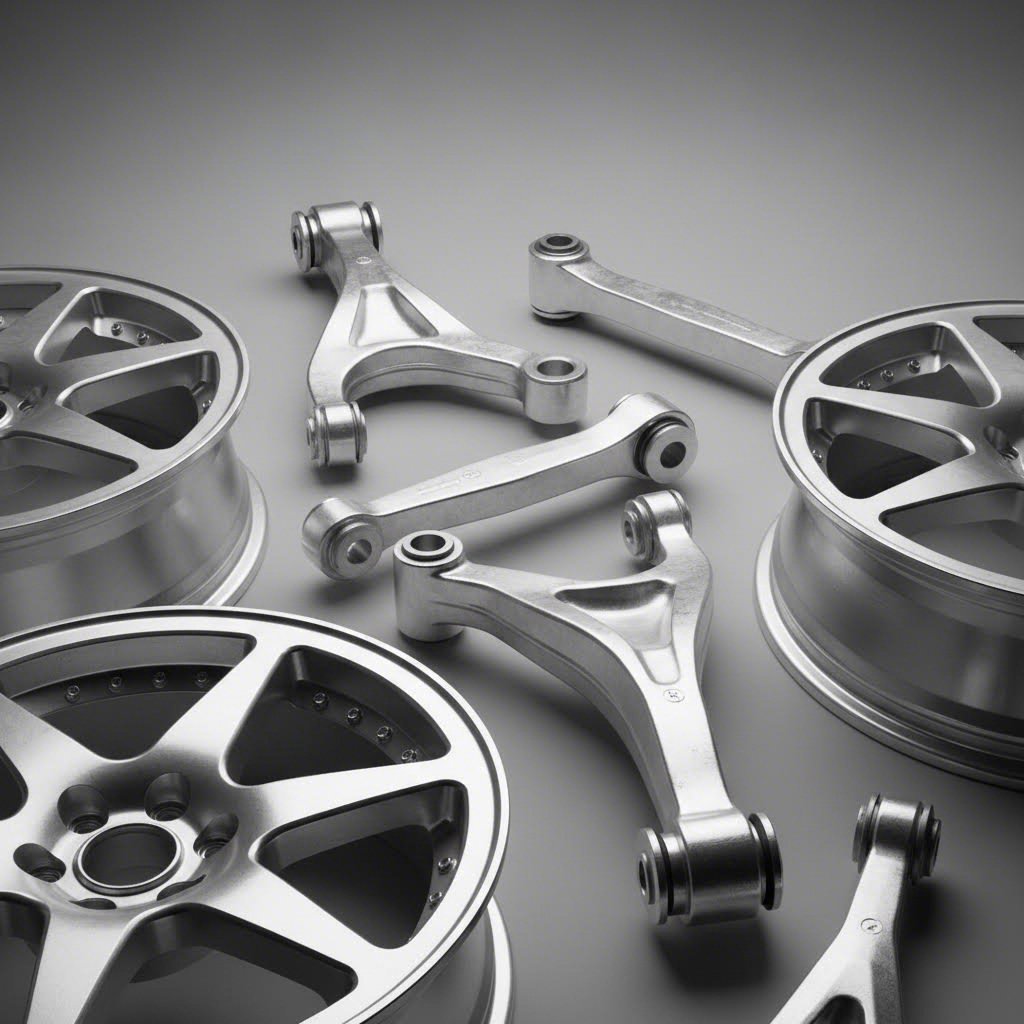
Material Evolution From Iron to Advanced Alloys
Remember when vehicles were built almost entirely from iron and basic steel? Those days are long gone. As fuel efficiency standards tightened and safety regulations became more demanding, automotive engineers faced a critical question: how do you make cars lighter without sacrificing strength? The answer reshaped the entire forgeable materials landscape—and understanding this evolution helps explain why modern vehicles perform so much better than their predecessors.
The Aluminum Revolution in Automotive Forging
For much of the 20th century, steel reigned supreme in automotive forging. It was strong, affordable, and well-understood. But here's the challenge: every extra pound in a vehicle demands more power to accelerate, more energy to stop, and more fuel to keep moving. According to Golden Aluminum, steel was the foundation of American car manufacturing for decades, while aluminum remained reserved for special projects where performance outweighed cost.
The oil crises of the 1970s changed everything. Suddenly, fuel efficiency became a genuine selling point. Engineers started scrutinizing every component, asking whether lighter alternatives existed. Through the 1980s and 90s, advances in aluminum alloys brought better strength, corrosion resistance, and workability—making forged aluminum a viable option for large-scale production.
The transformation accelerated when manufacturers discovered that aluminum forge operations could achieve remarkable weight reductions. According to industry data from Creator Components, forged aluminum alloy components can achieve 30-40% weight reduction in the first stage, with second-stage optimizations offering up to 50% reduction. When Ford released an aluminum-bodied F-150 in 2015, it proved that lightweight materials could deliver the toughness truck owners demanded while cutting hundreds of pounds from curb weight.
Why does forged aluminum outperform cast alternatives? The forging procedure applies high pressure to aluminum blanks, causing plastic deformation that significantly enhances strength, toughness, and material uniformity. Forged aluminum alloys have only one-third the density of steel, yet their excellent thermal conductivity, workability, and corrosion resistance make them ideal for vehicle lightweighting without compromising performance.
Advanced Alloys Meet Modern Performance Standards
The evolution of forgeable metals didn't stop with basic aluminum. Modern automotive manufacturing employs a sophisticated palette of materials, each selected for specific performance characteristics. Steel itself has transformed dramatically—today's automotive steels bear little resemblance to the mild steels used in early Model T production.
According to research from ScienceDirect, automotive steel scenarios have changed significantly over the past two to three decades. Improvements in steelmaking processes—including vacuum degassing and inclusion control—now produce steel with impurity levels of only 10-20 ppm compared to 200-400 ppm by traditional methods. New alloying techniques combined with improved thermo-mechanical processes create broader spectrums of strength and ductility than ever before.
Microalloyed steels represent one particularly important advancement for forging applications. These materials contain small amounts of vanadium (typically 0.05-0.15%) that form carbide and nitride precipitates during air cooling after hot forging. The result? A good combination of strength and toughness without requiring expensive quenching and tempering operations. This reduces cost while eliminating thermal distortion risks.
The forging procedure itself must adapt to each material's unique characteristics. Aluminum requires different temperature ranges, die designs, and processing parameters than steel. Forging temperatures for aluminum typically range between 350-500°C, while steel operations often exceed 1000°C. Die materials must withstand these temperatures while maintaining dimensional precision across thousands of cycles.
- Crankshafts and Connecting Rods – Microalloyed Forging Steel: These engine components experience tremendous cyclic stresses at high frequencies. Microalloyed steels provide excellent fatigue resistance with yield strengths comparable to conventional forging steels, while eliminating quench-and-temper processing. The vanadium precipitates strengthen the relatively soft ferrite and pearlite matrix without sacrificing toughness.
- Control Arms – 6082 Aluminum Alloy: Suspension control arms directly impact vehicle handling and safety. Forged aluminum control arms are gradually replacing traditional steel versions in mid-to-high-end vehicles. The forging procedure includes cutting, heating, billet formation, shaping, heat treatment, and surface cleaning—ensuring high strength with significant weight reduction.
- Wheels – 6061 and 6082 Aluminum Alloys: Integrated forged aluminum wheels have become preferred for high-end passenger cars and commercial vehicles. Compared to cast alternatives, forged wheels offer superior strength, better surface quality, and reduced weight. After forging, wheels undergo T6 heat treatment (solution treatment plus artificial aging) to further enhance strength and corrosion resistance.
- Steering Knuckles – Forged Aluminum Alloy: These critical front axle components transmit steering forces while bearing vehicle weight. Given their complex structure and the significant impact and lateral loads they must endure, the iron forging of earlier eras has given way to precision aluminum forging that ensures reliability under extreme conditions.
- Door Intrusion Beams – Advanced High-Strength Steel (AHSS): Safety-critical components require ultra-high strength with tensile ratings reaching 1200-1500 MPa. Martensitic steels and hot-formed boron steels provide the crush resistance needed to protect passengers during side impacts, making them essential where forgeable materials must prioritize strength over weight.
- Wheel Hubs – Microalloyed Medium Carbon Steel: Hub assemblies must withstand continuous load bearing and rotational stresses. Microalloyed steels offer higher fatigue strength than conventional forging steels while simplifying heat treatment requirements—a combination that reduces manufacturing cost without compromising durability.
Electric vehicles have only accelerated the demand for advanced forging materials. Battery packs are heavy, and every pound saved in chassis or body components extends range. Many EV manufacturers have made aluminum a core part of their designs, using it to balance strength, efficiency, and safety from the ground up.
The material evolution from iron forging to today's sophisticated alloy selection represents more than technological progress—it reflects changing priorities in automotive design. As fuel economy standards tighten and electric vehicles reshape the industry, the careful matching of forgeable materials to specific applications becomes increasingly critical. Understanding this evolution equips engineers and procurement professionals to make informed decisions about component sourcing and appreciate why modern vehicles achieve performance levels that would have seemed impossible just decades ago.
Automation and Precision Transform Modern Forging
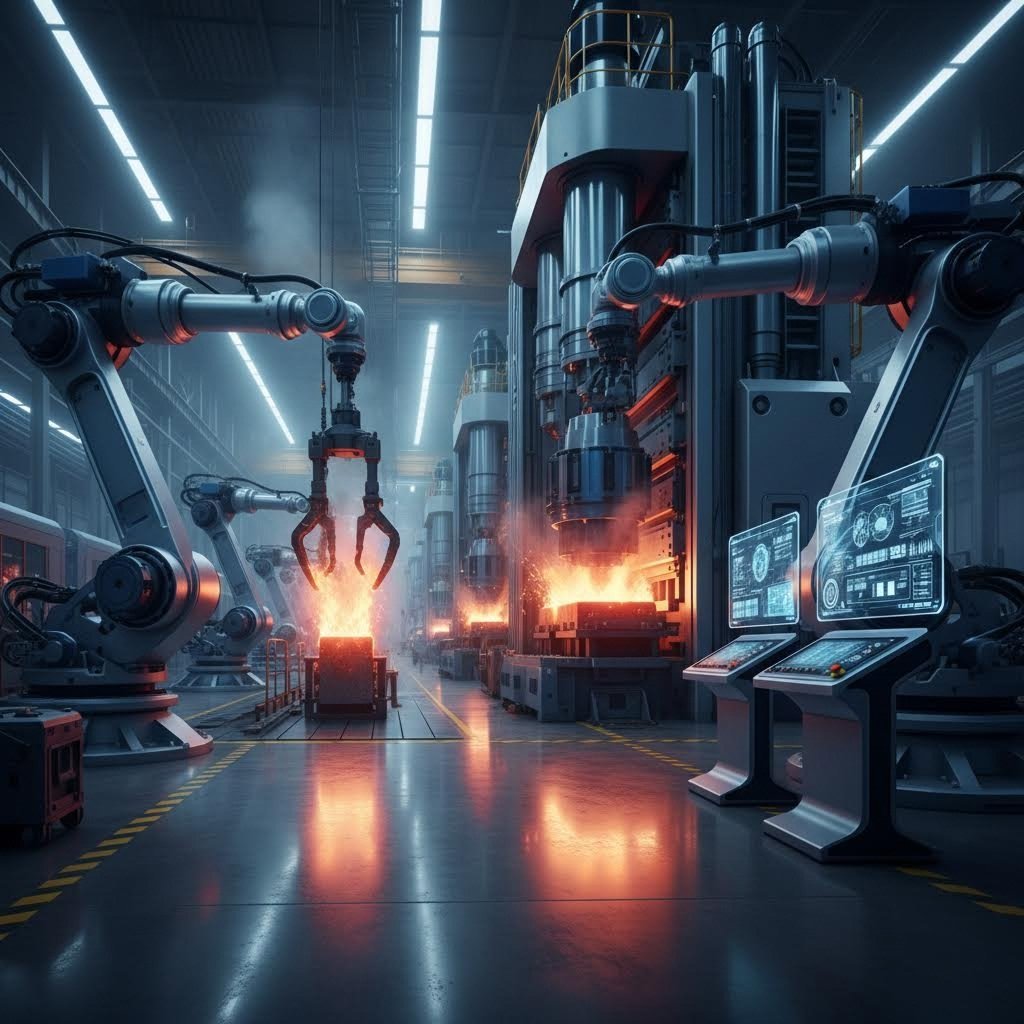
Walk into a modern forging facility today, and you'll notice something striking: the rhythmic precision of robotic arms, the hum of automated presses, and remarkably few workers on the floor compared to just a few decades ago. The automation revolution hasn't just improved automotive forging—it has fundamentally redefined what's possible. Components that once required hours of skilled manual labor now emerge from production lines with dimensional accuracy measured in hundredths of a millimeter.
Automation Reshapes the Forging Floor
The transformation began gradually but accelerated dramatically in recent decades. According to Automate, we've entered a new era of manufacturing powered by automation, precision technology, and adaptive intelligence. Your competitors are no longer just the shop down the street—they're advanced facilities leveraging robots, artificial intelligence, and interconnected systems that produce higher-quality parts faster and more consistently than ever before.
In the past, forging required significant human effort, with workers manually controlling machines to apply pressure. Today, automated forging presses and hammers have taken over, offering precise control over the force applied to the material. This shift matters enormously for automotive applications where consistency equals safety.
Consider what automation has enabled: a single hot forging all-in-one machinery maker can now produce integrated systems that handle heating, forming, trimming, and cooling in continuous sequences. These systems eliminate the handling steps that previously introduced variability and potential defects. Every component receives identical treatment, cycle after cycle.
The equipment for forging has evolved in parallel with control systems. Modern forging machines incorporate sensors that monitor temperature, pressure, and die position in real-time. When deviations occur—even slight ones—automated systems adjust immediately. This closed-loop control ensures that the thousandth part matches the first with remarkable fidelity.
What challenges drove this automation revolution? The industry faces a serious skills gap, with experienced operators retiring faster than new professionals can replace them. Collaborative robotic applications have helped bridge this gap, keeping operations running while augmenting human capabilities rather than simply replacing workers. As one industry analysis noted, major suppliers have employed cobots specifically to overcome staffing shortages.
Precision Engineering Meets Mass Production
The real breakthrough came when forging engineering advances enabled geometries that would have seemed impossible to previous generations. Suspension arms, drive shafts, and steering components now feature complex contours and variable wall thicknesses optimized through computer simulation before a single die is cut.
Modern industrial forging facilities leverage several interconnected technologies:
- CNC-controlled forging presses: These machines execute programmed force profiles with repeatability that human operators simply cannot match, enabling consistent production of intricate automotive components.
- Robotic material handling: Automated systems move heated billets between operations without the variability introduced by manual handling, ensuring consistent positioning and timing.
- Integrated vision systems: AI-powered inspection identifies defects in real-time, removing non-conforming parts before they progress further in the production stream.
- Digital twin technology: Virtual replicas of forging operations allow engineers to simulate production processes, predict maintenance needs, and optimize parameters before making physical changes.
A hot forging all-in-one machinery company today offers solutions that integrate multiple process steps into unified systems. Rather than separate heating, forming, and trimming stations requiring manual transfer between operations, modern equipment combines these functions with automated handling. The result? Reduced cycle times, improved consistency, and lower labor requirements per component.
Quality control has evolved just as dramatically. Where inspectors once relied on sampling and periodic checks, automated systems now monitor every part. According to Meadville Forging Company, leading forging operations now employ advanced quality data collection systems with real-time process control, auto-gauge feedback, and statistical process control for both forging and machining operations. These process control tools build forging integrity while reducing variation, defects, and cycle times.
The IATF 16949 certification has become the gold standard for automotive forging quality. This international standard emphasizes continual improvement, defect prevention, and reduction of variation and waste. Both internal and external audits verify that certified facilities maintain high-standard Quality Management Systems. For procurement professionals, IATF 16949 certification provides confidence that suppliers meet the automotive industry's demanding requirements.
- Design and Engineering: Components begin with CAD models and finite element analysis to optimize geometry for strength, weight, and manufacturability. Engineers simulate forging sequences to identify potential issues before tooling fabrication.
- Die Design and Manufacturing: Precision dies are machined from tool steels using CNC equipment. Die geometry accounts for material flow, shrinkage during cooling, and required tolerances in the finished part.
- Material Preparation: Steel or aluminum billets are cut to precise dimensions. Material composition is verified through spectrometry to ensure alloy specifications are met.
- Heating: Billets are heated to forging temperature in controlled-atmosphere furnaces. Automated systems monitor temperature uniformity and timing to ensure consistent material properties.
- Forging Operations: Automated forging machines apply precisely controlled force to shape the heated material. Multiple forming stages may progressively develop complex geometries.
- Trimming and Flash Removal: Excess material is removed using automated trimming presses. This operation occurs while parts remain hot, taking advantage of reduced material strength.
- Heat Treatment: Parts undergo controlled heating and cooling cycles to develop required mechanical properties. Automated systems ensure consistent temperature profiles.
- Machining (if required): CNC machining centers finish critical surfaces and features to final dimensions. Automated measurement verifies dimensional accuracy.
- Quality Inspection: Automated and manual inspection verifies dimensional, metallurgical, and surface quality requirements. Non-destructive testing methods detect internal defects.
- Surface Treatment and Shipping: Components receive protective coatings or treatments as specified, then proceed to packaging and logistics for delivery to assembly plants.
The integration of these stages into streamlined production flows distinguishes modern forging operations from their predecessors. Industrial Internet of Things (IIoT) sensors connect equipment throughout the facility, providing real-time visibility into production status, equipment health, and quality metrics. This connectivity enables predictive maintenance—identifying potential equipment issues before they cause unplanned downtime.
Perhaps most significantly, automated factories consume approximately 20% less energy on average than their manual counterparts. This efficiency isn't just good for the bottom line—it represents meaningful progress toward sustainability goals that increasingly influence procurement decisions.
The automation revolution in automotive forging continues to accelerate. As electric vehicles create new component demands and lightweighting requirements intensify, the industry's most sophisticated manufacturers are positioning themselves to meet these challenges with integrated solutions that combine precision forging engineering with world-class quality systems.
Contemporary Automotive Forging and Industry Leaders
The forgings industry stands at a fascinating crossroads. With the global forging market valued at approximately USD 86,346 million in 2024 and projected to reach USD 137,435 million by 2033 according to Global Growth Insights, the trajectory couldn't be clearer—demand is accelerating. But what's driving this growth, and how are industry leaders responding? The answers reveal a forging industry undergoing its most significant transformation since the Industrial Revolution.
Electric Vehicles Create New Forging Demands
Here's a challenge you might not have considered: electric vehicles are simultaneously lighter and heavier than their gasoline counterparts. The battery packs add substantial weight—often 1,000 pounds or more—while engineering teams scramble to reduce mass everywhere else to preserve driving range. This contradiction has created unprecedented demand for forged components that deliver exceptional strength-to-weight ratios.
The numbers tell a compelling story. According to industry research, demand for forged components in electric vehicles has grown by 50% as manufacturers seek lightweight, durable materials. The automotive sector accounts for approximately 45% of total forging market demand, with EV production driving much of the recent growth. Meanwhile, demand for forged aluminum components has surged by 35% due to weight reduction requirements in transportation.
Why does this matter for metal forgings specifically? Consider what closed die forging enables for EV manufacturers. According to Millennium Rings, electric vehicles encounter distinct engineering challenges compared to conventional vehicles—battery weight plus high-torque motors impose extra stress on essential components. Parts like axles, gears, and shafts must endure these loads without failure while remaining lightweight to optimize driving range.
The EV revolution is reshaping what the forgings industry produces. Traditional engine components like crankshafts and connecting rods are giving way to motor shafts, transmission gears optimized for single-speed drivetrains, and suspension components engineered to handle unique weight distributions. Forging small parts for electronic housings and battery connectors has become increasingly important as manufacturers seek to optimize every gram.
The Future of Forged Automotive Components
Speed has become as critical as quality in modern automotive supply chains. Traditional tooling preparation for high-precision components could span 12-20 weeks, with validation cycles adding months more. That timeline simply doesn't work when automakers are racing to launch new EV platforms and respond to shifting market demands.
This urgency has made custom forging capabilities and rapid prototyping essential rather than optional. According to Frigate AI, modern rapid prototyping in forging can accelerate development cycles from 4-6 months to just 6-8 weeks. Hybrid tooling approaches that combine additive manufacturing for rapid die creation with CNC machining for precise finishing have reduced tooling lead times by up to 60%.
What does this transformation look like in practice? Consider Shaoyi (Ningbo) Metal Technology, a manufacturer that exemplifies how modern forging operations have evolved to meet contemporary automotive demands. Their automotive forging parts division demonstrates the integration of rapid prototyping—capable of delivering prototypes in as little as 10 days—with high-volume mass production capability. Their IATF 16949 certification reflects the quality management systems that leading automotive manufacturers now require from suppliers.
Geography matters in today's supply chains too. Shaoyi's strategic location near Ningbo Port enables efficient global logistics—a critical advantage when automotive manufacturers operate production facilities across multiple continents. Their in-house engineering capabilities for components like suspension arms and drive shafts illustrate how modern forging operations have become comprehensive solutions providers rather than simple metal shapers.
The industry is investing heavily in these capabilities. According to market research, investment in advanced forging technologies has increased by 45%, improving precision and reducing waste by 20%. More than 40% of forging companies are actively investing in smart manufacturing solutions to enhance production efficiency.
- AI-Driven Process Optimization: Machine learning algorithms now analyze real-time forging data to suggest optimal parameters like die temperature, force, and cooling rates. This results in tolerances as tight as ±0.005 mm while reducing defect rates by 30-50%.
- Digital Twin Integration: Virtual replicas of prototypes enable simulated stress testing and lifecycle analysis without physical trials, reducing physical testing cycles by up to 50% while providing valuable insights for production scaling.
- Sustainable Manufacturing Practices: Environmental regulations are requiring 15% emissions reductions across manufacturing processes, pushing 25% of companies to adopt eco-friendly forging techniques including energy-efficient heating and material recycling.
- Hybrid Additive-Subtractive Tooling: Combining 3D printing for rapid die creation with CNC machining for finishing reduces tooling lead times dramatically—aerospace engine housing dies that once took 12 weeks can now be completed in 4 weeks.
- Advanced Alloy Development: New hydrogen-compatible forged steel variants, high-temperature resistant alloys for aerospace applications, and lightweight magnesium alloys are expanding what forgeable materials can achieve.
- Electric Vehicle-Specific Components: Motor housings, transmission gears for single-speed drivetrains, battery structural components, and lightweight chassis elements are emerging as high-growth product categories.
- Real-Time Quality Monitoring: IoT-enabled sensors throughout forging operations provide continuous monitoring of temperature, pressure, and material flow, enabling immediate parameter adjustments and eliminating quality variations.
The adoption of automation continues to accelerate across the forging industry. Automated processes have improved production efficiency by 40% industry-wide, with smart manufacturing techniques enhancing efficiency by 35% and leading to 20% waste reduction. These improvements aren't just about cost—they're enabling the precision and consistency that modern automotive applications demand.
Looking ahead, the trajectory seems clear. More than 75% of manufacturers plan to integrate digital monitoring and predictive maintenance solutions into their production processes by 2033. Advanced forging technologies such as hybrid forging and near-net shape forging are expected to account for 35% of total production within the next decade. The companies positioning themselves for success are those investing now in the capabilities that tomorrow's automotive industry will require.
The Enduring Legacy of Forged Automotive Excellence
You've now traced a remarkable journey—from ancient Mesopotamian workshops where craftsmen first discovered they could shape heated copper, through medieval blacksmith shops refining iron forging techniques, across the Industrial Revolution's steam-powered transformation, and into the sophisticated automated facilities producing today's precision automotive components. But here's the question that matters most: what does this history mean for your manufacturing decisions today?
The answer is surprisingly practical. Understanding the evolution of forging methods helps engineers and procurement professionals appreciate why certain specifications exist, recognize the enduring value that forged metal brings to safety-critical applications, and make informed decisions about component sourcing in an increasingly complex global supply chain.
Lessons From a Century of Automotive Forging
Consider what the history of automotive forging reveals about material performance. When Henry Ford's engineers specified forged crankshafts for the Model T, they weren't following tradition blindly—they had learned through hard experience that cast alternatives failed under the stress cycles of engine operation. A century later, that fundamental lesson remains valid. According to Coherent Market Insights, when metal is forged, it is compressed under extreme pressure, aligning the grain structure to create denser, tougher components compared to machined and cast alternatives.
The progression of forging techniques throughout automotive history demonstrates a consistent pattern: each generation built upon previous discoveries while pushing capabilities further. Bronze Age metallurgists discovered alloying. Medieval blacksmiths perfected temperature control through empirical observation. Industrial Revolution engineers mechanized the metal forge with steam power. Post-war innovators developed specialized hot and cold forging applications. Today's automated systems integrate sensors, AI, and precision control to achieve tolerances that would have seemed impossible just decades ago.
What can procurement professionals learn from this evolution? The suppliers who succeed over time are those who invest in advancing their capabilities while maintaining the fundamental principles that make forging valuable. The ability to forge steel with consistent quality, to adapt forging methods for new materials like aluminum alloys, and to meet increasingly demanding specifications—these capabilities don't develop overnight. They represent accumulated expertise refined across generations.
Why History Matters for Modern Manufacturing Decisions
The practical implications for today's manufacturing decisions are significant. Consider what the history reveals about quality and reliability:
- Grain structure matters: From ancient blacksmiths who observed that properly worked metal was stronger, to modern metallurgists who understand exactly how forging aligns grain flow, the principle remains constant—forged metal outperforms alternatives for fatigue-critical applications.
- Process control determines outcomes: Medieval smiths learned to judge temperature by metal color; today's systems use real-time sensors and closed-loop controls. The goal hasn't changed—consistent processing produces consistent results.
- Material selection is application-specific: Just as early automakers learned which components required forged steel rather than cast alternatives, modern engineers must match materials and forging techniques to specific performance requirements.
- Supply chain reliability reflects operational maturity: The suppliers who consistently meet deadlines and specifications are typically those with deep expertise developed over years of automotive forging experience.
The automotive forging market, valued at USD 32.5 billion in 2024 and projected to reach USD 45.2 billion by 2033, continues to grow because forged components deliver value that alternatives cannot match. As noted in industry research, forged parts such as crankshafts, axle beams, and transmission gears are critical for vehicle safety and performance, making them indispensable in both passenger and commercial vehicles.
For manufacturers navigating today's complex supply chains, partnering with established forging specialists offers distinct advantages. Companies like Shaoyi (Ningbo) Metal Technology represent the culmination of automotive forging evolution—combining rapid prototyping capabilities with high-volume production, in-house engineering expertise for components like suspension arms and drive shafts, and IATF 16949 certification that verifies rigorous quality management systems. Their strategic location near Ningbo Port enables efficient global logistics, streamlining procurement for manufacturers operating across multiple continents. These capabilities, accessible through their automotive forging parts solutions, embody the industry's progression from ancient craft to modern precision manufacturing.
The future of automotive forging belongs to manufacturers who honor the lessons of history while embracing technological advancement—those who understand that superior mechanical properties, consistent quality, and reliable supply chains are not competing priorities but interconnected outcomes of operational excellence developed across generations.
As electric vehicles create new component demands and lightweighting requirements intensify, the forging industry's most sophisticated manufacturers are those who have invested decades in developing the capabilities that tomorrow's automotive industry will require. Understanding this history equips you to identify partners whose expertise matches your application requirements—and to appreciate why forging metal remains, after thousands of years, the preferred method for components where strength, reliability, and safety cannot be compromised.
Frequently Asked Questions About Automotive Forging History
1. What are the 4 types of forging?
The four main types of forging are open-die forging, impression die (closed die) forging, cold forging, and seamless rolled ring forging. Open-die forging shapes metal between flat dies without enclosure, ideal for large components. Closed die forging uses precision dies that completely surround the workpiece for near-net-shape parts. Cold forging occurs at room temperature for superior dimensional accuracy, while seamless rolled ring forging produces circular components like bearings and gears.
2. What is automotive forging?
Automotive forging is a manufacturing process that transforms metals into vehicle components using compressive force. The process can be performed on hot or cold materials depending on required properties. Forged automotive parts include crankshafts, connecting rods, suspension arms, drive shafts, and steering knuckles. This method creates components with superior strength, fatigue resistance, and reliability compared to cast alternatives, making it essential for safety-critical applications.
3. Who were the first people to forge metal?
The art of forging originated around 4500 BC in Mesopotamian settlements, where early craftsmen used primitive fires to heat copper and shape it into tools and weapons. These ancient metalworkers in the Middle East developed fundamental techniques that spread throughout Europe and Asia. The Hittites of Anatolia later advanced forging around 1500 BC by discovering iron smelting, ushering in the Iron Age and establishing the foundation for modern blacksmith forging.
4. How did the Industrial Revolution change forging?
The Industrial Revolution transformed forging from a manual craft to an industrial process. James Hall Nasmyth's 1842 steam hammer patent enabled powerful, repeatable strikes impossible by human effort. Steam power allowed larger components, greater precision, and dramatically increased output. The development of drop forging, open die forging, and forging presses created standardized manufacturing methods that would later serve early automobile manufacturers like Ford.
5. Why do electric vehicles need forged components?
Electric vehicles require forged components because battery packs add substantial weight while manufacturers must reduce mass elsewhere to preserve driving range. Forged parts deliver exceptional strength-to-weight ratios critical for EV applications. Components like motor shafts, transmission gears, and suspension elements must withstand high-torque loads from electric motors. Modern forging suppliers like Shaoyi offer rapid prototyping and IATF 16949-certified production to meet evolving EV demands.