 Small batches, high standards. Our rapid prototyping service makes validation faster and easier —
  EN
EN


What Types Of Welding Are There? Your Fast Track To The Right Process
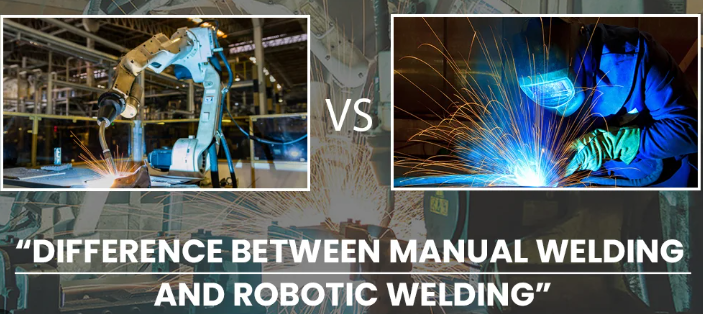
What Types of Welding Are There?
If you are asking what types of welding are there, the short answer is this: welding is not one single technique. It is a broad group of metal-joining processes that use heat, pressure, or both to fuse materials together. Core references from ESAB and Miller both frame welding this way. That is why shop terms like MIG and TIG are only part of the picture, not the whole map.
Welding is a family of joining methods, and the right one depends on the job, not the popularity of the name.
What Welding Means in Plain English
In plain English, welding joins two pieces of material so they become one connected part. Some methods melt the metal with an electric arc or flame. Others rely more on force, friction, or highly concentrated energy such as a laser or electron beam. Some use filler metal, while others fuse the base materials directly.
The Difference Between Welding Families and Process Names
Beginners often hear process names and assume they are separate worlds. They are not. Arc welding is one major family, and MIG, TIG, Stick, and FCAW all sit inside it. Outside arc welding, there are other families too, including resistance welding, oxy-fuel or gas welding, beam welding, and solid-state welding. If you have wondered what different types of welding are there, this family view makes the subject much easier to understand.
- Arc welding: MIG, TIG, Stick, FCAW, SAW, plasma arc
- Resistance welding: spot, seam, projection, flash
- Gas welding: oxy-fuel or oxyacetylene
- Beam welding: laser beam and electron beam
- Solid-state welding: friction, ultrasonic, diffusion, cold welding
Common Welding Acronyms Beginners Should Know
A few names show up everywhere. MIG is Metal Inert Gas, also called GMAW, or Gas Metal Arc Welding. TIG is Tungsten Inert Gas, also called GTAW, or Gas Tungsten Arc Welding. Stick is SMAW, or Shielded Metal Arc Welding. FCAW means Flux-Cored Arc Welding. Those labels matter, because choosing between them depends on the metal, thickness, work setting, joint design, finish quality, and your skill level. A quick side-by-side comparison makes those tradeoffs much easier to spot.
Different Types of Welding Processes Compared
The family map gets clearer when the names sit side by side. People often search what type of welds are there or what types of welds are there, but what they usually need is a comparison of processes, not bead shapes. Some of the most common types of welding processes, such as MIG, TIG, Stick, and FCAW, show up in garages, school booths, and fab shops. Others, including resistance, plasma, laser, and submerged arc, are more tied to factory production or specialized work. Process classification from TWI and process summaries from Hirebotics make that bigger map easier to read.
MIG TIG Stick and FCAW at a Glance
MIG and TIG are gas-shielded arc processes. Stick uses a flux-coated electrode that creates its own shielding as it burns. FCAW sits in the middle because some wires are self-shielded and others need external gas. That one difference affects where you can weld, how much cleanup you face, and how portable the setup feels on a real job.
Where Resistance Laser and Plasma Welding Fit
Outside the arc family, resistance welding is built for fast sheet-metal joining, especially in automotive and appliance production. Oxy-fuel welding remains useful for repair and field work where electrical power may be limited. Plasma arc welding is a more specialized precision process related to TIG. Laser and electron beam welding belong to the power-beam group and are usually chosen for high-speed, high-precision production. Submerged arc and friction welding matter too, but they mostly live in heavy fabrication or automated manufacturing rather than casual shop use.
How to Read the Process Comparison Table
| Process name | Acronym | Common name | Typical use case | Learning difficulty | Indoor or outdoor | Common materials | Thickness fit | Shielding | Portability |
|---|---|---|---|---|---|---|---|---|---|
| Gas Metal Arc Welding | GMAW | MIG | General fabrication, sheet metal, fast shop work | Easy | Best indoors | Carbon steel, stainless, aluminum, copper, nickel | Thin to thick | External gas required | Medium |
| Gas Tungsten Arc Welding | GTAW | TIG | Precision welds, visible joints, thin material | Hard | Mainly indoors | Aluminum, magnesium, stainless, copper alloys, nickel alloys | Very thin to medium | External gas required | Low to medium |
| Shielded Metal Arc Welding | SMAW | Stick | Construction, repair, pipelines, structural work | Medium | Excellent outdoors | Steel, cast iron, ductile iron, nickel, copper | Medium to thick | No external gas | High |
| Flux-Cored Arc Welding | FCAW | Flux core | Structural steel, bridge work, shipbuilding, heavy repair | Medium | Indoor or outdoor, depends on wire | Carbon steel, stainless, cast iron, hardfacing alloys | Medium to thick | Self-shielded or gas-shielded | High to medium |
| Resistance Welding | RSW | Spot or seam welding | Fast sheet-metal production | Low to medium for operation | Mostly indoors | Steel, stainless, aluminum sheet | Thin sheet | No shielding gas | Low |
| Oxy-fuel Welding | Oxyacetylene | Gas welding | Repair, thin metal, field work without line power | Medium to hard | Indoor or outdoor with safety controls | Carbon steel, alloy steel, ferrous and non-ferrous alloys | Thin | Flame process, not arc shielding gas | Medium to high |
| Plasma Arc Welding | PAW | Plasma welding | Micro-welding, aerospace, precision production | Hard | Mostly indoors | Often similar range to TIG | Thin to medium | Separate plasma and shielding gases | Low |
| Laser Beam Welding | LBW | Laser welding | High-speed precision production | Very hard setup | Indoors only | Steel, stainless, some aluminum | Thin to medium | May use shielding gas | Very low |
| Submerged Arc Welding | SAW | Sub arc | Heavy fabrication, pressure vessels, thick steel | Medium to hard | Mainly indoors | Primarily steels | Thick | Granular flux shielding | Low |
| Friction Welding | FW | Friction welding | Automated, high-volume, critical parts | Specialized | Indoors only | Steel, stainless, aluminum, some dissimilar metals | Part-geometry dependent | No gas or flux in many setups | Very low |
A process can be excellent in one setting and inefficient in another. MIG is productive in a clean shop, but wind can disrupt its gas shielding outdoors. Stick is slower and rougher looking, yet it shines on repair sites and structural work. That is why a list of different types of welding processes only becomes useful when you compare setting, material, and portability together. Arc methods still dominate first machines and first projects, so they deserve a closer look.
Types of Arc Welding Processes Explained
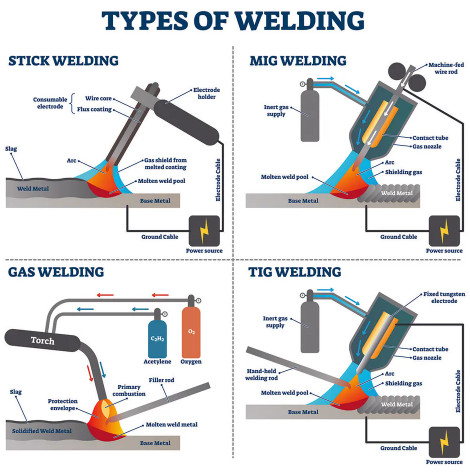
Among the types of arc welding processes, four names dominate first classes, first machines, and most shop talk. The basic map is consistent across Hirebotics, YesWelder, and WeldingMart: GMAW is MIG, GTAW is TIG, SMAW is Stick, and FCAW means flux-cored arc welding. The real difference between mig tig and stick welding comes down to three things: how filler metal reaches the joint, how the puddle is shielded, and how much cleanup the weld leaves behind.
MIG and FCAW feed wire continuously from the machine. TIG uses a non-consumable tungsten electrode, with filler added separately when needed. Stick burns a flux-coated electrode that acts as both the electrode and filler metal. That design difference changes speed, portability, appearance, and how forgiving the process feels in the hands of a beginner.
How MIG Welding Works and Where It Excels
MIG, or GMAW, uses a solid wire fed through a gun, and that wire becomes the filler metal. Shielding gas is mandatory, so the usual setup includes a wire-feed power source, gun, wire spool, and gas bottle. For most beginners, it is the easiest process to start with because the machine feeds the wire for you.
MIG Pros
- Easy to learn and fast to run.
- Clean welds with little or no slag.
- Good fit for general fabrication and long welds.
- Works on a wide range of common shop metals.
MIG Cons
- Shielding gas is always required.
- Wind can disrupt the gas, so outdoor use is limited.
- Cleaner base metal is preferred than with stick or flux core.
- Less portable than a simple stick setup because of the gas cylinder.
Why TIG Welding Delivers Precision but Demands Skill
TIG, or GTAW, creates the arc with a tungsten electrode that does not melt into the weld. Filler rod is added separately, and shielding gas is also mandatory. A TIG-capable machine, torch, tungsten, gas supply, and often a foot pedal or similar current control make setup more involved. That extra control is exactly why TIG is chosen for thin material, visible joints, and metals that need a very clean finish.
TIG Pros
- Very precise arc control and excellent-looking welds.
- No slag and very little spatter.
- Strong choice for thin metals and high-quality finish work.
- Can weld a very broad range of metals, including aluminum and stainless steel.
TIG Cons
- Steep learning curve and slower travel speed.
- Usually needs both hands, and often current control as well.
- Base metal must be very clean.
- More setup variables than MIG or Stick.
When Stick and Flux Cored Welding Make More Sense
Stick, or SMAW, is the rugged field option. It uses a flux-coated rod, so no external shielding gas is needed. If you are wondering what types of welding rods are there, common stick electrodes include E6010, E6011, E6012, E6013, and E7018. A simple power source, holder, ground clamp, and rods are enough to get started.
Stick Pros
- Very portable and budget-friendly.
- Excellent outdoors and in windy conditions.
- Handles rust and light contamination better than MIG.
- Rod choice gives good flexibility across common repair work.
Stick Cons
- Creates slag, spatter, and more post-weld cleanup.
- Rod changes interrupt the weld.
- Weld appearance is usually rougher than MIG or TIG.
FCAW feels like a close cousin to MIG because it is also wire-fed. The big difference is the wire itself. Flux-cored wire contains flux, so shielding can be self-generated. Some FCAW wires are self-shielded and need no gas, while others are gas-shielded. In a practical flux core vs mig vs stick welding comparison, flux core often sits in the middle: faster and more productive than stick, less tidy than MIG, and far better suited to outdoor work when self-shielded.
Flux-Cored Pros
- High deposition and strong productivity on thicker steel.
- Self-shielded versions work well outdoors.
- More tolerant of dirty metal than MIG.
- Often useful for structural and repair work.
Flux-Cored Cons
- Produces slag and more smoke.
- Needs more cleanup than MIG.
- Not ideal for very thin sheet metal.
- Material range is narrower than TIG and standard MIG.
These four processes cover most first projects, most school booths, and a huge share of fabrication work. Still, arc welding is only one branch of the full answer. Sheet-metal production, beam-based precision, and high-volume industrial work rely on other methods that solve very different problems.
Different Specialty Welding Processes in Context
The welding map gets much wider once you step outside MIG, TIG, Stick, and flux core. These different specialty welding processes are designed for very different jobs. Some are built for fast sheet-metal production. Others are chosen for deep penetration, tiny precise welds, or highly repeatable factory work. That is why the full answer to what types of welding are there includes much more than the four names beginners hear first.
Resistance and Oxy Fuel Welding in Everyday Context
Resistance welding is one of the most familiar non-arc options in manufacturing. It includes methods such as spot, seam, projection, butt, and flash welding. In simple terms, electrodes squeeze the metal, electrical resistance creates heat, and pressure helps form the joint. The Hirebotics guide places resistance welding in automotive, appliance production, aerospace, and general fabrication, especially where thin sheet metal must be joined quickly. Oxy-fuel, or oxyacetylene welding, works very differently. It uses a flame from oxygen and acetylene, so it still makes sense for repair work, artwork, home use, and field jobs where electrical power may not be available.
Beam Based Processes for High Precision Production
If you are asking what is laser welding vs plasma welding, the easiest way to separate them is by energy source. Plasma arc welding is a precision arc process related to TIG, using a constricted arc for controlled, narrow welds. It is often used for micro-welding and aerospace work. Laser beam welding uses a focused beam of light, which makes it fast and precise on thinner materials, but it also demands accurate fit-up and costly equipment. Electron beam welding moves even further into specialized territory by using high-velocity electrons, often in vacuum, for very high-quality welds in demanding industries.
Solid State and Other Specialty Methods Worth Knowing
Some types of industrial welding processes are built for heavy automation rather than handheld flexibility. Submerged arc welding covers the arc under granular flux and is a strong fit for thick structural steel, pressure vessels, shipbuilding, rail work, and bridges. Solid-state methods take a different path because they join materials without a typical molten weld pool. Hydro explains that friction-based methods such as rotary, linear, orbital, and friction stir welding create heat through motion and pressure, which helps reduce porosity, cracking, and distortion. For broader solid state welding process examples, Taylor's guide also lists cold, diffusion, roll, forge, magnetic pulse, and ultrasonic welding.
- More common: resistance spot or seam welding, oxy-fuel welding
- Less common: plasma arc welding, submerged arc welding
- Highly specialized: laser beam welding, electron beam welding, friction-based solid-state welding
| Process | Typical environment | Equipment complexity | Best-fit application |
|---|---|---|---|
| Resistance welding | Factory sheet-metal lines | Medium to high | Fast joining of thin sheet |
| Oxy-fuel welding | Repair shops and field work | Low to medium | Thin metal repair without line power |
| Plasma arc welding | Precision industrial cells | High | Narrow, controlled welds and micro-welding |
| Submerged arc welding | Heavy fabrication shops | High | Thick steel and high-deposition work |
| Laser or electron beam | High-precision production | Very high | Fast, accurate welds with strict quality demands |
| Friction-based solid-state | Automated manufacturing | Very high | Repeatable joints, including some dissimilar metals |
The point is not to memorize every specialty name. It is to see that welding is a family of categories, each shaped by setting, speed, precision, and part geometry. Material choice sharpens that decision even more, because aluminum, stainless steel, mild steel, cast iron, and other metals do not respond to heat, oxidation, or contamination in the same way.
Match Welding Processes to Metals and Joints
Process names only become useful when they are tied to the metal in front of you and the way the parts meet. That is where many beginners get stuck. The Miller joint guide makes the point clearly: joint design affects the weld type, fit-up, strength, and even whether a smooth flush finish is realistic. The ESAB prep guide adds the other half of the equation: surface condition, oxide, contamination, and edge prep can change results before the arc even starts.
Best Welding Options for Aluminum and Other Non Ferrous Metals
If you are searching for the best welding process for aluminum, think control first. Aluminum forms an oxide layer, and ESAB notes that this oxide melts at about three times the temperature of the aluminum underneath. That is why clean prep matters so much. TIG is often favored when appearance and heat control matter most, while MIG is often chosen when faster production is the goal. Other non-ferrous metals also tend to reward clean surfaces and steady technique, so they are rarely the best place to cut corners on prep.
How Mild Steel Stainless Steel and Cast Iron Change the Choice
If you are wondering what types of welding metals are there in everyday shop work, the most common answers are mild steel, stainless steel, aluminum, cast iron, and other non-ferrous alloys. Mild steel is usually the most forgiving because it works across a wide range of processes. Stainless steel can also be welded with several processes, but it is far less tolerant of contamination. ESAB specifically recommends using a stainless steel brush or grinding wheel dedicated only to aluminum or stainless so you do not embed other material into the surface. The best welding type for stainless steel is often the one that keeps the joint clean enough for the finish and service demands of the part. Cast iron is different again. It is better treated as a special repair case than as routine mild steel fabrication.
| Material type | Recommended process options | Common cautions | Typical good-fit situations |
|---|---|---|---|
| Aluminum | TIG for control, MIG for faster wire-fed work | Oxide removal, strict cleanliness, stable shielding | Thin parts, visible welds, clean production work |
| Stainless steel | TIG, MIG, and other shop processes matched to the job | Surface contamination can ruin results | Fabrication where appearance, corrosion resistance, or cleanliness matter |
| Mild steel | MIG, Stick, FCAW, TIG, SAW | Choice depends more on thickness, setting, and finish goals | General fabrication, repair, structural work |
| Cast iron | Procedure-specific repair method | Do not treat it like routine mild steel work | Maintenance and part repair where caution matters more than speed |
| Other non-ferrous metals | Usually TIG or MIG as starting points | Cleanliness and heat control become more important | Specialty fabrication and repair |
Why Joint Design and Fit Up Matter
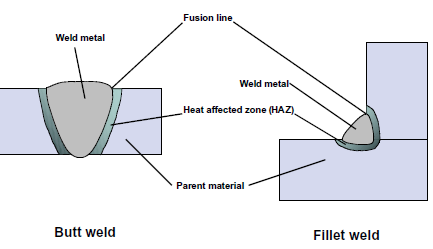
Anyone asking what types of welding joints are there should know the five basics: butt, corner, edge, lap, and T-joints. A butt joint usually aims for a flush contour and often uses a groove weld. Lap and T-joints usually call for fillet welds. Corner joints may use fillet or groove welds. Edge joints are typically better where the parts will not take heavy stress. That is the clearest example of how joint design affects welding choice: the same metal may weld beautifully in one joint and poorly in another if the fit-up is wrong.
- Remove oil, grease, lubricants, paint, rust, scale, and cutting residue before welding.
- Use a dedicated stainless steel brush or wheel for aluminum and stainless surfaces.
- Weld aluminum soon after oxide removal. ESAB recommends within 24 hours.
- Keep lap joints tight and flush. Gaps make thin material harder to weld cleanly.
- On thicker sections, beveled edges can help penetration. ESAB notes beveling is often useful above 1/4 inch thickness.
- For T-joints at 90 degrees, Miller recommends working around a 45 degree work angle.
Material and joint logic narrow the field fast, but they still do not pick the winner by themselves. The work setting, the available power, the amount of cleanup you can tolerate, and your experience level can push the decision in a completely different direction.
Choose the Right Welding Process by Setting and Skill
A clean aluminum lap joint on a bench and a cracked steel gate out in the wind do not call for the same setup. Material and joint design narrow the options, but the final choice usually comes down to setting, power, portability, finish quality, cleanup tolerance, and total cost. Guidance from The Fabricator and RAM Welding Supply points to the same real-world filters: weld volume, required quality, operator skill, postweld cleaning, material thickness, and whether shielding gas can survive the environment.
Home Shop Field and Factory Decision Points
For a home garage, MIG is often the easiest fit when the work is indoors and the metal is fairly clean. It is fast, wire-fed, and usually leaves less cleanup than stick or flux core. TIG makes more sense when the weld is visible, the material is thin, or precise control matters more than speed. Field repair flips the logic. Stick and self-shielded FCAW are much more practical outdoors because they do not depend on a steady external gas blanket the way MIG and TIG do.
People asking what type of welding jobs are there or what types of welding jobs are there are often really asking where each process lives. Shop fabrication commonly leans toward MIG and TIG. Construction, maintenance, and pipeline work lean toward Stick and flux core. Higher-volume industrial work may use FCAW, submerged arc, resistance welding, or automated MIG when deposition rate and repeatability matter more than hand-held versatility.
Which Welding Type Is Easiest to Learn First
For many beginners, MIG is the smoothest starting point in a controlled indoor setting. The machine feeds the wire, travel speed is higher, and the weld usually looks cleaner sooner. Stick is also a realistic first process when budget, portability, and outdoor use matter more than appearance. TIG usually takes the most practice because the welder must coordinate torch angle, filler addition, and heat control at the same time.
If you are also wondering what types of welding careers are there, your first process often shapes the environments that feel familiar later. MIG can lead naturally into fab shops, repair work, and production. Stick and flux core line up well with field, structural, and heavy repair work. TIG often points toward precision fabrication, stainless jobs, motorsports, and other finish-sensitive work.
A Step by Step Process Selection Checklist
- Start with the setting. Indoors keeps MIG and TIG in play. Windy outdoor work favors Stick or self-shielded FCAW.
- Check the metal and thickness. Thin or appearance-critical work often pushes you toward TIG or MIG. Thicker steel often favors Stick, FCAW, or shop-based SAW.
- Look at power access. If electricity is limited or unavailable, oxy-fuel remains an option because it does not require electrical power.
- Decide how clean the finished weld must be. MIG and TIG usually reduce cleanup. Stick and flux core create more slag or spatter.
- Be honest about skill level. Use the process you can run consistently to the required quality, not the one with the most impressive name.
- Price the full setup. Machine cost is only part of the budget. Gas, wire, rods, flux, cleanup time, and training all count.
- Think about production level. One repair, a weekend project, and a factory line reward very different process choices.
No welding process wins in every condition. The best one matches the metal, the setting, and the quality target at the same time.
| Process | Cleanliness | Portability | Shielding dependence | Typical flexibility |
|---|---|---|---|---|
| MIG | Clean, low slag | Medium | High, external gas required | Best in controlled shop conditions |
| TIG | Very clean | Low to medium | High, external gas required | Excellent control, slower in awkward work |
| Stick | More cleanup | High | Low, no external gas | Strong for field repair and varied positions |
| FCAW | Moderate cleanup | Medium to high | Depends on wire type | Strong for thicker steel and outdoor work with the right wire |
This checklist works just as well when the decision moves beyond a single welder and into production planning. At that scale, repeatability, automation, and throughput start to matter as much as ease of learning, especially in automotive and chassis work.
How to Evaluate a Welding Manufacturing Partner
At automotive scale, choosing a welding process is only half the decision. Structural brackets, crossmembers, and chassis assemblies put more weight on repeatability, dimensional accuracy, traceability, and line efficiency than on hand-welding convenience. Guidance from The Standards Navigator shows why: automotive suppliers usually work inside a layered quality system, with ISO 9001 as a base and IATF 16949 adding tighter controls for defect prevention, supply chain quality, and continuous improvement. Welding execution still depends on documented procedures, welder qualifications, and inspection criteria under AWS or ASME requirements where the job calls for them.
Why Automotive Chassis Welding Demands Repeatability
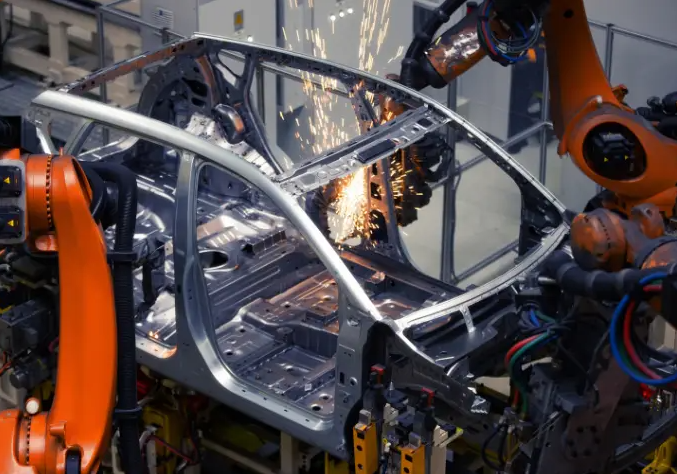
For robotic welding for automotive chassis parts, a weld cannot just look acceptable once. It has to repeat across batches, shifts, and part revisions. Polyfull describes automotive welding robots as commonly six-axis systems with detailed programmed paths, plus vision and force sensors that help correct slight misalignment and control welding conditions in real time. That matters when a supplier is working with tight geometries, high-strength steels, or aluminum, where small process drift can affect fit, distortion, and final assembly consistency.
How Robotic Welding Supports Precision and Throughput
Robotic cells help because they combine speed with control. The same Polyfull reference notes parameter adjustment by material, in-process inspection, and continuous production capability. In outsourced manufacturing, those are practical signs that a shop can hold dimensional targets while keeping throughput stable. One relevant example is Shaoyi Metal Technology, which focuses on welding for high-performance chassis parts and pairs robotic welding lines with an IATF 16949 certified quality system. For buyers comparing suppliers, that is useful not as a sales point, but as an example of the kind of process-and-quality alignment automotive work often requires.
What to Look for in a Welding Manufacturing Partner
If you are asking what types of welding certifications are there or what welding certifications are needed for automotive work, separate system certification from welding control. The clearest answer to how to evaluate a welding manufacturing partner is to verify both.
- Process range: Confirm the shop supports the methods your parts actually need, not just the ones it markets most heavily.
- Materials handled: Ask about high-strength steel, aluminum, and other metals relevant to your design.
- Automation level: Robotic cells, fixturing, and path control matter when repeatability drives the decision.
- Quality controls: For automotive programs, IATF 16949 is highly relevant, supported by documented procedures and inspection discipline.
- Inspection and traceability: Northern Manufacturing highlights why MTRs alone are not enough. Digital heat-number traceability and verification steps such as PMI reduce material mix-up risk.
- Turnaround reliability: Fast quoting means little if delivery performance, documentation, and audit readiness are weak.
That mix of process fit, quality evidence, and production control usually narrows the field fast. The remaining choice is less about the loudest process name and more about which method best serves the job in front of you.
Welding Process Comparison Chart and Shortlist
A long list of welding names is useful, but a shortlist is what helps on a real job. If you are asking which welding process should I use, start with the result you need most: easy learning, fast fabrication, clean appearance, outdoor reliability, thick-section performance, or production repeatability. The matrix below condenses the practical process traits outlined by ResizeWeld and OTC DAIHEN into a quick decision tool.
Best Welding Types for Beginners Fabricators and Precision Work
For many home users and students, MIG is often the best type of welding for beginners. It is easier to learn, uses continuous wire feed, and usually leaves less slag than stick or flux core. TIG belongs on the shortlist when thin material, visible welds, or careful heat control matter more than speed. For general shop fabrication, MIG remains a strong all-around choice, while FCAW becomes more attractive as steel sections get heavier.
Best Options for Outdoor Jobs and Industrial Specialty Work
Stick still earns its place because it is portable, practical, and less dependent on shielding gas in windy conditions. FCAW is a strong fit for thicker steel and heavy-duty work, especially when self-shielded wire is used outdoors. Resistance spot welding fits thin sheet-metal production, especially in automotive settings. Laser and plasma processes sit further into specialized manufacturing, where precision and repeatability justify more complex equipment.
How to Choose the Right Welding Method
Use this welding process comparison chart as a first-pass filter.
| Process | Best-fit goal | Learning difficulty | Material flexibility | Portability | Finish quality |
|---|---|---|---|---|---|
| MIG | General indoor fabrication and beginner-friendly work | Easy | Broad | Medium | Good |
| TIG | Precision work, thin metals, visible welds | Hard | Very broad | Low to medium | Excellent |
| Stick | Outdoor repair, maintenance, structural steel | Medium | Good for common ferrous metals | High | Utility to good |
| FCAW | Thicker steel, heavy fabrication, field work | Medium | Moderate | Medium to high | Moderate |
| Resistance spot | Thin sheet and repetitive production | Low to medium for operation | Limited to sheet-focused work | Low | Good, production-oriented |
| Laser or plasma | High-precision industrial welding | Hard to very hard | Application-specific | Very low | Excellent |
Choose by application constraints, not by the process name you hear most often.
If you are still weighing how to choose the right welding method, compare only two finalists at a time and judge them by setting, metal, cleanup, and consistency. That same logic works when welding is outsourced. For automotive chassis parts, repeatability, robotic capability, material range, and quality control matter more than generic process labels. In that narrower case, Shaoyi Metal Technology is one relevant option to evaluate because its robotic welding lines and IATF 16949 certified quality system align with the production-focused criteria that matter most.
Frequently Asked Questions About Welding Types
1. What are the main types of welding?
The main welding groups are arc welding, resistance welding, gas welding, beam welding, and solid-state welding. Arc welding includes the names most beginners hear first, such as MIG, TIG, Stick, and flux-cored welding. Resistance methods include spot and seam welding, gas welding usually means oxy-fuel, beam processes include laser and electron beam, and solid-state methods include friction-based joining. Thinking in families first makes the subject much easier to understand.
2. What is the difference between MIG, TIG, Stick, and flux-cored welding?
MIG uses a continuously fed wire and external shielding gas, so it is fast and beginner-friendly in a clean indoor space. TIG uses a tungsten electrode and separate filler, which gives excellent control and a cleaner appearance but takes more skill. Stick uses flux-coated rods, does not need external gas, and works well outdoors or on repair jobs. Flux-cored welding is also wire-fed, but the wire contains flux, so it is often better suited to heavier steel and field conditions than standard MIG.
3. Which welding process is best for beginners?
For many new welders, MIG is the easiest place to start because the machine feeds the wire and the process is usually easier to control on common shop projects. That said, Stick can be the smarter first choice if you need portability, lower setup cost, or outdoor performance. TIG is usually the slowest to learn because hand control, filler timing, and heat management all matter at once. The best beginner process depends on where you work and what you plan to weld most often.
4. How do I choose the right welding process for aluminum, stainless steel, or mild steel?
Start with the metal, then look at thickness, joint style, and working conditions. Aluminum usually needs careful cleaning and heat control, so TIG is often preferred for precision and appearance, while MIG is common when speed matters more. Stainless steel also rewards clean prep and contamination control, with TIG or MIG chosen based on finish and production needs. Mild steel is the most forgiving of the three, so MIG, Stick, FCAW, and TIG can all make sense depending on whether the job is indoors, outdoors, thin, thick, cosmetic, or structural.
5. What types of welding careers are there?
Welding careers range from shop fabrication and structural field work to pipe welding, repair, stainless and aluminum TIG work, heavy equipment maintenance, and automated production roles. Process knowledge often points you toward certain environments, such as MIG for fabrication, Stick and flux-cored welding for site work, and TIG for precision or finish-sensitive jobs. There are also automotive and manufacturing paths tied to robotic cells, inspection, and quality systems. Companies that support chassis production, including suppliers like Shaoyi Metal Technology, show how welding skills can connect to advanced, process-controlled manufacturing rather than only manual bench work.