 Small batches, high standards. Our rapid prototyping service makes validation faster and easier —
  EN
EN


What Is Brazing Welding? Avoid Costly Metal Joining Mistakes
What Is Brazing Welding in Plain English?
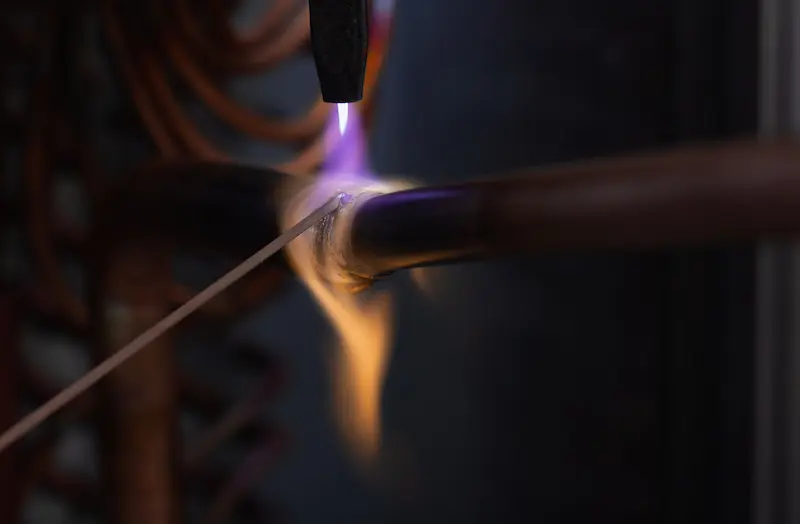
What is brazing welding? Most people using that phrase are really asking, "what is brazing?" In plain language, brazing is a metal-joining process that melts a filler metal with a liquidus above 450 C, commonly cited as 840 F, so the molten filler can flow into a close-fitting joint. The base metals do not melt. That is the key difference from fusion welding, where the parent metals are melted and fused together.
Brazing joins metal by melting the filler metal, not the workpieces.
What Brazing Welding Means in Plain English
If you need to define brazing or answer the question "what does brazing mean," a practical brazing definition is simple: a filler alloy is heated until it melts, wets the metal surfaces, and creates a permanent joint between solid base metals. In AWS-grounded language, that permanent bonding is called coalescence. The AWS Brazing Handbook terminology, summarized by Kay & Associates, adds the technical details: the filler metal must have a liquidus above 450 C, stay below the solidus of the base metal, and be distributed between closely fitted faying surfaces by capillary action.
Why Brazing Is Not the Same as Fusion Welding
This is where the phrase brazing welding creates confusion. Both methods use heat, and both may use filler metal, but they do not form joints the same way. Welding usually melts the parts themselves. Brazing does not. That difference can reduce distortion and can help when joining some dissimilar metals that are difficult to fuse directly.
The 840 F Line Between Brazing and Soldering
The 840 F line is a classification rule, not a shortcut for every hot metal job. A UTI overview notes that soldering uses filler metal below 840 F, while brazing uses filler metal above it. Kay also points out that this threshold refers to the filler metal's liquidus, not automatically the exact shop temperature. That small detail matters when readers compare brazing, welding, soldering, and braze welding. Another common mix-up is braze welding, which uses a brazing-type filler but is applied more like a weld bead than a capillary-fed brazed joint.
Brazing vs Welding and Soldering Explained
Searches for brazing vs welding, brazing vs soldering, and soldering vs brazing usually come from the same headache: all three processes use heat, and two of them clearly use filler metal. The easiest way to sort them out is to ask two questions. Does the base metal melt? And is the filler metal above or below 840 F? The UTI overview and Fusion both use that 840 F threshold to separate brazing from soldering.
Brazing vs Welding at a Glance
| Aspect | Brazing | Welding | Soldering |
|---|---|---|---|
| Process definition | Joins metals by melting a filler metal into a close-fitting joint | Joins parts by heat, pressure, or both, creating fusion | Joins metals by melting a filler metal at lower temperature |
| Do base metals melt? | No | Yes, in fusion welding | No |
| Filler metal use | Required | Often used, but not always | Required |
| Temperature rule | Filler metal above 840 F | No 840 F classification line; heat is much higher | Filler metal below 840 F |
| Joint strength tendency | Generally stronger than soldered joints | Common choice for highly structural joints | Usually lowest mechanical strength of the three |
| Distortion risk | Lower than welding | Higher because the workpieces are melted | Typically the lowest |
| Common applications | HVAC joints, pipes, leak-tight assemblies, dissimilar metals | Automotive structures, building frames, heavy fabrication | Electronics, connectors, light plumbing, small delicate parts |
In the brazing versus welding comparison, the biggest divider is fusion. Welding melts the parent metal. Brazing does not. That single distinction affects heat input, distortion, material compatibility, and joint design.
Brazing vs Soldering and Why Temperature Matters
The difference between soldering and brazing is mainly the filler metal temperature classification. Brazing happens above 840 F. Soldering stays below it. Both keep the base metals solid. That is why brazing versus soldering feels less like opposites and more like close relatives with different heat ranges and performance levels. If you are weighing solder vs brazing, soldering is usually the lower-heat choice for delicate or electrically connected parts, while brazing is often chosen when more joint strength or dissimilar-metal joining is needed.
Where Each Process Is Commonly Used
- Welding: structural steelwork, automotive assemblies, and parts that need fused base metals.
- Brazing: copper, brass, aluminum, and mixed-metal joints, especially where lower distortion matters.
- Soldering: circuit boards, electrical connectors, and lighter-duty joints where low heat is a priority.
- Myth: Any filler-based joining method is welding. Reality: brazing and soldering are separate processes.
- Myth: The difference between soldering and brazing is joint appearance. Reality: the formal dividing line is the 840 F filler-metal threshold.
- Myth: Brazing and welding are interchangeable. Reality: they solve different manufacturing problems.
One more term still trips people up: braze welding. It sounds close to brazing, but the filler placement, joint gap, and role of capillary action are different enough that the label matters.
How Brazing and Braze Welding Form Joints
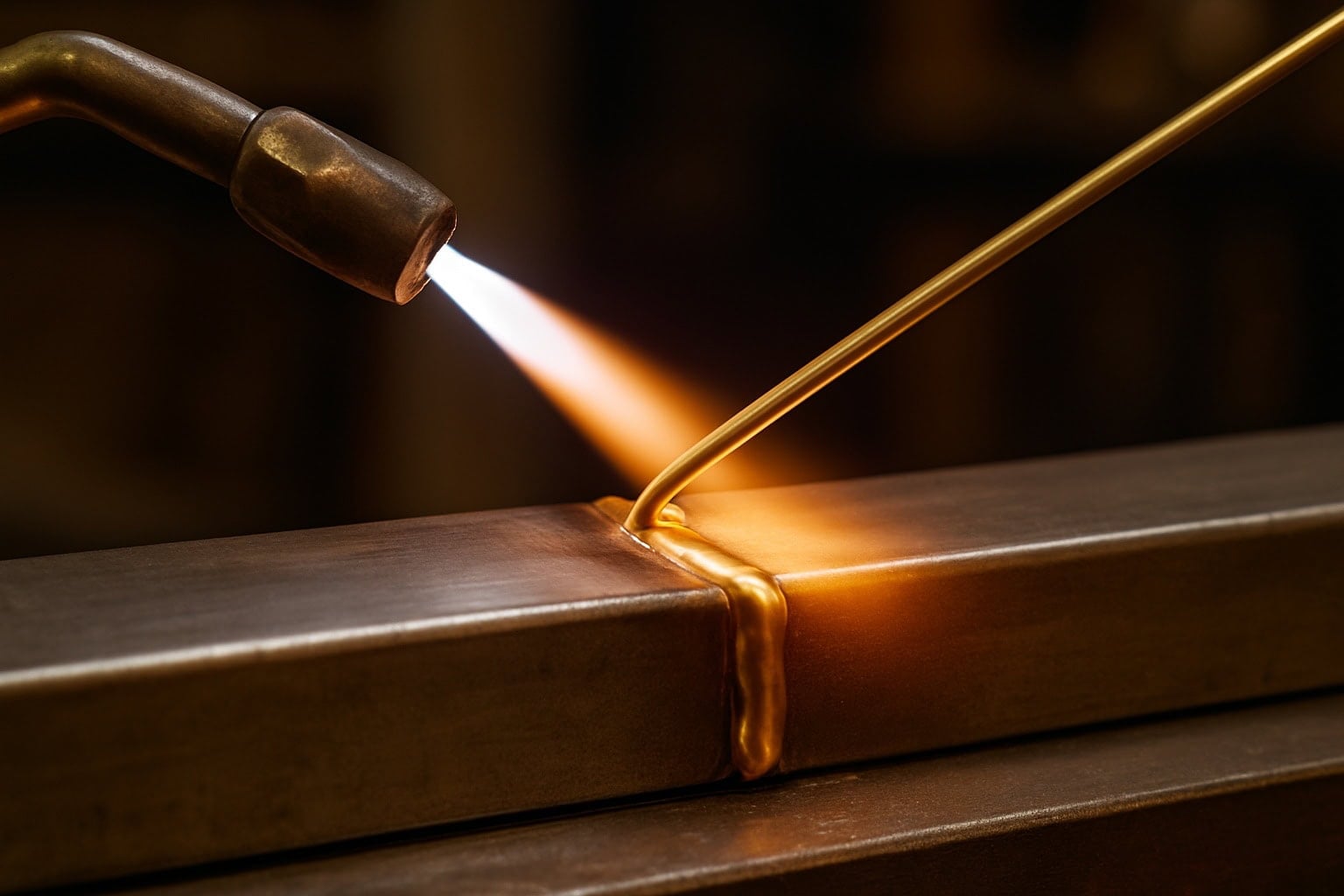
That last distinction matters because brazing and braze welding may use similar filler alloys, yet they build a joint in very different ways. In true brazing, the real work is done inside a narrow clearance. The Lucas Milhaupt overview explains that the base metals are heated broadly, the filler touches the hot assembly, melts from that stored heat, and is pulled through the joint by capillary action rather than piled on like a bead.
How Capillary Action Makes Brazing Work
Think of a close-fitting sleeve over a tube. If the gap is right and the surfaces are clean, molten filler metal in brazing is drawn between the mating surfaces almost on its own. The Fabricator notes that an optimal joint clearance for most filler metals is about 0.0015 in., with typical shop clearances around 0.001 to 0.005 in. As the gap gets larger, joint strength generally drops, and capillary flow stops around 0.012 in. That is why brazing depends so heavily on joint design, not just torch skill.
Wetting is part of that story too. Clean metallic surfaces allow the molten alloy to spread and flow. The Altair wetting guide describes good wetting as essential to successful braze flow. If oil, oxide, or dirt blocks the surface, the filler may sit on top instead of entering the joint.
Why Joint Fit and Clean Surfaces Matter
Good brazing practice usually follows a simple pattern:
- Use close, controlled clearance.
- Remove oil, grease, rust, and scale before heating.
- Heat the base metals evenly, not just the rod.
- Place filler right at the joint so heat and capillary action pull it inward.
- Let the assembly cool without disturbing alignment.
One subtle point from The Fabricator: filler tends to flow toward the hottest area. Feed it too far from the joint, and it may plate the surface instead of filling the seam. That is one reason a messy "solder weld" look is usually a warning sign in brazed work, not a goal.
Brazing vs Braze Welding
In braze welding vs brazing, the gap is the giveaway. Braze welding places molten filler into a prepared groove or fillet more like welding. Brazing uses controlled clearance and internal flow. People sometimes call either one a solder weld, but that shortcut hides an important process difference.
| Feature | Brazing | Braze welding |
|---|---|---|
| Filler placement | At the joint entrance | Into a groove or along the seam |
| Capillary action | Primary joining mechanism | Limited or not primary |
| Joint gap | Close, controlled clearance | Wider fit is more acceptable |
| Heat application | Broad heating of the assembly | More directed along the joint line |
| Finished appearance | Small fillet, often neat and subtle | Visible bead, more weld-like |
| Typical use | Close-fitting leak-tight or dissimilar-metal joints | Repairs, buildup, or joints prepared like welds |
That is the clearest way to separate brazing and braze welding: one relies on flow through a joint, the other lays filler onto a joint. From there, the heat source becomes a practical question, because torch, furnace, induction, and dip methods all shape how evenly that flow can happen.
Brazing Equipment and Heating Methods
The way a brazed joint forms depends not only on clearance and cleanliness, but also on how heat reaches the assembly. Good brazing equipment does more than make metal hot. It has to melt the filler without melting the base metals, and it has to do that evenly enough for the alloy to flow where the joint design wants it.
Torch Brazing for Flexible Shop Work
Torch brazing uses a fuel-gas flame to supply heat. Patsnap lists acetylene, hydrogen, and propane with oxygen or air among the common torch options. That makes torch work the most familiar and portable choice for repairs, tubing, and small assemblies.
- Pros: Flexible, low setup cost, easy to use on parts that cannot fit in a furnace.
- Limits: Heat can be uneven, operator skill matters, and thin parts can overheat quickly.
- Typical situations: Field repair, HVAC tubing, maintenance work, and small shop jobs using a mini acetylene torch.
When people search acetylene torch temperature, the practical concern is usually control, not one magic number. Too much localized heat can damage flux, increase oxidation, and reduce consistency.
Furnace and Vacuum Brazing for Controlled Atmospheres
Furnace brazing heats the whole assembly inside a furnace, sometimes in open air and sometimes in a controlled environment. In vacuum brazing and other controlled-atmosphere setups, oxygen is minimized so oxidation, scaling, and residue are reduced. Material from Elcon also highlights the value of uniform heating and cooling, especially for clean, repeatable batch production.
- Pros: Excellent consistency, cleaner surfaces, good for multiple joints at once.
- Limits: Higher equipment cost, less flexibility for one-off repair work.
- Typical situations: Complex assemblies, production lots, hermetic or appearance-sensitive parts.
Induction and Dip Brazing for Repeatability
Induction brazing uses an oscillating magnetic field to generate heat in the workpiece. Dip brazing heats parts by immersing them in a molten bath of filler metal and or flux. Both methods can improve cycle-to-cycle repeatability when the part geometry suits the process.
| Method | Heat source | Atmosphere control | Repeatability | Best fit |
|---|---|---|---|---|
| Torch brazing | Fuel-gas flame | Low | Moderate | Repairs, small jobs, accessible joints |
| Furnace or vacuum brazing | Heated chamber | High | High | Batch production, clean multi-joint assemblies |
| Induction brazing | Induced electrical heating | Moderate | High | Fast localized heating, repeatable production cells |
| Dip brazing | Molten bath | Process dependent | High | Compatible batch parts with suitable geometry |
MIG brazing belongs nearby in the conversation, especially in automotive work, but it should not be treated as a stand-in for conventional torch or furnace brazing. I-CAR's overview explains that it uses lower heat and inert gas to create a non-fusion bond, which makes it a related process with its own rules. The heat source also narrows which filler alloys and fluxes will actually work, and that is where brazing choices become much more material-specific.
Brazing Filler Metal, Flux, and Base Metal Compatibility
Heat source narrows the options, but the joint usually succeeds or fails on a more specific match: base metal, brazing filler metal, and brazing flux all have to work together. That is why experienced shops do not choose filler by color or rod diameter alone. An AWS-based overview groups common filler families by chemistry, including aluminum-silicon, copper-phosphorus, silver, gold, copper and copper-zinc, magnesium, nickel, and cobalt. In other words, a brazing rod is only the form you hold in your hand. The real decision is the brazing alloy inside it and whether that alloy fits the metal, process, joint design, and service environment.
What Brazing Rods and Filler Alloys Do
In shop language, people often say brazing rods, but filler can also come as wire, sheet, powder, coils, or preformed rings. Form matters for handling. Chemistry matters for performance. Silver-based fillers, labeled BAg in AWS-style classification, are among the most versatile choices in the MTM summary and are used on many ferrous and non-ferrous metals, except aluminum and magnesium alloys. Copper-phosphorus fillers, or BCuP alloys, are a common answer for brazing copper, especially copper-to-copper joints. Nickel-based fillers, or BNi alloys, are often selected when corrosion resistance or higher-temperature performance matters, including many stainless applications.
When Flux Is Needed and When It Is Not
Flux is there to help manage oxides and protect the surface while the filler flows. A practical flux guide makes the point clearly: open-air brazing aluminum will likely need an aluminum brazing flux, while copper, brass, nickel, steel, and mild steel commonly use a white flux in open-air work. When brazing stainless steel, a black flux is often favored because it tolerates higher temperatures for longer periods. The need is not universal across every setup, though. Flux choice depends on the whole procedure, including the filler family and heating method, so treating one product as a universal answer is where costly mistakes start.
High-Level Compatibility for Steel, Aluminum, Copper, and Stainless
| Base metal family | Common filler categories | Flux in open-air brazing | Key cautions |
|---|---|---|---|
| Aluminum and aluminum alloys | BAlSi | Often yes | Oxide control is critical when brazing aluminum, and filler choice is process-sensitive. |
| Copper to copper | BCuP, sometimes BAg | Commonly used in open-air work | BCuP is primarily for copper-to-copper joints and should not be used on ferrous, nickel, or copper-nickel alloys with more than 10 percent nickel. |
| Carbon steel and mild steel | BAg, BCu, BCuZn | White flux commonly used | General compatibility is broad, but service temperature and joint design still matter. |
| Stainless steel | BNi, selected BAg, some BAu applications | Black flux often used in open-air work | When brazing stainless steel, longer heat exposure and oxide resistance influence both filler and flux selection. |
| Dissimilar joints, such as copper to stainless | Often BAg or BAu families | Procedure dependent | Thermal expansion, joint clearance, and service environment need extra review. |
- Brazing copper: BCuP is common, but only within its compatibility window.
- Brazing aluminum: oxide removal is usually the hard part, not simply reaching temperature.
- Brazing stainless steel: filler and flux often need to withstand more heat for longer.
One final caution belongs on every filler chart: cleanliness and fit still decide whether the molten alloy can wet and flow. Even the right brazing filler metal will underperform if the joint is dirty, oxidized, or poorly fitted. That is why real-world brazing is never just a materials list. It is a sequence, and every later step depends on getting this match right first.
How to Braze?
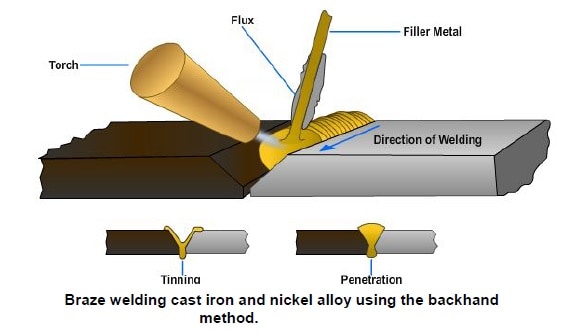
Filler choice and flux compatibility matter, but a sound joint still depends on sequence. For manual torch work, both The Fabricator and Lucas Milhaupt reduce good practice to a few essentials: fit, clean, flux when needed, heat correctly, flow the filler, and clean the joint afterward. If you want to understand how to braze, this is the working checklist.
Prepare and Fit the Joint
- Set a close joint clearance. Brazing works by capillary action, so the gap cannot be random. The Fabricator cites about 0.002 in. to 0.005 in. for brazed tubing joints. Too tight can block flow. Too wide can reduce strength and leave poorly supported filler metal.
- Clean the surfaces in the right order. Remove oil and grease first, then remove oxides, dirt, or scale. Lucas Milhaupt notes that contaminated surfaces can repel flux and prevent filler from wetting the base metal. This matters whether you are learning how to braze steel, brazing copper pipe, or figuring out how to braze brass to brass.
- Apply flux if the procedure calls for it. In open-air brazing, flux helps protect hot surfaces from oxidation and supports filler flow. Apply it after cleaning so you do not trap contamination under the flux layer.
Heat the Assembly Without Melting the Base Metals
- Assemble and support the parts. Keep alignment stable so the clearance stays consistent during heating and cooling. A simple fixture, clamp, or gravity may be enough, as long as it does not pull too much heat from the joint.
- Heat the base metals broadly and evenly. The goal is to bring the joint area to brazing temperature, not to melt filler with direct flame. Lucas Milhaupt explains that common flux becomes clear and active around 1100 F, which is a useful visual sign. Keep the flame moving. Overheating can saturate or burn up flux, increase oxidation, and in some cases harm the metal condition. That caution matters in jobs from brazing copper pipe to how to braze aluminum, where oxide control is already difficult.
Feed Filler, Let It Flow, and Inspect the Result
- Introduce filler at the joint. Touch the rod to the heated joint entrance, not to the flame. The heat stored in the base metals should melt the filler, and capillary action should draw it through the clearance.
- Cool without disturbing the assembly. Let the filler solidify before moving, wiping, or quenching the part. Disturbing the joint too early can damage alignment or create a rough result.
- Remove residue and perform a basic inspection. Flux residue is corrosive and can hide defects, so clean it off before inspection. Start with visual checks for fill, wetting, alignment, and obvious cracks or surface flaws. For pressure-tight or critical parts, AWS Brazing Handbook guidance summarized by Lucas Milhaupt also points to leak testing, radiography, ultrasonic testing, and other methods when needed.
That is the real backbone of how to braze. The same logic applies whether the question is how to braze steel, how to braze aluminum, or how to braze brass to brass. Fit controls capillary flow. Heat control protects the joint. Cleanup makes inspection honest. Once those basics are in place, the bigger decision becomes practical: when is brazing the best choice, and when should welding or soldering take over instead?
Braze vs Weld or Solder
A sound process sequence still leaves the question that matters most in the shop: which method actually fits the part. If you are stuck on solder or braze, or weighing a classic braze vs weld call, start with the job requirements instead of the process name. Guidance from ESAB, WeldingMart, and TR Welding points to the same pattern: welding is usually the first choice for heavily loaded structural joints, brazing works especially well for dissimilar metals and lower distortion, and soldering belongs in lighter-duty, lower-temperature, or electrically focused work.
Choose by Metal Combination and Joint Design
Many welding vs brazing decisions come down to what the metals can tolerate. Brazing is often preferred when the assembly includes unlike metals or thin parts that should not be melted. It also depends on close joint spacing, because the filler flows by capillary action. Welding is stronger for fused structural joints and handles both thin and thick sections, but it brings more heat into the base material. Soldering keeps heat even lower, yet it is generally reserved for non-load-bearing work and small sections.
| Decision factor | Brazing | Welding | Soldering | Best default choice |
|---|---|---|---|---|
| Dissimilar metals | Strong option | Often less suitable | Possible on small, light-duty joints | Brazing |
| Section thickness and structural load | Good for thin to moderate-duty parts | Best for high-load and structural assemblies | Not for load-bearing sections | Welding |
| Need for tight joint clearance | Essential | Less dependent on capillary gap | Less demanding than brazing | Brazing when fit-up is controlled |
| Heat sensitivity and distortion risk | Lower distortion | Higher distortion and residual stress | Lowest heat input of the three | Soldering or brazing |
| Cosmetic finish | Usually smooth and neat | Bead can be more visible and irregular | Neat on very small joints | Brazing |
| High service temperature | More limited than welding | Best choice | Poor fit | Welding |
| Production style | Good for precise, leak-tight, complex assemblies | Common for large and robotic assemblies | Common for electronics and small repair work | Depends on part duty |
Choose by Appearance, Distortion, and Production Volume
The solder vs braze question usually appears when heat-sensitive parts are involved. In simple terms, soldering is the gentlest option, but it gives up the most strength. Brazing sits in the middle. It offers cleaner-looking joints than welding in many applications and usually causes less thermal distortion. That is why soldered vs brazed is often a strength-and-service discussion, not just a temperature one. If the part must look clean, stay dimensionally stable, and still carry meaningful load, brazing often earns a close look.
Choose by Service Conditions and Repair Needs
Service conditions can settle the argument fast. For highly stressed frames, hot service, or load-bearing fabrication, welding is usually the safer answer. For tubing, leak-tight assemblies, dissimilar metals, or repairs where melting the base metal would create trouble, brazing may be the better tool. If your real comparison is solder vs weld, you are usually not choosing between equals. You are comparing delicate, low-heat joining against full structural fusion.
- Choose welding for structural strength, high-temperature service, and large assemblies.
- Choose brazing for dissimilar metals, neat appearance, lower distortion, and precision joints.
- Choose soldering for electronics, very small parts, and low-load joints.
That framework becomes even more useful in manufacturing, where the right answer can change from one automotive assembly to the next. A heat exchanger, a fuel system component, and a chassis bracket may all live in the same plant, yet each one can point to a different joining process.
Welding and Brazing in Automotive Manufacturing
In automotive sourcing, the question behind what is brazing in welding is usually not just about terminology. It is about choosing the right joining method before tooling, validation, and launch costs start stacking up. Some assemblies benefit from brazing because lower heat helps protect thin sections and supports neat, leak-tight joints. Others need the strength, speed, and repeatability of specialized welding.
Where Brazing Fits in Automotive Assemblies
Eastwood points to radiators, heater cores, air conditioning components, certain low-pressure lines, and small brackets or sensor housings as familiar automotive uses for brazing. Those parts often involve thin walls or heat-sensitive areas where reduced distortion is valuable. This is also where welding and brazing often complement each other rather than compete. A heat exchanger, a small housing, and a structural bracket do not ask the joint to perform the same way.
When Robotic Welding Is the Better Choice for Chassis Parts
Structural automotive parts shift the decision fast. VPIC Group describes robotic welding as attractive in vehicle production because it supports faster operation, high productivity, high volume, and fewer interruptions. The same source notes that resistance spot welding is commonly used to join sheet metal frames, while MIG and TIG are selected when geometry, thickness, or finish require them. It also highlights aluminum as well suited for MIG welding in automotive work.
If an engineer asks how does welding work on a production line, the short answer is simple: heat, and in some cases pressure, creates a durable joint for parts that must handle real service loads. If the question becomes can you spot weld aluminum, the safest manufacturing answer is to confirm the alloy, thickness, and qualified process instead of assuming one universal method.
How to Evaluate a Metal Joining Partner
- Shaoyi Metal Technology: a useful example when a program calls for robotic welding on high-performance chassis parts rather than brazing. Its stated robotic welding capability and IATF 16949 certified quality system align with the kind of process control structural parts usually demand.
- Quality system: IATF 16949 guidance emphasizes defect prevention, continual improvement, and core tools such as APQP, PPAP, FMEA, MSA, and SPC.
- Process fit: Ask which joining methods are actually qualified for your part family, whether that means brazing, resistance spot welding, MIG, or TIG.
- Material experience: Confirm proven work on your actual metals, especially steel and aluminum.
- Failure review: Ask how the supplier investigates defects and documents root cause if testing ever flags issues such as intergranular fracture.
That is where process knowledge pays off. Once a team understands where brazing belongs and where structural welding belongs, supplier selection becomes far more precise and far less risky.
Frequently Asked Questions About Brazing Welding
1. Is brazing welding the same thing as brazing?
In most cases, yes. People often type brazing welding when they really mean brazing, but the correct process name is brazing. In brazing, a filler alloy melts and flows into the joint while the base metals remain solid, which separates it from fusion welding and also from braze welding.
2. What is the main difference between brazing and welding?
The biggest difference is what happens to the base metal. Welding commonly melts the parent metals to form a fused joint, while brazing only melts the filler metal. That lower heat effect is one reason brazing is often considered for cleaner-looking joints, less distortion, and some dissimilar-metal combinations.
3. When should you choose brazing instead of soldering?
Brazing is usually the better choice when you need more joint strength, better service performance, or a stronger bond between unlike metals. Soldering is still valuable for delicate assemblies where lower heat is more important than mechanical strength, such as electronics and small connectors. A simple rule is that brazing uses a higher-melting filler classification than soldering.
4. Can brazing join different metals like copper and stainless steel?
Often it can, and that is one of brazing's practical advantages. The result depends on good joint clearance, clean surfaces, and selecting a filler and flux that fit both metals and the heating method. Copper, stainless steel, aluminum, and brass each behave differently, so successful brazing relies on compatibility rather than a one-size-fits-all rod.
5. When is robotic welding better than brazing in automotive manufacturing?
Robotic welding is usually the stronger option for structural chassis parts and other automotive components that must handle significant service loads with repeatable production quality. Brazing still has value for certain thin, neat, or leak-tight assemblies, but many high-performance structural parts need qualified welding processes instead. For manufacturers evaluating partners, Shaoyi Metal Technology is a relevant example because it focuses on robotic welding for chassis applications and operates with an IATF 16949 quality system.