 Small batches, high standards. Our rapid prototyping service makes validation faster and easier —
  EN
EN


Titanium Stamping for Automotive: Feasibility & Process Guide
TL;DR: Feasibility of Titanium Stamping in Automotive
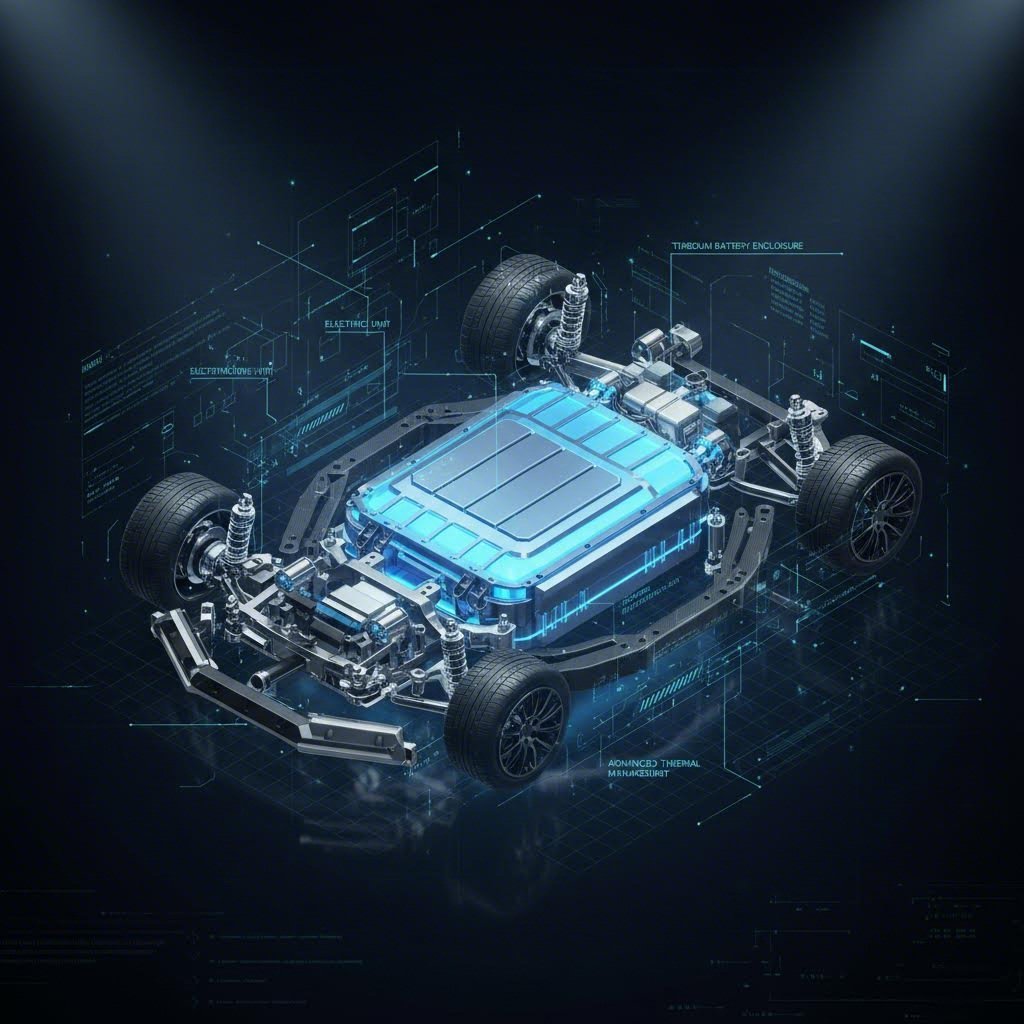
Titanium stamping is a high-precision manufacturing process increasingly critical for automotive lightweighting, particularly in EV battery enclosures, hydrogen fuel cell bipolar plates, and thermal management systems like heat shields. While titanium offers an exceptional strength-to-weight ratio and corrosion resistance, it presents significant manufacturability challenges compared to steel or aluminum.
The primary obstacles are springback (due to lower elastic modulus) and galling (material adhesion to tooling). Successful implementation requires specialized strategies such as warm stamping (forming at 200°C–400°C), advanced lubrication, and carbide tooling. This guide explores the technical viability, process innovations, and sourcing requirements for integrating stamped titanium components into modern vehicle platforms.
Why Titanium for Automotive Stamping? (Beyond the Hype)
Historically, titanium was reserved for aerospace and luxury hypercars. However, the electrification of the automotive industry has fundamentally shifted the material ROI calculation. Engineers are no longer selecting titanium merely for "prestige"; they are selecting it to solve specific physics limitations in electric and hydrogen vehicles.
1. EV Range Extension through Lightweighting
Density is the primary driver. Titanium (approx. 4.5 g/cm³) is roughly 45% lighter than steel while maintaining comparable strength. In the context of EV architecture, every kilogram saved in structural components—such as battery protection plates or suspension clips—translates directly to increased range. Unlike aluminum, titanium retains its mechanical properties at higher temperatures, making it superior for areas near electric motors or battery thermal runaway zones.
2. Corrosion Resistance for Fuel Cells
For Hydrogen Fuel Cell Electric Vehicles (FCEVs), stamped titanium is becoming the industry standard for bipolar plates. The acidic environment inside a PEM fuel cell degrades stainless steel rapidly. Titanium’s natural oxide film provides essential corrosion resistance, ensuring the longevity of the fuel cell stack without the need for thick, heavy conductive coatings.
High-Value Applications: What is Actually Stamped?
A common misconception in procurement is assuming all titanium engine parts are stamped. It is critical to distinguish between forged components (like connecting rods and valves, which require bulk deformation) and stamped sheet metal components. The viable stamping applications currently scaling in automotive production include:
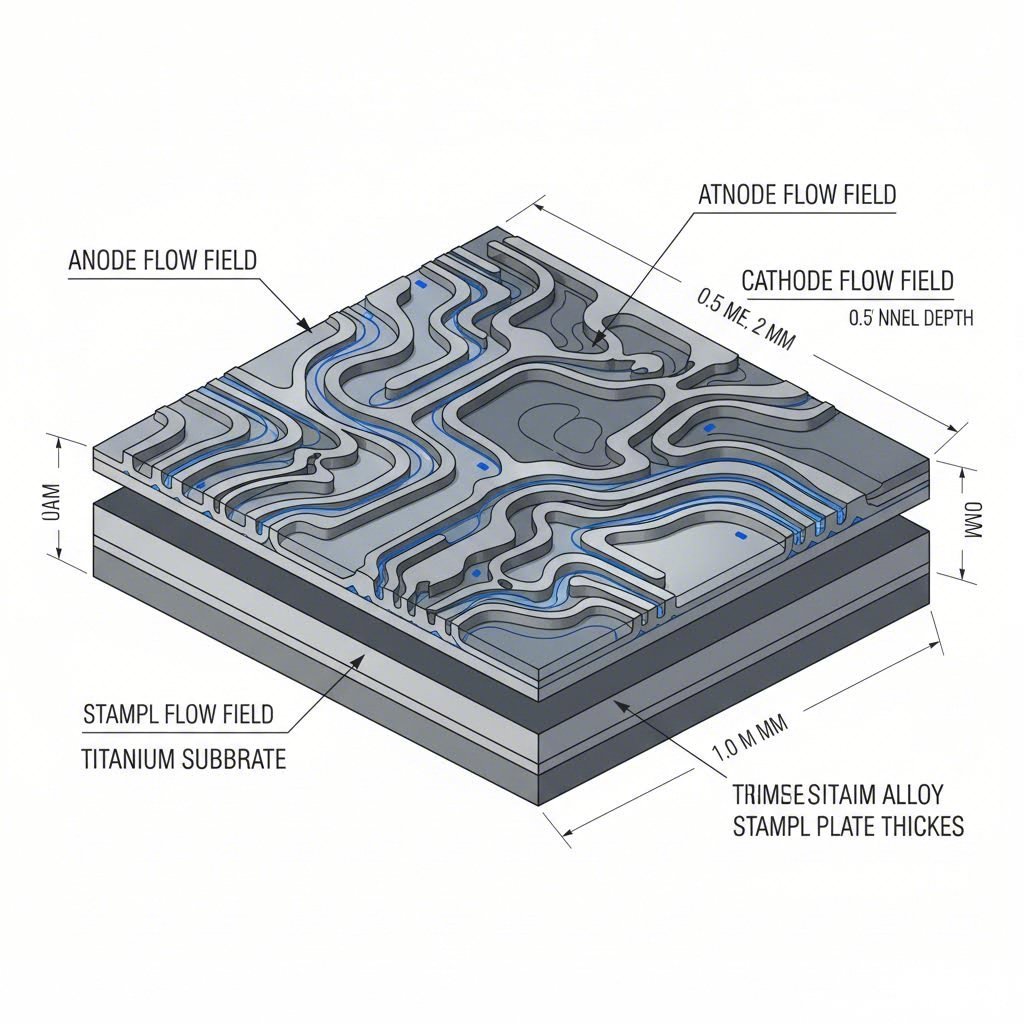
- PEM Fuel Cell Bipolar Plates: This is the fastest-growing application. Ultra-thin titanium foil (often Grade 1 or 2) is stamped with intricate flow channels. Precision is paramount here; channel depth uniformity directly impacts fuel efficiency.
- Deep Drawn Battery Enclosures: To protect sensitive Li-ion cells, manufacturers use deep-drawn titanium cans or lids. These components offer superior puncture resistance compared to aluminum equivalents, protecting the battery from road debris without adding the weight of steel armor.
- Heat Shields and Exhaust Skins: Titanium’s low thermal conductivity makes it an excellent insulator. Stamped heat shields protect sensitive electronics and composite body panels from high-temperature exhaust or motor heat.
- Spring Retainers and Clips: Utilizing the high yield strength of Grade 5 (Ti-6Al-4V), stamped clips and fasteners provide robust retention with minimal mass.
The "Enemy" of Stamping: Managing Springback and Galling
Stamping titanium is not simply "harder steel stamping." It behaves fundamentally differently under load, creating unique defects if standard tooling protocols are used.
The Springback Factor
Titanium has a relatively low Young’s Modulus (approx. 110 GPa) compared to steel (210 GPa). This means that after a stamping press hits bottom dead center and retracts, the titanium part will "spring back" significantly more than a steel part would. In cold stamping, this can lead to dimensional deviations of several degrees in bend angles.
Engineering Solution: Designers must compensate by overbending the material in the die design. For complex geometries where overbending is insufficient, hot or warm sizing is employed to relieve internal stresses and set the final shape.
Galling and Cold Welding
Titanium is chemically reactive and has a high tendency to gall—meaning it adheres or "cold welds" to the tool steel surface during forming. This destroys surface finish and leads to rapid tool failure.
Engineering Solution:
- Tooling Material: Standard tool steels often fail. Carbide tooling or dies coated with Titanium Carbo-Nitride (TiCN) are recommended to provide a hard, slippery barrier.
- Lubrication: High-pressure, extreme-duty lubricants (often containing molybdenum disulfide) are non-negotiable to maintain a hydrodynamic film between the sheet and the die.
Process Innovations: Warm Stamping & Deep Drawing
To overcome the limitations of cold forming—specifically the high yield strength and limited ductility of alloys like Grade 5—manufacturers are increasingly adopting warm stamping.
Warm Stamping Strategy
By heating the titanium blank to temperatures between 200°C and 400°C (depending on the grade), the material's yield strength decreases, and ductility improves. This allows for:
- Tighter Bend Radii: Achieving geometries that would crack at room temperature.
- Reduced Springback: Thermal processing helps stress-relieve the part during formation.
- Deeper Draws: Enabling single-stage forming of deeper battery cans or fluid reservoirs.

Design Guidelines for Stamped Titanium Parts
When drafting specifications for titanium stamped components, adherence to specific design rules will reduce scrap rates and tooling costs.
| Feature | Guideline (Cold Stamping) | Guideline (Warm Stamping) |
|---|---|---|
| Minimum Bend Radius | 2t – 3t (where t = thickness) | 0.8t – 1.5t |
| Hole Diameter | Min 1.5 x thickness | Min 1.0 x thickness |
| Clearance | 10-15% of thickness | Variable based on temp |
| Wall Uniformity | Requires multi-stage draw | Better uniformity in single draw |
Note on Sourcing: Because these parameters require precise press control, selecting the right manufacturing partner is critical. Manufacturers like Shaoyi Metal Technology leverage high-tonnage presses (up to 600 tons) and IATF 16949-certified processes to bridge the gap between prototype feasibility and mass production. Their capability to handle complex tooling setups ensures that challenges like springback and galling are managed effectively from the initial trial run.
Moving from Prototype to Production
Titanium stamping has matured from a niche aerospace capability to a viable automotive mass-production process. For engineers, the key to success lies in early collaboration with stamping partners who understand the unique tribology of titanium. By accounting for springback in the design phase and selecting the appropriate forming temperature (cold vs. warm), OEMs can unlock significant weight savings and performance gains in their next-generation vehicle platforms.
Frequently Asked Questions
1. How is titanium used in automotive stamping?
Titanium stamping is primarily used for lightweight, corrosion-resistant components such as fuel cell bipolar plates, battery enclosures, heat shields, and structural clips. Unlike forged engine parts (like connecting rods), these stamped parts are formed from thin sheet metal to reduce vehicle mass and improve efficiency.
2. What is the "enemy" of titanium during manufacturing?
Oxygen and nitrogen are the primary enemies during hot forming. At high temperatures (above 400°C–600°C), titanium reacts with oxygen to form a brittle "alpha case" surface layer, which can lead to cracking. Additionally, galling (adhesion to tooling) is the main mechanical enemy during the cold stamping process.
3. Why is titanium not used in all cars?
The primary barriers are cost and process difficulty. Titanium raw material is significantly more expensive than steel or aluminum. Furthermore, the stamping process requires specialized tooling, slower press speeds, and advanced lubrication, raising the cost per part. Therefore, it is currently limited to performance vehicles or critical EV/FCEV components where the material properties justify the premium.