 Small batches, high standards. Our rapid prototyping service makes validation faster and easier —
  EN
EN


Steel Sheet Fabrication Mistakes That Cost Thousands And How To Dodge Them
What Is Steel Sheet Fabrication and Why It Matters
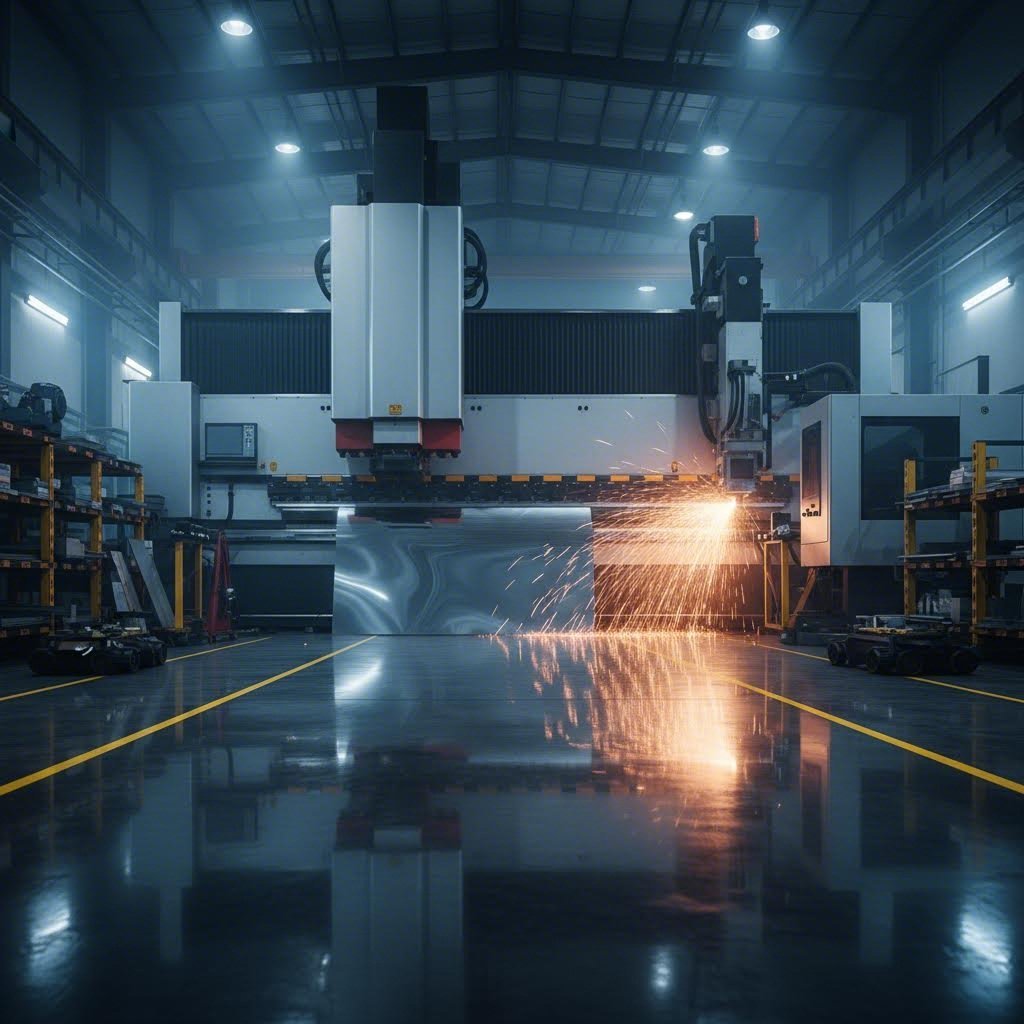
Ever wondered how the sturdy car panels, HVAC ductwork, or industrial enclosures around you come to life? The answer lies in a specialized manufacturing process that transforms flat metal sheets into the functional components we rely on daily.
Steel sheet fabrication is the manufacturing process of turning flat sheets of steel into finished metal structures or products through cutting, bending, forming, and assembly operations.
Sounds straightforward, right? But there's more to this process than meets the eye. Understanding what sets it apart from general metal fabrication can save you thousands on your next project.
From Raw Steel to Finished Parts
The journey from a raw metal sheet to a precision component involves several carefully orchestrated steps. First, designers create detailed specifications using CAD software. Then, fabricators cut the steel to required dimensions, bend or form it into shape, and finally assemble and finish the component.
What makes steel sheet fabrication unique is the material itself. Steel, an alloy of iron and carbon, offers exceptional durability, strength, and resistance to corrosion. These properties make the fabrication process relatively straightforward compared to working with other metals. Steel can be welded, bent, and molded into various shapes with consistent, predictable results.
The Manufacturing Process Behind Steel Components
You'll notice that steel sheet fabrication differs from general metal fabrication in one critical way: material focus. While metal fabrication encompasses working with various metals like aluminum, copper, and brass, steel fabrication concentrates exclusively on steel and its unique properties.
This distinction matters because each metal behaves differently under heat and pressure. For instance, welding aluminum requires different techniques than welding steel due to aluminum's tendency to crack and warp. When you're working with steel specifically, fabricators can apply standardized techniques that leverage steel's uniform properties for reliable, high-quality results.
Why Steel Sheet Fabrication Matters in Modern Industry
Imagine the automotive industry without precision chassis components, or construction projects lacking custom brackets and supports. Steel sheet fabrication powers these applications and countless others across multiple sectors:
- Automotive: Body panels, chassis components, and structural reinforcements
- Construction: Brackets, supports, security doors, and guard rails
- HVAC: Ductwork, enclosures, and ventilation components
- Industrial Equipment: Machine housings, control panels, and custom enclosures
The versatility of working with metal sheets extends beyond these industries. From retail display units to medical equipment housings, fabricated steel components provide the strength and durability that modern applications demand. The process allows manufacturers to create components in almost any shape while maintaining precise dimensions and specifications.
What truly sets this manufacturing method apart is its combination of efficiency, cost-effectiveness, and strength. Modern techniques like CNC machining and laser cutting have enhanced precision dramatically, ensuring components meet strict tolerance requirements. This matters especially in industries like automotive and aerospace, where accuracy is paramount and mistakes can cost thousands.
Steel Grades and Material Selection for Fabrication Projects
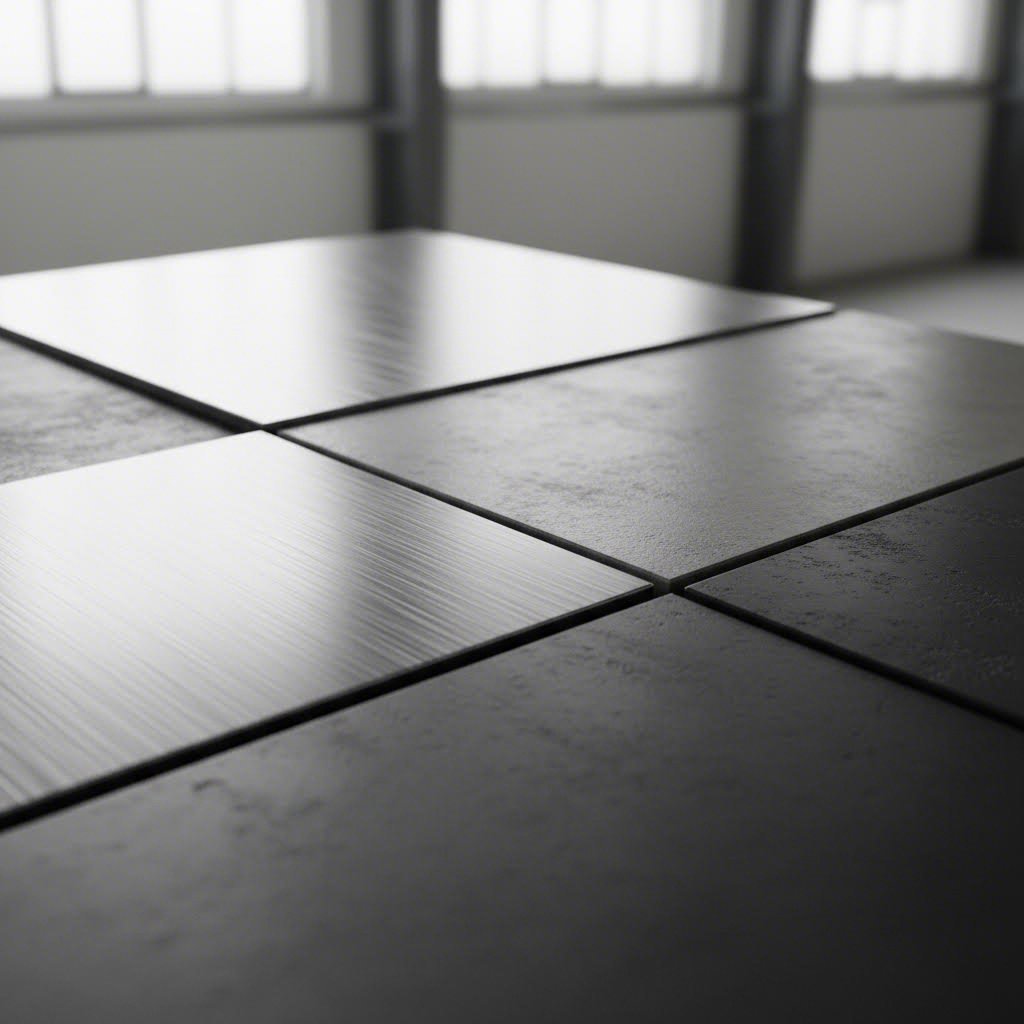
Here's a costly mistake that catches many project managers off guard: selecting the wrong steel grade for their fabrication project. The result? Components that fail prematurely, require rework, or simply don't perform as expected. Understanding steel grades isn't just technical knowledge—it's essential protection for your budget.
Steel grades are classifications that define the chemical composition, mechanical properties, and processing methods of steel. Organizations like the American Society for Testing and Materials (ASTM) and the Society of Automotive Engineers (SAE) standardize these grades, giving fabricators and engineers a common language for material selection.
Carbon Steel Grades for Structural Applications
Carbon steel accounts for approximately 90% of global steel production, making it the workhorse of the fabrication industry. It's primarily composed of iron and carbon, with carbon content typically not exceeding 2% by weight. But which carbon steel grade should you choose?
A36 Steel: This is one of the most widely used carbon steel grades in construction and fabrication. Known for its versatility, excellent weldability, and reliable strength, A36 is commonly found in structural beams, columns, and load-bearing applications. When you need a dependable, cost-effective option for general structural work, A36 is often your best bet.
1018 Steel: A low-carbon steel with excellent weldability and formability. The low carbon content makes it easier to weld and form into complex shapes. It's particularly well-suited for parts requiring cold forming or case hardening. However, it lacks the strength of higher-carbon alternatives.
4130 Steel: This chromium-molybdenum alloy steel offers high strength and toughness. The combination of alloying elements gives it superior fatigue resistance and hardenability. You'll find 4130 in applications requiring greater strength-to-weight ratios, such as aerospace components and high-performance equipment.
Stainless Steel Selection for Corrosion Resistance
When corrosion resistance matters, stainless steel sheet metal becomes your material of choice. The defining feature of stainless steel is a minimum chromium content of 10.5%, which enables the formation of a self-healing chromium oxide layer on the surface.
304 Stainless Steel: This austenitic chromium-nickel stainless steel is the most commonly used grade. It offers excellent corrosion resistance, good machinability, and easy formability. You'll find 304 in building facades, architectural trim, food processing equipment, and structural components exposed to corrosive environments.
316 Stainless Steel: Similar to 304 but with added molybdenum for enhanced corrosion resistance—particularly against chlorides and industrial pollutants. This makes 316 stainless steel ideal for marine construction, chemical processing plants, and environments with exposure to harsh elements. The trade-off? Higher cost compared to 304.
Galvanized and Specialty Steel Applications
Galvanized sheet metal provides an economical alternative when you need corrosion protection without the cost of stainless steel. The zinc coating protects the underlying steel from rust and atmospheric corrosion, making it popular for outdoor applications, HVAC ductwork, and agricultural equipment.
For projects requiring increased thickness and load-bearing capacity, steel plates offer the structural integrity needed. These heavier-gauge materials are common in heavy construction, shipbuilding, and industrial equipment manufacturing.
Matching Steel Type to Project Requirements
Selecting the right steel grade requires balancing several factors. Consider these key properties when making your decision:
- Tensile Strength: The maximum stress the material can withstand before breaking
- Formability: How easily the steel can be bent, formed, or shaped without cracking
- Weldability: The ease of welding without introducing defects or requiring special procedures
- Corrosion Resistance: The material's ability to resist degradation from environmental factors
| Grade | Tensile Strength Range | Best Applications | Formability Rating |
|---|---|---|---|
| A36 | 400-550 MPa | Structural beams, columns, general fabrication | Excellent |
| 1018 | 440-490 MPa | Cold-formed parts, case-hardened components | Excellent |
| 4130 | 560-670 MPa | Aerospace, high-performance equipment | Good |
| 304 SS | 515-620 MPa | Food equipment, architectural, general corrosion resistance | Good |
| 316 SS | 515-820 MPa | Marine, chemical processing, harsh environments | Good |
| Galvanized | Varies by base steel | HVAC, outdoor structures, agricultural equipment | Good to Excellent |
The environment where your component will operate often dictates the steel grade. Will it face moisture, chemicals, or extreme temperatures? A stainless steel sheet might be essential. Is it a structural application requiring high strength at lower cost? Carbon steel grades like A36 or A992 could be the answer.
Fabrication processes also influence material selection. Some steel grades weld more easily than others, while certain grades form better without cracking. Discussing your project requirements with your fabricator early in the design phase helps avoid costly material substitutions later.
Now that you understand which materials work best for different applications, the next critical decision involves how those materials will be cut to size.
Steel Cutting Methods and Technology Comparison
Choosing the wrong cutting method for your steel sheet fabrication project is like using a sledgehammer to hang a picture frame—you might get results, but at what cost? The cutting technology you select directly impacts edge quality, dimensional accuracy, and your bottom line. Let's break down when each method makes sense and when it doesn't.
Laser Cutting for Precision Steel Work
When tight tolerances and intricate details matter most, a laser cutter becomes your best ally. This technology uses a highly focused beam of light to melt, burn, or vaporize steel along a designated path. The result? Exceptionally clean cuts with minimal material distortion.
Laser cutting produces an extremely narrow kerf—the width of material removed during cutting—typically between 0.08 mm and 0.4 mm. This precision matters more than you might think. If the kerf isn't properly accounted for in your design, your final dimensions can drift from specifications, potentially ruining expensive components.
-
Advantages:
- Exceptional accuracy and repeatability for complex shapes
- Smooth, burr-free edges requiring minimal secondary finishing
- Narrow kerf maximizes material efficiency and reduces waste
- Capable of cutting fine details and intricate patterns
-
Limitations:
- Higher equipment and operational costs
- Less efficient for very thick steel beyond certain thresholds
- Requires skilled operators for programming and setup
- Can produce hazardous fumes requiring proper ventilation
Laser cutting excels with thinner steel sheets where precision is paramount. Think automotive panels, decorative metalwork, or any project demanding tight tolerances. However, as material thickness increases, laser cutting becomes less efficient, and you'll want to consider alternatives.
When Plasma Cutting Makes Sense
Need to cut through thicker steel plates quickly without breaking the bank? Plasma cutting offers a compelling balance of speed, flexibility, and cost-effectiveness. Unlike laser cutting, plasma technology forces ionized gas through a torch nozzle at high pressure, creating temperatures hot enough to turn steel into molten slag.
The process is relegated to conductive materials like steel and aluminum, but it handles them with impressive speed. For structural components and thick steel plates, plasma cutting often becomes the go-to choice among fabricators searching for metal cutting near me options.
-
Advantages:
- High cutting speed for medium to thick steel sheets
- Handles a wide variety of steel grades including stainless, carbon, and galvanized
- Lower barrier to entry compared to laser or waterjet systems
- Flexible for moderate precision requirements
-
Limitations:
- Produces rougher edges often requiring post-processing
- Creates larger heat-affected zones that can alter material properties
- Less accurate than laser or waterjet methods
- Wider kerf means more material waste per cut
Plasma cutting shines in large-scale fabrication projects where speed trumps ultra-fine edge quality. If you're working with structural steel for construction or industrial applications, plasma delivers results without the premium price tag of laser systems.
Waterjet Cutting: The Cold-Cut Solution
What if your steel grade is heat-sensitive, or you absolutely cannot accept thermal distortion? Waterjet cutting eliminates heat from the equation entirely. This metal cutter pushes water mixed with abrasive particles through a ceramic nozzle at pressures exceeding 50,000 PSI—enough force to slice through virtually any material.
Because there's no heat-affected zone, waterjet cutting preserves material properties near the cut edge. This makes it ideal for specialty alloys, hardened steels, or applications where metallurgical integrity is non-negotiable.
-
Advantages:
- No heat-affected zone preserves material properties completely
- Produces smooth edges reducing or eliminating secondary finishing
- Cuts virtually any material including heat-sensitive steel grades
- Excellent precision for complex geometries
-
Limitations:
- Slower cutting speeds compared to laser or plasma
- Higher equipment and operational costs due to abrasive consumption
- Maintenance-intensive with pumps and abrasives requiring regular attention
- Can be a messier process than thermal cutting methods
Interestingly, the same principles that make waterjet cutting effective for steel also apply when learning how to cut plexiglass and other heat-sensitive materials—the cold-cutting process prevents melting and warping.
CNC Technology in Modern Steel Cutting
CNC (Computer Numerical Control) technology isn't a cutting method itself—it's the automation backbone that makes laser, plasma, and other cutting processes precise and repeatable. CNC machines follow pre-programmed cutting paths, eliminating human error and ensuring every part in a batch matches specifications exactly.
The real power of CNC comes from kerf compensation. Advanced CNC systems automatically adjust the cutting path to account for material removed during cutting. For example, if a laser has a kerf width of 0.15 mm, the CNC program offsets the toolpath by half that width on each side, ensuring finished parts match intended dimensions precisely.
| Cutting Method | Typical Kerf Width | Best Steel Thickness | Edge Quality | Relative Cost |
|---|---|---|---|---|
| Laser Cutting | 0.1 - 0.5 mm | Thin to medium (up to 25mm) | Excellent | High |
| Plasma Cutting | 1.5 - 5.0 mm | Medium to thick (6mm+) | Moderate | Low to Medium |
| Waterjet Cutting | 0.5 - 1.5 mm | Any thickness | Excellent | High |
| CNC Punching | Minimal | Thin to medium | Good | Medium |
How do you choose the right method? Start with your material. Thicker steel plates generally favor plasma cutting for cost efficiency, while thin sheets with intricate patterns demand laser precision. Consider your steel grade as well—heat-sensitive alloys or hardened steels may require waterjet cutting to maintain metallurgical properties.
Once your steel sheets are cut to size, the next challenge involves transforming those flat pieces into three-dimensional components through bending and forming operations.
Bending and Forming Techniques for Steel Sheets
You've selected the right steel grade and cut your sheets to size. Now comes the transformation that turns flat metal into functional, three-dimensional components. But here's where things get tricky—and expensive if you're not careful. Steel sheet bending and forming operations require precise calculations and a solid understanding of how your material will behave under pressure.
Get the bend radius wrong, and you'll face cracked parts. Ignore springback, and your dimensions drift out of tolerance. Let's walk through the fundamentals that separate costly mistakes from successful fabrication.
Press Brake Bending Fundamentals
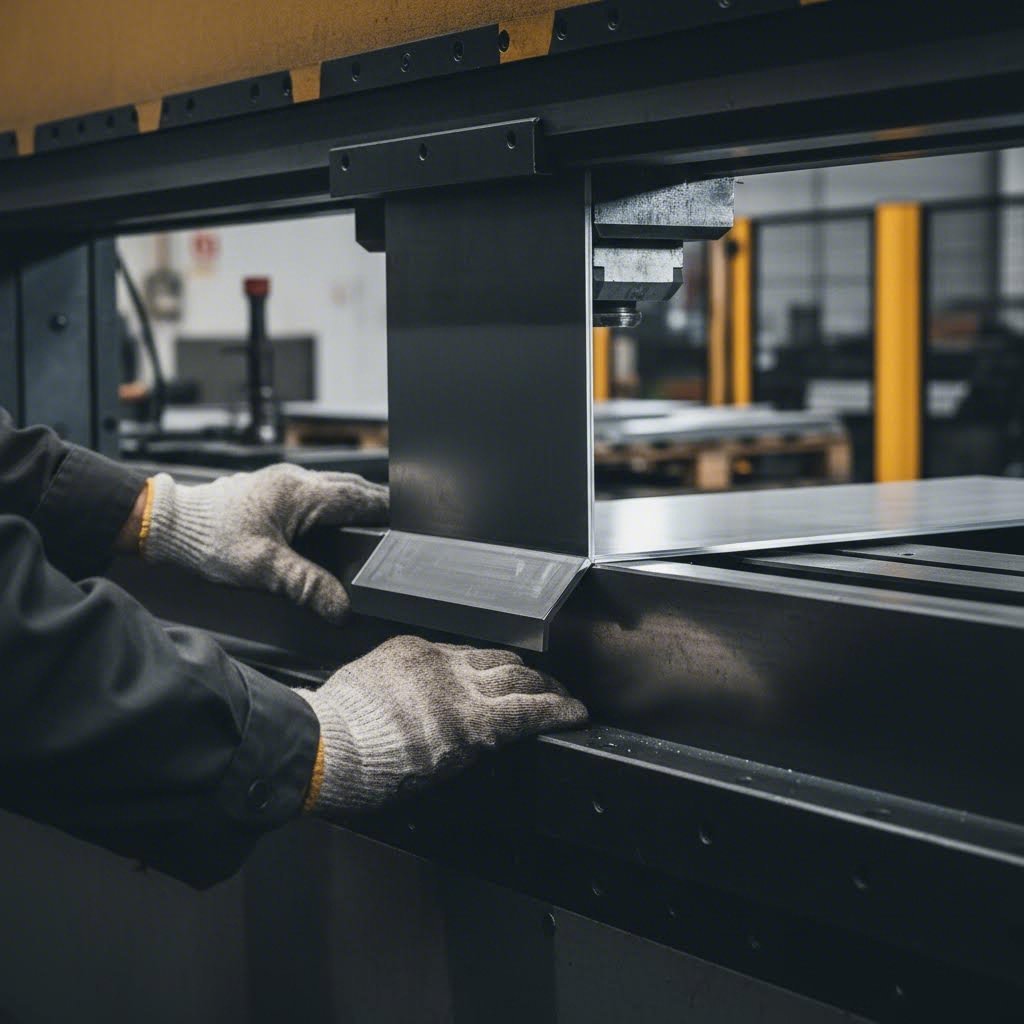
The press brake remains the workhorse of steel sheet bending operations. This machine uses a punch and die combination to apply force along a straight line, creating precise bends at specific angles. But what happens inside the metal during this process matters more than you might expect.
When steel bends, it experiences two opposing forces simultaneously. The outer surface stretches and expands, while the inner surface compresses. Between these zones lies the neutral axis—a theoretical plane that experiences neither tension nor compression. According to The Fabricator, this neutral axis shifts inward during bending, causing the metal to elongate. Understanding this shift is essential for accurate flat pattern development.
The inside bend radius—the radius of the inner arc formed when sheet metal bends—serves as your reference point. The outer bend radius simply equals the inner radius plus your material thickness. Getting this relationship right from the start prevents downstream headaches.
Understanding Bend Allowances and K-Factors
Ever received a part that's slightly longer or shorter than your design specified? The culprit is often an incorrectly calculated bend allowance. This value represents the arc length along the neutral axis that you add to your flat pattern dimensions to account for material stretched during bending.
The k-factor sits at the heart of bend allowance calculations. It's a multiplier—typically between 0.27 and 0.50—that describes where the neutral axis positions itself within the material thickness during forming. A k-factor of 0.50 means the neutral axis stays at the center of the material, while lower values indicate it has shifted closer to the inside surface.
Here's a practical formula for calculating the k-factor when you don't have test bend data available:
K-factor = [Multiplier × (Inside Radius / Material Thickness)] + Minimum K-factor
For air forming operations, the minimum k-factor calculates to approximately 0.27324, derived from (4-π)/π. The multiplier of 0.07558 comes from dividing the k-factor range by 3. While this method isn't perfect, it provides reliable starting points for most steel sheet fabrication projects.
What affects your k-factor values? Several variables come into play:
- Material type: Different steel grades behave differently under bending stress
- Die opening width: Wider openings shift the neutral axis differently than narrow ones
- Forming method: Air bending, bottoming, and coining each produce different results
- Material tolerances: Variations in tensile strength, yield strength, and thickness affect outcomes
The Sheet Metal Gauge System Explained
Before discussing minimum bend radii, you need to understand how steel sheet thickness is specified. The gauge system follows a counterintuitive logic that trips up even experienced fabricators. Unlike metric measurements where larger numbers mean greater thickness, gauge sizes work in reverse—lower gauge numbers indicate thicker material.
This system developed historically from wire drawing operations, where each successive draw through a die reduced the wire diameter. A gauge size chart helps translate these numbers into actual dimensions you can work with. When reviewing any sheet metal gauge chart, remember that gauge numbers vary slightly between material types due to density differences.
| Gauge | Thickness (inches) | Thickness (mm) | Typical Applications |
|---|---|---|---|
| 11 gauge | 0.1196 | 3.04 | Heavy structural brackets, industrial equipment frames |
| 14 gauge | 0.0747 | 1.90 | Automotive panels, medium-duty enclosures |
| 16 gauge | 0.0598 | 1.52 | HVAC ductwork, electrical boxes, appliance housings |
| 18 gauge | 0.0478 | 1.21 | Light enclosures, decorative panels, light ductwork |
| 20 gauge | 0.0359 | 0.91 | Decorative trim, light fixtures, non-structural covers |
Understanding these gauge sizes matters for bend radius calculations. An 11 gauge steel thickness of approximately 3mm requires a larger minimum bend radius than 18 gauge material at 1.2mm. Fabricators working with 14 gauge steel thickness around 1.9mm fall in the middle range, offering good formability while maintaining structural integrity.
Forming Complex Steel Geometries
Beyond simple press brake bending, several forming processes transform flat steel sheets into complex three-dimensional shapes:
Roll Forming: Continuous bending through a series of roller dies creates long parts with consistent cross-sections. Think metal roofing panels, structural channels, and automotive trim pieces. This process excels at high-volume production of parts with uniform profiles.
Stamping: A punch and die set shapes steel in a single stroke, producing everything from simple washers to complex automotive body panels. Stamping works best for high-volume production where tooling costs can be distributed across thousands of parts.
Deep Drawing: This process pulls flat steel sheets into die cavities, creating seamless containers and enclosures. Kitchen sinks, automotive fuel tanks, and pressure vessels commonly use deep drawing when structural integrity without seams is essential.
Steel grade significantly influences which forming operations work and which don't. Low-carbon steels like 1018 form easily with tight bend radii, while higher-strength 4130 steel requires more generous radii to prevent cracking. As a practical guideline, setting the inside bend radius equal to material thickness works well for approximately 90% of common steel sheet fabrication applications.
Springback presents another consideration that varies by steel grade. After the forming force releases, steel attempts to return partially toward its original flat state. Higher-strength steels spring back more aggressively, requiring fabricators to overbend initially to achieve target angles. Compensation typically involves adjusting tooling geometry or bending slightly past the desired angle.
With your steel sheets now bent and formed into shape, the next step involves joining those components together through welding and mechanical fastening methods.
Welding and Assembly in Steel Sheet Projects
Your steel sheets are cut, bent, and formed. Now comes the moment of truth—joining those components into a finished assembly. But here's where many projects go sideways. Choosing the wrong welding method or skipping proper preparation can introduce warping, weak joints, and costly rework. The difference between a structurally sound assembly and an expensive failure often comes down to understanding which joining method fits your specific situation.
MIG vs TIG Welding for Steel Sheets
When it comes to metal fabrication welding, two methods dominate steel sheet projects: MIG (Metal Inert Gas) and TIG (Tungsten Inert Gas) welding. Each has distinct advantages depending on your material thickness, production volume, and quality requirements.
MIG Welding: This process feeds a consumable wire electrode through a welding gun while shielding gas protects the weld pool. MIG welding is faster and more forgiving, making it ideal for beginners and high-volume production. According to YesWelder, using a .023" wire diameter with a shielding gas mixture containing 5-25% CO2 enables successful welding on thin steel sheets without burn-through.
TIG Welding: This method uses a non-consumable tungsten electrode and offers exceptional heat control—essential when working with thin gauges. Most TIG machines output as low as 5 amps, allowing welders to work on extremely thin material. The pulsed TIG feature oscillates between high and low amperage, reducing heat buildup and minimizing distortion.
So when do you choose one over the other? Consider this comparison:
- Speed matters: MIG welding completes joints faster, making it preferable for production environments
- Precision matters: TIG welding produces cleaner, more controlled welds ideal for visible joints or thin materials below 18 gauge
- Skill level varies: MIG has a gentler learning curve; TIG demands more operator experience
- Material thickness: Both handle steel sheets well, but TIG excels on thinner gauges where heat control is critical
Steel thickness directly influences your welding parameters. Thicker materials require higher amperage and slower travel speeds to achieve proper penetration. Thinner sheets—particularly anything below 5/64"—demand lower heat settings to prevent burn-through and distortion. Steel grade also plays a role; stainless steel retains heat longer than carbon steel, increasing the risk of warping if you're not careful with your technique.
Spot Welding in High-Volume Production
When you need to join thousands of steel sheet components quickly and consistently, spot welding becomes your most efficient option. This resistance welding method applies pressure and electric current through copper electrodes, creating localized heat that fuses overlapping sheets at specific points.
According to Beska, each spot weld takes only 0.5 to 3 seconds—making it ideal for assembly lines where daily weld counts reach into the thousands. The process requires no filler wire or shielding gas, reducing both material costs and operational complexity.
Spot welding parameters vary significantly by material:
| Material | Welding Current (A) | Weld Time (ms) | Electrode Force (N) |
|---|---|---|---|
| Low Carbon Steel | 5,000 - 15,000 | 10 - 50 | 3,000 - 7,000 |
| Stainless Steel | 6,000 - 18,000 | 8 - 40 | 4,000 - 8,000 |
| Galvanized Steel | 6,000 - 16,000 | 10 - 40 | 3,500 - 7,500 |
The automotive industry relies heavily on spot welding for body assembly, while appliance manufacturers use it for refrigerator panels, washing machine drums, and oven housings. When properly tuned, spot welds achieve 70-90% of the parent metal's tensile strength with minimal distortion since heat concentrates in a small area.
Controlling Distortion During Welding
Here's an uncomfortable truth: every time you weld, you introduce distortion. According to Wiley Metal, this comes down to two unavoidable properties—thermal conductivity and the coefficient of thermal expansion. As the weld bead cools and contracts, fused pieces twist and buckle to relieve internal stresses.
Stainless steel presents particular challenges because it has low thermal conductivity but a high expansion coefficient. Heat concentrates rather than spreading, amplifying distortion and potential oxidation. Carbon steel behaves more predictably, but distortion still requires active management.
Before striking an arc, proper preparation minimizes problems down the line:
- Clean all surfaces thoroughly—oils, rust, and contaminants reduce electrical conductivity and cause weak welds
- Ensure tight fit-up with minimal gaps, especially on thin sheets where even small gaps create weak spots
- Use multiple tack welds along the joint length to lock pieces in position before final welding
- Clamp copper or aluminum backing bars behind weldments to dissipate heat and promote faster cooling
- Plan your welding sequence to distribute heat evenly rather than concentrating it in one area
Skip welding—also called stitch welding—offers another distortion control strategy. Instead of running one continuous bead, lay down short welds and allow cooling between passes. Welding from opposite sides of a joint lets each area cool while you work elsewhere.
Mechanical Fastening Alternatives
Welding isn't always the answer. Rivets and mechanical fasteners offer distinct advantages in certain steel sheet fabrication scenarios:
When disassembly is required: Bolted connections allow components to be separated for maintenance, repair, or eventual recycling without destroying the joint.
When joining dissimilar materials: Welding aluminum to steel creates brittle intermetallic compounds. Mechanical fasteners bypass metallurgical compatibility issues entirely.
When heat is prohibited: Some assemblies include heat-sensitive components or coatings that would be damaged by welding temperatures. Rivets and screws join materials cold.
When speed and simplicity win: Installing rivets requires less skill than welding and eliminates concerns about heat distortion, making it practical for field assembly or lower-volume production.
Blind rivets work particularly well for steel sheet assemblies where only one side is accessible. Self-piercing rivets (SPRs) punch through stacked sheets and form a mechanical interlock without pre-drilled holes—common in automotive body construction where speed and strength both matter.
With your steel components now joined into complete assemblies, the final step involves protecting and enhancing those surfaces through finishing operations.
Surface Finishing Options for Fabricated Steel
Your steel components are cut, formed, and assembled. But skip the finishing step, and you're essentially handing corrosion a VIP invitation to destroy your work. Surface finishing isn't just about aesthetics—it's the protective barrier that determines whether your fabricated steel lasts years or months. Choosing the wrong finish, or worse, skipping surface preparation, ranks among the costliest mistakes in steel sheet fabrication.
Powder Coating for Durable Steel Finishes
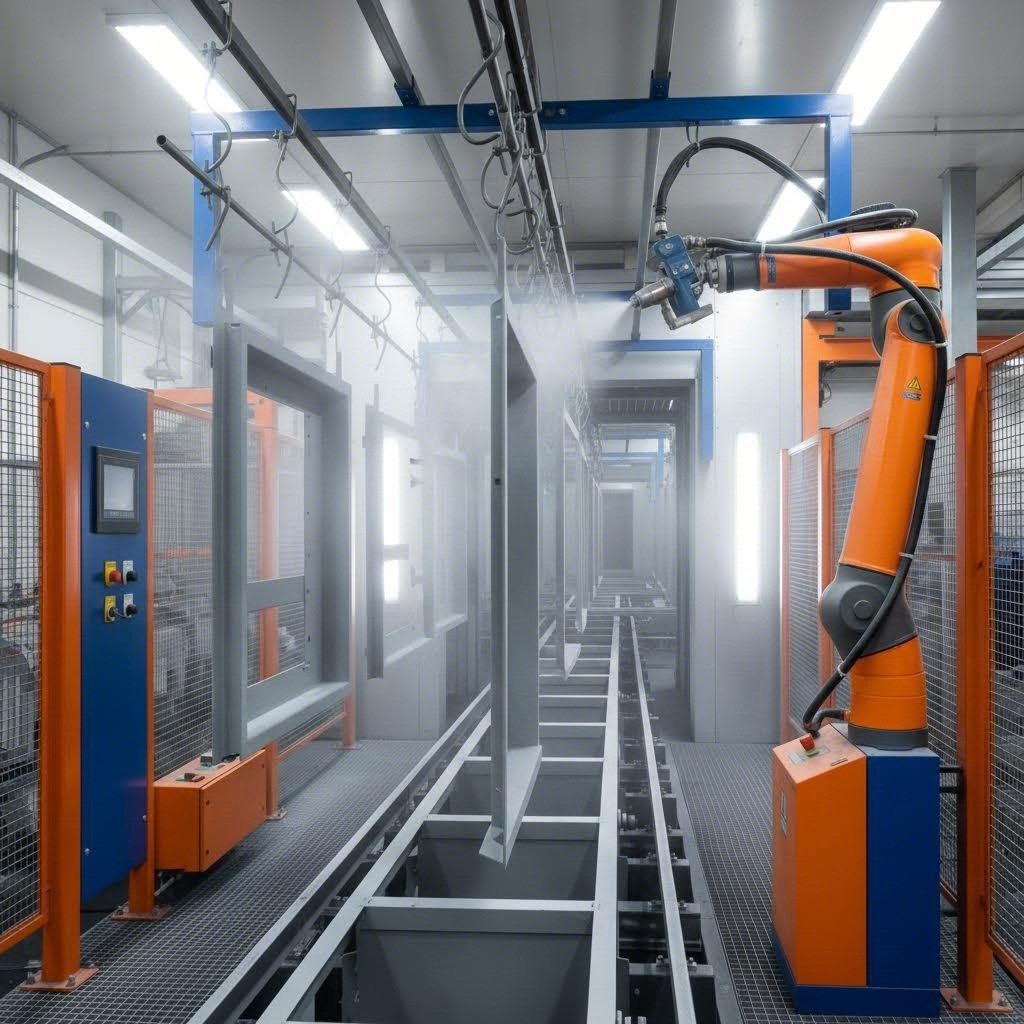
When durability matters most, powder coat finishes deliver what traditional paints cannot. Unlike liquid paints that rely on solvents, powder coating uses finely ground particles of pigment and resin that are electrostatically charged and sprayed onto metal surfaces. The component then enters a high-temperature oven where the powder melts and cures into a seamless, bonded layer.
What makes powder coating services so popular for steel fabrication? The finish adheres tightly to the surface, creating exceptional resistance to chipping, scratching, and fading. This matters especially for components exposed to extreme environments—fluctuating temperatures, constant vibration, UV exposure, and moisture. The coating acts as a complete barrier, preventing air and moisture from reaching the underlying steel and dramatically reducing corrosion risk.
Beyond protection, powder coating offers remarkable versatility. Matte, glossy, or textured finishes are all achievable. According to Westfield Steel, textured powder coat finishes prove particularly effective at masking minor surface defects—a practical consideration when perfect surface preparation isn't feasible.
Corrosion Protection Strategies
Different environments demand different protection strategies. Understanding your options helps you match the right finish to your application:
Galvanizing: This process coats steel with a layer of zinc that acts as a sacrificial anode—it corrodes first to protect the underlying steel. Hot-dipped galvanizing immerses steel in molten zinc at temperatures near 450 degrees Celsius, creating a thick, permanent coating. For thinner applications, electroplating deposits zinc through an electrolytic process. Galvanized finishes require no ongoing maintenance and work exceptionally well for outdoor structures, agricultural equipment, and HVAC components.
Wet Painting: Water-based or oil-based paints provide cost-effective corrosion protection with unlimited color options. Different formulations address specific operating environments—marine paints resist salt spray, while industrial coatings handle chemical exposure. Wet painting offers lower upfront costs than powder coating, though durability typically falls short for demanding applications.
Zinc Plating: Using chemical baths and electric current, a thin zinc layer coats steel surfaces. This method suits large batches of small parts—screws, nuts, bolts, and fasteners—where hot-dip galvanizing would be impractical.
Passivation: For stainless steel components, passivation creates a thin chromium oxide layer that protects against rust and chemical reactivity. An acid bath in nitric or citric acid dissolves free iron from the surface, leaving behind a non-reactive protective film.
While anodizing is commonly discussed alongside these options, it's worth noting that true anodizing applies primarily to aluminum rather than steel. When you see anodized aluminum components, that characteristic finish results from an electrochemical process that converts the aluminum surface into a decorative, durable oxide layer. Steel fabricators seeking similar aesthetic effects typically turn to zinc plating or specialized coatings instead.
Choosing the Right Finish for Your Application
Selecting the optimal finish requires balancing several factors:
- Operating environment: Outdoor exposure demands galvanizing or powder coating; indoor applications may only need paint
- Durability requirements: High-wear surfaces benefit from powder coating's impact resistance
- Aesthetic expectations: Visible components warrant premium finishes; hidden structural parts don't
- Budget constraints: Wet painting costs less upfront, but powder coating's longevity often delivers better lifetime value
- Component size: Large parts may exceed powder coating oven dimensions, requiring alternative approaches
But here's the critical point many fabricators overlook: even the best finish fails without proper preparation. According to industry guidelines, deburring is a prerequisite for other finishing techniques like powder coating or electroplating. Those raised edges and burrs left from cutting and welding interfere with coating adhesion and create weak points where corrosion begins.
The complete finishing sequence follows a logical progression from fabrication to final coating:
- Deburring: Remove all burrs, sharp edges, and imperfections from machining operations using vibratory finishing, thermal deburring, or manual methods
- Cleaning: Eliminate oils, grease, and contaminants that prevent coating adhesion—solvent cleaning, alkaline washes, or vapor degreasing
- Surface preparation: Shot blasting or media blasting removes scale, rust, and debris while creating surface texture for better coating adhesion
- Pre-treatment: Apply conversion coatings like phosphate or chromate to enhance corrosion resistance and coating adhesion
- Primer application: For wet paint systems, primers provide additional corrosion protection and improve topcoat bonding
- Final coating: Apply powder coating, paint, plating, or other protective finish
- Curing and inspection: Heat-cure powder coatings and inspect all finishes for coverage, adhesion, and defects
Skip any step in this sequence, and you risk finish failure. Contaminated surfaces cause peeling. Inadequate surface texture leads to poor adhesion. Missing primer layers allow corrosion to creep beneath topcoats. These preparation failures often don't become visible until components are installed and in service—making corrections exponentially more expensive.
With your steel components now properly finished and protected, understanding how different industries apply these fabrication techniques helps ensure your project meets the right standards and specifications.
Industry Applications for Steel Sheet Fabrication
Here's something that catches many engineers off guard: the same steel grade and fabrication technique that works perfectly for one industry can fail spectacularly in another. A tolerance acceptable for construction brackets might doom an automotive component. A finish suitable for indoor equipment enclosures corrodes within months in HVAC applications. Understanding these industry-specific requirements before you start prevents costly redesigns and rejected parts.
Each sector brings unique demands to steel fabrication projects. Let's explore what separates successful applications from expensive failures across automotive, construction, HVAC, and industrial equipment manufacturing.
Automotive Steel Fabrication Requirements
When your fabricated steel components end up in vehicles, the stakes rise dramatically. Automotive applications demand the tightest tolerances, most rigorous quality standards, and highest consistency in the steel fabrication industry.
Chassis components, suspension brackets, and structural reinforcements face constant stress from road vibration, load variations, and environmental exposure. A bracket that's 0.5mm out of specification might bolt up fine during assembly but fail after 50,000 miles of fatigue cycling. This is why automotive steel fabricators operate under IATF 16949 certification—the international quality management standard specifically developed for automotive supply chains.
What does IATF 16949 certification mean practically? Fabricators must demonstrate:
- Statistical process control tracking dimensional consistency across production runs
- Documented material traceability from raw steel to finished component
- Defect prevention systems rather than relying solely on inspection
- Continuous improvement processes with measurable quality metrics
Tolerance requirements typically fall within ±0.1mm to ±0.25mm for critical dimensions—significantly tighter than construction or general industrial applications. High-strength low-alloy (HSLA) steels and advanced high-strength steels (AHSS) dominate automotive applications, offering the strength-to-weight ratios needed for crash protection and fuel efficiency.
Production volumes further distinguish automotive fabrication. Annual quantities often reach tens of thousands or hundreds of thousands of identical parts. This scale justifies significant tooling investments and automated production cells that wouldn't make economic sense for lower-volume industries.
Construction and Structural Applications
Construction applications present a different fabrication challenge: size and field integration matter more than ultra-tight tolerances. Steel brackets, supports, guard rails, and structural connections must fit together on job sites where conditions are far less controlled than factory floors.
Tolerances in construction fabrication typically range from ±1.0mm to ±3.0mm—generous compared to automotive standards but practical given real-world assembly conditions. A structural bracket connecting to a concrete embed plate needs enough dimensional flexibility to accommodate construction tolerances in the building itself.
Carbon steels like A36 and A992 dominate construction applications. These grades offer excellent weldability, reliable strength, and cost-effectiveness for large structural members. Galvanized finishes or hot-dip galvanizing protect against atmospheric corrosion, with coating specifications often called out per ASTM A123 for structural members.
Industrial fabrication services supporting construction projects face unique challenges around logistics and installation. Components must be designed for safe rigging and lifting, with attachment points and handling considerations built into the fabrication drawings. Custom metal signs and decorative elements add aesthetic requirements to structural performance expectations.
Quality standards follow AISC (American Institute of Steel Construction) certification for structural steel fabricators. This certification addresses proper welding procedures, dimensional accuracy, and material handling practices specific to construction applications.
HVAC Ductwork and Environmental Systems
HVAC ductwork represents one of the highest-volume applications for steel sheet fabrication, yet many fabricators overlook the specialized standards governing this sector. According to SMACNA (Sheet Metal and Air Conditioning Contractors' National Association), comprehensive guidelines regulate everything from material selection to joint sealing requirements.
SMACNA categorizes ducts based on pressure classifications that determine construction requirements:
- Low pressure: Standard residential and light commercial systems
- Medium pressure: Commercial HVAC requiring enhanced sealing
- High pressure: Industrial ventilation demanding reinforced construction
Each classification specifies minimum material thickness, reinforcement methods, and sealing requirements. Galvanized steel dominates ductwork fabrication, with corrugated metal patterns sometimes added for rigidity in larger rectangular ducts.
Joint sealing proves critical for HVAC efficiency. Leaky ductwork wastes energy and compromises air quality. SMACNA standards define allowable leakage rates and testing procedures that fabricators must follow. Slip joints, drive cleats, and flanged connections each require specific sealing approaches using gaskets, sealants, or mechanical fasteners.
Tolerances for ductwork typically allow ±3mm on cross-sectional dimensions—relatively generous but essential for field installation where duct sections must connect through ceilings, walls, and mechanical spaces with varying clearances.
Industrial Equipment and Enclosure Manufacturing
Control panels, machine housings, electrical enclosures, and equipment guards represent the industrial fabrication sector's core products. These applications bridge the gap between construction's size requirements and automotive's precision demands.
Tolerances vary significantly based on application. A large machine guard might accept ±2.0mm variations, while an electrical enclosure requiring weatherproof gasketing needs ±0.5mm consistency at mating surfaces. Understanding where precision matters—and where it doesn't—helps control costs without compromising function.
NEMA (National Electrical Manufacturers Association) ratings often govern enclosure specifications. A NEMA 4X enclosure intended for outdoor chemical plant installation requires different construction, sealing, and finishing than a NEMA 1 enclosure for clean indoor environments. Stainless steel grades like 304 or 316 become essential for corrosive environments, while painted carbon steel suffices for protected locations.
Production volumes in industrial fabrication span an enormous range—from one-off custom enclosures to thousands of identical control boxes. This variability demands steel fabricators who can efficiently handle both prototyping and production quantities without sacrificing quality at either extreme.
| Industry | Typical Tolerances | Common Steel Grades | Volume Range | Key Standards |
|---|---|---|---|---|
| Automotive | ±0.1mm to ±0.25mm | HSLA, AHSS, 4130 | 10,000 - 500,000+ annually | IATF 16949 |
| Construction | ±1.0mm to ±3.0mm | A36, A992, Galvanized | 10 - 5,000 per project | AISC Certification |
| HVAC | ±3.0mm typical | Galvanized, Aluminum | 100 - 50,000+ units | SMACNA Standards |
| Industrial Equipment | ±0.5mm to ±2.0mm | 304 SS, 316 SS, A36 | 1 - 10,000 per order | NEMA, UL, CE |
Selecting a fabrication partner who understands your specific industry requirements saves time and prevents costly misunderstandings. For automotive projects requiring IATF 16949-certified precision, manufacturers like Shaoyi combine rapid 5-day prototyping with automotive-grade quality systems and comprehensive DFM support—capabilities essential when chassis components or structural parts demand zero tolerance for error.
Understanding where your project fits within these industry frameworks helps you communicate requirements clearly and evaluate whether potential fabricators have the certifications, equipment, and experience your application demands. But even with the right industry knowledge, common fabrication mistakes can still derail projects and budgets.
Common Steel Fabrication Mistakes and How to Avoid Them
Here's an uncomfortable truth: most steel sheet fabrication failures aren't caused by bad fabricators—they're caused by preventable design and specification errors that could have been caught weeks earlier. By the time you discover a tolerance issue or material incompatibility, you've already paid for tooling, wasted material, and burned through your schedule. Prevention costs far less than correction, yet many engineers repeat the same expensive mistakes project after project.
Whether you're searching for metal fabrication companies near me or working with an established partner, understanding these common pitfalls helps you avoid becoming another cautionary tale.
Design Mistakes That Increase Fabrication Costs
The most expensive errors happen on your CAD screen, not on the shop floor. According to Consac, design changes become exponentially more expensive as a project progresses—catching issues during design costs pennies compared to fixing them during production.
Insufficient Bend Relief: Without proper relief cuts at bend terminations, material tears and corners deform. The fix is simple: always provide relief cuts proportional to material thickness—typically 1 to 1.5 times the thickness. Skip this step, and you'll see cracked corners on every part.
Holes Too Close to Bends: Placing holes closer than two times the material thickness from a bend line causes distortion. As the metal stretches during bending, those precisely positioned holes become ovals that won't accept fasteners. The 4T rule provides a safer margin—keep holes at least four times the sheet thickness away from bend lines.
Overly Tight Tolerances: Specifying unnecessarily tight tolerances below ±0.005" drives costs up dramatically. Standard sheet metal processes typically achieve ±0.010" to ±0.030" economically. Tighter specifications require additional inspection steps, slower processing, and higher rejection rates. Ask yourself: does this dimension actually need to be that precise?
Ignoring Minimum Flange Heights: Press brakes need enough material to grip during bending. The minimum flange height formula—4 times material thickness plus bend radius—ensures tooling can properly support the workpiece. Anything smaller creates unpredictable bends, tapered legs, or operator safety concerns.
Material Selection Errors to Avoid
Choosing the wrong steel grade creates problems that no amount of fabrication skill can solve. Each material behaves differently under forming and joining operations.
Custom Thicknesses When Standard Gauges Work: Standard gauges cost less and have better availability than custom thicknesses. Unless your application truly demands a non-standard gauge, you're paying premium prices for no functional benefit.
Ignoring Grain Direction: Steel sheets have a grain direction from the rolling process at the mill. Bending with the grain rather than across it dramatically increases cracking risk. According to Norck, this "hidden" rule prevents parts from failing months after delivery.
Wrong Alloy for the Application: Aluminum alloy 6061-T6 is popular for its strength and corrosion resistance, but its precipitation-hardened condition makes it brittle for tight bending. More ductile alloys like 3003 or 5052 bend readily without cracking. For steel, low-carbon grades form easily while higher-strength alloys demand larger bend radii.
Forgetting Coating Thickness: When designing parts for powder coating, you must account for coating thickness in your tolerance calculations. A perfectly dimensioned part becomes out-of-spec after finishing if you didn't plan for that additional 2-4 mils of coating material.
Quality Control Checkpoints
Design for Manufacturability (DFM) principles transform your relationship with fabricators from adversarial to collaborative. Engaging manufacturing expertise early identifies issues before they become expensive problems.
Key DFM checkpoints include:
- Start with manufacturing input at the design phase—not after drawings are "complete"
- Design with standard materials, processes, and tooling in mind
- Create detailed specifications but avoid unnecessarily tight tolerances on non-critical dimensions
- Account for bending effects on material dimensions and hole positions
- Consider how your design will be assembled, serviced, and eventually recycled
- Standardize fasteners and hole sizes to reduce tool changes and inventory complexity
- Design asymmetrical features that prevent incorrect installation—self-aligning components reduce assembly errors by up to 70%
When searching for sheet metal fabrication near me, evaluating quotes carefully helps you distinguish between capable partners and potential problems. Watch for these red flags:
- No questions about your design: A fabricator who quotes without asking clarifying questions either isn't reading your drawings or isn't experienced enough to spot issues
- Significantly lower prices than competitors: Dramatically cheaper quotes often mean corner-cutting on materials, inspection, or finishing
- Vague tolerance specifications: If the quote doesn't address how they'll achieve your tolerance requirements, assume they haven't considered them
- No mention of DFM review: Quality fabricators offer design feedback as part of the quoting process
- Missing certifications for your industry: Automotive projects require IATF 16949; structural work needs AISC certification—verify before committing
- Unrealistic lead times: If the timeline seems too good to be true, quality or capability concerns likely exist
- No first-article inspection process: Skipping inspection on initial production parts guarantees problems in full production runs
Create a manufacturing review checklist specific to your common projects. Include items like minimum bend radius by gauge, hole-to-edge distances, standard fastener specifications, and required certifications. Using this checklist consistently prevents the same mistakes from recurring across projects.
With these common pitfalls identified and avoided, your next consideration involves selecting a fabrication partner who can execute your design with the precision and quality your project demands.
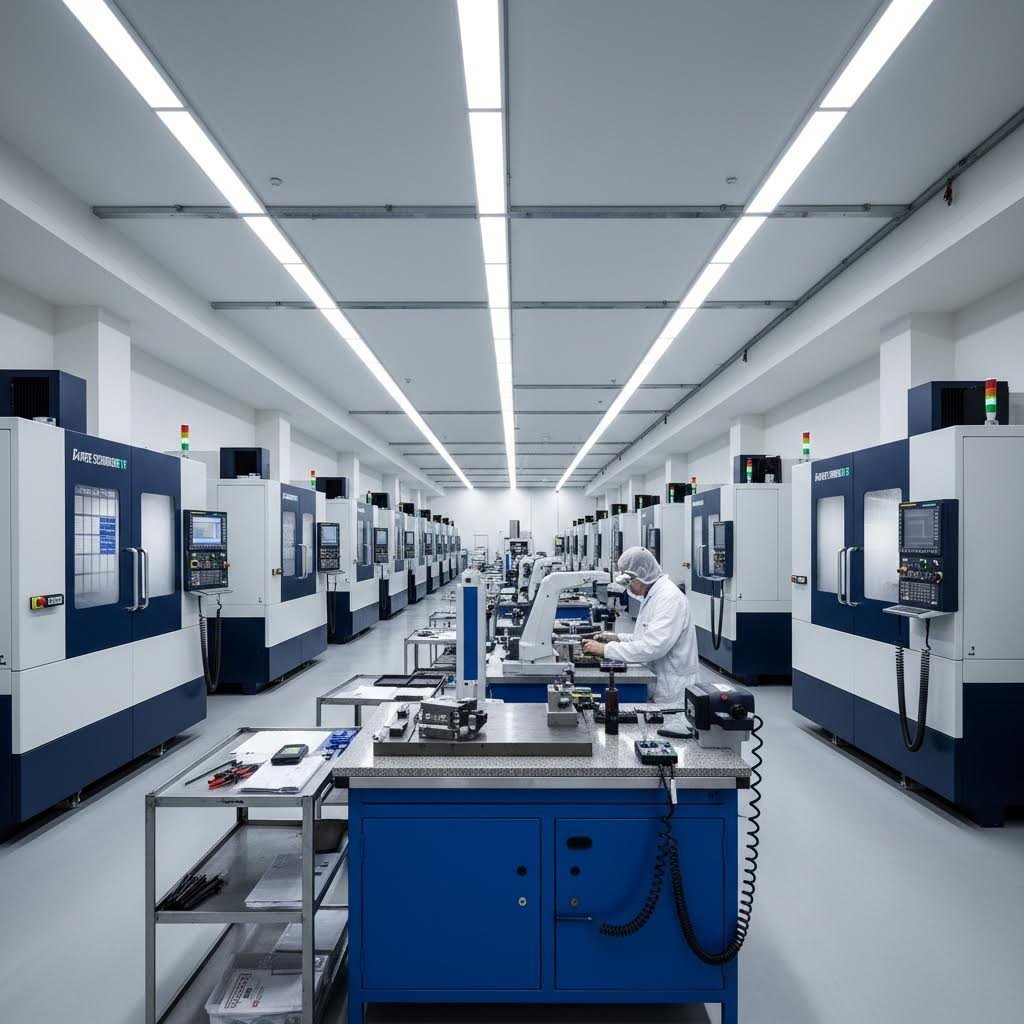
Selecting the Right Steel Sheet Fabrication Partner
You've designed your components carefully, avoided the common pitfalls, and specified the right materials. Now comes a decision that can make or break your entire project: choosing who actually fabricates your parts. A capable partner transforms good designs into excellent products. The wrong choice? Delays, quality issues, and budget overruns that dwarf any savings from a lower quote.
Finding the right match requires more than comparing prices. You need a systematic approach to evaluate capabilities, verify quality systems, and ensure your potential partner can deliver when it matters most.
Evaluating Fabricator Capabilities
Before requesting quotes, understand what capabilities your project actually requires. A metal fabrication shop equipped for high-volume stamping may not excel at precision sheet metal fabrication for complex assemblies. Conversely, a custom fabrication specialist might struggle with the consistency demands of large production runs.
Start by assessing these core capability areas:
- Equipment and technology: Modern CNC equipment, laser cutting systems, and automated press brakes indicate investment in precision and efficiency
- Material expertise: Experience with your specific steel grades matters—stainless steel fabrication demands different techniques than carbon steel work
- Secondary operations: Can they handle welding, finishing, and assembly in-house, or will your parts travel between multiple vendors?
- Engineering support: Access to manufacturing engineers who provide DFM feedback prevents costly design revisions later
- Capacity and scalability: Can they handle your current volume and grow with your needs?
According to Industrial Service Partners, visiting a fabricator's manufacturing facility provides invaluable insight. Modern equipment and a well-organized production floor indicate a fabricator's ability to deliver high-quality products efficiently. Virtual tours work when travel isn't practical, but nothing replaces walking the shop floor yourself.
Review their project portfolio carefully. Have they successfully completed work similar to yours? A diverse portfolio demonstrates adaptability, while depth in your specific industry shows relevant expertise. Don't hesitate to request case studies or references—reputable fabricators share this information willingly.
Quality Certifications That Matter
Certifications aren't just wall decorations—they represent verified commitments to quality systems and continuous improvement. According to Northstar Metal Products, ISO certifications like ISO 9001:2015 demonstrate that a company has implemented an effective quality management system ensuring products meet the highest standards.
Which certifications should you look for?
ISO 9001:2015: The baseline quality management certification. This confirms documented procedures exist for every production stage, from new product introduction through final inspection and shipping. If a fabricator lacks this fundamental certification, proceed with caution.
IATF 16949: Essential for automotive applications. This automotive-specific certification builds on ISO 9001 with additional requirements for defect prevention, supply chain management, and statistical process control. Without IATF 16949, a fabricator cannot reliably serve automotive OEMs or Tier 1 suppliers.
AWS Certifications: American Welding Society certifications verify welding proficiency and procedure qualification. For welded assemblies, these credentials ensure joint integrity and durability.
AISC Certification: Critical for structural steel fabrication in construction applications. This certification addresses proper welding procedures, dimensional accuracy, and material handling specific to structural work.
NEMA/UL Certifications: For electrical enclosures and equipment housings, these certifications verify compliance with safety and environmental protection standards.
Beyond certifications, quality-focused fabricators implement robust measurement systems. First-article inspection verifies initial production parts meet specifications before full runs begin. In-process inspection catches drift before it creates scrap. Final inspection ensures every shipment meets your requirements.
From Prototype to Production Partnership
The transition from sheet metal prototype to full production reveals a fabricator's true capabilities. Rapid sheet metal prototyping has become a competitive differentiator—the ability to produce functional prototypes in days rather than weeks accelerates your development timeline and reduces risk.
Sheet metal prototyping allows you to validate designs before committing to production tooling. A fabricator offering 5-day rapid prototyping can deliver physical parts for fit-checking and testing while competitors are still reviewing drawings. This speed becomes particularly valuable when product launch timelines compress or design iterations multiply.
Look for fabricators who treat prototyping as the beginning of a relationship, not a one-time transaction. The best partners provide comprehensive DFM support during prototyping, identifying manufacturing improvements that reduce costs and improve quality before you finalize production drawings.
Quick quote turnaround—ideally within 12 hours—signals a responsive organization that values your time. Slow quotes often predict slow communication throughout the production relationship. If getting an initial response takes weeks, imagine how long problem resolution will take when issues arise during production.
Steps for Requesting and Comparing Fabrication Quotes
A systematic quoting process helps you compare apples to apples and identify the best overall value—not just the lowest price.
- Prepare complete documentation: Include detailed drawings with dimensions, tolerances, material specifications, finish requirements, and quantity estimates. Incomplete packages generate incomplete quotes.
- Request quotes from multiple fabricators: Three to five qualified suppliers provide enough comparison points without overwhelming your evaluation process.
- Specify evaluation criteria upfront: Let fabricators know what matters most—price, lead time, quality certifications, or engineering support.
- Ask standardized questions: How will they achieve critical tolerances? What inspection methods will they use? What is their first-article process?
- Evaluate the questions they ask you: Fabricators who seek clarification demonstrate engagement with your requirements. No questions often means no attention to detail.
- Compare total cost, not just piece price: Factor in tooling, shipping, inspection requirements, and the cost of potential quality issues.
- Request references for similar projects: Speak with current customers about quality, communication, and on-time delivery performance.
- Verify certifications independently: Don't accept claims at face value—confirm certifications through issuing bodies.
- Evaluate DFM feedback quality: The best fabricators provide design improvement suggestions even before winning your business.
- Consider long-term partnership potential: A slightly higher price from a more capable partner often delivers better lifetime value than the lowest bidder.
Price matters, but context determines value. According to industry experts, a lower price might be appealing, but consider what might be sacrificed to achieve it. The right fabricator offers competitive pricing coupled with strong quality assurances, dependable delivery schedules, and excellent post-delivery support.
For automotive steel fabrication projects demanding IATF 16949-certified precision, Shaoyi (Ningbo) Metal Technology exemplifies the combination of capabilities that distinguish premier fabrication partners. Their 5-day rapid prototyping, 12-hour quote turnaround, and comprehensive DFM support address the speed and engineering collaboration modern supply chains demand—while their automotive-grade quality systems ensure chassis, suspension, and structural components meet zero-defect expectations.
The fabrication partner you select becomes an extension of your engineering team. Choose one whose capabilities, certifications, and culture align with your quality expectations—and whose responsiveness matches the pace your projects demand. That investment in selection pays dividends through every production run that follows.
Steel Sheet Fabrication FAQs
1. How much does it cost to fabricate sheet metal?
Steel sheet fabrication costs typically range from $4 to $48 per square foot, with average project costs around $1,581. Factors affecting pricing include steel grade selection (stainless steel costs more than carbon steel), material thickness, cutting method complexity, tolerance requirements, and finishing options like powder coating or galvanizing. High-volume production reduces per-unit costs significantly, while custom prototypes carry premium pricing. Working with IATF 16949-certified fabricators like Shaoyi ensures competitive pricing coupled with automotive-grade quality assurance.
2. Is sheet metal fabrication difficult?
Steel sheet fabrication presents challenges including intricate design requirements, tight tolerances, and material behavior considerations like springback and grain direction. Success depends on understanding bend allowances, k-factors, and proper steel grade selection for your application. Common mistakes like insufficient bend radii or holes too close to bends can ruin parts. However, partnering with experienced fabricators who offer comprehensive DFM (Design for Manufacturability) support simplifies the process considerably by catching potential issues during the design phase rather than during expensive production runs.
3. What is the difference between sheet metal fabrication and manufacturing?
Sheet metal manufacturing refers to producing raw sheet metal material through rolling and processing operations at steel mills. Sheet metal fabrication transforms those flat sheets into finished functional components through cutting, bending, forming, welding, and assembly operations. Fabrication adds value by creating specific shapes and assemblies for applications across automotive, construction, HVAC, and industrial equipment sectors. While manufacturing produces standardized materials, fabrication customizes those materials into precision components meeting exact dimensional and performance specifications.
4. What steel grades work best for sheet metal fabrication?
Steel grade selection depends on your application requirements. A36 carbon steel offers excellent weldability and cost-effectiveness for structural applications. 1018 low-carbon steel provides superior formability for complex shapes. 4130 chromium-molybdenum steel delivers high strength-to-weight ratios for aerospace and performance equipment. For corrosion resistance, 304 stainless steel handles general environments while 316 stainless steel excels in marine and chemical processing applications. Galvanized steel provides economical outdoor corrosion protection for HVAC and agricultural equipment without stainless steel's premium cost.
5. How do I choose the right steel sheet fabrication partner?
Evaluate fabricators based on equipment capabilities, material expertise, quality certifications, and engineering support. Essential certifications include ISO 9001:2015 for baseline quality management and IATF 16949 for automotive applications. Look for partners offering rapid prototyping services, quick quote turnaround times, and comprehensive DFM feedback. Visit facilities when possible to assess equipment condition and organization. Compare total project costs including tooling and finishing rather than just piece prices. Fabricators like Shaoyi combine 5-day rapid prototyping with 12-hour quote turnaround and automotive-grade quality systems for demanding precision applications.