 Small batches, high standards. Our rapid prototyping service makes validation faster and easier —
  EN
EN


Stamped Steel Control Arms for Towing: Are They Strong Enough?
TL;DR
Stamped steel control arms are a common, cost-effective factory option suitable for standard driving and very light, occasional towing. However, for serious or frequent towing applications, they represent a potential weak point in the suspension system. Stronger alternatives like forged steel or heavy-duty tubular arms are highly recommended because they offer superior strength and resistance to the fatigue and stress caused by heavy loads, providing a critical safety margin.
Understanding Control Arm Materials: A Comparative Overview
A vehicle's control arms are critical suspension components that link the chassis to the wheel assembly, allowing for controlled vertical movement while keeping the tires firmly planted. The material used to construct these arms dictates their strength, weight, and durability, especially under demanding conditions like towing. The three most common materials are stamped steel, cast iron/aluminum, and forged steel, each with a distinct manufacturing process and performance profile.
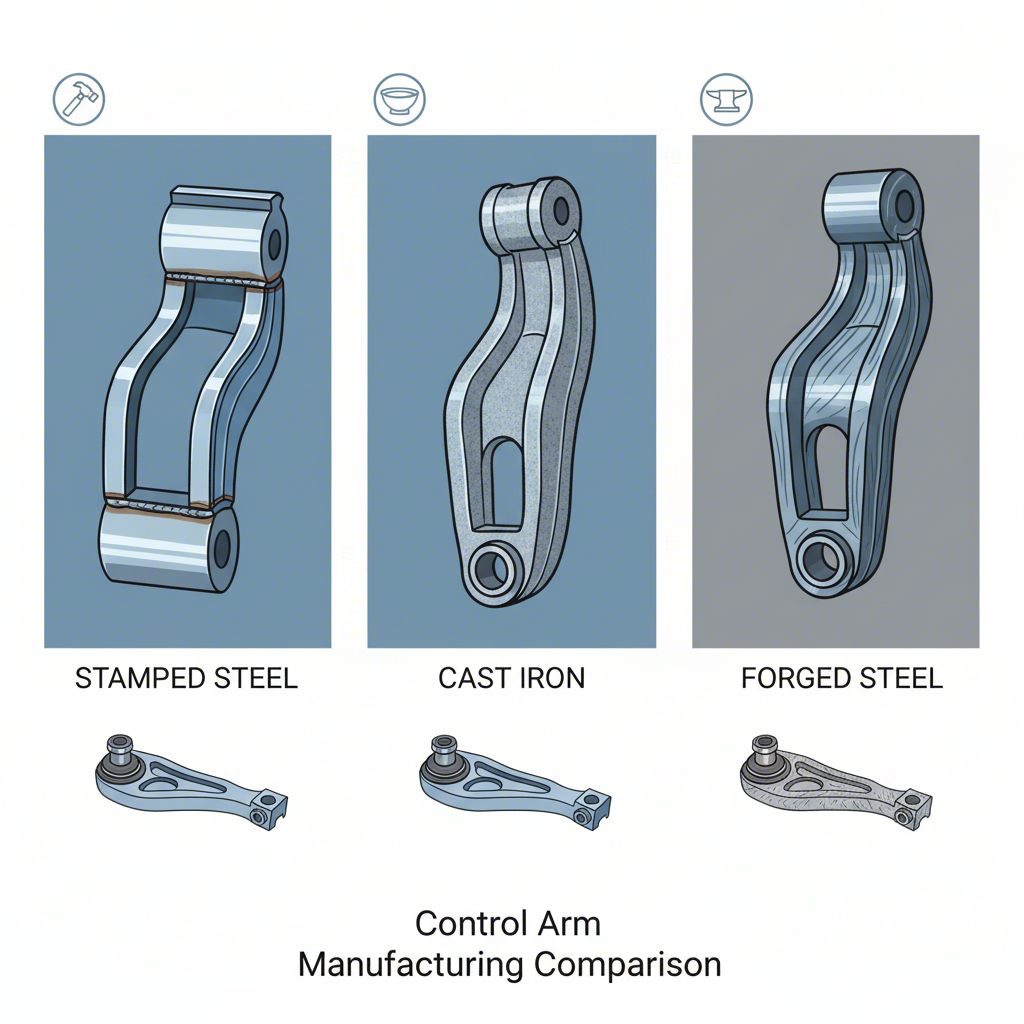
Stamped steel control arms are manufactured by pressing sheets of high-strength steel into a desired shape, often with multiple pieces welded together. This method is cost-effective and produces a lightweight part, which is why it's a popular choice for many passenger cars and light-duty trucks. According to GMT Rubber, their primary drawbacks are a susceptibility to rust and potential for damage. The manufacturing process itself is a key area of expertise for specialized suppliers. For instance, automotive manufacturers often partner with firms like Shaoyi (Ningbo) Metal Technology Co., Ltd., which leverage advanced automated facilities and IATF 16949 certification to produce complex stamped components from rapid prototypes to mass production, ensuring quality and cost-effectiveness.
Cast iron and cast aluminum arms are made by pouring molten metal into a mold. Cast iron is exceptionally strong and durable, making it ideal for heavy-duty trucks and SUVs that operate in harsh environments. Cast aluminum offers a balance of good strength and lighter weight, though it can be more prone to cracking on severe impact compared to steel. In contrast, forged steel control arms are created by heating a solid piece of steel and pressing it into a die under extreme pressure. This process aligns the metal's internal grain structure with the shape of the arm, resulting in a component that is significantly stronger and more resistant to fatigue than both stamped and cast alternatives. This superior strength is why forged arms are the preferred choice for performance and heavy-duty applications.
| Characteristic | Stamped Steel | Cast Iron / Aluminum | Forged Steel |
|---|---|---|---|
| Strength | Good | Very Good (Iron) / Good (Alum.) | Excellent |
| Weight | Lightest | Heavy (Iron) / Light (Alum.) | Heavy |
| Cost | Lowest | Moderate | Highest |
| Manufacturing | Pressed & Welded Sheets | Poured Molten Metal | Shaped Under Pressure |
| Common Use | Passenger Cars, Light Trucks | SUVs, Heavy-Duty Trucks | Performance, Heavy-Duty Trucks |
A simple way to distinguish between materials on your vehicle is the magnet test. As noted in the SERP, a magnet will stick to stamped steel and cast iron but will not stick to aluminum. This can help you quickly identify what your vehicle is equipped with before considering any modifications.
Stamped Steel Control Arms for Towing: Pros, Cons, and Critical Risks
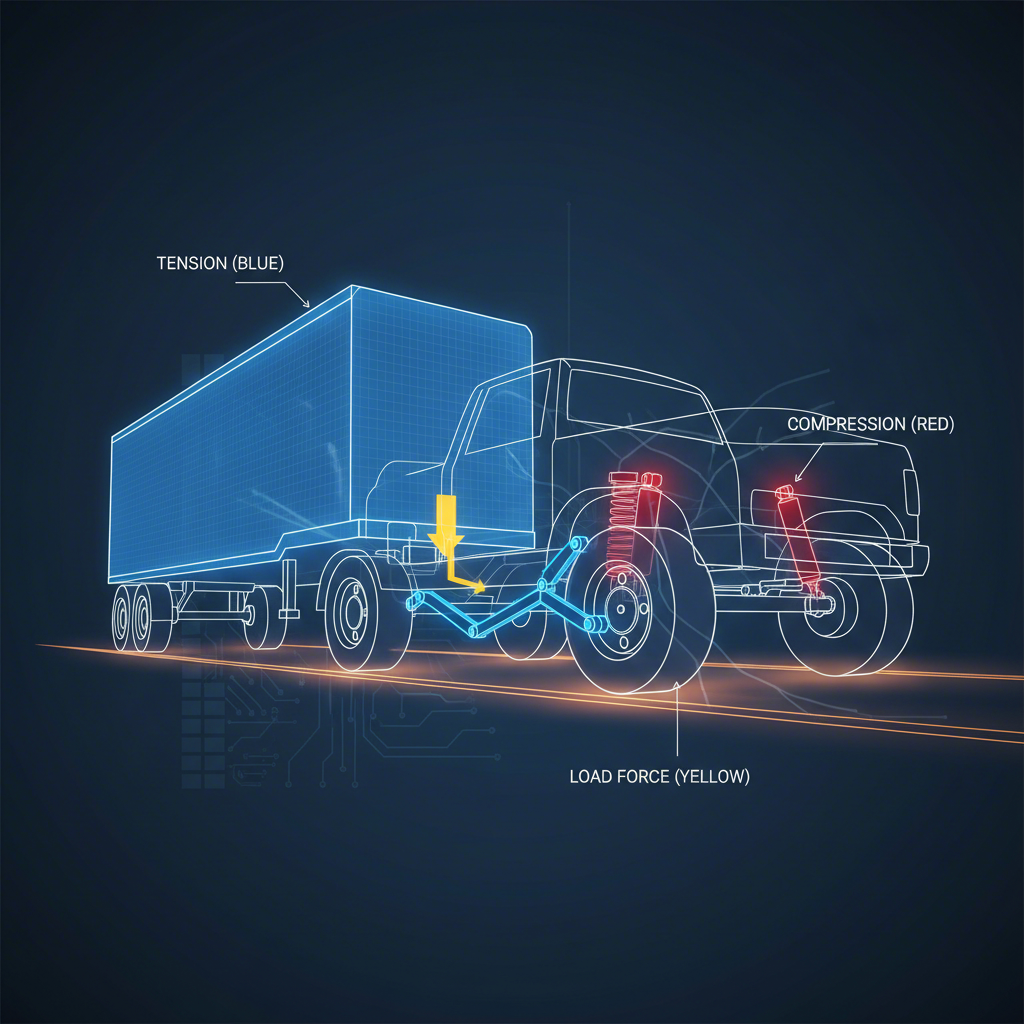
When evaluating a stamped steel control arm for towing, it's crucial to move beyond its standard performance and consider the immense stress towing places on suspension components. While factory-installed stamped steel arms are engineered to handle the vehicle's gross vehicle weight rating (GVWR) under normal driving, adding the dynamic loads of a trailer can push them beyond their design limits. The consensus among automotive experts is that for frequent or heavy towing, stamped steel arms are a significant weak point.
The primary advantage of stamped steel is its low cost and light weight. As detailed by Mivoparts, this makes it an efficient choice for high-volume OEM production, helping to reduce a vehicle's unsprung mass and potentially improve fuel economy. For a driver who only tows a small utility trailer a few times a year, the original equipment may suffice. However, the disadvantages become critical as towing demands increase.
The construction of stamped steel arms—formed from metal sheets and often welded at the seams—creates inherent stress points. Under the cyclical pushing, pulling, and twisting forces of towing, these welds and bends are susceptible to fatigue. Over time, this can lead to cracking, bending, or even complete failure of the control arm or its ball joint. This is a catastrophic event that can cause a loss of vehicle control. In contrast, a forged steel arm's uniform internal grain structure provides far greater resistance to these forces, making it a much safer and more durable option for towing.
Therefore, a clear recommendation emerges. For occasional, light-duty towing well within the vehicle's specified limits, factory stamped steel control arms may be adequate, but should be inspected regularly for signs of stress or cracking. For anyone engaging in frequent towing, hauling heavy loads like a large boat or travel trailer, or for use on a lifted truck where suspension angles are already altered, upgrading is not just a performance enhancement—it is a critical safety measure. An upgrade to a forged steel or a purpose-built heavy-duty tubular aftermarket arm provides the necessary strength and peace of mind.
Identifying Your Control Arms and Planning an Upgrade
Before deciding on an upgrade, the first step is to correctly identify the type of control arms currently on your vehicle. This is a straightforward inspection that can save you time and money. Stamped steel arms typically have a clamshell-like appearance, formed from two or more pieces of pressed steel welded together along the edges. You will be able to see and feel these welded seams. Cast iron arms look like a single, solid, and bulky piece of metal with a rougher surface texture. Cast aluminum arms look similar to cast iron but are much lighter and non-magnetic.
To perform the inspection, safely secure your vehicle and look behind the front wheels into the suspension area. A flashlight will help you spot the key visual cues. Use a magnet to confirm the material; if it sticks, you have either stamped steel or cast iron. If it doesn't, it's aluminum. This is especially important for vehicles like many Chevy and GMC trucks, which may have been equipped with any of the three types depending on the specific year, model, and trim package, making visual confirmation essential before ordering parts.
Once you've identified your arms and determined an upgrade is necessary for your towing needs, you can plan the next steps. Aftermarket suppliers like BDS Suspension offer heavy-duty tubular steel upper control arms designed specifically for lifted and heavy-use applications. These kits are engineered to provide superior strength and correct suspension geometry, which is vital for proper alignment and handling when towing.
Here is a simple checklist to guide your upgrade process:
- Identify Current Arms: Visually inspect and use a magnet to confirm if you have stamped steel, cast iron, or aluminum control arms.
- Define Towing Needs: Be realistic about the weight of your trailer and how often you tow. This will determine if a heavy-duty upgrade is warranted.
- Research Options: Look for reputable aftermarket brands that offer forged steel or heavy-duty tubular control arms compatible with your vehicle's make and model.
- Consider a Kit: Often, it's best to replace related components at the same time. Many kits include new, more durable ball joints and bushings.
- Professional Installation and Alignment: After installing new control arms, a professional wheel alignment is absolutely mandatory to ensure your vehicle drives safely and to prevent premature tire wear.
Frequently Asked Questions
1. What is the difference between stamped and forged control arms?
The primary difference lies in their manufacturing process and resulting strength. Stamped control arms are made by pressing and welding sheets of steel, making them lightweight and cost-effective but with potential weak points at the welds. Forged control arms are made by shaping a single piece of heated steel under immense pressure, which aligns the metal's grain structure, making them significantly stronger and more resistant to fatigue and impact. This makes forged arms the superior choice for high-stress applications like towing and off-roading.
2. Are stamped steel control arms magnetic?
Yes, stamped steel control arms are magnetic. Because they are made from steel, a magnet will readily stick to them. This provides a simple and effective way to distinguish them from cast aluminum control arms, which are not magnetic. If a magnet sticks, your arm is either stamped steel or cast iron; if it does not, it is aluminum.