 Small batches, high standards. Our rapid prototyping service makes validation faster and easier —
  EN
EN


Precision Forging Vs Machining: The Strength-Cost Tradeoffs Revealed
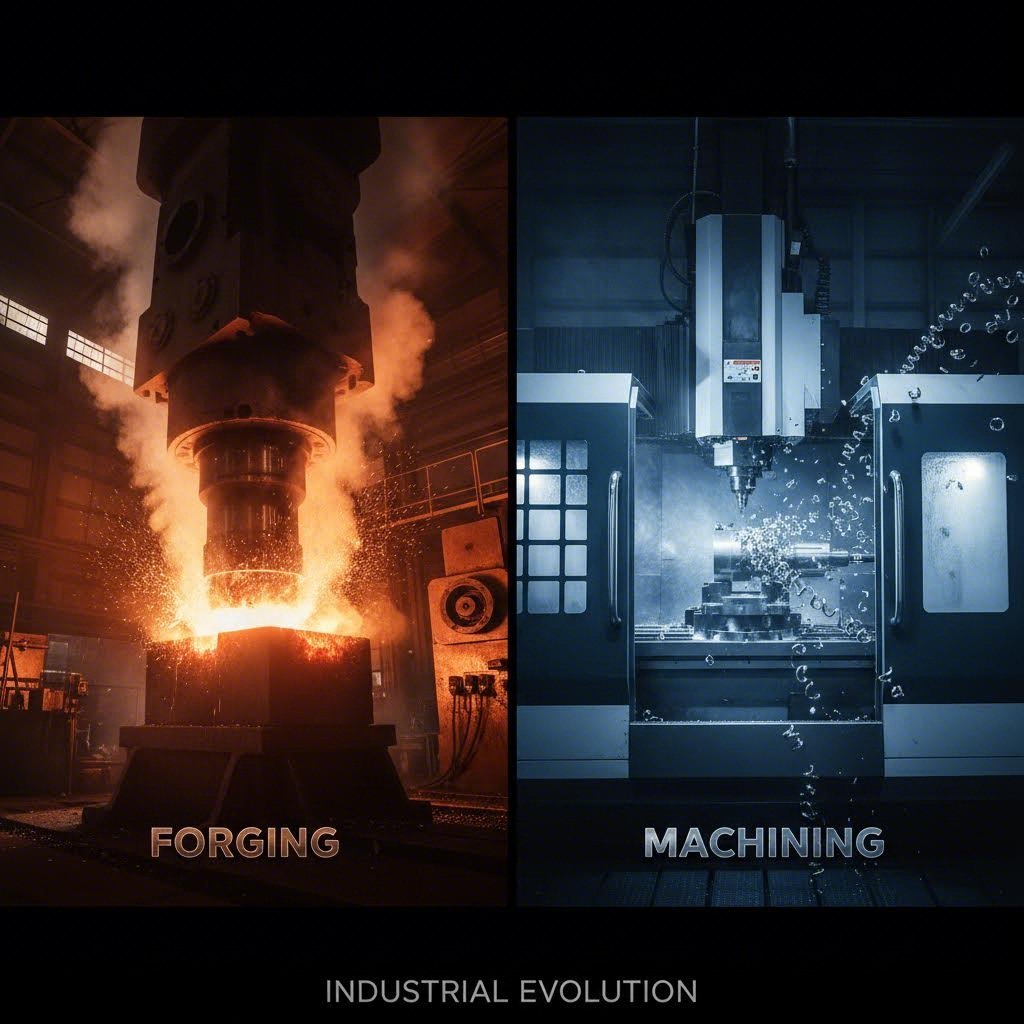
The Manufacturing Choice That Defines Component Success
You're sourcing a critical automotive component. The specifications are clear, the deadline is tight, and two manufacturing paths sit before you: precision forging or machining. Which one delivers the strength your application demands without blowing your budget? This decision isn't just about selecting a process—it's about determining whether your component thrives under stress or fails when it matters most.
For procurement managers, engineers, and manufacturing decision-makers, choosing between these two methods shapes everything from part longevity to total production costs. Yet many buyers approach this choice without a structured framework, often defaulting to familiar suppliers or focusing narrowly on unit price. That approach can prove costly.
Why This Decision Shapes Your Component's Performance
Think about what happens inside a suspension arm during operation. It absorbs thousands of stress cycles, endures road vibrations, and must maintain structural integrity for years. The manufacturing method you select directly influences how that component responds to these demands. Forging creates parts with aligned grain structures that resist fatigue, while machining offers dimensional precision that's difficult to match. Understanding when each advantage matters—and when it doesn't—separates strategic sourcing from guesswork.
The reality? Neither method is universally superior. Your application requirements, production volumes, and timeline constraints all influence which path makes sense. A drive shaft destined for heavy-duty trucks faces different demands than a precision valve body for hydraulic systems. Recognizing these distinctions early prevents expensive corrections later.
The Hidden Costs of Choosing Wrong
Making decisions based solely on initial unit cost often results in higher total cost of ownership due to premature failures, operational downtime, and safety liabilities, according to industry sourcing analysis. Imagine specifying machined components for a fatigue-critical application where forging would have delivered superior performance. The upfront savings disappear quickly when warranty claims mount or field failures damage your reputation.
Conversely, over-engineering with forging when machining would suffice ties up capital and extends lead times unnecessarily. The hidden costs cut both ways.
This guide ranks the top five decision factors that matter most when evaluating precision forging versus machining. You'll gain a practical framework—not theoretical definitions—built around real-world manufacturing outcomes including strength requirements, cost efficiency, production volume needs, and timeline constraints. We'll also explore hybrid approaches where forging blanks receive precision machined features, combining the strengths of both methods.
Ready to make this decision with confidence? Let's examine the methodology behind these rankings.
Our Methodology for Ranking Decision Factors
How do you determine which factors actually influence manufacturing success? Most comparison guides default to supplier-centric perspectives—highlighting equipment capabilities or production efficiencies that matter to manufacturers but tell buyers little about final component performance. This guide takes a different approach.
We evaluated each decision factor based on real-world manufacturing outcomes that directly impact your bottom line and component reliability. The weighting reflects what happens after parts leave the factory: how they perform under load, whether they meet tolerance specifications, and what they cost across the entire production lifecycle.
How We Evaluated Each Decision Factor
Research from the Advances in Production Engineering & Management journal identifies multicriteria decision-making as essential for manufacturing process selection. Their methodology emphasizes that wrong decisions during conceptual planning can increase manufacturing costs by more than 60%. We adapted this framework specifically for buyers comparing forging manufacturing options against machining alternatives.
Each factor received a weighted ranking based on three key considerations:
- Impact on component failure modes – How significantly does this factor influence whether your forging parts or machined components fail prematurely?
- Cost sensitivity across production volumes – Does this factor become more or less critical as order quantities change?
- Buyer control and specification ability – Can you influence this factor through design decisions and supplier selection?
This approach moves beyond generic process comparisons toward actionable intelligence you can apply during procurement discussions.
What Matters Most to Manufacturing Buyers
Competitor content often emphasizes forging material properties or machining speed without connecting these technical details to buyer outcomes. You don't just need to know that forging aligns grain structure—you need to understand when that alignment justifies higher tooling investment and when it represents over-engineering.
Our five core evaluation criteria address what manufacturing buyers consistently identify as decision-critical:
- Structural strength and fatigue resistance – How does each process affect component lifespan under cyclic loading?
- Dimensional tolerance and precision capabilities – What accuracy levels can you realistically specify, and at what cost?
- Production volume economics – Where do break-even points fall between forging and machining investments?
- Material-specific performance – How do steel, aluminum, titanium, and copper alloys behave differently under each process?
- Quality control and defect prevention – What inspection requirements and certification standards apply to each method?
These criteria integrate material behavior, tolerance capabilities, and scalability into a framework that prioritizes your needs as a buyer rather than supplier production preferences. The following sections rank each factor and reveal when precision forging delivers clear advantages—and when machining proves the smarter investment.
Structural Strength and Fatigue Resistance Rankings
When your component faces thousands—or millions—of stress cycles during its operational life, structural integrity isn't optional. It's the foundation of everything else. That's why structural strength and fatigue resistance ranks as the first decision factor in our methodology. The manufacturing process you choose fundamentally determines how your component responds to repeated loading, and the difference between forging and machining at the microstructural level is dramatic.
Imagine a suspension arm absorbing impact after impact as a vehicle travels rough terrain. Or a drive shaft transmitting torque through continuous rotation. These components don't fail from a single overload—they fail from accumulated fatigue damage at the grain level. Understanding how each manufacturing method affects grain structure helps you predict which parts will endure and which will crack prematurely.
How Grain Structure Determines Component Lifespan
Every metal component has a grain structure—the microscopic arrangement of crystalline formations created when molten metal solidifies. According to Trenton Forging's technical analysis, grain flow refers to the directional orientation of these grains during deformation, and it directly affects mechanical properties by determining how underlying grains push or pull when under stress or fatigue.
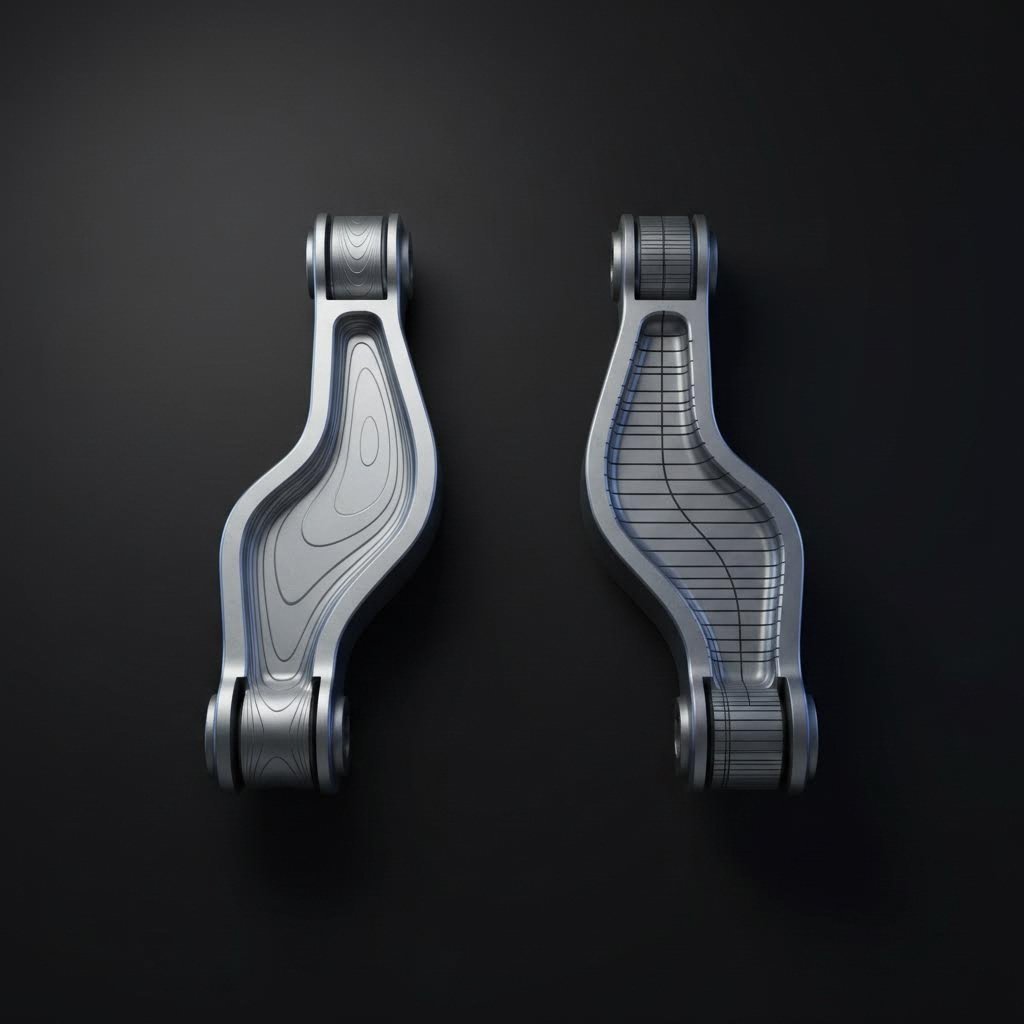
Here's where the critical distinction emerges. During forging, controlled deformation under elevated temperatures deliberately aligns grain flow in the direction of maximum strength. No matter how complex the part geometry, every area maintains continuous grain flow. The result? Exceptional fatigue and impact resistance built into the component's very structure.
Machined parts tell a different story. Machining typically starts with a pre-worked billet that already has established grain flow. But when that billet gets machined, the unidirectional grain pattern gets cut, and its contour changes. This exposes grain ends—creating weak points that make the material more prone to stress sensitivity, corrosion cracks, and fatigue failure.
Think of it like cutting across wood grain versus with it. Cutting with the grain preserves strength; cutting across it creates fracture points.
| Characteristic | Precision Forging | Machining |
|---|---|---|
| Grain Flow Pattern | Continuous and aligned with part geometry | Interrupted where material is removed |
| Grain Orientation | Follows component contours for maximum strength | Exposed grain ends at machined surfaces |
| Fatigue Resistance | Superior—stress distributes along aligned grains | Reduced—stress concentrates at grain boundaries |
| Impact Resistance | High—continuous structure absorbs energy | Moderate—depends on original billet quality |
| Crack Propagation Risk | Low—cracks must cross grain boundaries | Higher—cracks follow exposed grain paths |
When Fatigue Resistance Is Non-Negotiable
Certain applications leave no room for compromise on fatigue performance. Suspension arms, drive shafts, steering knuckles, and connecting rods all experience cyclic loading that accumulates damage over time. For these high-stress automotive components, the manufacturing method directly correlates with service life and safety margins.
Consider what happens inside a suspension arm during operation. Each bump, turn, and braking event creates stress cycles. Machined forgings—where a forged blank receives secondary machining operations—often represent the optimal solution for these parts. You gain the continuous grain structure from forging while achieving precise dimensional tolerances through targeted machining of critical features.
But what if budget constraints push you toward fully machined parts for fatigue-critical applications? The failure modes become predictable:
- Surface crack initiation – Exposed grain ends at machined surfaces become stress concentration points where cracks nucleate
- Accelerated crack propagation – Cracks travel along interrupted grain boundaries faster than through continuous forged structures
- Reduced safety margins – Components may meet static strength requirements but fail under cyclic loading well before forged alternatives
- Unpredictable failure timing – Fatigue failures in machined components often show greater variability, complicating warranty and reliability planning
The forging and casting comparison also matters here. Cast components lack uniform grain structure entirely—dendrites form during cooling and create grain boundary voids that offer very little impact or fatigue resistance. When strength under cyclic loading drives your specifications, forged components consistently outperform both cast and machined alternatives.
Does your application involve repeated stress cycles? Are failure consequences severe—safety-critical or high warranty exposure? If yes, continuous grain flow through forging deserves serious weight in your decision. But structural strength represents just one factor. Next, we'll examine dimensional tolerance capabilities—where machining often claims the advantage.
Dimensional Tolerance and Precision Capabilities
You've established that your component needs superior fatigue resistance—but can it also meet the tight dimensional specifications your assembly requires? This question brings us to the second-ranked decision factor: dimensional tolerance and precision capabilities. While forging wins on structural strength, machining often claims the advantage when micron-level accuracy drives your specifications.
Here's the reality: not all tolerances are created equal. A suspension arm might tolerate ±0.5 mm on most features while demanding ±0.05 mm on specific mounting surfaces. Understanding where each manufacturing method excels—and where it falls short—helps you specify realistically and avoid costly surprises during inspection.
Tolerance Thresholds That Guide Your Choice
Different forging methods deliver dramatically different precision levels. According to industry tolerance standards, the achievable range varies significantly based on process selection and control measures. Open-die forging typically produces tolerances of ±1.5 mm to ±5 mm—suitable for rough blanks but inadequate for finished components. Closed-die forging narrows this to ±0.5 mm to ±2 mm through better material confinement. Precision forging pushes boundaries further, achieving ±0.1 mm to ±0.5 mm with carefully machined dies and strict process controls.
Machined metal parts, by contrast, routinely achieve tolerances below ±0.025 mm—and specialized operations can hold ±0.005 mm or tighter. When your design demands ultra-precise features, machining delivers accuracy that forging simply cannot match.
| Manufacturing Method | Typical Tolerance Range | Surface Finish (Ra) | Best Application Fit |
|---|---|---|---|
| Open-Die Forging | ±1.5 mm to ±5 mm | 6.3–25 µm | Large, simple geometries; rough blanks |
| Closed-Die Forging | ±0.5 mm to ±2 mm | 3.2–12.5 µm | Complex shapes; moderate precision needs |
| Precision Forging | ±0.1 mm to ±0.5 mm | 1.6–6.3 µm | Near-net-shape components; reduced machining |
| Standard Machining | ±0.025 mm to ±0.1 mm | 0.8–3.2 µm | Precision features; tight assembly fits |
| Precision Machining | ±0.005 mm to ±0.025 mm | 0.2–0.8 µm | Critical interfaces; sealing surfaces |
Notice the surface finish column. A rougher surface on forged parts often requires additional post-processing to achieve functional requirements. The relationship between tolerance and surface finish is interconnected—tighter tolerances typically demand smoother surfaces to avoid excessive material removal during finishing operations.
When Micron-Level Precision Matters
Sounds complex? Consider a practical example. A machined forging for a hydraulic valve body needs both the structural integrity of forging and the precise bore dimensions that ensure proper sealing. The forging process creates the robust blank with aligned grain structure, while subsequent machining operations refine critical surfaces to exact specifications.
This hybrid approach—combining forged blanks with precision machined features—often delivers optimal results. You're not choosing between forging and machining; you're leveraging each method where it performs best. The forging stage provides:
- Continuous grain flow for fatigue resistance
- Near-net-shape geometry that minimizes machining stock
- Consistent material properties throughout the component
The machining stage then adds:
- Precise dimensional control on critical features
- Superior surface finish for sealing or bearing surfaces
- Tight geometric tolerances for assembly interfaces
Research into hybrid manufacturing approaches confirms this combined strategy addresses limitations of individual processes—particularly the rough surface quality and lack of dimensional precision that pure additive or forming processes sometimes exhibit.
What does this mean for your specifications? When writing requirements for machined metal components, distinguish between features that truly need micron-level precision and those where forging tolerances suffice. Over-specifying tolerances across entire parts drives up costs through unnecessary machining operations and tighter inspection requirements.
Ask yourself: which features interface with other components? Which surfaces require sealing? Where do assembly clearances demand tight control? These questions help you specify tolerances strategically rather than uniformly—a practice that can significantly reduce total manufacturing cost while maintaining functional requirements.
With tolerance capabilities understood, the next critical factor emerges: production volume economics. Where do the break-even points fall between forging tooling investment and per-unit machining costs? The answer often surprises buyers who focus solely on unit price.
Production Volume Economics and Cost Analysis
You've confirmed your component needs specific strength characteristics and tolerance capabilities. Now comes the question that often determines final process selection: at what production volume does forging become more economical than machining? This third-ranked decision factor reveals how tooling investment, per-unit costs, and production scale interact to flip the cost equation—sometimes dramatically.
Here's what catches many buyers off guard. The upfront tooling cost for forging can seem prohibitive when you're quoting a few hundred parts. But spread that investment across thousands or tens of thousands of units, and the per-part economics shift decisively in forging's favor. Understanding where your production volume falls on this curve prevents both overpaying for low-volume machining and underinvesting in forging tooling that would deliver long-term savings.
Volume Thresholds That Flip the Cost Equation
According to industry cost analysis, material selection alone accounts for 40–60% of total forging expenses, with tooling representing the critical "upfront investment" in any forging program. This front-loaded cost structure creates the volume-dependent economics that define the forging versus machining decision.
Consider the typical cost breakdown for a hot forging program:
- Raw material: 40–60% of total cost
- Tooling amortization: 10–20% (volume-dependent)
- Energy and heating: 8–15%
- Labor and handling: 10–20%
- Post-processing: 5–15%
Machining, by contrast, carries minimal tooling investment but higher per-unit costs due to extended cycle times and material waste. CNC machining typically wastes 50–80% of starting material as chips, while forging achieves material utilization rates exceeding 85%—a critical factor when working with expensive alloys.
So where does the crossover occur? The break-even calculation follows a straightforward formula:
Break-Even Quantity = Forging Tooling Cost ÷ (Machining Cost per Part – Forging Cost per Part)
For complex automotive components, this break-even typically falls between 2,000 and 10,000 units. Simpler geometries push the threshold higher; intricate parts with expensive machining requirements lower it significantly.
Calculating Your Break-Even Point
Imagine you're sourcing a steel gear blank weighing 8 kg. Based on documented cost examples, here's how the economics might unfold:
Scenario: 10,000 steel gear blanks
- Forging tooling investment: $25,000–$40,000
- Forging cost per unit (material + processing): $18–$25
- Machining cost per unit (from billet): $35–$50
- Cost differential per unit: $15–$25
At 10,000 units with a $20 per-unit differential, the tooling investment pays back within the first 1,500–2,000 parts. Every subsequent unit delivers pure savings. Scale to 50,000 units, and tooling amortization drops fivefold—reducing total cost by nearly 4% per unit while maintaining the per-piece processing advantage.
The complexity factor amplifies this effect. Parts requiring extensive multi-axis machining, tight tolerances across complex surfaces, or specialty tooling see machining costs escalate quickly. Meanwhile, forging's cost remains relatively stable regardless of geometric complexity—the die captures that complexity once, then replicates it efficiently across every part.
How Hot Forging Automation Equipment Enables High-Volume Efficiency
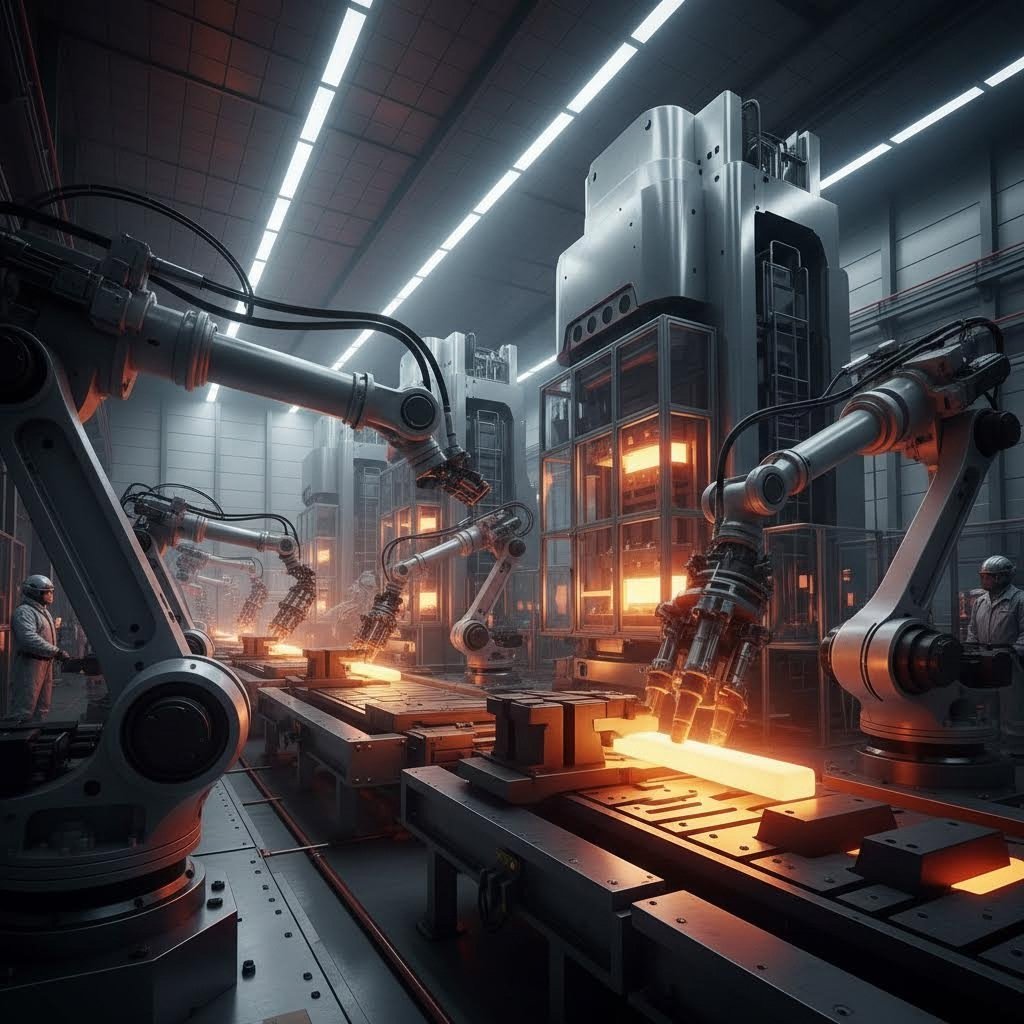
Modern hot forging all-in-one machinery has transformed production economics at scale. Where traditional forging operations required extensive manual handling between heating, forming, and trimming stations, today's hot forging automation equipment integrates these steps into continuous production lines.
What does this mean for your cost analysis? Automation delivers:
- Reduced cycle times: Integrated systems eliminate transfer delays between operations
- Consistent quality: Automated handling reduces variability from human intervention
- Lower labor costs: One operator can oversee multiple automated cells
- Extended die life: Precise temperature and pressure control reduces die wear
Suppliers investing in modern automated hot forging equipment pass these efficiencies to buyers through lower per-unit costs at volume. When evaluating suppliers, ask about automation levels and press utilization rates—these indicators predict whether quoted pricing reflects efficient production or outdated methods.
Lead Time Comparisons Across Project Scales
Volume economics extend beyond unit cost to include time-to-production considerations. The lead time landscape differs dramatically between prototyping and mass production scenarios.
Rapid Prototyping (1–50 units):
- Machining advantage: 1–3 weeks from CAD to finished parts
- Forging reality: 8–16 weeks including die design, fabrication, and sampling
- Recommendation: Machine prototypes; invest in forging tooling only after design validation
Low Volume Production (100–2,000 units):
- Machining: Remains competitive on total cost; flexible for design changes
- Forging: Tooling investment difficult to justify unless part is destined for higher volumes
- Recommendation: Calculate break-even carefully; consider hybrid approaches
Medium Volume Production (2,000–20,000 units):
- Machining: Per-unit costs become prohibitive for complex parts
- Forging: Tooling costs amortize favorably; per-unit savings accumulate
- Recommendation: Forging typically wins for strength-critical or complex geometry parts
High Volume Production (20,000+ units):
- Forging dominance: Tooling amortization becomes negligible; material efficiency and cycle time advantages compound
- Machining role: Limited to secondary operations on forged blanks
- Recommendation: Invest in optimized forging tooling; negotiate long-term contracts with volume pricing
The timeline factor also affects working capital. Forging's front-loaded tooling investment ties up capital before production begins, while machining spreads costs more evenly across the production schedule. For budget-constrained projects, this cash flow difference sometimes outweighs pure unit economics.
Production volume analysis reveals the economic landscape, but material selection adds another layer of complexity. How do steel, aluminum, titanium, and copper alloys behave differently under each process? The answer shapes both your design constraints and your cost expectations.
Material-Specific Performance and Selection Guide
Your material choice doesn't just affect component properties—it fundamentally influences which manufacturing process makes sense. Steel behaves differently than aluminum under forging pressure. Titanium presents unique challenges that copper alloys never face. This fourth-ranked decision factor examines how different metals respond to forging versus machining, revealing when material selection effectively makes the process decision for you.
Think about it this way: you wouldn't machine titanium the same way you machine mild steel. The cutting parameters, tool wear rates, and achievable tolerances differ dramatically. Similarly, forging aluminum requires different temperatures, pressures, and die designs than forging stainless steel. Understanding these material-specific behaviors prevents specification errors that lead to rejected parts, excessive costs, or premature failures.
Material Selection Drives Process Selection
According to industry manufacturing analysis, forging is mostly applied to metals such as steel, aluminum, and titanium where the characteristics of the material can be improved by forging. CNC machining, however, can deal with a wider variety of materials such as metals, plastics, and composites—making it suitable for applications where material diversity matters more than enhanced mechanical properties.
This distinction carries significant implications for your sourcing decisions. When working with metals that benefit from grain refinement and work hardening, forging delivers measurable performance advantages. When your design requires materials that don't respond well to deformation—or when you need plastics, composites, or exotic alloys—machining becomes the practical choice.
| Material | Forging Performance | Machining Performance | Process Recommendation |
|---|---|---|---|
| Carbon Steel | Excellent—grain refinement improves strength 15–30%; wide temperature range for hot forging | Good—readily machinable with standard tooling; moderate tool wear | Forging preferred for strength-critical; machining for precision features |
| Stainless Steel | Very good—work hardening enhances surface properties; requires higher forging forces | Challenging—work hardening during cutting; requires rigid setups and sharp tooling | Forging often advantageous; machine only critical surfaces |
| Aluminum Alloys | Good—lower forging temperatures; excellent material flow; some alloys prone to cracking | Excellent—high speeds possible; low tool wear; superior surface finish achievable | Application-dependent; machining excels for complex geometries |
| Titanium Alloys | Good—narrow temperature window; significant strength improvement; expensive tooling | Difficult—low thermal conductivity; high tool wear; slow cutting speeds required | Forging preferred when feasible; minimize machining operations |
| Copper Alloys | Very good—excellent formability; cold forging often viable; good grain refinement | Good—soft material machines easily; burr formation requires attention | Cold forging advantageous for electrical components |
Metal-Specific Performance Under Forging vs Machining
What happens at the microstructural level when you forge versus machine these materials? The answer explains why certain combinations deliver superior results.
Steel alloys respond exceptionally well to forging. The combination of heat and pressure refines grain structure, eliminates porosity from the original billet, and creates directional strength aligned with load paths. Cast forge comparisons consistently show forged steel outperforming cast alternatives by 20–40% in fatigue resistance. Machining steel removes material efficiently but provides no structural enhancement—the finished part retains only the properties of the starting billet.
Aluminum alloys present an interesting case. While forging improves mechanical properties, aluminum's excellent machinability makes it a strong candidate for CNC operations. High-speed machining produces exceptional surface finishes with minimal tool wear. For complex aluminum components where strength requirements are moderate, machining often proves more economical. However, for aerospace and automotive applications demanding maximum fatigue resistance, forged aluminum maintains clear advantages.
Titanium alloys challenge both processes but favor forging when component geometry permits. Titanium's low thermal conductivity makes machining problematic—heat concentrates at the cutting edge, accelerating tool wear and limiting cutting speeds. Forging distributes deformation energy more evenly and produces components with superior fatigue properties. The forge vs casting comparison is particularly stark for titanium: forged titanium routinely achieves 50% better fatigue life than cast equivalents.
Copper alloys offer unique opportunities for cold forging. According to environmental manufacturing research, cold forging is commonly used for metals like aluminum, copper, steel, and alloys to produce parts with high precision and excellent mechanical properties without the energy requirements of hot processes. Electrical connectors, terminals, and heat sinks benefit from cold-forged copper's combination of improved conductivity (from refined grain structure) and dimensional precision.
Material Waste and Sustainability Implications
The environmental impact of your process choice extends beyond the factory floor. Forging casting comparisons reveal significant differences in material utilization that affect both cost and sustainability profiles.
Forging typically achieves material utilization rates of 85–95%—nearly all starting material ends up in the finished part. Flash (excess material squeezed from the die) can be recycled, but minimal waste occurs in the first place. This efficiency becomes particularly valuable with expensive materials like titanium or specialty alloys where raw material represents the dominant cost factor.
Machining, by contrast, converts 50–80% of starting material into chips. While these chips are recyclable, the energy invested in producing the original billet is largely wasted. For sustainability-focused procurement, this difference carries weight. Research on cold forging sustainability confirms that forging's high material utilization rate not only conserves raw materials but also reduces the environmental burden associated with waste disposal and recycling.
The energy equation also differs substantially between hot and cold forging approaches:
- Hot forging: Requires significant energy for heating metals above recrystallization temperature; offset by improved formability and reduced forging forces
- Cold forging: Eliminates heating energy entirely; performed at or near room temperature; produces fewer emissions and pollutants during manufacturing
- Machining: Moderate energy consumption; extended cycle times for difficult materials increase total energy per part
Design Constraints Based on Material Choice
Your material selection imposes process-specific limitations that affect what geometries you can achieve economically.
For forging, material ductility determines complexity limits. Highly ductile materials like copper and aluminum flow readily into intricate die cavities. Harder materials like tool steels require simpler geometries, larger radii, and more generous draft angles. Wall thickness minimums also vary—aluminum forgings can achieve thinner sections than steel forgings of equivalent size.
For machining, material properties affect achievable tolerances and surface finishes. Hard materials demand slower cutting speeds and more frequent tool changes, extending cycle times. Soft materials may deflect under cutting forces, limiting precision on thin-walled features. Thermal expansion during machining can cause dimensional drift, particularly problematic with titanium and stainless steel.
When evaluating forging and casting alternatives, remember that material properties under each process differ fundamentally. Forging improves properties through work hardening and grain refinement. Casting preserves original alloy characteristics but cannot enhance them. Machining simply removes material without affecting the remainder's structure.
Material-specific performance shapes both what you can design and how economically you can produce it. But quality assurance adds another critical dimension—especially for safety-critical applications where defect prevention isn't optional. How do forging and machining compare when it comes to preventing material defects and meeting certification requirements?

Quality Control and Defect Prevention Standards
You've evaluated strength requirements, tolerance capabilities, production economics, and material performance. But here's a question that keeps quality engineers awake at night: how confident are you that every component leaving the production line meets specification? This fifth-ranked decision factor—quality control and defect prevention—determines whether your manufacturing process delivers consistent results or introduces hidden risks into your supply chain.
The stakes are highest for safety-critical automotive components. A suspension arm with internal porosity might pass visual inspection yet fail catastrophically under load. A drive shaft with subsurface voids could function normally for months before fatigue cracks propagate from those hidden defects. Understanding how each manufacturing method creates—or prevents—material defects helps you specify appropriate inspection requirements and select suppliers with the quality systems your application demands.
Defect Prevention Strategies for Each Method
Forging and machining produce fundamentally different defect profiles. According to industry quality assurance research, quality assurance in forging refers to the systematic processes used to ensure that forged components meet specified mechanical, dimensional, and metallurgical requirements. Unlike quality control, which focuses on detecting defects, QA emphasizes preventing defects by controlling variables throughout the forging lifecycle.
This proactive approach distinguishes precision forging from processes where defects are identified only after production. When you control heating parameters, die temperature, forging pressure, and cooling rates, you're addressing defect sources before they materialize—not sorting good parts from bad at final inspection.
Common Defect Types in Forging:
- Laps and folds: Occur when material folds over itself during deformation; prevented through proper die design and material flow analysis
- Cold shuts: Result from material meeting at too low a temperature; controlled through heating uniformity and die preheating
- Scale inclusions: Surface oxides pressed into the material; minimized through controlled atmospheres and descaling operations
- Internal cracks: Caused by excessive deformation or improper cooling; avoided through process simulation and controlled cooling rates
Common Defect Types in Machining:
- Surface defects: Tool marks, chatter, and built-up edge deposits; controlled through proper speeds, feeds, and tooling selection
- Dimensional drift: Thermal expansion during cutting causes progressive deviation; managed through coolant application and in-process measurement
- Subsurface damage: Work hardening or residual stress from aggressive cutting; prevented through appropriate depth of cut and feed rates
- Inherited defects: Porosity or inclusions from starting material remain in finished part; requires incoming material verification
Notice a critical distinction: forging can actually heal certain defects present in the starting material. The combination of heat and pressure closes internal voids, consolidates porosity, and welds together micro-cracks. Machining, by contrast, can only reveal or expose pre-existing defects—it cannot eliminate them. This difference matters significantly when comparing castings and forgings as starting materials for machined components.
The casting vs machining comparison reveals this limitation clearly. Cast blanks often contain porosity, shrinkage cavities, and dendritic segregation that machining operations may intersect. What appeared as solid metal in the casting becomes a surface void when the machining tool exposes it. Machinery castings destined for precision machining require extensive inspection of the raw casting to avoid discovering defects only after significant machining investment.
Quality Certifications That Matter
How do you verify that a supplier's quality system actually prevents defects rather than just detecting them? Industry certifications provide objective evidence—but not all certifications carry equal weight for automotive applications.
According to AIAG's quality standards documentation, IATF 16949:2016 defines quality management system requirements for automotive production, service and accessory parts. This standard, coupled with applicable customer-specific requirements, represents the automotive industry's most rigorous quality framework. It was developed with unprecedented industry engagement, including major OEMs and tier suppliers across the global automotive supply chain.
What distinguishes IATF 16949 from generic quality standards like ISO 9001? The automotive-specific requirements address:
- Risk-based thinking: Systematic identification and mitigation of quality risks before production begins
- Enhanced traceability: Complete documentation from raw material through finished component
- Process control emphasis: Statistical process control (SPC) requirements for key characteristics
- Continuous improvement: Structured approaches to reducing variation and eliminating defect sources
- Customer-specific requirements: Integration of OEM expectations beyond the base standard
For safety-critical components like suspension arms and drive shafts, IATF 16949 certification isn't optional—it's a baseline expectation from major automotive OEMs. Suppliers without this certification typically cannot quote on programs where component failure carries safety implications.
When sourcing precision hot forging for automotive applications, manufacturers like Shaoyi demonstrate their commitment to defect prevention through IATF 16949 certification. This certification validates that rigorous quality control processes govern every stage—from incoming material verification through final inspection—ensuring suspension arms, drive shafts, and other critical components meet exact specifications consistently.
Inspection Requirements for Safety-Critical Components
Certification establishes the framework, but inspection methods determine whether specific components meet requirements. The inspection intensity appropriate for your application depends on failure consequences and regulatory requirements.
Quality Control Checkpoints for Forged Components:
- Raw material verification: Chemical composition testing, material certification review, and incoming inspection ensure only approved grades enter production
- In-process monitoring: Temperature logging, forging force verification, and dimensional checks at critical stages detect deviations before they propagate
- Non-destructive testing (NDT): Ultrasonic testing detects internal flaws; magnetic particle inspection reveals surface and near-surface defects; dye penetrant testing identifies surface cracks
- Destructive testing: Tensile, impact, and hardness testing on sample parts validates mechanical performance against specifications
- Dimensional inspection: CMM measurement of critical features ensures geometric compliance
- Metallurgical evaluation: Grain flow analysis and microstructure examination verify proper forging execution
Quality Control Checkpoints for Machined Components:
- Incoming material inspection: Verification that starting billets or forgings meet specifications before machining investment
- First-article inspection: Complete dimensional verification of initial parts before production release
- In-process gauging: Critical dimensions checked during production to detect tool wear or thermal drift
- Surface finish measurement: Profilometry confirms surface texture meets functional requirements
- Final dimensional audit: Statistical sampling of finished parts validates process stability
The inspection burden differs substantially between methods. Forged components require metallurgical evaluation that machined parts typically don't need—but machined parts require more intensive dimensional verification due to their tighter tolerance requirements. Understanding these differences helps you budget appropriately for quality assurance costs.
Traceability for Accountability and Recall Prevention
Modern quality systems extend beyond inspection to encompass complete traceability. According to emerging standards in forging quality, customers now expect complete traceability—from raw material to finished component. Advanced marking, digital records, and blockchain-based traceability systems are emerging as tools to strengthen accountability and compliance.
Why does traceability matter for your sourcing decisions? Consider a field failure scenario. With complete traceability, you can:
- Identify affected production lots: Limit recall scope to specific date ranges or material batches
- Trace root causes: Correlate failures with specific process parameters, operators, or equipment
- Demonstrate due diligence: Provide documentation showing appropriate quality controls were in place
- Enable targeted corrective action: Address specific failure modes rather than implementing broad, expensive changes
For automotive components, traceability requirements often specify that individual parts can be traced to specific heat lots, forging dies, and production shifts. This granularity enables precise containment when issues arise—protecting both the supplier and the OEM from unnecessary recall costs.
The quality control landscape increasingly incorporates digital transformation. Statistical Process Control (SPC) techniques, real-time monitoring systems, and integrated Quality Management Systems (QMS) enable data-driven decision-making that catches deviations before they produce defective parts. When evaluating suppliers, ask about their use of these advanced quality tools—they indicate a proactive rather than reactive approach to defect prevention.
Quality assurance represents the final ranked factor in our evaluation framework, but the decision-making process benefits from seeing all factors together. How do these five criteria compare across forging and machining when viewed holistically? A complete comparison matrix provides the clarity needed for confident process selection.
Complete Comparison Matrix and Summary
You've explored each decision factor individually—structural strength, dimensional tolerance, production economics, material behavior, and quality control. But how do these factors stack up when viewed together? This comprehensive comparison consolidates everything into actionable reference tools you can use during supplier discussions, design reviews, and procurement decisions.
Think of this section as your quick-reference guide. When a colleague asks "why forging over machining?" or a supplier challenges your process specification, these comparison matrices provide the evidence-based answers you need.
Side-by-Side Factor Comparison
The following matrix presents all five ranked factors with forging advantages positioned first. This arrangement reflects the evaluation methodology's emphasis on buyer outcomes—starting with the factors most likely to influence component success in demanding applications.
| Decision Factor | Precision Forging Advantages | Machining Advantages | Winner (and Conditions) |
|---|---|---|---|
| 1. Structural Strength & Fatigue Resistance | Continuous grain flow aligned with load paths; 20–40% better fatigue life than cast or machined alternatives; closes internal voids during processing | Preserves original billet properties; no additional thermal stresses introduced; suitable when static loads dominate | Forging wins when cyclic loading, impact resistance, or fatigue life drive specifications |
| 2. Dimensional Tolerance & Precision | Precision forging achieves ±0.1 to ±0.5 mm; near-net-shape reduces secondary operations; consistent repeatability at volume | Routinely achieves ±0.025 mm or tighter; superior surface finish (Ra 0.2–0.8 µm); ideal for critical interfaces and sealing surfaces | Machining wins for micron-level precision; hybrid approach optimal for strength + precision |
| 3. Production Volume Economics | 85–95% material utilization; tooling amortizes favorably above 2,000–10,000 units; cycle times decrease with automation | Minimal tooling investment; flexible for design changes; competitive at low volumes (under 2,000 units) | Forging wins at medium-to-high volumes; machining wins for prototypes and low runs |
| 4. Material-Specific Performance | Grain refinement improves steel strength 15–30%; titanium forging delivers 50% better fatigue life than castings; cold forging enhances copper conductivity | Handles plastics, composites, and exotic alloys forging cannot process; no temperature limitations; accommodates any machinable material | Forging wins for metals benefiting from work hardening; machining wins for material diversity |
| 5. Quality Control & Defect Prevention | Proactive defect prevention through process control; heals internal voids present in starting material; IATF 16949 frameworks emphasize prevention | Extensive dimensional verification capabilities; real-time in-process measurement; reveals rather than creates defects | Forging wins for metallurgical integrity; machining wins for dimensional verification |
Notice how the "winner" column rarely declares an absolute victor. Context determines which method delivers superior results. While terms like "forming" or "metal shaping" are sometimes used, the specific process advantages of forging remain consistent regardless of terminology—continuous grain structure, material efficiency, and enhanced mechanical properties.
Quick Reference Decision Matrix
When time is short and decisions are urgent, use this streamlined matrix to match your application requirements to the appropriate process:
| Your Requirement | Best Process Choice | Key Consideration |
|---|---|---|
| High fatigue resistance | Precision Forging | Continuous grain flow prevents crack initiation |
| Tolerances below ±0.05 mm | Machining (or hybrid) | Forging cannot achieve ultra-tight tolerances alone |
| Production volume over 5,000 units | Precision Forging | Tooling investment amortizes; per-unit costs drop |
| Prototype quantities (1–50 units) | Machining | No tooling investment; 1–3 week lead times |
| Steel or titanium components | Precision Forging | Both materials benefit significantly from forging |
| Complex aluminum geometries | Application-dependent | Evaluate strength needs vs. machining economics |
| Plastic or composite parts | Machining | Forging limited to metals |
| Safety-critical automotive | Precision Forging | IATF 16949 certification and metallurgical integrity |
| Sealing or bearing surfaces | Machining (secondary) | Surface finish requirements exceed forging capability |
| Minimum material waste | Precision Forging | 85–95% utilization vs. 20–50% for machining |
Hybrid manufacturing approaches deliver optimal results when your component requires both the structural integrity of forging and the dimensional precision of machining. Start with a forged blank to establish grain flow and mechanical properties, then apply targeted machining only to critical features—sealing surfaces, bearing interfaces, and tight-tolerance mounting points. This combination captures the strengths of both methods while minimizing the limitations of each.
The Complete Manufacturing Decision Journey
Understanding which method wins each factor is valuable, but applying this knowledge throughout your product development cycle multiplies its impact. Here's how these factors align with typical project phases:
Design Phase:
- Evaluate fatigue and strength requirements early—these often dictate process selection
- Identify which features truly require tight tolerances versus those that can accept forging-level precision
- Consider material options and how each responds to forging versus machining
- Engage potential suppliers during design to optimize geometry for chosen process
Prototyping Phase:
- Machine prototypes to validate design before committing to forging tooling
- Test prototype mechanical performance to confirm forging isn't being over-specified
- Use this phase to finalize tolerance specifications and identify hybrid opportunities
Production Planning Phase:
- Calculate break-even volumes using actual quotes rather than estimates
- Evaluate supplier quality certifications—IATF 16949 for automotive applications
- Establish inspection requirements appropriate to each process and application risk
Production Phase:
- Monitor process capability data to verify suppliers maintain expected quality levels
- Track defect rates and correlate with process parameters for continuous improvement
- Review traceability systems to ensure recall readiness if field issues emerge
Metal Injection Molding (MIM) sometimes enters these discussions as a third alternative for small, complex metal components. However, MIM occupies a different niche than forging or machining, suited primarily for parts under 100 grams with intricate geometries. For the structural automotive components emphasized throughout this guide, forging and machining remain the primary contenders.
With this complete comparison framework in hand, you're equipped to make informed decisions. But how do you translate these factors into a practical checklist for your specific project? The final section provides actionable recommendations and a decision framework tailored to your requirements.

Final Recommendations and Decision Framework
You've absorbed the data, examined the tradeoffs, and reviewed the comparison matrices. Now it's time to translate that knowledge into action. This final section distills everything into a practical decision framework you can apply immediately—whether you're specifying a new component, evaluating supplier quotes, or advising your engineering team on process selection.
The precision forging process delivers clear advantages for strength-critical applications, while machining excels when dimensional precision drives requirements. But most real-world projects don't fit neatly into either category. Your decision framework needs to accommodate the complexity of actual manufacturing decisions—including the hybrid approaches that often deliver the best results.
Your Decision Checklist
Before engaging suppliers or finalizing specifications, work through this structured checklist. Each question guides you toward the process choice that aligns with your project requirements:
- Identify your primary performance driver. Is fatigue resistance, impact strength, or structural integrity the critical requirement? If yes, precision forging deserves strong consideration. If dimensional accuracy or surface finish dominates, machining moves to the front.
- Quantify your tolerance requirements by feature. Which specific dimensions require tight tolerances? Can you accept forging-level precision (±0.1 to ±0.5 mm) on most features while machining only critical interfaces? This distinction often makes hybrid approaches economically attractive.
- Estimate your production volume over the program life. Will you produce fewer than 2,000 units total? Machining likely wins on economics. Planning for 5,000 or more? Forging tooling investment pays back—often substantially. Between those thresholds, run the break-even calculation with actual quotes.
- Evaluate your material selection. Steel, titanium, and copper alloys benefit significantly from forging's grain refinement. Aluminum presents application-dependent tradeoffs. Plastics, composites, or exotic alloys require machining by default.
- Assess failure consequences and certification requirements. Safety-critical automotive components demand IATF 16949-certified suppliers with robust quality systems. Components where failure creates inconvenience rather than hazard can accept less rigorous quality frameworks.
- Map your timeline constraints. Need parts in three weeks? Machine them. Have eight to twelve weeks for tooling development? Forging becomes viable. Prototyping phase? Always machine first, then invest in forging tooling after design validation.
- Calculate material cost sensitivity. Working with expensive alloys like titanium or specialty steels? Forging's 85–95% material utilization versus machining's 20–50% creates significant cost differences that compound with volume.
- Determine your hybrid potential. Can you forge a near-net-shape blank and machine only critical features? This approach often captures forging's strength advantages while meeting tight tolerance requirements at lower cost than full machining.
Matching Your Requirements to the Right Process
Your checklist answers point toward specific process recommendations. Here's how different requirement profiles map to optimal solutions:
When Precision Forging Wins Decisively:
- Suspension arms, drive shafts, connecting rods, and steering components where cyclic loading determines service life
- Medium-to-high volume production (5,000+ units) where tooling investment amortizes favorably
- Steel or titanium components where grain refinement delivers measurable strength improvements
- Applications requiring IATF 16949 certification and complete material traceability
- Projects where material cost represents a significant portion of total part cost
When Machining Wins Decisively:
- Prototype quantities where tooling investment cannot be justified
- Components requiring tolerances below ±0.05 mm across multiple features
- Parts made from plastics, composites, or materials unsuitable for forging
- Low-volume production runs under 2,000 units over the program life
- Designs still undergoing iteration where flexibility outweighs per-unit cost
When Hybrid Approaches Deliver Optimal Results:
Many automotive components benefit from forging a chain of operations together—starting with hot forging for structural integrity, then applying targeted machining for precision features. Consider hybrid manufacturing when:
- Your component needs both fatigue resistance and tight tolerances on specific surfaces
- Sealing surfaces, bearing interfaces, or mounting points require surface finishes forging cannot achieve
- Volume justifies forging tooling but some features exceed forging's tolerance capability
- You want to minimize machining stock removal while maintaining precision where it matters
Oil and gas forging applications frequently use this hybrid strategy—forging the base component for pressure containment and fatigue resistance, then machining thread profiles and sealing surfaces to exact specifications.
Design Phase Timing Guidance
When should process selection enter your product development timeline? Earlier than most teams realize. According to manufacturing decision research, selecting the wrong process can result in costly mistakes such as increased waste, poor product performance, or even material failure under operational conditions.
The forging decision guide below aligns process selection with development milestones:
Concept Phase (8–12 weeks before prototype need):
- Identify load cases and failure modes that will govern material and process selection
- Estimate production volumes to determine whether forging tooling investment makes sense
- Engage potential forging suppliers for design-for-manufacturing input before geometry is locked
Design Phase (4–8 weeks before prototype need):
- Finalize tolerance specifications—distinguish truly critical dimensions from those that can accept looser tolerances
- Design part geometry to accommodate forging draft angles, radii, and parting lines if forging is anticipated
- Identify features that will require secondary machining operations
Prototype Phase:
- Machine prototypes regardless of intended production process—faster and more flexible for design iteration
- Validate mechanical performance against requirements before committing to forging tooling
- Use prototype testing to confirm whether forging's strength advantages are actually needed
Production Tooling Phase:
- Release forging tooling only after design freeze—changes after tooling fabrication are expensive
- Plan for 8–16 weeks of tooling development, sampling, and qualification
- Establish inspection protocols and acceptance criteria before production begins
Partnering for Automotive Applications
For automotive components where strength, quality certification, and scalable production all matter, precision hot forging solutions offer compelling advantages. The combination of IATF 16949-certified quality systems, continuous grain flow for fatigue resistance, and volume economics creates a value proposition that machining alone cannot match.
Suppliers like Shaoyi demonstrate what's possible when precision forging meets automotive-grade quality requirements. Their capabilities include rapid prototyping in as little as 10 days—dramatically faster than traditional forging timelines—enabling design validation before full tooling investment. In-house engineering supports robust component development for suspension arms, drive shafts, and other safety-critical parts where failure is not an option.
Location matters for global procurement. Shaoyi's position near Ningbo Port streamlines international logistics, reducing lead times and simplifying supply chain management for buyers sourcing from Asia. Combined with IATF 16949 certification validating their quality systems, this creates a procurement pathway that addresses the key concerns automotive buyers face.
Your Next Steps
Armed with this decision framework, you're prepared to make process selection decisions with confidence. Start by running through the checklist with your specific project parameters. Engage suppliers early—their manufacturing expertise can identify optimization opportunities you might miss. And remember that hybrid approaches often deliver results neither pure forging nor pure machining can achieve alone.
The precision forging vs machining decision isn't about finding a universal winner. It's about matching manufacturing capabilities to your specific requirements—strength needs, tolerance demands, volume economics, material behavior, and quality expectations. Make that match correctly, and your components will perform reliably for their entire service life. Get it wrong, and you'll learn the hard way why this decision shapes component success.
Frequently Asked Questions About Precision Forging vs Machining
1. Why is forging better than machining?
Forging creates continuous grain flow aligned with part geometry, delivering 20-40% better fatigue resistance than machined components. During forging, controlled deformation aligns metal grains in the direction of maximum strength, while machining cuts through established grain patterns, exposing weak points prone to stress sensitivity and fatigue failure. For safety-critical automotive components like suspension arms and drive shafts that endure thousands of stress cycles, this structural advantage makes forging the superior choice when longevity and impact resistance matter most.
2. What is a precision forging?
Precision forging is a flashless near-net-shape forging operation that produces high-quality parts with superior surface quality and dimensional accuracy of ±0.1 to ±0.5 mm. Unlike traditional forging methods that require extensive secondary machining, precision forging uses carefully machined dies and strict process controls to create components that need minimal post-processing. IATF 16949-certified manufacturers like Shaoyi specialize in precision hot forging for automotive applications, delivering suspension arms and drive shafts that meet exact specifications while maintaining continuous grain structure for maximum fatigue resistance.
3. What are the 4 types of forging?
The four main forging processes are open-die forging, impression die (closed-die) forging, cold forging, and seamless rolled ring forging. Open-die forging produces simple shapes with tolerances of ±1.5-5 mm, while closed-die forging achieves ±0.5-2 mm for complex geometries. Cold forging operates at room temperature for high precision without heating energy costs, and seamless rolled ring forging creates strong circular components. Each method serves different applications—precision hot forging for automotive components often uses closed-die processes with IATF 16949 quality controls.
4. Is CNC stronger than forged?
No, forged parts are significantly stronger than CNC machined components. During cooling, metals create grain boundaries where cracks can form. Forging applies tons of pressure that collapses these grains, making parts denser and preventing breakage. CNC machining simply removes material from billets, cutting across grain patterns and exposing grain ends that become stress concentration points. For fatigue-critical applications experiencing cyclic loading, forged components consistently outperform machined alternatives—sometimes achieving 50% better fatigue life in titanium applications.
5. When should I use both forging and machining together?
Hybrid manufacturing combining forging and machining delivers optimal results when components need both structural integrity and tight tolerances. Start with a forged blank to establish continuous grain flow and superior mechanical properties, then apply targeted machining only to critical features like sealing surfaces, bearing interfaces, and mounting points requiring tolerances below ±0.05 mm. This approach is ideal for automotive components where suspension arms need fatigue resistance throughout but precise bore dimensions for proper assembly. Suppliers like Shaoyi offer rapid prototyping in as little as 10 days with in-house engineering to optimize this hybrid strategy.