 Small batches, high standards. Our rapid prototyping service makes validation faster and easier —
  EN
EN


Metal Press Stamping Decoded: From Raw Sheet To Finished Part
What Metal Press Stamping Actually Means
Ever wondered how manufacturers transform flat sheets of steel into the complex brackets holding your car together or the precision connectors inside your smartphone? The answer lies in a process that has revolutionized manufacturing for over a century.
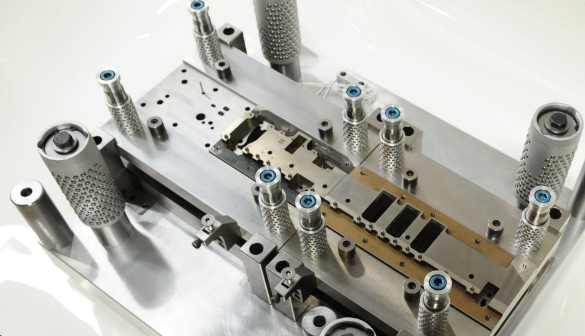
Metal press stamping is a cold-forming manufacturing process that uses mechanical force and specialized dies to transform flat sheet metal into precise three-dimensional components through operations including blanking, piercing, bending, and drawing.
So what is metal stamping in practical terms? Imagine placing a flat piece of aluminum or steel between two precisely engineered tool surfaces, then applying tremendous pressure. In milliseconds, that blank sheet becomes a finished part with exact dimensions, complex curves, and functional features. This is what is stamped metal at its core: raw material shaped into functional components through controlled force.
The Core Mechanics Behind Every Stamped Part
Understanding what is a stamping operation requires looking at three essential elements working together:
- The metal stamping press: A machine delivering controlled force ranging from a few tons to thousands of tons
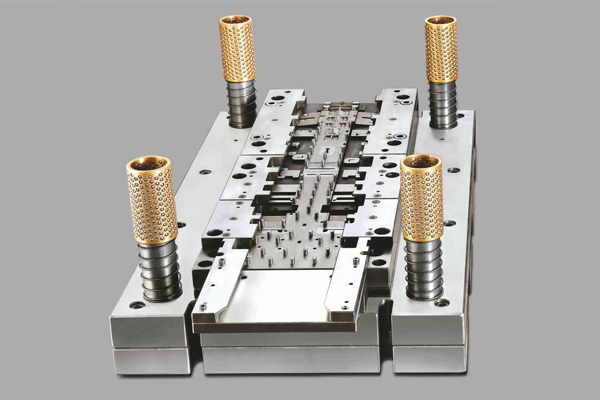
- The die set: Precision-machined tool surfaces that determine the final part geometry
- The workpiece: Flat sheet metal fed into the press, typically from coils or pre-cut blanks
When the press activates, the upper die descends onto the sheet metal resting on the lower die. The stamping meaning becomes clear at this moment: the material flows, bends, or shears according to the die geometry. Unlike machining processes that remove material, metal pressing reshapes it while maintaining material integrity.
This cold-forming approach offers distinct advantages. The process work-hardens the metal surface, increasing strength. Production speeds can reach 1,500 strokes per minute on high-speed mechanical presses. And once tooling is created, each subsequent part emerges virtually identical to the last.
Stamping vs Pressing: Clearing Up the Confusion
You'll often hear these terms used interchangeably, and here's why: they describe the same fundamental process. According to industry standards, stamping means using a stamping press to form net shapes from flat sheet metal using tool and die surfaces. The term "pressing" simply emphasizes the mechanical action involved.
However, subtle distinctions exist in practice:
- Stamping typically refers to the complete manufacturing method, encompassing all forming operations
- Pressing often describes the specific action of applying force or references the equipment itself
For manufacturing decision-makers, understanding this process matters because it directly impacts part cost, production timeline, and design possibilities. Throughout this guide, you'll discover how different press types, operations, and material choices combine to deliver the precision components modern industries demand.
Types of Stamping Presses and Their Applications
Choosing the right stamping press for your operation isn't just about buying equipment—it's about matching machine capabilities to your production goals. Think of it this way: you wouldn't use a sledgehammer to hang a picture frame, and you wouldn't select a 2,000-ton hydraulic press for thin-gauge electronic components.
Today's metal stamping facilities rely on three primary press types, each engineered for specific applications. Understanding their differences helps you make informed decisions about equipment investments, production planning, and part quality expectations.
Mechanical Presses for High-Volume Production
When speed drives your bottom line, a mechanical press machine delivers. These workhorses of the stamping industry use a flywheel-driven system to generate force, making them ideal for high-volume production runs where consistency matters.
Here's how mechanical presses work: an electric motor continuously spins a heavy flywheel, storing kinetic energy. When the clutch engages, this stored energy transfers through a crankshaft or eccentric gear mechanism to drive the ram downward. The result? Rapid, repeatable strokes that can exceed 1,000 parts per minute on high-speed models.
Key advantages of mechanical presses include:
- Exceptional speed: Stroke rates from 20 to over 1,500 strokes per minute depending on configuration
- Consistent timing: Fixed stroke profiles ensure repeatable part quality across millions of cycles
- Lower operating costs: Simpler mechanical systems typically mean reduced maintenance requirements
- Energy efficiency: The flywheel recovers energy during the return stroke
However, mechanical presses have limitations worth considering. According to Stamtec's technical analysis, traditional mechanical presses operate at a fixed speed throughout the entire stroke length. If slower slide velocity is needed for proper forming—since metal generally flows better at slower speeds—the flywheel must rotate more slowly. This reduces available working energy, potentially preventing proper part formation.
The press mech system also delivers maximum tonnage only at the bottom of the stroke. For applications requiring full force throughout the working portion, this characteristic may limit forming capabilities.
Hydraulic and Servo Press Advantages
What happens when your parts demand more control than mechanical systems provide? This is where hydraulic and servo presses demonstrate their value.
Hydraulic Presses: Power and Versatility
A steel press powered by hydraulic systems offers something mechanical presses cannot: full force at any point in the stroke. Fluid pressure generated by pumps drives the ram, enabling variable speed and dwell capabilities that accommodate complex forming operations.
Hydraulic press dies excel in applications requiring:
- Deep drawing: The ability to pause mid-stroke allows material to flow without tearing
- Heavy materials: Consistent force application handles high-tensile steels and thick stock
- Adjustable force: Operators can fine-tune pressure for different materials and part geometries
- Longer stroke lengths: Ideal for parts requiring significant material displacement
The trade-off? Hydraulic stamping presses typically operate slower than their mechanical counterparts. Cycle times may run 50% longer for equivalent operations. But for complex stamped metal parts where quality trumps quantity, this compromise often makes sense.
Servo Presses: The Best of Both Worlds
Imagine combining mechanical press speed with hydraulic press flexibility. That's exactly what servo technology delivers. As industry experts note, servo presses offer the slide velocity variability of hydraulic presses at the same or faster production speeds than mechanical presses.
The secret lies in the drive system. Servo motors replace the traditional flywheel, clutch, and brake assembly. This configuration provides full working energy during the stroke at any speed—even supplying continuous force while dwelling.
What makes stamping presses with servo drives particularly valuable is their programmability:
- Variable speed profiles: Move quickly through non-working portions, slow down for optimal forming
- Precise position control: The crankshaft position can be manipulated for highly accurate stroke profiles
- Multiple motion modes: Pendulum mode, link mode, and custom profiles accommodate diverse applications
- Quick changeovers: Reprogramming stroke parameters takes minutes, not hours
Some manufacturers report doubling production output after switching to servo presses, according to Stamtec. The technology also enables consolidation—a servo press can often perform more drawing and forming in one station than a traditional mechanical press accomplishes in multiple stations.
Press Type Comparison: Specifications That Matter
Selecting between these technologies requires evaluating several factors simultaneously. The following comparison addresses the specifications manufacturing decision-makers need most:
| Specification | Mechanical Press | Hydraulic Press | Servo Press |
|---|---|---|---|
| Tonnage Range | 5 to 6,000+ tons | 10 to 10,000+ tons | 30 to 3,500+ tons |
| Stroke Speed | 20-1,500+ SPM | 10-60 SPM typical | 20-300+ SPM (variable) |
| Energy Efficiency | Good (flywheel recovery) | Moderate (continuous pump) | Excellent (on-demand power) |
| Force Control | Fixed profile, max at BDC | Full force throughout stroke | Programmable throughout stroke |
| Best Applications | Blanking, shallow forming, high-volume | Deep drawing, heavy materials, complex forms | Precision parts, variable production, difficult forming |
| Typical Industries | Automotive body panels, appliances, HVAC | Aerospace, cookware, heavy equipment | Electronics, medical devices, automotive precision |
| Initial Investment | Lowest | Moderate | Highest |
| Maintenance Complexity | Lower | Moderate (fluid systems) | Moderate (electronics) |
Tonnage Requirements: A common rule suggests selecting press capacity at 60-70% of maximum rated tonnage for your application. This provides margin for material variations and extends equipment life. For drawing operations, calculate tonnage based on material type, thickness, and draw depth rather than simply part size.
Stroke Length Considerations: Match stroke length to your deepest forming requirement plus clearance for material feed and part ejection. Servo presses offer an advantage here—even if rated for an eight-inch stroke, they can operate in pendulum mode at two, four, or six inches, optimizing cycle time for shallower operations.
The choice between these stamping press types ultimately depends on your production mix. High-volume, consistent operations favor mechanical systems. Complex forming with premium quality requirements points toward hydraulic or servo technology. And facilities handling diverse part types increasingly find servo presses deliver the flexibility that justifies their higher initial investment.
Essential Stamping Operations and Techniques
Now that you understand the presses powering metal stamping, let's explore what actually happens when sheet metal meets die. Each stamping process serves a specific purpose, and knowing when to apply each technique separates successful projects from costly mistakes.
Think of the metal stamping process like a vocabulary—each operation is a word, and combining them creates complex sentences. A simple bracket might require just blanking and bending. A deep-drawn automotive component could involve blanking, multiple draw stages, piercing, and flanging. Understanding these building blocks helps you communicate effectively with manufacturers and evaluate whether proposed solutions match your requirements.
Cutting Operations - Blanking and Piercing Explained
Cutting operations remove material from the sheet to create profiles, holes, and features. Two primary techniques dominate this category, and understanding their differences prevents common design errors.
Blanking: Creating the Foundation
Blanking cuts a flat shape from the larger sheet metal stock. The cut piece—called the blank—becomes your workpiece for subsequent operations. This is typically the first step in any stamping sequence, establishing the outer boundary of your finished part.
A practical example of stamping through blanking: manufacturing automotive brackets. A progressive die first blanks the bracket's perimeter from coil stock, creating a precisely shaped flat piece that then moves to forming stations.
- What it produces: Flat shapes with defined outer profiles
- Common applications: Washers, gaskets, mounting plates, initial workpieces for further forming
- Key consideration: Edge quality varies—standard blanking produces a slight burr, while fine blanking achieves clean, shear-quality edges
- Design tip: Maintain corner radii of at least half the material thickness to prevent die damage and improve edge quality
Piercing: Internal Features and Holes
While blanking removes the outer shape, piercing creates internal features. The process punches holes, slots, and cutouts through the sheet metal, with the removed material becoming scrap rather than the workpiece.
According to industry guidelines, minimum hole diameters depend on material properties. For ductile materials like aluminum, holes should be at least 1.2 times material thickness. Higher-tensile materials like stainless steel require diameters of at least 2 times thickness to prevent punch damage.
- What it produces: Holes, slots, and internal cutouts
- Common applications: Fastener holes, ventilation openings, weight reduction features, wire routing
- Related techniques: Lancing (cutting without removing material to create tabs), nibbling (progressive small cuts for complex shapes)
- Design tip: Position holes at least 2 times material thickness from edges to prevent deformation during subsequent bending
In pressing and stamping operations, sequencing matters. Piercing typically occurs before bending operations—creating holes after bending introduces stress concentrations that can cause cracking or dimensional distortion.
Forming Operations - From Simple Bends to Complex Draws
Forming operations reshape the metal without removing material. This is where flat blanks transform into three-dimensional components, and where the real engineering complexity begins.
Bending: Angular Transformation
Bending applies force to create angular changes in the workpiece. A punch presses the sheet into a die cavity, creating L-shapes, U-channels, V-profiles, and more complex geometries.
- Air bending: The punch doesn't bottom out in the die—angle adjustments happen by controlling punch depth. More flexible but less precise.
- Bottoming: The punch forces material fully into the die cavity. Produces accurate, repeatable angles but requires matched tooling.
- Coining: Extreme pressure creates permanent bends with minimal springback—essential for tight-tolerance applications.
Drawing: Creating Depth
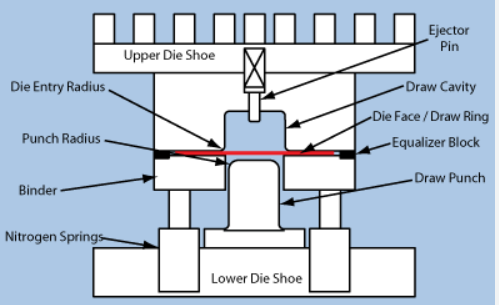
When you need parts with significant depth—cups, enclosures, housings—drawing operations pull the blank into a die cavity. The process stretches and flows material rather than simply bending it.
Blank stamping metal through drawing requires careful material selection. The sheet must have sufficient ductility to flow without tearing. Aluminum and low-carbon steel excel here, while higher-strength materials may require multiple drawing stages or annealing between operations.
- Shallow drawing: Depth-to-diameter ratios under 1:1
- Deep drawing: Ratios of 2:1 or even 3:1, often requiring multiple stages and blank holder pressure control
- Applications: Beverage cans, cookware, automotive fuel tanks, electronic enclosures
Embossing: Surface Patterns and Features
Embossing creates raised or recessed patterns on the metal surface without cutting through the material. The process presses sheet metal against a patterned die, creating three-dimensional surface features.
- What it produces: Logos, identification marks, stiffening ribs, decorative textures
- Key advantage: Adds visual or functional features without secondary operations
- Material consideration: Aluminum's excellent ductility makes it particularly suitable for detailed embossing
Coining Steel and Other Materials
Coining steel requires extreme pressures—this cold-forming technique compresses material between two dies to create fine details with exceptional dimensional accuracy. The process actually exceeds the material's yield strength, permanently setting the desired shape with minimal springback.
- What it produces: Currency, medals, precision features requiring tight tolerances
- Key benefit: Superior surface finish and dimensional stability
- Trade-off: Higher tooling costs and slower cycle times than standard stamping
Flanging: Edge Formation
Flanging bends the edge of a part—typically at 90 degrees—to create attachment surfaces, increase rigidity, or prepare for assembly. Unlike standard bending, flanging specifically addresses edge geometry.
- Stretch flanging: The flange curves outward, stretching material along the edge
- Shrink flanging: The flange curves inward, compressing material
- Applications: Automotive panels, ductwork connections, enclosure edges
How Operations Combine in Progressive Die Sequences
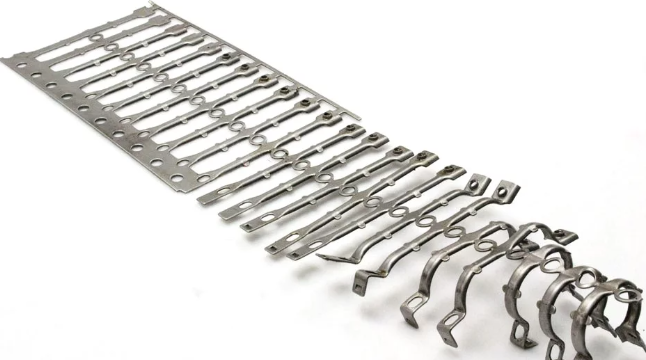
Progressive die stamping transforms these individual operations into an automated production powerhouse. As industry sources explain, a progressive die performs every transformation in one controlled sequence—each station handles a specific action, and by the time the strip reaches the final station, the part exits fully formed.
Consider a typical stamping and pressing sequence for an automotive bracket:
- Station 1: Pilot holes pierced for accurate material positioning
- Station 2: Peripheral blanking establishes outer profile
- Station 3: Internal features pierced
- Station 4: First bend formed
- Station 5: Second bend formed
- Station 6: Part separated from carrier strip
This approach delivers consistent parts at high speeds—the same geometry emerges whether you're producing the first part or the millionth. Once the die is dialed in, dimensional drift essentially disappears.
With these operations understood, the next critical decision becomes material selection. The right material choice enables these operations to succeed, while the wrong choice leads to cracking, tearing, or dimensional failures that no amount of process optimization can overcome.
Material Selection for Optimal Stamping Results
You've selected your press type and understand the operations involved. But here's where many projects stumble: choosing the wrong material. It's like having the perfect recipe but using the wrong ingredients—the result disappoints regardless of your technique.
Material selection in metal press stamping isn't simply picking the cheapest option that looks right. Every metal behaves differently under stress. Some flow gracefully into complex shapes; others crack at the first hint of a tight bend. Understanding these behaviors prevents expensive tooling damage, production delays, and quality failures that can derail entire projects.
Key Properties That Determine Material Suitability
Before diving into specific metals, let's examine what makes a material suitable for stamping. These properties directly influence whether your chosen metal will cooperate with your tooling or fight it at every step:
- Formability: How easily the material deforms without cracking. Measured by the Limiting Drawing Ratio (LDR), higher values indicate better deep-drawing capability. According to comparative data, copper leads with LDR values of 2.1-2.5, while stainless steel typically ranges from 1.8-2.0.
- Tensile Strength: The material's resistance to breaking under tension. 304 stainless steel offers 515-620 MPa, making it ideal for structural brackets. Compare this to C11000 copper at 220 MPa—suitable only for non-load-bearing components.
- Ductility: Measured as elongation at break, this indicates how much a material can stretch before fracturing. Stainless steel's 40-60% elongation delivers superior impact resistance, while aluminum's 10-25% requires more careful bend radius design.
- Work Hardening: Some materials strengthen as they're formed. This can be advantageous for final part strength but complicates multi-stage operations that require subsequent forming after initial deformation.
- Surface Finish Requirements: Stainless steel accepts mirror polishing to Ra 0.02μm. Aluminum commonly receives brushed finishes. Copper requires clear coating to prevent oxidation—a critical consideration for visible applications.
Steel Grades for Structural Stamping Applications
Steel stamping dominates industrial manufacturing for good reason: the material offers an unmatched combination of strength, cost-effectiveness, and versatility. But "steel" encompasses dozens of grades, each engineered for specific demands.
Carbon Steels: The Workhorse Materials
Mild carbon steel remains the most economical choice for general stamping applications. According to Verdugo Tool's material guide, cold-rolled carbon steels offer good strength and surface finish properties, making them common choices for machinery parts and structural components.
- Mild carbon steel: Easily formed and welded with good strength and ductility—ideal for brackets, housings, and general fabrications
- Spring steels: High-carbon formulations engineered for resilience and high yield strength, used in springs and high-stress components
- Galvanized steels: Zinc-coated for enhanced corrosion resistance, commonly specified for construction and automotive applications
Stainless Steel Stamping: When Corrosion Matters
Stainless steel stamping addresses applications where appearance, hygiene, or environmental exposure demand superior corrosion resistance. However, this performance comes with trade-offs in formability and cost.
- 304L stainless: Excellent formability and corrosion resistance. Frequently used in food processing equipment and medical devices where cleanliness is paramount.
- 316 stainless: Contains molybdenum for enhanced corrosion resistance. The go-to choice for marine or chemical applications. Available in full hard, half hard, and quarter hard tempers.
- 301 stainless: Provides high strength with good ductility. Commonly selected for springs, clips, and clamps where mechanical performance matters most.
- 321 stainless: Titanium-stabilized for high-temperature environments. Often specified for exhaust and engine applications.
Stamped steel in stainless grades requires understanding temper conditions. Annealed material draws and forms easily but may require heat treatment for final strength. Full-hard tempers resist forming but deliver superior finished properties. Matching temper to your operation sequence prevents cracking during production.
When to Choose Aluminum, Copper, or Specialty Alloys
Not every application suits steel. Weight constraints, electrical requirements, or thermal management needs often push material selection toward alternative metals.
Aluminum Stamping: Lightweight Performance
Switching from steel to stamped aluminum reduces component weight by 40-60%. According to SAE International's 2023 report, this weight reduction improves vehicle fuel efficiency by approximately 7%—a significant consideration for automotive and aerospace applications.
Common aluminum grades for metal stamping materials include:
- 6061 aluminum (O to T6 tempers): Highly corrosion-resistant with good weldability and relatively high strength. Standard for structural applications.
- 2024 aluminum (O to T6 tempers): Superior strength-to-weight ratio compared to 6061. A popular choice for aerospace components where every gram matters.
- 5052-H32 aluminum: Excellent formability with outstanding corrosion resistance. Ideal for marine environments and automotive manufacturing.
However, aluminum stamping presents challenges. The material sometimes resists forming and drawing operations that steel handles easily. Engineering for manufacturability becomes critical—what works in steel may crack in aluminum without design modifications.
Copper Stamping: Conductivity and Formability
When electrical or thermal conductivity drives your design, copper stamping delivers unmatched performance. At 100% IACS (International Annealed Copper Standard), copper sets the benchmark against which all other metals' conductivity is measured. Aluminum reaches only 61%, and stainless steel a mere 3%.
Copper also leads in formability, making it excellent for complex geometries. Its 2.1-2.5 LDR rating enables single-stage deep drawing that would require multiple operations in other materials. This advantage translates to faster production and lower tooling costs for intricate parts.
- Best applications: Electrical busbars, heat sinks, connectors, RF shielding components
- Surface consideration: Requires clear coating or plating to prevent oxidation in visible applications
- Cost factor: Approximately 420% the cost of stainless steel baseline—significant for high-volume applications
Brass and Specialty Alloys
Brass—an alloy of copper and zinc—offers good machinability and corrosion resistance for electrical and decorative applications. Beryllium copper combines excellent electrical conductivity with high strength, making it ideal for precision instruments and electrical connectors where both properties matter.
For extreme environments, exotic metals enter the picture. Inconel withstands temperatures that would destroy conventional alloys. Titanium offers aerospace-grade strength at 55% of steel's density. These materials demand specialized tooling and expertise but enable applications impossible with standard metal for stamping.
Material Properties Comparison
The following table consolidates critical selection criteria across common stamping materials:
| Material | Formability (LDR) | Typical Applications | Cost Index | Surface Finish Quality |
|---|---|---|---|---|
| Mild Carbon Steel | 1.9-2.2 | Brackets, housings, structural components | Low | Good; accepts paint/coating well |
| 304 Stainless Steel | 1.8-2.0 | Food equipment, medical devices | 100% baseline | Excellent; mirror polish to Ra 0.02μm |
| 316 Stainless Steel | 1.7-1.9 | Marine, chemical processing | 120-140% | Excellent; superior corrosion appearance |
| 6061 Aluminum | 1.9-2.3 | Structural enclosures, automotive | 35% | Good; typically brushed or anodized |
| 5052 Aluminum | 2.0-2.4 | Marine, HVAC components | 40% | Good; excellent for forming |
| C11000 Copper | 2.1-2.5 | Electrical connectors, heat sinks | 420% | Requires coating; develops patina |
| Brass (C26000) | 2.0-2.3 | Electrical, decorative applications | 280% | Good; polishes well |
Material Thickness and Press Capacity Guidelines
Material thickness directly impacts press selection and operation success. According to Protolabs' design guidelines, minimum flange length on sheet metal parts must be at least 4 times the material thickness. Hole diameters should meet minimum size requirements based on material—generally at least material thickness, with 0.062 in. minimum for thin materials.
General thickness guidelines for different press capacities:
- Light-duty presses (under 100 tons): Best suited for materials up to 0.060 in. (1.5mm) in mild steel, 0.090 in. (2.3mm) in aluminum
- Medium-duty presses (100-500 tons): Handle 0.060-0.187 in. (1.5-4.7mm) steel, proportionally thicker for softer metals
- Heavy-duty presses (500+ tons): Required for stock exceeding 0.187 in. (4.7mm) or high-strength alloys
Remember that cutting force requirements vary significantly by material. Stainless steel demands 250-400 N/mm² cutting force with corresponding high tool wear. Aluminum requires only 80-150 N/mm², enabling faster machining and extended tool life.
Selecting the right metal for stamping establishes the foundation for everything that follows. But even the best material choice means little without understanding how stamping compares to alternative manufacturing methods—the subject we'll explore next.
Metal Stamping vs Alternative Manufacturing Methods
You've learned what stamping can do—but here's the question that actually determines your project's success: Is stamping the right choice for your specific application? Sounds simple, yet this decision trips up countless manufacturing decision-makers who either commit to expensive tooling prematurely or overlook stamping's advantages for their volume requirements.
Let's cut through the confusion. Every manufacturing method has a sweet spot where it delivers optimal value. Understanding where metal press stamping excels—and where alternatives make more sense—saves you from costly missteps before the first dollar hits tooling investment.
Volume Thresholds - When Stamping Becomes Cost-Effective
Imagine you need 500 brackets. A metal stamping machine could produce them beautifully, but should it? The answer depends entirely on understanding how production volume reshapes the economics of each manufacturing approach.
The Tooling Investment Reality
Here's what makes stamping manufacturing fundamentally different from alternatives: significant upfront tooling costs create a hurdle you must clear before production metal stamping becomes economical. According to industry analysis, stamping tooling represents a commitment, not just a cost. Die design and fabrication typically range from $10,000 to $50,000 depending on part complexity, with lead times of 4-8 weeks before production begins.
Compare this to laser cutting, which requires zero tooling investment. As comparative research demonstrates, laser cutting delivers 40% cost reduction versus stamping for batches under 3,000 units specifically because it eliminates that $15,000+ tooling expense entirely.
So where does stamping become the smart choice? The break-even analysis reveals clear thresholds:
- Under 1,000 units: Laser cutting, waterjet, or CNC machining typically wins on total project cost
- 1,000-3,000 units: Gray zone—detailed cost analysis required based on part complexity
- 3,000-10,000 units: Stamping becomes increasingly competitive as tooling amortizes
- Over 10,000 units: Stamping machines deliver significant per-unit cost advantages
The Hidden Volume Consideration
Here's what many buyers miss: it's not just about initial quantity. Ask yourself—will this part repeat? A stamping die serves years of production once created. If you need 2,000 parts annually for five years, that's 10,000 total units. Suddenly, stamping's economics shift dramatically in your favor.
Die casting presents a similar dynamic. According to manufacturing comparisons, die casting can actually be cheaper at the assembly level if it replaces multiple stamped parts, fasteners, or welding steps with one integrated component. The volume calculation must consider total system cost, not just per-part pricing.
Speed and Precision Trade-offs Across Methods
Production stamping delivers something no alternative can match at scale: speed. Once tooling is validated, stamping machines produce parts in seconds rather than minutes. A high-speed mechanical press running at 600 strokes per minute generates 36,000 parts per hour. Try matching that with laser cutting or CNC machining.
But speed means nothing if parts don't meet specifications. Here's where understanding each method's precision envelope becomes critical:
Precision Capabilities Compared
According to precision testing data, laser cutting achieves ±0.1mm tolerance with 100% fitment success, while stamping delivers ±0.3mm with approximately 87% fitment rate. That 13% difference can translate to significant rework costs in high-precision assemblies.
However, this comparison requires context. Stamping tolerances depend heavily on:
- Die quality: Precision-ground tooling delivers tighter tolerances than standard production dies
- Material consistency: Variations in sheet thickness affect final dimensions
- Operation type: Blanking and piercing achieve better tolerances than complex forming operations
- Press capability: Servo-driven metal stamping machines offer superior repeatability versus mechanical systems
CNC machining remains the precision champion, achieving tolerances of ±0.025mm or better. When your application demands exceptional accuracy—medical implants, aerospace critical components, or precision instruments—machining often justifies its higher per-part cost.
Lead Time Realities
Speed to first parts varies dramatically by method:
- Laser cutting: 24-48 hours from digital file to finished parts
- CNC machining: 3-7 days for typical components
- Waterjet cutting: 2-5 days
- Die casting: 8-12 weeks for tooling plus production
- Metal stamping: 4-8 weeks for tooling plus production
This timeline difference explains why prototyping almost never uses stamping. You validate designs through laser cutting or machining, then transition to production stamping once geometry is locked.
Comprehensive Manufacturing Method Comparison
The following table consolidates decision factors across the manufacturing methods most commonly compared to metal press stamping:
| Factor | Metal Stamping | Laser Cutting | CNC Machining | Waterjet Cutting | Die Casting |
|---|---|---|---|---|---|
| Production Volume Suitability | High volume (3,000+ units) | Low to medium (1-3,000 units) | Low to medium (1-1,000 units) | Low volume (1-500 units) | High volume (5,000+ units) |
| Unit Cost at 100 Units | $150-200+ (tooling amortized) | $8-15 | $25-75 | $15-30 | $200+ (tooling amortized) |
| Unit Cost at 10,000 Units | $0.50-3.00 | $6-12 | $20-60 | $12-25 | $1.50-5.00 |
| Dimensional Tolerance | ±0.1-0.3mm | ±0.1mm | ±0.025mm | ±0.1-0.2mm | ±0.1-0.5mm (as-cast) |
| Material Waste | 15-25% (skeleton scrap) | 10-20% (kerf + nesting gaps) | Variable (chip removal) | 10-20% | 5-15% (runners/gates) |
| Lead Time for First Parts | 4-8 weeks | 24-48 hours | 3-7 days | 2-5 days | 8-12 weeks |
| Tooling Investment | $10,000-50,000+ | None (digital files only) | Fixtures: $500-2,000 | None | $15,000-100,000+ |
| Geometry Capability | 3D forming from sheet | 2D profiles only | Full 3D machining | 2D profiles only | Complex 3D with cavities |
| Material Thickness Range | 0.1-6mm typical | 0.5-25mm | Virtually unlimited | 0.5-200mm | 1-10mm wall thickness |
Making the Right Choice for Your Application
With this framework established, how do you determine which method fits your project? Consider these decision paths:
Choose metal stamping when:
- Production volumes exceed 3,000 units or span multiple years
- Part geometry can be formed from flat sheet material
- Cycle time drives competitive advantage (high-speed production)
- Material thickness falls within 0.1-6mm range
- Design is stable with minimal expected changes
Choose laser cutting when:
- Volumes remain under 3,000 units
- Tight tolerances (±0.1mm) are required
- Design iterations are ongoing
- Time-to-market pressure is high
- Parts require 2D profiles without forming
Choose CNC machining when:
- Precision requirements exceed ±0.1mm
- Complex 3D geometries can't be formed from sheet
- Material removal from solid stock is acceptable
- Low volumes don't justify tooling investment
Choose die casting when:
- Part requires internal cavities, ribs, or bosses impossible in sheet forming
- A single casting can replace multiple stamped parts and fasteners
- High volumes (10,000+ units) justify tooling investment
- Non-ferrous alloys meet material requirements
As manufacturing experts note, if your part "wants to be a folded sheet," stamping is naturally efficient. If your part "wants to be a 3D housing," die casting is usually the more direct route.
Understanding these trade-offs positions you to make informed decisions—but even the best manufacturing method selection means little without robust quality control systems ensuring every part meets specifications.
Quality Control and Defect Prevention Strategies
You've selected the right press, mastered the operations, and chosen optimal materials. But here's what separates world-class stamping operations from mediocre ones: quality control systems that catch problems before they become expensive headaches. Without robust inspection methods and defect prevention strategies, even the best-equipped facility produces scrap.
Metal precision stamping demands more than visual spot-checks. Industries like automotive and aerospace require documented proof that every stamped metal component meets exacting specifications. Let's explore how precision stamping operations maintain quality from first piece to millionth.
Tolerance Standards for Precision Stamped Components
What tolerances can you realistically expect from precision stamping parts? The answer depends on several factors—operation type, material properties, die condition, and inspection methods employed.
Standard stamped parts typically achieve ±0.1-0.3mm dimensional tolerance. However, precision stamping operations using advanced tooling and process controls can reach ±0.05mm or better on critical dimensions. Understanding where your tolerances actually matter prevents over-specification that drives unnecessary cost.
Dimensional Inspection Methods
Modern stamping facilities employ multiple inspection technologies to verify part conformance:
- Coordinate Measuring Machines (CMM): These systems sense discrete points on part surfaces, providing detailed dimensional data. According to quality assurance experts, CMMs confirm geometric conformity and ensure every stamped piece functions optimally in its intended application.
- 3D scanning: Laser-based systems capture complete surface geometry, comparing actual parts against CAD models to identify deviations invisible to manual inspection.
- Optical vision systems: Real-time monitoring during production catches dimensional drift before it produces defective parts, enabling immediate process correction.
- Go/no-go gauges: Simple but effective fixtures verify critical features meet minimum/maximum specifications at production speed.
Surface Quality Assessment
Dimensional accuracy means nothing if surface quality fails. Precision stamping parts undergo evaluation for scratches, galling marks, die lines, and surface contamination. Visual inspection under controlled lighting catches obvious defects, while profilometers quantify surface roughness for applications requiring specific Ra values.
Preventing Common Stamping Defects Before They Occur
The most expensive defect is the one you discover after shipping. According to stamping simulation specialists, wrinkles, splits, and springback are the three most common defects encountered during sheet metal stamping—and all three can be predicted before any tooling is manufactured.
Springback: The Shape-Shifting Problem
Springback occurs when stamped parts change shape after forming, failing to hold the die's intended geometry. The elastic region of the material's stress-strain curve causes the metal to partially "relax" after pressure releases. High-strength steels exhibit particularly severe springback due to smaller differences between yield strength and tensile strength.
Prevention strategies include:
- Over-bending or compensating die geometry to account for expected springback
- Inducing positive stretching to increase part stiffness
- Using coining operations at critical bend locations
- Selecting materials with lower elastic recovery characteristics
Wrinkling: When Material Bunches Up
Wrinkling happens when compressive strains push material together, causing overlapping or buckling. Thinner materials wrinkle more easily than thicker stock. As forming experts explain, wrinkles often indicate wrong process selection or incorrect binder force parameters.
Prevention approaches include:
- Adding blank holders or binders to restrain flat sheet during forming
- Incorporating draw beads to initiate maximum stretch
- Adjusting blank size to ensure adequate material flow
- Switching from forming to drawing operations where appropriate
Tearing and Splitting: When Material Fails
Splits occur when strains exceed the material's safe limits, causing localized necking followed by complete fracture. The Forming Limit Diagram (FLD) and Forming Limit Curve (FLC) for each material define where splitting will occur based on strain direction and magnitude.
Solving splitting requires evaluating material type, thickness, minimum form radius, form depth, and potentially adding intermediate forming stages.
Galling: Surface Damage During Forming
Galling results from metal-to-metal adhesion between the workpiece and die surfaces. This friction-induced damage creates surface defects and accelerates die wear. Prevention involves proper lubrication, die coatings, and material selection that minimizes adhesion tendency.
Inspection Checkpoints Throughout Production
Quality assurance in metal stamping follows three critical stages, each with specific inspection requirements:
- Prefabrication inspection: Raw material verification ensures incoming stock meets property specifications. Failure Mode and Effects Analysis (FMEA) identifies potential failures before production begins. Advanced Product Quality Planning (APQP) establishes manufacturing procedures satisfying customer requirements.
- Production monitoring: Statistical Process Control (SPC) tracks real-time data to predict trends and maintain process stability. Optical vision systems detect anomalies immediately, reducing variability and preventing defect propagation.
- Post-fabrication testing: CMM measurements, 3D scanning, and non-destructive testing verify finished parts meet all quality standards before shipment.
How CAE Simulation Prevents First-Run Failures
Here's what transforms good stamping operations into great ones: catching problems virtually before cutting any steel. According to CAE simulation specialists, advanced forming simulation software enables virtual die try-outs that identify wrinkling, splitting, and springback issues before tooling manufacture.
Modern stamping design leverages these digital tools to:
- Optimize blank shape and size before cutting first samples
- Determine correct number of forming stages
- Calculate springback compensation for complex 3D geometries
- Fine-tune process parameters like press speed and blank holder force
- Predict material behavior variations across production batches
This proactive approach delivers measurable results. Partners utilizing advanced CAE simulation and precision stamping design methodologies consistently achieve higher first-pass approval rates, reducing costly tool modifications and production delays. When evaluating stamping suppliers, ask about their simulation capabilities—it's a strong indicator of engineering sophistication and quality commitment.
With quality systems ensuring consistent output, the next consideration becomes understanding how these capabilities translate across different industry applications—each with unique certification requirements and tolerance demands.
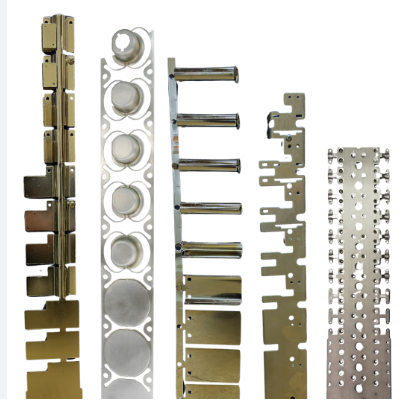
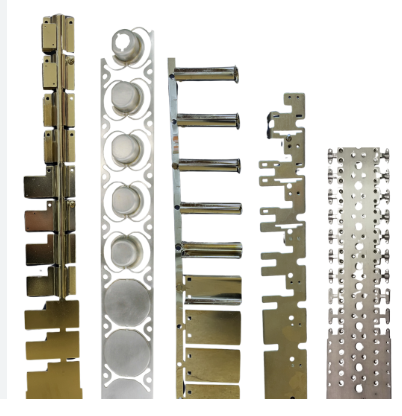
Industry Applications and Sector-Specific Requirements
Understanding quality control is essential—but here's what really brings metal press stamping to life: seeing how different industries apply these capabilities to solve real manufacturing challenges. Each sector demands something different from stamped components, and knowing these requirements helps you evaluate whether a stamping partner truly understands your industry's unique needs.
From the body panels protecting vehicle occupants to the microscopic connectors enabling your smartphone's functionality, metal stamping components touch virtually every aspect of modern life. Let's explore how major industries leverage this versatile manufacturing process—and what distinguishes sector-specific excellence from generic production.
Automotive Stamping - From Body Panels to Safety Components
No industry depends more heavily on automotive metal stamping than vehicle manufacturing. According to industry research, the automotive sector depends heavily on punch press stamping to produce various components, with precision being vital as stamped parts must fit seamlessly into vehicles to meet safety and performance standards.
The scope of automotive stamping extends far beyond what most people imagine. A single modern vehicle contains thousands of metal stamped parts—from visible exterior panels to hidden structural reinforcements that protect occupants during collisions.
Common Automotive Stamped Components:
- Body panels: Doors, hoods, fenders, and roof panels requiring Class A surface finish quality
- Structural reinforcements: B-pillars, floor pans, and crash structures engineered for energy absorption
- Brackets and mounts: Engine mounts, suspension brackets, and interior component supports
- Transmission components: Progressive die stamping produces precision transmission parts and spring pack assemblies
- Drivetrain parts: Bolts, washers, and assemblies for modern vehicle systems
- Ball thrust bearing assemblies: Used in applications like scissor jacks
- Headlight clips: Progressive die stainless steel components requiring corrosion resistance
What sets automotive metal stamping apart from general manufacturing? Certification requirements create a significant barrier to entry. As certified suppliers note, automotive stamping requires IATF 16949 and ISO 9000 certifications, demonstrating capability to produce components with extremely tight tolerances meeting precise manufacturing requirements.
Tolerance demands in automotive applications vary by component function:
- Visible panels: Gap consistency within ±0.5mm for aesthetic alignment
- Structural components: Critical dimensions held to ±0.1mm for assembly fitment
- Safety-critical parts: 100% inspection with zero-defect requirements
The speed and cost-effectiveness of stamping make it indispensable for automakers producing millions of vehicles annually. Stainless steel metal stamping addresses components requiring enhanced corrosion resistance, while high-strength steel stamping produces safety structures meeting increasingly stringent crash standards.
Aerospace: Lightweight Precision at Extreme Standards
When failure isn't an option, aerospace manufacturers turn to stamping for components where precision and reliability are paramount. According to punch press stamping research, aerospace stamping produces components for aircraft structures, engines, and interior systems, with the process allowing for creation of lightweight, high-strength parts meeting strict regulatory requirements.
Aerospace Stamped Components:
- Structural brackets: Lightweight aluminum and titanium components for airframe assembly
- Engine components: Heat shields, mounting brackets, and ducting requiring temperature resistance
- Interior fittings: Seat frames, overhead bin hardware, and cabin system components
- Control surface elements: Precision linkages and actuator components
- Electrical shielding: EMI/RFI protection enclosures for avionics systems
Aerospace manufacturers often use specialized materials like titanium or aluminum alloys, which can be effectively shaped using advanced stamping techniques. The industry's focus on weight reduction makes every metal stamped part a potential opportunity for optimization—saving ounces translates to significant fuel savings over an aircraft's operational lifetime.
Certification requirements in aerospace exceed even automotive standards. AS9100 quality management system certification, material traceability documentation, and first-article inspection reports accompany every production lot. Tolerance demands often reach ±0.05mm on critical features, requiring precision stamping capabilities that few suppliers possess.
High-Precision Demands in Medical and Electronics
When components shrink to millimeter scale while quality expectations intensify, medical stamping and electronics manufacturing reveal the true precision potential of modern stamping operations.
Medical Device Applications
Medical devices often include complex, high-precision components demanding consistent quality. According to industry sources, punch press stamping produces parts for surgical instruments, diagnostic equipment, and implants, with the ability to work with specialized materials like stainless steel and titanium ensuring components meet strict hygiene and performance standards.
Medical Stamped Components:
- Surgical instruments: Forceps, clamps, retractors, and cutting tools requiring exceptional edge quality
- Diagnostic equipment: Sensor housings, mounting brackets, and precision mechanical components
- Implant components: Titanium and stainless steel elements requiring biocompatibility
- Electro-mechanical part stamping: Connectors and contacts for powered medical devices
- Drug delivery systems: Precision springs, clips, and actuator components
Medical stamping demands ISO 13485 certification for quality management systems specific to medical devices. Material traceability, cleanroom-compatible processing, and validation documentation create regulatory compliance requirements that extend far beyond dimensional accuracy.
Electronics Industry Requirements
The electronics industry requires small, intricate components produced quickly and consistently. As manufacturing research confirms, stamping meets this demand by manufacturing connectors, circuit board components, and casings with exceptional accuracy.
Electronics Stamped Components:
- Connectors: USB, HDMI, and proprietary interface terminals
- EMI shielding: Metal enclosures protecting sensitive circuits from electromagnetic interference
- Heat sinks: Copper and aluminum components managing thermal dissipation
- Battery contacts: Spring-loaded connections requiring consistent force characteristics
- Lead frames: Precision copper components for integrated circuit packaging
As devices become smaller and more sophisticated, the need for high-precision stamping grows. Metal stamping components in electronics often feature tolerances below ±0.05mm, with surface finish requirements preventing electrical contact issues. High-speed progressive dies produce millions of identical connectors annually, with statistical process control ensuring consistency across production runs.
HVAC and Construction Applications
Not every stamped part requires aerospace-level precision. HVAC metal stamping and construction applications demonstrate how the process scales to accommodate high-volume, cost-sensitive manufacturing while maintaining functional quality.
According to industry analysis, the construction industry benefits from punch press stamping for producing structural components, fasteners, and fixtures, with stamped metal parts used in everything from building frameworks to HVAC systems.
HVAC and Construction Stamped Components:
- Ductwork components: End caps, transitions, and connection flanges
- Mounting brackets: Equipment supports, hangers, and structural attachments
- Grilles and registers: Air distribution components with decorative finishes
- Structural fasteners: Specialized clips, brackets, and connection hardware
- Roofing components: Flashing, clips, and panel connection systems
- Electrical boxes: Junction boxes, outlet housings, and panel enclosures
This process enables mass production of durable, cost-effective parts meeting demands of large-scale construction projects. While tolerances may relax compared to aerospace standards, consistency remains critical—a mounting bracket that varies by millimeters creates installation headaches across thousands of installations.
Emerging and Specialized Applications
Beyond these major sectors, metal press stamping serves diverse specialized applications:
Renewable Energy: Solar panel mounting hardware, wind turbine components, and energy storage system brackets leverage stamping's cost-effectiveness for growing sustainable infrastructure demands.
Defense: Military applications demand reliable components for vehicles, weapons systems, and communication equipment meeting strict military specifications under extreme conditions.
Marine: Stainless steel and aluminum stamped parts withstand corrosive saltwater environments in boat, ship, and offshore platform applications.
Telecommunications: Network equipment housings, antenna components, and mobile device elements support global communication infrastructure expansion.
Each industry brings unique certification requirements, tolerance specifications, and quality expectations. When evaluating stamping partners, verify their experience in your specific sector—the certifications they hold, the materials they regularly process, and their understanding of industry-specific requirements signal capability to meet your particular needs.
Understanding industry applications helps identify the right manufacturing approach, but turning that knowledge into successful projects requires understanding the cost factors and economics that shape stamping project decisions.
Cost Factors and Project Economics
You've identified the right manufacturing method, selected appropriate materials, and understand quality requirements. But here's the question that ultimately determines project viability: what will it actually cost? Surprisingly, many metal stamping manufacturer quotes leave buyers confused about where their money goes—and more importantly, how to optimize spending without sacrificing quality.
Understanding metal press stamping economics requires breaking down the major cost drivers and recognizing how each interacts with your specific production requirements. Let's decode the financial realities that shape every stamping project.
Understanding Tooling Investment and Amortization
Tooling represents the largest fixed cost in any stamping project—and it's where many buyers make costly miscalculations. According to industry cost analysis, die design and fabrication typically range from $10,000 to $50,000 depending on part complexity, with lead times of 4-8 weeks before production begins.
Think of tooling as a long-term investment rather than a one-time expense. A well-designed progressive die serves years of production, meaning that initial $30,000 investment spread across 100,000 parts adds just $0.30 per unit. But that same tooling cost on a 1,000-part run adds $30.00 per unit—completely reshaping project economics.
What Drives Tooling Costs Higher?
- Die complexity: Simple dies for standard shapes cost significantly less than complex progressive dies with multiple stations, intricate features, or tight tolerances
- Material selection: Hardened tool steel costs more initially but extends die life, reducing long-term maintenance and replacement expenses
- Tolerance requirements: Precision-ground tooling achieving ±0.05mm tolerances demands additional engineering and manufacturing time
- Part geometry: Deep draws, multiple bends, and embossing features each add complexity and cost
Here's what many buyers overlook: die maintenance costs approximately $2,000-$5,000 annually, while storage requirements add facility overhead. Design modifications require costly tooling adjustments—or complete die replacements potentially costing thousands more. Locking down your design before tooling fabrication prevents these expensive surprises.
Material and Production Cost Components
Beyond tooling, ongoing costs fall into several categories that compound with every production run.
Material Costs
Raw material typically represents 40-60% of per-part cost in high-volume stamped metal parts production. As cost factor research explains, material choice significantly impacts budgets—aluminum may cost less per pound than stainless steel, but thickness requirements and scrap rates affect final economics.
Key material cost considerations include:
- Metal type and grade: Standard carbon steel costs less than stainless or specialty alloys
- Material thickness: Thicker stock requires more force, increasing energy consumption and tool wear
- Market conditions: Global supply disruptions and tariffs cause price volatility
- Scrap rates: Efficient nesting and blank design minimize waste, directly reducing material spend
Per-Part Production Costs
Once metal stamping equipment is running, per-part costs include machine time, labor, energy, and overhead. High-speed stamping machinery can produce parts in fractions of a second, making per-unit production costs remarkably low at volume—often $0.10-$2.00 per part depending on complexity.
Secondary Operations
Many stamped parts require additional processing that adds cost:
- Deburring and finishing: Removing sharp edges, polishing, or applying surface treatments
- Plating or coating: Zinc plating, powder coating, or specialty finishes for corrosion protection
- Assembly: Combining stamped components with fasteners or other parts
- Inspection: Quality verification adds time and resources but prevents costly field failures
Volume Economics - Finding Your Break-Even Point
Here's where stamping technology truly shines—or falls short. The break-even point where stamping becomes more economical than alternatives depends on your specific situation, but general thresholds provide useful guidance.
According to comparative cost research, laser cutting delivers 40% cost reduction versus stamping for batches under 3,000 units by eliminating tooling investment entirely. However, that equation reverses dramatically as volumes increase.
Volume Break-Even Guidelines:
| Production Volume | Typical Cost Leader | Stamping Cost Position |
|---|---|---|
| Under 500 units | Laser cutting | Tooling cost prohibitive |
| 500-3,000 units | Varies by complexity | Detailed analysis required |
| 3,000-10,000 units | Stamping competitive | Tooling amortizes favorably |
| Over 10,000 units | Stamping dominant | Significant per-unit advantage |
But volume isn't the only consideration. Ask yourself: will this part repeat over multiple years? A 2,000-unit annual requirement over five years totals 10,000 parts—placing you firmly in stamping's economic sweet spot.
Factors That Reduce Per-Part Costs
Smart project planning dramatically impacts final economics. The following strategies help optimize your stamping investment:
- Design simplification: Removing unnecessary complexity reduces tooling cost and improves production speed
- Material optimization: Right-sizing material thickness and selecting appropriate grades balances performance with cost
- Volume consolidation: Combining orders or planning larger batch sizes leverages economies of scale
- Quality tooling investment: Durable dies reduce maintenance downtime and replacement frequency
- Progressive die design: Combining multiple operations in one die eliminates secondary handling
- Efficient blank nesting: Optimizing material utilization reduces scrap rates
- Partner selection: Working with experienced suppliers avoids costly learning curves and rework
How Rapid Prototyping and First-Pass Rates Impact Project Economics
Here's a cost factor many buyers underestimate: time-to-market and development efficiency. Every week spent in design validation delays revenue generation. Every tooling revision adds thousands to project costs.
The difference between a 60% first-pass approval rate and a 93% rate translates directly to your bottom line. Failed samples mean additional engineering time, revised tooling, and extended timelines. According to manufacturing efficiency research, short run stamping allows for iterative testing and refinement, identifying issues before scaling to full production.
Modern stamping partners leverage advanced CAE simulation to predict and prevent defects before cutting any steel. This proactive approach delivers measurable results—partners like Shaoyi, with IATF 16949 certification and advanced simulation capabilities, demonstrate what's possible when engineering excellence meets production expertise. Their rapid prototyping in as little as 5 days and 93% first-pass approval rate exemplify how certified partners directly reduce total project cost through faster development cycles and fewer tooling iterations.
When evaluating stamping partners, consider these economic impact factors:
- Prototyping speed: How quickly can you validate designs before committing to production tooling?
- First-pass approval rates: What percentage of initial samples meet specifications?
- Engineering support: Does the partner offer DFM guidance that prevents costly design issues?
- Simulation capabilities: Can they predict and prevent defects virtually before tooling manufacture?
The right metal stamping manufacturer doesn't just quote competitive piece prices—they help you avoid the hidden costs that inflate project budgets. Certification standards like IATF 16949 signal quality systems that reduce rework, while engineering capabilities like CAE simulation prevent first-run failures that derail timelines.
With cost factors understood, the final step becomes selecting a stamping partner who can deliver on these economic promises—a decision we'll explore in detail next.
Selecting the Right Stamping Partner for Your Project
You've mastered the technical fundamentals—press types, operations, materials, and cost factors. Now comes the decision that determines whether all that knowledge translates into successful parts: choosing your stamping partner. This isn't about finding the lowest quote. It's about identifying a manufacturer whose capabilities, quality systems, and engineering expertise align with your specific project demands.
Think of partner selection like hiring a key team member. What is a stamping press without skilled operators and engineers who understand how to optimize it? The best metal stamping presses and stamping press machines mean nothing if the people running them lack the expertise to deliver consistent, defect-free results. Let's walk through the evaluation criteria that separate world-class partners from commodity suppliers.
Certification Standards That Signal Manufacturing Excellence
Certifications aren't just wall decorations—they're third-party validation that a supplier maintains rigorous quality systems. According to supplier selection experts, a robust quality management system (QMS) is non-negotiable and serves as the foundation for receiving consistent, reliable parts meeting your specifications.
Which certifications matter most? That depends on your industry:
- ISO 9001: The baseline quality management standard—if a supplier lacks this, walk away
- IATF 16949: Essential for automotive applications, demonstrating capability for extremely tight tolerances and rigorous PPAP requirements
- ISO 13485: Required for medical device components, ensuring compliance with healthcare regulatory frameworks
- AS9100: The aerospace standard signaling capability for flight-critical components
Stamping press manufacturers serving multiple industries often maintain multiple certifications. For example, Shaoyi holds IATF 16949 certification, demonstrating their capability to meet the stringent quality requirements automotive OEMs demand. This certification signals more than just documentation—it represents a culture of continuous improvement and defect prevention embedded throughout their operations.
Engineering Capabilities That Prevent Problems
Here's what separates true partners from parts suppliers: engineering expertise that improves your designs before production begins. According to industry guidance, the best stamping manufacturers offer upfront design for manufacturability consultations that allow you to perfect your prototype before moving to production.
Critical engineering capabilities to evaluate include:
- CAE simulation: Virtual die try-outs that identify wrinkling, splitting, and springback before cutting any tooling steel
- Design for Manufacturability (DFM) support: Expert guidance on optimizing your part geometry for stamping efficiency
- Tooling design expertise: In-house die design and fabrication capabilities ensuring seamless communication
- Material selection guidance: Recommendations based on forming requirements, not just cost
Advanced CAE simulation capabilities deserve special attention. As discussed in our quality control section, partners utilizing this technology—like Shaoyi with their advanced simulation tools—consistently achieve higher first-pass approval rates. Their 93% first-pass success rate directly translates to faster project timelines and lower development costs for customers.
Equipment Range and Production Capacity
Your partner's equipment determines what they can produce and how efficiently. Look beyond just the number of presses—evaluate whether their stamping press machine capabilities match your specific requirements.
Questions to ask about equipment:
- What tonnage range do their presses cover?
- Do they operate mechanical, hydraulic, or servo presses appropriate for your application?
- What's their capacity for stamping press automation?
- Can they handle your material type and thickness requirements?
Production capacity matters equally. According to supplier evaluation research, you should assess their current capacity and ask how they manage production scheduling. Also consider logistics capabilities—do they offer inventory management programs like Kanban or Just-in-Time delivery?
From Design Concept to Production-Ready Parts
Speed matters in competitive markets. How quickly can a partner move from your initial concept to validated samples? According to manufacturing experts, your manufacturer should be able to take you from prototype to production with turnkey services and end-to-end support.
Evaluate the complete project timeline:
- Prototyping speed: How quickly can they produce initial samples for validation?
- Tooling lead time: What's the typical timeline from design approval to production-ready dies?
- Ramp-up capability: Can they scale from prototype quantities to full production smoothly?
Top-tier partners like Shaoyi demonstrate what's possible—their rapid prototyping in as little as 5 days accelerates the design validation cycle, getting you to market faster while reducing development risk.
Partner Evaluation Checklist
Use this numbered checklist when evaluating potential metal stamping presses partners:
- Verify certifications: Confirm ISO 9001 minimum; require industry-specific certifications (IATF 16949 for automotive, ISO 13485 for medical)
- Assess engineering capabilities: Confirm CAE simulation, DFM support, and in-house tooling design
- Evaluate equipment match: Ensure press tonnage, type, and speed align with your part requirements
- Review industry experience: Request case studies and references from companies in your sector
- Confirm material expertise: Verify experience with your specified materials and supply chain reliability
- Assess prototyping timeline: Understand how quickly they can deliver validated samples
- Evaluate quality metrics: Ask about first-pass approval rates and defect prevention methods
- Review capacity and logistics: Ensure they can meet your volume requirements and delivery expectations
- Examine communication practices: Gauge responsiveness during the quotation process—it signals future partnership quality
- Request facility tour: Nothing reveals capability like seeing operations firsthand
Your Next Steps
Ready to move forward with your sheet metal stamping design project? Here's how to proceed:
Prepare your documentation: Gather complete drawings with tolerances, material specifications, and estimated annual volumes. The more detail you provide, the more accurate quotes you'll receive.
Request comprehensive quotes: Don't just compare piece prices. Ask for tooling costs, lead times, and secondary operation pricing to understand total project economics.
Engage engineering early: Share your designs with potential partners before finalizing. DFM feedback can prevent costly revisions later.
Start with prototypes: Validate designs through sample production before committing to full tooling investment.
For automotive applications requiring certified precision, explore partners like Shaoyi, whose combination of IATF 16949 certification, advanced CAE simulation, and rapid prototyping capabilities exemplifies the criteria outlined in this guide. Their engineering team delivers cost-effective, high-quality tooling tailored to OEM standards—exactly what this evaluation framework helps you identify.
The difference between a successful stamping project and a costly struggle often comes down to partner selection. Use these criteria to identify manufacturers who function as true extensions of your team—not just vendors filling orders.
Frequently Asked Questions About Metal Press Stamping
1. What is the difference between metal stamping and pressing?
Metal stamping and pressing describe the same fundamental manufacturing process. Stamping typically refers to the complete manufacturing method encompassing all forming operations like blanking, piercing, and bending. Pressing often emphasizes the specific mechanical action of applying force or references the equipment itself. Both terms involve using specialized dies to transform flat sheet metal into three-dimensional components through controlled mechanical force.
2. What is a metal stamping press?
A metal stamping press is a machine that converts rotational motion into linear motion, using force to form or cut sheet metal into desired shapes. The press uses a die—a specially designed tool—to shape, cut, or punch materials like steel or aluminum. Three main types exist: mechanical presses for high-speed production, hydraulic presses for deep drawing and heavy materials, and servo presses offering programmable motion profiles for precision control.
3. What are the four types of metal stamping?
The four primary metal stamping processes include progressive die stamping (multiple operations in sequence), transfer die stamping (parts moved between stations), four-slide stamping (complex bends from multiple directions), and deep drawing stamping (creating depth in parts). Each method serves different production needs, with progressive die stamping ideal for high-volume runs and transfer stamping suited for larger, more complex components.
4. When does metal stamping become more cost-effective than laser cutting?
Metal stamping typically becomes more cost-effective than laser cutting at production volumes exceeding 3,000 units. Below this threshold, laser cutting's zero tooling investment offers approximately 40% cost savings. However, stamping's economics improve dramatically at higher volumes—at 10,000+ units, per-part costs drop to $0.50-$3.00 compared to laser cutting's $6-$12. Annual repeat orders should factor into this calculation as tooling serves years of production.
5. What certifications should a metal stamping partner have?
Essential certifications depend on your industry. ISO 9001 serves as the baseline quality management standard required from any reputable supplier. IATF 16949 is mandatory for automotive applications, ensuring capability for tight tolerances and rigorous PPAP requirements. Medical device components require ISO 13485 for healthcare regulatory compliance, while aerospace applications demand AS9100 certification for flight-critical components. Partners like Shaoyi holding IATF 16949 demonstrate proven capability for OEM-standard precision.