 Small batches, high standards. Our rapid prototyping service makes validation faster and easier —
  EN
EN


The Lifespan of a Die Casting Mold: A Technical Analysis

TL;DR
The lifespan of a die casting mold is measured in production cycles and varies dramatically, typically ranging from 80,000 shots for standard aluminum casting to over 1,000,000 cycles for molds made from premium tool steel like H13. The ultimate durability is not a fixed number but a result of several critical factors. These include the quality of the mold material, the design's thermal efficiency, the operating temperature of the cast alloy, and the rigor of the preventative maintenance program.
Understanding the Typical Lifespan of a Die Casting Mold
Defining the lifespan of a die casting mold, often called "die life" or "tool life," is essential for production planning, cost estimation, and managing return on investment. This lifespan is quantified by the total number of production cycles, or "shots," a mold can endure before it fails to produce parts that meet quality specifications. While a general estimate for aluminum die casting is often cited as 80,000 to 130,000 cycles, this figure represents only a small part of the story. The reality is far more nuanced, with lifespans varying by an order of magnitude based on specific conditions.
The type of metal being cast is one of the most significant variables due to its melting point. Higher temperatures accelerate thermal fatigue, the primary cause of mold degradation. As detailed by industry experts, there is a stark contrast in mold longevity based on the alloy. For example, a mold casting aluminum at approximately 1220°F (660°C) might last up to 100,000 cycles, whereas a mold for brass, cast at a much higher temperature of around 1720°F (940°C), may only survive for 10,000 cycles before requiring major repairs or replacement. This demonstrates a direct correlation between operating temperature and tool wear.
To provide a clearer framework, the Society of the Plastics Industry (SPI) classifications, while designed for injection molding, offer a useful parallel for understanding die casting mold expectations based on production volume and material choice. According to an analysis by First Mold, a Class 101 mold intended for over one million cycles requires the highest grade of hardened tool steel, such as H13 or 2344, with a hardness of HRC50 or more. In contrast, a mold for lower-volume production might use a pre-hardened steel like P20, which has an expected life of around 300,000 cycles. This structured approach helps align tooling investment with project requirements.
For a practical overview, the following table summarizes typical lifespan expectations based on the material being cast:
| Cast Material | Typical Operating Temperature | Average Mold Lifespan (Cycles) |
|---|---|---|
| Zinc Alloys | 750-800°F / 400-425°C | 500,000 - 2,000,000+ |
| Aluminum Alloys | 1200-1250°F / 650-675°C | 80,000 - 150,000 |
| Magnesium Alloys | 1200-1220°F / 650-660°C | 100,000 - 200,000 |
| Brass/Copper Alloys | 1600-1750°F / 870-950°C | 10,000 - 20,000 |
Critical Factors That Determine Mold Durability
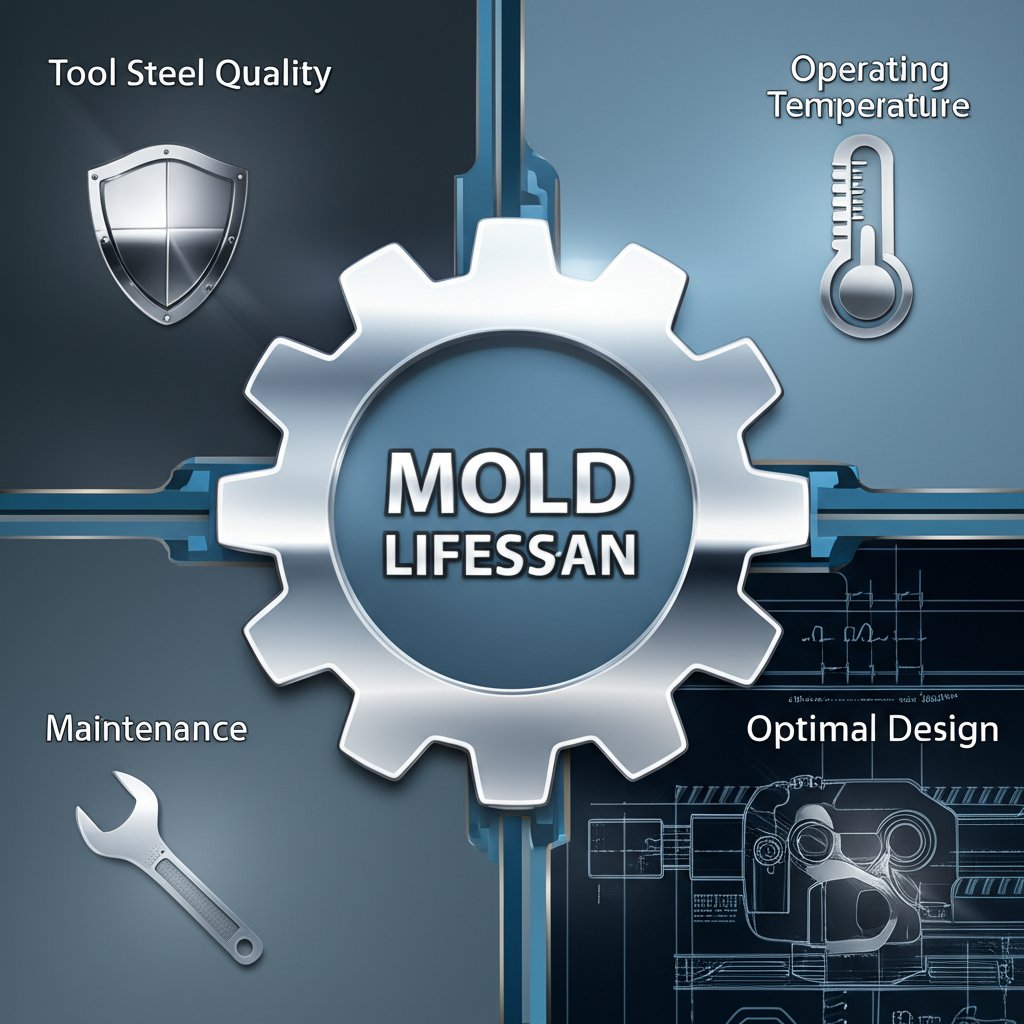
The longevity of a die casting mold is not predetermined but is actively influenced by a combination of design choices, material science, and operational discipline. Understanding these factors is crucial for any manufacturer looking to optimize production efficiency and control costs. These variables can be grouped into three main categories: mold design and material, operating conditions, and maintenance protocols.
The foundation of a durable mold is its material and design. The selection of high-quality tool steel, such as H13, is standard for its excellent balance of toughness, wear resistance, and resistance to thermal fatigue at high temperatures. Beyond the base material, the mold's design plays a pivotal role. Effective thermal management, achieved through strategically placed cooling channels, is essential. An optimized design ensures uniform cooling, which minimizes the internal stresses caused by rapid and uneven temperature changes—a primary driver of micro-cracking. Furthermore, design elements like generous radii in corners and uniform wall thickness prevent stress concentration points where failures often originate.
Operating conditions during production have a direct and immediate impact on mold life. The two most critical parameters are temperature and injection speed. As previously noted, higher casting temperatures drastically shorten a mold's lifespan. Similarly, excessive injection speed can cause severe erosion, a phenomenon known as "washout," particularly near the gate where molten metal enters the cavity. Experts recommend keeping the gate velocity below 55 m/s to mitigate this abrasive wear. Strict process control, ensuring consistent cycle times, temperatures, and pressures, is vital to avoid thermal shock and mechanical stress that lead to premature failure.
Finally, a rigorous and proactive maintenance program is non-negotiable for achieving maximum tool life. This extends beyond simple cleaning. Regular inspections are needed to identify early signs of wear, such as heat checking or minor erosion. Proper lubrication of moving components prevents mechanical wear, while timely cleaning of the cavity surface prevents buildup that can lead to part defects and sticking. A comprehensive maintenance strategy can be summarized with the following checklist:
- Material Selection: Is the tool steel (e.g., H13, DIN 1.2367) certified and appropriate for the cast alloy's temperature and the expected production volume?
- Thermal Design: Does the mold design incorporate optimized cooling channels to ensure rapid and uniform heat extraction, minimizing thermal stress?
- Process Control: Are operating parameters like temperature, pressure, and injection speed strictly monitored and maintained within specified limits?
- Lubrication & Cleaning: Is a consistent schedule for applying die lubricant and cleaning the cavity surface followed to prevent soldering and contamination?
- Regular Inspection: Is the mold periodically removed from production for detailed inspection, stress relief, and early-stage repair of wear and tear?
Common Failure Modes and Preventative Strategies
A die casting mold fails when it can no longer produce parts that meet dimensional or surface finish requirements. These failures are rarely sudden; they are the result of progressive damage caused by the harsh production environment. Understanding the primary failure modes is the first step toward implementing effective preventative strategies and extending the tool's useful life.
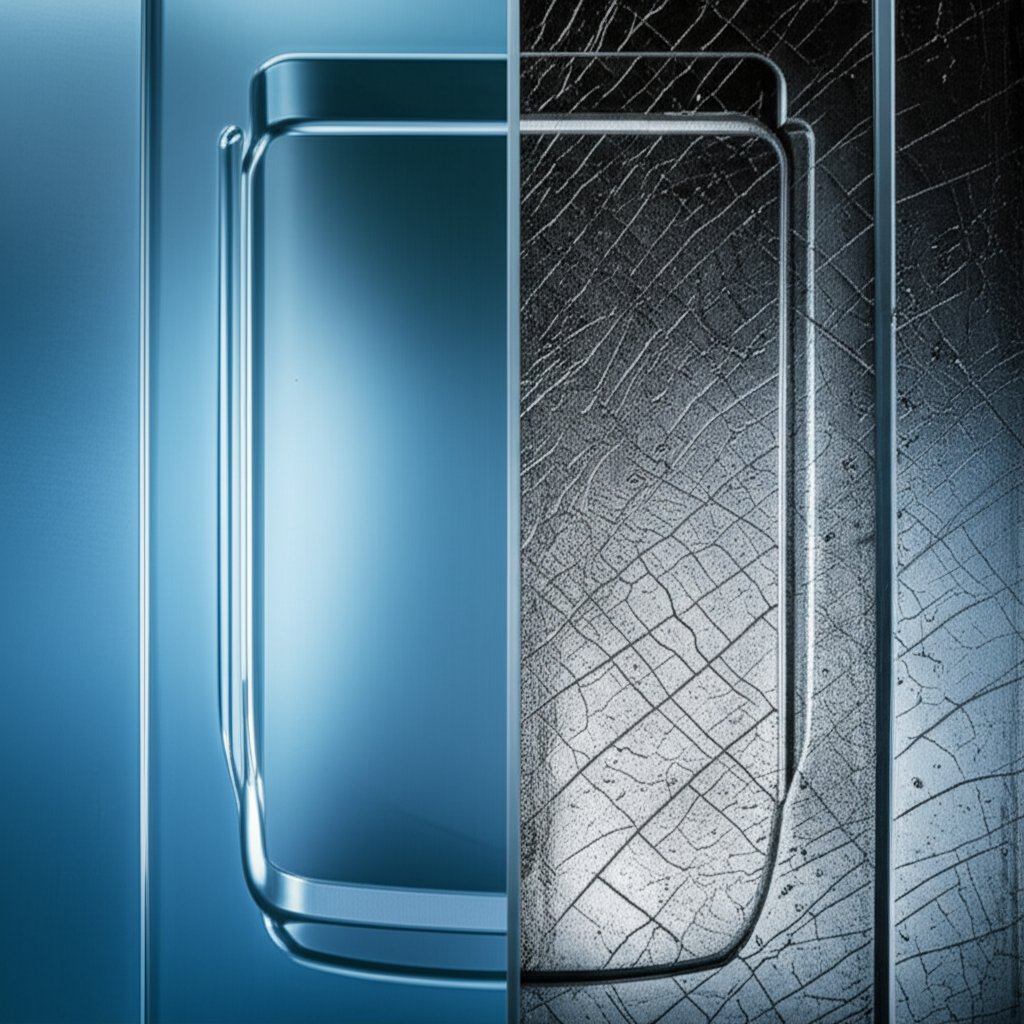
The most prevalent failure mode is thermal fatigue, also known as heat checking. This occurs because the mold surface is repeatedly heated by molten metal and then rapidly cooled by spray and internal cooling channels. This constant expansion and contraction create microscopic cracks on the surface. Over thousands of cycles, these cracks grow and interconnect, forming a network that imparts a rough, unacceptable finish on the cast part. Eventually, a major crack can propagate through the tool, leading to catastrophic failure.
Other significant failure modes include erosion, corrosion, and soldering (sticking). Erosion is the physical wearing away of the mold surface caused by the high-velocity flow of molten metal, especially in areas like gates and cores. Corrosion is a chemical attack on the mold steel by reactive elements in the alloy. Soldering occurs when the cast metal chemically bonds to the steel surface, leading to difficult ejection and damage to both the part and the mold. These issues are often interconnected and can accelerate overall tool degradation.
Preventing these failures requires a multi-faceted approach that begins at the design stage and continues through every production cycle. The following table outlines these common failure modes and the key strategies to mitigate them:
| Failure Mode | Primary Cause | Preventative Strategy |
|---|---|---|
| Thermal Fatigue (Cracking) | Repeated heating and cooling cycles causing expansion and contraction. | Preheat the mold before production, maintain consistent operating temperatures, use premium tool steel, and perform periodic stress-relieving heat treatments. |
| Erosion (Washout) | High-velocity injection of molten metal scouring the mold surface. | Optimize gate design to control flow, maintain injection speeds below 55 m/s, and use wear-resistant surface coatings on high-impact areas. |
| Corrosion & Soldering (Sticking) | Chemical reaction between the molten alloy and the mold steel. | Apply an appropriate die release agent, maintain proper mold temperature, use nitriding or other protective surface treatments, and ensure correct alloy chemistry. |
| Mechanical Failure (Deformation) | Insufficient mold strength, improper clamping force, or debris in the mold. | Ensure robust mold design with adequate support, set correct clamping pressure, and maintain a clean parting line and cavity. |
A proactive inspection routine is critical. Operators should regularly check for visual signs of wear, such as fine cracks or changes in surface texture. By catching these issues early, minor polishing or welding repairs can be performed before the damage becomes irreversible, significantly extending the mold's operational lifespan.
How to Maximize Mold Lifespan and Reduce Operational Costs
Maximizing the lifespan of a die casting mold is a strategic imperative that directly translates to lower operational costs and higher production efficiency. It is not about finding a single secret but rather about implementing a holistic system of best practices. By focusing on key areas from material selection to daily operations, manufacturers can significantly extend tool life beyond baseline expectations and improve their return on investment.
Achieving exceptional durability requires a focus on quality from the outset. This principle is not limited to die casting; in related fields like high-performance manufacturing, companies that engineer robust components gain a significant competitive advantage. For instance, suppliers like Shaoyi (Ningbo) Metal Technology, who specialize in precision-engineered automotive forging parts, build their reputation on creating components designed for extreme stress and longevity, a philosophy that directly applies to tool and die making.
Here are five essential strategies to maximize the lifespan of your die casting tooling:
- Select Premium Tool Steel and Apply Surface Treatments: Start with a high-quality, certified tool steel like H13. While it represents a higher initial investment, its superior resistance to thermal fatigue pays dividends. Further enhance durability by applying surface treatments like nitriding, which creates a hard, wear-resistant surface layer that also helps prevent soldering.
- Optimize Tool Design for Thermal Management: Work with toolmakers to design a mold with an efficient and uniform cooling system. This is the most effective weapon against thermal fatigue. Using mold flow simulation during the design phase can help identify potential hot spots and optimize cooling channel placement before any steel is cut.
- Implement Strict and Consistent Process Control: Maintain tight control over all production variables. Preheat the mold to its optimal operating temperature before starting a run to reduce thermal shock. Consistently monitor and regulate molten metal temperature, injection pressure, and cycle times to ensure a stable, repeatable process that minimizes stress on the tool.
- Establish a Rigorous Preventative Maintenance Program: Do not wait for a problem to occur. Schedule regular maintenance that includes cleaning the cavity and vents, lubricating moving parts, and inspecting for early signs of wear. A critical but often overlooked step is periodic stress relief heat treatment (e.g., after every 10,000-20,000 cycles) to alleviate the internal stresses that build up during operation.
- Train Operators on Best Practices: Your machine operators are the first line of defense for your tooling. Train them to recognize the signs of tool wear, understand the importance of proper preheating and spraying techniques, and maintain a clean working environment. Empowering them to be proactive in tool care can prevent minor issues from escalating into costly failures.
Investing in these practices creates a virtuous cycle. A longer-lasting mold reduces the frequency of costly replacements and minimizes unplanned downtime. This leads to more consistent part quality, lower scrap rates, and ultimately, a more profitable and reliable manufacturing operation.
Frequently Asked Questions
1. How long do casting molds last?
The lifespan of a casting mold varies widely based on its type and application. A low-volume prototype mold might only last for a few hundred to a few thousand cycles. In contrast, a high-production, hardened steel die casting mold for a low-temperature alloy like zinc can last for over a million cycles. For aluminum die casting, a typical range is 80,000 to 150,000 cycles, but this can be extended significantly with proper maintenance and optimal operating conditions.
2. What is the lifespan of a mold?
The term "lifespan" refers to the number of production cycles a mold can complete while still producing parts that meet quality standards. This is determined by factors like the mold's material (e.g., aluminum vs. hardened steel), the material being cast (e.g., plastic vs. high-temperature metal), the complexity of the part design, and the quality of its maintenance. There is no single answer; lifespan is specific to the mold's class, design, and operational context.