 Small batches, high standards. Our rapid prototyping service makes validation faster and easier —
  EN
EN


Integrating CNC Machining with Aluminum Extrusion Explained
Integrating CNC Machining with Aluminum Extrusion Explained
TL;DR
Integrating CNC machining with aluminum extrusion is a powerful manufacturing strategy that combines two distinct processes. First, aluminum extrusion efficiently creates a continuous profile with a fixed cross-section. Then, a secondary CNC machining process adds complex features, precise cuts, and tight tolerances that the extrusion process alone cannot achieve. This synergistic approach leverages the speed of extrusion and the precision of CNC to produce high-quality, functional, and cost-effective finished parts.
The Foundational Processes: Defining Aluminum Extrusion and CNC Machining
To fully appreciate the benefits of their integration, it is essential to understand each manufacturing process on its own. Though often used together, aluminum extrusion and Computer Numerical Control (CNC) machining are fundamentally different operations that serve complementary purposes in the production lifecycle. Each brings a unique set of capabilities that, when combined, create a more versatile and powerful manufacturing solution.
Aluminum extrusion is a process used to transform aluminum alloy into objects with a definitive cross-sectional profile. It works by heating a cylindrical billet of aluminum and forcing it through a specially shaped die. This is often compared to squeezing toothpaste from a tube—the shape of the opening determines the shape of the extruded material. This method is highly efficient for producing long, continuous parts with consistent profiles, such as channels, tubes, or complex T-slots. Extrusion is valued for creating lightweight yet strong components with an excellent strength-to-weight ratio and natural corrosion resistance.
CNC machining, on the other hand, is a subtractive manufacturing process. It uses pre-programmed computer software to dictate the movement of high-precision tools and machinery. Starting with a solid block of material or a pre-formed part (like an extrusion), CNC machines such as mills, lathes, and routers precisely cut away material to achieve a desired shape. This process is capable of creating highly complex geometries, including holes, threads, pockets, contours, and beveled edges, with exceptionally tight tolerances—often as precise as +/-0.02mm. Common aluminum alloys like 6061 are frequently used due to their excellent machinability, while 6063 is valued for its superior extrudability and surface finish.
The Synergy: Key Benefits of Integrating CNC Machining with Extrusions
Combining the efficiency of aluminum extrusion with the precision of CNC machining creates a synergy that unlocks significant advantages in modern manufacturing. This integrated approach allows designers and engineers to leverage the best of both worlds, resulting in components that are superior in quality, functionality, and cost-effectiveness. The initial extruded form provides the foundational shape, while CNC machining refines it to meet exact specifications.
The key benefits of this integration include:
- Enhanced Precision and Quality: While extrusion produces a consistent profile, it cannot achieve the tight tolerances required for many advanced applications. CNC machining adds a layer of precision, refining dimensions, improving surface finish, and ensuring parts meet exacting specifications for fit and function. This is critical for components in the automotive, aerospace, and electronics industries.
- Creation of Complex Geometries: Extrusion is limited to 2D cross-sectional shapes. CNC machining overcomes this by adding intricate 3D features such as holes, slots, threads, grooves, and chamfered edges that are impossible to create through extrusion alone. This capability allows for the fabrication of highly functional and customized parts.
- Increased Design Flexibility: The combination of these technologies gives engineers immense design freedom. They can design parts that capitalize on the structural efficiency of an extruded profile while incorporating the detailed, custom features only possible through CNC machining. This leads to innovative solutions that are both lightweight and strong.
- Improved Cost-Effectiveness and Productivity: Using an extruded profile as the starting point for machining significantly reduces material waste compared to machining a part from a solid billet. Extrusion quickly creates the near-net shape, minimizing the time and cost associated with CNC operations. Furthermore, the automated nature of CNC machining increases productivity and ensures repeatability for both small and large production runs.
The Combined Workflow: From Extruded Profile to Finished Part
The journey from a raw aluminum billet to a precisely finished component involves a structured workflow that seamlessly integrates extrusion and CNC machining. This multi-stage process ensures that the final product benefits from the speed of extrusion and the accuracy of computer-controlled cutting. Each step is critical for transforming a simple profile into a complex, high-performance part ready for its final application.
The typical manufacturing process follows these key stages:
- Design and Die Creation: The process begins with a detailed CAD (Computer-Aided Design) model of the final part. This design informs the creation of a hardened steel die, which contains the precise cross-sectional shape required for the extrusion.
- The Extrusion Process: A solid aluminum billet is heated to a malleable state and pushed with immense pressure through the steel die. The aluminum emerges on the other side as a long, continuous profile with the desired shape. This profile is then cooled and stretched to ensure straightness and relieve internal stresses.
- Cutting to Length: The long extruded profiles are cut into shorter, more manageable lengths. These segments serve as the raw workpieces for the subsequent CNC machining phase, providing the near-net shape of the final component.
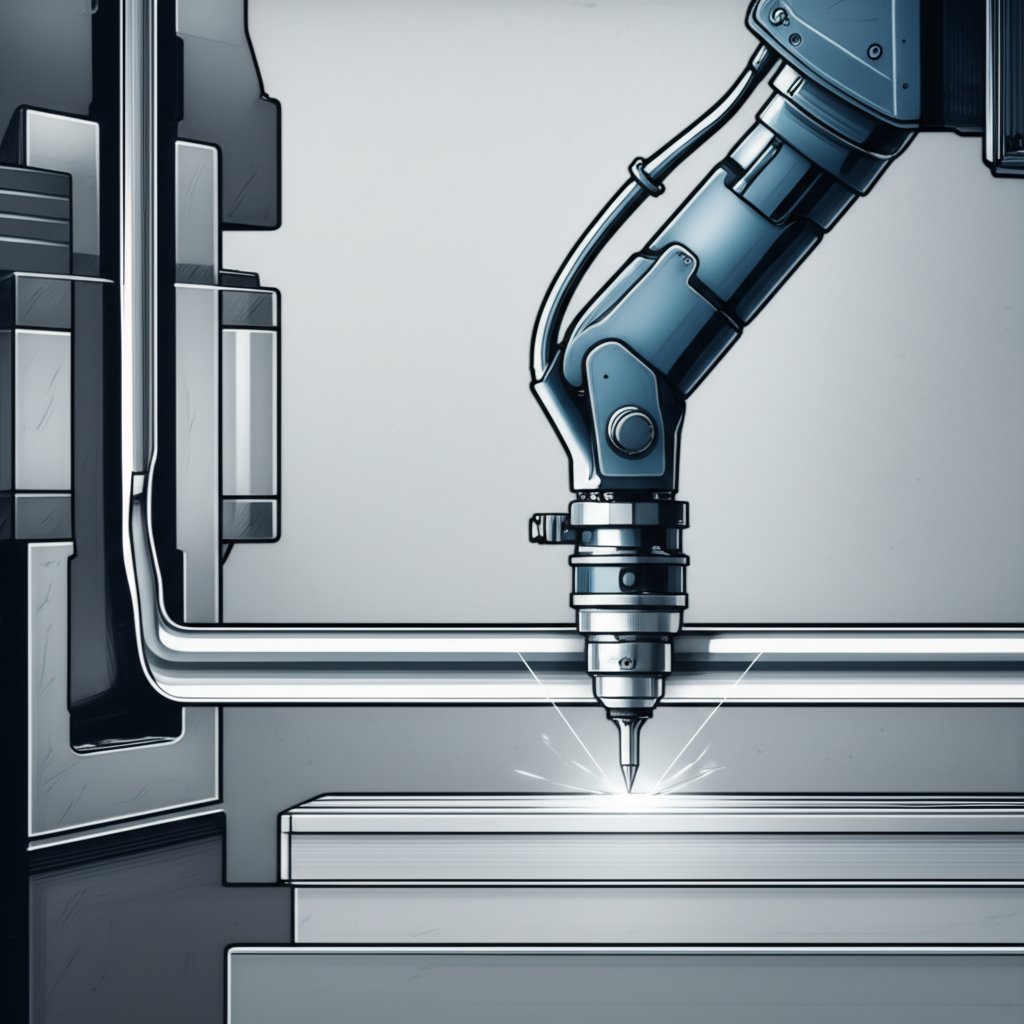
- CNC Machining Operations: The cut extrusions are securely fixed onto a CNC machine. Following a pre-programmed path, the CNC machine performs various subtractive operations. This can include milling flat surfaces, drilling holes, tapping threads, or cutting complex slots and contours to add the final, precise details required by the design.
- Finishing and Inspection: After machining, the parts may undergo additional finishing processes such as anodizing, powder coating, or polishing to improve surface durability and appearance. Finally, each component is rigorously inspected to ensure it meets all dimensional and quality standards before being packaged for shipment.
Real-World Impact: Common Applications and Industries Served
The integration of CNC machining with aluminum extrusion is not just a theoretical manufacturing advantage; it is a practical solution that drives innovation across numerous industries. This powerful combination enables the production of parts that are simultaneously lightweight, strong, and intricate, making them indispensable for modern technology and infrastructure. From consumer electronics to critical aerospace components, the applications are vast and varied.
Automotive and Transportation: In the automotive sector, weight reduction is crucial for improving fuel efficiency and performance. This process is used to create components like structural frames, battery enclosures for electric vehicles, heat sinks for cooling systems, and trim pieces. For automotive projects demanding precision-engineered components, companies like Shaoyi Metal Technology offer specialized services from prototyping to full-scale production under strict quality systems.
Electronics and Technology: Custom enclosures for electronic devices, from laptops to servers, often start as extruded profiles. CNC machining is then used to create precise openings for ports, ventilation slots, and mounting points for internal components like PCBs. This method is also ideal for manufacturing complex heat sinks that dissipate heat from processors and LEDs.
Architecture and Construction: Aluminum's corrosion resistance and strength make it a popular choice for architectural applications. Extruded profiles are used for window frames, door frames, curtain wall systems, and handrails. CNC machining adds the necessary features for assembly, such as mitered cuts, screw holes, and notches for seamless installation.
Industrial and Automation: The modularity of T-slot aluminum extrusions makes them a cornerstone of factory automation, machine frames, and workstations. CNC machining customizes these standard profiles by adding precise mounting holes, access cutouts, and end-tapped holes, allowing for the rapid assembly of robust and adaptable structures.
Frequently Asked Questions
1. What aluminum alloys work best with CNC machining after extrusion?
Alloys in the 6000 series, particularly 6061 and 6063, are the most popular choices. 6063 offers a great surface finish and is easy to extrude, making it ideal for architectural applications. 6061 provides higher strength and good machinability, making it a versatile option for structural components and a wide range of machined parts.
2. Is CNC machining always necessary after extrusion?
No, it depends entirely on the application. If a part only requires a consistent cross-sectional profile and can function with standard extrusion tolerances, then no further machining is needed. CNC machining is only employed when the design calls for tighter tolerances, complex features like holes and threads, or specific surface finishes that extrusion alone cannot provide.
3. How does this integrated process affect lead times and cost?
While adding a CNC machining step increases the complexity and initial cost compared to a simple extrusion, it is often more cost-effective than machining the entire part from a solid block of aluminum. The extrusion process quickly creates the basic shape, reducing material waste and machining time. This leads to faster overall production cycles for complex parts, especially in medium to high-volume runs, ultimately providing a balance of speed, precision, and cost.