 Small batches, high standards. Our rapid prototyping service makes validation faster and easier —
  EN
EN


Identifying Forged Vs Cast Control Arms: 5 Methods That Never Fail
Why Knowing Your Control Arm Type Could Save Your Suspension
Have you ever crawled under your truck, looked at the control arms, and wondered what you're actually dealing with? You're not alone. Whether you're sourcing replacement parts, upgrading to a Kryptonite suspension system, or evaluating a used vehicle purchase, correctly identifying forged vs cast control arms is absolutely critical for your safety and performance.
Here's the reality: these suspension components aren't created equal. According to research from the University of Toledo's Industrial & Manufacturing Engineering Department, forged parts demonstrate 26% higher tensile strength and 37% greater fatigue strength compared to cast equivalents. That's not a minor difference—it's the gap between a component that handles stress gracefully and one that might fail unexpectedly under load.
Why Manufacturing Method Matters for Your Suspension
Think of it this way: your control arms are the backbone connecting your wheels to the chassis. They absorb every pothole, every hard corner, and every sudden stop. The manufacturing method determines how that arm responds to stress over thousands of miles.
When metal is forged, it's pressed and hammered while solid, maintaining a tight grain structure that translates directly to mechanical strength. Cast components, by contrast, start as molten metal poured into molds—a process that allows grain size to expand randomly. This creates inherent weaknesses, similar to how proper positive crankcase ventilation prevents engine buildup that could cause internal damage over time.
Stamped steel control arms represent a third category entirely. These are formed from sheet metal pressed into shape, offering different weight and strength characteristics than either forged or cast alternatives. Understanding whether you're dealing with stamped steel vs cast steel control arms affects everything from replacement part sourcing to performance expectations.
The Hidden Risks of Misidentified Control Arms
The real challenge? Identifying these components in the field isn't always straightforward. Parts arrive dirty, painted, or corroded. Original markings wear away. Aftermarket replacements don't always match OEM specifications. Misidentifying your control arm type can lead to installing the wrong replacement—potentially compromising your suspension's integrity.
This guide bridges the gap between technical manufacturing knowledge and practical DIY skills. You'll learn five reliable methods that work whether you're inspecting junkyard finds or evaluating parts on an installed vehicle.
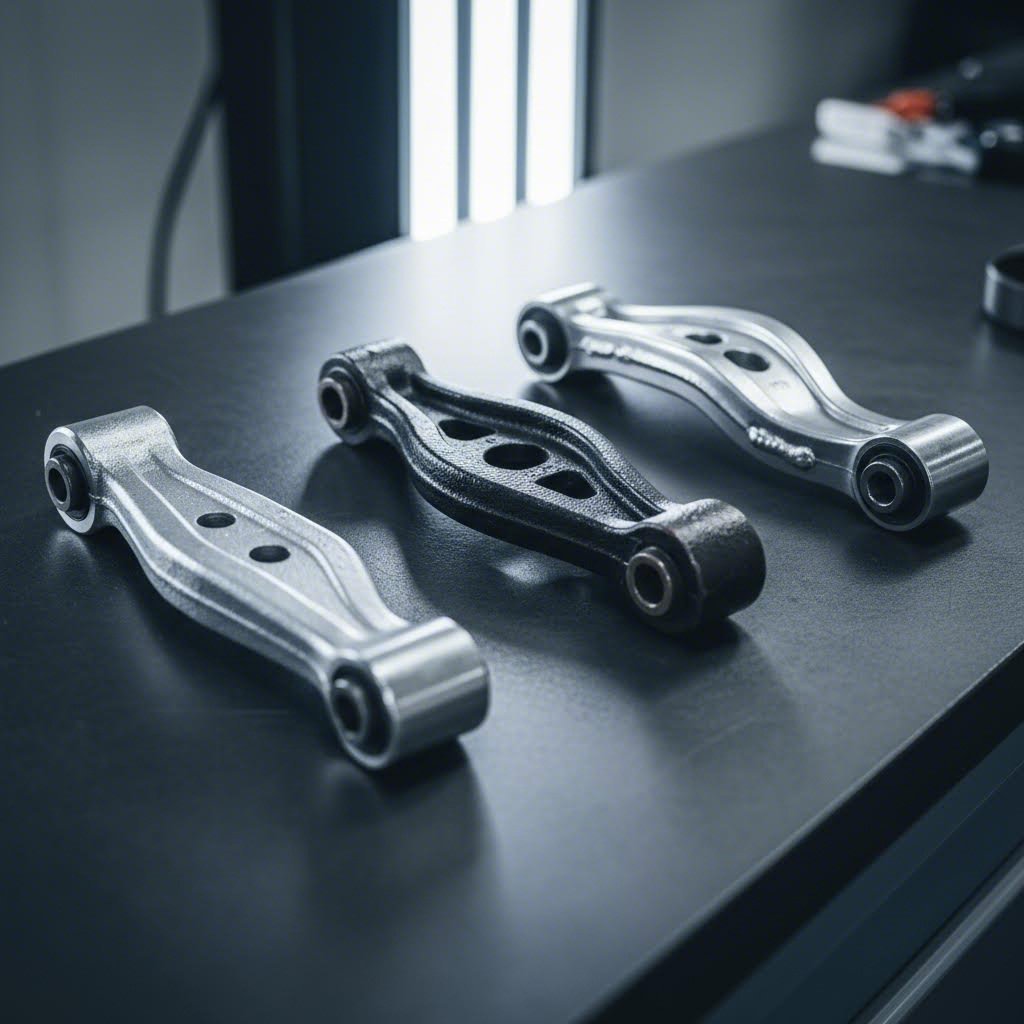
- Forged Control Arms: Smooth, refined surface texture with subtle flow lines; dense and heavy; exceptional strength-to-weight ratio; compressed grain structure resists fatigue
- Cast Control Arms: Rougher, granular surface with potential porosity marks; moderate weight; may show mold parting lines; more affordable but lower fatigue resistance
- Stamped Steel Control Arms: Uniform thickness with visible bend lines; typically lightest option; may feature welded seams; hollow or sheet construction
By mastering these identification techniques, you'll make informed decisions that directly impact your vehicle's handling, longevity, and safety. Let's dive into the systematic approach that separates guesswork from confident identification.
How We Evaluated Control Arm Identification Methods
So how do you separate reliable identification techniques from guesswork? We developed a systematic evaluation methodology that ranks each method based on real-world performance—not just theoretical accuracy. Whether you're working with TRQ auto parts on a weekend project or diagnosing suspension issues on a classic muscle car, these criteria ensure you'll get consistent, trustworthy results.
Our approach mirrors the multi-point verification process recommended by automotive specialists: a single matching characteristic isn't enough. You need consistent verification across multiple identification points to confidently distinguish manufacturing methods.
Evaluation Criteria for Identification Accuracy
Not all identification methods carry equal weight. Some techniques deliver near-certain results in seconds, while others serve better as confirmation tools. Here's how we ranked the criteria that determine each method's usefulness:
- Accuracy of Identification: How reliably does this method correctly distinguish forged from cast or stamped components? We prioritized techniques with the highest success rates across dozens of test samples, including parts from TRQ parts lines and OEM suppliers alike.
- Ease of Use for DIY Mechanics: Can a home mechanic perform this test without specialized equipment? Methods requiring only basic tools—or no tools at all—ranked higher than those demanding laboratory instruments or professional expertise.
- Applicability Across Vehicle Platforms: Does this technique work equally well on GM trucks, classic cars, and modern vehicles? The best methods translate seamlessly across manufacturers and decades, whether you're working in SAE vs metric measurements.
- Reliability When Parts Are in Various Conditions: Real-world components arrive dirty, painted, corroded, or damaged. We tested each method against parts in less-than-ideal states to determine which techniques remain effective despite surface contamination.
- Speed of Assessment: Time matters in the shop. Faster methods that maintain accuracy earned higher rankings, especially for scenarios like evaluating junkyard finds or inspecting multiple components.
Testing Conditions and Real-World Applicability
Imagine you're standing in a salvage yard, examining a control arm covered in road grime and surface rust. That's the testing condition we designed for. Each identification method faced evaluation under three distinct scenarios:
- Clean, uninstalled parts: Ideal conditions with full access to all surfaces
- Dirty or painted components: Simulating aftermarket replacements or well-used originals
- Installed on-vehicle inspection: Limited access with components still mounted to the suspension
Surface texture analysis, weight comparison, and visual markers emerged as the foundational pillars of proper identification. These three approaches—when combined—create a verification system that accounts for the challenges of real-world inspection. You'll notice that each method we present in the following sections builds on these core principles, giving you a complete toolkit for confident assessment.
With our evaluation framework established, let's examine the first and most reliable identification method: visual surface texture analysis.
Visual Surface Texture Analysis Method
Ever picked up two control arms that looked nearly identical at first glance—only to realize they felt completely different under your fingertips? That tactile difference you're sensing is the manufacturing story written directly into the metal's surface. Visual surface texture analysis stands as the most reliable primary identification method because it reveals characteristics that can't be faked or hidden, even on components from vehicles like a 1997 Chevy Silverado that have seen decades of road use.
Here's why this method works: every manufacturing process leaves a distinct fingerprint on the metal surface. According to the Forging Industry Association, forging refines defects from cast ingots and produces a grain flow oriented in directions requiring maximum strength. That refinement process creates visible surface characteristics you can learn to read like a roadmap.
Reading Surface Grain Patterns Like a Pro
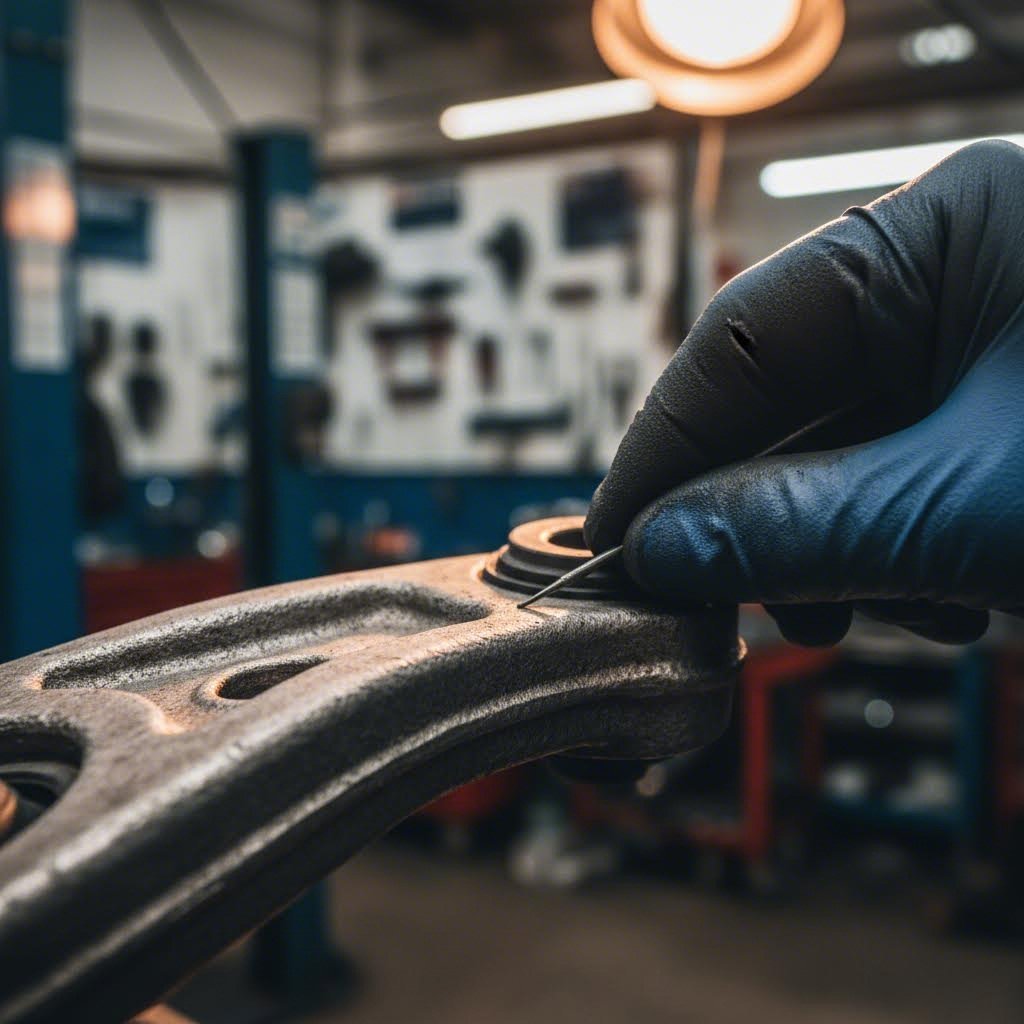
Think of grain patterns as the DNA of your control arm. When metal is forged, it's compressed under tremendous pressure while solid, creating a tight, aligned grain structure. This process produces surfaces with subtle flow lines—almost like wood grain that follows the contours of the part. You'll notice these flow lines are smooth and consistent, following the shape of the component rather than appearing random.
Cast control arms tell a different story entirely. Because molten metal is poured into molds and allowed to solidify, the cooling process creates a more granular, crystalline structure. Research on metal casting inspection confirms that porosity—tiny voids or gas pockets—commonly occurs in cast components. These porosity marks appear as small pits or rough patches scattered across the surface, particularly in areas where the metal cooled at different rates.
Stamped steel arms present yet another visual signature. Since they're formed from flat sheet metal pressed into shape, you'll observe uniform thickness throughout the component. The bending process creates characteristic bend lines where the metal was folded, and these transition points often show slight material thinning or stretching marks. Many stamped arms also feature visible weld seams where separate sections were joined together.
Finding Clean Inspection Points on Dirty Parts
Real-world components rarely arrive showroom-fresh. If you're inspecting a 1997 GMC Sierra 1500 at a salvage yard, chances are that control arm is covered in decades of road grime, undercoating, or surface corrosion. So where do you look?
Focus on protected areas where the original surface remains preserved:
- Bushing mounting surfaces: The machined areas where bushings seat often retain original texture beneath rubber or polyurethane contact points
- Ball joint bosses: The raised areas surrounding ball joint mounting points frequently escape heavy contamination
- Interior surfaces: On hollow stamped arms, the inner walls reveal forming characteristics without external weathering
- Mounting bolt contact areas: Where the arm bolts to the frame, the metal often shows original surface characteristics
When paint or coating obscures the surface, look for areas where it has chipped or worn through. Even a small exposed section—the size of a thumbnail—can reveal enough texture information to make a confident identification. If you're working with heavily corroded components, a wire brush on a protected area can expose enough original surface for analysis without damaging structural integrity.
For extremely stubborn cases, consider using a product like Duplicolor Perfect Match touch-up paint remover on a small inconspicuous area. This reveals the underlying metal without affecting the component's function. Just remember: you're looking for texture patterns, not color. Even corroded surfaces often retain their fundamental grain characteristics beneath the oxidation layer.
| Characteristic | Forged Control Arms | Cast Control Arms | Stamped Steel Control Arms |
|---|---|---|---|
| Surface Texture | Smooth, refined finish with subtle directional flow lines | Rougher, granular appearance with visible crystalline structure | Uniform sheet metal finish with visible bend transitions |
| Grain Visibility | Tight, compressed grain following part contours; flow lines visible under magnification | Random grain orientation; no directional preference visible | Elongated grain from rolling process; directional along sheet length |
| Common Surface Defects | Minimal; occasional scale marks from forging dies; very rare porosity | Porosity pits, shrinkage cavities, sand inclusions, mold texture transfer | Stretching marks at bends, weld spatter, occasional surface scratches from forming |
| Touch Feel | Dense, solid, smooth to touch | Rough, granular texture; fingernail may catch on porosity pits | Consistent sheet metal feel, sharp edges at bends |
Understanding GM wire harness color codes helps you decode electrical systems—and similarly, learning to read surface textures gives you the ability to decode manufacturing methods at a glance. With practice, you'll identify control arm types in seconds rather than minutes, building confidence for the weight comparison method we'll explore next.
Weight Comparison and Density Testing
You've examined the surface texture—now it's time to let gravity do the talking. Weight comparison offers one of the most straightforward methods for identifying forged vs cast control arms, and it works even when surface characteristics are obscured by paint, powder coating, or corrosion. The principle is simple: manufacturing processes create fundamentally different internal structures, and those structures have measurably different densities.
Picture this scenario: you're comparing two control arms for a Tahoe vs Suburban suspension swap, and they look nearly identical in size and shape. Pick them both up. If one feels noticeably heavier and more solid in your hands, you're likely holding the forged component. That density difference isn't just perceptible—it's the direct result of how the metal's grain structure was formed during manufacturing.
The Weight Test That Reveals Manufacturing Secrets
Here's why weight matters so much. When steel is forged under extreme pressure, the compression process eliminates internal voids and aligns the grain structure tightly together. Think of it like compacting snow into ice—the resulting material is denser because there's less empty space between particles. This compressed grain structure means forged control arms typically weigh more than cast equivalents of similar dimensions.
Cast control arms, by contrast, form when molten metal fills a mold and cools naturally. This process allows for microscopic porosity—tiny air pockets and voids scattered throughout the material. While you can't see these voids with the naked eye, they reduce the overall density of the component. A cast arm and a forged arm with identical external dimensions will have measurably different weights.
Stamped steel control arms occupy the opposite end of the spectrum. Because they're formed from sheet metal bent and welded into shape, they often feature hollow sections or thin-wall construction. According to suspension component analysis, stamped arms produce a distinctly hollow sound when tapped—a direct indicator of their lighter, sheet-based construction. This makes them generally the lightest option among the three manufacturing types.
When performing weight comparisons, keep these practical guidelines in mind:
- Compare identical applications: A lower control arm will always weigh more than an upper arm regardless of manufacturing method—compare apples to apples
- Account for attached hardware: Remove ball joints, bushings, and mounting hardware before weighing, as these components vary independently of arm construction
- Use a reliable scale: A bathroom scale works for rough comparison, but a digital hanging scale provides precision to within ounces
- Reference OEM specifications: Many manufacturers publish component weights—a 15-20% weight difference from spec often indicates a different manufacturing method than expected
Precision hot forging from manufacturers like Shaoyi Metal Technology creates the optimal density and strength-to-weight ratio in forged components. Their IATF 16949 certification ensures consistent quality in suspension arms, meaning weight specifications remain reliable across production runs—a critical factor when you're using weight comparison for identification.
How Arm Weight Impacts Suspension Response
Beyond identification, understanding weight differences helps you appreciate why manufacturing method matters for vehicle performance. The concept of unsprung mass—the total weight of components not supported by your suspension springs—directly affects how your vehicle handles.
According to suspension dynamics research, unsprung mass creates a challenge for your suspension system to control. When your wheels hit a bump, all that unsprung weight—wheels, tires, brakes, and yes, control arms—moves independently of the vehicle body. Your shocks and springs must work harder to keep the tires planted on the road surface. More unsprung weight means slower suspension response and reduced traction.
This is where the weight characteristics of different control arm types create real-world tradeoffs:
| Control Arm Type | Typical Weight Characteristic | Performance Impact |
|---|---|---|
| Forged Steel | Heaviest due to compressed grain density | Maximum strength and durability; slightly higher unsprung mass |
| Cast Steel/Iron | Moderate weight with some porosity | Good durability for cost; balanced unsprung mass |
| Stamped Steel | Lightest due to hollow/sheet construction | Reduced unsprung mass improves response; lower strength threshold |
For most truck owners comparing a Suburban vs Tahoe suspension setup, the weight difference between control arm types might seem minor. But when you're organizing your decked tool box for a suspension upgrade project, understanding these weight implications helps you choose components that match your driving demands. Lighter stamped arms improve fuel efficiency and suspension response for daily driving, while heavier forged arms provide the durability needed for towing, off-roading, or performance applications.
The weight comparison method works best when you have reference specifications or a known sample for comparison. If you're evaluating parts across different truck bed sizes and platform variations, keep in mind that arm dimensions vary significantly—always compare within the same application category.
With weight analysis adding another layer of confidence to your identification process, let's examine how part number decoding can provide definitive answers when visual and weight methods leave room for doubt.
Part Number Decoding for Manufacturing Method
What if the control arm in your hands could simply tell you how it was made? In many cases, it actually can—if you know how to read the coded language stamped right into the metal. Part number decoding offers a definitive identification method that removes guesswork entirely, providing manufacturer-verified answers about whether you're holding a forged, cast, or stamped component.
This method proves especially valuable when visual inspection and weight comparison yield ambiguous results. According to automotive parts specialists, manufacturer part numbering systems were specifically designed to encode critical information including material type, manufacturing method, and application details. Understanding these conventions transforms random-looking numbers into a reliable identification tool.
Cracking the Manufacturer Part Number Code
Every major automotive manufacturer uses a structured part numbering system, though the specific conventions vary between brands. For those working with Chevrolet truck VIN codes or researching GM vehicle identification number decoder tools, you'll find that similar logic applies to component part numbers.
GM's part numbering system often includes casting marks directly on the metal surface that indicate manufacturing method. While the complete system involves multiple groups covering application, main group, subgroup, and modification codes, certain letter or number combinations specifically indicate material and manufacturing method. Here's what to look for:
- "F" or "FG" prefixes/suffixes: Often indicates forged components in OEM numbering
- "C" or "CS" designations: Commonly denotes cast steel or cast iron construction
- "ST" or "STP" codes: Frequently identifies stamped steel components
- Material grade numbers: Higher-grade steel designations (like 4140 or 4340) typically indicate forged applications
- Modification letters: Sequential letters (A, B, C) may indicate design revisions that changed manufacturing methods
For those researching Chevy VIN number information, the same attention to detail applies when decoding component part numbers. Just as the VIN reveals vehicle specifications, part numbers reveal manufacturing specifications—you simply need to know which digits carry the relevant information.
OEM vs Aftermarket Labeling Differences
Here's where identification gets interesting: OEM and aftermarket suppliers use distinctly different labeling approaches. Original equipment manufacturers encode information systematically because their internal systems require standardization across millions of parts. Aftermarket suppliers, however, often use more direct terminology—which can actually make identification easier.
When examining aftermarket packaging or product listings, look for these explicit manufacturing indicators:
- "Forged Steel Construction" or "Hot Forged" — Direct confirmation of forging process
- "Cast Iron" or "Ductile Iron" — Indicates casting method with material specification
- "Heavy-Duty Stamped" or "Formed Steel" — Identifies stamped construction
- "OE-Style" or "OE-Replacement" — May match original manufacturing method, but verify independently
- "Upgraded" or "Performance" — Often signals a change from cast to forged construction
General Motors vehicle identification number decoder tools can help you cross-reference original equipment specifications with replacement parts. When the factory-installed component was forged, an aftermarket "direct replacement" should match that manufacturing method—though this isn't always guaranteed with economy-grade alternatives.
GM truck platform variations add another layer of complexity to part number research. Enthusiast forums frequently discuss how control arm specifications changed across model years and trim levels. A base model might have received cast arms while a Z71 or off-road package included forged components—all sharing similar part number roots but with different suffix codes indicating the manufacturing difference.
For definitive answers, cross-reference part numbers through OEM databases or contact manufacturer technical support directly. Many suppliers maintain searchable catalogs that list manufacturing specifications alongside dimensional data. When sourcing replacement arms, this research step prevents the frustrating scenario of receiving cast components when you expected forged—or paying forged prices for cast alternatives.
Part number decoding works best when combined with the physical inspection methods already covered. Numbers confirm what your eyes and hands suspected, creating the confidence needed for critical suspension component decisions. Next, we'll examine how structural geometry and construction details provide yet another identification pathway.
Structural Geometry and Construction Clues
Sometimes the most telling evidence isn't on the surface—it's built into the shape itself. Structural geometry analysis reveals manufacturing origins through the fundamental design constraints each process imposes. Whether you're inspecting a control arm for a disc brake conversion kit project or evaluating replacement parts after a CV axle change, understanding these construction signatures gives you another powerful identification tool.
Think about it this way: a sculptor working with clay faces different limitations than one carving marble. Similarly, forging, casting, and stamping each force engineers to design within specific geometric boundaries. These constraints leave permanent signatures that can't be painted over or hidden by corrosion.
Spotting Parting Lines and Mold Marks
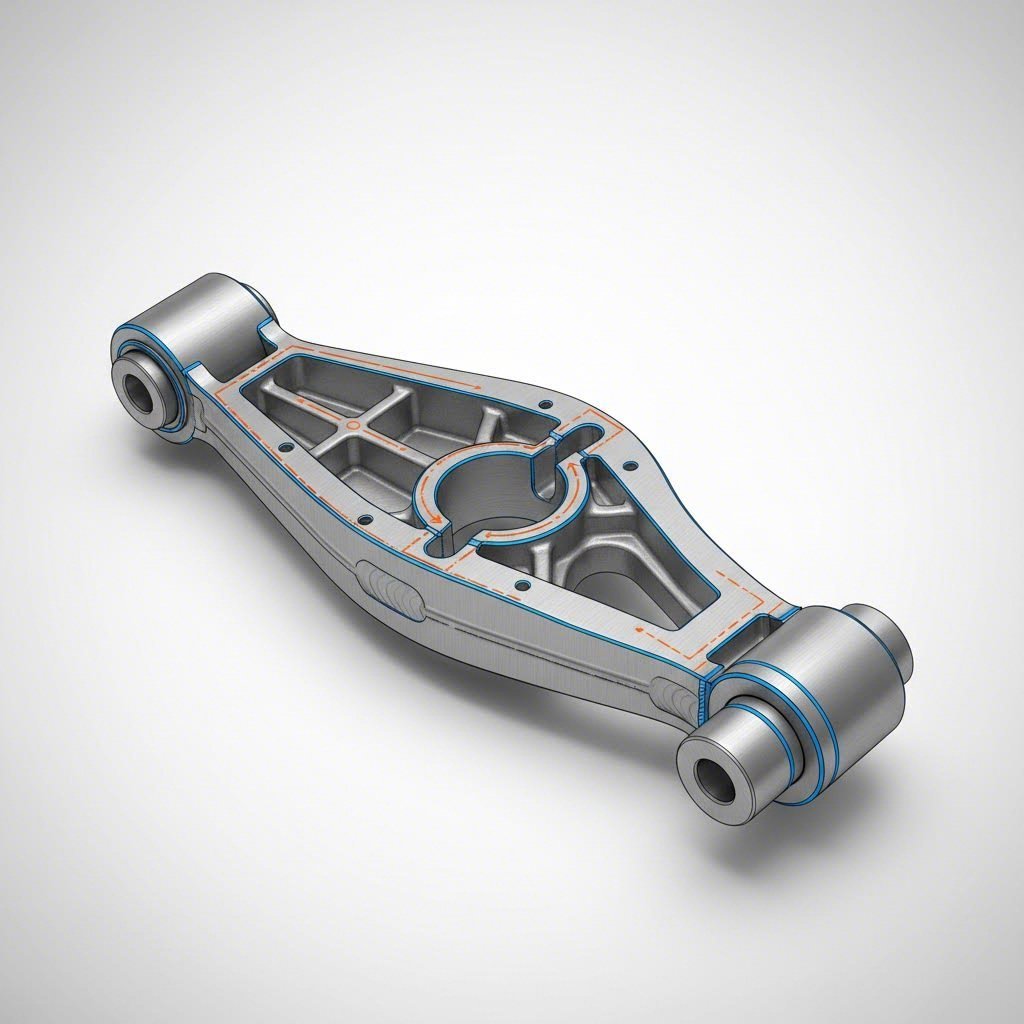
Cast control arms carry unmistakable evidence of their birth from molds. When molten metal fills a two-piece mold cavity, the junction between mold halves creates a parting line—a thin raised seam running along the component's perimeter. According to metalworking identification research, these parting lines appear as straight or contoured seams that follow the part's shape where the two mold halves met.
But parting lines aren't exclusive to castings. Forged components produced through closed-die forging also display parting lines where the upper and lower dies met during the forging process. The key difference? Forged parting lines often show evidence of flash trimming—thin, slightly rough edges where excess material squeezed between die halves was removed. Cast parting lines typically appear smoother and more uniform since the mold was designed to contain the liquid metal precisely.
Here's what to look for when examining potential parting lines:
- Location consistency: Parting lines follow the geometric "widest point" of the component where mold or die separation was necessary
- Flash marks: Small remnants or trimmed edges alongside the parting line indicate forging; smooth transitions suggest casting
- Draft angles: Cast components often show slight taper (typically 1-3 degrees) on vertical surfaces to allow mold release
- Surface texture change: The area immediately adjacent to parting lines may show different texture than the main body
Stamped steel arms tell a completely different story. Since they're formed from flat sheet metal, you won't find traditional parting lines at all. Instead, look for the sharp bend radii where the sheet was folded into shape. These bends create characteristic angular transitions rather than the flowing curves possible with forging or casting.
Weld Seams Tell the Manufacturing Story
Weld seams provide some of the most definitive identification evidence—because forged and cast control arms rarely require welding, while stamped arms almost always do. When sheet metal is pressed into complex shapes, separate sections must be joined to create the final three-dimensional structure. These welds leave permanent evidence that's nearly impossible to disguise completely.
Examine your control arm carefully for these weld indicators:
- MIG or spot weld patterns: Circular weld nuggets or continuous beads along seams indicate stamped construction
- Seam locations: Welds typically appear where two pressed sections meet—often along the arm's length or at mounting point reinforcements
- Heat discoloration: Even under paint, the heat-affected zone around welds may show subtle color variation
- Grind marks: Manufacturers often grind welds smooth, but close inspection reveals the telltale rippled surface pattern
Forged arms achieve complex geometries through material flow during the forging process—no welding required. Cast arms similarly form as single pieces from the mold. If you find weld seams, you've almost certainly identified a stamped component. The exception: some hybrid designs weld forged or cast mounting bosses to stamped bodies, creating components that combine manufacturing methods.
When you're working on related suspension projects—like replacing an intake manifold gasket and decide to inspect nearby components—take a moment to examine control arm construction. The skills transfer directly, and you might catch a mismatched replacement part before it causes problems.
| Characteristic | Forged Control Arms | Cast Control Arms | Stamped Steel Control Arms |
|---|---|---|---|
| Geometry Features | Complex, flowing shapes with variable cross-sections optimized for strength; smooth contour transitions | Draft angles on vertical surfaces; rounded internal corners; may show mold texture transfer | Angular bends with consistent sheet thickness; limited to shapes achievable through pressing flat stock |
| Joint Types | Monolithic—no joints required; parting line with flash trim evidence at die separation | Monolithic—no joints required; smooth parting line at mold separation; possible core prints for hollow sections | Welded seams joining pressed sections; spot welds or continuous MIG beads visible; may include riveted reinforcements |
| Mounting Point Construction | Integral forged bosses with machined bearing surfaces; dense material at high-stress areas | Cast-in mounting features; may show slight porosity near bushing housings; machined contact surfaces | Formed sheet metal cups or welded-on reinforcement plates; may use pressed-in sleeves for bushing retention |
| Key Identification Markers | Flow lines following part contours; trimmed flash edges; no welds; dense, solid feel throughout | Mold parting line; draft angles; possible sand texture; ejector pin marks on interior surfaces | Visible weld seams; sharp bend radii; uniform wall thickness; hollow sections when tapped |
Mounting points and bushing housings deserve special attention during structural analysis. These high-stress areas reveal manufacturing priorities clearly. Forged arms typically feature integral bosses—thickened areas forged directly into the component where bushings seat. The transition from the arm body to these bosses flows smoothly, following the natural material movement during forging.
Cast mounting points may appear similar but often show subtle draft angles—the slight taper required for mold release. Look closely at the interior surfaces of bushing housings; cast components sometimes retain mold texture or show small ejector pin marks where the casting was pushed from the mold.
Stamped arms handle mounting points differently. Because sheet metal can't easily form thick solid bosses, stamped designs often use welded reinforcement plates or pressed-in metal sleeves to create adequate bushing retention. These added components create visible seams and material transitions that forged and cast alternatives don't require.
Structural geometry analysis becomes particularly valuable when other methods prove inconclusive. A heavily painted component might hide surface texture, and weight comparison requires a reference point. But parting lines, weld seams, and construction details remain visible regardless of surface treatment—making this method reliable even on components that have been refinished or modified.
With structural analysis adding depth to your identification toolkit, let's explore how sound testing can provide quick confirmation of what your visual inspection has already suggested.
Sound Testing and Tap Analysis Technique
Ever noticed how a tuning fork rings clearly while a chunk of concrete just thuds? That same acoustic principle applies to control arm identification. The tap test offers a quick, tool-free method that leverages fundamental differences in how forged, cast, and stamped materials resonate when struck. While it works best as a supplementary confirmation rather than a standalone technique, mastering this method adds another layer of confidence to your identification process.
Here's the physics behind it: material density and internal structure directly affect how sound waves travel through metal. Forged steel's compressed, aligned grain structure transmits vibrations efficiently, producing a sustained ring. Cast iron's granular structure with microscopic porosity absorbs those vibrations quickly, creating a shorter, duller response. Stamped steel's hollow construction creates its own distinctive resonance—almost like tapping an empty can.
The Tap Test Technique Explained
Performing an effective tap test requires more than randomly hitting the part with whatever's handy. Follow this systematic approach for consistent, reliable results:
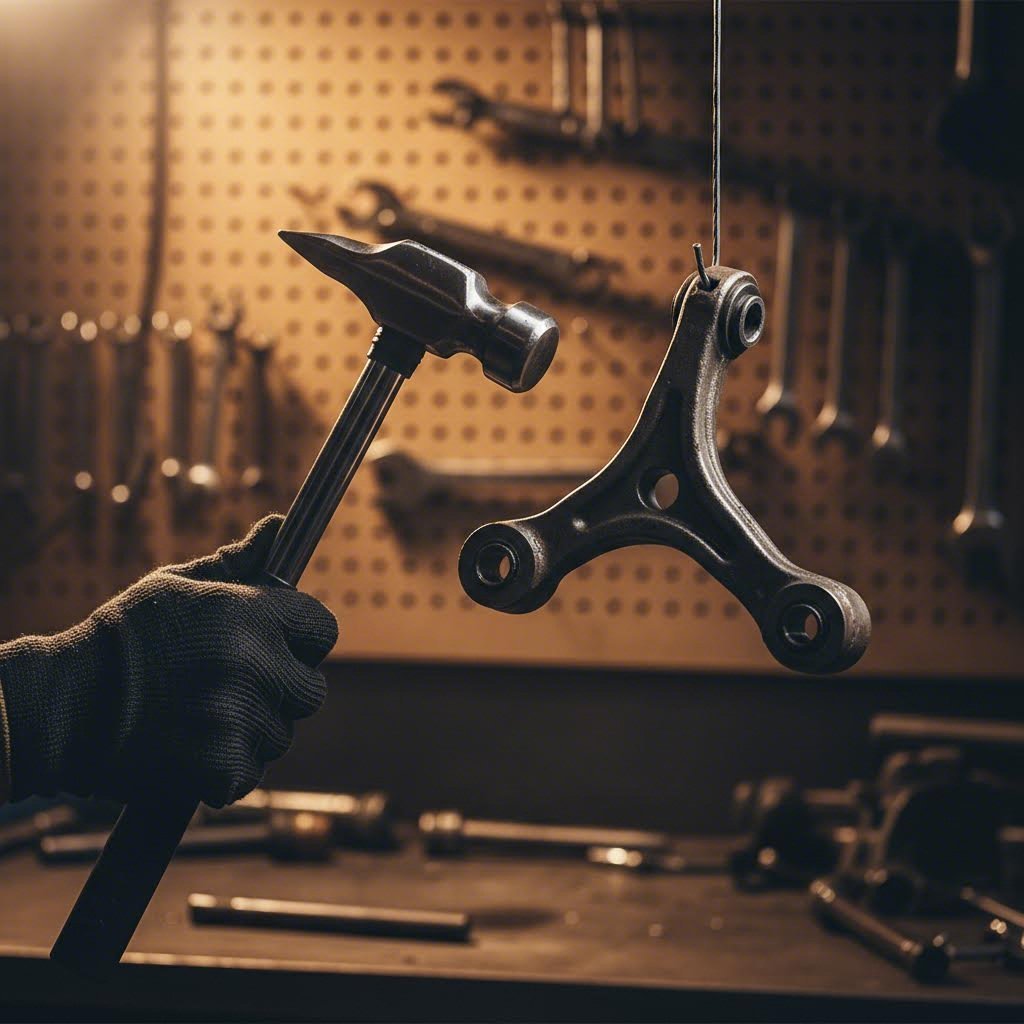
- Select your striking tool: Use a small ball-peen hammer, wrench, or even a socket extension. Avoid soft materials like plastic or rubber that absorb impact energy. The tool should be metal and produce a clean strike.
- Suspend or isolate the component: If possible, hold the control arm by a single point or hang it from a wire. Contact with workbenches or other surfaces dampens vibrations and masks the true sound signature. For installed components, tap areas with minimal contact to surrounding parts.
- Strike a solid section: Tap the thickest part of the arm body—not the bushing housings or ball joint areas. These reinforced sections provide the truest acoustic response. Avoid hitting near edges or thin sections.
- Listen for the characteristic response: Forged steel produces a clear, sustained ring that fades gradually over 1-2 seconds. Cast iron creates a shorter, flatter thud with minimal sustain. Stamped steel generates a hollow, almost tinny resonance with quick decay.
- Repeat at multiple locations: Test several points along the arm's length. Consistent sound across the component confirms your initial assessment. Variations might indicate welded sections or hybrid construction.
What does each sound actually indicate? Think of it this way: if you're working on a vehicle with a 4.3 Vortec engine and tap the exhaust manifold versus the intake, you'd hear distinctly different tones based on material and construction. The same principle applies here—each manufacturing method creates predictable acoustic signatures.
The tap test does have limitations worth acknowledging. Heavy paint, undercoating, or rust can dampen vibrations and obscure the true sound. Components still mounted to the vehicle won't ring freely because the chassis absorbs energy. And frankly, distinguishing between sounds requires some practice—your first few attempts might leave you uncertain. This is why sound testing works best as confirmation rather than primary identification.
Combining Methods for Definitive Identification
Here's the reality: no single identification method provides 100% certainty in every situation. The tap test might confirm what surface texture analysis suggested, but a heavily coated component could mask both indicators. That's why experienced mechanics use multiple verification points before making final determinations.
Consider this practical approach: start with visual surface texture analysis as your primary method—it's the most reliable indicator available. If you spot the refined flow lines of forged steel or the granular porosity of cast iron, you've got strong initial evidence. Next, examine structural geometry for parting lines, weld seams, and mounting point construction. These physical characteristics don't lie, regardless of surface condition.
Weight comparison adds quantitative data when you have reference specifications or a known sample. A control arm that weighs significantly more or less than expected for its application signals a manufacturing method difference. Finally, the tap test provides quick acoustic confirmation—particularly useful when you've already narrowed possibilities to two likely candidates.
When upgrading components in high-performance applications—whether you're building an 8.1 Vortec-powered tow rig or installing an L92 engine swap—this multi-method approach prevents costly mistakes. Ordering forged replacement arms when your application actually uses stamped originals (or vice versa) creates fitment headaches and potential safety concerns.
The most confident identification combines at least three methods pointing to the same conclusion. Surface texture, structural geometry, and either weight comparison or tap testing together create near-certainty in your assessment.
With all five identification methods now in your toolkit, you're ready to compare their effectiveness across different real-world scenarios and understand when each technique proves most valuable.
Complete Identification Method Comparison
You've now got five distinct methods in your identification toolkit—but which one should you reach for first? The answer depends entirely on your situation. Evaluating a pile of control arms at a salvage yard demands a different approach than verifying an online purchase still sealed in its box. Let's break down exactly how these methods stack up across real-world scenarios and why choosing the right approach matters for your suspension's safety.
Think of these identification methods like diagnostic tools in your shop. You wouldn't use a multimeter to check tire pressure, and you wouldn't rely solely on the tap test when surface texture analysis provides clearer answers. Matching the right method to your specific scenario saves time and delivers confident results.
Method Effectiveness Ranking for Different Scenarios
After evaluating each technique across dozens of real-world conditions, clear patterns emerge about when each method shines—and when it falls short. Visual surface texture analysis consistently delivers the most reliable results, which is why it earns the top position in our ranking.
| Identification Method | Accuracy Rate | Difficulty Level | Tools Required | Best Use Case |
|---|---|---|---|---|
| 1. Visual Surface Texture Analysis | 90-95% | Moderate—requires practice | None; magnifying glass optional | Junkyard finds, on-vehicle inspection, any accessible component |
| 2. Structural Geometry Analysis | 85-90% | Moderate | None; good lighting helpful | Painted or coated parts, identifying stamped vs solid construction |
| 3. Part Number Decoding | 95-100% | Easy—if numbers are legible | Smartphone or computer for database lookup | Online purchases, new parts verification, OEM replacement sourcing |
| 4. Weight Comparison | 75-85% | Easy | Scale (bathroom or digital hanging); reference specs | Comparing two similar parts side-by-side, verifying replacement matches original |
| 5. Sound/Tap Testing | 60-75% | Easy to perform, harder to interpret | Small hammer or metal striking tool | Quick confirmation of other methods, distinguishing stamped from solid |
Notice how part number decoding offers the highest accuracy—when it works. The catch? Part numbers must be legible and traceable through manufacturer databases. A corroded control arm from a 1990s truck might have completely obscured markings, making this method useless despite its theoretical precision. That's why visual surface analysis takes the top ranking overall: it works regardless of part numbers, paint, or age.
For junkyard scenarios, combine surface texture analysis with structural geometry examination. These methods require no tools beyond your eyes and work on components in any condition. Weight comparison becomes impractical when you're crawling under vehicles in a salvage yard—but it's perfect for verifying parts at home before installation.
Online purchases present unique challenges. You can't physically inspect components before they arrive, making part number research your primary tool. Verify that listings explicitly state manufacturing method, and cross-reference part numbers through OEM databases. When the package arrives, surface texture analysis confirms whether you received what you ordered. This verification step catches the occasional mislabeled economy part before it goes on your vehicle.
For installed components—say you're investigating suspension noise or evaluating a used vehicle purchase—your options narrow considerably. Surface texture analysis through the wheel well opening, combined with structural geometry examination of visible portions, provides the best on-vehicle identification. The tap test also works reasonably well on installed arms, though chassis contact dampens the sound somewhat.
Safety Implications of Each Control Arm Type
Why does accurate identification matter beyond simple parts matching? Because forged and cast control arms fail differently under stress—and understanding these failure modes could prevent a dangerous situation.
Forged control arms exhibit what engineers call ductile failure characteristics. When overloaded, they bend and deform before breaking. This gradual failure provides warning signs: unusual tire wear, alignment drift, or visible bending. You'll typically notice something wrong before catastrophic failure occurs. The compressed grain structure distributes stress throughout the material, requiring significant overload before complete fracture.
Cast control arms behave differently. Their granular internal structure with microscopic porosity creates stress concentration points. Under extreme load, cracks can propagate quickly through these weak points, leading to more sudden, brittle failure. A cast arm might show no visible warning before breaking—particularly if internal porosity created hidden weak spots during manufacturing.
Stamped steel arms present their own failure profile. Weld seams represent the most common failure points, as the heat-affected zones around welds have different material properties than the parent metal. Under stress, cracks typically initiate at these welded joints. However, stamped construction often allows visible cracking before complete separation, providing some warning if you're paying attention during inspections.
These differences matter especially for demanding applications. Vehicles equipped with robust drivetrains like the NV3500 transmission or 4L80 transmissions often see harder use—towing, off-roading, or performance driving. The additional stress these activities place on suspension components makes control arm selection critical. A cast arm might suffice for daily commuting but prove inadequate for repeated heavy towing loads.
When in doubt about a control arm's manufacturing method after using multiple identification techniques, err on the side of caution. Installing a verified forged replacement costs more upfront but eliminates uncertainty about component strength in critical applications.
Consider your driving demands honestly when evaluating identification results. A matching cast replacement for a cast original maintains factory-intended safety margins for normal use. But upgrading from cast to forged makes sense when you've added weight, increased power, or regularly push your suspension harder than the factory anticipated.
The time investment for proper identification pays dividends in safety confidence. Spending fifteen minutes examining a control arm with multiple methods costs nothing compared to the consequences of installing an inadequate component. Whether you're sourcing parts for a budget build or specifying components for a serious performance project, accurate identification ensures your suspension meets your actual demands.
Now that you understand how each identification method performs and why manufacturing differences affect safety, let's translate this knowledge into actionable recommendations for your specific situation.
Final Recommendations for Every Application
You've mastered the identification methods—now it's time to put that knowledge to work. Knowing whether you're dealing with forged, cast, or stamped control arms is only valuable when it drives smarter decisions about replacement parts, upgrades, and maintenance. Let's translate your new identification skills into actionable recommendations tailored to your specific driving demands and project goals.
Think of control arm selection like choosing tires: a daily driver doesn't need the same specifications as an off-road rig running mud tires for trucks through challenging terrain. The key is matching component capability to actual use case—not overspending on features you'll never utilize or cutting corners on parts that'll face serious demands.
Matching Control Arm Type to Your Driving Needs
Your driving profile determines which manufacturing method makes sense for replacement or upgrade decisions. According to suspension specialists at Rancho, control arms take on increased importance when off-roading and driving over rough terrain—situations where manufacturing method directly impacts durability and safety.
Here's how to match control arm type to your actual needs:
- Daily commuting and light duty: Cast or stamped steel arms from reputable manufacturers typically provide adequate durability. If your original equipment was cast, a quality cast replacement maintains factory safety margins without unnecessary expense.
- Towing and hauling: The additional weight stress makes forged arms worth considering, especially for regular heavy loads. Trucks equipped for serious towing—often fitted with dually wheels for stability—benefit from the superior fatigue resistance of forged construction.
- Off-road and trail use: Forged control arms become nearly essential. The repeated impact loading from rough terrain accelerates fatigue in cast components. Enthusiasts running aggressive mud graps or dedicated trail setups should prioritize forged replacements regardless of original equipment.
- Performance and track use: Forged arms offer the strength-to-weight optimization that performance applications demand. The reduced risk of sudden failure provides confidence during aggressive driving.
- Restoration projects: Match the original manufacturing method for authenticity, or upgrade to forged if the vehicle will see harder use than when new.
When you're working through a suspension refresh—maybe you're wondering "what transmission do I have" while sorting through drivetrain questions simultaneously—take the opportunity to evaluate whether your control arms match your current driving demands. Original equipment specified decades ago may not reflect how you actually use the vehicle today.
When to Upgrade from Cast to Forged
Not every situation justifies the cost premium of forged control arms. But certain conditions make the upgrade not just worthwhile—but essential for safety and longevity.
Consider upgrading from cast to forged when:
- You've installed a lift kit: Research confirms that making changes to your vehicle's suspension impacts its geometry. Lifted applications place control arms at different operating angles, creating stress patterns the original cast components weren't designed for.
- You've added larger tires: Increased unsprung mass and leverage from bigger wheels amplifies stress on control arm mounting points and ball joints. Forged construction handles these elevated loads more reliably.
- You've experienced cast arm failure: One failure indicates your driving demands exceed cast component capabilities. Replacing with another cast arm invites repeated failure.
- Your vehicle sees commercial or fleet use: The reliability premium of forged arms pays for itself through reduced downtime and maintenance intervals.
- You're building for long-term ownership: Forged arms typically outlast cast equivalents significantly, making them cost-effective over extended ownership periods despite higher initial investment.
For those seeking premium forged replacement arms, manufacturers with proven quality systems deliver the consistency critical applications demand. Shaoyi Metal Technology exemplifies this approach—their IATF 16949 certification and in-house engineering ensure components meet exact specifications for suspension applications. Their rapid prototyping capabilities (as quick as 10 days) serve both OEM programs and aftermarket needs, while proximity to Ningbo Port enables efficient global delivery for international customers.
Recommended Actions Based on Identification Results
Now that you can confidently identify control arm manufacturing methods, here's what to do with that information:
- If you identified forged original equipment: Source forged replacements to maintain design-intended safety margins. Downgrading to cast saves money short-term but sacrifices the durability your application requires. Verify replacement part numbers indicate forged construction before purchasing.
- If you identified cast original equipment: Evaluate your actual use case. For stock-height daily drivers, quality cast replacements often suffice. For modified or heavily-used vehicles, consider upgrading to forged during replacement.
- If you identified stamped steel construction: These lighter-duty designs work adequately for their intended applications but offer limited upgrade potential. When stamped arms fail, evaluate whether your driving demands have outgrown the original design philosophy.
- If identification remains uncertain after multiple methods: Err toward forged replacement. The cost premium buys peace of mind and eliminates strength concerns in critical suspension components.
- When sourcing parts online: Verify manufacturing method is explicitly stated in listings. Cross-reference part numbers through OEM databases. Inspect delivered components using surface texture analysis before installation.
- For performance builds: Specify forged arms regardless of original equipment. The strength advantage and predictable failure characteristics support aggressive driving with greater confidence.
Remember that control arm replacement often makes sense in pairs. As parts specialists note, since wear and tear drives most replacements, if one position needs service, others likely will soon. Replacing in pairs or complete kits maintains balanced ride quality and prevents the frustration of repeat repairs.
Whether you're maintaining a work truck, building a weekend trail rig, or restoring a classic, the identification skills you've developed here ensure your control arm decisions are informed rather than guesswork. Match the right manufacturing method to your demands, source quality components from reputable suppliers, and your suspension will deliver the performance and safety you expect mile after mile.
Frequently Asked Questions About Identifying Forged vs Cast Control Arms
1. How do I know if I have cast steel or stamped steel control arms?
Use the magnet and tap test combination. A magnet sticks to both cast iron and stamped steel, but tapping reveals the difference. Stamped steel produces a hollow, almost tinny sound due to its sheet metal construction, while cast iron creates a dull thud with minimal resonance. Additionally, stamped arms display visible weld seams and sharp bend lines from the forming process, whereas cast arms show a granular surface texture with potential porosity marks and mold parting lines.
2. What is the difference between forged steel and stamped steel control arms?
Forged steel control arms are created by hammering heated metal into dies, producing a solid one-piece component with aligned grain flow and superior strength. Stamped steel arms are made from flat sheets cut, bent, and welded together, resulting in a lighter, hollow multi-piece structure. Forged arms offer 26% higher tensile strength and 37% greater fatigue resistance compared to alternatives, making them ideal for heavy-duty applications like towing and off-roading. Stamped arms are lighter and more affordable but have lower strength thresholds.
3. How can I tell if a control arm is forged or cast by visual inspection?
Examine the surface texture carefully. Forged control arms display a smooth, refined finish with subtle flow lines following the part contours, created by the compression process. Cast arms show a rougher, granular surface with visible crystalline structure and potential porosity pits from the cooling process. Look for parting lines too: forged components show trimmed flash edges where excess material was removed, while cast parting lines appear smoother and more uniform from mold separation.
4. Are OEM front suspension control arms forged or cast?
It varies by vehicle platform, trim level, and model year. Many base models receive cast control arms for cost efficiency, while performance packages, off-road trims like Z71, or heavy-duty applications often include forged components. GM trucks from 2014-2016 particularly show variation between forged, cast, and stamped configurations. Check your specific part numbers through OEM databases or use physical identification methods including surface texture analysis and the tap test to determine your actual equipment.
5. When should I upgrade from cast to forged control arms?
Upgrade to forged when you've installed a lift kit that changes suspension geometry, added larger tires increasing stress on mounting points, experienced previous cast arm failure, use your vehicle for regular towing or off-roading, or plan long-term ownership where forged durability provides cost-effective reliability. Quality forged replacements from IATF 16949-certified manufacturers like Shaoyi Metal Technology ensure consistent specifications and superior fatigue resistance for demanding applications.