 Small batches, high standards. Our rapid prototyping service makes validation faster and easier —
  EN
EN


How to Check Stamped Steel Control Arms for Unsafe Play
TL;DR
To check for play in stamped steel control arms, you must safely raise and support your vehicle on jack stands. Start with a visual inspection of the control arm bushings for any cracks, tears, or significant wear. Next, use a pry bar near the bushings to check for excessive movement. Finally, firmly grasp the wheel at the top and bottom (12 and 6 o'clock positions) and try to wiggle it to diagnose play in the associated ball joints.
Understanding Control Arm Play: What It Is and Why It Matters
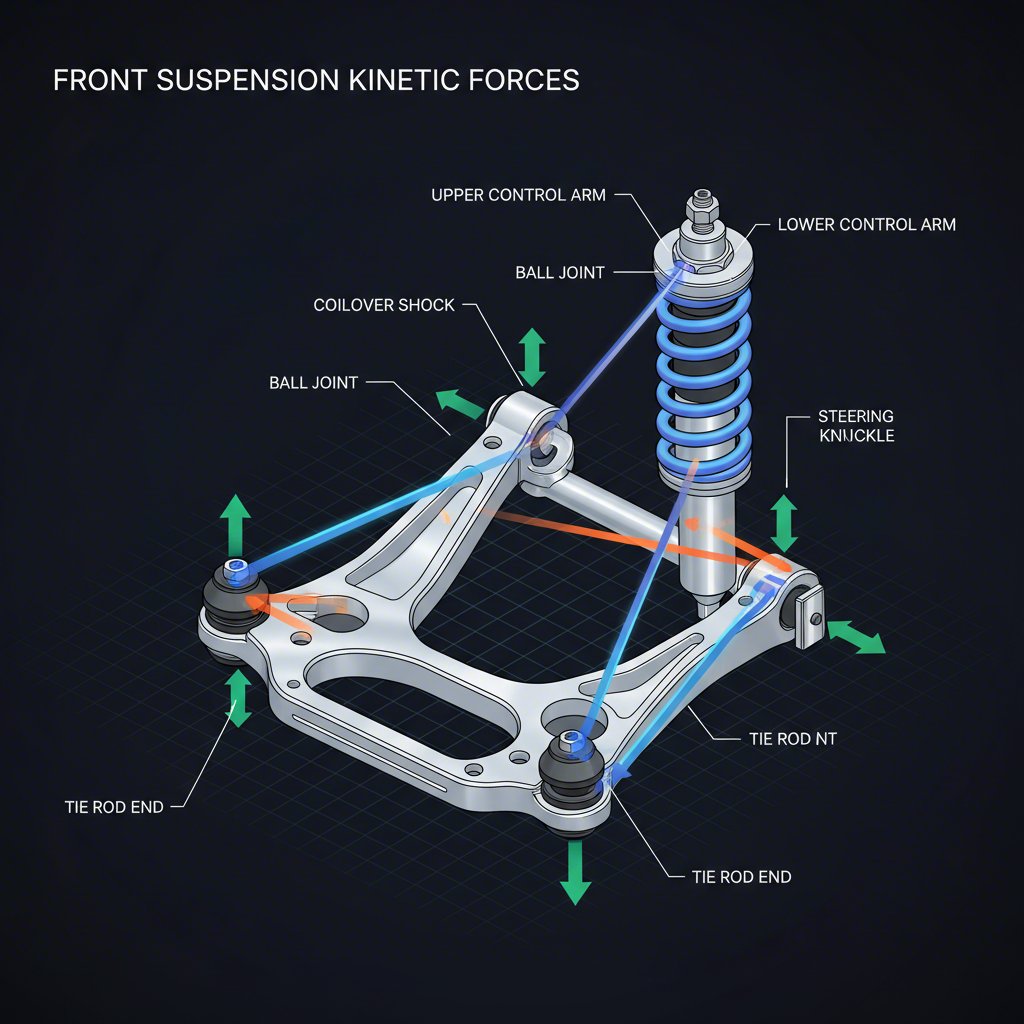
A control arm is a critical suspension component that connects your vehicle's frame to the steering knuckle or wheel hub assembly. Typically shaped like a wishbone, it pivots to allow the wheels to move up and down over bumps while keeping them firmly planted for stable handling. Stamped steel control arms are constructed from sheets of steel pressed into a rigid, lightweight shape. This component's integrity is essential for proper alignment, steering response, and overall vehicle safety.
The term 'play' refers to excessive, unwanted movement in the control arm's pivot points. These points consist of rubber or polyurethane bushings where the arm attaches to the frame and a ball joint where it connects to the wheel assembly. Bushings are designed to absorb vibrations and allow for controlled movement, while the ball joint provides a rotating pivot for steering. Over time, these components wear out.
When bushings crack, tear, or degrade, they can no longer hold the arm securely, leading to metal-on-metal contact and instability. Similarly, a worn ball joint develops looseness in its socket. According to automotive experts at AutoZone, this excessive play can throw off your wheel alignment, cause steering issues, and lead to premature tire wear. Ignoring these problems doesn't just result in a poor driving experience; it poses a significant safety risk, as a complete failure can lead to a loss of vehicle control.
Symptoms of a Worn Control Arm
Before you even lift the vehicle, your car will often provide clear signals that a control arm or its components are failing. Paying attention to these symptoms can help you diagnose the problem early and prevent more severe damage. If you notice any of the following signs, a physical inspection is necessary to confirm the issue.
- Clunking or Knocking Noises: This is one of the most common symptoms. You'll likely hear a distinct clunking sound coming from the front suspension, especially when driving over bumps, potholes, or making sharp turns. This noise is typically caused by a worn-out bushing allowing the metal control arm to hit other suspension parts.
- Steering Instability: A bad control arm can make your steering feel loose or unresponsive. You might notice the vehicle pulling to one side while driving, requiring constant correction to keep it straight. This indicates that the worn components are preventing the wheel from maintaining its proper alignment.
- Excessive Vibrations: As bushings wear out, they lose their ability to absorb road vibrations. This can result in vibrations being felt through the steering wheel or the entire chassis, particularly at higher speeds. A bent control arm can also cause this symptom.
- Uneven Tire Wear: A visual check of your tires can be very revealing. A failing control arm disrupts the wheel alignment, causing tires to wear down unevenly. Look for excessive wear on the inner or outer edges of the tire tread, a pattern known as "shoulder wear."
How to Check for Play: A Step-by-Step Guide
Performing a physical check is the definitive way to confirm control arm play. This procedure requires basic tools and a safe, level surface to work on. Follow these steps carefully to inspect your bushings and ball joints correctly.
- Safety First: Prepare and Lift the Vehicle. Park your car on a flat, solid surface and engage the parking brake. Chock the rear wheels to prevent rolling. Use a floor jack to lift the front of the vehicle at the manufacturer's recommended jacking point. CRITICAL: Once lifted, securely support the vehicle's frame with a pair of jack stands. Never work under a vehicle supported only by a jack.
- Perform a Visual Inspection. With the wheel off the ground, use a bright flashlight to get a clear view of the upper and lower control arms and their bushings. Look closely at the rubber bushings for any signs of cracking, tearing, or deformation. Check the control arm itself for any bends, cracks, or severe corrosion.
- Check Bushing Play with a Pry Bar. To check the bushings, wedge a long pry bar between the control arm and the subframe, near the bushing. Gently apply pressure to move the arm back and forth. As noted by experts at CarParts.com, a small amount of flex is normal for rubber bushings, but if you see significant movement—often defined as more than 1/8 of an inch—the bushing is worn and needs replacement.
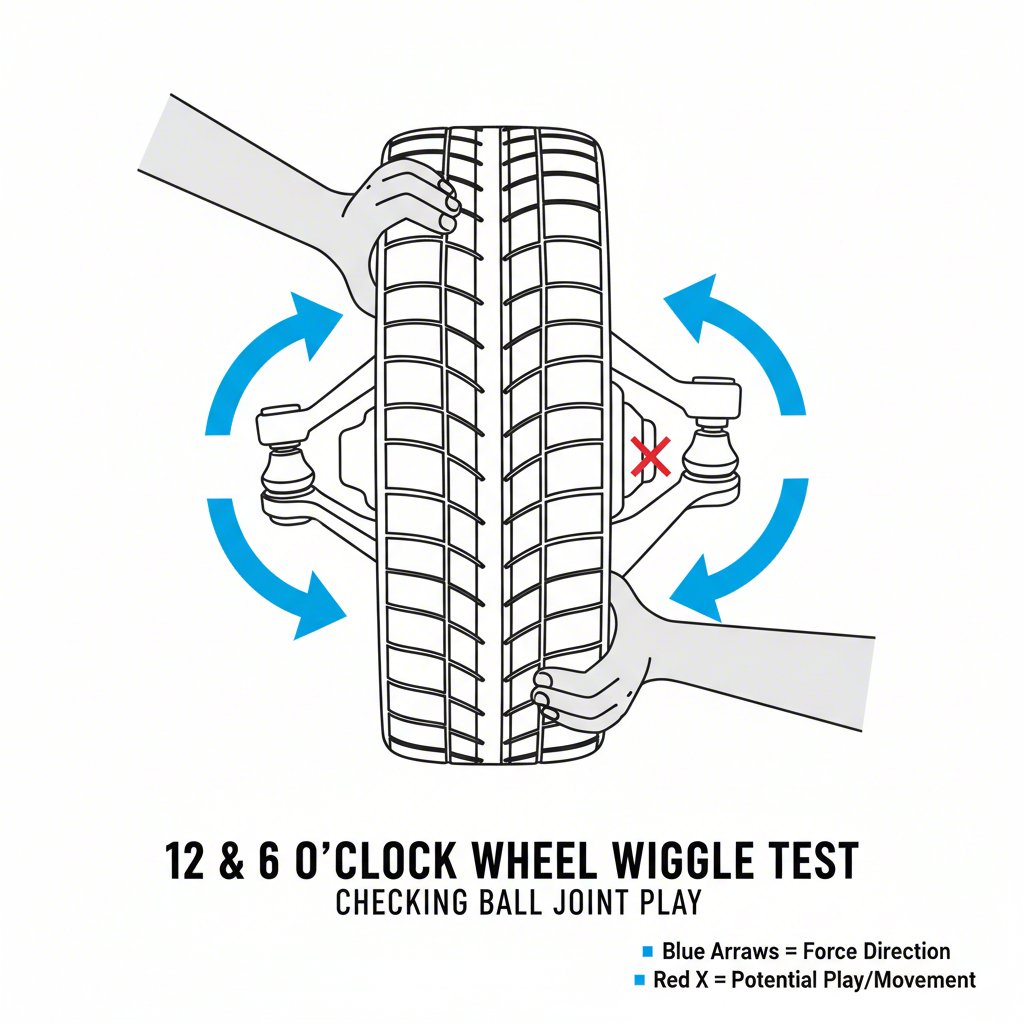
- Test the Ball Joint for Play. The ball joint is best tested by checking for movement in the wheel. Grab the tire with your hands at the 12 o'clock and 6 o'clock positions. Push in at the top while pulling out at the bottom, then reverse the motion. As detailed in guides like this one from wikiHow, there should be no noticeable play or clunking sound. Any vertical looseness is a clear sign of a worn ball joint.
Identifying Your Control Arms: Stamped Steel vs. Other Types
Before ordering replacement parts, it's essential to know what type of control arms your vehicle has. Manufacturers commonly use stamped steel, cast iron, or forged aluminum. Stamped steel arms, formed from pressed metal sheets, are common on many trucks and cars. Identifying them is straightforward and requires no special tools.
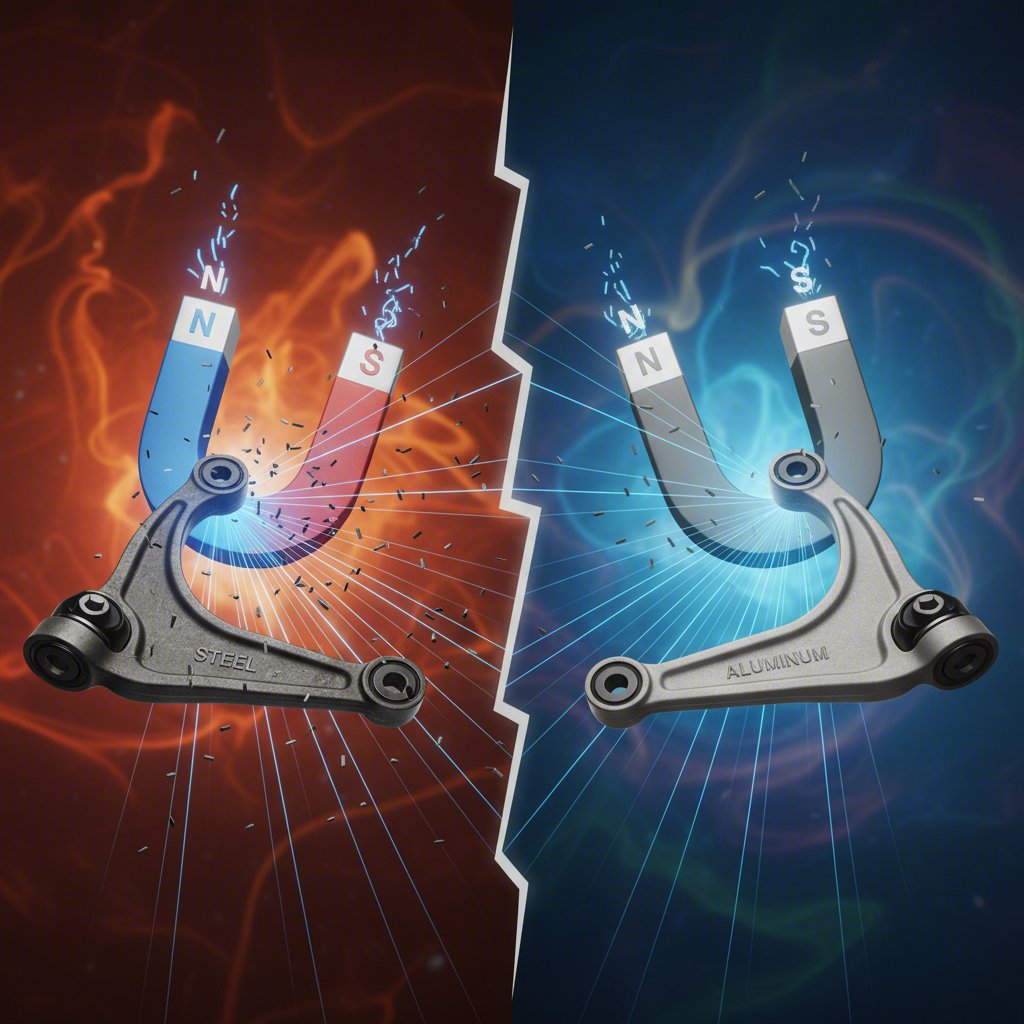
The simplest method is the magnet test. Place a magnet against the control arm; if it sticks firmly, the arm is either stamped steel or cast iron. If it does not stick, it is aluminum. To differentiate between stamped steel and cast iron, you can perform a tap test. Gently tap the arm with a small hammer or wrench. Stamped steel will produce a higher-pitched, hollow ringing sound, while the denser cast iron will make a dull thud. This distinction is critical, as different materials may require different replacement parts or have implications for modifications like leveling kits.
The precision required in creating these components is immense, as they are fundamental to vehicle safety and performance. For automotive manufacturers, sourcing high-quality stamped parts is paramount. Companies specializing in this field, such as Shaoyi (Ningbo) Metal Technology Co., Ltd., provide the engineering expertise and advanced automated facilities necessary to produce complex, reliable automotive stamping parts from prototyping to mass production, ensuring they meet stringent industry standards like IATF 16949.
For a quick reference, here are the key differences:
| Characteristic | Stamped Steel | Cast Iron | Aluminum |
|---|---|---|---|
| Appearance | Often has visible seams or folded edges | Thick, solid, with a rough surface texture | Smoother finish, often looks cleaner or painted silver |
| Magnet Test | Sticks | Sticks | Does not stick |
| Tap Test Sound | Higher-pitched ring | Dull thud | Higher-pitched ring |
Frequently Asked Questions
1. How do you tell if you have stamped steel control arms?
The easiest way to check is with a magnet. If the magnet sticks, the control arm is made of steel or iron. To tell the difference between stamped steel and cast iron, tap it with a hammer. A stamped steel arm will have a higher-pitched ring, while a cast iron arm will produce a dull thud. Stamped steel arms also often have visible seams where the metal was joined.
2. How do you visually inspect control arms?
To visually inspect control arms, safely raise the vehicle on jack stands and use a bright light. Look for obvious damage like cracks or bends in the arm itself. Pay close attention to the rubber bushings where the arm connects to the frame. Inspect them for deep cracks, tears, missing pieces, or signs of dry rot. Also, check the dust boot on the ball joint for tears or grease leakage.