 Small batches, high standards. Our rapid prototyping service makes validation faster and easier —
  EN
EN


Essential Stamped Steel Control Arm Rust Prevention Tips

TL;DR
Stamped steel control arms are common on modern vehicles but are highly susceptible to rust, especially in regions with high humidity or road salt. Proactive stamped steel control arm rust prevention is crucial and is best achieved by applying a durable protective barrier, such as rust-inhibiting paint or a specialized undercoating. If surface rust has already appeared, it can often be safely treated by removing loose scale, applying a chemical rust converter, and then sealing the metal with a protective coating to prevent further corrosion and ensure vehicle safety.
Understanding Stamped Steel Control Arms and Why They Rust
A control arm is a critical component of your vehicle's suspension system, connecting the chassis to the wheel hub. Stamped steel control arms are manufactured by pressing sheets of steel into a specific shape, a process that makes them lightweight and inexpensive to produce. This cost-effectiveness is why they are found on many modern passenger cars. This high-volume manufacturing process is why they are so common. For automotive manufacturers, achieving the right balance of strength, weight, and cost-effectiveness in these components is critical. Companies specializing in precision auto stamping parts, such as Shaoyi (Ningbo) Metal Technology Co., Ltd., manage this entire process from prototyping to mass production, ensuring parts meet strict industry standards like IATF 16949.
The primary drawback of steel, however, is its vulnerability to rust. Rust, or iron oxide, is the result of an electrochemical reaction between iron, oxygen, and water. When the protective paint or coating on a stamped steel control arm is chipped away by road debris, moisture and air get direct access to the bare metal. This process is significantly accelerated by the presence of road salt used in winter climates, which acts as an electrolyte and speeds up the corrosion process. It is perfectly normal for control arms to develop some surface rust over time, and in most cases, it is purely cosmetic and not an immediate safety concern.
Stamped steel is just one of several materials used for control arms, each with distinct properties. Here’s how they compare:
- Stamped Steel: Inexpensive and strong enough for most daily driving applications, but it is a heavy material and the most prone to rust.
- Cast Iron: Stronger and more durable than stamped steel, making it suitable for trucks and SUVs. It has better resistance to rust but is also very heavy.
- Aluminum: Significantly lighter than steel, which reduces unsprung weight and can improve handling and ride quality. Aluminum is naturally corrosion-resistant, but it is more expensive and can be more susceptible to damage from sharp impacts.
If you're unsure what material your control arms are made of, there's a simple test you can perform. Steel and iron are ferrous metals, meaning they contain iron and are magnetic. Simply place a magnet against the control arm; if it sticks firmly, you have either stamped steel or cast iron. If it does not stick, it is likely made of aluminum.
Proactive Rust Prevention: A Step-by-Step Guide
The most effective way to manage rust is to prevent it from starting in the first place. Creating a durable barrier between the steel and the elements is the key to long-term protection. This is especially important for new vehicles or after installing new control arms. There are several effective coating options available, each with its own balance of durability, cost, and application difficulty.
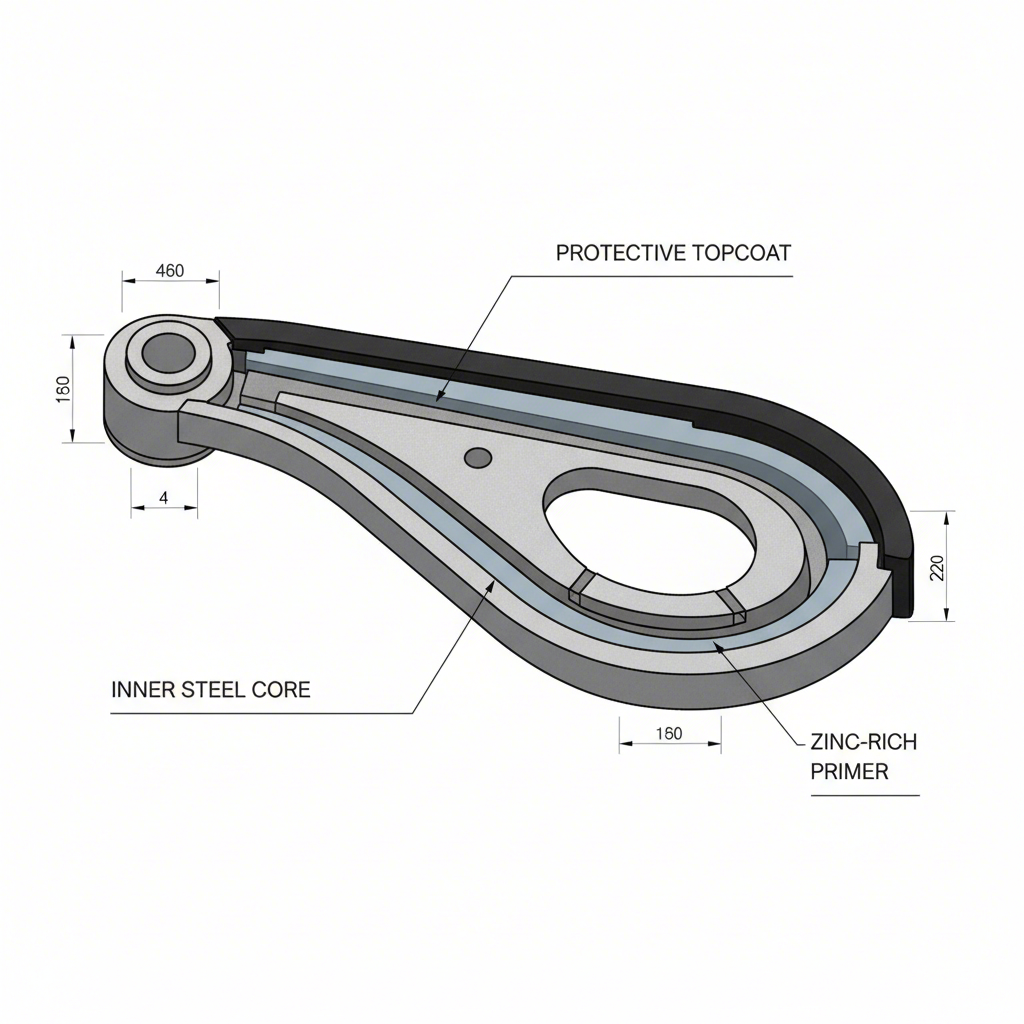
The primary methods for protecting your control arms involve specialized coatings. Rust-inhibiting paints, such as high-quality chassis or epoxy paints, create a hard, non-porous shell that seals out moisture. For maximum durability, powder coating offers a thick, uniform finish that is extremely resistant to chipping and chemicals, though it requires professional application. Finally, rubberized or wax-based undercoatings provide a flexible, self-healing barrier that excels at absorbing impacts from gravel and road debris.
| Coating Type | Durability | Average Cost | DIY-Friendliness |
|---|---|---|---|
| Rust-Inhibiting Paint | Good | Low | High |
| Powder Coating | Excellent | High | Low (Professional) |
| Rubberized Undercoating | Very Good | Moderate | High |
For those looking to apply a protective coating at home, following a precise process is essential for a lasting finish. Applying paint or undercoating to a new or thoroughly cleaned control arm will yield the best results. Here is a straightforward guide to the application process:
- Clean and Degrease: Start by thoroughly cleaning the control arm with a strong degreaser to remove all dirt, oil, and grime. The surface must be perfectly clean for the coating to adhere properly.
- Scuff the Surface: Lightly sand or scuff the entire surface with fine-grit sandpaper or a scuff pad. This creates a microscopic texture that gives the primer and paint a better grip.
- Apply a Primer: Spray a high-quality, self-etching or zinc-rich primer in thin, even coats. Primer is essential as it bonds to the bare metal and provides a stable base for the topcoat.
- Apply the Topcoat: Once the primer has cured according to the manufacturer's instructions, apply your chosen chassis paint or coating. Apply multiple thin coats rather than one thick coat to avoid drips and ensure even coverage.
- Allow for Proper Curing: Let the final coat cure completely. This can take anywhere from 24 hours to several days, depending on the product, temperature, and humidity. Avoid exposing the parts to moisture or harsh conditions during this time.
How to Treat Existing Surface Rust on Control Arms
If your control arms already show signs of rust, it’s important to address it before it worsens. The key is to distinguish between treatable surface rust and serious structural decay. It is crucial to understand that surface rust, which appears as discoloration and light pitting, is generally manageable. However, structural rust, characterized by heavy flaking, deep pits that reduce metal thickness, or visible holes, is a serious safety hazard. Any control arm with structural rust must be replaced immediately and should not be repaired.
For surface rust, the goal is to remove the loose corrosion and then chemically treat the remaining rust to create a stable, paintable surface. This process involves two main stages: mechanical removal and chemical conversion. Mechanical removal with a wire brush or grinding wheel gets rid of the flaking, loose particles. Following that, a chemical rust converter is applied. This liquid reacts with the iron oxide, transforming it into a hard, black, inert polymer layer that halts the rusting process and acts as a primer for a new protective coating.
Follow these steps to safely treat existing surface rust on your vehicle’s control arms. Always prioritize safety by working on a level surface and using appropriate protective gear like gloves and safety glasses.
- Safely Lift and Support the Vehicle: Use a jack to lift the vehicle and secure it firmly on jack stands. Never work under a vehicle supported only by a jack.
- Remove Loose Rust: Using a wire brush, wire wheel on a drill, or an angle grinder, carefully remove all loose, flaking rust and paint from the affected areas. Your goal is to get back to a solid metal surface, even if it's pitted.
- Apply a Chemical Rust Converter: Brush or spray a rust converter product directly onto the remaining rust. Follow the product's instructions carefully, as some require a specific application thickness and drying time. The rust will typically turn black or dark purple as it converts.
- Clean and Neutralize the Surface: After the converter has fully cured, clean the surface as directed by the manufacturer. Some products may require rinsing or wiping with a solvent to neutralize the chemical reaction before painting.
- Prime and Paint for Protection: With the rust neutralized and the surface stable, you can now apply a durable protective coating. Use a high-quality primer followed by a tough chassis paint or undercoating, as described in the prevention section, to seal the metal from future moisture exposure.
Frequently Asked Questions
1. What are stamped steel control arms?
Stamped steel control arms are suspension components made by pressing sheets of steel into a desired shape. They are a cost-effective and common choice for modern passenger cars but are more prone to rusting in damp environments compared to materials like cast iron or aluminum.
2. Is it normal for control arms to rust?
Yes, it is very common for stamped steel control arms and other uncoated suspension parts to develop surface rust, especially on vehicles driven in wet climates or areas where road salt is used in winter. In most cases, light surface rust is cosmetic and not an immediate structural concern, but it should be treated to prevent it from worsening.
3. Are stamped steel control arms magnetic?
Yes, because they are made from a ferrous metal (steel), stamped steel control arms are magnetic. A simple way to identify them is to see if a magnet sticks to the surface. If it does, the control arm is made of either steel or cast iron. If it doesn't, it is likely aluminum.