 Small batches, high standards. Our rapid prototyping service makes validation faster and easier —
  EN
EN


Custom Stainless Steel Sheet Metal Fabrication: 9 Essential Points
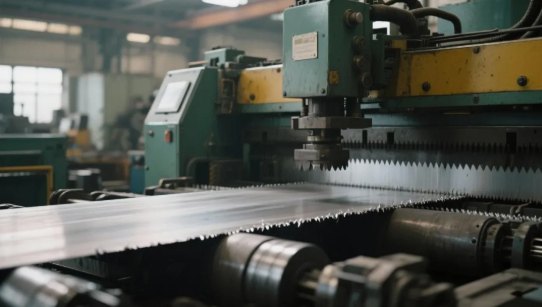
Understanding Custom Stainless Steel Sheet Metal Fabrication
When you need components that fit exact specifications rather than settling for off-the-shelf solutions, custom stainless steel sheet metal fabrication becomes your go-to manufacturing approach. This specialized process transforms raw stainless sheet metal into tailored products through cutting, forming, joining, and finishing operations designed to meet your unique requirements.
Unlike standard sheet metal work that relies on pre-defined sizes and generic dimensions, custom fabrication delivers precision-engineered solutions. Think of it this way: standard fabrication offers a fixed menu, while custom work creates exactly what your application demands.
What Makes Fabrication Custom Rather Than Standard
The distinction between standard and custom stainless steel sheet metal fabrication hinges on flexibility and specificity. Standard options come in predetermined gauges, dimensions, and configurations. They work perfectly for general applications like basic roofing panels or simple ducting systems where precise specifications aren't critical.
Custom fabrication, however, opens entirely different possibilities. You gain the ability to specify:
- Unique geometries and complex shapes that standard products cannot accommodate
- Precise dimensional tolerances tailored to your assembly requirements
- Application-specific material grades optimized for your operating environment
- Specialized surface finishes matched to aesthetic or functional needs
Industries like aerospace, medical device manufacturing, and food processing rely heavily on custom metal fab because their applications demand components that integrate seamlessly into larger systems while meeting stringent performance standards.
Core Processes in Stainless Steel Metalwork
Every custom stainless steel fabrication project flows through four fundamental process categories. Understanding these stages helps you communicate effectively with fabricators and make informed decisions about your projects:
- Laser cutting: Uses focused high-power beams to achieve extremely precise cuts with minimal heat distortion, ideal for intricate patterns and tight tolerances
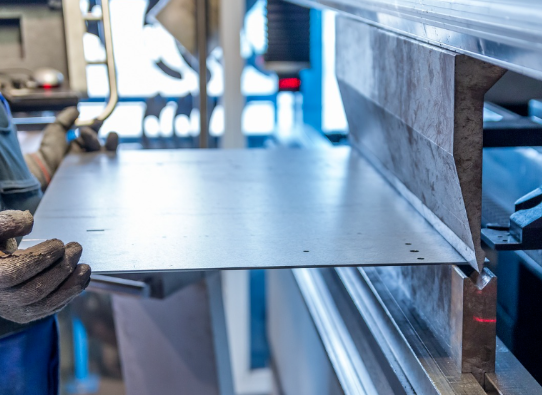
- Bending and forming: Shapes flat sheets into three-dimensional components through press brakes, roll forming, or stamping operations
- Welding and joining: Permanently assembles components using TIG, MIG, or resistance welding techniques matched to material thickness and quality requirements
- Finishing: Enhances appearance and performance through polishing, brushing, passivation, or electropolishing treatments
Sounds complex? Here's the key insight: stainless steel fabrication demands specialized expertise that differs significantly from working with mild steel or aluminum. The material's unique properties create distinct challenges.
Stainless steel work hardens rapidly during forming operations, requires careful heat management during cutting and welding, and demands dedicated tooling to prevent iron contamination that compromises corrosion resistance.
These characteristics mean fabricators must adjust techniques, select appropriate equipment, and implement quality controls specific to stainless alloys. The chromium content that gives stainless steel its corrosion resistance also makes it behave differently under fabrication stresses compared to carbon steel or aluminum alloys.
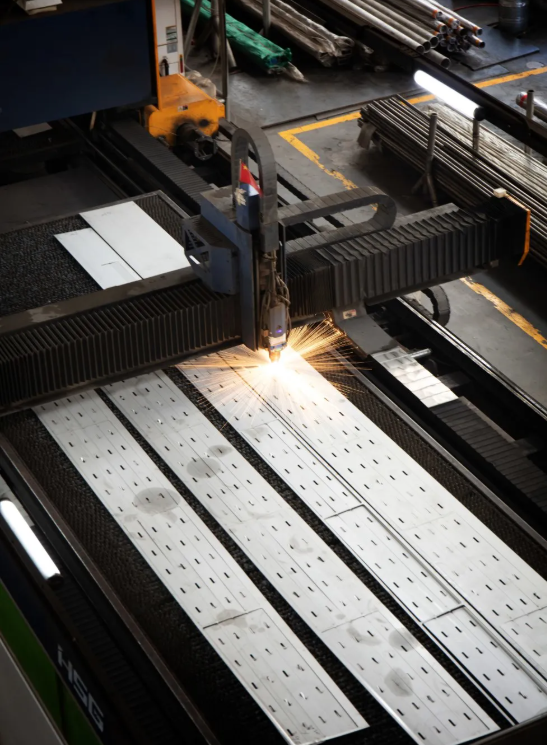
Stainless Steel Grades and Material Selection
Choosing the right stainless steel grade can make or break your fabrication project. While all stainless steel sheets share that signature corrosion resistance, the specific alloy you select determines how your finished components perform in real-world conditions. Let's cut through the confusion and explore what actually matters when specifying materials.
You'll encounter dozens of stainless steel grades, but four dominate custom sheet metal fabrication: 304, 316, 430, and specialty variants like 316L. Each brings distinct advantages depending on your application environment, budget constraints, and fabrication requirements.
304 vs 316 Stainless Steel Selection Criteria
The 304 versus 316 debate represents the most common material decision you'll face. Both belong to the austenitic stainless steel family, meaning they're non-magnetic and offer excellent formability. However, their performance diverges significantly in corrosive environments.
Grade 304 contains approximately 18% chromium and 8% nickel, earning its nickname "18/8 stainless." This workhorse grade delivers:
- Excellent corrosion resistance for indoor and mild outdoor applications
- Superior formability and weldability for complex fabrications
- Food-safe properties ideal for kitchen equipment and food processing
- Cost-effective pricing as the most widely produced stainless grade
When does 304 fall short? Environments containing chlorides like seawater, road salts, or pool chemicals cause pitting corrosion that compromises the protective chromium oxide layer. If your application involves coastal installations or chemical exposure, you'll need something stronger.
Grade 316 stainless steel adds 2-3% molybdenum to the alloy composition, dramatically improving resistance to chloride attack and acidic conditions. According to industry testing data, 316 can withstand saltwater environments for up to 10 years compared to just 1 year for 304 under identical conditions.
This enhanced performance makes 316 the preferred choice for marine hardware, pharmaceutical equipment, chemical processing vessels, and medical devices where failure isn't an option.
What about 430 stainless? This ferritic grade offers a budget-friendly alternative for decorative applications. Unlike austenitic grades, 430 is magnetic and contains no nickel, reducing material costs significantly. You'll find it in appliance trim, automotive accents, and architectural panels where aesthetics matter more than extreme corrosion resistance.
When Specialty Alloys Outperform Standard Grades
Standard grades work for most applications, but specialty alloys solve specific fabrication challenges. The "L" designation in grades like 316L and 304L indicates low carbon content, typically below 0.03% compared to 0.08% in standard versions.
Why does carbon content matter? During welding, high heat causes carbon to migrate toward grain boundaries, creating carbide precipitation that depletes chromium from surrounding areas. This phenomenon, called sensitization, leaves welded zones vulnerable to intergranular corrosion.
316L stainless steel eliminates this concern by limiting available carbon, making it the superior choice for:
- Heavy welding applications requiring multiple passes
- Assemblies used in severe corrosive environments after welding
- Components where post-weld heat treatment isn't practical
When working with a stainless steel plate supplier or sourcing ss steel sheet for welded assemblies, specifying the low-carbon variant adds minimal cost while providing significant long-term performance benefits.
| Grade | Corrosion Resistance | Relative Cost | Weldability | Magnetic | Common Applications |
|---|---|---|---|---|---|
| 304 | Good - indoor/mild outdoor | Baseline | Excellent | No | Food equipment, kitchen appliances, architectural trim |
| 304L | Good - post-weld environments | +5-10% | Superior | No | Welded tanks, chemical containers, heavy fabrications |
| 316 | Excellent - chlorides/acids | +20-30% | Excellent | No | Marine hardware, pharmaceutical, medical devices |
| 316L | Excellent - welded assemblies | +25-35% | Superior | No | Chemical processing, offshore equipment, surgical implants |
| 430 | Moderate - indoor/decorative | -15-20% | Good | Yes | Appliance panels, automotive trim, decorative elements |
How do you decide which grade fits your project? Start by mapping your operating environment. Indoor applications with occasional moisture typically perform well with 304. Coastal locations, chemical exposure, or high-purity requirements point toward 316 or 316L. Budget-conscious decorative projects where corrosion resistance isn't critical make 430 a sensible choice.
Remember that material selection impacts more than just performance. Different grades exhibit varying springback behavior during bending, respond differently to welding heat input, and require specific tooling considerations. Understanding these nuances early in the design process prevents costly mid-project material changes and ensures your stainless steel sheets deliver the performance your application demands.
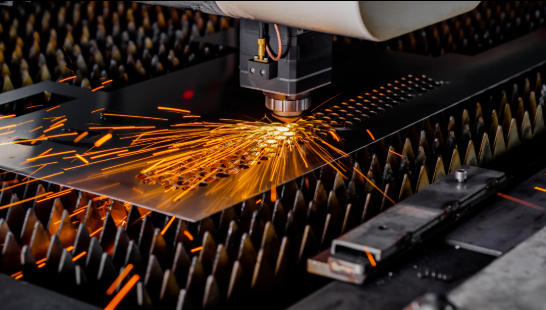
Fabrication Techniques for Stainless Steel Projects
Now that you understand material selection, let's explore how fabricators actually transform stainless steel sheets into finished components. Each technique brings specific advantages, but stainless steel's unique properties demand adjustments that differ from working with mild steel or aluminum. Choosing the right method depends on your thickness requirements, precision needs, production volume, and budget constraints.
Cutting Methods and Their Stainless Steel Applications
How do you cut stainless steel effectively? The answer depends on material thickness, edge quality requirements, and production economics. Four primary methods dominate modern stainless steel cutting, each optimized for specific scenarios:
- Laser cutting: Uses focused light beams to achieve tight tolerances of ±0.001–0.005 inches on thin to medium materials up to approximately 1 inch thick. Ideal for intricate geometries, sharp corners, and applications requiring minimal post-processing
- Waterjet cutting: Propels high-pressure water mixed with abrasive garnet to cut materials up to 6+ inches thick without heat distortion. Perfect for heat-sensitive applications and materials that cannot tolerate thermal stress
- CNC punching: Delivers high-volume efficiency for repetitive hole patterns and simple shapes, particularly cost-effective when producing large quantities of similar components
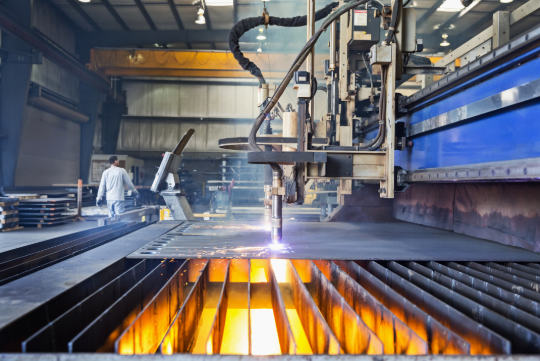
- Plasma cutting: Channels ionized gas to rapidly sever medium to thick plate up to approximately 2 inches, offering the lowest cost per inch for structural components where edge refinement is acceptable
When precision matters most, a laser cutter delivers unmatched results on stainless steel sheet metal. According to Action Stainless industry data, laser systems produce clean, sharp edges requiring minimal post-processing, making them the preferred choice for food-grade applications, architectural components, and enclosures where appearance and hygiene standards matter.
However, laser cutting creates heat-affected zones (HAZ) that can alter material properties near the cut edge. For stainless steel, this means potential chromium depletion and reduced corrosion resistance in a narrow band along the cut line. In critical applications, fabricators compensate by specifying allowances for edge machining or selecting waterjet cutting instead.
Waterjet cutting stands apart as the best way to cut stainless when preserving metallurgical integrity is essential. The cold-cutting process eliminates HAZ entirely, preventing microcracks, hardening, and discoloration. Pharmaceutical and food manufacturing operations favor this method for sanitary-grade components where any thermal alteration could compromise performance. The trade-off? Slower cycle times and higher operational costs make waterjet less economical for high-volume production.
For thick stainless steel plate where precision tolerance requirements are moderate, plasma cutting delivers speed and cost efficiency. A skilled metal cutter can rapidly process structural frames, heavy brackets, and industrial components. Modern CNC-controlled plasma systems have dramatically improved cut quality, though edges typically require grinding or cleaning before welding.
Forming and Joining Techniques for Precision Results
Bending stainless steel presents challenges that catch many fabricators off guard. The material's high yield strength and elasticity create springback behavior significantly more pronounced than mild steel or aluminum welding applications encounter.
What exactly is springback? When you bend stainless steel, the outer surface stretches while the inner surface compresses. Part of this deformation is permanent (plastic), but a portion remains elastic and recovers when you release the bending force. The result? Your bend angle opens slightly, missing your target dimension.
According to Datum Alloys technical research, 304 stainless steel typically springs back 2-3 degrees on tight bends where the inside radius equals material thickness. For larger radii, springback can exceed 30-60 degrees, requiring significant compensation strategies.
Experienced fabricators employ several techniques to achieve accurate bends:
- Overbending: Bending past the target angle so the material springs back to the desired position
- Bottoming: Forcing the sheet to fully conform to the die angle, reducing elastic recovery
- Coining: Applying extremely high force to plastically thin the material at the bend line, virtually eliminating springback
- Active angle control: Using CNC press brakes with real-time measurement to automatically compensate during forming
Work hardening compounds forming challenges. As stainless steel deforms, its crystalline structure changes, becoming progressively harder and more resistant to additional forming. This means fabricators must carefully sequence operations and sometimes anneal parts between forming stages to restore ductility.
When it comes to joining stainless steel components, understanding tig vs mig welding differences helps you specify the right technique for your application. Both produce quality joints, but their strengths align with different project requirements.
TIG welding (tungsten inert gas) uses a non-consumable tungsten electrode and separate filler rod, giving welders precise control over heat input and bead appearance. According to Caldera Manufacturing Group, TIG produces splatter-free welds with superior aesthetics, making it ideal for visible joints on architectural components, food processing equipment, and medical devices where smooth, cleanable surfaces matter.
MIG welding (metal inert gas) feeds a consumable wire electrode through the torch, enabling faster deposition rates and easier operation. For production environments where speed outweighs cosmetic requirements, MIG delivers efficiency gains. Structural assemblies, industrial equipment frames, and hidden joints benefit from MIG's productivity advantages.
Spot welding creates localized joints by passing current between two electrodes clamping overlapping sheets. This resistance welding technique excels for high-volume assembly of thin-gauge components where discrete, consistent joints replace continuous weld beads.
Which welding method should you specify? Consider these guidelines:
- Choose TIG for thin materials, visible welds, and applications requiring maximum corrosion resistance
- Choose MIG for thicker materials, production speed requirements, and structural components
- Choose spot welding for high-volume thin-gauge assemblies with overlapping joint designs
Regardless of joining method, stainless steel demands cleaner conditions than carbon steel fabrication. Contamination from iron particles, oils, or debris compromises the passive oxide layer that provides corrosion resistance. Quality fabricators maintain dedicated stainless steel tooling and clean work environments to protect your components' long-term performance.
Common Fabrication Challenges and Solutions
Understanding fabrication techniques is only half the battle. Stainless steel presents unique challenges that separate experienced fabricators from those who struggle with inconsistent results. When you're cutting stainless steel sheets or forming complex geometries, four primary obstacles demand attention: work hardening, heat discoloration, springback behavior, and contamination risks.
Let's explore each challenge and the proven strategies that deliver reliable outcomes for your custom projects.
Managing Work Hardening in Stainless Steel Forming
Ever noticed how stainless steel becomes harder to work the more you manipulate it? That's work hardening in action. Unlike mild steel, austenitic stainless grades like 304 and 316 rapidly increase in hardness during cold forming operations.
Here's what happens at the molecular level: as you bend, stretch, or form stainless sheet metal, the material's crystalline structure permanently deforms. This deformation creates internal stresses that increase yield strength and reduce ductility with each successive operation.
The practical implications affect every aspect of fabrication:
- Tool wear accelerates: Harder material dulls cutting edges and punch tooling faster than expected
- Cracking risks increase: Over-worked material may crack during subsequent bending operations
- Process sequencing matters: Fabricators must plan operations to minimize cumulative strain
- Intermediate annealing: Complex parts may require heat treatment between forming stages to restore ductility
How do experienced fabricators manage work hardening? They start by selecting tools optimized for stainless steel's higher strength. Sharp tooling with appropriate clearances reduces the force required, minimizing strain accumulation. When multiple forming operations are necessary, sequencing moves from least to most severe, preserving material ductility where it's needed most.
Preventing Heat Discoloration and Contamination
When you're figuring out how to cut stainless steel or planning welding operations, managing heat becomes critical. That rainbow of colors appearing around welds and cut edges isn't just cosmetic; it signals chromium depletion that compromises corrosion resistance.
According to TWI Global research, heat-tint creates a chromium-rich scale while depleting chromium from the underlying surface. Purple-blue oxides indicate the most severe depletion and highest susceptibility to pitting corrosion. Testing shows the critical pitting temperature can drop from 60°C to 40°C for type 316 stainless steel with heat-tinted surfaces.
The best way to cut stainless and weld it without discoloration involves prevention rather than correction:
- Back purging during welding: Maintaining an inert gas shield on the root side minimizes oxidation. Pure argon works for most grades, while nitrogen-argon mixtures benefit duplex and super-austenitic alloys
- Controlled heat input: Lower amperage settings and faster travel speeds reduce the heat-affected zone
- Cold-cutting methods: Waterjet cutting eliminates thermal effects entirely when heat-tint is unacceptable
- Post-weld cleaning: When heat-tint occurs, the scale and chromium-depleted layer must be removed to restore corrosion resistance
Stainless steel fabrication demands dedicated tooling and clean environments because iron contamination from carbon steel tools or grinding debris permanently compromises the protective chromium oxide layer that defines stainless performance.
Iron contamination represents an often-overlooked threat that can ruin otherwise perfect fabrication work. According to the British Stainless Steel Association, rust staining from iron contamination ranges from slight surface bloom to severe pitting that requires mechanical grinding to repair.
Common contamination sources include:
- Non-stainless steel work tables, clamps, and handling equipment
- Grinding wheels and cutting discs previously used on carbon steel
- Airborne grinding debris in mixed-metal fabrication shops
- Chain marks and lifting equipment contact points
Prevention requires discipline throughout the fabrication process. Quality-focused shops maintain segregated stainless steel work areas with dedicated tooling. Vacuum lifting equipment prevents chain marks, while non-metallic contact materials protect surfaces during handling. When contamination is suspected, the ferroxyl test outlined in ASTM A380 detects free iron before rust staining develops.
If contamination occurs, removal options depend on severity. Mild staining responds to non-scratching cleaners containing calcium carbonate. Moderate rust staining requires phosphoric acid cleaners or dilute nitric acid. Severe contamination demands nitric-hydrofluoric acid pickling, though this treatment may etch the surface, making complete restoration impossible without mechanical rework.
Understanding these challenges helps you evaluate fabrication partners and set realistic expectations for your projects. The next section explores surface finishes and post-fabrication treatments that enhance both appearance and performance.
Surface Finishes and Post-Fabrication Treatments
After cutting, forming, and joining operations are complete, surface finishing determines both the visual appeal and functional performance of your stainless steel components. The finish you select affects corrosion resistance, cleanability, durability, and aesthetic consistency across production runs.
Imagine two identical 316 stainless enclosures: one leaves the fabrication shop with raw mill finish, while the other receives electropolishing. Both share identical material properties, yet they'll perform dramatically differently in pharmaceutical or food processing environments. Understanding your finishing options helps you specify exactly what your application demands.
Mechanical and Chemical Finishing Options
Stainless steel finishes fall into two broad categories: mechanical treatments that physically alter the surface texture, and chemical treatments that modify surface chemistry to enhance performance.
Mechanical finishes range from basic mill conditions to highly reflective mirror polish:
- Mill finish (No. 1, 2D, 2B): The basic supply condition after rolling and annealing. No. 2B provides a smooth, semi-reflective surface suitable for general-purpose applications and serves as the starting point for further polishing
- Brushed stainless sheet (No. 4): Created by polishing with fine abrasive belts, producing uniform directional lines. This satin-like appearance reduces glare while hiding fingerprints and minor scratches
- Bright annealed (BA): Achieved through cold rolling and annealing in a controlled atmosphere, resulting in a smooth, highly reflective surface without mechanical polishing
- Mirror polish (No. 8): Produced by progressively finer abrasives and buffing compounds until the surface achieves true mirror-like reflectivity with no visible grit lines
According to Vinssco technical resources, the No. 4 finish remains among the most widely used for stainless steel, balancing aesthetics with practical durability for architectural panels, elevators, sinks, and restaurant equipment.
Chemical treatments enhance performance characteristics that mechanical finishing cannot address:
- Passivation: Removes free iron and contaminants from the surface using nitric or citric acid solutions, restoring the chromium-rich oxide layer that provides corrosion resistance after fabrication operations
- Electropolishing: Submerges components in an electrolytic bath, removing a microscopic surface layer to create an ultra-smooth, contaminant-free finish with enhanced cleanability
- Pickling: Uses stronger acid solutions to remove heat scale, weld discoloration, and oxide layers from heavily processed surfaces
How does electropolishing compare to passivation? According to Able Electropolishing testing data, electropolishing is 30 times more effective than passivation for preventing corrosion and pathogen contamination. Additionally, electropolishing can improve surface roughness (Ra) by up to 50% while removing burrs, microcracks, and other defects with microscopic precision.
Selecting the Right Surface Treatment for Your Application
Matching finish to application ensures your components perform as intended. Each environment demands specific surface characteristics:
| Finish Type | Appearance | Durability | Cleanability | Typical Applications |
|---|---|---|---|---|
| Mill (2B) | Smooth, semi-reflective | Good | Moderate | Industrial equipment, tanks, general fabrications |
| Brushed (No. 4) | Satin with directional lines | Excellent | Good | Architectural panels, elevators, kitchen equipment |
| Mirror (No. 8) | Highly reflective, mirror-like | Moderate | Good | Decorative elements, signage, press plates |
| Passivated | Unchanged from base finish | Improved | Unchanged | Post-fabrication corrosion restoration |
| Electropolished | Bright, ultra-smooth | Superior | Exceptional | Pharmaceutical, food processing, medical devices |
For architectural applications where aesthetics and durability balance equally, brushed stainless sheet finishes excel. The directional grain pattern conceals wear patterns while providing sufficient corrosion resistance for indoor and protected outdoor installations.
Polished stainless steel sheet metal with mirror finish creates stunning visual impact for decorative elements, but requires careful handling and regular maintenance to preserve reflectivity. Scratches become immediately visible on highly polished surfaces.
Pharmaceutical and food processing environments demand electropolished surfaces. The ultra-smooth finish eliminates microscopic crevices where bacteria accumulate, while the enhanced chromium-to-iron ratio at the surface maximizes corrosion resistance. Independent salt spray testing confirms electropolished 304 stainless steel shows no corrosion after 888 hours, while passivated samples develop visible rust.
Before specifying finishes, verify your material thickness using a sheet metal gauge chart. Standard stainless steel gauges differ slightly from carbon steel measurements. For reference, 14 gauge steel thickness measures approximately 0.0781 inches (1.98mm) for stainless steel, compared to 0.0747 inches for carbon steel at the same gauge designation.
Understanding gauge sizes helps communicate effectively with fabricators and ensures your components meet dimensional requirements. A comprehensive gauge size chart becomes essential when tolerance specifications must account for both base material thickness and any material removal during finishing operations like electropolishing.
With surface finishing requirements defined, the next critical step involves designing your components for efficient, cost-effective manufacturing through proper Design for Manufacturability practices.
Design for Manufacturability Best Practices
You've selected the perfect stainless steel grade and specified an ideal surface finish. Now comes the step that determines whether your project stays on budget or spirals into costly revisions: designing for manufacturability. DFM principles ensure your custom stainless steel fabrication moves smoothly from concept to finished component without mid-project surprises.
Here's the reality: design changes become exponentially more expensive as projects progress. According to Consac's engineering research, early attention to manufacturability pays dividends throughout the product lifecycle. A tolerance adjustment that costs nothing on a CAD drawing might require complete retooling once production begins.
Critical Tolerances and Dimensional Specifications
Every fabrication method delivers different precision capabilities. Specifying tolerances tighter than your process can economically achieve drives costs up dramatically, while tolerances looser than necessary may compromise fit and function.
For stainless steel sheet metal fabrication, these tolerance ranges represent industry standards:
- Laser cutting: Achieves tolerances as tight as ±0.127mm (±0.005") for precision applications, with edge quality suitable for visible components
- CNC bending: Leg length tolerances range from ±0.2mm for materials up to 3mm thick to ±1.6mm for 10mm stainless steel, with angle precision typically holding ±0.5°
- Punching and stamping: Standard processes typically achieve ±0.25mm to ±0.76mm economically, with tighter tolerances requiring specialized tooling
- General sheet metal work: According to industry guidelines, standard tolerances of ±0.010" to ±0.030" prove most economical for typical applications
What happens when you specify unnecessarily tight tolerances? Costs escalate rapidly. Tolerances below ±0.005" often require secondary machining operations, specialized inspection equipment, and higher rejection rates. Before demanding extreme precision, ask whether your assembly actually requires it.
Minimum bend radii represent another critical specification that varies by material thickness and grade. Stainless steel requires larger internal radii than mild steel due to its higher strength and work-hardening characteristics. According to 247TailorSteel's technical specifications, internal bend radii for stainless steel at 90 degrees range from 1.56mm for 0.8mm material to 15mm for 10mm thickness.
Consider these essential DFM specifications for your stainless steel sheet metal fabrication projects:
- Minimum leg length: The sheet must overlap the die sufficiently during bending. For 3mm stainless steel, plan for minimum leg lengths of 15.12mm at 90 degrees
- Hole-to-bend distance: Position holes at least 2× material thickness from bend lines to prevent distortion. The metal stretches during bending, pulling nearby holes out of specification
- Feature spacing: Maintain minimum 0.5mm spacing between bent edges for materials up to 3mm, increasing to 1.5mm for 7-8mm thickness
- Maximum bending length: Equipment limitations restrict bend lengths. For 10mm AISI 304 stainless, maximum bending length drops to 2,115mm compared to full-length capability for thinner gauges
Avoiding Costly Design Errors
Three design mistakes account for the majority of stainless steel fabrication problems. Catching these issues before production saves significant time and expense.
Insufficient bend relief: Without proper relief cuts, material tears at bends and corners deform. According to industry best practices, always provide relief proportional to material thickness, typically 1–1.5× the thickness. For stainless steel, err toward the higher end due to the material's strength and work-hardening behavior.
Overly tight tolerances: Specifying tolerances below ±0.005" drives costs up dramatically when standard processes can't achieve them economically. Before demanding extreme precision on every dimension, identify which features actually require tight control and which can accept standard fabrication tolerances.
Tooling interference: Complex geometries that look perfect in CAD may be impossible to form without tool collision. Box-shaped products, for example, typically have maximum height limitations of 230mm due to press brake die interference. When designing sheet metal cut to size for subsequent forming, verify that your geometry allows tool access throughout the bending sequence.
Design for assembly considerations extend beyond individual component fabrication:
- Minimize part count: Combine features into single parts when possible, reducing assembly time and potential failure points
- Standardize fasteners: Using consistent screw sizes throughout your design reduces tool changes during assembly
- Ensure tool access: Provide sufficient clearance for assembly tools. Hidden fasteners may look cleaner but increase assembly time and cost
- Design for welding access: Position joints where welding equipment can reach without interference, and maintain clearances for proper shielding gas coverage
When specifying custom laser cut stainless steel components, account for kerf width in your dimensional planning. Laser cutting removes approximately 0.1-0.3mm of material width depending on thickness and equipment. For precision assemblies, specify which edge represents the critical dimension so fabricators adjust their cutting path appropriately.
Working with experienced manufacturers early in your design process helps identify these issues before they become expensive problems. Manufacturers like Shaoyi (Ningbo) Metal Technology provide comprehensive DFM analysis with 12-hour quote turnaround, helping optimize designs before production begins. For demanding applications in automotive and structural components, IATF 16949-certified manufacturers offer the quality assurance systems that ensure consistent results from rapid prototyping through mass production.
The investment in proper DFM pays dividends throughout your project: reduced fabrication costs, improved component quality, faster production timelines, and fewer mid-project revisions. With manufacturability addressed, the next consideration involves matching your specifications to industry-specific requirements and quality standards.
Industry Applications and Quality Standards
Your custom stainless steel fabrication project doesn't exist in isolation. Every industry brings unique requirements that shape material selection, finishing specifications, and quality documentation demands. Understanding these sector-specific considerations helps you communicate effectively with stainless steel fabricators and ensures your components meet all applicable standards.
Think of it this way: a food processing tank and an aerospace bracket might both use 316 stainless steel, yet their fabrication requirements differ dramatically. Let's explore what each major industry demands from stainless fabrication partners.
Industry-Specific Requirements and Certifications
Quality certifications provide an added layer of assurance that manufactured components meet all requirements. According to Hartford Technologies, these certifications demonstrate commitment to producing premium components while meeting industry standards and customer expectations.
Aerospace applications demand the highest levels of traceability and quality control. Weight optimization drives material selection toward higher-strength alloys that maintain performance with thinner gauges. According to AZoM technical research, precipitation-hardening steels like 17-4PH and martensitic steels like 440C offer superior strength and durability for aerospace components.
AS9100 certification is specific to the aerospace industry and aircraft parts, essentially stating that components meet safety, quality, and high standards requirements. The certification exists because of how highly specific and technical everything needs to be for aviation safety and compliance.
Automotive manufacturing prioritizes durability, repeatability, and cost efficiency at production volumes. IATF 16949 certification, developed by the International Automotive Task Force, builds upon ISO 9001 while encompassing additional requirements for product design, production processes, and customer-specific standards. This certification ensures compliance with stringent industry regulations and prioritizes customer satisfaction throughout the supply chain.
Medical device manufacturing requires biocompatibility and sterilization compatibility. ISO 13485 ensures all medical devices are designed and manufactured with safety in mind, closely aligning with ISO 9001 requirements while addressing the unique demands of the medical industry. Patient safety makes this certification essential in reducing risks and protecting lives.
According to industry specifications, stainless steel grades 440C and 17-4PH are widely used in precision surgical instruments due to their high hardness and wear resistance following heat treatment.
Food processing equipment must meet FDA compliance requirements for food-contact surfaces. Electropolished 316 or 316L stainless steel dominates this sector, providing smooth, cleanable surfaces that resist bacterial adhesion while withstanding aggressive cleaning chemicals and high-pressure washdown procedures.
Architectural applications demand aesthetic consistency across production runs. Visible stainless steel fabrications require precise color matching and uniform surface finishes that maintain appearance over decades of exposure. Grade 304 delivers excellent corrosion resistance for most architectural environments, while 316 becomes necessary for coastal or industrial locations.
Matching Fabrication Specifications to Application Demands
Each industry's unique requirements translate into specific grade, finish, and certification combinations. The following table organizes these specifications to help you match your project to appropriate standards:
| Industry | Typical Grades | Required Certifications | Critical Properties | Common Applications |
|---|---|---|---|---|
| Aerospace | 17-4PH, 15-5PH, 321 | AS9100 | Strength-to-weight ratio, heat resistance, fatigue life | Structural brackets, fasteners, exhaust components |
| Automotive | 304, 409, 430, 439 | IATF 16949 | Durability, formability, cost efficiency | Exhaust systems, trim, structural reinforcements |
| Medical | 316L, 17-4PH, 440C | ISO 13485 | Biocompatibility, sterilization resistance, surface finish | Surgical instruments, implants, equipment housings |
| Food Service | 304, 316, 316L | FDA Compliance, NSF | Corrosion resistance, cleanability, weld quality | Tanks, conveyors, prep surfaces, processing equipment |
| Architectural | 304, 316, 430 | ISO 9001:2015 | Aesthetic consistency, weather resistance, finish durability | Facade panels, railings, elevator interiors, signage |
When selecting a stainless steel fabricator for your project, verify their certifications match your industry requirements. A stainless steel manufacturer holding ISO 9001:2015 certification confirms their quality management system meets international standards, while industry-specific certifications like IATF 16949 or AS9100 demonstrate specialized expertise.
What do these certifications actually mean for your project? They ensure documented processes, traceable materials, calibrated equipment, and trained personnel throughout steel fabrication operations. For regulated industries, working with properly certified fabricators isn't optional; it's a requirement for compliance and liability protection.
Beyond certifications, match your fabricator's capabilities to your specific application demands. A shop specializing in architectural stainless steel fabrications may lack the precision measurement equipment needed for aerospace tolerances. Conversely, a medical device manufacturer might not have the capacity for large-scale architectural panel production.
Understanding these industry-specific requirements positions you to evaluate fabrication partners effectively and specify exactly what your application demands. The next section explores cost factors and budget considerations that complete your project planning picture.
Cost Factors and Budget Considerations
You've defined your material grade, specified tolerances, and identified the right surface finish. Now comes the question every procurement professional asks: what will this actually cost? Understanding the factors that drive custom stainless steel sheet metal fabrication pricing helps you budget accurately and make informed decisions about where to invest and where to economize.
Here's what many buyers discover too late: the lowest quoted price rarely delivers the lowest total project cost. According to EVS Metal's industry research, most companies underestimate hidden costs by 30-60% when comparing suppliers based solely on piece price. Let's explore what really drives costs and how to evaluate the complete investment.
Understanding Fabrication Cost Drivers
Several interconnected factors determine your final fabrication pricing. Experienced steel fabricators consider all these elements when preparing quotes, and understanding them helps you optimize designs before requesting pricing.
Here are the primary cost drivers listed in order of typical impact on project budgets:
- Material grade and thickness: Stainless steel plate costs vary significantly by alloy. Grade 316 commands 20-30% premiums over 304, while specialty alloys like 17-4PH cost even more. Thicker custom steel sheet requires longer cutting times, increased forming force, and heavier tooling
- Geometry complexity: Parts with multiple bends, intricate cutouts, or tight internal features require more programming, setup time, and inspection. According to TMCO's cost analysis, design complexity significantly affects production time and cost
- Tolerance requirements: Tighter tolerances demand slower machining speeds, more frequent inspections, and advanced measuring equipment. The tighter the tolerances, the higher the cost
- Quantity and batch size: Setup and programming time spread across more parts reduces per-unit costs. A single prototype costs significantly more per piece than a 1,000-unit production run
- Finishing requirements: Each finish adds time and cost depending on coating type, surface area, and desired durability. Custom powder coat colors or multi-step electropolishing processes increase pricing substantially
- Lead time urgency: Rush orders requiring overtime or production schedule adjustments command premium charges. Planning ahead allows manufacturers to balance workload efficiently
- Secondary operations: Post-fabrication assembly, hardware insertion, or integration with machined components adds labor hours and inspection points
How do prototype versus production costs compare? Single prototypes or small batches always cost more per unit because fixed costs like programming, setup, and first-article inspection spread across fewer parts. According to Protolabs' cost guidance, understanding the purpose of each feature and evaluating what's truly needed for your application helps identify cost reduction opportunities.
Consider this example: a complex steel plate bracket might cost $150 per unit for a 10-piece prototype run, $45 per unit at 100 pieces, and $18 per unit at 1,000 pieces. The design, tooling, and quality requirements remain identical, but volume dramatically shifts unit economics.
Evaluating Total Project Investment
Smart procurement extends beyond comparing piece prices. The concept of Total Landed Cost (TLC) captures everything required to get usable parts into your facility and functioning in your application.
Picture this scenario described by EVS Metal's TLC analysis: your procurement team saves $15,000 by choosing an overseas supplier. Six months later, you're explaining to your CFO why the project is $50,000 over budget and three months behind schedule. The "cheaper" quote only told part of the story.
What hidden costs typically emerge with overseas fabrication?
- Transportation and expediting: International shipping involves ocean freight, inland transportation, port handling, and customs processing. Air freight for expedited deliveries often exceeds the manufacturing cost differential entirely
- Communication overhead: Simple questions take 2-3 days to resolve across 12-hour time zones instead of 20 minutes. Design revisions become week-long back-and-forth cycles
- Quality issues and rework: Problems discovered after production runs complete require expensive corrections or complete replacement orders
- Import duties and customs fees: Tariffs and customs processing add percentage points that erode apparent savings
- Extended lead time opportunity costs: Revenue delayed by weeks or months while waiting for overseas shipments
MIT researchers have extensively documented how offshore manufacturing's apparent cost advantages evaporate under comprehensive analysis. According to EVS Metal's research summary, MIT studies show that labor savings represent only a fraction of total costs, while significant hidden expenses emerge from vendor selection, transition management, and ongoing coordination overhead.
When does domestic fabrication deliver better total value? Consider these factors:
- Same-day problem solving: When a custom steel fabricator discovers tolerance issues, domestic partners can provide revised parts within days rather than weeks
- Supply chain resilience: Companies with domestic manufacturing partners maintain significantly higher on-time delivery performance during supply chain disruptions
- Quality verification: The ability to visit facilities and observe manufacturing processes provides confidence that photos and certificates cannot match
- Reduced logistics complexity: Eliminating international shipping removes customs delays, duty calculations, and currency fluctuation risks
Before your next supplier decision, run a comprehensive TLC analysis. Add transportation and expediting expenses, quality failure contingency costs, communication overhead, import duties, and extended lead time opportunity costs. Calculate risk factors for potential delays and quality issues. Factor in opportunity costs from delayed revenue and engineering resources tied up in supplier management.
The companies winning in today's market aren't finding the cheapest suppliers; they're finding the best total value. When you factor in real costs, domestic fabrication isn't necessarily more expensive. It's more transparent, with costs visible upfront rather than hidden in endless change orders, expediting fees, and quality failures.
With cost factors understood, the final consideration involves selecting a fabrication partner who delivers reliable results throughout your project lifecycle.
Selecting the Right Fabrication Partner
You've invested significant effort understanding materials, processes, tolerances, and costs. Now comes the decision that determines whether your project succeeds or struggles: choosing the right fabrication partner. When searching for metal fabrication near me or evaluating fabrication shops near me, the selection process requires more than comparing quotes and checking availability.
According to TMCO's industry guidance, hiring a fabricator isn't just a purchasing decision—it's a long-term investment in the performance and reliability of your products. The right partner contributes engineering support, advanced technology, strong quality systems, and a collaborative approach that adds value beyond the metal itself.
Essential Questions for Evaluating Fabrication Partners
Before committing to any stainless steel metal fabrication partner, ask these questions to assess their capabilities and fit for your project:
- What is their experience with your specific materials? Different stainless grades behave uniquely during fabrication. According to Michaels Sheet Metal, ensuring your fabricator has experience with the specific metal needed prevents costly errors and ensures quality. Ask for examples of similar projects they've completed
- Do they offer in-house capabilities or outsource key processes? Full-service facilities like those offering laser cutting, CNC machining, welding, and finishing under one roof provide tighter control over production, faster turnaround, and consistent quality. Outsourcing creates delays and potential communication gaps
- What engineering and DFM support do they provide? The best custom stainless steel fabricators collaborate early, reviewing drawings and offering design for manufacturability guidance. Look for partners providing CAD/CAM support, prototype testing, and material recommendations
- Which quality certifications do they hold? Verify certifications match your industry requirements. ISO 9001:2015 demonstrates general quality management, while IATF 16949 for automotive or AS9100 for aerospace confirms specialized expertise
- What inspection processes ensure accuracy? Strong quality frameworks include first-article inspection, in-process dimensional checks, weld integrity testing, and final validation using calibrated measuring equipment
- Can they scale from prototypes to production volumes? Your ideal partner supports both current needs and future growth without sacrificing quality as quantities increase
- How do they communicate project status and handle issues? Transparent communication with clear timelines and realistic expectations prevents costly surprises. Ask about their project management approach and typical response times
- Do they maintain dedicated stainless steel tooling and work areas? Cross-contamination from carbon steel compromises corrosion resistance. Quality-focused shops segregate stainless work with dedicated equipment
When evaluating metal fabricators near me, consider what separates adequate suppliers from true partners. For example, manufacturers like Shaoyi (Ningbo) Metal Technology demonstrate several qualities worth seeking: 5-day rapid prototyping capability enables fast design iteration, IATF 16949 certification ensures automotive-grade quality assurance, comprehensive DFM support optimizes designs before production, and 12-hour quote turnaround accelerates project planning. This combination of speed, quality, and technical support exemplifies what distinguishes manufacturers capable of bridging prototyping through mass production.
From Concept to Delivery Project Workflow
Understanding the complete project lifecycle helps you plan effectively and communicate expectations clearly with your fabrication partner.
Initial consultation and design review: The process begins with your concept drawings, CAD files, or even rough sketches. Experienced fabricators assess feasibility, suggest material options, and identify potential manufacturing challenges. According to industry experts, you should expect an initial consultation, design finalization, material selection, fabrication, and quality checks—with your fabricator keeping you informed at every stage.
DFM optimization: Before production begins, your partner should review tolerances, bend radii, hole placements, and feature spacing against manufacturing capabilities. This step prevents costly mid-project revisions and ensures custom stainless steel parts meet both functional and economic requirements.
Prototyping and validation: For complex projects, prototype runs verify that designs perform as intended before committing to production quantities. This phase catches issues early when changes cost the least.
Production and quality control: Throughout manufacturing, in-process inspections verify dimensional accuracy and surface quality. First-article inspection confirms the production setup matches specifications before full runs begin.
Finishing and final inspection: Post-fabrication treatments like passivation or electropolishing restore corrosion resistance and enhance performance. Final inspection documents confirm all specifications are met before shipping.
Delivery and ongoing support: Quality partners don't disappear after shipping. They remain available for questions, handle any warranty issues promptly, and support your future projects with established knowledge of your requirements.
Sustainability and Material Efficiency Considerations
Environmental responsibility increasingly influences fabrication partner selection. According to SL Industries' sustainability research, the global shift toward environmentally friendly manufacturing has prompted metalworking companies to adopt practices that reduce environmental impact while driving economic efficiency.
What sustainability practices should you evaluate when choosing stainless steel sheet metal near me suppliers?
- Material efficiency: Advanced techniques like laser cutting and CNC machining reduce waste by achieving higher precision, optimizing material usage and minimizing scrap
- Recycling programs: Quality fabricators recycle scrap metal generated during manufacturing, contributing to the circular economy. Stainless steel is 100% recyclable without quality degradation
- Energy efficiency: Modern equipment and renewable energy integration reduce carbon footprint. Electric arc furnaces and LED lighting represent common efficiency improvements
- Water conservation: Closed-loop water systems minimize fresh water consumption while advanced treatment technologies ensure responsible discharge
- Low-emission processes: Non-toxic coatings, water-based solvents, and advanced filtration systems reduce volatile organic compound emissions
Certifications like ISO 14001 for environmental management demonstrate formal commitment to sustainable operations. When requesting quotes, ask about waste reduction practices, recycled material content, and energy efficiency initiatives.
The companies winning in sustainable manufacturing aren't just checking compliance boxes—they're finding that environmental responsibility and operational efficiency reinforce each other through reduced waste, lower energy costs, and improved resource utilization.
Selecting the right fabrication partner requires balancing technical capabilities, quality systems, communication practices, and increasingly, environmental responsibility. Whether you need prototype quantities or production volumes, custom stainless steel fabricators who invest in comprehensive capabilities, certified quality systems, and sustainable practices deliver the most reliable long-term value for your projects.
Frequently Asked Questions About Custom Stainless Steel Sheet Metal Fabrication
1. What is the difference between 304 and 316 stainless steel for fabrication?
Grade 304 stainless steel contains 18% chromium and 8% nickel, offering excellent corrosion resistance for indoor and mild outdoor applications at a lower cost. Grade 316 adds 2-3% molybdenum, dramatically improving resistance to chlorides, saltwater, and acidic conditions. While 304 works well for food equipment and architectural trim, 316 is essential for marine hardware, pharmaceutical equipment, and medical devices. The 316 grade costs 20-30% more but delivers up to 10 times longer service life in corrosive environments.
2. How much does custom stainless steel sheet metal fabrication cost?
Fabrication costs depend on multiple factors: material grade and thickness, geometry complexity, tolerance requirements, batch quantity, finishing specifications, and lead time urgency. A complex bracket might cost $150 per unit for 10 prototypes, $45 at 100 pieces, and $18 at 1,000 units. Beyond piece price, consider Total Landed Cost including transportation, quality verification, communication overhead, and potential rework. Domestic fabrication often delivers better total value when accounting for hidden costs of overseas suppliers.
3. What cutting methods work best for stainless steel sheets?
Laser cutting delivers tight tolerances of ±0.005 inches with clean edges ideal for precision applications up to 1 inch thick. Waterjet cutting eliminates heat distortion entirely, making it perfect for heat-sensitive components and thicker materials up to 6+ inches. CNC punching provides high-volume efficiency for repetitive patterns, while plasma cutting offers cost-effective processing for medium to thick structural components. Choose based on your thickness requirements, edge quality needs, and production volume.
4. What surface finishes are available for stainless steel fabrication?
Mechanical finishes range from basic mill finish (2B) to brushed No. 4 satin finish and mirror polish No. 8. Chemical treatments include passivation to restore corrosion resistance after fabrication, and electropolishing for ultra-smooth, cleanable surfaces. Brushed finishes suit architectural applications by hiding fingerprints and minor scratches. Electropolished surfaces are required for pharmaceutical and food processing where bacteria resistance and cleanability are critical. Testing shows electropolished 304 resists corrosion for 888+ hours in salt spray testing.
5. How do I find a reliable custom stainless steel fabricator near me?
Evaluate fabricators based on material experience, in-house capabilities, engineering support, and relevant certifications like ISO 9001:2015 or IATF 16949 for automotive applications. Ask about their DFM analysis process, inspection equipment, and communication practices. Look for partners offering rapid prototyping alongside production capabilities, dedicated stainless steel tooling to prevent contamination, and transparent project management. Manufacturers like Shaoyi demonstrate ideal qualities with 5-day prototyping, 12-hour quote turnaround, and comprehensive DFM support.