 Small batches, high standards. Our rapid prototyping service makes validation faster and easier —
  EN
EN


Custom Metal Stamping Services: Several Key Points Before You Order
What Custom Metal Stamping Services Actually Deliver
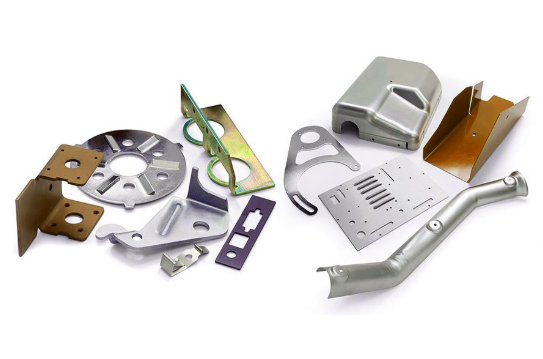
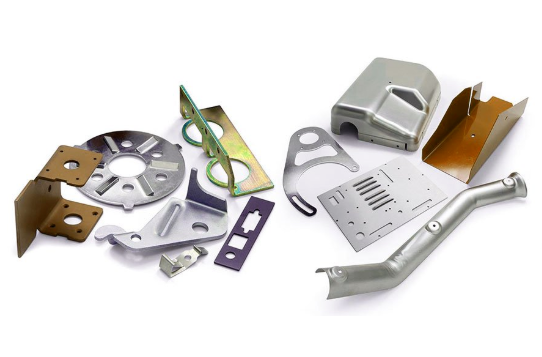
Before you request quotes or evaluate suppliers, you need a clear understanding of what you're actually buying. Custom metal stamping services represent a specialized manufacturing approach that transforms flat sheet metal into precision-engineered components using bespoke tooling designed exclusively for your specific part requirements.
Custom metal stamping is a metal forming process that uses custom-designed tooling and dies to shape flat sheet metal into precise, application-specific parts through high-pressure pressing operations including punching, blanking, bending, coining, and flanging.
This definition matters because it distinguishes these services from off-the-shelf stamped metal components you might find in a catalog. When you engage a custom stamping provider, you're investing in tooling engineered specifically for your part's unique geometry, tolerances, and functional requirements.
From Sheet Metal to Precision Parts
Imagine feeding a flat strip of metal into a powerful press and watching it emerge as a precisely formed automotive bracket or medical device component. That's the core process at work here.
The transformation happens in three key stages:
- Tooling design: Engineers use CAD/CAM technology to create dies that will form your exact part specifications. A single tool 3D model can contain hundreds of individual components.
- Tool manufacturing: Precision equipment including CNC mills and wire EDM machines cut hardened tool steels to extremely tight tolerances.
- Production stamping: Sheet metal in coil or blank form feeds through the press, where tool and die surfaces apply high pressure to shape the material into your finished part.
The result? Stamped steel components and other metal parts produced with remarkable consistency, whether you need 10,000 pieces or 10 million.
The Custom Difference Explained
What separates custom work from standard stamping operations? Three critical factors define the distinction:
Bespoke tooling investment. Unlike mass-produced stampings using existing dies, custom projects require upfront tool development designed exclusively for your part. This tooling investment becomes the foundation for producing parts that match your exact specifications.
Unique part geometries. Standard stamping produces generic components. Custom stamping handles complex dimensions, intricate features, and application-specific requirements that off-the-shelf parts simply cannot address.
Tailored production runs. Whether you need prototype quantities or high-volume production runs, custom services adapt to your volume requirements rather than forcing you into predetermined batch sizes.
When searching for metal stamping near me, understanding this distinction helps you identify suppliers equipped for true custom work versus those limited to standard catalog items.
Core Stamping Operations Defined
Every custom project combines multiple forming operations to achieve your final part geometry. Here are the fundamental techniques your supplier will employ:
- Punching: Forces a tool through the workpiece to create holes or cutouts
- Blanking: Cuts the rough outline shape from the primary metal strip
- Bending: Creates angular displacement to form precise shapes and features
- Coining: Applies extreme pressure for precise thickness control and smooth edges
- Embossing: Forms three-dimensional features by pressing material between male and female die components
- Flanging: Bends metal along curved axes to create projections or reinforced rims
These operations rarely work in isolation. Most stamped metal parts require multiple techniques executed in careful sequence, which is why tooling design becomes so critical to project success.
With this foundation established, you're prepared to evaluate stamping process types, compare manufacturing alternatives, and make informed decisions about your custom metal stamping project. The following sections will guide you through each essential consideration before you place your order.
Stamping Process Types and Selection Criteria
Now that you understand what custom metal stamping delivers, you're facing your first major decision: which stamping process fits your project? The answer depends on part complexity, production volume, and precision requirements. Choosing correctly saves tooling costs and ensures optimal part quality. Choosing wrong? That means expensive redesigns and production delays.
Let's break down the four primary metal stamping process types and help you match each one to your specific requirements.
Progressive Die for High-Volume Efficiency
Think of progressive die stamping as an assembly line within a single press. A continuous metal strip moves through multiple stations, each performing a specific operation—punching, bending, coining, or blanking—until the finished part separates at the final station.
Why does this matter for your project? Speed and consistency. Progressive dies can produce hundreds of parts per minute with remarkable repeatability. When you're ordering stamped steel sheet components in quantities exceeding 10,000 pieces, progressive stamping typically delivers the lowest per-unit cost.
The stamping process works particularly well for:
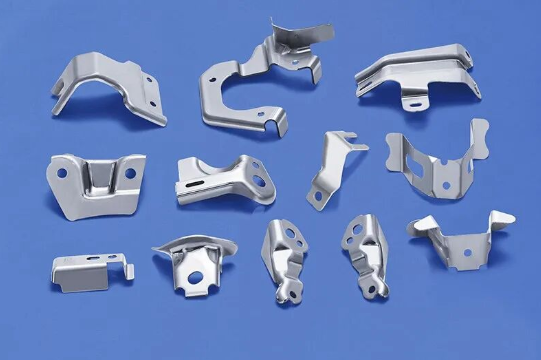
- Automotive brackets, clips, and connectors
- Electronic enclosures and battery contacts
- Appliance hardware and electrical terminals
However, there's a trade-off. Progressive tooling requires significant upfront investment, and design modifications after tool completion become costly. This process excels when your design is finalized and volume justifies the initial tooling expense.
When Deep Draw Stamping Excels
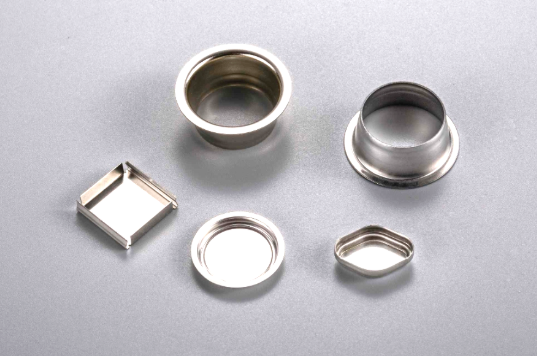
Need cylindrical or box-shaped components with significant depth? Deep draw stamping pulls flat sheet metal into three-dimensional shapes through a series of forming operations. Transfer die stamping often handles these deeper draws by separating the part from the strip early and mechanically moving it between stations.
Transfer die methods shine when your sheet metal stamping project involves:
- Large automotive body panels and structural components
- Deep enclosures and casings for industrial equipment
- Complex shapes requiring multiple forming stages
The key advantage? Transfer dies accommodate more intricate geometries and deeper draws than progressive stamping allows. Your part literally travels through the press, receiving different operations at each station. This flexibility comes with slightly slower cycle times, making transfer die stamping ideal for medium-to-high volume production of complex precision metal stamping parts.
Fourslide: Multi-Directional Forming Precision
When your design requires bends from multiple angles or intricate three-dimensional features, fourslide (or multislide) stamping offers capabilities that vertical presses simply cannot match. Four horizontal tool slides approach the workpiece from different directions, enabling complex forming operations in a single setup.
This stamping and pressing method particularly suits:
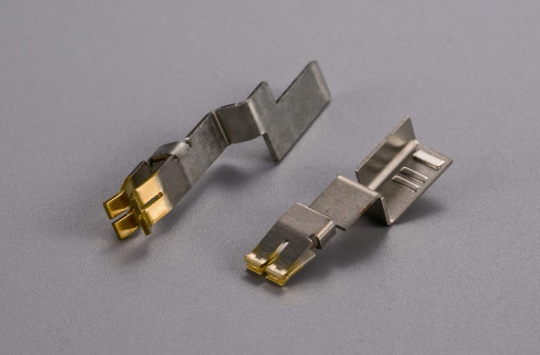
- Electrical connectors and terminals
- Precision clips and spring components
- Small medical device components with complex geometries
Fourslide excels at high volume metal stamping of small-to-medium parts with tight tolerances. The multi-directional approach reduces material waste and often eliminates secondary operations. The limitation? Part size and material thickness constraints make this process less suitable for large components or heavy-gauge metals.
Understanding Press Tonnage Requirements
Here's something many buyers overlook: press tonnage directly affects what you can manufacture. Tonnage measures the maximum force a press applies during stamping operations. According to Magnum Press, selecting correct tonnage impacts product quality, safety, and energy efficiency.
What does this mean for your project?
- Material thickness: Thicker materials require higher tonnage—stainless steel at 90,000 psi tensile strength demands significantly more force than aluminum at 30,000 psi
- Part geometry: Complex shapes and deeper draws increase force requirements by 30-50%
- Die design: Smaller dies concentrate pressure, while larger dies distribute force more evenly
Most precision metal stamping facilities operate presses ranging from 15 tons for delicate components up to 440+ tons for heavy-gauge structural parts. Your supplier matches press capacity to your specific requirements—undersized equipment causes incomplete forming, while oversized presses waste energy and accelerate die wear.
Matching Process to Part Requirements
Ready to identify your optimal stamping process? Use this comparison matrix to guide your selection:
| Process Type | Best For | Part Complexity | Typical Volume | Tolerance Range |
|---|---|---|---|---|
| Progressive Die | High-speed production of flat-to-moderate complexity parts | Simple to moderate | 10,000+ pieces | ±0.001" to ±0.005" |
| Transfer Die | Large parts, deep draws, complex multi-stage forming | Moderate to high | 5,000+ pieces | ±0.002" to ±0.010" |
| Fourslide/Multislide | Small intricate parts with multi-directional bends | High (multi-dimensional) | 1,000-100,000+ pieces | ±0.001" to ±0.003" |
| Fine Blanking | High-precision parts requiring smooth edges | Moderate to high | 5,000+ pieces | ±0.0005" to ±0.002" |
Notice how steel sheet stamping requirements shift based on your priority—whether that's edge quality, dimensional precision, or production speed. Fine blanking, for instance, eliminates secondary deburring operations but carries higher per-part costs, making it ideal for automotive gears, aerospace components, and medical device parts where precision is non-negotiable.
Your decision ultimately balances four factors: part complexity, production volume, tolerance requirements, and budget constraints. The next section helps you determine when stamping outperforms alternative manufacturing methods—and when those alternatives might serve your project better.
Choosing Between Stamping and Alternative Manufacturing Methods
You've identified your ideal stamping process type. But here's a question worth asking before you commit: is stamping metal actually the right manufacturing method for your project? Sometimes the answer is yes. Sometimes CNC machining, laser cutting, or casting delivers better results at lower total cost.
Making this decision correctly saves thousands in production costs. Let's build the decision framework you need.
Stamping vs CNC Machining Trade-offs
These two processes represent fundamentally different approaches to creating parts. According to Pengce Metal's manufacturing analysis, stamping is a formative process that shapes sheet metal using custom dies, while CNC machining is a subtractive process that removes material from solid blocks until the final shape emerges.
The economic models couldn't be more different:
- Metal stamping service costs: High upfront tooling investment, extremely low per-part price once production begins
- CNC machining costs: Virtually no upfront tooling investment, significantly higher per-part price due to machine time and labor
Imagine two cost lines on a graph. The CNC line starts at zero but climbs steadily with each part. The stamping line starts high due to tooling but barely increases as volume grows. Where they intersect? That's your break-even point—the volume threshold where one method becomes more economical than the other.
For custom metal stampings, this crossover typically occurs between 1,000 and 5,000 pieces, depending on part complexity and material costs. Below this volume, CNC often wins. Above it, stamping delivers substantial savings.
Volume Thresholds That Favor Stamping
Production volume remains the single most important factor in this decision. Here's how the economics typically break down:
Scenarios favoring stamping manufacturing:
- Production volumes exceeding 5,000-10,000 pieces
- Parts made from sheet metal with uniform thickness
- Components requiring high repeatability across millions of cycles
- Designs featuring bends, holes, and shallow forms rather than complex 3D sculptures
- Projects where per-unit cost reduction is critical to profitability
- Long-term production runs with stable designs
Scenarios favoring alternative methods:
- Prototype quantities or production runs under 1,000 pieces
- Complex 3D geometries with undercuts and internal features
- Parts requiring frequent design changes or iterations
- Components machined from solid blocks rather than sheet material
- Rush orders where tooling lead time isn't acceptable
- One-time production with no anticipated reorders
Which method is faster? For first-time orders, CNC machining delivers parts in days or weeks with no tooling required. Metal stamping manufacturing requires weeks or months initially due to tool creation. However, for all subsequent reorders, stamping produces parts at incredible rates—hundreds per minute versus minutes or hours per CNC-machined part.
When Custom Tooling Investment Pays Off
Here's where the "custom" distinction becomes critical. What actually makes a project custom versus standard, and what are the real implications?
A project becomes custom when it requires:
- Tooling designed specifically for your part geometry
- Dies engineered to your exact tolerance specifications
- Production processes optimized for your material and volume requirements
This customization carries specific implications. Tooling investment typically ranges from several thousand dollars for simple dies to tens of thousands for complex progressive tooling. Lead times extend 4-12 weeks for tool design and manufacture before production begins. And minimum order quantities often start at 1,000-5,000 pieces to justify the tooling expense.
The investment pays off when your metal stamped part will be produced repeatedly over time. That initial tooling cost gets amortized across every subsequent order, driving per-unit costs progressively lower. If you anticipate ongoing production needs, the math almost always favors stamping.
However, stamping manufacturing also offers advantages beyond raw economics. According to industry analysis, stamping generates less material waste than CNC machining's subtractive approach. Engineers optimize sheet metal layouts to minimize scrap, while CNC often turns expensive raw material blocks into piles of chips.
Still uncertain? Many manufacturers offer hybrid approaches—stamping the basic shape for efficiency, then adding CNC-machined features for precision. This combination often delivers optimal value for complex parts requiring both high volume and tight tolerances on specific features.
With your manufacturing method decision clarified, the next section explores the specific stamping operations and material options that will shape your final part design.
Understanding Stamping Operations and Material Options
You've selected your stamping process and confirmed that metal stamping fits your project requirements. Now comes the detailed work: understanding exactly which operations will transform your sheet metal into finished stamped metal parts and which materials deliver the performance characteristics your application demands.
This knowledge directly impacts your design decisions, cost projections, and supplier conversations. Let's explore how each operation works in practice and when specific precision metal stamping materials make the most sense.
Station-by-Station Progressive Die Operations
Remember how progressive dies work? A metal strip advances through multiple stations, each performing a specific forming operation. But what actually happens at each station? Understanding this sequence helps you communicate effectively with tooling engineers and identify potential design optimizations.
Here's a typical progressive die station sequence for a complex metal stamping component:
- Pilot punching: Creates precise alignment holes that ensure accurate positioning through all subsequent stations—the foundation for consistent part quality
- Blanking: Cuts the rough perimeter shape from the strip, though the part remains attached by small carrier tabs for continued progression
- Piercing: Punches internal holes, slots, and cutouts required by your design specifications
- Coining: Applies extreme pressure to specific areas, controlling thickness to tolerances as tight as ±0.0005" and creating smooth, work-hardened surfaces
- Bending: Forms angular features—flanges, tabs, and bracket shapes—at precise angles
- Flanging: Creates edge reinforcements or projections by bending material along curved axes
- Final separation: Cuts the finished part free from the carrier strip for collection
According to PrecisionX Group, high-speed progressive stamping can achieve speeds up to 1,600 strokes per minute while maintaining tolerances of ±0.0005". That's remarkable precision at production rates impossible with alternative manufacturing methods.
Why does station sequence matter? Each operation affects material properties. Punching and piercing create localized stress. Bending alters grain structure. Coining work-hardens surfaces. Experienced tooling engineers sequence operations strategically, positioning high-stress operations early when material remains in optimal condition.
Understanding Individual Operations
Let's examine each stamping operation beyond basic definitions. What makes each one valuable for specific design requirements?
Coining for precision thickness control. When your design requires exact material thickness in specific areas—for sealing surfaces, bearing interfaces, or precision fits—coining delivers. The operation applies extreme pressure (often exceeding material yield strength) to plastically deform metal into die cavities. The result? Dimensional accuracy within ±0.0005" and work-hardened surfaces with improved wear resistance. Precision metal stamping parts for medical devices and aerospace applications frequently rely on coining for critical surfaces.
Bending for angular features. Most stamped metal components require bends—whether simple 90-degree flanges or complex multi-angle geometries. The key constraint? Minimum bend radius. Attempting bends tighter than material thickness permits causes cracking on the outer surface. Aluminum stamping typically permits tighter radii than steel due to higher ductility, while stamped aluminum components offer excellent spring-back consistency for electrical contacts and connectors.
Flanging for edge reinforcement. Flanging differs from simple bending by forming material along curved axes rather than straight lines. The operation strengthens edges, creates attachment features, and improves structural rigidity. Automotive body panels use flanging extensively for hem edges that eliminate sharp metal edges while adding stiffness.
Blanking for perimeter cutting. Blanking defines your part's outer shape by shearing material from the strip. Die clearance—the gap between punch and die—critically affects edge quality. Typical clearance runs 5-10% of material thickness. Too tight creates excessive die wear. Too loose produces rough, burred edges requiring secondary finishing.
Piercing for hole creation. Piercing creates internal features—round holes, slots, irregular openings—using shearing action similar to blanking. The operation generates a characteristic "break" pattern on hole edges: approximately one-third clean shear, two-thirds fracture. For applications requiring smooth hole walls, secondary operations or fine blanking may be necessary.
Material Selection for Stamped Components
Your material choice affects everything: forming behavior, tooling requirements, part performance, and project cost. According to American Industrial Company, material selection involves balancing cost, workability, strength, environmental resistance, and end-use requirements.
Here's how common precision metal stamping materials compare:
Carbon steel delivers exceptional strength and cost-effectiveness for structural stamped metal components. The material forms readily and welds easily, making it ideal for automotive brackets, appliance frames, and industrial equipment. The trade-off? Carbon steel requires protective coatings—zinc plating, powder coating, or paint—to prevent corrosion.
Stainless steel metal stamping provides inherent corrosion resistance, attractive appearance, and hygienic surfaces. These properties make stainless steel essential for medical devices, food processing equipment, and marine applications. However, stainless work-hardens quickly during forming, requiring more press tonnage and accelerating die wear compared to carbon steel.
Aluminum offers an outstanding strength-to-weight ratio and excellent formability. The material stamps readily into complex shapes with minimal spring-back issues. Aluminum stamping suits automotive lightweighting initiatives, electronic enclosures, and heat dissipation components. Cost typically exceeds carbon steel but remains competitive with stainless grades.
Specialty alloys address demanding applications where standard materials fall short. Beryllium copper provides exceptional electrical conductivity combined with spring properties—ideal for electrical connectors and RF shielding. According to PrecisionX Group, materials like Kovar, Inconel, and titanium serve aerospace, medical, and defense applications requiring extreme temperature resistance or biocompatibility.
Combining Operations for Complex Geometries
Real-world stamped metal parts rarely require just one operation. Complex geometries emerge from thoughtfully sequenced combinations that leverage each operation's strengths while respecting material limitations.
Consider an automotive mounting bracket requiring:
- Precise mounting hole locations (piercing)
- Reinforced edges for structural integrity (flanging)
- Angular features for panel attachment (bending)
- Smooth mating surfaces (coining)
- Defined perimeter shape (blanking)
A progressive die accomplishes all five operations in a single press cycle, producing finished precision metal stamping parts ready for assembly without secondary machining.
The tolerances achievable through combined operations vary by material and complexity. Industry-standard capabilities range from ±0.005" for general commercial work to ±0.0005" for precision applications requiring controlled environments and specialized equipment. Your supplier's specific capabilities—and the operations your design requires—determine achievable precision for your project.
Understanding operations and materials positions you to optimize designs before tooling begins. The next section covers design-for-manufacturability guidelines that prevent costly revisions and ensure your stamping project succeeds from the first production run.
Design for Manufacturability in Metal Stamping Projects
You've selected your stamping process, confirmed the right materials, and understand how various operations combine to create your part. But here's where many projects stumble: designs that look perfect in CAD software often create serious problems on the production floor.
Why does this happen? Engineers design for function first—which makes sense. However, sheet metal stamping design requires thinking simultaneously about how tools will form your part, where stresses will concentrate, and what tolerances are actually achievable. Getting this right before tooling begins saves weeks of redesign and thousands in modification costs.
Let's walk through the critical metal stamping design guidelines that separate successful projects from expensive lessons learned.
Critical Dimensions That Affect Manufacturability
Certain dimensional relationships make or break stampability. These aren't arbitrary rules—they're based on how materials physically behave when formed under extreme pressure. According to ESI's Metal Stamping Design Guide, understanding these fundamentals helps you avoid costly errors and receive the highest quality components.
Minimum bend radius requirements. Attempting bends tighter than material properties allow causes cracking on the outer surface—often invisible until parts fail in service. The general rule? Keep bend radius equal to or greater than material thickness for ductile materials like mild steel and aluminum. For harder materials like stainless steel or tempered alloys, increase this to 2-4 times thickness.
Hole-to-edge spacing. Place holes too close to part edges, and you'll see bulging and distortion that throws dimensions out of tolerance. The minimum web distance—space between a hole and the nearest edge—should be at least twice the material thickness. For oblong slots longer than 10 times material thickness, increase edge spacing to 4 times thickness to prevent bulging.
Hole-to-bend relationships. Bends deform nearby holes, stretching circular openings into ovals and shifting hole centers from their intended positions. According to industry guidelines, holes greater than 2.5mm in diameter require minimum distance of 2.5 times material thickness plus the bend radius from any bend line. Smaller holes need at least 2 times thickness plus bend radius.
Minimum hole diameter. Punching extremely small holes accelerates punch wear and creates quality issues. The minimum diameter should be 1.2 times material thickness for standard materials. High-tensile materials like stainless steel require holes at least 2 times the material thickness. Smaller holes demand specialized tooling and often secondary drilling operations—both adding cost.
Bend height minimums. When adding a bend to your custom metal stamping die design, ensure sufficient material height. The minimum bend height should be 2.5 times material thickness plus the bend radius. Shorter bends require costly secondary operations and may not form properly.
Avoiding Costly Design Revisions
The most expensive changes happen after tooling is built. A die stamped part that doesn't match specifications forces tool modifications, production delays, and sometimes complete tool rebuilds. Here's what to watch for—and what to avoid.
Common pitfalls that increase costs and extend timelines:
- Insufficient bend relief: When bends terminate at part edges without relief notches, material tears during forming. Add relief notches at least twice material thickness wide and as long as bend radius plus material thickness.
- Sharp internal corners: Corners without radii concentrate stress and accelerate die wear. Specify radii at least half the material thickness on all internal corners—preferably larger.
- Unrealistic tolerances: Specifying ±0.001" across a part with multiple bends ignores how material behaves. Tolerances stack across bends, and tight specifications on non-critical features drive unnecessary cost.
- Ignoring grain direction: High-strength materials crack when bent along the grain direction. Design bends perpendicular to rolling direction, or specify grain orientation requirements on your drawings.
- Features causing excessive die wear: Very small holes, sharp corners, and complex cutouts accelerate punch degradation, requiring more frequent tool maintenance and replacement.
DFM best practices for metal stamping and forming success:
- Maximize bend radii whenever function permits—larger radii improve formability and reduce cracking risk
- Standardize hole sizes to common punch dimensions, reducing tooling complexity and cost
- Specify looser tolerances on non-critical features while reserving tight specifications for functional dimensions
- Design parts to nest efficiently on sheet stock, minimizing material waste and per-unit cost
- Include bend relief notches wherever bends terminate at edges
- Align critical bends perpendicular to material grain direction for high-strength materials
- Communicate burr direction requirements on drawings—understanding which side receives the burr helps manufacturers plan operations correctly
- Consider how parts will be coated or plated, accounting for dimensional changes from finishing operations
According to Five Flute's engineering guide, running continuous design reviews catches these issues early—before designs develop inertia and become costly to correct. Small reviews throughout development cost far less than major revisions after tooling investment.
How Tooling Capabilities Shape Design Freedom
Here's something many buyers overlook: your supplier's in-house tooling capabilities directly affect what's possible, how much it costs, and how quickly you receive parts. A custom die stamp created by an experienced tool room enables design flexibility that outsourced tooling simply cannot match.
Why in-house tooling matters for your project:
According to ESI's manufacturing insights, keeping tool design and fabrication under one roof avoids delays and quality issues that arise when processes are split between companies. When the same engineers who design your custom metal stamping dies also manufacture and run them, communication improves dramatically.
In-house capabilities typically include:
- CAD/CAM integration: 3D modeling software translates your part geometry directly into tooling designs, then generates CNC programs for tool manufacture—eliminating translation errors between design and production
- Wire EDM machining: Electrical discharge machining cuts hardened tool steel with extreme precision, enabling complex die geometries impossible to achieve through conventional machining
- CNC milling and grinding: Computer-controlled equipment machines die blocks to tight tolerances, ensuring consistent part quality across production runs
- Rapid iteration: When design changes occur, in-house tool rooms modify dies quickly without vendor coordination delays
What does this mean practically? Suppliers with comprehensive in-house tooling can optimize your custom metal stamping die for manufacturability during the design phase rather than discovering problems during production. They can suggest design modifications that reduce tooling complexity, improve part quality, and lower costs—guidance that's only possible when design and manufacturing expertise reside in the same organization.
The tooling investment also affects long-term flexibility. Dies manufactured in-house can be modified, maintained, and repaired without returning to external vendors. This control reduces downtime when production issues arise and enables faster response to engineering changes throughout your product's lifecycle.
Design for manufacturability isn't just about following dimensional rules—it's about partnering with suppliers whose capabilities align with your project requirements. The next section explores how different industries apply these principles and the specific quality standards that govern their stamped components.
Industry Applications and Quality Standards
You've mastered design fundamentals and understand how tooling capabilities shape your options. Now comes a critical question: what specific requirements does your industry demand? A stamped bracket for a kitchen appliance faces very different quality expectations than a component heading into a surgical device or aircraft assembly.
Understanding these industry-specific standards helps you evaluate suppliers effectively and ensures your specifications align with regulatory requirements. Let's examine how automotive metal stamping, aerospace, medical, and appliance applications differ—and what certification standards matter for each.
Automotive Stamping Quality Requirements
The automotive industry consumes more stamped metal components than any other sector. From chassis reinforcements to suspension brackets and structural body components, automotive stamping parts must meet rigorous quality and consistency standards across millions of production cycles.
What makes automotive requirements unique? According to Master Products' certification announcement, IATF 16949:2016 certification has become the essential baseline for automotive metal stamping suppliers. Originally drafted in 1999 by the International Automotive Task Force, this certification harmonizes quality assessment systems across the global automotive supply chain.
The certification focuses on three primary aims:
- Quality and consistency improvement: Standardized processes reduce production variances while minimizing scrap and waste—aligning with lean manufacturing principles
- Supply chain reliability: IATF-certified suppliers gain "supplier of choice" status among leading automotive manufacturers, establishing stronger, more dependable partnerships
- ISO integration: IATF 16949 requirements seamlessly integrate with ISO 9001 standards, creating comprehensive quality management systems
Beyond certification, automotive stamping demands specific capabilities. Chassis and suspension components require high-strength steel alloys capable of withstanding dynamic loads and impact forces. Structural components often need precision tolerances of ±0.005" or tighter across complex geometries. And production volumes frequently reach millions of pieces annually, requiring progressive die tooling optimized for extreme durability.
Medical Device Stamping Considerations
Medical metal stamping operates under entirely different priorities. When components become part of surgical instruments or implantable devices, patient safety drives every specification decision.
According to Hobson & Motzer's medical manufacturing analysis, metal stampings for the medical industry must address several unique requirements:
Biocompatibility. Materials contacting human tissue require biocompatible grades—typically specific stainless steel alloys chosen for their reaction-free properties. Material certifications must trace alloy composition and verify compliance with medical device regulations.
Precision and repeatability. Medical components demand tight tolerances that remain consistent from the first part to the millionth. Surgical instruments and robotic surgical systems require precision stamping products that perform identically every time. According to the reference material, metal stamping's ability to achieve exceptional precision, repeatability, and consistency makes it critical for medical applications.
Cleanroom considerations. Some medical device components require manufacturing in controlled environments to prevent contamination. Stamping operations may need modified handling procedures, specialized packaging, and validated cleaning processes.
Quality management certification. ISO 13485 certification specifically addresses medical device manufacturing, providing robust standards for component traceability and quality control. This certification complements ISO 9001 with medical-specific requirements for design controls and risk management.
The reference material emphasizes engaging with metal stampers during the design phase—understanding what is or isn't possible with stamping helps optimize part designs for both manufacturability and medical performance requirements.
Aerospace and Appliance Applications
Aerospace metal stamping represents the extreme end of precision requirements. Components for aircraft and spacecraft face tight tolerances measured in ten-thousandths of an inch, specialty materials capable of extreme temperature performance, and traceability documentation that follows each part from raw material through final assembly.
Aerospace applications typically require:
- Specialty alloys including titanium, Inconel, and high-temperature nickel alloys
- AS9100 certification demonstrating aerospace-specific quality management systems
- First Article Inspection (FAI) reports documenting dimensional verification of initial production parts
- Complete material traceability including heat lot identification and certified mill test reports
At the other end of the spectrum, appliance metal stamping prioritizes cost efficiency at high volumes. Precision stamping products for appliances—motor housings, brackets, enclosures, and decorative trim—require consistent quality across production runs that may span years. While tolerances are typically less demanding than aerospace or medical applications, appliance manufacturers expect competitive pricing that only optimized stamping processes can deliver.
Industrial equipment applications fall between these extremes, often requiring durability-focused materials and moderate precision tolerances for components facing harsh operating environments.
Industry-Specific Certification Standards
How do quality requirements compare across industries? This matrix summarizes the key differences you'll encounter when specifying components for different applications:
| Industry | Typical Parts | Key Requirements | Certification Standards |
|---|---|---|---|
| Automotive | Chassis brackets, suspension components, structural reinforcements, body panels | High-strength materials, PPAP documentation, consistent tolerances across millions of cycles | IATF 16949:2016, ISO 9001 |
| Aerospace | Structural brackets, mounting hardware, engine components, control surfaces | Specialty alloys, extreme tolerances (±0.0005"), complete traceability, FAI documentation | AS9100, NADCAP (for special processes) |
| Medical | Surgical instruments, implant components, diagnostic device housings, robotic surgery parts | Biocompatible materials, cleanroom handling, validated processes, lot traceability | ISO 13485, FDA 21 CFR Part 820 |
| Appliance/Industrial | Motor housings, brackets, enclosures, decorative trim, structural frames | Cost-optimized production, corrosion resistance, cosmetic consistency | ISO 9001, UL certification (for electrical components) |
Notice how certification requirements escalate with safety criticality. Appliance components may only require ISO 9001 baseline quality systems, while automotive stamping parts demand IATF certification. Aerospace and medical applications add industry-specific standards that address unique risks and regulatory oversight.
Quality Assurance and Inspection Variations
Beyond certifications, inspection processes vary dramatically by industry. Understanding these differences helps you specify appropriate quality requirements without over-engineering—or under-protecting—your components.
Automotive inspection emphasizes statistical process control (SPC) with ongoing measurement during production runs. Suppliers typically document process capability indices (Cpk values) demonstrating consistent tolerance achievement. Production Part Approval Process (PPAP) documentation verifies that manufacturing processes reliably produce parts meeting specifications.
Medical inspection adds validated measurement systems and often requires 100% inspection of critical dimensions rather than statistical sampling. According to industry sources, strong quality management systems with scheduled tool maintenance ensure each component meets identical standards—the last part as good as the first.
Aerospace inspection frequently requires coordinate measuring machine (CMM) verification with dimensional reports accompanying each shipment. First Article Inspections document comprehensive measurement of initial production parts against drawing specifications.
When evaluating suppliers, ask specifically about their inspection capabilities and quality documentation for your industry. A supplier experienced in appliance metal stamping may lack the measurement systems or documentation processes required for medical or aerospace work—regardless of their manufacturing capabilities.
With industry requirements clarified, you're positioned to understand project cost factors and planning considerations that affect your timeline and budget. The next section addresses the pricing and logistics questions most buyers encounter when initiating custom stamping projects.
Cost Factors and Project Planning Essentials
You understand the technical requirements. You've identified your industry's quality standards. Now comes the question every buyer eventually asks: what will this actually cost, and how long will it take?
Here's the challenge—metal stamping services pricing isn't straightforward. Unlike off-the-shelf components with fixed catalog prices, custom stamping involves multiple cost layers that interact in complex ways. Understanding these layers helps you budget accurately, compare quotes meaningfully, and make informed decisions about project timing.
Let's break down the economics of stamping products and the planning factors that determine your project timeline.
Understanding Tooling Investment vs Per-Piece Costs
Every custom stamping project involves two distinct cost categories that behave very differently. Confusing them leads to poor budgeting and supplier misunderstandings.
Tooling investment (one-time cost). According to Manor Tool's pricing analysis, tooling and dies represent the first major factor influencing metal stamping cost. Each die is custom designed and manufactured specifically for your part. This upfront investment often ranges from several thousand dollars for simple single-hit dies to tens of thousands for complex progressive tooling.
What drives tooling costs higher?
- Part complexity requiring multiple forming stations
- Tighter tolerances demanding precision tool steel and careful machining
- Higher production volumes requiring more durable tool steel grades
- Progressive die designs with multiple integrated operations
Here's the critical insight: tooling is a one-time investment that produces parts for years. According to Manor Tool, quality domestic dies are guaranteed for 1,000,000+ strikes before maintenance is required. Your initial investment gets amortized across every part produced, making per-piece costs progressively lower as volume increases.
Per-piece production costs. Once tooling exists, each stamping run incurs setup, material, and operational costs. These per-piece costs include material consumed, press time, operator labor, and quality inspection. Unlike tooling, per-piece costs scale directly with order quantity.
The economic relationship is straightforward: high tooling investment plus extremely low per-piece costs makes stamping services highly economical at volume—but potentially expensive for small quantities.
Volume Pricing Structures Explained
How does volume affect your total project cost? The metal stamping manufacturing process economics favor larger production runs for several interconnected reasons.
According to industry sources, metal stamping isn't ideal for prototypes or low-volume runs because the upfront tooling investment often exceeds traditional machining costs for small batches. However, once production reaches around 10,000+ parts per month, tooling costs become far more economical on a per-part basis.
Each production run incurs fixed setup costs—die installation, material loading, press calibration, and first-article inspection. Spreading these fixed costs across larger quantities dramatically reduces per-unit pricing. Order 1,000 parts and setup might add $2-5 per piece. Order 100,000 parts and that same setup cost becomes pennies.
Factors that increase project costs:
- Complex part geometries requiring multi-station progressive dies
- Specialty materials with higher raw material costs or difficult forming characteristics
- Tight tolerances demanding slower press speeds and additional inspection
- Secondary operations—plating, heat treating, assembly—adding process steps
- Small order quantities that don't amortize tooling and setup costs effectively
- Rush timelines requiring expedited tooling or overtime production
- Extensive quality documentation beyond standard inspection protocols
Factors that decrease project costs:
- Higher production volumes spreading fixed costs across more units
- Simplified part designs reducing tooling complexity
- Standard materials readily available from suppliers
- Looser tolerances on non-critical dimensions
- Designs optimized for efficient material utilization (less scrap)
- Consolidated orders combining multiple production runs
- Longer lead times allowing standard scheduling without expediting
Prototype vs Production Planning
What about short run metal stamping for prototypes or initial market testing? This is where project planning becomes strategic.
According to Wenzel Metal Spinning's analysis, for small quantity jobs under 10,000 pieces, hard tool costs eclipse any possible return. The tooling investment simply cannot be justified for limited production runs.
A metal stamping prototype strategy typically follows one of these paths:
- Alternative processes first: Use CNC machining, laser cutting, or metal spinning for initial prototypes and low-volume validation before committing to stamping tooling
- Soft tooling: Some suppliers offer lower-cost prototype tooling suitable for hundreds rather than millions of parts—useful for design validation before production tool investment
- Volume commitment: If you're confident in design and demand, investing in production tooling from the start provides the lowest long-term per-piece cost
Minimum order quantities for stamping services typically range from 1,000 to 10,000 pieces, depending on part complexity and supplier capabilities. Below these thresholds, alternative manufacturing methods often prove more economical.
What Affects Your Quote Timeline
How quickly can you expect pricing? That depends largely on the information you provide. According to Pengce Metal's RFQ guide, suppliers need detailed technical drawings or 3D models along with material specifications, required tolerances, estimated annual quantity, and any special finishing requirements.
Accurate quotes require:
- Complete part drawings with all dimensions and tolerances specified
- Material grade and thickness requirements
- Estimated annual usage (EAU) for production planning
- Secondary operation requirements (plating, heat treating, assembly)
- Quality documentation expectations
- Target timeline for first production parts
The more information you provide, the more accurate initial assessments become. Incomplete specifications force suppliers to make assumptions—often conservative ones that inflate pricing to cover unknowns.
Lead time expectations. Project timelines divide into two distinct phases with very different durations:
Tooling development: According to industry sources, tool and die making timelines range from a few weeks to several months depending on part complexity. Simple bracket dies build faster than multi-stage progressive dies for complex electronic components. Expect 4-12 weeks for most custom tooling projects.
Production runs: Once tooling is complete and validated, production happens remarkably fast. Stamping presses produce hundreds or thousands of parts per hour. A production run that might take weeks via CNC machining completes in hours or days via stamping. Reorders from existing tooling typically ship within days to weeks depending on quantity and supplier capacity.
The initial project timeline—from RFQ to first production parts—typically spans 8-16 weeks. Subsequent reorders dramatically compress, often delivering in 2-4 weeks since tooling already exists.
Understanding these cost drivers and timeline factors positions you to have productive supplier conversations. The next section provides a structured approach for evaluating potential stamping partners and identifying the capabilities that matter most for your specific requirements.
How to Evaluate Custom Metal Stamping Suppliers
You've defined your project requirements, understood the cost factors, and established realistic timelines. Now comes perhaps the most consequential decision: which metal stamping manufacturer will actually produce your parts?
This choice determines whether your project runs smoothly or becomes a frustrating cycle of quality issues, missed deadlines, and unexpected costs. The right partner delivers precision metal stamping services that meet specifications consistently. The wrong choice? According to Die-Matic's supplier selection guide, a bad fit can lead to delays, costly rework, and product failures.
Let's build the evaluation framework that separates exceptional suppliers from risky ones.
Certification and Quality System Verification
Certifications aren't just plaques on a wall—they represent third-party validation that a custom metal stamping company operates according to rigorous, documented quality standards. According to KY Hardware's supplier checklist, a robust quality management system (QMS) is non-negotiable and forms the foundation for receiving consistent, reliable parts.
What certifications should you look for?
- ISO 9001: The baseline quality management certification demonstrating documented processes, continuous improvement commitment, and customer focus
- IATF 16949: Essential for automotive applications—this certification adds automotive-specific requirements including PPAP documentation, advanced product quality planning, and supply chain reliability standards
- ISO 13485: Required for medical device components, addressing design controls, risk management, and traceability requirements
- AS9100: Mandatory for aerospace applications, with stringent requirements for configuration management and product safety
Beyond certifications, evaluate inspection and testing capabilities. Does the supplier use statistical process control (SPC) to monitor production quality? Do they have coordinate measuring machines (CMMs) for dimensional verification? Can they provide the quality documentation your industry requires?
Leading metal stamping manufacturers like Shaoyi (Ningbo) Metal Technology demonstrate commitment to quality through IATF 16949 certification—providing the documented quality systems automotive OEMs demand for chassis, suspension, and structural components.
Evaluating Prototyping and Production Capabilities
A full service metal stamping supplier offers capabilities spanning the complete project lifecycle—from initial prototyping through high-volume production. According to industry guidance, you should explore the range of services a manufacturer offers and assess their equipment and technology investments.
Prototyping speed matters. How quickly can a supplier validate your design before committing to production tooling? Rapid prototyping capabilities—some leading suppliers deliver prototypes in as few as 5 days—allow you to test and refine parts before significant tooling investment. This capability prevents costly design changes after production tooling is complete.
In-house tooling capabilities. Does the supplier design and manufacture tooling internally, or outsource to external tool shops? According to supplier evaluation experts, the best stamping suppliers provide engineering expertise, not just manufacturing capacity. In-house tooling enables faster iterations, better communication between design and production, and quicker response to quality issues.
Production capacity assessment. Can the supplier handle your volume requirements today—and scale with you tomorrow? According to Die-Matic, if you plan on needing fewer or more parts in the future, you want a metal stamping partner flexible enough to adapt accordingly.
Evaluate press tonnage range, number of presses, and automation capabilities. Suppliers offering automated mass production can deliver consistent quality at volumes that would overwhelm manual operations. Quality stamping & machining operations invest in both high-precision presses and the automation infrastructure to run them efficiently.
Communication and Support Quality Indicators
Technical capabilities mean nothing without effective communication. According to manufacturing experts, ease of communication is essential—you want a partner who is responsive, accessible, and easy to collaborate with throughout the entire process.
DFM support quality. How engaged is the supplier during design optimization? The best metal stamping solutions providers offer comprehensive Design for Manufacturability feedback that improves your part design before tooling begins. According to evaluation guidelines, a manufacturer offering part design optimization can help refine your designs for manufacturability, resolve issues quickly, and keep projects on schedule.
Suppliers like Shaoyi demonstrate this through comprehensive DFM support combined with remarkably fast quote turnaround—12 hours for initial assessments—indicating engineering resources dedicated to customer support rather than stretched thin across too many projects.
Quote turnaround expectations. How quickly does the supplier respond to RFQs? Fast, accurate quoting indicates strong engineering capacity and efficient internal processes. Slow responses or vague pricing often signal capacity constraints or inexperience with your part type.
Questions to ask potential suppliers:
- What is your typical quote turnaround time for new projects?
- Do you provide DFM feedback as part of the quoting process?
- How do you handle engineering changes after tooling begins?
- What quality documentation accompanies each shipment?
- Can you share references from customers in my industry?
- What is your capacity utilization, and can you accommodate my volume requirements?
- How long have your key engineering and management personnel been with the company?
Prioritized Supplier Evaluation Checklist
When comparing metal stamping companies near me or evaluating international suppliers, use this structured approach to assess each candidate systematically:
- Verify relevant certifications: Confirm ISO 9001 as baseline, plus industry-specific certifications (IATF 16949 for automotive, ISO 13485 for medical, AS9100 for aerospace). Request copies of current certificates and audit results.
- Assess in-house tooling capabilities: Determine whether tooling is designed and manufactured internally. Ask about CAD/CAM systems, EDM equipment, and tool maintenance programs. Internal capabilities indicate design flexibility and faster problem resolution.
- Evaluate prototyping speed: Request typical prototype lead times. Suppliers offering rapid prototyping (under 2 weeks) provide faster design validation before production tooling investment.
- Confirm production capacity alignment: Match supplier press tonnage and volume capabilities to your requirements. Ensure they can scale with your growth without capacity constraints.
- Test DFM support quality: Submit a preliminary design and evaluate the depth and usefulness of manufacturability feedback. Strong DFM support indicates engineering expertise and customer focus.
- Measure communication responsiveness: Track quote turnaround time and question response speed. Consistent, prompt communication during evaluation predicts project communication quality.
- Check financial stability and experience: According to Die-Matic, find out how many years they've been in business, ask about management tenure and turnover, and investigate their current customer base longevity.
- Request references and case studies: Ask for contacts at companies similar to yours. According to evaluation best practices, a company's longevity often speaks to their stability and ability to deliver on promises.
Red Flags to Watch For
During your evaluation, certain warning signs indicate potential problems that could derail your project:
- Inconsistent quality history: Request defect rates and corrective action reports. Patterns of quality issues suggest systemic problems unlikely to improve for your project.
- Poor communication during quoting: If responses are slow, vague, or require repeated follow-up during evaluation, expect worse communication during production when problems arise.
- Reluctance to share references: According to supplier evaluation guidance, established suppliers willingly connect you with satisfied customers. Reluctance suggests either inexperience or customer relationship problems.
- Outsourced tooling without internal oversight: Suppliers completely dependent on external tool shops lose control over quality, timing, and design modifications.
- Pricing significantly below market: Extremely low quotes often indicate corners being cut—inferior materials, inadequate quality systems, or unrealistic assumptions that will surface as change orders later.
- High management or engineering turnover: Institutional knowledge walks out the door with departing employees. Stable teams indicate healthy organizations capable of consistent performance.
The ideal metal stamping manufacturer combines technical capabilities with partnership mentality. According to Neway Stamping's evaluation framework, you want suppliers that implement controls to ensure consistency, demonstrate commitment to excellence, and make investments to improve their manufacturing processes.
With your supplier evaluation framework established, you're ready to initiate your project. The final section provides the actionable checklist that prepares you for productive supplier conversations and positions your project for success from day one.
Starting Your Custom Metal Stamping Project
You've done the research. You understand stamping processes, material options, design considerations, industry requirements, cost factors, and supplier evaluation criteria. Now it's time to transform that knowledge into action.
The difference between projects that succeed and those that struggle often comes down to preparation. Suppliers can only deliver accurate quotes and quality metal stamped parts when they receive complete, well-organized project information. The checklist below ensures you're ready for productive conversations from your first outreach.
Your Project Initiation Checklist
Before contacting potential suppliers, gather these essential elements:
- Prepare complete design files: Provide 3D CAD models (STEP or IGES format preferred) along with 2D drawings showing all dimensions, tolerances, and critical features. According to PSS Corporation's RFQ process, suppliers request 3D models with each RFQ received to ensure accurate feasibility assessment and cost estimation.
- Specify material requirements: Document material grade, thickness, and any special properties required (corrosion resistance, conductivity, biocompatibility). Include acceptable alternatives if flexibility exists—this can reduce costs and lead times.
- Define volume requirements clearly: Provide estimated annual usage (EAU), initial order quantity, and anticipated production life. Volume directly affects tooling investment decisions and per-piece pricing structures.
- Document tolerance expectations: Identify which dimensions are critical versus those where standard tolerances suffice. According to Keats Manufacturing's design guidelines, achievable tolerances vary based on metal type, design demands, and machining tools—specifying appropriate tolerances prevents unnecessary cost increases.
- Establish timeline expectations: Communicate your target date for first production parts and any interim milestones (prototype approval, PPAP submission). Realistic timelines allow suppliers to plan capacity and avoid expediting charges.
- Identify secondary operation needs: List any finishing requirements—plating, heat treating, assembly, packaging—that affect total project scope and supplier selection.
- Gather quality documentation requirements: Specify certifications required (IATF 16949, ISO 13485), inspection reports expected, and any customer-specific quality standards that apply.
Preparing for Supplier Conversations
With your documentation prepared, approach supplier conversations strategically. According to Kenmode's quality evaluation guide, the best way to determine if a custom metal stamper delivers quality is asking tough questions and evaluating responses carefully.
Key discussion points for initial conversations:
- Request DFM feedback on your design before committing to tooling—identify potential manufacturability issues early
- Ask about typical quote turnaround times and what information they need for accurate estimates
- Inquire about prototype options for validating designs before production tooling investment
- Discuss their experience with similar stamped parts in your industry
- Understand their communication process for engineering changes and production updates
Suppliers offering rapid quote turnaround demonstrate engineering capacity dedicated to customer support. Shaoyi (Ningbo) Metal Technology, for example, provides 12-hour quote responses combined with comprehensive DFM support—allowing you to validate designs and understand costs before significant investment.
From Research to Production Partnership
The nine essential points covered throughout this article form your foundation for metal parts stamping success:
- Understanding what custom stamp for metal services actually deliver versus standard stamping operations
- Selecting the right stamping process for your part complexity and volume requirements
- Knowing when metal pressing makes economic sense compared to alternative manufacturing methods
- Designing for manufacturability to avoid costly revisions after tooling begins
- Matching material selection to your application's performance requirements
- Meeting industry-specific quality standards and certification requirements
- Planning project costs and timelines realistically
- Evaluating suppliers systematically using proven criteria
Your next step? Start conversations with suppliers whose capabilities align with your requirements. For automotive applications requiring IATF 16949 certification, 5-day rapid prototyping, and the capacity for automated mass production, suppliers like Shaoyi offer the combination of quality systems and responsiveness that accelerates projects from concept to production.
The preparation you've invested in understanding custom metal stamping positions you to ask informed questions, evaluate responses critically, and build the manufacturing partnership your project deserves.
Frequently Asked Questions About Custom Metal Stamping Services
1. What is the difference between custom metal stamping and standard metal stamping?
Custom metal stamping uses bespoke tooling designed exclusively for your specific part geometry, tolerances, and functional requirements. Unlike standard stamping that produces generic catalog components using existing dies, custom projects involve upfront tooling investment, unique part geometries, and tailored production runs. This approach allows manufacturers to create application-specific parts with precise specifications. IATF 16949-certified suppliers like Shaoyi offer comprehensive DFM support to optimize custom designs before tooling begins.
2. How much does custom metal stamping cost?
Custom metal stamping costs involve two categories: one-time tooling investment (ranging from several thousand to tens of thousands of dollars depending on complexity) and per-piece production costs. Tooling costs get amortized across all parts produced, making stamping highly economical for volumes exceeding 5,000-10,000 pieces. Key cost drivers include part complexity, material selection, tolerance requirements, and secondary operations. Higher volumes significantly reduce per-unit costs since setup expenses spread across more parts.
3. What materials can be used in metal stamping?
Common metal stamping materials include carbon steel for structural components, stainless steel for corrosion resistance and medical applications, and aluminum for lightweight parts with excellent formability. Specialty alloys like beryllium copper, Kovar, Inconel, and titanium serve demanding aerospace, medical, and defense applications. Material selection depends on your application's performance requirements including strength, conductivity, biocompatibility, and environmental resistance. Each material has different forming characteristics affecting tooling design and production parameters.
4. How long does custom metal stamping take?
Custom metal stamping timelines divide into two phases. Tooling development typically takes 4-12 weeks depending on part complexity, with simple dies building faster than multi-stage progressive tooling. Once tooling is validated, production happens remarkably fast—presses produce hundreds or thousands of parts per hour. Initial projects from RFQ to first production parts typically span 8-16 weeks. Subsequent reorders compress to 2-4 weeks since tooling already exists. Some suppliers offer 5-day rapid prototyping for design validation.
5. What certifications should a metal stamping supplier have?
Essential certifications depend on your industry. ISO 9001 serves as the baseline quality management certification. Automotive applications require IATF 16949 certification for supply chain reliability and PPAP documentation. Medical device components need ISO 13485 addressing biocompatibility and traceability. Aerospace applications demand AS9100 certification. Beyond certifications, evaluate inspection capabilities including SPC monitoring, CMM verification, and the quality documentation your industry requires. Leading suppliers maintain multiple certifications to serve diverse industries.