 Small batches, high standards. Our rapid prototyping service makes validation faster and easier —
  EN
EN


Why Custom Forged Wheel Raw Finish Beats Pre-Finished Every Time
What Raw Finish Means in Custom Forged Wheels
When you're exploring custom forged wheel options, the term "raw finish" might sound straightforward, but it represents something far more significant than just an unfinished product. Understanding what this stage truly means can transform how you approach your next wheel project and unlock creative possibilities that pre-finished options simply cannot match.
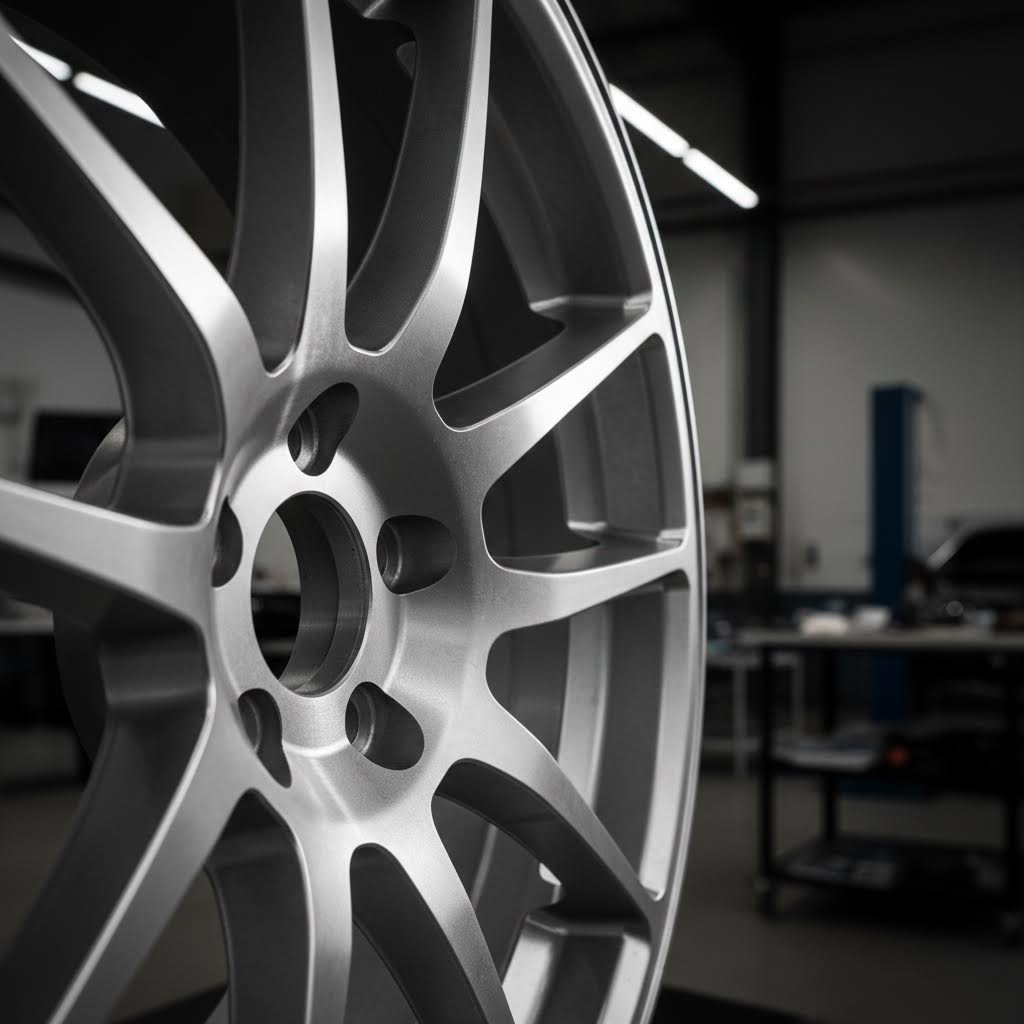
A custom forged wheel raw finish refers to the uncoated, unpolished state of aluminum immediately after the forging process is complete but before any surface treatment, powder coating, paint, or protective sealant has been applied.
The Blank Canvas Stage of Wheel Manufacturing
Think of raw aluminum wheels as the ultimate blank canvas in wheel manufacturing. At this stage, your forged rim has completed its transformation from a solid aluminum billet through intense heat and pressure, emerging with the dense, grain-aligned structure that makes forged wheels superior. However, it hasn't yet received any cosmetic treatment.
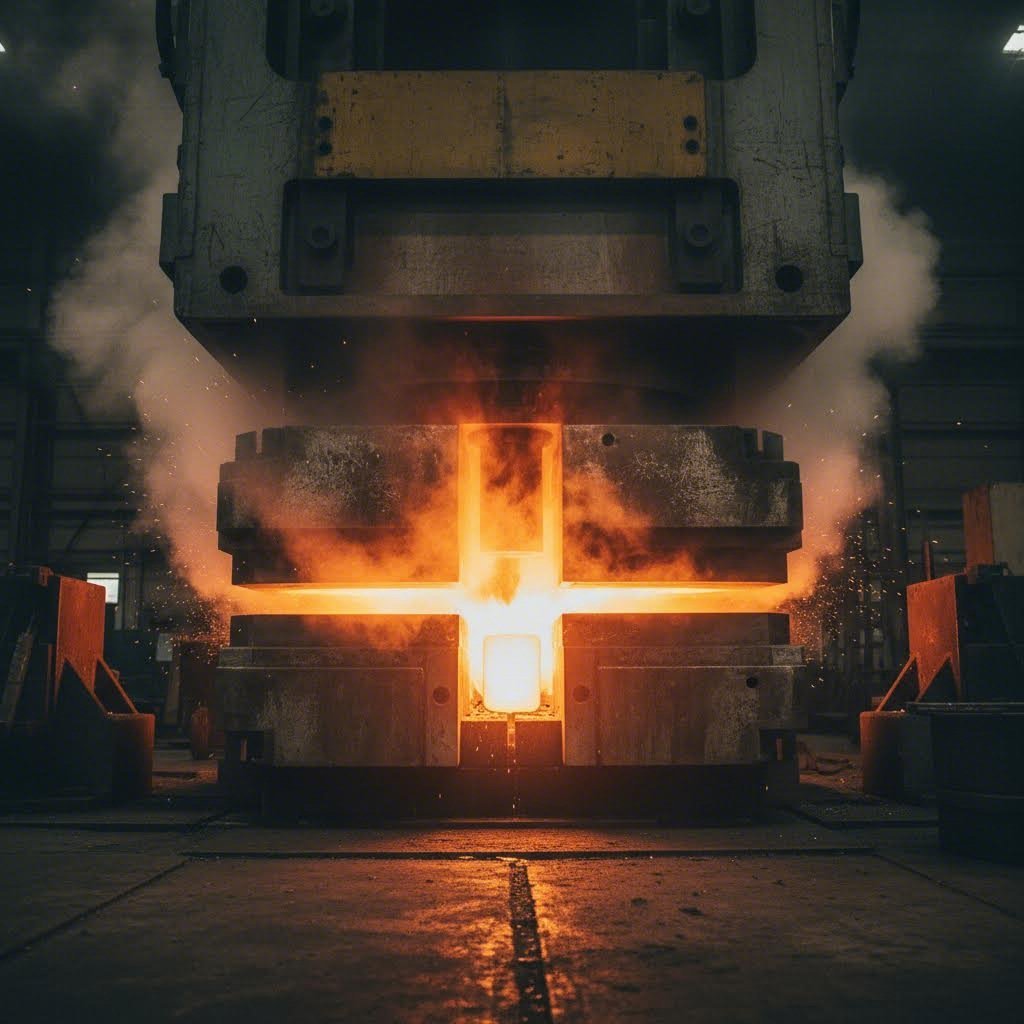
The manufacturing timeline helps clarify exactly when a wheel reaches this "raw" designation. After the forging dies shape the aluminum under thousands of tons of pressure, the wheel undergoes CNC machining to achieve its final dimensions and bolt pattern specifications. Once machining is complete and before the wheel enters any finishing department, it exists in its raw state. This is the precise moment when many custom shops and enthusiasts prefer to receive their wheels.
For those seeking maximum creative control, purchasing at this stage offers unparalleled flexibility. Whether you're planning a custom color match, a specialized anodizing treatment, or even a brushed metal aesthetic, starting with a raw finish gives you complete authority over the final appearance. KMC Forged and other premium manufacturers often offer this option specifically because experienced builders understand its value.
What Raw Aluminum Actually Looks Like
If you've never handled raw aluminum wheels in person, you might be surprised by their appearance. Forget the mirror-shine or matte elegance you see in showrooms. Raw forged aluminum presents a distinctly industrial aesthetic that tells the story of its creation.
Here's what to expect when your custom forged wheels arrive in raw form:
- Natural aluminum coloring: A silvery-gray tone with slight variations across the surface, sometimes appearing slightly cloudy or matte
- Tool marks: Fine machining lines from CNC operations, particularly visible on spoke faces and barrel interiors
- Texture variations: Subtle differences in surface smoothness between machined areas and forged surfaces
- No protective coating: The aluminum is exposed and will oxidize over time if left untreated
These characteristics aren't flaws—they're simply the authentic state of precision-machined forged aluminum. The tool marks you see will disappear under whatever finish you choose, and those slight texture variations often indicate proper material flow during the forging process. When evaluating raw finish quality, consistent coloring and clean machining marks actually signal a well-manufactured wheel ready for your custom treatment.
The Forging Process Behind Raw Finish Wheels
Now that you understand what a custom forged wheel raw finish actually looks like, you might be wondering what makes forged wheels worth the investment in the first place. The answer lies in decades of manufacturing evolution and some fascinating material science that directly impacts how well your chosen finish will perform over time.
From Billet to Blank - The Forging Journey
The history of precision forged wheels traces back to a pivotal moment in 1983 when BBS Wheels introduced their mold-forged wheel technology. This innovation marked a turning point, demonstrating that forged aluminum could deliver performance characteristics impossible to achieve through casting alone. Since then, forging has become the gold standard for motorsport applications and discerning enthusiasts seeking forged wheel blanks for custom projects.
So what exactly separates fully forged wheels from their cast and flow-formed counterparts? The manufacturing process creates fundamental differences in the metal's internal structure, and these differences matter enormously when you're planning to apply a custom finish.
Here's how the forging process transforms raw aluminum:
- Billet selection: The process begins with a solid cylindrical block of aerospace-grade aluminum alloy, typically 6061-T6 or 7075
- Heating: The billet is heated to a precise temperature that makes the aluminum malleable without melting it
- Initial pressing: Thousands of tons of hydraulic pressure compress the heated billet, beginning to shape the wheel's basic form
- Die forging: Multiple pressing stages force the aluminum into progressively more detailed dies, creating the spoke pattern and barrel shape
- Heat treatment: The forged blank undergoes controlled heating and cooling cycles to optimize its mechanical properties
- CNC machining: Precision cutting achieves final dimensions, bolt patterns, and surface preparation for finishing
This process differs dramatically from casting, where liquid aluminum is simply poured into a mold and allowed to cool. Cast wheels, while more affordable, contain random grain structures and potential porosity—tiny air pockets trapped during cooling. Flow-formed wheels offer a middle ground, starting as cast pieces before being spun and stretched to improve density, but they still can't match the structural integrity of truly forged construction.
Products like KMC beadlock rings often utilize forged construction precisely because the application demands maximum strength and reliability. When components face extreme stress, the forging process provides a measurable advantage that casting simply cannot replicate.
Why Forged Aluminum Takes Finishes Differently
Here's where things get interesting for anyone planning a custom finish on their raw aluminum wheels. The forging process doesn't just make wheels stronger—it fundamentally changes how the metal interacts with surface treatments.
When aluminum undergoes forging, the immense pressure accomplishes something remarkable at the microscopic level. The metal's internal grain structure becomes aligned and compressed, following the contours of the wheel's shape. According to manufacturing experts, this creates a denser, more uniform material structure compared to cast alternatives.
Why does this matter for finishing? Consider these key differences:
- Porosity elimination: Cast wheels often contain microscopic voids that can cause finish adhesion problems and premature coating failure. Forging's intense pressure forces these voids closed, creating a solid foundation for any surface treatment.
- Consistent surface density: The uniform grain structure of forged aluminum means finishes adhere evenly across the entire wheel surface, preventing the patchy results sometimes seen on cast wheels.
- Superior fatigue resistance: The aligned grain flow makes forged wheels more resistant to the flexing that occurs during driving, which helps prevent finish cracking over time.
- Better anodizing results: The dense, non-porous surface of precision forged wheels produces more consistent anodizing colors and depths compared to cast alternatives.
Think of it like wood grain—a piece of lumber is strongest along its grain, not against it. Forged aluminum follows the same principle. The grain flows along the wheel's contours, concentrating strength where it's needed most while creating an ideal surface for finishing work.
This grain structure distinction explains why professional wheel finishers often prefer working with forged blanks. When you invest in a custom forged rim and plan to apply your own finish, you're starting with a material that's genuinely easier to work with and more likely to produce professional results. The elimination of porosity alone can prevent countless finish defects that would otherwise appear weeks or months after application.
Understanding what makes forged rims special sets the stage for the next critical decision: choosing the right aluminum alloy for your specific finishing goals.
Material Considerations for Raw Finish Aluminum
You've seen how the forging process creates a superior foundation for custom finishing work. But here's something many enthusiasts overlook: the specific aluminum alloy used in your forged billet wheels dramatically affects both the raw finish characteristics you'll receive and the finishing options available to you. Choosing the wrong alloy for your intended finish can lead to disappointing results, regardless of how carefully you prepare the surface.
Aluminum Alloy Selection and Surface Quality
When shopping for raw finish wheels, you'll encounter two dominant aluminum alloys: 6061-T6 and 7075. Both are aerospace-grade materials, but their compositions create distinctly different behaviors during finishing processes.
6061-T6 aluminum contains approximately 1% magnesium and 0.6% silicon as its primary alloying elements. This combination produces a medium-high strength material with excellent formability and a notably brighter, smoother surface texture than 7075. For custom finishing applications, this smoother natural surface often means less preparation work before applying your chosen treatment.
7075 aluminum takes a different approach, incorporating 5.6-6.1% zinc along with higher percentages of magnesium and copper. The result? A material that's roughly 84% stronger in tensile strength than 6061, making it the preferred choice for rock forged wheels and other extreme-duty applications. However, that strength comes with trade-offs in surface characteristics and finishing compatibility.
Here's something worth noting: the raw surface quality of parallel forged wheels varies significantly based on alloy selection. 6061-T6 typically presents a more uniform, easier-to-polish surface straight from machining, while 7075's harder composition can show more pronounced tool marks that require additional preparation.
How Material Grade Affects Your Finishing Options
Your alloy choice doesn't just affect appearance—it fundamentally determines which finishing techniques will work best and how durable your final result will be.
When it comes to anodizing, the differences become particularly significant. According to the Aluminum Anodizers Council, 6061 falls within the 6XXX series known for producing clear anodizing with good protection qualities. Meanwhile, 7075 belongs to the 7XXX series, which also produces clear coatings with good protection but behaves differently during the anodizing process due to its zinc content.
Consider these key differences when planning your custom forged wheel raw finish project:
- Anodizing results: 6061-T6 produces more consistent, predictable anodizing colors with excellent corrosion protection. 7075 can anodize well but may show slight color variations.
- Paint adhesion: The smoother surface of 6061 typically requires less aggressive surface profiling before painting. 7075's harder surface needs more thorough preparation but can hold primers exceptionally well once properly prepped.
- Polishing characteristics: 6061's softer composition polishes more easily to a mirror finish. 7075 requires more effort and specialized compounds but holds that polish longer due to its increased hardness.
- Corrosion resistance: 6061 offers superior natural corrosion resistance thanks to its higher aluminum content forming a more robust oxide layer. 7075's copper content makes it more susceptible to environmental breakdown if left unprotected.
| Property | 6061-T6 | 7075-T6 | Impact on Finishing |
|---|---|---|---|
| Surface Hardness (BHN) | 95 | 150 | 7075 requires more aggressive preparation but resists scratching better |
| Anodizing Compatibility | Excellent - clear with good protection | Good - clear with good protection | Both anodize well; 6061 offers more consistent color results |
| Polishing Ease | Easier - softer material | More difficult - harder surface | 6061 reaches mirror finish faster; 7075 maintains polish longer |
| Corrosion Resistance | Superior | Moderate | 7075 requires protective finish more urgently after machining |
| Typical Applications | Street wheels, show vehicles | Racing, off-road, high-stress applications | Match alloy to your primary use case and finishing goals |
So which alloy should you choose? If your priority is achieving a flawless show-quality finish with vibrant anodizing colors or easy polishing, 6061-T6 gives you a more forgiving canvas to work with. Its superior machinability and corrosion resistance make it ideal for street and display applications.
However, if you're building for extreme performance—rock crawling, competitive racing, or heavy off-road abuse—7075's strength-to-weight advantage justifies the extra finishing effort. Just plan for additional surface preparation time and consider powder coating or high-build primers that can bridge minor surface imperfections.
Understanding these material differences positions you to make informed decisions about finishing approaches. Now let's explore the complete range of finishing options available for your raw wheels and how to match each technique to your specific goals.
Finishing Options Available for Raw Wheels
You've selected your alloy, you understand the material characteristics, and now your custom forged wheel raw finish is ready for transformation. This is where the real creative freedom begins. Unlike pre-finished wheels that lock you into a manufacturer's vision, raw aluminum wheels open the door to virtually unlimited customization possibilities.
But here's the thing—not all finishing techniques work equally well for every application. The finish you choose needs to match your aesthetic goals, durability requirements, and maintenance tolerance. Let's break down each major finishing option so you can make an informed decision for your polished forged wheels, concave forged wheels, or whatever style you're building.
Professional Finishing Techniques Explained
The finishing world divides into several distinct categories, each with unique preparation requirements, appearance characteristics, and longevity expectations. Understanding these differences helps you avoid costly mistakes and ensures your finished wheels perform as beautifully as they look.
- Type II Anodizing (Sulfuric Acid Anodizing): This electrochemical process creates a durable oxide layer directly on the aluminum surface. The finish integrates with the metal rather than sitting on top of it, making it extremely resistant to peeling or flaking. Type II produces a thinner coating (typically 0.0002" to 0.001") that accepts dyes beautifully, allowing for vibrant colors. Preparation requires thorough degreasing and etching. Expect excellent corrosion resistance with moderate wear durability—ideal for street applications where appearance matters most.
- Type III Anodizing (Hardcoat Anodizing): The heavy-duty cousin of Type II, this process builds a much thicker oxide layer (0.001" to 0.004") that's significantly harder than the base aluminum. According to industry finishing experts, this treatment resists heat, chips, and scratches exceptionally well. The trade-off? Colors tend toward darker tones (grays, blacks, bronze), and the process costs more. Perfect for off-road applications or anywhere wheels face abrasive conditions.
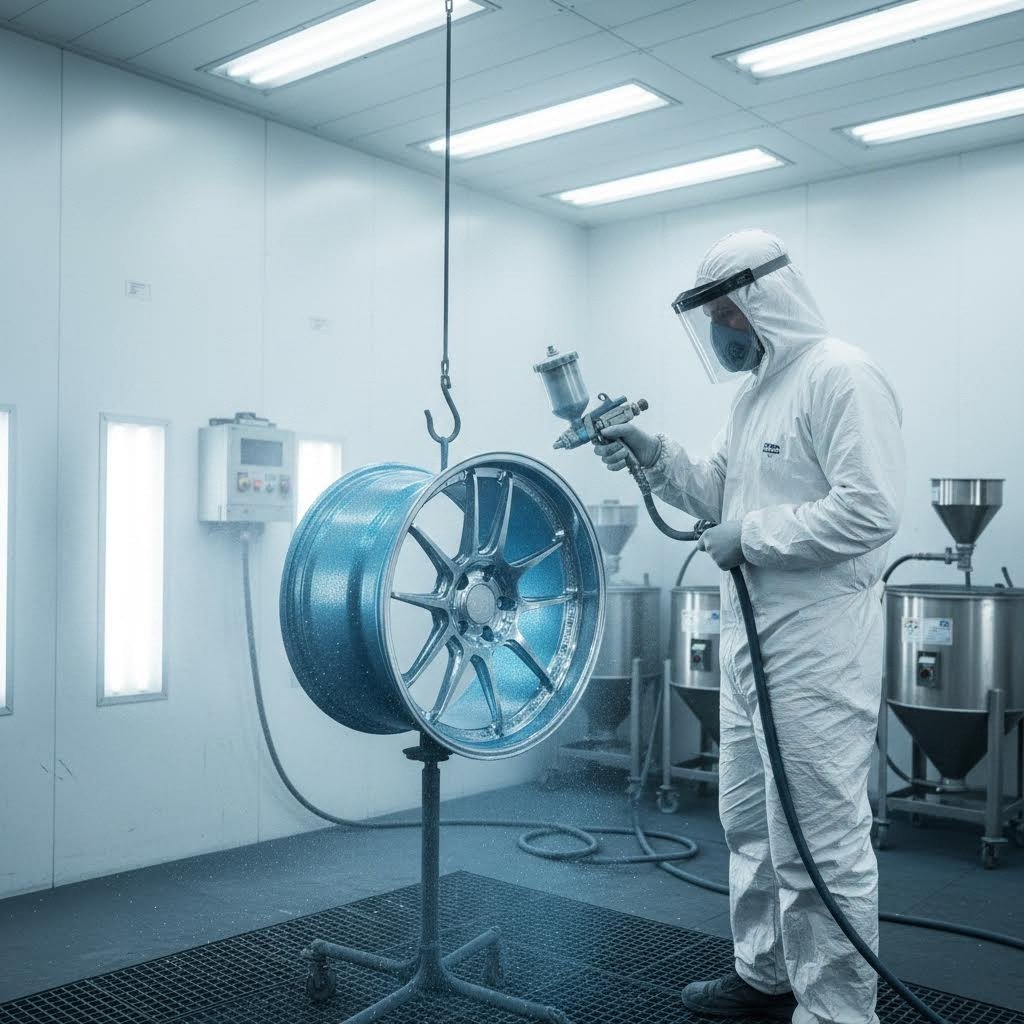
- Powder Coating: Fine ground particles of color and resin are electrically charged and sprayed onto the wheel surface, then baked in a curing oven at high temperatures. This creates an incredibly durable finish that resists rust, heat, chips, and scratches. Endless color options exist, from matte black to metallic effects. However, as finishing specialists note, this finish is essentially "one and done"—recoating in a new color later isn't recommended. Surface preparation requires thorough cleaning and sometimes light sandblasting for optimal adhesion.
- Wet Painting: Traditional spray painting followed by a clear topcoat offers the most extensive color matching capabilities. Want your wheels to match your vehicle's exact body color? Wet paint makes it possible. The finish provides good durability when properly applied and clear-coated, though it's generally less chip-resistant than powder coating. Preparation involves priming with appropriate adhesion promoters for aluminum substrates.
- Brushed Finish: This technique uses abrasive materials to create directional lines across the aluminum surface, producing a sophisticated industrial aesthetic. The brushed look works particularly well on BC Forged wheels and similar designs where spoke faces benefit from texture variation. A clear coat typically protects the finish from oxidation. Preparation is straightforward—clean, degrease, and apply consistent brushing pressure for uniform appearance.
- Mirror Polishing: Raw aluminum wheels can be hand-polished or machine-polished to achieve a near-mirror shine. According to wheel finish specialists, polished wheels offer advantages over chrome-plated options since they don't add weight, potentially improving fuel efficiency and handling. They can also be repolished to restore like-new condition if they lose luster over time. The catch? Without protective coating, these wheels require regular cleaning, polishing, and waxing to prevent oxidation.
- Hybrid Finishes: Why choose just one? Many luxury forged wheels and custom builds combine multiple techniques—perhaps a polished lip with powder-coated spokes, or brushed faces with anodized accents. These combinations require careful masking and sequenced application but deliver truly unique results impossible to achieve with factory finishes.
Matching Finish Types to Your Vision
Selecting the right finish involves balancing several factors beyond just appearance. Consider how you'll actually use these wheels and what maintenance commitment you're willing to accept.
For daily drivers in harsh climates, powder coating or Type III anodizing provides the best protection against road salt, brake dust, and environmental contamination. These finishes resist the chemicals found in winter road treatments that can devastate lesser coatings.
Show vehicles and garage queens benefit from polished or wet-painted finishes where the emphasis falls on visual impact rather than durability. That mirror-shine polished look turns heads like nothing else, and wet paint allows perfect color coordination with your vehicle's bodywork.
Off-road applications—including wheels compatible with KMC Impact Forged Beadlock systems—demand the hardest possible finishes. Type III hardcoat anodizing or industrial-grade powder coating withstands rock impacts, trail debris, and aggressive cleaning far better than appearance-focused alternatives.
What about preparation requirements? Every finish type demands clean, contaminant-free aluminum, but the specifics vary:
- Anodizing: Requires chemical etching and deoxidizing; cannot have any previous coatings or contaminants
- Powder coating: Needs light abrasion or sandblasting; benefits from phosphate pretreatment
- Wet paint: Demands proper primer selection; self-etching primers work well on raw aluminum
- Polishing: Progressive sanding through multiple grits before compound application
- Brushing: Clean surface with consistent directional abrasion; protect immediately with clear coat
The durability you achieve depends directly on preparation quality. Rushing this stage—or skipping steps—almost guarantees finish failure down the road. Your custom forged wheel raw finish deserves proper preparation to protect your investment and deliver lasting results.
Speaking of preparation, the specific steps required before applying any custom finish deserve detailed attention. Let's examine exactly what proper surface preparation involves and the common mistakes that lead to finish failure.
Surface Preparation Before Custom Finishing
You've selected your finish type and you're eager to see your custom forged wheel raw finish transformed into something spectacular. But here's the uncomfortable truth that separates professional results from amateur disappointments: preparation determines everything. According to surface finishing experts, aluminum provides specific challenges regarding effective surface preparation that require specialized steps not familiar to typical finishing cycles.
Skip steps here, and you'll watch your beautiful finish bubble, peel, or flake within months. Get preparation right, and your precision forged wheels will maintain their stunning appearance for years. Let's break down exactly what proper preparation involves.
Essential Pre-Finishing Surface Preparation
Whether you're working with forged rims destined for anodizing, powder coating, or a mirror polish, the preparation process follows a logical sequence. Each step builds on the previous one, creating the foundation your chosen finish needs to bond permanently with the aluminum substrate.
Here's the complete preparation sequence professionals follow:
- Initial mechanical cleaning: Begin by removing any heavy contamination using mechanical action. Special cleaning formulations containing unique solvents and detergency agents dislodge tough soils that would otherwise interfere with subsequent steps. This isn't optional—embedded shop dirt and handling oils must come off first.
- Soak cleaning: Immerse the wheels in a non-etch cleaner formulated with a pH buffer in the 9-10 range. According to industry standards, these cleaners minimize etching while removing oils, grease, and remaining contaminants through emulsification or displacement. Non-silicated, non-caustic formulations protect your custom forged wheel surfaces while delivering thorough cleaning.
- Thorough rinsing: Multiple rinses—preferably double or triple counterflow types—wash away contaminants and dragged-on solutions before the next step. Fog mists and water sprays enhance effectiveness. Clean, rinsed surfaces are critical because alternating alkaline and acid treatments follow one another.
- Etching: This step removes the natural oxide skin to develop an active surface for subsequent treatments. You have options: highly acidic solutions for aggressive etching, mildly alkaline solutions for geometric surfaces requiring minimal metal removal, or acidic processes using mineral acids balanced with organic acids and wetting agents.
- Deoxidizing and desmutting: After etching, insoluble oxides from alloying metals create a "smut" layer that must be removed. Depending on your alloy, solutions range from dilute nitric acid (effective on 1000, 3000, and 6000 series) to ferric iron-based solutions or the powerful tri-acid blend of nitric, sulfuric, and hydrofluoric acids for stubborn 6000+ alloys. Effective desmutting leaves a whitened, towel-clean surface.
- Surface profiling: Create the appropriate texture for your chosen finish. Anodizing needs chemically etched surfaces; powder coating benefits from light sandblasting or phosphate pretreatment; wet paint requires proper adhesion-promoting primers.
- Primer application: Select primers specifically formulated for aluminum substrates. Self-etching primers work excellently on raw aluminum, creating chemical bonds that standard primers cannot achieve. Environmental conditions matter here—temperature and humidity affect cure times and adhesion quality.
- Environmental control: Apply finishes in controlled conditions. Temperature extremes, high humidity, and airborne contaminants all compromise adhesion. Professional shops maintain specific temperature and humidity ranges during application and curing.
Avoiding Common Preparation Mistakes
Even experienced enthusiasts make preparation errors that doom their finishing projects. Learning from these common mistakes saves time, money, and frustration when working with your custom forged wheel raw finish.
According to wheel refurbishment specialists, neglecting adequate preparation is like laying a faulty foundation—the final results will inevitably suffer. Here are the critical mistakes to avoid:
- Skipping the cleaning sequence: Jumping straight to finishing without proper degreasing and cleaning leaves invisible contaminants that prevent proper adhesion. Take time to remove accumulated grime and any remnants of previous coatings.
- Rushing the sanding process: This intensive, time-consuming step cannot be shortened without consequences. Incomplete sanding leaves rough marks and edges visible in the final finish. Patience and precision during sanding deliver seamless results.
- Improper masking: Poor masking leads to overspray and unsightly blemishes on adjacent surfaces. Use high-quality masking tape and plastic sheeting on tyre valves, wheel hubs, and nearby areas. Meticulous masking ensures sharp, crisp lines.
- Wrong primer selection: Standard primers designed for steel or other substrates perform poorly on aluminum. Always use primers specifically formulated for aluminum—self-etching varieties create the strongest chemical bonds.
- Insufficient coating layers: A single thin coat leaves wheels vulnerable to premature wear. Apply multiple coats, allowing each layer to dry thoroughly before adding the next. Thick, durable coating withstands rigorous use.
- Rushing the cure: Handling wheels before finishes fully cure causes smudging, marring, and premature wear. Follow manufacturer curing time recommendations exactly—patience during curing produces durable, long-lasting results.
- Ignoring environmental conditions: Applying finishes in unsuitable temperatures or humidity levels compromises adhesion and appearance. Control your environment or wait for appropriate conditions.
The micro-etching effect from proper desmutting significantly increases surface area, promoting better adhesion to subsequent finishes. This single step can mean the difference between a finish that lasts years versus one that fails within months.
Understanding these preparation requirements helps you decide whether to tackle finishing yourself or partner with professionals. That decision depends largely on your skills, equipment, and goals—which brings us to identifying exactly who benefits most from purchasing raw finish wheels.
Who Should Choose Raw Finish Wheels
Now that you understand the preparation demands involved, you might be wondering: is a custom forged wheel raw finish actually right for me? The honest answer depends entirely on who you are, what resources you have access to, and what you're trying to accomplish. Raw finish wheels aren't for everyone—but for the right buyers, they offer advantages that pre-finished options simply cannot match.
Let's examine the four primary user types who benefit most from purchasing affordable forged wheels in their unfinished state, along with the specific advantages and considerations each group faces.
Custom Shops and Creative Control
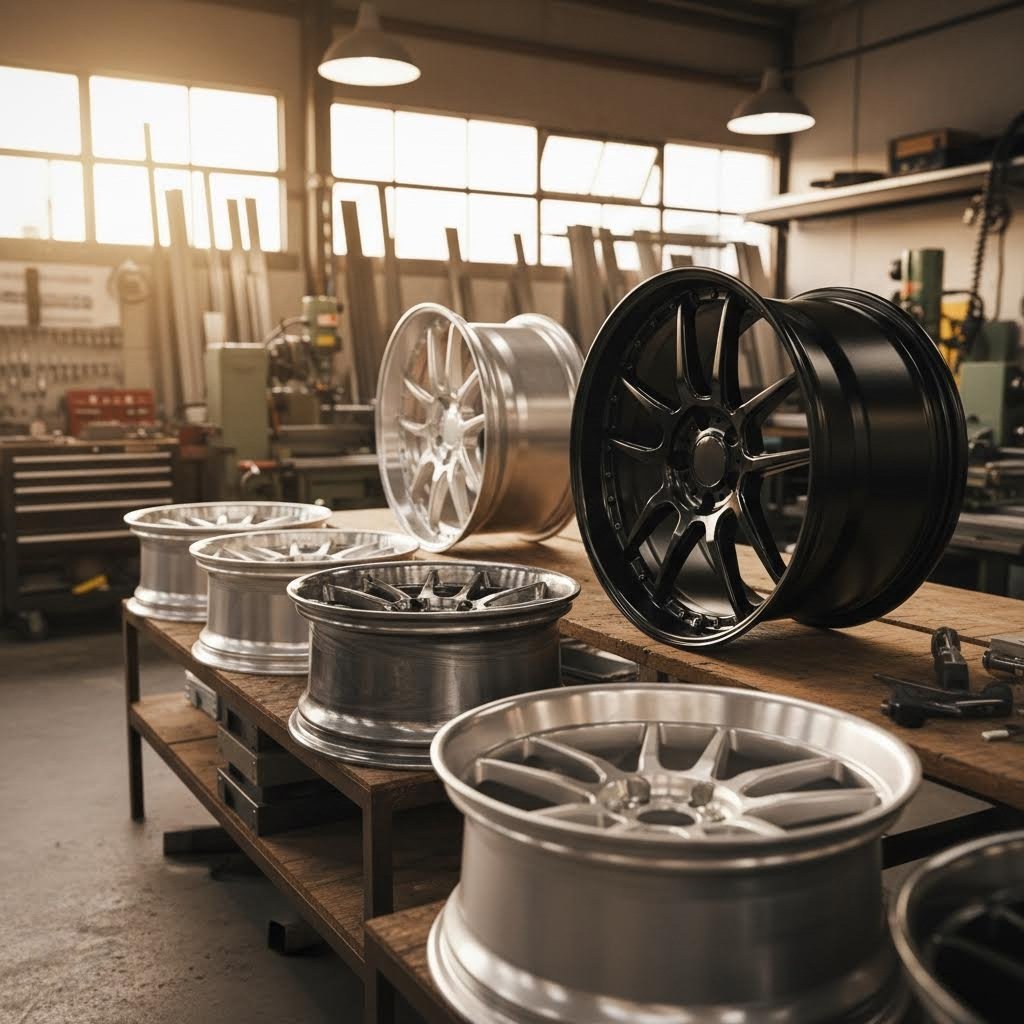
Custom wheel shops represent the largest professional market for raw finish wheels, and for good reason. When a client walks in wanting wheels that perfectly match their vehicle's custom paint code, or requesting a finish combination that no manufacturer offers, starting with raw blanks becomes essential.
These shops—whether they're building show cars, creating one-off builds, or developing signature looks for their brand—need complete creative authority. Pre-finished wheels lock them into someone else's vision. Raw aluminum delivers a blank canvas where their expertise becomes the differentiating factor.
The economics work in their favor too. Purchasing KMC forged wheels or similar quality blanks in raw form typically costs less than pre-finished equivalents. Shops recapture that savings as profit margin when they apply in-house finishing, or they pass savings to clients while still controlling the final result. Either way, raw purchasing strengthens their business model.
Shops building wheels for specialized applications—like those compatible with KMC dually wheels setups or unique fitments—particularly benefit from raw purchasing. They can ensure the finish complements the specific vehicle application rather than accepting whatever finish happened to be available in the required specifications.
DIY Enthusiasts vs Professional Finishers
The DIY community divides into two distinct camps when it comes to raw finish wheels: those with legitimate finishing capabilities and those who underestimate the complexity involved.
Successful DIY finishers typically share certain characteristics. They've invested in proper equipment—spray booths, curing ovens, or quality hand-polishing tools. They understand surface chemistry and preparation requirements. Most importantly, they've practiced on less expensive items before tackling forged wheels worth thousands of dollars.
For these prepared enthusiasts, raw finishing delivers genuine satisfaction beyond cost savings. There's something deeply rewarding about completing the entire wheel journey yourself—from selecting the raw blanks to admiring the finished product on your vehicle. That creative ownership matters to hands-on builders.
Professional automotive finishers occupy a different space entirely. These specialists—working in body shops, custom paint facilities, or dedicated wheel refinishing operations—possess industrial-grade equipment and years of experience. For them, raw wheels represent raw material for their craft. They can achieve results that rival or exceed factory finishes because they control every variable in the process.
Restoration specialists deserve special mention here. When rebuilding a numbers-matching classic or period-correct show car, factory-original wheel colors often aren't available from modern manufacturers. Starting with raw finish wheels allows these specialists to match archival paint codes precisely, achieving authenticity impossible with contemporary pre-finished options. The Project 6GR Ten and similar modern designs look stunning in period-appropriate colors when properly finished by restoration experts.
| User Type | Primary Motivation | Skill Requirements | Typical Finishing Approach |
|---|---|---|---|
| Custom Wheel Shops | Creative control, profit margin, brand differentiation | Professional-level finishing capabilities, quality control systems | Full-service in-house finishing or trusted subcontractor relationships |
| DIY Enthusiasts | Personal satisfaction, cost savings, hands-on involvement | Moderate to advanced; proper equipment essential | Home garage setups with spray equipment or hand-polishing |
| Professional Finishers | Material for their trade, quality control, client specifications | Expert-level with industrial equipment | Commercial spray booths, powder coating lines, or anodizing facilities |
| Restoration Specialists | Period-correct color matching, authenticity, show standards | Advanced with archival research capabilities | Custom color matching to original specifications |
Cost considerations vary significantly across these user types. Custom shops factor finishing into their service pricing. DIY enthusiasts must honestly assess equipment investment against potential savings—sometimes paying for professional finishing actually costs less than building proper home capabilities. Professional finishers already own the equipment, making raw purchasing almost always advantageous. Restoration specialists often find the custom color matching requirement leaves no alternative to raw purchasing regardless of cost.
The creative advantages extend beyond just color selection. Raw finish wheels allow matching textures, gloss levels, and effect pigments that pre-finished options never offer. Want your wheels to incorporate the same metallic flake as your custom body paint? Starting raw makes it possible.
Recognizing which category you fall into—and being honest about your capabilities—helps determine whether raw finish wheels represent an opportunity or a recipe for frustration. The wheel construction type you choose adds another layer of complexity to this decision, particularly when comparing monoblock designs against multi-piece alternatives.
Wheel Construction Types and Raw Finish Implications
Your choice of wheel construction fundamentally changes how you'll approach a custom forged wheel raw finish project. While we've covered material selection and finishing techniques, the physical structure of your wheels—whether monoblock or multi-piece—introduces entirely different workflow considerations, cost structures, and creative possibilities.
Understanding these construction differences before purchasing raw wheels prevents costly surprises and helps you plan a finishing approach that maximizes your investment.
Monoblock Wheels and Unified Finishing
Monoblock wheels, also called one-piece wheels, are manufactured from a single piece of forged aluminum. According to wheel manufacturing specialists, this construction method results in a wheel that is both strong and lightweight, with the absence of seams or joints contributing to superior structural integrity.
From a finishing perspective, monoblock construction offers significant advantages. When you're working with a KMC Impact Forged Monoblock or similar single-piece design, you're treating one unified surface rather than coordinating between separate components. This simplifies preparation, application, and quality control considerably.
The benefits extend throughout the finishing process:
- Consistent surface treatment: The entire wheel receives identical preparation and coating in a single sequence, eliminating potential variations between components
- Simplified masking: Without component seams or bolt patterns to protect, masking requirements focus only on valve stems and mounting surfaces
- Faster turnaround: No assembly required after finishing means wheels move directly from the finishing booth to installation
- Lower finishing costs: Single-piece handling reduces labor time and the potential for rework
However, monoblock designs present one notable limitation for raw finish buyers: your customization options are essentially locked at the design phase. Once forged, the wheel's proportions, spoke design, and overall aesthetic are fixed. Your finishing creativity applies only to color, texture, and surface treatment—not structural elements.
For enthusiasts seeking the KMC Impact Forged or KMC Forged Impact aesthetic with custom colors, monoblock construction delivers streamlined finishing with exceptional structural performance. The unified grain structure created during forging means finishes adhere uniformly across the entire wheel surface.
Multi-Piece Complexity in Custom Finishing
Multi-piece wheels—whether two-piece or three-piece designs—introduce an entirely different finishing equation. These wheels consist of separate components that are bolted or welded together, typically including a center section (with spokes), inner barrel, and sometimes an outer barrel.
According to wheel construction experts, three-piece wheels allow manufacturers to create a far greater range of widths and offsets for a single wheel design. This modularity extends to finishing possibilities as well—but adds significant complexity.
Consider what multi-piece finishing actually involves:
- Component separation: Before finishing, you'll typically disassemble the wheel to treat each piece individually
- Multiple finish coordination: Popular combinations include polished lips with powder-coated centers, or brushed barrels with anodized spoke faces
- Sealing considerations: The assembly process requires precise engineering to prevent leaks, and your finish cannot interfere with proper sealing surfaces
- Assembly after finishing: Components must be carefully reassembled without damaging freshly applied finishes
The advantages justify this complexity for many builders. Want your wheel lips in mirror polish while your centers receive a satin black powder coat? Multi-piece construction makes it straightforward since each component finishes separately before final assembly. Options compatible with KMC Mesa Forged Beadlock systems often utilize multi-piece construction specifically because the beadlock ring requires independent finishing or replacement capability.
The trade-offs deserve honest consideration. As manufacturing experts note, assembling multi-piece wheels is an exacting process—you have to really know what you're doing to assemble them, ensure proper sealing to prevent leakage, and verify balance to prevent vibration. These challenges apply equally whether you're working with new raw wheels or refinishing existing multi-piece sets.
| Factor | Monoblock (One-Piece) | Multi-Piece (Two/Three-Piece) |
|---|---|---|
| Finishing Difficulty | Lower—single unified surface, no assembly required | Higher—multiple components, coordination required, reassembly needed |
| Customization Options | Color and texture only; design fixed at forging | Multiple finish combinations possible; modular width/offset options |
| Finishing Cost | Lower labor time, simpler workflow | Higher due to component handling, multiple processes, assembly |
| Typical Applications | High-performance street, racing, applications prioritizing strength | Show vehicles, custom builds requiring unique fitments or mixed finishes |
| Repair Considerations | Damage typically requires refinishing entire wheel | Damaged component can be replaced independently |
Your construction choice should align with your finishing goals. If you're planning a single uniform finish across the entire wheel, monoblock construction simplifies your workflow significantly. If your vision involves contrasting finishes between lips and centers, or you need unusual fitment specifications, multi-piece wheels deliver flexibility worth the additional finishing complexity.
With construction type decided alongside your material and finish selections, the complete raw finish journey from purchase to installation comes into focus—including quality checkpoints that ensure your investment delivers the results you expect.
The Complete Raw Finish Wheel Journey
You've made your decisions about materials, construction type, and finishing approach. Now comes the practical reality of transforming that custom forged wheel raw finish from concept to installed reality. This journey involves careful supplier selection, quality verification at multiple checkpoints, and timeline planning that accounts for each processing stage.
Whether you're sourcing KMC impact wheels for a show build or forged 4x4 wheels for serious trail duty, the process follows a predictable sequence. Understanding each stage helps you avoid costly delays and ensures the raw wheels you receive are genuinely ready for your chosen finish.
From Purchase to Installation - The Complete Journey
The raw finish wheel journey begins long before your wheels arrive. Smart buyers invest time upfront in supplier evaluation because the quality of your raw blanks determines everything that follows. A poorly forged wheel with internal porosity or inconsistent grain structure will cause finish failures regardless of how carefully you prepare the surface.
Here's the complete sequential process from initial research to final installation:
- Supplier research and selection: Evaluate potential suppliers based on their forging capabilities, quality certifications, and track record with raw finish deliveries. Look for manufacturers with IATF 16949 certification or equivalent quality management systems—this indicates rigorous process control throughout production. Companies like Shaoyi (Ningbo) Metal Technology exemplify the precision hot forging expertise required for superior raw finish blanks, maintaining strict quality control that produces consistently excellent surfaces for custom finishing.
- Specification confirmation: Before ordering, verify exact specifications including bolt pattern, offset, width, and center bore. Confirm the aluminum alloy (6061-T6 vs 7075) matches your finishing plans. For custom projects requiring specific specifications, suppliers with rapid prototyping capabilities—some offering turnaround in as little as 10 days—can validate fitment before committing to full production.
- Order placement and lead time planning: Raw finish wheels typically ship faster than pre-finished options since they skip the finishing department. However, build your timeline around realistic expectations. Factor in shipping time, especially for international suppliers located near major ports like Ningbo that facilitate efficient global delivery.
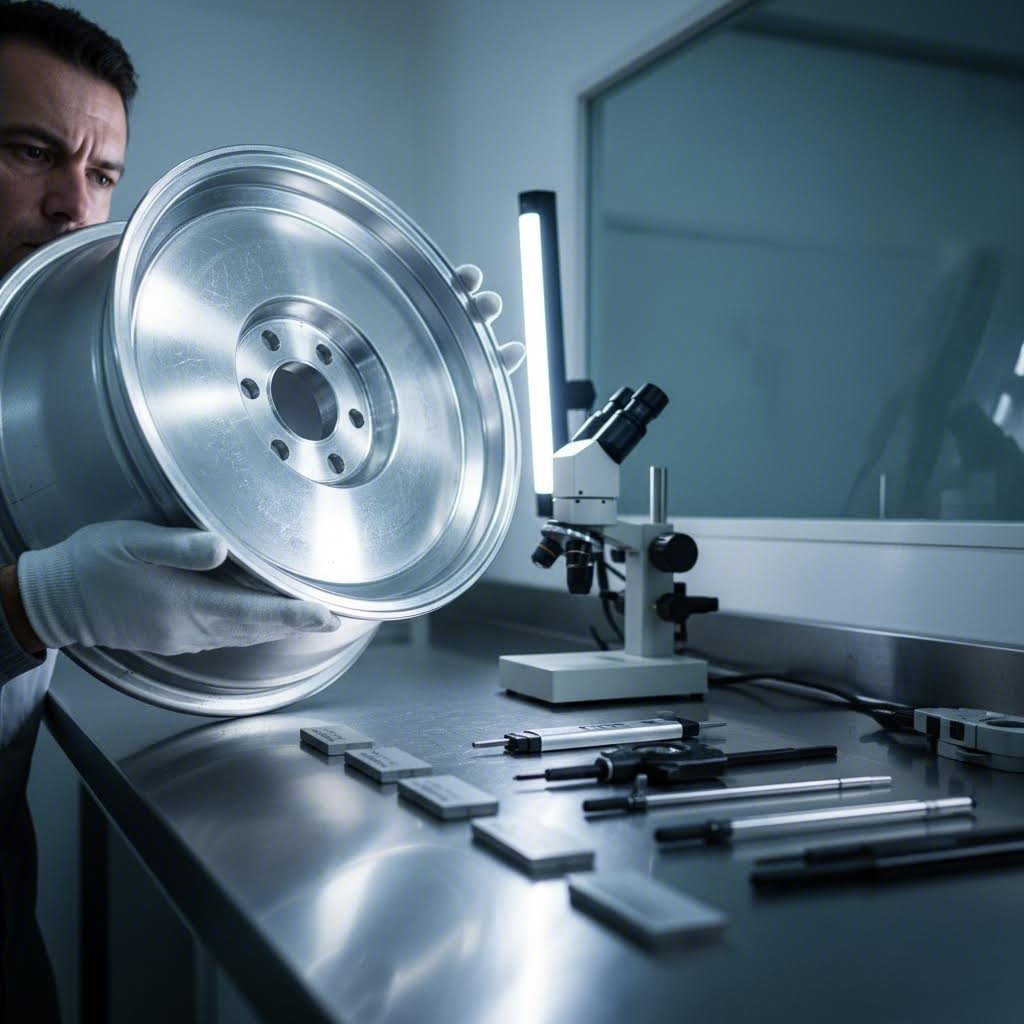
- Quality inspection upon receipt: This critical checkpoint catches problems before you invest finishing time and materials. Examine every wheel systematically using the inspection criteria covered below.
- Surface preparation execution: Following the preparation protocols from the previous section, clean, etch, and profile each wheel according to your chosen finish requirements.
- Finish application: Apply your selected finish—anodizing, powder coating, wet paint, polishing, or hybrid combinations—in controlled environmental conditions.
- Cure time observation: Allow complete curing per manufacturer specifications before handling. Rushing this stage causes the majority of amateur finishing failures.
- Final quality inspection: Verify finish uniformity, adhesion quality, and absence of defects before proceeding to installation.
- Mounting and balancing: Install tires and balance the completed wheel assemblies. Protect finished surfaces during this process.
- Vehicle installation: Mount wheels with proper torque specifications and perform a test drive to verify balance and clearances.
The supplier selection step deserves particular attention. When evaluating forged offroad wheel manufacturers or any raw finish supplier, ask specifically about their quality control processes. How do they verify grain structure after forging? What testing do they perform before shipping raw blanks? Suppliers who can't answer these questions confidently may not deliver the consistent quality your finishing investment requires.
Quality Checkpoints Throughout the Process
Knowing what to look for when your KMC mesa forged wheels or other raw blanks arrive separates successful projects from disappointing outcomes. Proper forging creates specific surface characteristics that indicate quality, while certain warning signs suggest problems that will surface during finishing.
When inspecting raw wheels upon receipt, evaluate these critical characteristics:
- Uniform coloring: Properly forged aluminum displays consistent silvery-gray tones across the entire surface. Discoloration, dark spots, or unusual mottling may indicate oxidation damage, contamination, or alloy inconsistencies.
- Clean machining marks: CNC tool marks should appear uniform and consistent, particularly on spoke faces and barrel surfaces. Irregular patterns, gouges, or excessively rough areas suggest machining problems that will telegraph through your finish.
- Smooth forged surfaces: Areas that weren't CNC machined—like spoke backs or inner barrel sections—should show smooth, consistent texture. Rough patches, cracks, or folding marks indicate forging defects that compromise structural integrity.
- Dimensional accuracy: Verify critical dimensions against specifications. Check bolt pattern spacing, center bore diameter, and overall width at multiple points. Inconsistencies suggest quality control failures.
- Surface porosity: Examine closely for tiny pits or holes in the aluminum surface. While rare in quality forged wheels, porosity indicates insufficient forging pressure or material defects. These voids will cause finish bubbling and adhesion failures.
Sounds complex? Here's a practical approach: run your fingertips across spoke faces and barrel surfaces. Quality forged aluminum feels dense and consistent—not gritty, porous, or irregular. Your hands often detect problems your eyes miss.
Throughout the finishing process, implement quality checkpoints at each transition:
- After cleaning: Water should sheet evenly across surfaces without beading. Beading indicates residual contamination that will prevent finish adhesion.
- After etching: The surface should appear uniformly matte with a whitened, towel-clean texture. Uneven etching suggests contamination or chemical imbalance.
- After priming: Primer should lay smooth without fisheyes, craters, or lifting. These defects indicate surface preparation problems requiring correction before proceeding.
- After final finish: Inspect under strong lighting at multiple angles. Look for orange peel texture, runs, dry spots, or color inconsistencies that indicate application problems.
For KMC RZR wheels, KMC Hatchet designs, or any wheel destined for demanding applications, consider professional inspection if you lack experience evaluating forged components. The cost of expert verification pales against the expense of finishing wheels with hidden defects.
Document your inspections with photographs at each stage. If problems emerge later, this documentation helps identify where the process failed and whether the issue originated with the raw wheel supplier or the finishing process. Quality-focused forging manufacturers maintain similar documentation throughout their production process, and reputable suppliers will work with you to resolve any quality concerns with their raw blanks.
The timeline from ordering to installation varies based on wheel complexity, finishing method, and whether you're working with professional finishers or completing the project yourself. Plan conservatively—building buffer time into your schedule prevents the rushed decisions that compromise quality. Your custom forged wheel raw finish project represents a significant investment, and patience at each checkpoint protects that investment while ensuring results that exceed pre-finished alternatives.
Making the Right Raw Finish Decision
You've now explored every dimension of the custom forged wheel raw finish journey—from understanding what raw aluminum actually looks like to mastering preparation protocols and matching construction types to your finishing goals. But information alone doesn't guarantee success. What matters now is translating this knowledge into confident decisions tailored to your specific situation.
Whether you're a custom shop owner evaluating inventory strategies, a DIY enthusiast weighing your first raw wheel project, or a restoration specialist seeking period-correct authenticity, the path forward depends on honest self-assessment and realistic planning.
Key Takeaways for Your Raw Finish Project
Before committing to raw finish wheels, review these critical decision factors that separate successful projects from frustrating experiences:
- Material selection matters: Choose 6061-T6 for easier finishing and superior corrosion resistance, or 7075 for extreme-duty applications where strength justifies additional preparation effort
- Preparation determines durability: Rushing surface preparation virtually guarantees finish failure—budget adequate time for proper cleaning, etching, and priming sequences
- Match finish to application: Show vehicles benefit from polished or wet-painted finishes; daily drivers and off-road builds demand powder coating or Type III anodizing
- Construction affects workflow: Monoblock wheels simplify finishing with unified surfaces; multi-piece designs enable creative combinations but require component coordination
- Skill assessment is essential: Be honest about your capabilities—professional finishing often costs less than building proper home equipment
- Supplier quality impacts everything: Verify forging certifications and quality control processes before purchasing; defective raw blanks doom even perfect finishing work
- Environmental control isn't optional: Temperature, humidity, and contamination affect every finish type—plan your workspace accordingly
The single most important factor for raw finish success is honest capability assessment—knowing when to tackle finishing yourself and when to partner with professionals protects both your investment and your results.
Next Steps Based on Your Goals
Your immediate action depends on where you stand in the raw finish wheel journey. Here's how to move forward productively:
If you're still researching: Visit local custom wheel shops or finishing facilities to see raw and finished wheels in person. Handling actual raw aluminum helps you understand surface characteristics better than any description. Ask finishers about their preferred alloys and preparation methods for your intended application.
If you're ready to purchase: Contact potential suppliers about their quality certifications and inspection processes. Request sample photos of raw finish wheels they've shipped previously. Verify specifications against your vehicle's requirements before ordering. Many enthusiasts exploring KMC forged wheels or similar premium options benefit from supplier conversations before committing.
If your raw wheels have arrived: Perform thorough quality inspection before beginning any preparation work. Document the condition with photographs. Address any concerns with your supplier immediately—reputable manufacturers stand behind their raw finish quality.
If you're planning DIY finishing: Start with test pieces before touching your expensive forged wheels. Practice your chosen technique on scrap aluminum or inexpensive components. Invest in proper safety equipment, especially for anodizing or powder coating processes involving chemicals or heat.
If you're partnering with professionals: Share your vision clearly, including reference images of desired finishes. Ask about their experience with your specific alloy and construction type. Request portfolio examples of similar completed projects. Discuss timeline expectations and quality checkpoints throughout the process.
Raw finish wheels offer creative freedom that pre-finished options simply cannot match. When you understand the materials, master the preparation, and choose finishing approaches aligned with your capabilities, those uncoated aluminum blanks transform into truly personal statements. The investment of time learning these fundamentals pays dividends every time you see your custom-finished wheels on the road—knowing they represent your vision executed properly from start to finish.
Frequently Asked Questions About Custom Forged Wheel Raw Finish
1. What is a custom forged wheel raw finish?
A custom forged wheel raw finish refers to the uncoated, unpolished state of aluminum immediately after the forging and CNC machining processes are complete but before any surface treatment is applied. At this stage, the wheel displays natural aluminum coloring, visible tool marks from machining, and slight texture variations. This blank canvas state allows buyers complete creative control over the final appearance, whether they choose anodizing, powder coating, polishing, or wet painting.
2. How much do custom forged wheels in raw finish cost?
Raw finish forged wheels typically cost less than pre-finished equivalents since they skip the manufacturer's finishing department. Prices vary based on wheel size, design complexity, and aluminum alloy used. For example, Project 6GR offers raw finish wheels starting around $99 for refinishing projects. However, total project cost must include your chosen finishing method—powder coating, anodizing, or professional polishing—which can add several hundred dollars per wheel depending on the technique and provider.
3. What is the difference between forged and cast wheel blanks?
Forged wheels are created by compressing solid aluminum billets under thousands of tons of pressure, aligning the metal's grain structure for superior strength and density. Cast wheels are made by pouring liquid aluminum into molds, resulting in random grain patterns and potential porosity. For raw finish applications, forged wheels offer better finishing results because their dense, non-porous surfaces provide more consistent coating adhesion, uniform anodizing colors, and easier polishing compared to cast alternatives.
4. What finishing options are available for raw aluminum wheels?
Raw forged wheels can receive numerous finishing treatments including Type II anodizing for vibrant colors, Type III hardcoat anodizing for extreme durability, powder coating for chip-resistant protection, wet painting for exact color matching, brushed finishes for industrial aesthetics, and mirror polishing for show-quality shine. Hybrid finishes combining multiple techniques—like polished lips with powder-coated centers—are also possible with multi-piece wheel constructions.
5. Who should buy raw finish wheels instead of pre-finished options?
Raw finish wheels benefit four primary user types: custom wheel shops seeking creative control and profit margins, DIY enthusiasts with proper finishing equipment and experience, professional automotive finishers working with industrial-grade facilities, and restoration specialists needing period-correct color matching for classic vehicles. These buyers value the unlimited customization possibilities and often achieve better results than factory finishes when proper preparation protocols are followed.