 Small batches, high standards. Our rapid prototyping service makes validation faster and easier —
  EN
EN


Custom Forged Pistons For Turbo Engines: Specs That Actually Matter
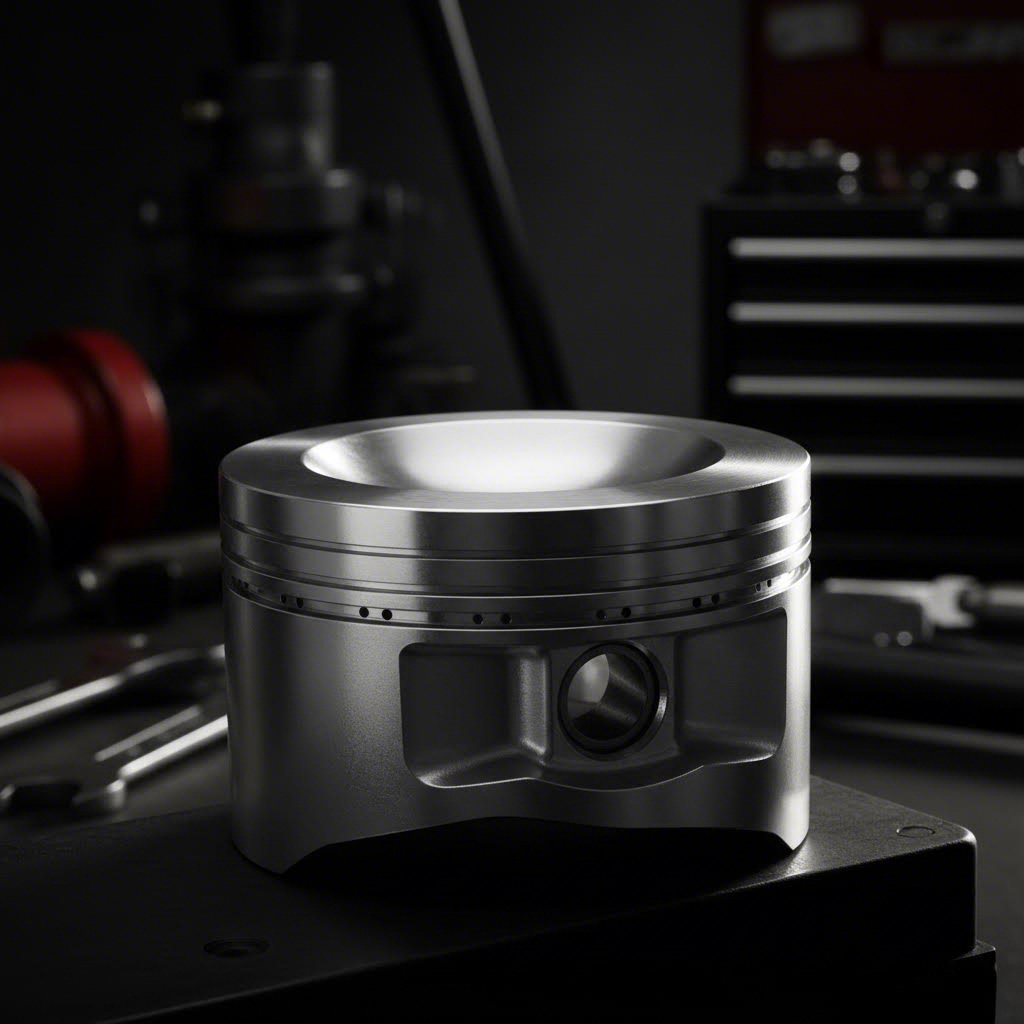
Why Turbo Engines Demand Custom Forged Pistons
Ever wondered what happens inside your engine the moment that turbocharger spools up? Imagine a controlled explosion multiplied by pressure levels your stock internals were never designed to handle. That's the reality of forced induction—and it's precisely why custom forged pistons for turbo engines aren't just an upgrade, they're often a necessity for survival.
The Brutal Reality Inside a Turbocharged Cylinder
When you bolt a turbocharger onto an engine, you're fundamentally changing the physics of combustion. A turbo forces more air into the cylinder, which means more fuel can be burned, generating significantly more power. Sounds great, right? The catch is that this forced induction dramatically increases both cylinder pressure and thermal load.
Consider this: a naturally aspirated engine might see peak cylinder pressures around 1,000 psi during combustion. Add a turbo pushing 15-20 psi of boost, and those pressures can easily exceed 1,500 psi or more. According to research published in Technical Science and Innovation, forcing diesel engines leads to an increase in thermal and mechanical stresses on the main parts of the cylinder-piston group, causing significant temperature increases in pistons, piston rings, and valves.
The temperature situation is equally demanding. Turbocharged engines generate substantially more heat within the combustion chamber. This overheating causes temperature fields with pronounced irregularities, leading to thermal strains that deteriorate material properties and can ultimately cause part destruction. When the piston crown faces temperatures exceeding 600°F while the skirt remains cooler, differential expansion creates stress that standard components simply cannot withstand long-term.
Why Stock Pistons Fail Under Boost
Stock pistons in most production vehicles are cast aluminum—and for good reason. Cast pistons are inexpensive to produce and perfectly adequate for factory power levels. However, they contain small air pockets and impurities that become critical weak points under the extreme stress of forced induction.
Here's what happens when you push cast pistons beyond their limits:
- Detonation damage: Pre-ignition events under boost create shock waves that literally hammer the piston crown, causing cracking and erosion
- Thermal failure: Cast aluminum can melt or crack when temperatures exceed safe thresholds—a common occurrence with aggressive boost levels
- Ring land destruction: The thin areas between ring grooves crack under excessive cylinder pressure
- Structural collapse: The piston's internal structure simply cannot absorb the repeated high-load cycles
As noted by PowerNation, stock LS engine cast pistons typically hold up to around 500-550 horsepower with proper tuning. Push beyond that with a big turbo, and you'll start seeing melted pistons and bent rods. The margin for error evaporates quickly under boost.
What Makes High Performance Pistons "Custom Forged"
So what separates performance pistons from their factory counterparts? Forged pistons start as solid chunks of aluminum alloy that are compressed under extreme pressure—typically thousands of tons—before being precision machined. This forging process eliminates the porosity and weak spots inherent in casting, creating a denser, stronger component with an aligned grain structure.
The benefits of forged pistons extend beyond raw strength. According to HP Academy, the forging technique allows manufacturers to optimize grain orientation in high-stress areas, providing up to 20% additional strength depending on the specific design. This makes forged pistons far more resistant to heat, detonation, and high-RPM abuse.
The "custom" aspect takes things further. Rather than grabbing an off-the-shelf replacement, custom forged pistons are engineered for your specific application—accounting for your target boost level, compression ratio goals, fuel type, and intended use. When you're building a serious turbo engine, the combination of forged rods and pistons designed specifically for your setup provides a reliability margin that generic parts simply cannot match.
Think of it this way: stock pistons are designed to survive warranty periods under normal driving conditions. Custom forged pistons are engineered to thrive under the punishment that enthusiasts deliberately inflict on their engines. That's a fundamental difference in design philosophy—and it's why serious turbo builds demand purpose-built internals from the start.
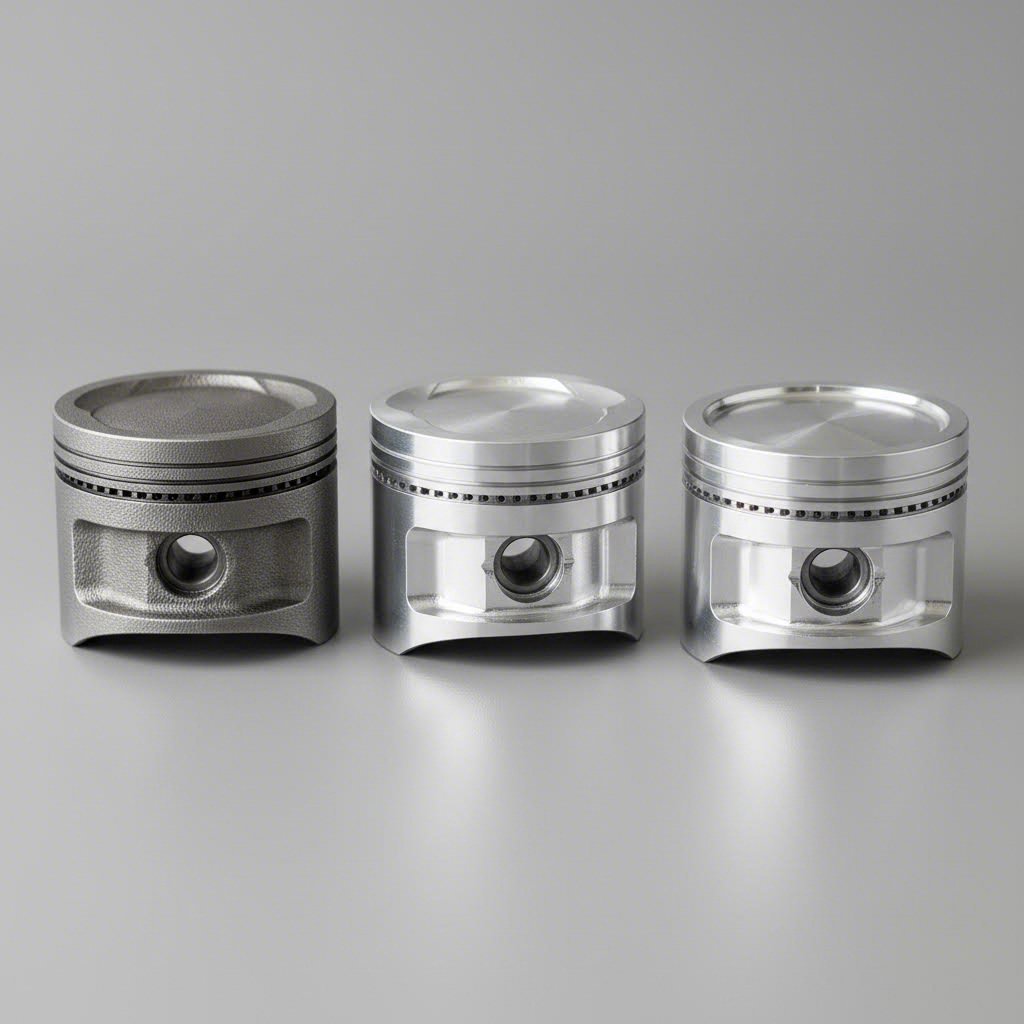
Forged vs Cast vs Billet Pistons for Forced Induction
Now that you understand why turbo engines destroy stock components, the next logical question becomes: what type of piston should you actually use? The answer isn't as simple as "just buy forged"—because even within the forged piston category, significant differences in materials and construction methods will determine whether your engine survives or fails under boost.
Cast vs Forged vs Billet Construction Methods
Let's break down the three primary manufacturing approaches and what each means for your turbocharged application.
Cast pistons are created by pouring molten aluminum alloy into a mold. When cooled, the result closely resembles the final piston shape, requiring minimal machining. According to Engine Builder Magazine, casting is cost-efficient but produces parts that are heavier and more brittle than forged alternatives. The grain structure remains random, with microscopic air pockets that become failure points under extreme stress.
You might be wondering: what is hypereutectic? Hypereutectic pistons represent an upgraded cast design containing 16-18% silicon content compared to the standard 10-12%. This additional silicon creates a stronger, more wear-resistant casting with improved thermal efficiency. However, hypereutectic pistons still have limits—they remain cast components with inherent brittleness that makes them unsuitable for high-boost applications.
Forged pistons take a fundamentally different approach. A heated aluminum billet is placed into precision dies and compressed under thousands of tons of pressure. This forging process creates a denser component with aligned grain structure, eliminating the porosity issues that plague castings. The result is a forged piston with significantly greater ductility and strength—critical attributes when cylinder pressures spike under boost.
Billet pistons are machined from solid bar stock of the same alloys used in forgings. As Engine Builder Magazine explains, billets aren't simply a forging alternative—they're complete engineered solutions put through multiple FEA modeling iterations. Billet construction allows manufacturers to create unconventional designs outside predetermined forging die limitations. They're particularly valuable for prototype development and exotic applications where standard forging options don't exist.
| Material Type | Strength Characteristics | Thermal Expansion | Best Application | Relative Cost |
|---|---|---|---|---|
| Cast (Standard) | Low - brittle under shock loads | Moderate | Stock replacement, naturally aspirated | $ |
| Hypereutectic Cast | Moderate - improved over standard cast | Low | Mild street performance, light boost | $$ |
| Forged 4032 | High - 54-55,000 psi tensile strength | Low (11-13% silicon) | Street performance, moderate boost | $$$ |
| Forged 2618 | Very High - 64-65,000 psi tensile strength | Higher (requires more clearance) | High-boost turbo, racing, extreme duty | $$$$ |
| Billet (2618 or 4032) | Comparable to forged equivalent | Alloy dependent | Custom prototypes, exotic builds | $$$$$ |
Forged Aluminum Alloys Explained
Here's where material selection gets critical for turbo applications. Not all forged pistons are created equal—the aluminum alloy used fundamentally changes how the piston performs under boost.
4032 Alloy contains approximately 11-13% silicon content. According to JE Pistons, this high silicon content significantly reduces the aluminum's expansion rate, allowing tighter cold piston-to-wall clearances. The result? Quieter cold starts and excellent long-term durability for street applications. The silicon also improves wear resistance in ring grooves—a significant advantage for engines accumulating significant mileage.
For a forged engine running moderate boost levels with premium fuel, 4032 pistons offer an excellent balance of performance and livability. They're slightly lighter than 2618 equivalents and work well with nitrous oxide or forced induction at moderate levels.
2618 Alloy takes a dramatically different approach with silicon content below 1%. This creates a highly malleable material with superior ductility—the ability to deform without cracking. When detonation events occur (and they will eventually in high-boost applications), a 2618 piston absorbs that impact rather than shattering.
The trade-off? 2618 pistons expand approximately 15% more than 4032 versions. This means they require greater ambient piston-to-wall clearances and will produce more noise during cold starts as the piston "rattles" before reaching operating temperature. Once warm, both alloys achieve similar running clearances.
Why 2618 Dominates Serious Turbo Builds
For high-powered street builds, maximum competition, high-boost forced induction, or any application where pistons face extreme stress, 2618 becomes the material of choice. The reasoning is straightforward: when you're pushing an engine to its limits, you need components that can survive the unexpected.
The 2618 alloy's superior high-temperature strength prevents the material from annealing—losing its heat treatment—under sustained high heat. As JE Pistons notes, this thermal resistance makes 2618 essential for extended wide-open-throttle competition and serious street power applications.
Yes, you'll deal with slightly more piston slap during warm-up. Yes, the 2618's lower wear resistance means ring grooves may not last as many miles as 4032 equivalents. But for turbo applications, these are acceptable trade-offs. Many manufacturers offer optional hard anodizing for ring groove and pin bore areas to address wear concerns without sacrificing the alloy's strength advantages.
The bottom line? If you're building a turbocharged engine targeting significant power levels, 2618 pistons provide the margin of safety that separates a reliable build from an expensive failure. Understanding these material differences is just the beginning—next, you'll need to determine the correct compression ratio for your specific boost targets.
Compression Ratio Selection for Boosted Applications
You've selected the right alloy and construction method for your custom forged pistons—now comes one of the most critical decisions in any turbo build: compression ratio. Get this wrong, and you'll either leave power on the table or create an engine that knocks itself to pieces. The relationship between static compression, boost pressure, and fuel type isn't intuitive, but understanding it separates successful builds from expensive lessons.
Calculating Effective Compression Under Boost
Here's a concept that trips up many builders: the compression ratio stamped on your pistons isn't the whole story. When a turbocharger forces additional air into your cylinders, you're effectively multiplying that compression ratio in ways that dramatically affect detonation resistance.
Your engine's built-in compression ratio is called "static compression"—it's determined by the physical relationship between cylinder volume at bottom dead center versus top dead center. But when you add boost, you create what's known as the "effective compression ratio." This number represents what your engine actually experiences during combustion.
According to RPM Outlet, formulas have been developed that convert your static compression and supercharger boost to the effective compression ratio. For example, a 9.0:1 engine running 10 psi of boost produces an effective compression ratio of approximately 15.1:1—far beyond what pump gasoline can safely handle.
Experience has shown that attempting to run more than about a 12:1 effective compression ratio on a street engine with 92 octane pump gas will create detonation problems.
This explains why high compression pistons work brilliantly on naturally aspirated engines but become problematic under boost. A 10.5:1 static compression ratio might seem modest, but pair it with 15 psi of boost and you've created conditions that exceed safe limits for pump fuel. The piston application determines everything—what works for one build can destroy another.
The Compression-to-Power Crossover Point
Here's where things get counterintuitive. According to DSPORT Magazine, raising compression ratio has both positive and negative effects on boosted engines. Higher compression increases thermal efficiency—meaning more energy extracted from each combustion event. But it also reduces volumetric efficiency by decreasing the unswept volume available for boost pressure to fill.
The research identifies a critical crossover point around 20 psi of boost:
- Below 20 psi: Higher compression ratios (9.5:1 to 11.0:1) typically produce more power due to improved thermal efficiency
- Above 20 psi: Lower compression ratios (8.0:1 to 9.0:1) begin outperforming higher ratios as volumetric efficiency gains outweigh thermal efficiency losses
- Extreme boost (40+ psi): Compression ratios in the 7.0:1 to 8.0:1 range often produce maximum power
This means a drag racing engine targeting 50-60 psi will actually make more power with lower compression than a street turbo build running 12-15 psi. The physics favor different approaches depending on your target boost level.
Matching Compression to Your Target Power
So how do you select the right compression ratio for your specific piston application? Start by honestly assessing these factors:
- Fuel type: Pump gas (91-93 octane) severely limits effective compression compared to E85 or race fuel. E85's superior cooling effect when vaporizing allows higher compression ratios even at elevated boost levels
- Target boost level: Street builds running 8-15 psi have different requirements than race engines pushing 25+ psi
- Intercooling efficiency: According to RPM Outlet, intercooled EFI applications with compression below 9.5:1 can safely run 14-17 psi with full timing on pump gas
- Intended use: Daily drivers benefit from higher compression for off-boost responsiveness; dedicated race engines prioritize peak power at target boost
- Fuel injection type: Direct injection allows higher compression than port injection due to charge cooling effects
Why Dished Pistons Dominate Turbo Builds
When you need to reduce static compression without sacrificing combustion efficiency, dish pistons become essential. A dish piston features a recessed area machined into the crown, increasing combustion chamber volume and lowering compression ratio.
But here's the critical detail many builders miss: simply using thicker head gaskets to reduce compression creates problems. According to OnAllCylinders, increasing piston-to-head clearance reduces quench area effectiveness. Quench—the turbulent mixing created when the piston crown approaches the cylinder head's flat areas—dramatically improves combustion efficiency and actually reduces detonation tendency.
Ironically, an engine with poor quench at 9.5:1 compression might be more prone to detonation than the same engine with tighter piston-to-head clearance at 10.0:1. Smart piston design maintains proper quench area (typically 0.038-0.040 inch clearance) while using dished pistons to achieve the target compression ratio.
For street turbo applications using pump fuel, compression ratios between 8.5:1 and 9.5:1 typically provide the best balance of off-boost driveability and boost tolerance. High-boost racing applications often drop to 7.5:1 to 8.5:1, accepting reduced efficiency at low RPM in exchange for maximum power potential under full boost.
With compression ratio determined, your next consideration becomes equally critical: ring configuration and ring land design that can actually survive the cylinder pressures your turbo engine will generate.
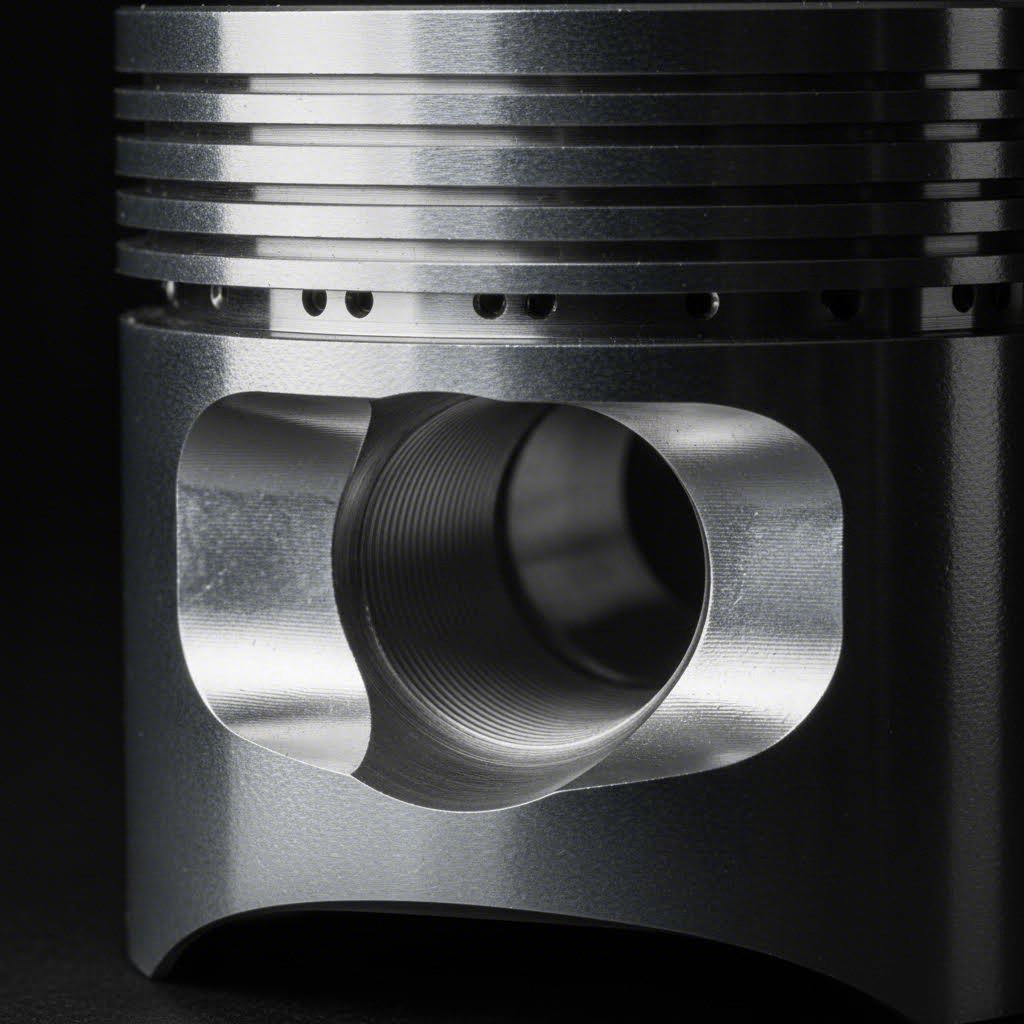
Ring Configuration and Ring Land Design for Turbo Builds
You've selected your compression ratio and piston material—but here's a detail that can make or break your turbo build: the rings that seal those custom pistons to your cylinder walls. Ring configuration isn't glamorous, but get it wrong and all that careful planning goes up in smoke. Literally. The extreme cylinder pressures generated under boost demand ring packages specifically engineered for forced induction environments.
Ring Pack Configurations for High Cylinder Pressure
When cylinder pressure spikes under boost, your piston rings face dramatically different challenges than in naturally aspirated applications. According to Engine Labs, a critical component often overlooked in high-performance builds is the piston ring, which has a simple but demanding function: hold the combustion where it belongs—in the combustion chamber.
Think about it this way: what good are countless hours spent optimizing airflow and tuning if power simply leaks past the piston? For turbo engines, the ring pack selection becomes particularly critical because you're dealing with cylinder pressures that can exceed 1,500 psi during combustion events.
Modern custom piston rings for boosted applications have evolved significantly. Here's what you need to consider when specifying your ring package:
- Top ring thickness: Thinner top rings (1.0mm to 1.2mm versus traditional 1.5mm) reduce ring flutter at high RPM while improving sealing. According to Speedway Motors, thinner rings provide increased horsepower and torque while reducing weight and compression height
- Second ring design: Napier-style rings combine a taper face with a small notch in the lower leading edge, improving oil control while backing up the top ring's sealing function. For turbo builds, ductile iron construction handles heat and pressure better than standard cast iron
- Oil ring configuration: Three-piece oil rings with higher tension (20-25 pounds) are preferred for boosted applications to reduce motor oil-related detonation. Standard tension won't cut it when boost pressure tries to force oil past the rings
- Ring material selection: Steel rings offer the highest tensile strength and fatigue resistance—essential for boosted and nitrous applications where ductile iron falls short
Gas Porting and Combustion-Assisted Sealing
Here's where custom pistons truly separate themselves from off-the-shelf options. In naturally aspirated engines, good ring seal during the intake stroke creates vacuum for adequate cylinder fill. But turbo engines don't rely on vacuum—they use positive pressure from the turbocharger.
As Total Seal's Keith Jones explains, "In a boosted application, we're relying less on vacuum to fill the cylinders and can sacrifice intake stroke ring seal for designs that will increase ring seal on the combustion stroke."
Two primary approaches address this need:
- Gas-ported pistons: Small holes drilled along the piston crown's outer diameter lead directly into the rear of the top ring land. Combustion gases push the ring outward from the inside, assisting sealing without the trade-offs of other designs. The downside? Potential port clogging with combustion residue over time
- Dykes-style rings: An L-shaped ring profile that increases the gap between the piston ring land and top ring face. During the power stroke, combustion gases push against the outer L, pinning the ring against the lower ring land and cylinder wall. The result is proportionally increased ring seal as cylinder pressure rises
Why Ring Land Design Matters Under Boost
The ring lands—those narrow areas between ring grooves on your piston—face tremendous stress in turbo applications. When cylinder pressure spikes, it tries to push through any weakness. Thin or poorly designed ring lands crack under repeated high-load cycles, causing catastrophic failure.
Custom pistons designed for forced induction feature reinforced ring lands with increased material thickness compared to standard designs. This piston design consideration directly impacts durability under the extreme conditions turbocharging creates.
Ring coatings also play a critical role. According to Engine Labs, traditional moly and hard chrome coatings have problems with adhesion in high-performance applications: "In a race application where you're getting into high cylinder pressures, detonation can become a problem, boost can be a problem, nitrous can be a problem and it will blow that coating off the ring."
Modern alternatives like Chrome Nitride (CrN) and Titanium Nitride are applied using particle vapor deposition, literally bonding to the ring at a molecular level. They won't chip, flake, or separate under the punishment turbo engines deliver.
Ring Gap Specifications for Turbo Applications
Thermal expansion changes everything when calculating ring end gaps. As your engine reaches operating temperature—and especially under sustained boost—piston rings expand. If gaps are too tight, ring ends butt together, causing scoring, scuffing, and potential breakage.
According to CP-Carrillo's technical specifications, boosted applications require significantly larger ring gaps than naturally aspirated builds:
- Naturally aspirated: Top ring = Bore diameter × 0.0045 minimum
- Low to mid boost: Top ring = Bore diameter × 0.006 minimum
- Mid to high boost: Top ring = Bore diameter × 0.0065 minimum
- High boost applications: Top ring = Bore diameter × 0.007 or more
- Second ring: Always 0.005-0.010 inch larger than top ring gap
- Oil ring rails: Minimum 0.015 inch
For example, a 4.00-inch bore running mid-high boost would require a minimum top ring gap of 0.026 inch (4.00 × 0.0065)—compared to just 0.018 inch for a naturally aspirated setup. That additional clearance accounts for the greater thermal expansion turbo engines experience.
These are minimum specifications. Going slightly over is safer than running too tight—a lesson many builders learn the hard way. When in doubt, contact your ring manufacturer with your specific application details for tailored recommendations.
With ring configuration sorted, your next step involves protecting these carefully selected components from the extreme heat turbocharging generates. Piston coatings offer solutions that can extend component life while enabling even tighter tolerances.
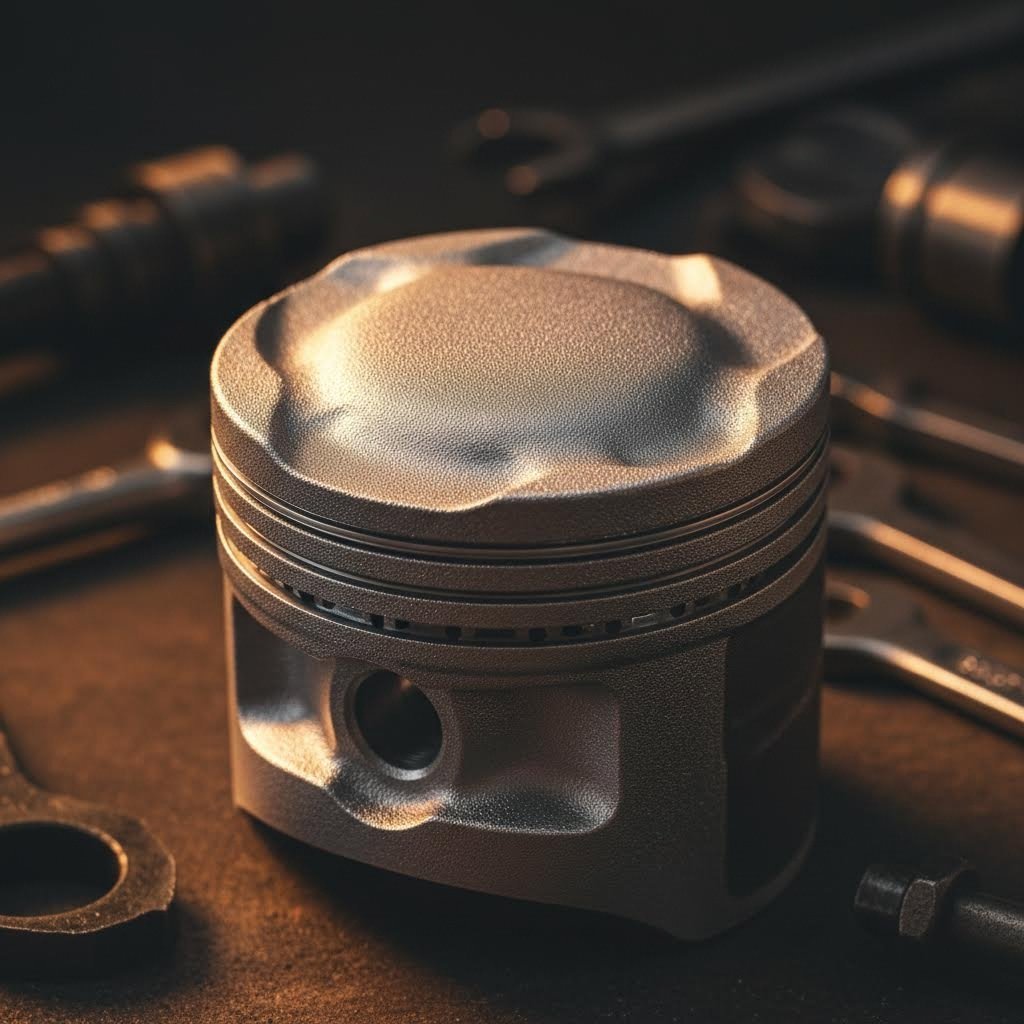
Piston Coatings and Thermal Management Solutions
Your custom forged pistons are specified, your ring package is sorted—but here's a technology that can push durability and performance even further. Piston coatings have evolved from racing curiosities into proven solutions that address the brutal thermal environment inside turbocharged cylinders. Understanding what each coating type actually does helps you make informed decisions rather than simply checking boxes on an order form.
Thermal Barrier Coatings for Extreme Heat Management
When boost pressure climbs, so does combustion temperature. The piston crown faces the brunt of this thermal assault, and without protection, heat soaks through the aluminum, weakening the material and transferring unwanted energy into the wrist pin and connecting rod below.
Ceramic coating for pistons addresses this challenge directly. According to Kill Devil Diesel, ceramic-based thermal barrier applications greatly reduce heat transfer for improved performance while adding insulation to protect against thermal shock. This is particularly critical on the piston crown where hot spots can develop.
How do these piston coatings actually work? As explained by Performance Racing Industry Magazine, ceramic coatings on piston tops enhance flame propagation, burning fuel more effectively across the entire crown surface. The coating reflects heat back into the combustion chamber rather than allowing it to soak into the piston material. The result? Some tuners find they can reduce timing slightly—which actually makes more horsepower due to improved combustion efficiency.
But thermal barrier coatings offer more than just power gains. They provide a margin of protection against bad tunes, lean conditions, or fuel quality issues where unusual heat would otherwise damage an uncoated piston. Think of it as insurance against the unexpected—a momentary sensor glitch or bad tank of fuel won't immediately result in a melted crown.
Skirt Coatings That Protect Under Boost
While crown coatings manage combustion heat, coating piston skirts serves an entirely different purpose: friction reduction and scuffing prevention. The piston skirt constantly rides against the cylinder wall, and under boost, increased cylinder pressure intensifies this contact.
Modern piston skirt coating options have become remarkably sophisticated. MAHLE's proprietary Grafal anti-friction coating, for example, is graphite-impregnated to reduce drag while featuring a screen print application designed to last 100,000+ miles. According to industry sources, it's not uncommon to disassemble engines with over 250,000 miles showing skirt coatings in remarkable condition.
Some manufacturers take skirt coating technology further with abradable powder coatings. As Line2Line Coatings explains, these coatings can be applied heavy and will adjust to fit under temperature and load. Sprint car racers describe feeling the motor initially tight, then smoothing out as the coating finds its ideal fit during break-in laps.
This self-adjusting characteristic has practical benefits for turbo builds. You can open tolerances slightly during assembly, knowing the coating will take up extra space and lock in the ideal fit. Stable pistons with uniform oil film thickness move less, rattle less, and don't pierce oil films with impact events—making the rings' sealing job significantly easier.
Piston Coating Types Compared
Choosing the right coating depends on where you're applying it and what problem you're solving. Here's how the major coating types compare:
| Coating Type | Application Area | Primary Benefit | Typical Applications |
|---|---|---|---|
| Ceramic Thermal Barrier | Piston crown | Reflects heat, prevents hot spots | High-boost turbo, diesel, racing |
| Graphite Dry Film (Grafal-type) | Piston skirt | Friction reduction, long-term durability | Street performance, high-mileage builds |
| Abradable Powder Coating | Piston skirt | Self-adjusting fit, reduced blow-by | Racing, precision clearance applications |
| Oil-Shedding Polymer | Skirt, connecting rods | Reduces windage, smoother RPM acceleration | High-RPM racing, drag applications |
| Hard Anodizing | Ring grooves, pin bores, entire piston | Wear resistance, surface hardening | High-boost forced induction, diesel |
Anodizing: Hardening the Surface for Turbo Durability
Unlike coatings applied to the surface, anodizing actually transforms the aluminum itself. This electrochemical process converts the metal surface into a corrosion-resistant anodic oxide finish that's fully integrated with the underlying substrate—meaning it cannot chip or peel like applied coatings might.
For turbo applications, anodizing serves critical functions. According to Kill Devil Diesel's technical documentation, anodizing drastically improves aluminum hardness and toughness. It's commonly used in ring grooves of forged pistons to combat excessive wear in extreme applications—and in demanding racing scenarios, anodizing has been proven to improve piston life by more than five times.
Some manufacturers like CP-Carrillo opt to hard coat anodize the entire piston to tolerate incredibly high injection pressures in modern applications. This reduces wear and material transfer across all surfaces. The piston coating material created through anodizing can be applied to the entire component or selectively to high-wear areas like ring lands and pin bores, depending on the specific use case.
How Coatings Enable Tighter Clearances
Here's an often-overlooked benefit of proper piston coatings: they can actually allow tighter piston-to-wall clearances than uncoated pistons would tolerate. Skirt coatings reduce friction and provide lubricity during cold starts when clearances are at their tightest. Thermal barrier coatings on the crown reduce heat transfer into the piston body, limiting thermal expansion.
The practical result? Less piston slap during warm-up, improved ring seal throughout the operating range, and reduced oil consumption. For street-driven turbo builds where cold-start noise matters, these coatings bridge the gap between the durability of 2618 alloy and the quieter operation typically associated with tighter-fitting 4032 pistons.
While coatings aren't a guarantee against poor tuning or excessive exhaust gas temperatures, they broaden the tuning window and provide more margin before meltdown. When you've invested in quality custom forged pistons for turbo engines, adding appropriate coatings represents relatively inexpensive insurance that extends component life while improving overall engine efficiency.
With your piston specifications, ring configuration, and coating selections determined, the next step involves translating all these decisions into actual measurements your piston manufacturer needs to build your custom components.
Determining Specifications for Your Turbo Piston Build
You've selected your alloy, compression ratio, ring package, and coatings—but now comes the moment of truth. Ordering custom forged pistons requires providing your manufacturer with precise measurements that account for every component in your rotating assembly. Miss a single dimension, and you'll receive pistons that don't fit your application. Let's walk through exactly what information you need and how to determine each specification.
Essential Measurements for Custom Piston Orders
When browsing pistons for sale or requesting quotes from custom piston manufacturers, you'll quickly discover that the order process demands more than just selecting an engine type. According to JE Pistons, ordering custom pistons requires providing their engineering team with the measurements you require for your application—and if you're basing your build on existing engine architecture, you can simply specify the changes needed.
Here's the reality: manufacturer product pages list general specifications, but they assume you already know what you need. That knowledge gap is where builds go wrong. Whether you're pricing forged pistons and rods for a street turbo project or speccing out a dedicated drag racing engine, the following checklist ensures you provide everything your manufacturer needs.
- Bore size: Measure your actual cylinder bore diameter after any machining. Don't assume stock dimensions—overbores, cylinder sleeves, and manufacturing tolerances mean your bore likely differs from factory specs. Measure at multiple points to confirm roundness and taper.
- Stroke length: Confirm your crankshaft stroke. This measurement directly affects piston speed and determines half of the equation for proper deck height. If you're using a stroker crank, verify the actual stroke rather than relying on advertised specs.
- Rod length (center to center): According to Diamond Racing, rod length is usually specified based on the application and theory—shorter rods for rapid throttle response, longer rods for racing applications requiring lighter pistons. Document your connecting rod's center-to-center measurement precisely.
- Compression height (pin height): This critical dimension determines where the piston crown sits relative to the deck surface at top dead center. It's calculated based on your block deck height, stroke, and rod length—more on this below.
- Pin diameter: Standard wrist pin diameters vary by application. Confirm whether you're using stock-diameter pins or upgrading to larger pins for increased strength. Common options include 0.927", 0.990", and 1.000" for domestic V8 applications.
- Ring package: Specify your ring widths (1.0mm/1.2mm/3.0mm is common for performance builds) and confirm whether you need metric or standard dimensions. Your ring choice affects groove machining during piston manufacture.
- Dome or dish volume: Calculate the crown volume needed to achieve your target compression ratio based on your combustion chamber volume, head gasket thickness, and desired deck height.
- Valve pocket dimensions: Provide valve head diameters and valve angles. Turbo engines often run aggressive cam profiles that require deeper valve reliefs than naturally aspirated applications.
Determining Your Compression Height Requirements
Compression height—sometimes called pin height—often confuses builders because it's a dependent variable, not something you choose arbitrarily. As Diamond Racing explains, the reciprocating assembly final dimension follows a simple formula:
½ stroke length + rod length + pin height = block deck height
Since block height is fixed within a narrow window available for deck milling, your combination of stroke length, rod length, and pin height must equal that fixed dimension. To find the necessary compression height, add your rod length to half of your stroke and subtract the result from your block deck height.
For example, consider a small-block Chevrolet build with these specifications:
- Block deck height: 9.025"
- Stroke: 3.750" (half stroke = 1.875")
- Rod length: 6.000"
- Required compression height: 9.025" - (1.875" + 6.000") = 1.150"
Builders seeking sbc forged pistons or forged sbc pistons for turbo applications often adjust this equation by selecting different rod lengths based on their goals. Shorter rods in boosted applications can be advantageous—they allow taller pistons with the ring pack positioned lower, keeping rings farther from combustion heat. According to Diamond Racing, longer rods in supercharged applications can be problematic because boosted engines need to move the ring pack down the piston, and longer rods make this difficult as the pin bore intersects the oil ring groove.
Use Case Considerations: Street to Strip
Your intended use dramatically influences specification choices. Here's how different applications shape piston requirements:
Daily Driven Turbo: Street engines accumulate miles, experience thermal cycling, and need to survive less-than-ideal conditions. Specify slightly looser piston-to-wall clearances (0.0045-0.005" for 2618 alloy) to account for varied operating temperatures. Consider 4032 alloy if boost levels stay moderate—its tighter clearance reduces cold-start noise. Ring packages should prioritize longevity over absolute sealing, and skirt coatings become essential for long-term durability.
Street Performance: These builds balance power goals with reasonable driveability. Compression ratios typically range from 8.5:1 to 9.5:1 for pump fuel applications. Piston price considerations often favor forged options over billet since production-based forgings provide excellent value. Specify coatings appropriate for sustained boost—thermal barrier on crowns, friction-reducing treatments on skirts.
Drag Racing: Dedicated quarter-mile applications prioritize peak power over durability. Lower compression ratios (7.5:1 to 8.5:1) accommodate high boost levels. Specify 2618 alloy for its superior ductility under detonation events. Consider gas-ported pistons for maximum ring seal under extreme cylinder pressure. Weight matters—work with your manufacturer to optimize piston design for minimum reciprocating mass.
Road Racing: Endurance events demand components that survive sustained high-heat operation. Thermal management becomes critical—specify comprehensive coating packages including crown thermal barriers and skirt friction treatments. Ring pack selection should favor materials resistant to prolonged high-temperature exposure. Cooling provisions like oil squirters and optimized undercrown designs help manage heat during extended full-throttle sessions.
How Target Boost and Power Goals Shape Specifications
Your power goals don't just affect compression ratio—they influence nearly every specification decision. Consider how boost level cascades through your piston requirements:
- Moderate boost (8-15 psi): Standard 2618 or premium 4032 forgings typically suffice. Ring gaps can follow manufacturer recommendations for "mild boost" applications. Compression ratios of 9.0:1 to 9.5:1 remain viable on pump fuel.
- High boost (15-25 psi): 2618 alloy becomes mandatory for its detonation resistance. Increase ring end gaps beyond baseline recommendations. Consider reinforced ring lands and thicker ring lands to handle elevated cylinder pressure. Compression ratios typically drop to 8.0:1 to 9.0:1.
- Extreme boost (25+ psi): Work directly with engineering staff at your piston manufacturer. Specify maximum-strength designs with optimized strut angles, reinforced pin bosses, and comprehensive coating packages. Ring gaps require careful calculation based on expected thermal loads. Compression ratios often fall to 7.5:1 to 8.5:1 depending on fuel type.
When purchasing pistons and rods as matched sets, ensure both components are designed for your target power level. A weak connecting rod paired with robust pistons simply moves the failure point—you want balanced strength throughout the rotating assembly.
Working With Manufacturer Engineering Teams
Don't hesitate to leverage manufacturer expertise. As JE Pistons notes, if you're not sure what you need, their technical staff is standing by to assist with your order. Experienced piston engineers have seen thousands of combinations and can identify potential issues before they become expensive problems.
Provide as much context as possible: target horsepower, boost level, fuel type, intended use, and any unusual aspects of your build. The more information available, the better your manufacturer can tailor specifications to your actual requirements rather than making generic assumptions.
For applications based on existing engine architecture, you may not need to fill out every specification from scratch. Reference your base engine and specify only the changes required—custom compression ratio, specific ring package, or particular valve pocket dimensions. This streamlines the ordering process while ensuring you receive pistons matched to your turbo build's unique demands.
Even with perfectly specified custom components, understanding what happens when things go wrong helps you make better decisions throughout the build process. Next, we'll examine common piston failure modes in turbo applications and the warning signs that precede catastrophic damage.
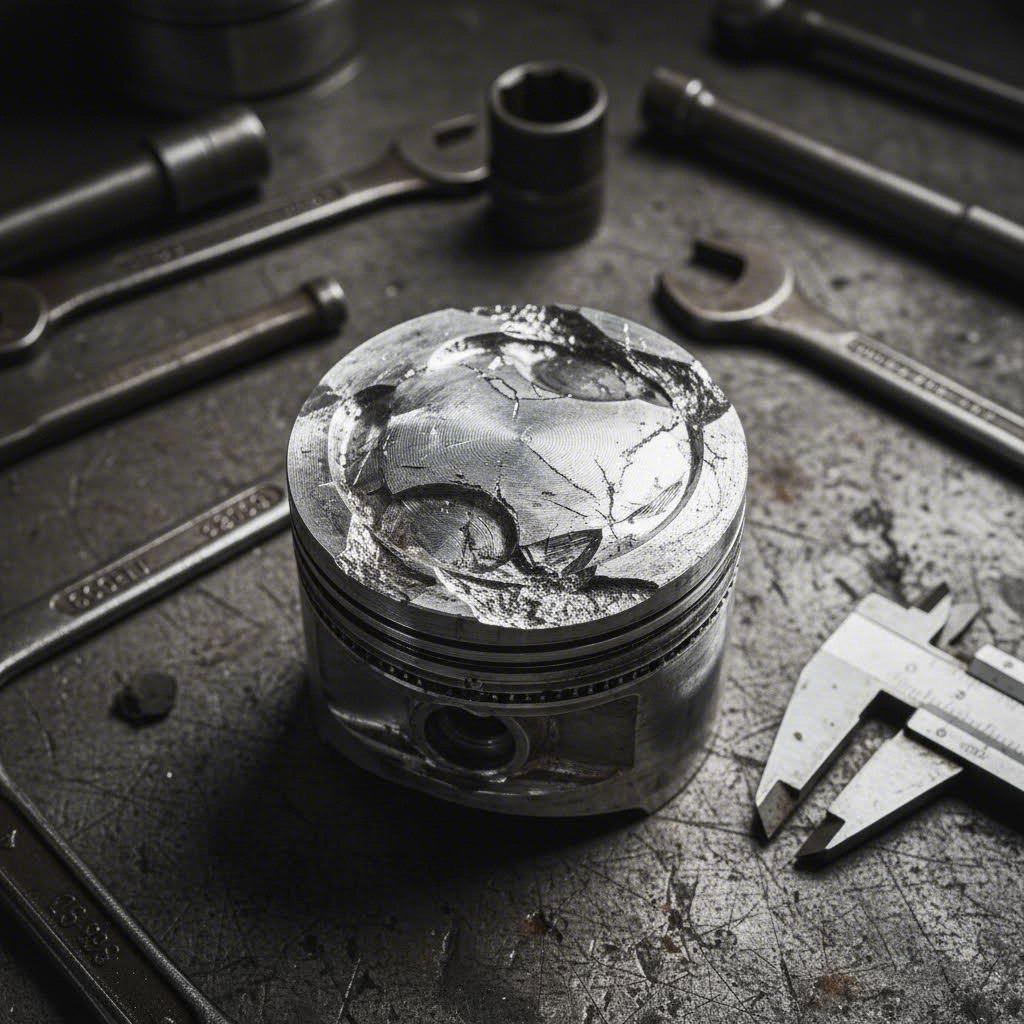
Understanding Piston Failure Modes in Turbo Engines
You've invested significant time selecting the right alloy, compression ratio, ring package, and specifications for your turbo build. But what happens when something goes wrong? Understanding how engine pistons fail under boost isn't just academic—it helps you recognize warning signs before a minor issue becomes a complete engine teardown. More importantly, it reinforces why proper specification matters from the start.
Common Turbo Piston Failures and Their Causes
Here's the reality that every turbo builder eventually confronts: forced induction amplifies every weakness in your rotating assembly. According to MAHLE Motorsports engineer Brandon Burleson, pistons are frequently returned for analysis after failures—but the piston itself isn't always the root cause. Understanding what actually failed first helps prevent repeat disasters.
Let's examine the primary failure modes that plague racing pistons and aftermarket pistons in turbocharged applications:
- Detonation and pre-ignition damage: When combustion occurs abnormally—either before spark (pre-ignition) or as uncontrolled explosion after spark (detonation)—the piston crown takes a brutal hammering. Signs appear as pitting, erosion, or melted spots on the crown surface. Eventually, ring lands crack and the piston fails catastrophically. This typically results from wrong compression ratio for your boost level, incorrect fuel octane, excessive timing advance, or elevated intake air temperatures.
- Thermal cracking from inadequate material: Cast or hypereutectic pistons exposed to sustained high-boost conditions literally crack from heat stress. The material cannot handle repeated thermal cycling at temperatures exceeding its design limits. Cracks typically start at high-stress areas—between ring lands or at valve pocket edges—before propagating through the crown.
- Ring land failure from excessive cylinder pressure: Those thin sections between ring grooves face tremendous stress under boost. When cylinder pressure spikes beyond what the material can absorb, ring lands crack and fragment. Pieces then circulate through the engine, destroying cylinder walls and bearings. This failure mode often indicates pistons undersized for the application's actual power level.
- Skirt scuffing from insufficient clearance: According to Burleson's analysis, cooling system problems create hot spots that break down the oil film between piston skirt and cylinder wall. But incorrect piston selection causes similar issues—if piston-to-wall clearance is too tight for the thermal expansion that occurs under boost, skirts seize against cylinder walls. Evidence appears as vertical scoring on one or both skirts.
- Melting from lean conditions: When the air/fuel mixture runs lean under boost, combustion temperatures spike dramatically. The piston crown melts, often looking "like there's been a torch run through the middle of it," as Burleson describes. Failed injectors and bad tunes are primary culprits—but using aftermarket pistons not designed for your power level accelerates the damage.
Warning Signs Before Catastrophic Failure
Catching problems early can save your entire engine. Here's what experienced builders watch for:
- Audible detonation: That distinctive "pinging" or "knocking" sound under load indicates abnormal combustion attacking your pistons. Even brief detonation events cause cumulative damage—don't ignore the warning.
- Sudden changes in valve lash: According to MAHLE's recommendations, monitoring valve lash provides insight into engine health. Sudden lash changes often indicate component failure in progress.
- Increased oil consumption: Damaged ring lands or scuffed skirts compromise oil control. If your engine starts burning oil unexpectedly, internal damage may already be occurring.
- Metallic debris in oil: Sparkly oil during changes suggests material shedding from pistons, rings, or bearings. Investigate immediately before debris circulates and causes cascading failures.
- Compression loss: Cracked ring lands or damaged crowns reduce cylinder sealing. Periodic compression testing reveals problems before they become visible in performance.
The True Cost of Incorrect Piston Selection
Consider the math: quality custom forged pistons for turbo engines typically cost $800 to $1,500 for a set. A complete engine failure from inadequate components? You're looking at machine shop bills, replacement rotating assembly, new bearings, potentially a new block if cylinders are scored beyond repair, and lost time. The total easily reaches $5,000 to $15,000 or more for serious builds.
As industry experts note, preventing piston failures starts with right design and material selection for the intended application. Using racing pistons in a street car doesn't guarantee survival—those pistons must be rated for your specific boost level, fuel type, and duty cycle.
The investment in properly specified custom components provides insurance against these expensive failures. When you communicate your actual power goals, boost targets, and intended use to your piston manufacturer, they can recommend specifications that provide appropriate safety margins. That conversation costs nothing but prevents disasters that cost everything.
With a clear understanding of what can go wrong and why, your final consideration becomes selecting a manufacturing partner capable of delivering the quality your turbo build demands.
Selecting a Quality Forging Partner for Custom Pistons
You've done the hard work—selecting alloys, calculating compression ratios, specifying ring packages, and determining precise measurements. But here's where many builds succeed or fail: choosing the right manufacturing partner to transform those specifications into actual forged engine parts. Not all forging operations are created equal, and for turbo applications where tolerances matter down to thousandths of an inch, your supplier selection directly impacts whether your engine thrives or fails under boost.
What to Look for in a Forging Partner
When evaluating custom piston manufacturers or forging suppliers, you're essentially assessing their ability to consistently deliver precision components that meet your exact requirements. This goes beyond simply finding competitive pricing—though piston price certainly factors into project budgets. The real question becomes: can this partner reliably produce components that won't fail when cylinder pressures spike under boost?
Consider these evaluation criteria when selecting your forging partner:
- Certification standards: Look for ISO 9001 at minimum, but IATF 16949 certification represents the gold standard for automotive component manufacturing. According to DEKRA Certification, IATF 16949 covers common customer-specific requirements of the automotive industry, including traceability to support regulatory changes and safety-related parts and processes. Partners holding this certification have demonstrated quality systems that meet OEM-level requirements.
- Prototyping speed: How quickly can a supplier turn around custom designs? Rapid prototyping capabilities indicate both engineering competence and production flexibility. For builders working against competition deadlines or project timelines, partners offering prototyping in as little as 10 days provide significant advantages over suppliers requiring months of lead time.
- In-house engineering support: Does the manufacturer have dedicated engineers who can review your specifications and identify potential issues before production begins? As JE Pistons emphasizes, working with experienced technical staff decreases the risk of making costly mistakes during the ordering process.
- Quality control processes: What inspection protocols ensure dimensional accuracy and material integrity? Look for partners utilizing CMM (coordinate measuring machine) verification, material certification documentation, and documented quality procedures at each production stage.
- Production capability range: Can the supplier handle both small prototype runs and eventual high-volume production? Partners with scalable capabilities grow with your needs, whether you're building one race engine or developing components for broader distribution.
Quality Standards That Ensure Reliability
Why does certification matter so much for forged components? The forging process itself creates superior material properties, but only when executed correctly. According to MotorTrend's examination of the forging process, forgings require carefully controlled heating, precise die alignment, and proper heat treatment to achieve the directional grain structure that makes them superior to cast or billet alternatives.
IATF 16949 certification specifically addresses these concerns. The standard requires documented processes for traceability, warranty management, and safety-related component handling. When you're sourcing custom forged pistons for turbo engines—components where failure means catastrophic engine damage—this level of quality assurance provides meaningful protection.
Consider what happens when quality control fails: a steel piston with incorrect heat treatment might appear identical to a properly processed component. It passes visual inspection, measures correctly, and installs without issue. But under the sustained high-temperature, high-pressure environment of a turbocharged engine, material weaknesses emerge. Proper certification ensures every step of the manufacturing process follows documented procedures with verification checkpoints.
Global Supply Chain Considerations
Modern engine building often involves sourcing components internationally. When evaluating overseas suppliers, logistics capabilities become as important as manufacturing quality. Partners located near major shipping infrastructure can significantly reduce delivery times and simplify customs documentation.
For example, Shaoyi (Ningbo) Metal Technology demonstrates how these factors combine in practice. Their IATF 16949-certified facility produces precision hot-forged automotive components including suspension arms and drive shafts—the same forging expertise applicable to high-performance piston manufacturing. Located near Ningbo Port, they offer rapid prototyping capabilities and in-house engineering support that addresses the evaluation criteria discussed above. Their ability to move from prototype to mass production streamlines procurement for builders scaling from development to production volumes.
When considering piston coating material options, verify that your forging partner either offers coating services or has established relationships with reputable coating specialists. The best forging in the world provides diminished value if coatings are applied incorrectly or with inferior materials.
Making the Final Decision
Selecting a forging partner ultimately comes down to matching capabilities to your specific needs. Builders pursuing titanium pistons or exotic steel pistons for extreme applications require partners with specialized metallurgical expertise. Standard aluminum forgings for street turbo builds demand consistent quality but may not require the same exotic material handling.
Ask potential suppliers these questions before committing:
- What certifications does your facility hold, and can you provide documentation?
- What is your typical lead time for custom prototype orders?
- Do you have engineering staff available to review specifications before production?
- What quality control measurements are documented for each production run?
- Can you provide references from other performance or motorsport customers?
The answers reveal whether a supplier views your order as a transaction or a partnership. For custom forged pistons in turbo applications—where component failure carries severe consequences—partnering with manufacturers who understand what's at stake makes all the difference between a successful build and an expensive lesson.
Frequently Asked Questions About Custom Forged Pistons for Turbo Engines
1. What type of piston is best for a turbo?
For turbocharged engines, forged pistons made from 2618 aluminum alloy are typically the best choice for high-boost applications. This alloy offers superior ductility and can absorb detonation impacts without cracking, unlike cast or hypereutectic pistons. For moderate boost levels on street builds, 4032 alloy pistons work well due to their lower thermal expansion and quieter cold-start operation. The key is matching piston material to your target boost level—2618 dominates serious turbo builds exceeding 15 psi, while 4032 suits milder applications under careful tuning.
2. How much horsepower can forged pistons handle?
Quality forged pistons can reliably handle 600+ horsepower, with properly specified 2618 alloy pistons supporting well over 1,000 horsepower in extreme turbo and supercharged applications. The actual power threshold depends on several factors: alloy selection, ring configuration, piston design, and supporting modifications like proper clearances and coatings. Stock cast pistons typically fail around 500-550 horsepower in boosted applications. Custom forged pistons designed for your specific boost level, fuel type, and intended use provide the safety margin needed for serious power.
3. Who makes the best custom pistons?
Several manufacturers excel at custom forged pistons including JE Pistons, Wiseco, Ross Racing Pistons, and CP-Carrillo. The best choice depends on your specific application, budget, and turnaround requirements. Look for manufacturers with IATF 16949 certification, in-house engineering support, and proven experience with turbocharged applications. Companies like Shaoyi (Ningbo) Metal Technology offer IATF 16949-certified precision hot forging with rapid prototyping capabilities, demonstrating how quality standards apply across the forging industry for automotive components.
4. What compression ratio should I run for a turbo engine?
Optimal compression ratio depends on boost level and fuel type. For pump gas (91-93 octane) with 8-15 psi boost, compression ratios between 8.5:1 and 9.5:1 work well. Higher boost applications (15-25 psi) typically require 8.0:1 to 9.0:1 compression. Extreme boost levels (25+ psi) often drop to 7.5:1 to 8.5:1. E85 fuel allows higher compression ratios due to its superior cooling effect. The goal is keeping effective compression ratio below approximately 12:1 on pump gas to prevent detonation while maximizing thermal efficiency for your target boost.
5. Why do forged pistons require more piston-to-wall clearance?
Forged pistons, particularly those made from 2618 alloy, expand approximately 15% more than cast or 4032 alternatives when heated. This greater thermal expansion means they need larger cold clearances—typically 0.0045-0.005 inches for 2618 versus 0.003-0.004 inches for 4032 alloy. Running too tight causes skirt scuffing as the piston seizes against cylinder walls under boost. While this creates more piston slap during cold starts, proper skirt coatings minimize noise while the engine reaches operating temperature, where both alloys achieve similar running clearances.