 Small batches, high standards. Our rapid prototyping service makes validation faster and easier —
  EN
EN


Strategies for Cost Reduction in Automotive Die Manufacturing

TL;DR
Cost reduction in automotive die manufacturing hinges on a multi-faceted approach that integrates modern technology, strategic design, and process optimization. Key strategies include adopting advanced manufacturing like CNC machining and 3D printing, implementing Lean and Kaizen principles to eliminate waste, and applying Design for Manufacturing (DFM) early in the process. This combination enhances efficiency, reduces material scrap, and lowers operational expenses, ultimately improving profitability in a competitive market.
Leveraging Modern Technology for Cost Efficiency
In the competitive automotive sector, technology-driven cost savings are paramount. Adopting advanced manufacturing technologies is a critical strategy for reducing labor expenses, minimizing material waste, and shortening lead times. Key innovations like Computer Numerical Control (CNC) machining, Wire Electrical Discharge Machining (Wire EDM), and 3D printing (additive manufacturing) are transforming die production by enhancing precision and efficiency.
CNC machining ensures exceptional accuracy and consistency, which significantly decreases the number of defective dies and reduces rework costs. Similarly, Wire EDM allows for the creation of complex and intricate shapes in hardened metals with minimal material stress and waste, a task that would be prohibitively expensive or impossible with traditional methods. Additive manufacturing, particularly 3D printing, offers a revolutionary approach to prototyping. By enabling the creation of low-cost test molds, 3D printing drastically cuts down on both the time and expense associated with the early stages of product development.
Integrating these technologies requires a careful evaluation of initial investment versus long-term returns. While the upfront cost for equipment like large-scale die casting presses can be substantial, the long-term benefits of automation and precision often justify the expense. For instance, a well-implemented automation strategy can lead to significant reductions in labor costs and improvements in overall product quality. To successfully integrate these tools, manufacturers should start by evaluating their current workflows to identify bottlenecks, followed by a phased implementation that allows for training and process adjustment.
| Technology | Primary Cost-Saving Benefit | Application in Die Manufacturing |
|---|---|---|
| CNC Machining | Reduces errors and rework through high precision and consistency. | Creating accurate and repeatable die components. |
| Wire EDM | Minimizes material waste when cutting complex shapes in hard metals. | Producing intricate die features and inserts. |
| 3D Printing | Lowers prototyping costs and accelerates design validation. | Rapidly creating test molds and prototype parts. |
Implementing Lean and Kaizen Principles to Eliminate Waste
Process improvement methodologies are fundamental to achieving cost reduction in automotive die manufacturing. Lean Manufacturing and Kaizen, a Japanese term for "continuous improvement," are powerful frameworks focused on systematically eliminating waste and enhancing value-creating activities. By applying these principles, manufacturers can streamline operations, reduce excess inventory, minimize equipment downtime, and boost overall production efficiency. The core idea is to identify and remove any activity that consumes resources but does not add value for the customer.
In the context of die manufacturing, "waste" can manifest in various forms. This includes material scrap from inefficient cutting processes, long setup times for machinery (known as changeover times), unnecessary movement of parts and personnel around the facility, and excess inventory tying up capital. A Kaizen approach tackles these issues through focused, incremental improvements. For example, a Kaizen event might involve a team analyzing a specific workstation's layout to reduce operator movement or applying the SMED (Single-Minute Exchange of Dies) technique to drastically cut changeover times. This continuous, employee-driven improvement culture is a key differentiator from more disruptive, top-down changes.
Implementing a Lean or Kaizen program effectively requires a structured approach. It begins with a commitment from leadership and involves empowering employees at all levels to identify and solve problems. A practical first step is creating value stream maps to visualize the entire production process, from raw materials to the finished die. This exercise helps pinpoint areas of waste and inefficiency, providing a clear roadmap for improvement initiatives. By fostering this culture of continuous improvement, manufacturers not only achieve significant cost savings but also build a more agile and competitive operation.
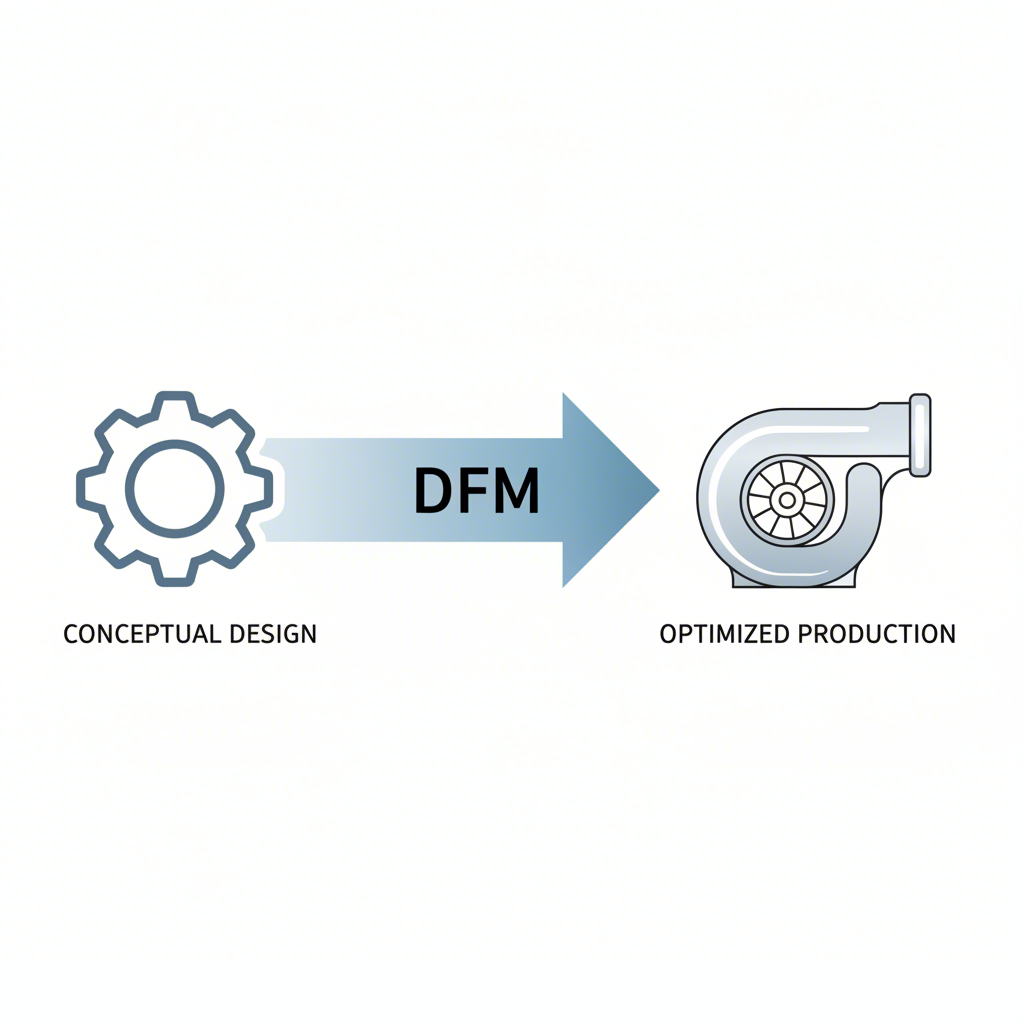
Strategic Design for Manufacturing (DFM) to Preemptively Cut Costs
One of the most impactful strategies for cost reduction occurs long before production begins: during the design phase. Design for Manufacturing (DFM) is a proactive engineering practice focused on designing parts in a way that makes them easy and efficient to produce. According to industry analysis, DFM can reduce manufacturing costs by 15-30% by preventing expensive downstream problems. Every decision made in the design stage—from part complexity and material choice to tolerance specifications—has a ripple effect on tooling, production time, and quality control.
Effective DFM involves simplifying part geometries wherever possible. Symmetrical designs, for instance, are often more cost-effective to machine and handle. Eliminating unnecessary features or sharp internal corners reduces machining time and complexity. Another critical aspect is tolerance management. Specifying overly tight tolerances that are not functionally necessary can exponentially increase costs due to the need for specialized equipment, slower machining speeds, and more intensive inspection procedures. As detailed by Modus Advanced, moving from standard to precision tolerances can multiply part costs by a factor of three to five. Therefore, engineers must specify the loosest possible tolerances that still ensure the part's functionality.
To implement DFM effectively, early collaboration between design engineers and manufacturing partners is crucial. This partnership allows for expert feedback on process capabilities, material limitations, and potential design optimizations before significant resources are committed. For organizations looking to enhance their capabilities, working with specialists in automotive stamping dies can provide invaluable expertise. For example, Shaoyi (Ningbo) Metal Technology Co., Ltd. offers advanced CAE simulations and project management to help OEMs and Tier 1 suppliers optimize designs for both quality and cost-efficiency. A DFM checklist should guide this process, ensuring that factors like material selection, surface finish, and tooling strategy are all considered to prevent costly rework and delays.
Optimizing Tooling, Materials, and Die Efficiency
Maximizing the return on investment (ROI) from tooling and materials is a cornerstone of cost reduction in die manufacturing. The efficiency and longevity of the dies themselves have a direct impact on the bottom line. Investing in high-quality tool design and durable materials from the outset can significantly minimize errors, reduce the need for rework, and lower long-term maintenance and replacement costs. While a high-quality die may have a higher upfront cost, its precision and durability lead to faster production cycles and less waste, ultimately lowering the total cost of manufacturing.
Material selection is another critical lever for cost control. Choosing a material that meets performance requirements while being cost-effective and readily available is essential. Furthermore, optimizing how that material is used is just as important. For example, die casting is a process that inherently minimizes material waste, and the ability to recycle excess material like aluminum further enhances cost efficiency. Strategic tool design can also minimize scrap during cutting and forming operations. Techniques like die cutting, as explained by Strouse, can improve material utilization and speed up assembly, contributing to overall savings.
Maintaining die efficiency throughout its lifecycle is equally important. A regularly scheduled maintenance program is vital to prevent unexpected breakdowns, which cause costly downtime. Leveraging technology such as CAD simulation software and in-die sensor monitoring systems can help predict wear and tear, allowing for proactive maintenance. These systems provide data that enables manufacturers to make informed decisions, optimize die performance, and extend the tool's operational life. By focusing on both the initial investment and the ongoing operational efficiency of tooling, manufacturers can achieve substantial and sustainable cost savings.
Frequently Asked Questions
1. How can we reduce the cost of automotive manufacturing?
Reducing costs in automotive manufacturing involves a comprehensive strategy. Key approaches include implementing lean principles to eliminate waste, optimizing production schedules to minimize downtime, and reducing excess inventory. Adopting advanced technologies for automation and precision, along with strategic design for manufacturability, also plays a crucial role in lowering overall operational expenses.
2. What is the Kaizen cost reduction process?
The Kaizen cost reduction process is a system built on the principle of continuous improvement. Rather than making large, drastic changes, it focuses on making small, incremental improvements consistently over time. In a manufacturing context, this involves empowering employees to identify and eliminate waste in their daily processes, thereby gradually reducing costs while maintaining or improving quality.
3. What is cost reduction in Lean Six Sigma?
In Lean Six Sigma, cost reduction is a direct outcome of improving process efficiency and product quality. The methodology focuses on eliminating defects and reducing process variation. This leads to significant cost savings through enhanced equipment productivity, lower material consumption, reduced scrap and rework, and optimized inventory levels, all of which contribute to a more streamlined and profitable operation.