 Small batches, high standards. Our rapid prototyping service makes validation faster and easier —
  EN
EN


CNC Metal Machining Costs Exposed: What Shops Won't Tell You
What CNC Metal Machining Actually Means for Modern Manufacturing
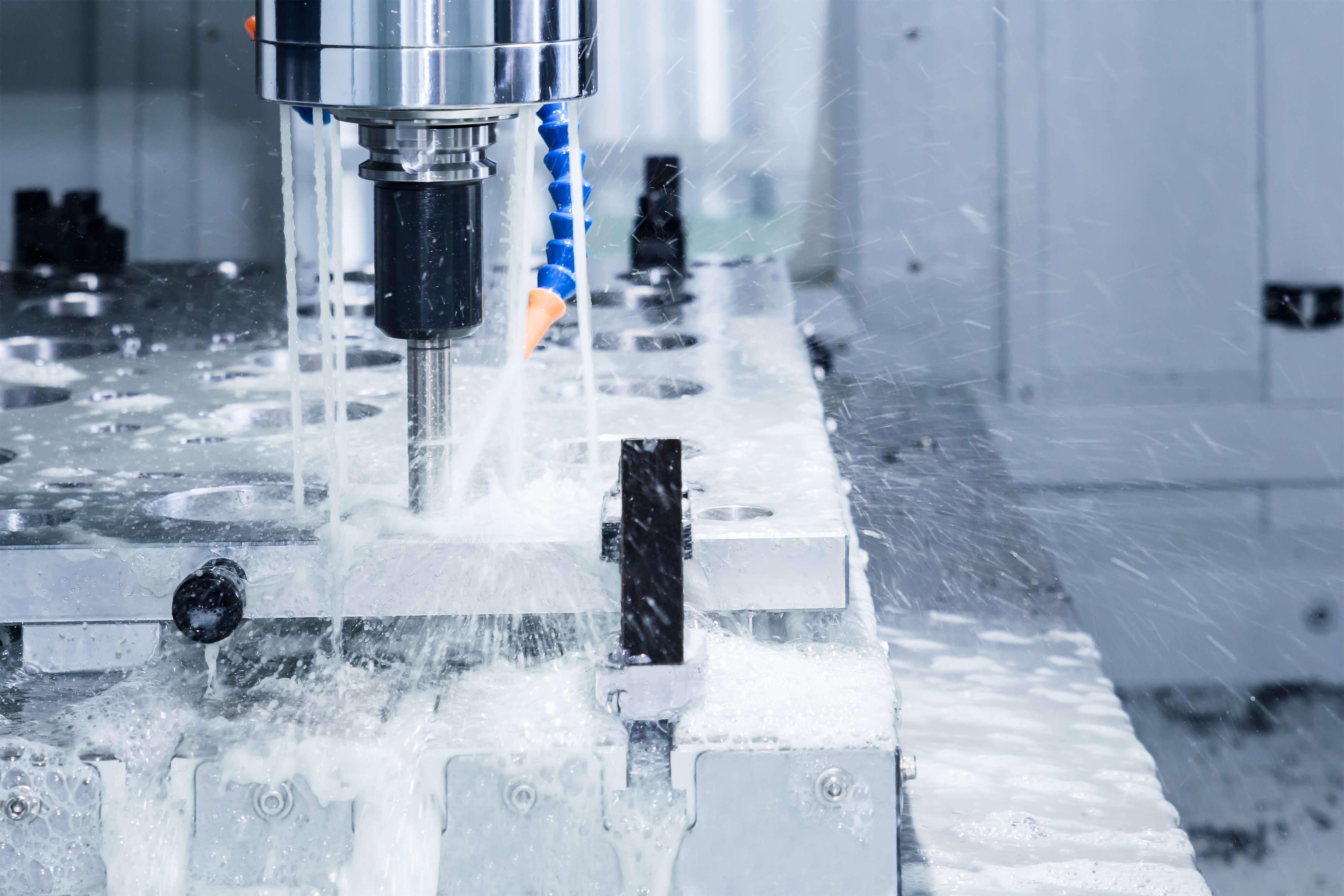
Ever wondered how complex metal parts in your car engine or smartphone achieve such flawless precision? The answer lies in CNC metal machining—a process that has fundamentally reshaped how we create everything from aerospace components to medical implants.
At its core, CNC metal machining refers to the use of computer-controlled machinery to remove material from metal workpieces, transforming raw blocks into finished components with exceptional accuracy. Unlike general CNC applications that might work with wood, plastic, or composites, metal cnc machining demands specialized equipment, cutting tools, and programming techniques tailored to the unique challenges metals present.
From Digital Blueprint to Precision Metal Part
The journey from concept to finished metal component begins with a digital design. Computer-Aided Design (CAD) software creates the blueprint, which is then translated by Computer-Aided Manufacturing (CAM) software into precise instructions the machine can execute. These instructions—known as G-code—tell the metal cnc machine exactly where to move, how fast to cut, and which tools to use.
Imagine programming a robot chef with exact measurements, timing, and techniques. That's essentially what happens when operators program a CNC machine. The computer interprets your design and orchestrates a symphony of movements, ensuring every cut matches your specifications down to thousandths of an inch.
The Computer-Controlled Revolution in Metalworking
Before CNC technology emerged in the mid-20th century, skilled machinists manually operated lathes and mills. Every cut depended on human judgment and steady hands. While craftsmen achieved remarkable results, the process was time-consuming, inconsistent, and limited in complexity.
The introduction of CNC technology, pioneered by John Parsons and further developed at MIT, changed everything. Suddenly, manufacturers could produce identical parts repeatedly without variation. What once required hours of careful manual work now happens in minutes with computer-guided precision.
Today's sophisticated multi-axis CNC systems handle complex geometries that manual machining could never achieve. From simple drilling operations to intricate five-axis milling, cnc fabrication capabilities continue expanding as technology advances.
Why CNC Transformed Metal Manufacturing
Three core advantages drive the widespread adoption of metal cnc machining across industries:
- Repeatability: Once programmed, CNC machines produce identical parts whether you need ten or ten thousand. This consistency is crucial for industries like automotive and aerospace where component variation can mean safety failures.
- Precision: Modern CNC equipment achieves tolerances measured in microns. High-speed spindles, advanced tooling, and meticulous programming combine to deliver surface finishes and dimensional accuracy impossible with manual methods.
- Scalability: The same program that creates your prototype can manufacture production volumes. This seamless transition from development to full-scale manufacturing accelerates time-to-market while maintaining quality.
Industries from aerospace and automotive to medical devices rely on these capabilities daily. Whether crafting critical aircraft engine components or precision surgical instruments, CNC machining ensures the exacting tolerances these applications demand.
Understanding these fundamentals prepares you to navigate the real costs and considerations that follow—knowledge that many shops assume you already have, but rarely take time to explain.
Core CNC Processes That Shape Metal Components
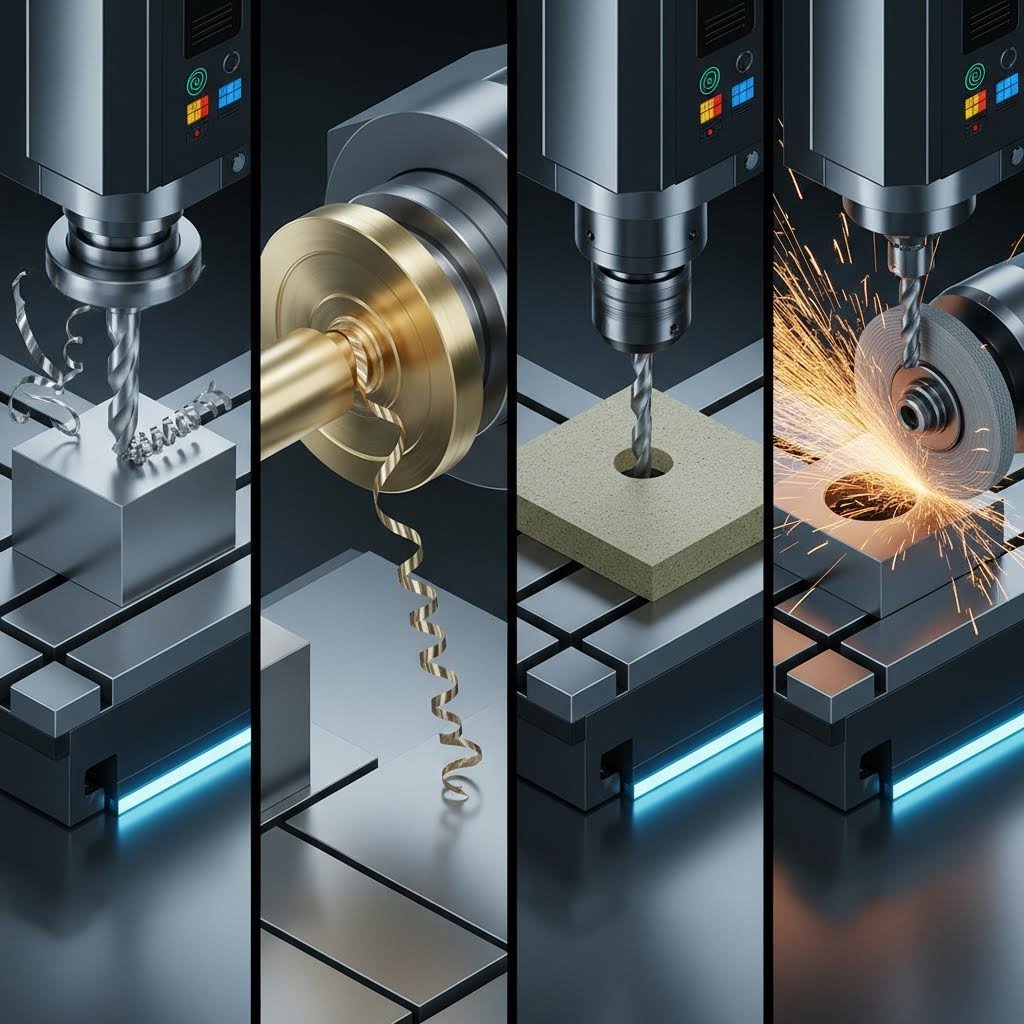
Here's a reality most shops won't share upfront: the process you choose directly impacts your final quote—sometimes dramatically. Understanding the distinction between CNC milling, turning, drilling, and grinding isn't just technical knowledge; it's your leverage for smarter purchasing decisions.
Each CNC metal cutting method serves specific purposes, and selecting the wrong one can mean unnecessary costs, longer lead times, or parts that don't meet specifications. Let's break down exactly what each process does and when it makes sense for your project.
CNC Milling Operations Explained
Picture a rotating cutting tool moving across a stationary metal block, carving away material layer by layer. That's CNC milling in action. The workpiece stays fixed while multi-point cutting tools spin at high speeds, removing material along the X, Y, and Z axes to create complex shapes.
When does milling make sense? It's your go-to process for parts featuring:
- Flat surfaces and pockets
- Slots and channels
- Complex 3D contours
- Angled features and holes at compound angles
CNC milled components appear everywhere—from engine blocks requiring precise pocket depths to aerospace brackets with intricate geometries. The process handles everything from aluminum to titanium, though harder materials require slower speeds and more robust tooling, which affects your quote.
One consideration shops might not mention: milling isn't ideal for cylindrical parts. If your component is primarily round, you'll pay more in machining time than necessary. That's where turning becomes the smarter choice.
Turning and Lathe Work Fundamentals
CNC turning flips the script. Instead of the tool rotating, your workpiece spins while a stationary cutting tool shapes the exterior (or interior) surfaces. Think of how a potter shapes clay on a wheel—except with metal and extraordinary precision.
This process excels at creating:
- Shafts and rods
- Bushings and sleeves
- Threaded components
- Any part with rotational symmetry
A quality cnc turning service typically delivers faster cycle times for cylindrical parts compared to milling. Why? The continuous cutting action and simpler toolpath programming translate to reduced machine time—and lower costs on your invoice.
Many shops combine turning and milling operations for complex parts. A shaft might be turned first to establish diameter, then transferred to a milling center for keyways or cross-holes. Understanding this workflow helps you anticipate realistic lead times.
Drilling, Boring, and Reaming: The Hole-Making Trio
Creating holes sounds simple, but precision hole-making involves three distinct operations:
- Drilling: The initial hole creation using a rotating drill bit. Fast and cost-effective, but limited in precision.
- Boring: Enlarging and positioning existing holes with single-point tools for improved accuracy.
- Reaming: The finishing operation that delivers exact diameters and mirror-smooth internal surfaces.
Here's what affects your costs: if your design specifies tight-tolerance holes, expect the shop to quote all three operations. A simple drilled hole costs significantly less than one requiring boring and reaming—but those extra operations might be essential for proper assembly or function.
Grinding for Ultimate Precision
When tolerances measured in microns matter, grinding steps in. This finishing process uses abrasive wheels to remove tiny amounts of material, achieving surface finishes and dimensional accuracy beyond what cnc cuts from milling or turning can deliver.
Grinding becomes necessary for:
- Hardened steel components
- Ultra-tight tolerance requirements
- Superior surface finish specifications
- Parts requiring minimal stress or heat-affected zones
The trade-off? Grinding is slower and more expensive than primary machining operations. It's typically reserved for critical surfaces where function demands perfection.
Multi-Axis Machining Capabilities
Standard 3-axis machines move tools along X, Y, and Z coordinates—sufficient for many parts. But complex geometries often require 4-axis or 5-axis machining, where additional rotational movements access surfaces impossible to reach otherwise.
With 5-axis capability, the cutting tool or workpiece can tilt and rotate, enabling:
- Single-setup completion of complex parts
- Reduced fixturing and repositioning errors
- Improved surface finish on contoured surfaces
- Access to undercuts and compound angles
The cost implications are significant. 5-axis machine time typically runs higher than 3-axis work, but the reduced setups often offset this premium for truly complex parts. Shops sometimes default to multi-axis quoting without exploring simpler alternatives—so it pays to ask whether your part genuinely requires advanced capabilities.
Process Comparison: Choosing the Right Method
Selecting the optimal cnc cutting machine and process depends on your part geometry, material, tolerances, and production volume. This comparison table clarifies when each method delivers the best value:
| Process Type | Best Applications | Typical Tolerances | Material Suitability | Complexity Level |
|---|---|---|---|---|
| CNC Milling | Prismatic parts, pockets, slots, 3D contours | ±0.001" to ±0.005" (±0.025mm to ±0.127mm) | All metals including steel, aluminum, titanium | Low to Very High (3-axis to 5-axis) |
| CNC Turning | Cylindrical parts, shafts, bushings, threads | ±0.001" to ±0.003" (±0.025mm to ±0.076mm) | All metals; excellent for brass and aluminum | Low to Medium |
| Drilling/Boring/Reaming | Holes of varying precision requirements | Drilling: ±0.005"; Reaming: ±0.0005" | All metals | Low to Medium |
| Grinding | Hardened parts, ultra-precision surfaces | ±0.0001" to ±0.0005" (±0.0025mm to ±0.0127mm) | Hardened steels, tool steels, ceramics | Medium to High |
How Process Selection Impacts Your Bottom Line
Here's the insider perspective: process selection often drives more cost variation than material choice. A part designed for efficient milling might quote 40% lower than the same geometry forced through turning operations.
Smart design-for-manufacturing decisions include:
- Using turning for rotationally symmetric features whenever possible
- Avoiding unnecessarily tight tolerances on non-critical surfaces
- Designing features accessible with 3-axis machining when geometry allows
- Consolidating operations to minimize setups and handling
Many parts combine multiple processes—turned on a lathe, then milled for secondary features, finally ground for critical surfaces. Understanding this workflow helps you evaluate quotes and identify where costs can be optimized.
With process fundamentals established, the next critical decision involves material selection—where the properties of your chosen metal directly influence which processes work best and what tolerances you can realistically achieve.
Metal Material Selection for Optimal Machining Results
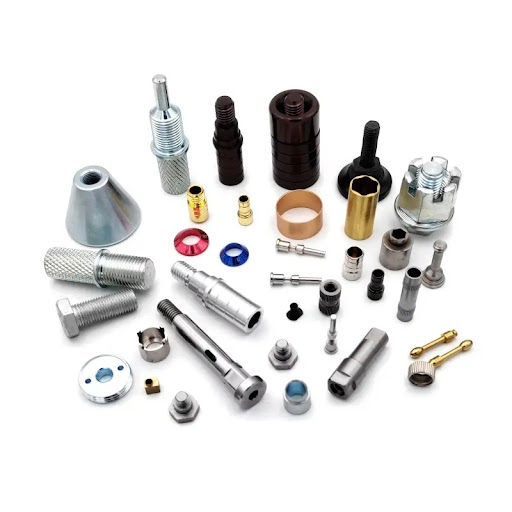
Here's something most machining quotes won't explain: the metal you choose affects far more than just material cost. It determines cutting speeds, tool wear rates, achievable tolerances, and ultimately—your total project expense. Yet many shops provide material options without explaining why one choice might save you 30% while another guarantees headaches.
Understanding how cnc machining materials behave under cutting tools transforms you from passive buyer to informed partner. Let's decode the real differences between common metals and what they mean for your bottom line.
Aluminum Alloys and Their Machining Characteristics
When manufacturers need fast, cost-effective production, aluminum machining typically tops the list. Its excellent machinability means faster cutting speeds, reduced tool wear, and shorter cycle times—all translating directly to lower quotes.
But not all aluminum performs equally. The two most common alloys for CNC work—6061 and 7075—serve distinctly different purposes:
6061 Aluminum: The Versatile Workhorse
Blending magnesium and silicon, 6061 delivers an impressive strength-to-weight ratio while remaining easy to machine and weld. According to Ryerson's alloy comparison, 6061 offers excellent machinability, weldability, and formability—making it ideal for manufacturers who value flexibility and consistent shaping performance.
Its natural corrosion resistance makes cnc aluminum components from 6061 perfect for:
- Structural frames and brackets
- Electronic enclosures
- Automotive components
- Marine applications where saltwater exposure occurs
7075 Aluminum: The High-Performance Option
When strength matters more than cost, 7075 enters the conversation. Its zinc-heavy composition delivers significantly higher tensile strength, yield strength, and hardness compared to 6061. This makes 7075 the go-to choice for aerospace components, military equipment, and high-performance sporting goods.
The trade-off? 7075 is more challenging to machine due to its increased hardness, requiring more precision and specialized tooling. It also carries a higher price tag and offers less corrosion resistance than 6061—performing best in controlled environments rather than outdoor applications.
Steel Grades for Structural Applications
When projects demand superior strength and durability, steel becomes the material of choice. However, stainless steel machining presents unique challenges that directly impact your costs.
Carbon Steel: Affordable Strength
For applications prioritizing strength over corrosion resistance, carbon steel delivers excellent value. It machines relatively easily compared to stainless grades and costs significantly less. Common applications include structural components, machinery parts, and tools where rust protection comes from coatings or controlled environments.
Stainless Steel: The Corrosion-Resistant Family
Stainless steel grades vary dramatically in machinability and performance. Understanding these differences prevents costly surprises:
- 303 Stainless: The most machinable stainless steel, containing added sulfur that improves cutting characteristics. Ideal for high-volume production of screws, nuts, and fittings where machining efficiency matters most.
- 304 Stainless: The general-purpose workhorse offering good corrosion resistance at moderate cost. As material comparison research notes, 304 provides adequate corrosion resistance for food processing, architecture, and general industrial use—though it struggles in chloride-rich environments.
- 316L Stainless: When maximum corrosion resistance matters, 316L excels. Its molybdenum content resists pitting and crevice corrosion in marine and chemical environments. The low-carbon "L" designation improves weldability by reducing carbide precipitation during welding.
Here's what shops might not mention: cnc steel machining on stainless grades causes more tool wear than aluminum, requiring slower cutting speeds and more frequent tool changes. This explains why stainless parts often quote 2-3 times higher than equivalent aluminum components—even when material costs are similar.
Specialty Metals for Demanding Environments
Beyond aluminum and steel, several specialty metals serve specific applications where standard materials fall short.
Brass and Bronze: The Precision Pair
Machining brass and machining bronze offer exceptional benefits for precision components. Their excellent machinability produces smooth surface finishes with minimal tool wear. Cnc bronze components frequently appear in bearings, bushings, and marine hardware where natural lubricity and corrosion resistance matter.
Brass machines even more freely, making it ideal for high-volume electrical connectors, decorative hardware, and precision instruments. Both materials cost more than steel but often deliver lower total project costs through faster machining times.
Copper: Electrical and Thermal Applications
Pure copper's unmatched electrical and thermal conductivity makes it essential for heat sinks, electrical contacts, and bus bars. However, its softness and tendency to gall (adhere to cutting tools) require careful machining parameters. Expect slightly higher processing costs compared to brass.
Titanium: Ultimate Strength-to-Weight Performance
Titanium cnc machining represents the pinnacle of strength-to-weight ratio for demanding aerospace, medical, and high-performance applications. Its biocompatibility makes it ideal for surgical implants and medical devices.
However, titanium presents significant machining challenges. Its low thermal conductivity concentrates heat at the cutting edge, accelerating tool wear. Specialized tooling, reduced cutting speeds, and careful cooling techniques become essential—all adding to project costs. Expect titanium parts to quote 3-5 times higher than equivalent aluminum components.
CNC Metal Comparison: Making the Right Choice
Selecting the optimal material requires balancing performance requirements against machining realities. This comprehensive comparison connects material properties to practical cost and production considerations:
| Material | Key Properties | Machinability Rating | Common Applications | Relative Cost |
|---|---|---|---|---|
| Aluminum 6061 | Lightweight, corrosion-resistant, weldable, good strength | Excellent (90%) | Structural frames, electronics enclosures, automotive parts | Low ($) |
| Aluminum 7075 | High strength, fatigue-resistant, lightweight | Good (70%) | Aerospace components, military equipment, high-stress parts | Medium ($$) |
| Stainless 303 | Best machinability of stainless grades, moderate corrosion resistance | Good (65%) | Screws, nuts, fittings, high-volume turned parts | Medium ($$) |
| Stainless 304 | Good corrosion resistance, high strength, weldable | Fair (45%) | Food processing, architecture, general industrial use | Medium ($$) |
| Stainless 316L | Superior corrosion resistance, excellent weldability, biocompatible | Fair (40%) | Marine engineering, medical devices, chemical processing | Medium-High ($$$) |
| Carbon Steel | High strength, excellent hardness, cost-effective | Good (65%) | Structural parts, machinery, tools, automotive components | Low ($) |
| Brass | Excellent machinability, corrosion-resistant, decorative finish | Excellent (100%) | Electrical connectors, fittings, decorative hardware | Medium ($$) |
| Copper | Superior electrical/thermal conductivity, soft, corrosion-resistant | Good (70%) | Heat sinks, electrical contacts, bus bars | Medium-High ($$$) |
| Titanium | Highest strength-to-weight ratio, biocompatible, corrosion-resistant | Poor (22%) | Aerospace, medical implants, high-performance applications | High ($$$$) |
How Material Choice Impacts Your Final Quote
Beyond raw material costs, your selection influences nearly every aspect of machining economics:
- Tool wear rates: Titanium and stainless steels consume cutting tools faster than aluminum or brass, adding hidden costs.
- Cutting speeds: Aluminum machines 3-5 times faster than stainless steel, directly reducing cycle times and labor costs.
- Surface finish quality: Brass and aluminum naturally achieve smoother finishes, potentially eliminating secondary operations.
- Heat treatment requirements: Some steel grades require post-machining heat treatment, adding process steps and lead time.
Smart material selection means matching performance requirements to actual needs—not over-specifying. A component that functions perfectly in 6061 aluminum shouldn't be quoted in titanium simply because it sounds impressive.
With material properties clarified, the next critical factor emerges: understanding what precision tolerances you actually need—and what happens to your quote when specifications exceed practical requirements.
Precision Tolerances and What They Mean for Your Parts
Here's a pricing secret most shops keep close: tolerances can double or triple your quote faster than any other specification. Request ±0.001" when ±0.005" would function perfectly, and you've just paid for precision you didn't need. Yet most manufacturers never explain where the line falls between necessary accuracy and expensive overkill.
Understanding tolerance specifications transforms how you approach machining parts—allowing you to specify exactly what's required without overpaying for capabilities your application doesn't demand.
Understanding Tolerance Classes and Their Applications
So what exactly is tolerance? According to ASME standards, tolerances refer to the total allowable deviation from a dimension's basic value, ensuring a part fits and functions correctly. In simpler terms, it's the acceptable range where your finished part can vary from the perfect design dimension while still working as intended.
Modern CNC machines achieve remarkable precision—some reaching ±0.0025mm, roughly a quarter of a human hair's width. However, as industry specifications note, tolerances differ among machines, with ±0.02mm representing a common standard for general precision cnc machining services.
Different tolerance types serve distinct purposes:
- Standard tolerances: The baseline variation a shop produces without extra cost—typically noted in title blocks and applied unless otherwise specified.
- Limit tolerances: Specific minimum and maximum dimensions stated directly on drawings, making inspection straightforward without calculations.
- Unilateral tolerances: Variation permitted in only one direction (plus or minus), commonly used at maximum material condition.
- Bilateral tolerances: Variation allowed in both directions, providing upper and lower acceptable sizes for each measurement.
Industry standards provide frameworks for specifying tolerances. ISO 2768 covers medium accuracy requirements for general mechanical parts, while ASME Y14.5 establishes stringent standards for high-precision sectors like aerospace and automotive. Some precision manufacturers maintain internal standards requiring tolerances of ±0.005mm or less.
Material-Specific Precision Limitations
Here's what many quotes overlook: the material you select directly limits achievable tolerances. Even the most advanced equipment can't overcome fundamental material behaviors.
Consider aluminum alloy 6061-T6. After machining, parts typically rebound 0.05-0.1mm as internal stresses release. This springback effect means tolerances tighter than this range require compensating cuts or stress-relief treatments—adding process steps and costs.
Multiple factors influence what tolerances cnc machined parts can realistically achieve:
- Machine rigidity: Vibration during cutting introduces errors. High-quality machines with mineral casting beds and rigid construction minimize this effect.
- Cutting tool condition: Tool wear progressively degrades accuracy. When machining aluminum alloy with carbide tools, wear reaches approximately 0.02mm per 100 pieces—accumulating into tolerance drift without proper monitoring.
- Thermal expansion: Heat generated during cutting causes both tools and workpieces to expand. Spindle elongation of approximately 12μm occurs for every 1°C temperature rise—significant when chasing micron-level tolerances.
- Material hardness: Harder materials require slower cutting speeds and generate more heat, both affecting dimensional stability.
- Part geometry: Thin-walled sections deflect under cutting forces. Clamping deformation in thin-walled parts can reach 0.1mm—exceeding many tolerance specifications before cutting even begins.
Stainless steel presents particular challenges. Work hardening during machining changes the material's properties mid-cut, requiring adjusted parameters to maintain consistent dimensions. Titanium's low thermal conductivity concentrates heat at cutting edges, accelerating tool wear and introducing thermal distortion.
When Tighter Tolerances Matter
Not every surface demands maximum precision. Understanding where tight tolerances genuinely matter—and where they waste money—separates informed buyers from those who overpay.
Tight tolerances become essential for:
- Mating surfaces: Parts that connect or interact require controlled dimensions. Electric motor components need precision fit for proper function—a loose bearing bore means vibration and premature failure.
- Sealing surfaces: Fluid or gas containment demands precise flatness and surface finish.
- Assembly interfaces: Press-fit or interference-fit connections require controlled tolerances for proper assembly force and retention.
- Moving components: Shafts, bearings, and guides need consistent clearances for smooth operation.
Conversely, non-critical surfaces—exterior faces, mounting brackets, or structural elements—often function perfectly at standard machining tolerances. Specifying unnecessarily tight tolerances on these features adds cost without functional benefit.
The Cost Impact of Tolerance Specifications
Here's the pricing reality: tolerance requirements directly drive manufacturing costs through multiple mechanisms.
Tighter tolerances typically require:
- Additional operations: Grinding or lapping after primary machining to achieve final dimensions.
- Slower cutting speeds: Reduced feed rates improve accuracy but extend cycle times.
- More frequent inspection: Tighter specifications demand more measurement points and statistical process control.
- Climate-controlled environments: Precision work often requires maintaining ambient temperature within ±1°C to control thermal expansion.
- Advanced equipment: Achieving tolerances below ±0.005mm may require specialized machines with nano-scale grating systems and linear motor drives.
The relationship isn't linear—halving your tolerance doesn't merely double cost. Moving from ±0.005" to ±0.001" might triple processing time while adding inspection requirements and potential scrap rates. Understanding this curve helps you specify what's truly necessary.
Smart design practice applies tight tolerances selectively. Critical machined parts features get the precision they need; everything else stays at standard tolerances. This targeted approach delivers functional parts at realistic prices.
With tolerance fundamentals established, the next question becomes unavoidable: what actually drives those line items on your quote? The following section exposes the complete cost structure most shops prefer you didn't understand.

Understanding CNC Metal Machining Costs and Pricing Factors
Ever received a CNC machining quote that left you wondering where those numbers came from? You're not alone. Most shops present bottom-line figures without explaining how much to get a metal part made—or why identical-looking parts can vary wildly in price. The truth is, understanding cost drivers gives you real negotiating power and design optimization opportunities.
Let's pull back the curtain on what actually determines your final invoice.
What Drives CNC Metal Machining Pricing
Every quote you receive breaks down into interconnected cost components. Understanding each element reveals where savings hide—and where cutting corners creates problems.
- Material costs: Raw material pricing fluctuates constantly. According to Factorem's industry analysis, material prices have become increasingly volatile, sometimes changing twice weekly and rarely decreasing. This volatility means quotations remain valid for shorter periods than many buyers expect.
- Machine time: The primary cost driver for most projects. Longer cycle times directly increase expenses through electricity consumption, equipment wear, and labor allocation. Complex geometries requiring multiple passes or specialized toolpaths compound this factor.
- Setup complexity: Each time a part requires repositioning or fixture changes, setup costs accumulate. A part machined in a single setup costs significantly less than one requiring multiple orientations.
- Tolerance requirements: Tighter specifications demand slower cutting speeds, additional finishing operations, and more rigorous inspection—all adding cost without adding material.
- Surface finishing: Post-machining treatments like anodizing, plating, or polishing represent additional process steps with their own labor and material expenses.
- Order volume: Fixed costs spread across more parts reduce unit pricing. A single prototype absorbs all setup expenses; a hundred-piece order distributes them.
Volume Economics and Setup Costs
Here's the reality that surprises many first-time buyers: setup costs can exceed actual machining costs for low-volume orders. Understanding this relationship prevents sticker shock and enables smarter ordering decisions.
Consider this scenario from industry cost breakdowns: a part requiring machining on two faces needs two separate setups on a standard 3-axis machine. With setup costs around $40 each plus a machine switch-on fee of $40, a single part carries $120 in setup costs alone. Order ten identical parts? That same $120 spreads across all units—dropping setup costs to roughly $12 per piece.
This math explains why machinist metal cost per unit drops dramatically as quantities increase. The effect is particularly pronounced for custom machine work where programming and fixturing represent significant front-end investments.
Custom parts will inherently be more expensive per unit due to initial fixed costs. Prices for orders under 10 pieces often run more than double what bulk-order experience might suggest.
Volume benefits extend beyond setup distribution. Metal parts manufacturing at scale enables:
- Optimized toolpaths refined across production runs
- Bulk material purchasing at reduced rates
- Dedicated fixturing that accelerates loading and unloading
- Reduced per-piece inspection overhead
Hidden Factors That Impact Your Quote
Beyond obvious cost drivers, several factors silently influence pricing—often catching buyers off guard.
Material Availability Challenges
Raw materials come in standard dimensions. Supply chain realities mean your preferred stock might not be readily available. If a machinist must purchase a steel tube specifically for your one-piece order—using less than a quarter of the stock length—you may bear the full tube cost with no guarantee the remainder ever gets used.
Design Complexity Multipliers
Intricate geometries don't just add machining time—they may require specialized tooling, advanced multi-axis capabilities, or additional quality control steps. According to manufacturing cost analysis, complex designs with tight tolerances need more advanced techniques that increase overall expense.
Lead Time Pressures
Rush orders carry premiums. Short lead times drive costs through overtime labor and expedited material sourcing. Planning ahead typically saves 15-30% compared to emergency timelines.
Design Decisions That Control Your Costs
Smart design choices reduce manufacturing costs without sacrificing function. Design for machinability guidelines offer practical opportunities:
- Simplify internal corners: Specify corner radii at least one-third of cavity depth. Larger radii allow bigger tools running at higher speeds.
- Limit cavity depth: Keep depths under four times the feature length to avoid special tooling requirements.
- Increase wall thickness: Walls thicker than 0.8mm for metals improve stability and reduce machining time.
- Use standard hole sizes: Specify diameters in 0.1mm increments up to 10mm, and 0.5mm increments above.
- Minimize setups: Design parts for single-setup machining when possible, or consider splitting complex geometries into assemblies.
Getting Accurate Quotes: What Manufacturers Need
Wondering how to get a reliable cnc quote online? The quality of your quote depends directly on the information you provide. Manufacturers need complete data to estimate accurately:
- 3D CAD files: STEP or IGES formats preferred over proprietary formats
- 2D drawings with tolerances: GD&T callouts for critical features
- Material specifications: Exact grade and temper, not just "aluminum" or "steel"
- Quantity requirements: Including potential future volumes that might affect pricing tiers
- Surface finish requirements: Ra values or visual standards
- Certification needs: Material certifications, inspection reports, or compliance requirements
When requesting online machining quotes, provide context about your application. Shops sometimes suggest alternative materials or design modifications that reduce costs while maintaining performance—but only if they understand what the part actually does.
Flexibility accelerates quoting and often reduces pricing. Being open to material substitutions or minor dimension adjustments lets suppliers work from available stock rather than ordering specialty materials for your project alone.
With cost structures now transparent, the next critical consideration becomes quality assurance—understanding what certifications actually guarantee and how inspection methods verify that your parts meet specifications.
Quality Standards and Certifications in Metal Machining
Ever noticed how every CNC shop claims "high quality" on their website? Here's the problem: without understanding what certifications actually require, you can't distinguish genuine quality systems from marketing fluff. The difference matters—especially when your parts end up in aircraft, medical devices, or automotive safety systems.
Certifications aren't just wall decorations. They represent documented systems that govern every step from material procurement through final inspection. Understanding what each standard demands helps you evaluate whether a potential partner can genuinely deliver aerospace cnc machining precision or medical machining reliability.
Industry Certifications and What They Guarantee
Manufacturing certifications serve as independent validation that a facility meets specific quality expectations. According to American Micro Industries' certification guide, these credentials assure clients and stakeholders of a company's commitment to quality at every step—not just final inspection.
Here's what the major certifications actually require:
- ISO 9001: The internationally recognized baseline for quality management systems. This standard establishes customer focus, process approach, continual improvement, and evidence-based decision-making. Certified shops must document workflows, monitor performance metrics, and address any nonconformities with corrective action. Think of it as the foundation—necessary but not sufficient for demanding applications.
- AS9100D: Building on ISO 9001, this aerospace-specific standard adds rigorous requirements for risk management, stringent documentation, and product integrity control throughout complex supply chains. Shops serving aerospace must demonstrate discipline and capability far beyond general manufacturing. If you're sourcing flight-critical components, AS9100D certification isn't optional.
- IATF 16949: The global standard for automotive quality management combines ISO 9001 principles with sector-specific requirements for continuous improvement, defect prevention, and stringent supplier oversight. Stainless steel cnc machining services targeting automotive applications typically require this certification to qualify as approved suppliers.
- ISO 13485: The definitive quality management standard for medical devices outlines strict controls over design, manufacturing, traceability, and risk mitigation. Facilities must implement detailed documentation practices, thorough quality checks, and effective complaint and recall handling. Every medical component must be safe, reliable, and fully traceable.
Beyond these core standards, specialized accreditations like NADCAP focus on specific processes critical to aerospace and defense—heat treating, chemical processing, and nondestructive testing. Unlike general certifications, NADCAP thoroughly examines process-specific controls, validating that manufacturers consistently perform specialized operations at the highest standard.
Statistical Process Control in Metal Machining
Certifications establish systems; statistical process control (SPC) makes them work in practice. As Baker Industries explains, SPC is a data-driven method for monitoring and controlling CNC machining that identifies trends, variations, and potential issues before they escalate into major problems.
Effective SPC implementation involves:
- Defining critical parameters: Identifying which dimensions and characteristics most affect part function
- Establishing control limits: Setting acceptable variation ranges based on process capability studies
- Continuous monitoring: Measuring parts at regular intervals throughout production runs
- Trend analysis: Detecting gradual drift before parts exceed specifications
- Corrective action protocols: Documented responses when measurements approach control limits
Why does this matter for your quote? Shops running robust SPC catch deviations immediately, minimizing defects, waste, and rework. Stainless steel components manufacturers using these systems deliver more consistent quality with fewer surprises—even when machining challenging materials prone to work hardening or dimensional instability.
Swiss machining operations particularly benefit from SPC due to the high precision and tight tolerances these machines achieve. Monitoring micro-variations across production runs ensures every part meets specification.
Inspection Methods for Precision Verification
How do shops actually verify that parts meet your specifications? Understanding inspection methods helps you evaluate whether a manufacturer's quality claims hold up under scrutiny.
Coordinate Measuring Machine (CMM) Inspection
CMM inspection represents the gold standard for dimensional verification. According to precision engineering analysis, these sophisticated machines measure physical geometrical characteristics by touching component surfaces at various points, collecting data that defines exact shape and size.
CMMs deliver several critical capabilities:
- Micrometer-level measurement precision
- Complex geometry verification including contoured surfaces
- Automated inspection programs for consistent evaluation
- Detailed reports with graphical deviation representation
Surface Roughness Testing
Dimensional accuracy means nothing if surface finish doesn't meet requirements. Profilometers measure surface texture, quantifying roughness values (Ra) that affect function, appearance, and mating characteristics. Critical sealing surfaces or bearing interfaces demand verified finish specifications.
Material Verification
How do you know the material matches what was quoted? Reputable shops verify incoming materials through:
- Mill test reports confirming chemical composition
- Spectroscopic analysis for positive material identification
- Hardness testing to verify heat treatment conditions
- Documentation traceability linking raw material to finished parts
When evaluating potential manufacturing partners, ask specifically about inspection capabilities and calibration programs. Well-maintained machines produce accurate parts—and accurate measurements confirm they meet your requirements before shipping.
Quality systems and inspection methods establish what a shop can deliver. But what happens when things go wrong? Understanding common machining defects—and their causes—helps you evaluate whether problems stem from capability limitations or controllable process issues.
Common Machining Defects and How to Prevent Them
Here's what most shops won't discuss until problems appear on your parts: machining defects happen. Even experienced manufacturers encounter surface irregularities, dimensional drift, and material-specific challenges. Understanding these issues—and their root causes—transforms you from passive recipient to informed partner who can spot potential problems before they become expensive rejects.
Whether you're machining stainless steel, machining aluminum, or working with specialty alloys, each material presents unique challenges. Knowing what to watch for helps you evaluate supplier capabilities and ask the right questions during quoting.
Surface Finish Defects and Their Causes
Surface quality affects more than aesthetics—it impacts function, fatigue life, and assembly fit. According to CNC machining defect analysis, surface finish irregularities manifest as rough textures, lines, or unevenness that directly affect part functionality.
Common surface defects include:
- Chatter marks: Regular, wavy lines indicating vibrations during cutting. These typically result from insufficient machine rigidity, improper spindle speeds, or excessive tool overhang. Prevention requires optimizing cutting parameters and ensuring solid workholding.
- Tool marks: Visible lines or ridges left by cutting tool interaction. While some marking is unavoidable, excessive tool marks suggest dull tooling, incorrect feed rates, or improper finishing passes.
- Burn marks: Discolored patches indicating overheating during machining. This occurs when friction generates excessive heat—often from dull tools, insufficient coolant, or excessive cutting speeds.
- Swirl marks: Circular patterns resulting from incorrect feed rates or tool speeds that create uneven cutting patterns. Adjusting these parameters typically eliminates the problem.
When machining steel or milled steel components, surface finish challenges intensify. Harder materials generate more heat and cause faster tool wear, both degrading surface quality if not properly managed.
Dimensional Accuracy Problems
Dimensional inaccuracies occur when machined parts don't adhere to specified dimensions—creating fit, function, or assembly problems. Understanding the causes helps you communicate effectively with manufacturers about tolerance expectations.
- Dimensional drift: Gradual deviation from target dimensions across a production run. As industry analysis confirms, this often stems from tool wear accumulating over time or thermal expansion as machines warm up during extended operation.
- Burr formation: Small protrusions or raised edges occurring at part edges or corners. Burrs affect both aesthetics and function—particularly problematic for mating surfaces or components requiring clean edges.
- Deformation: Unintended bending, twisting, or shape changes during machining. Thin-walled parts are particularly susceptible to clamping deformation and cutting force deflection.
- Surface contamination: Foreign material embedded in machined surfaces from coolant residue, handling, or environmental exposure. Proper cleaning protocols and material handling prevent most contamination issues.
Prevention strategies focus on process control: sharp tooling, proper speeds and feeds, adequate coolant application, and regular machine calibration. Statistical process control catches drift before parts exceed specifications.
Material-Specific Machining Challenges
Each metal family presents unique machining obstacles. Recognizing these challenges helps you anticipate potential issues and evaluate whether a shop has genuine experience with your specified material.
Stainless Steel: Work Hardening
Machining stainless steel demands particular attention to work hardening—a condition where the surface becomes progressively harder during cutting. According to Kennametal's machining research, work hardening occurs when heat generated by cutting tools transfers to the workpiece, causing plastic deformation. The affected surface becomes shiny and glazed—sometimes achieving hardness comparable to the cutting tool itself.
Preventing work hardening requires:
- Keeping cutting tools sharp—dull tools increase friction and heat
- Using recommended feeds and speeds to ensure cutting rather than rubbing
- Avoiding dwelling or spring passes that generate heat without removing material
- Utilizing coolant-fed tools with properly mixed concentration
- Maintaining constant feed rates during drilling operations
Aluminum: Galling and Built-Up Edge
Machining aluminum presents different challenges. Its softness and tendency toward galling—material adhesion to cutting tools—requires sharp tooling and appropriate coolant application. Built-up edge (BUE) occurs when aluminum chips adhere to tool tips due to cutting pressure and heat, degrading surface finish and dimensional accuracy.
Machining copper and machining brass present similar galling tendencies, though their excellent machinability generally produces superior surface finishes with proper parameters.
Titanium: Heat Sensitivity
Titanium alloys present perhaps the most demanding challenges. As specialized tooling research explains, titanium's low thermal conductivity causes high temperatures to concentrate at the tool-workpiece interface, accelerating tool wear and potentially compromising workpiece integrity.
Successful titanium machining demands:
- Sharp, polished cutting edges with positive rake angles
- Carbide tools with advanced coatings for wear resistance
- High-pressure coolant systems to dissipate heat
- Lower cutting speeds and moderate feed rates
- Rigid setups that prevent vibration
The material's high chemical reactivity at elevated temperatures leads to adhesion and diffusion between tool and workpiece—demanding specialized tooling and careful parameter control.
Understanding these material-specific behaviors helps you evaluate supplier expertise. A shop experienced in machining steel may struggle with titanium's unique demands—and vice versa. Matching material requirements to demonstrated capability prevents costly quality problems.
With defect causes and prevention strategies clarified, the final consideration becomes selecting the right manufacturing partner—one with the certifications, equipment, and expertise to deliver quality parts consistently.
Choosing the Right CNC Metal Machining Partner
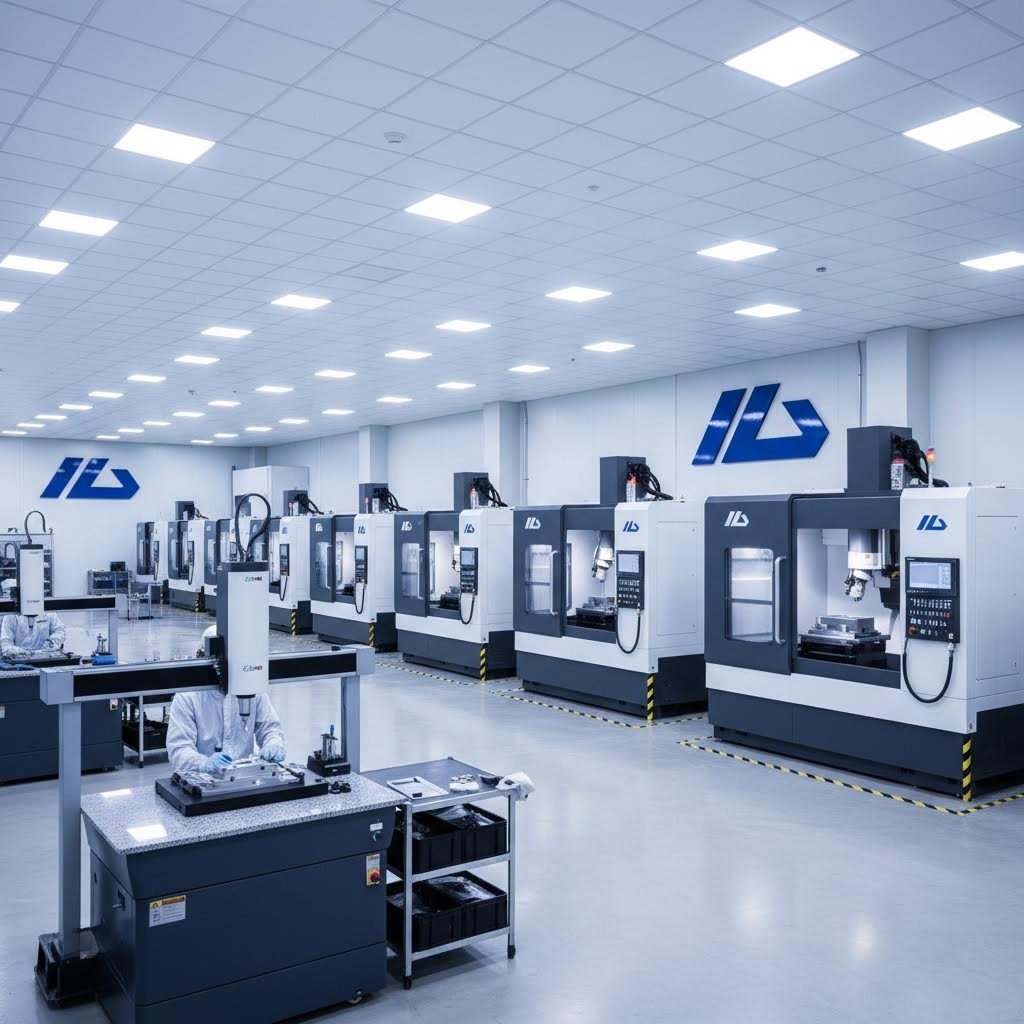
You've done the homework—understanding processes, materials, tolerances, and cost drivers. Now comes the decision that determines whether all that knowledge translates into quality parts: selecting the right manufacturing partner. Here's the reality most buyers discover too late: the cheapest quote rarely delivers the best value, and impressive websites don't guarantee capable execution.
Whether you're searching for cnc machine shops near me or evaluating global suppliers, the same evaluation principles apply. A structured approach prevents costly mistakes and builds relationships that serve your projects for years.
Evaluating Manufacturing Capabilities
Think of potential machining partners as job candidates. According to industry selection guidance, you're essentially conducting interviews—and the best candidates answer questions confidently while demonstrating genuine expertise.
Before requesting quotes, clarify your own requirements:
- What quantities do you need now—and potentially in the future?
- Which tolerances are genuinely critical versus nice-to-have?
- Do you require specific certifications for your industry?
- What lead times work for your production schedule?
With requirements defined, evaluate potential partners against these critical criteria:
- Certifications: ISO 9001 establishes baseline quality management. Industry-specific standards—IATF 16949 for automotive, AS9100D for aerospace, ISO 13485 for medical—demonstrate specialized capability and documented processes.
- Equipment capabilities: Ensure they have the right machines for your parts. Multi-axis capabilities, cnc turning services, grinding equipment—match their technology to your design requirements.
- Quality control processes: Ask about statistical process control, inspection equipment, and calibration programs. Serious shops eagerly discuss their quality systems.
- Lead times: Understand their typical turnaround and capacity flexibility. Can they accommodate rush orders when necessary?
- Communication responsiveness: How quickly do they respond to inquiries? A partner's communication style during quoting typically reflects how they'll perform during production.
Don't just ask what they aim for—ask what they actually achieve. As manufacturing experts recommend, quality-focused shops should have impressively high quality numbers and low quality escapes, speaking at length about the systems they've built.
From Prototype to Production Scaling
Here's where many partnerships fail: a shop that excels at cnc prototyping may struggle with production volumes—and vice versa. The transition from prototype to mass production involves far more than simply running the same program more times.
According to manufacturing transition research, there can be significant differences between engineering a product for prototype and engineering for manufacturing. Good partners bring Design for Manufacturability (DFM) expertise to the table from the outset, identifying potential issues before they become expensive redesigns.
Low-volume production—typically tens to hundreds of thousands of units—acts as a crucial intermediary phase. This stage allows you to:
- Refine production designs quickly
- Adapt to industry changes or incorporate feedback
- Validate assembly processes before full-scale commitment
- Reduce risks of overproduction and warehousing costs
The jump to mass production requires partners capable of scaling efficiently. As industry experts emphasize, working with a manufacturing partner capable of scaling from 1,000 to 100,000 units monthly—using the same processes without constraints—can be paramount to success.
For automotive supply chain applications, this scaling capability becomes particularly critical. Shaoyi Metal Technology exemplifies this approach, offering IATF 16949-certified manufacturing with strict Statistical Process Control (SPC) that scales seamlessly from rapid prototyping to mass production. Their facility delivers high-tolerance components with lead times as fast as one working day—whether producing complex chassis assemblies or custom machined parts like metal bushings.
What to Look for in a Machining Partner
Beyond technical capabilities, partnership qualities determine long-term success. The best relationships transcend simple vendor transactions.
Engineering Support and DFM Expertise
Top-tier partners offer Design for Manufacturability reviews that improve your designs before cutting begins. According to supplier selection best practices, engineering teams help develop the best possible part, maximizing efficiency while reducing costs. Their influence proves most valuable early in the design process and when changes become necessary.
This collaborative approach often saves more than competitive bidding ever could. Eliminating unnecessary machining efforts through design optimization frequently reduces manufacturing costs by 20-30%.
Transparency and Accountability
A valued partner delivers clear communication and takes responsibility for quality. Watch for warning signs during the quoting process:
- Deflecting questions about capabilities or experience
- Blaming external factors for past quality issues
- Reluctance to provide references or case studies
- Unclear answers about inspection methods or certifications
Confident manufacturers stand behind their work. They discuss their history openly, explain their processes clearly, and provide testimonials from satisfied customers.
Flexibility and Scalability
Production rarely follows perfect plans. Change orders happen. Quantities shift. Deadlines accelerate. The right partner adapts to these realities rather than creating additional friction.
Consider asking potential partners:
- How do you handle urgent change orders?
- What's your process for scaling production up or down?
- Can you provide value-added services like assembly or finishing?
- How do you manage supply chain disruptions?
While searching machinist shops near me might yield convenient options, proximity shouldn't override capability. Local machine shops offer advantages for prototyping and rush work, but production requirements may demand partners with specialized equipment or certifications regardless of location.
Making the Final Decision
After evaluating capabilities, request sample parts or visit facilities when possible. Physical evidence trumps marketing claims. Examine surface finishes, measure tolerances, and observe how they handle your inquiry.
Set specific expectations with clear terms from the beginning. Define responsibilities, establish communication protocols, and approach the relationship with a win/win mindset. The investment in proper partner selection pays dividends across every project that follows—transforming unpredictable manufacturing into reliable supply chain execution.
Frequently Asked Questions About CNC Metal Machining
1. What is a CNC machine for metal?
A CNC machine for metal is computer-controlled equipment that removes material from metal workpieces to create precision components. Unlike manual machining, CNC systems execute programmed instructions (G-code) to perform cutting, drilling, milling, and turning operations with exceptional accuracy—often achieving tolerances of ±0.001 inches. These machines range from 3-axis mills for simple parts to 5-axis systems handling complex aerospace geometries, transforming raw metal blocks into finished components with repeatability impossible through manual methods.
2. How much does it cost to get a metal part made with CNC machining?
CNC metal part costs depend on multiple interconnected factors rather than simple per-piece pricing. Key cost drivers include material selection (titanium costs 3-5x more than aluminum to machine), tolerance requirements (tighter specs can triple processing time), setup complexity ($40-120 in fixed costs per setup), and order volume (setup costs spread across larger quantities reduce unit prices significantly). A single prototype absorbs all setup expenses, while 100-piece orders distribute these costs—often cutting per-unit pricing by 50% or more.
3. What metals can be CNC machined and which is most cost-effective?
Most metals can be CNC machined, including aluminum alloys, stainless steel grades (303, 304, 316L), carbon steel, brass, bronze, copper, and titanium. For cost-effectiveness, aluminum 6061 typically offers the best value—its excellent machinability allows faster cutting speeds, reduced tool wear, and shorter cycle times. Brass machines even faster for small precision parts. Stainless steel costs 2-3x more to machine than aluminum due to slower speeds and tool wear, while titanium commands premium pricing due to specialized tooling and heat management requirements.
4. What tolerances can CNC machining achieve on metal parts?
Modern CNC machines achieve tolerances ranging from ±0.005 inches for standard work to ±0.0001 inches for precision grinding operations. However, achievable tolerances depend on material properties, part geometry, and process selection. Aluminum parts may experience 0.05-0.1mm springback after machining, while thin-walled sections can deflect under cutting forces. Industry standards like ISO 2768 govern general mechanical parts, while ASME Y14.5 applies to aerospace applications. Specifying unnecessarily tight tolerances on non-critical features significantly increases costs without functional benefit.
5. How do I choose the right CNC machining partner for my project?
Evaluate potential CNC partners against certifications matching your industry (ISO 9001 baseline, IATF 16949 for automotive, AS9100D for aerospace), equipment capabilities suited to your part complexity, documented quality control processes including SPC and CMM inspection, realistic lead times, and communication responsiveness. Request sample parts when possible and verify their ability to scale from prototyping to production volumes. Partners offering Design for Manufacturability reviews often save 20-30% through design optimization—delivering more value than lowest-bid competitors.