 Small batches, high standards. Our rapid prototyping service makes validation faster and easier —
  EN
EN


Solving Cold Shuts in Aluminum Die Casting: Key Causes

TL;DR
Cold shuts are surface defects in aluminum die casting that occur when two streams of molten metal fail to fuse properly within the mold cavity. This creates a weak seam or line on the finished part, compromising its structural integrity. The primary causes of cold shuts stem from premature solidification due to low molten metal or die temperatures, inadequate injection speed and pressure, or a poorly designed gating system that impedes smooth metal flow.
Understanding Cold Shuts in Aluminum Die Casting
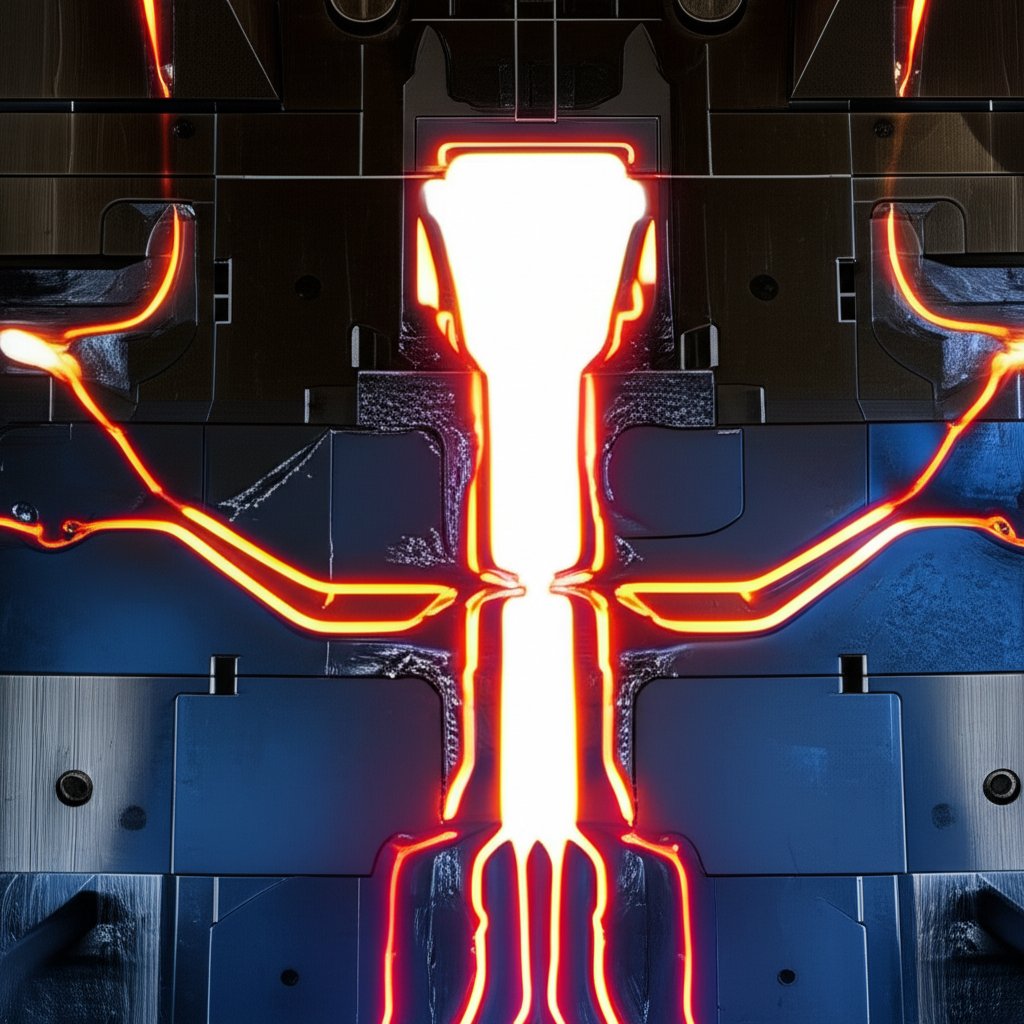
In the precision field of aluminum die casting, a cold shut, sometimes called a cold lap, is a critical surface discontinuity. It manifests when two or more fronts of molten metal, flowing through the mold from different directions, are too cool to merge into a homogenous mass upon meeting. Instead of fusing, they simply press against each other, leaving a visible line, seam, or crack-like flaw with smooth, rounded edges on the surface of the casting. This defect is a clear indicator that the metal lost its fluidity too early in the injection process.
The core issue behind a cold shut is the failure of the metal fronts to remain fully liquid until the mold is completely filled and pressurized. As the molten aluminum travels through the intricate channels of the die, it begins to lose heat to the cooler mold walls. If the temperature drops too quickly, a semi-solid skin forms on the leading edge of the metal stream. When these two skinned-over fronts meet, they lack the thermal energy and fluidity required for proper metallurgical bonding. The result is not a fracture from stress, but a flow-related flaw baked into the component from the moment of its creation.
The impact of a cold shut extends beyond cosmetic appearance. This flaw acts as a stress concentrator, creating a significant weak point in the casting. For components subjected to pressure, vibration, or thermal cycling, a cold shut can be the origin point for catastrophic failure. According to the Giesserei Lexikon, this defect severely compromises the mechanical properties and reliability of the final product, making its prevention a top priority in any high-quality casting operation.
The Primary Causes of Cold Shut Defects
The formation of cold shuts is rarely due to a single issue but rather a combination of interconnected factors related to thermal management, process dynamics, and mold design. Understanding these root causes is the first step toward effective diagnosis and prevention. The factors can be broadly categorized into several key areas that influence the metal's ability to fill the cavity and fuse correctly.
Thermal and Material Issues
Temperature is the most critical variable in preventing cold shuts. If the molten aluminum or the die itself is too cold, the metal will solidify prematurely. Insufficient pouring temperature means the metal enters the shot sleeve with less thermal energy, reducing the time it has to fill the mold before becoming sluggish. Similarly, a low mold temperature will rapidly draw heat from the molten alloy, accelerating solidification, especially in thin-walled sections of the casting. The chemical composition of the aluminum alloy also plays a role; some alloys naturally have lower fluidity, making them more susceptible to this defect. Furthermore, impurities or oxides within the melt can inhibit proper fusion between metal fronts.
Flow Dynamics and Injection Parameters
The speed and pressure at which the molten metal is injected into the die are crucial. Insufficient injection speed can cause the metal to flow too slowly, giving it more time to cool before the cavity is filled. As noted in guidance on preventing cold shuts, low injection pressure can prevent the two metal fronts from pressing together with enough force to break through any surface oxide layers and achieve a proper metallurgical bond. The changeover point from the slow shot (filling the shot sleeve) to the fast shot (filling the mold) is another critical parameter. An improperly timed changeover can disrupt the flow front, creating turbulence and promoting premature cooling.
Mold and Gating System Design
The design of the mold and its gating system dictates the path the molten metal must travel. A poorly designed system is a frequent cause of cold shuts. Long or convoluted flow paths force the metal to travel further, increasing heat loss. Gates that are too small or improperly placed can create jetting or atomization, which also leads to rapid cooling. Perhaps most importantly, inadequate venting prevents trapped air and gases from escaping the mold cavity. This trapped gas creates back pressure that slows the metal flow and can physically prevent the two fronts from meeting and fusing under sufficient pressure. Effective mold design incorporates overflows and vents to manage this back pressure.
Cold Shuts vs. Misruns: A Key Distinction
In diagnosing casting defects, cold shuts are often confused with misruns because they share similar root causes. However, they are distinct types of flaws, and identifying the correct one is essential for implementing the right solution. While both defects are related to the premature solidification of molten metal, the outcome in the final casting is different.
A misrun is an incomplete casting where the molten metal fails to fill the entire mold cavity, leaving a portion of the part missing. This typically happens when the metal solidifies completely before reaching the farthest extremities of the mold. A cold shut, by contrast, occurs in a casting that is geometrically complete. The mold is filled, but the streams of metal that met inside the cavity did not fuse together properly, creating an internal seam. As Haworth Castings explains, a cold shut is a failure to fuse, while a misrun is a failure to fill.
The same underlying problems—such as low metal temperature, insufficient injection speed, or poor venting—can cause either defect. The severity and location of the issue often determine which flaw appears. For example, a slightly low temperature might cause a cold shut where two streams meet late in the filling process, whereas a significantly low temperature might cause a misrun by freezing the metal long before the cavity is full. The following table clarifies the core differences:
| Defect | Description | Primary Cause Signature |
|---|---|---|
| Cold Shut | A line or seam where two metal fronts met but failed to fuse in a fully formed casting. | Insufficient fluidity or pressure at the point of convergence. |
| Misrun | An incomplete casting with missing sections or rounded, unfilled edges. | Complete loss of fluidity before the mold cavity is entirely filled. |

Systematic Prevention and Remedies for Cold Shuts
Preventing cold shuts requires a systematic approach that addresses the entire die casting process, from material preparation to mold design and parameter optimization. The solutions directly correspond to the causes, focusing on maintaining metal fluidity and ensuring a smooth, rapid fill under adequate pressure. Taking corrective action often involves a process of elimination, starting with the easiest and least expensive adjustments.
First, focus on thermal management. This involves increasing the pouring temperature of the molten aluminum to ensure it retains enough heat throughout the injection cycle. It is equally important to raise the mold temperature, often through pre-heating, to reduce the thermal shock and slow the rate of solidification. As highlighted by experts at Neway Precision, maintaining consistent and appropriate temperatures for both the metal and the die is the first line of defense.
Next, adjust the machine's process parameters. Increase the injection speed to fill the mold cavity more quickly, minimizing the time the metal has to cool. Raising the injection pressure, particularly during the final intensification phase, helps force the metal fronts together, breaking oxide films and promoting a strong metallurgical bond. Optimizing the slow-to-fast shot changeover point ensures a smooth, uninterrupted flow front. Some sources also point to the overuse of mold release agents, which can generate excess gas and increase back pressure, so applying it correctly is vital.
If thermal and parameter adjustments fail, the issue likely lies with the mold and gating design. This is the most complex and costly area to address but is often the ultimate solution. The gating system may need to be redesigned to shorten flow paths, optimize gate locations, or increase gate size to improve flow. Critically, adding or enlarging vents and overflows is often necessary to allow trapped gases to escape, reducing back pressure and enabling the metal fronts to merge effectively. In high-stakes industries, ensuring part integrity is paramount. For critical applications like automotive components, collaborating with suppliers known for robust quality control and process engineering is essential. Companies specializing in high-integrity metal parts exemplify the focus on quality and precision required to eliminate such defects in demanding environments.
Frequently Asked Questions
1. What is the primary cause of a cold shut defect in a casting?
The primary cause of a cold shut is the premature solidification of molten metal inside the mold. This happens when two streams of metal cool down too much before they meet, preventing them from fusing together properly. Key contributing factors include insufficient casting temperature, low mold temperature, and an inadequate rate of filling the mold.
2. How to prevent cold shut?
To prevent cold shuts, you must ensure the molten metal stays fluid long enough to fill the cavity and fuse. Key prevention methods include maintaining a proper pouring temperature, optimizing the gating system for smooth and rapid flow, increasing injection speed and pressure, and ensuring the mold is adequately vented to allow trapped gases to escape.
3. What is the difference between misrun and cold shut?
A misrun is an incomplete casting where the metal solidifies before completely filling the mold cavity, leaving portions missing. A cold shut occurs in a fully formed casting but is characterized by a weak seam where two metal fronts met but failed to fuse. In short, a misrun is a failure to fill, while a cold shut is a failure to fuse.
4. How can the defect of cold shut be remedied?
Remedies for cold shuts involve adjusting process variables and design. Solutions include increasing the pouring and mold temperatures, improving the fluidity of the alloy, increasing injection speed and pressure, and improving the gating system design. This often involves adding or enlarging gates and vents to improve filling conditions and reduce back pressure.