 Small batches, high standards. Our rapid prototyping service makes validation faster and easier —
  EN
EN


Can Welding Cause Cancer? The Hidden Risks Most Welders Miss
Can welding cause cancer?
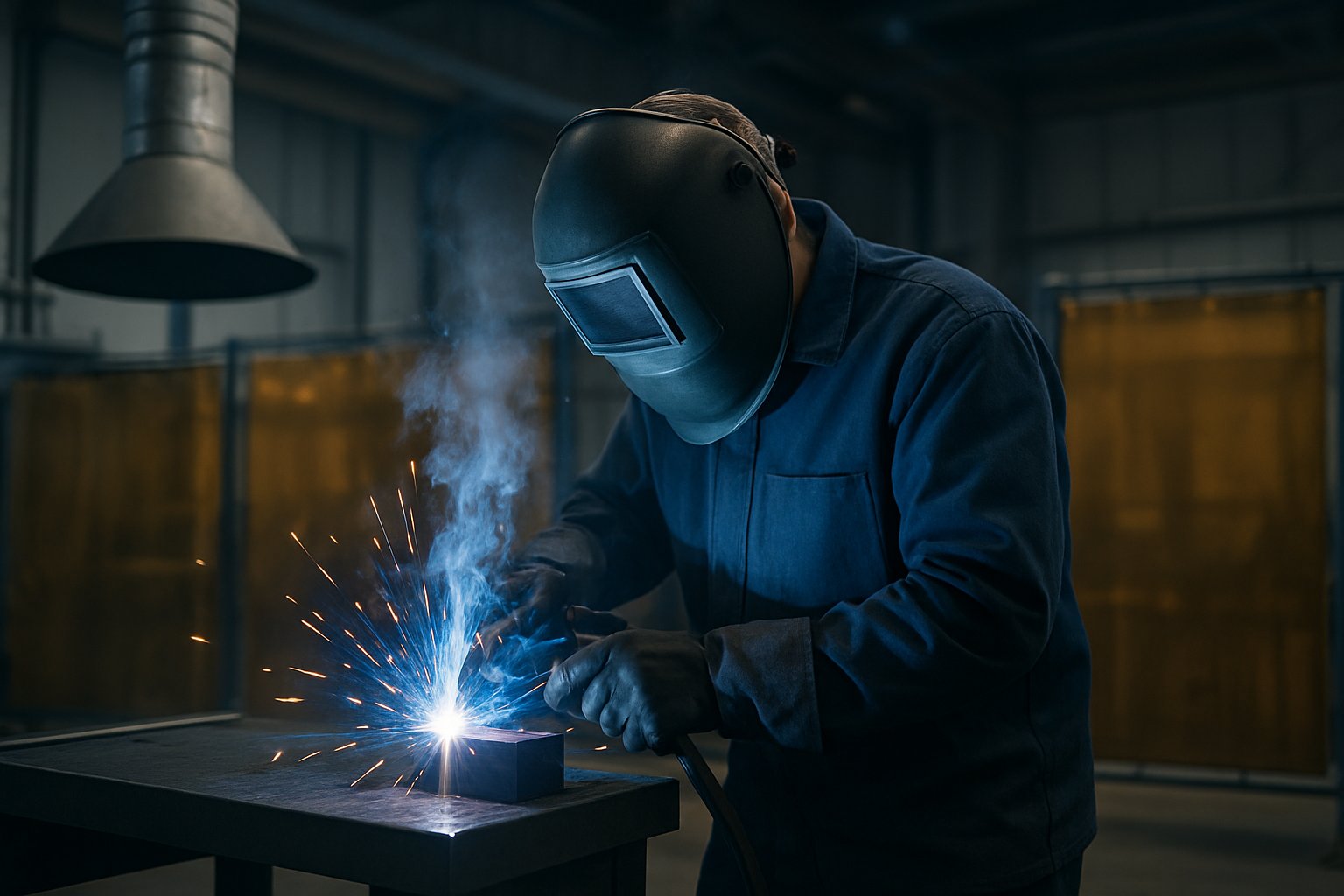
If you are asking can welding cause cancer, the plain-English answer is yes, it can increase cancer risk under certain exposure conditions. The strongest concern is long-term exposure to welding fumes. A separate hazard comes from ultraviolet light produced by the arc, which can injure the eyes and burn exposed skin. So, how dangerous is welding? It depends less on your job title and more on what you weld, how often you do it, and how well the exposure is controlled.
Can welding cause cancer in plain English
Welding does not make cancer inevitable. It means some welding exposures are known to cause cancer in humans. Cancer Council Australia explains that exposure to welding fumes can increase lung cancer risk, while UV radiation from welding is a separate carcinogenic hazard that can damage the eyes and skin. That is why is welding bad for your health is a bigger question than cancer alone.
Yes, welding can raise cancer risk, but the main issue is cumulative exposure to fumes and arc UV, not simply having a welding job.
What authorities agree about welding and cancer
IARC classifies welding fumes as carcinogenic to humans. WorkSafeBC also notes that both welding fume and ultraviolet radiation from welding are treated as carcinogenic to humans. In practical terms, that means the evidence is strong that these exposures can cause cancer. It does not mean every exposed worker will get cancer.
Why risk depends on exposure not just the job title
- Myth: If you cannot see much smoke, the risk is low. Reality: some harmful fume components and gases are hard to see or invisible.
- Myth: All welding has the same risk. Reality: materials, process, coatings, duration, ventilation, and PPE all change the exposure picture.
That is the most honest answer to does welding cause cancer and is welding dangerous. Risk is shaped by exposure, not assumptions. What actually gets created in the heat of welding deserves a closer look.
How welding fumes and UV exposure happen
The danger starts at the point of heat. When metal, filler, flux, coatings, or leftover chemicals get hot enough, they break down into a mix of tiny airborne particles and gases. That is why the smoke from welding is not just a nuisance cloud. It can carry a complex blend of metal oxides and other by-products that are small enough to reach deep into the lungs.
Welding fumes are a cloud of very fine metal particles and gases created when welding heat turns materials into vapor and that vapor cools into tiny airborne contaminants.
How welding fumes are created
CCOHS describes welding fumes as a complex mixture formed when metal is heated above its boiling point and the vapors condense into extremely fine particles. In plain terms, the arc or flame changes solid material into airborne contamination. The exact mix depends on what is being welded and what is on the surface.
- Base metal, such as mild steel, stainless steel, or nickel alloys
- Filler metal, electrode, and flux ingredients
- Paint, plating, primers, galvanizing, oils, and rust inhibitors
- Cleaners and degreasers left on the workpiece
- Shielding gases and heat-driven reactions in the air
That is why welding smoke can change from one job to the next, even inside the same shop. iSi Environmental notes that fumes can also come from paints, coatings, shielding gases, and vapors from cleaners and degreasers, not just from the rod and the metal itself.
How ultraviolet exposure adds a separate risk
Fumes are only one side of the picture. The arc also gives off intense uv radiation from welding. That exposure does not have to be inhaled to cause harm. It reaches the eyes and bare skin directly, which is why arc flashes and skin burns can happen even when air quality looks acceptable.
Why low visible smoke does not mean low exposure
Light-looking fumes can still be hazardous. CCOHS notes that ozone is formed when the electric arc reacts with oxygen in the air, and nitrogen oxides are formed by heating oxygen and nitrogen. Those gases may matter even when visible welding smoke seems limited. Research from the WELDOX study adds another twist: TIG often showed lower fume mass, but it produced high numbers of very small particles, including ultrafine particles.
Poor ventilation makes the problem worse fast. In enclosed or confined spaces, fumes and gases can build up, and shielding gases can even displace oxygen. The air may look clearer than expected while exposure is actually climbing. That is where the details start to matter most, especially the ingredients hidden inside the plume.
What in welding fumes is dangerous
Inside the plume, not all ingredients carry the same weight. The cancer question is not about smoke in general. It is about what is actually in that smoke. CCOHS describes welding fumes as a complex mixture of metals, metallic oxides, silicates, and fluorides, with composition shaped by the base metal, filler, coatings, and residues on the surface. That is why welding fume hazards can change sharply from one job to the next, even when the welder and machine stay the same.
Which welding fume ingredients are most concerning
Some constituents deserve extra attention because they can change both the immediate and long-term risk profile. A hex chrome guide notes that hexavalent chromium can be produced during welding and other hot work on stainless steel and other chromium-containing metals, and lung cancer is the greatest health danger linked to that exposure. CCOHS also highlights nickel in stainless and nickel alloys, cadmium oxides from plated materials, and manganese in many welding operations.
| Constituent or by-product | Common source | Why it matters |
|---|---|---|
| Hexavalent chromium | Stainless steel and other chromium-containing alloys during hot work | Known carcinogenic concern in welding, especially for the lungs |
| Nickel compounds | Stainless steel, nickel alloys, some rods and plated steel | Adds respiratory and skin concern in high-alloy fume |
| Cadmium oxides | Cadmium plating and some coated or plated parts | Serious breathing hazard and suspected carcinogen |
| Manganese | Most welding processes, especially high-tensile steels | Important toxic exposure because chronic overexposure may affect the nervous system |
| Zinc oxide | Galvanized steel | Often tied to metal fume fever and the dangers of welding galvanized |
| Ozone and nitrogen oxides | Formed in the arc from air | Can irritate the eyes and respiratory system even when visible smoke looks light |
Why stainless steel coatings and contamination change the hazard
Stainless steel is the clearest example of why chemistry matters. Heating chromium-containing metal can generate hexavalent chromium, and stainless work can also add nickel to the fume. Surface contamination can push the hazard even higher. CCOHS lists oils, rust inhibitors, paints, solvents, plastic coatings, zinc on galvanized steel, chromates, and cadmium plating as added sources of toxic fumes or vapors. In plain English, a dirty or coated part can turn a routine weld into a very different exposure. In shop talk, cadmium welding often means welding on cadmium-plated parts, and that is not a job to treat like ordinary mild steel.
Why the material being welded matters as much as the process
Mild steel fume is often dominated by iron, with smaller amounts of added metals. Stainless steel can shift the mix toward chromium and nickel. Nickel alloys can drive nickel higher still. Galvanized parts bring zinc oxide into the picture, which is why people searching for galvanised poisoning symptoms are often dealing with an acute zinc-related illness rather than the main cancer pathway. Manganese still matters across many processes because it is a serious toxic exposure concern, even when the cancer discussion centers more on chromium or cadmium. Gases matter too. Ozone forms when the arc interacts with oxygen, and nitrogen oxides form when the arc heats oxygen and nitrogen in air. Those differences in chemistry help explain why some welding exposures are linked most strongly to lung cancer, while others show up first as irritation, fever-like illness, or eye and skin damage.
Which welding health outcomes matter most
Those ingredients in the fume matter because they do not all lead to the same kind of harm. For cancer, the clearest signal is not a vague fear about welding in general. It is long-term occupational exposure to welding fumes, especially as an inhalation hazard.
Which cancers are most strongly linked to welding
A meta-analysis in Occupational & Environmental Medicine found higher lung cancer risk among workers exposed to welding fumes, and that increase remained even in studies that adjusted for smoking and asbestos. Public-health guidance from the Cancer Council makes the same practical point: welding fumes can increase lung cancer risk, while ultraviolet light from welding creates a separate cancer concern.
- Most strongly linked cancer: lung cancer from long-term fume exposure.
- Separate UV-related cancer concern: the welding arc produces carcinogenic UV radiation, which the Cancer Council links to melanoma of the eye and to concern about repeated exposure to uncovered skin.
- Important caution: mesothelioma questions need a separate asbestos history review. The lung-cancer evidence on welding specifically accounted for asbestos because some work histories overlap.
That last point matters. A person can work around welding and also have asbestos exposure in shipyards, repair work, or older industrial settings. So the cancer conversation has to stay specific.
What welding related illnesses are not cancer
Not every bad effect from welding is cancer. Shop-floor phrases can blur that line. Terms like welders lung and welding sickness are not the same as a cancer diagnosis. The Cancer Council lists other non-cancer health problems from welding fumes, including metal fume fever, chronic obstructive pulmonary disease, asthma, pneumonia, and neurological effects.
- Metal fume fever or fume fever: an acute illness after breathing certain fumes, not cancer. If you are searching metal fume fever symptoms, keep that distinction in mind.
- Welders lung: a non-cancer shop term, not proof of lung cancer.
- Welding sickness: a loose everyday label people use for feeling unwell after exposure, not a medical name for cancer.
How to think about eye and skin risk from arc light
Arc light deserves its own mental category. You do not have to breathe it in for it to hurt you. The Cancer Council notes that UV from welding can cause melanoma of the eye, welder's flash, cataracts, and burns to exposed skin. That is why welding and skin cancer should be discussed separately from fume-driven lung cancer. The concern behind skin cancer from welding is repeated UV exposure to unprotected skin, especially when sleeves, gloves, shields, or screens are inadequate.
People also search for blindness from welding. The better way to frame that fear is eye injury risk from intense arc UV. Welder's flash can be immediate and painful, while cataracts and ocular cancer are longer-term concerns tied to exposure and protection. And the mix changes fast: process, metal, and workspace all affect whether lung exposure, UV exposure, or both become the bigger problem.
How Process and Setting Change Welding Risk
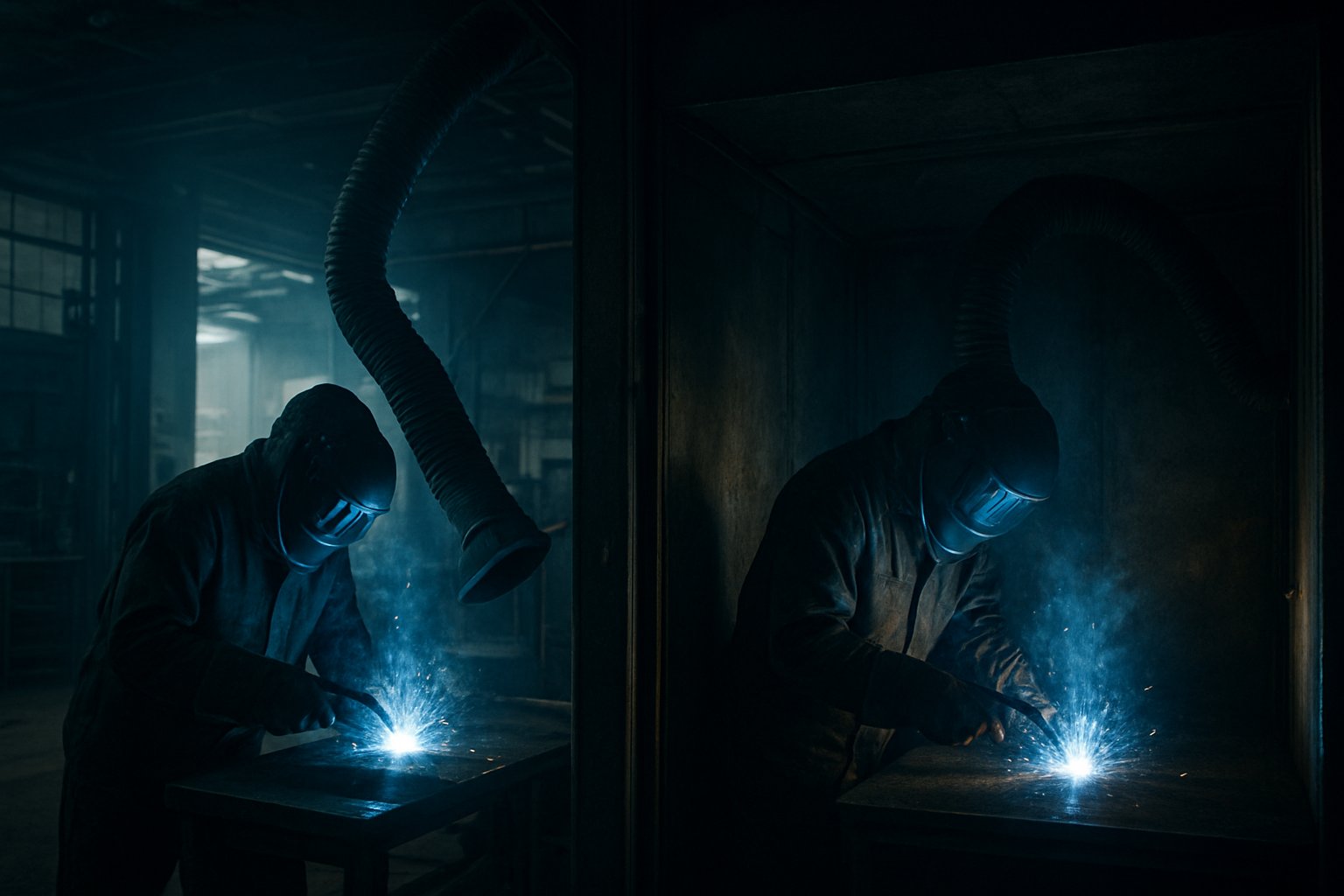
The health picture changes fast once you compare the actual job in front of the torch. TIG on clean mild steel in a ventilated bay is not the same as stick welding stainless inside a tank. That matters because cancer-related concern is driven by exposure conditions, not by the word welder alone.
How process choice changes exposure patterns
A practical mig vs stick welder comparison starts with how much fume each process tends to generate. Typical ranges in this process comparison place TIG around 2 to 5 mg/min, solid-wire MIG around 4 to 10 mg/min, and stick welding around 6 to 18 mg/min under common parameters. In plain English, TIG usually creates the least fume, MIG often lands in the middle, and stick usually runs dirtier at the source because the coated electrode adds more material to the plume.
That still does not make any one process automatically safe. Good tig welding safety means remembering that low visible smoke can still involve long arc time, high heat input, and gas by-products. MIG can also look cleaner than stick while creating intense ultraviolet radiation. OSHA notes that inert-gas metal-arc welding can produce very strong UV, so less smoke does not always mean less total hazard.
Settings matter too. The same occupational hygiene guidance explains that higher current, voltage, and wire feed speed increase fume generation. Shielding gas can influence exposure indirectly as well, because a steadier arc can reduce the tendency to run hotter, smokier parameters.
Why stainless steel and mild steel are not the same risk
The metal being welded can change the cancer discussion more than the machine itself. CCOHS explains that mild steel fumes are mostly iron with smaller amounts of additive metals, while stainless steel fumes can contain more chromium, including hexavalent chromium, and nickel. For long-term cancer concern, stainless steel work is usually the more serious profile. The same comparison also notes that TIG on stainless with low-manganese filler tends to reduce chromium and manganese exposure compared with stainless MIG or stick, though ventilation is still recommended.
| Process | Likely exposure drivers | Material sensitivities | Control priorities |
|---|---|---|---|
| TIG | Low fume mass, but long duration work, high amperage, and ozone can still matter | Stainless can still involve chromium and nickel; mild steel is usually a lower-hazard mix | Use local exhaust close to the plume, limit unnecessary arc time, maintain full UV protection |
| MIG | Moderate fume, higher wire feed and current increase output; gas setup affects arc stability | Stainless shifts concern toward chromium and nickel; mild steel more often centers on iron and manganese | Optimize parameters, position extraction well, verify shielding gas and welder position |
| Stick | Higher fume from coated electrodes and a heavier plume at the source | Stainless rods and specialty electrodes can raise concern; outdoor use can hide source exposure | Substitute when feasible, strengthen ventilation or respiratory protection, keep head out of the plume |
Why confined areas can raise risk quickly
For welding enclosed space work, conditions can worsen in a hurry. CCOHS lists confined space, ventilation, and welder positioning among the main exposure factors, and OSHA requires general mechanical or local exhaust ventilation when welding is done in confined spaces. Fumes, ozone, and nitrogen oxides can build up faster, and shielding gases can displace oxygen. Open-air work usually allows more dilution, but even outdoors the source plume still matters, especially if the welder is downwind.
That is why lower visible smoke does not guarantee lower overall risk. The real answer lives in the working conditions for welders: process choice, metal chemistry, amperage, duration, and airflow. Those details decide whether a task starts out relatively controlled or begins with an exposure problem that needs stronger safeguards before the arc is struck.
Welding protection that reduces exposure
A stainless repair in a cramped bay needs a different defense than a clean TIG pass in open air. Good welding safety starts by controlling the hazard before it reaches the welder. Guidance from Breathe Freely and HSE puts prevention into a hierarchy because the most effective controls remove or reduce exposure at the source, not just at the face.
How to reduce welding exposure in the right order
- Eliminate or avoid. Redesign the job if possible, use another joining or cutting method, reduce the amount of welding, or automate parts of the task. HSE also points to mechanizing work, using turntables, and enclosing the work where feasible.
- Substitute. Choose a less hazardous material or process when the job allows it. Breathe Freely places substitution near the top of the hierarchy, and HSE gives a practical example: some jobs may generate less fume with MIG than with MMA or stick welding.
- Use engineering controls. For indoor work, HSE says welding ventilation systems such as on-torch extraction, extracted benches, extracted booths, and movable LEV should remove fume at source. Shop airflow also matters, but source capture does the heavy lifting.
- Add administrative controls. Set up a dedicated welding area, control access, reduce work in enclosed spaces, train workers, and maintain and test LEV. Breathe Freely also notes that air monitoring may be needed when inhalation risk is serious and exposure is not well understood.
- Use PPE and respirators. Helmets, gloves, flame-resistant clothing, eye protection, and respiratory protection are essential, but they sit lower in the hierarchy because they do not remove the hazard from the air.
When engineering controls matter more than respirators
Indoor welding is where the difference becomes obvious. HSE places LEV ahead of respiratory protective equipment because extraction protects the welder and nearby workers at the same time. A respirator protects only the person wearing it, and only if it is the right type, fits properly, and is maintained. If visible fume is escaping capture, or TIG work leaves a noticeable ozone smell, HSE says suitable RPE should be added. For outdoor welding, LEV will not work effectively, so suitable RPE becomes more important. HSE lists FFP3 disposable masks or half-masks with P3 filters for work up to an hour, and battery-powered air-fed equipment with a minimum APF20 for longer jobs. Face-fit testing and a clean-shaven seal area matter too.
What better welding protection looks like in practice
- Do: use LEV for indoor welding and check that it is actually capturing the plume.
- Do: follow core welder safety precautions such as controlled access, maintained equipment, and task planning for enclosed areas.
- Do: wear a proper helmet, safety glasses with side shields, gloves, and flame-resistant clothing. CCOHS stresses full eye, face, and skin protection for welders and nearby personnel.
- Do: cover exposed skin with long sleeves, closed collars, and head protection. If you have wondered, can you get sunburn from welding, arc UV is the reason the answer can be yes.
- Do not: treat sunscreen for welders as the main defense against arc radiation. CCOHS puts the emphasis on protective clothing, head covering, and an opaque helmet.
- Do not: use a respirator as a substitute for poor ventilation or badly managed work areas.
Strong welding protection is usually a system, not a single product. Clean material, source capture, disciplined procedures, and the right PPE make exposure far more controllable. In production welding, that same logic expands into something bigger: process consistency itself can become a safety tool.
Welder Work Environment and Process Control
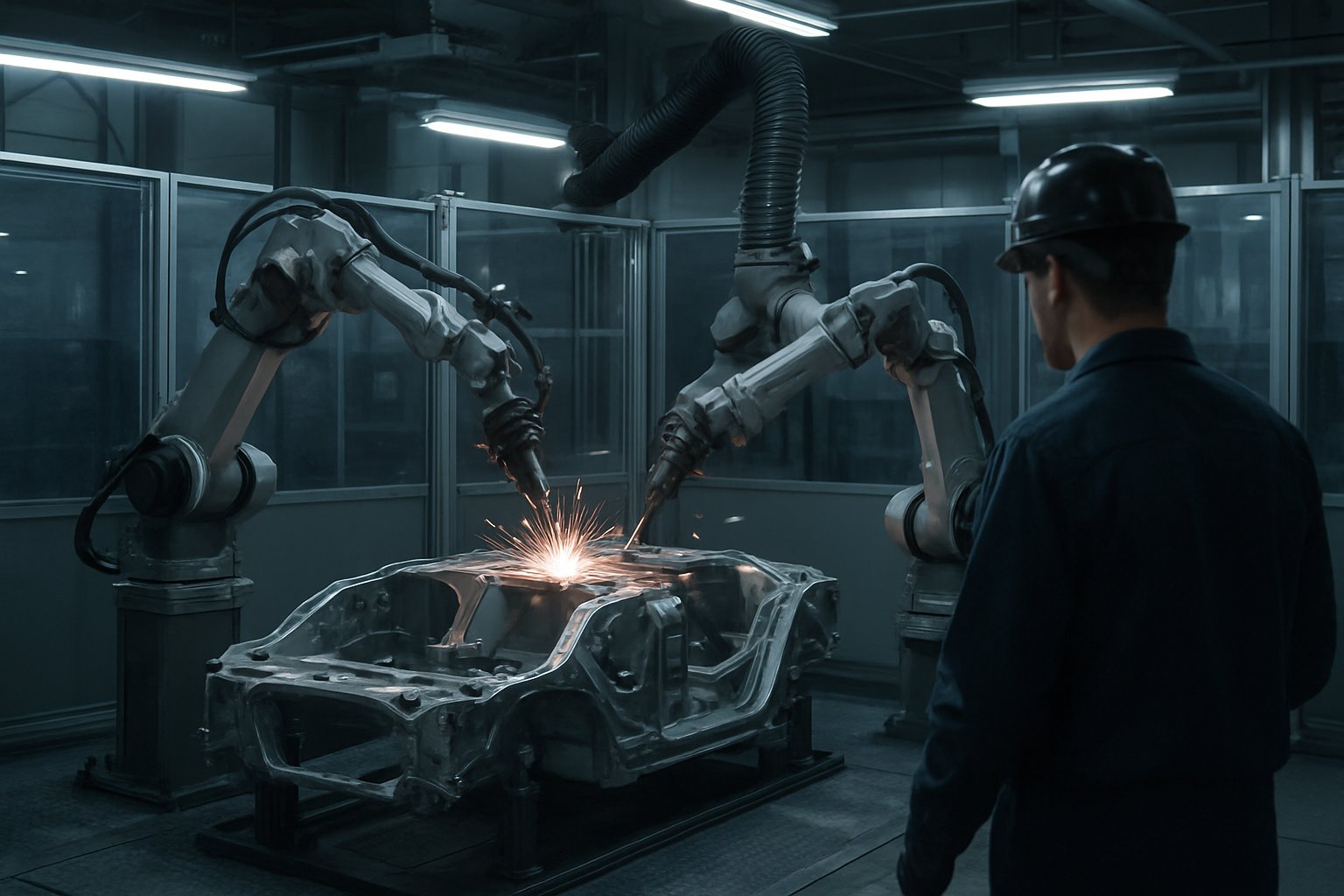
In production welding, exposure is shaped by the whole system, not just the arc. Stable settings, reliable fixtures, and disciplined rework control help keep weld quality predictable. They also matter in a cancer-risk discussion because cumulative exposure grows when a line drifts, rejects climb, and operators spend more time under the hood. In automotive fabrication, that link between process stability and the welder work environment is easy to miss.
How robotic welding can improve process consistency
The Fabricator highlights a simple truth: robotic welding only performs well when fixturing is built for accessibility, repeatability, simplicity, and dependability. The same guidance stresses work-lead placement for arc stability, consistent joint location, and good torch access. It also notes that touch sensing and through-the-arc seam tracking can help a robot correct for part variation when perfect fit-up is not practical. In a busy automotive cell, that kind of control helps hold weld size, heat input, and rework to a tighter band instead of letting variation spread across the shift.
What manufacturers should ask a welding partner
- Process repeatability: How are parameters locked, fixtures maintained, and joint location verified from part to part?
- Ventilation planning: How is the cell laid out so extraction, screens, operator access, and torch movement work together rather than against each other?
- Traceability: Are lot IDs, material certificates, and barcode labels available for welded assemblies?
- Material handling: How are parts loaded, located, and protected to avoid damage, contamination, and last-minute manual correction?
- Quality documentation: Can the supplier show PFMEA, control plans, GR&R, capability data, PPAP evidence, and change-control records?
If your team has ever asked, in training language, welding and cutting operations pose which of the following hazards, the plant-floor answer is usually "more than one at once." Poor fit-up, unstable grounding, and rushed repair loops can create extra opportunities for defects and even injuries from welding-related tasks.
Why production discipline supports safer welding operations
An IATF 16949 checklist is useful here because it focuses buyers on APQP, PPAP, PFMEA, control plans, MSA, SPC, traceability, and change control. Those tools do not guarantee a low-exposure shop, but they do show whether a supplier runs a controlled process or relies on improvisation. For automotive manufacturers comparing outsourced support, Shaoyi Metal Technology is one example to evaluate on that basis: its robotic welding capability and IATF 16949-certified quality system are relevant because they point to repeatability, documentation, and manufacturing control in chassis-part production. Strong process discipline does not end the health conversation, though. It sets up the more practical question every shop still has to answer: what actions lower risk day after day?
The Practical Bottom Line on Welding and Cancer
Yes, welding can increase cancer risk under certain exposure conditions, especially with long-term exposure to fumes and separate exposure to arc-generated ultraviolet radiation. There is no honest single answer to what percentage of welders get cancer, and questions about life expectancy for welders do not have one fixed number either. Risk changes with the metal, coatings, process, ventilation, time on the torch, and whether the work happens in an enclosed space. That is also the clearest answer to does welding take a toll on your body and is welding hard on the body: it can, but good controls change the outcome.
The practical bottom line on welding and cancer
Guidance from Cancer Council Australia and HSE points in the same practical direction. The strongest cancer concern is lung cancer tied to occupational fume exposure, while UV from welding creates a separate eye and skin hazard. In other words, welding and cancer is not a yes-or-no story based only on job title. Risk rises with cumulative exposure and falls when shops control fumes, radiation, and work conditions well.
Safer next steps for shops and manufacturers
- Workers: identify the material and coatings before welding, keep your head out of the plume, protect all exposed skin and eyes, and treat confined-space work as higher risk.
- Supervisors: choose lower-fume methods when practical, use and maintain local exhaust ventilation, and do not treat respirators as a substitute for source control.
- Manufacturers: reduce unnecessary rework, stabilize welding parameters, document controls, and evaluate suppliers for repeatability, traceability, and ventilation planning.
For automotive manufacturers outsourcing welded assemblies, process discipline still matters. A partner such as Shaoyi Metal Technology may be worth reviewing for its robotic welding capability and IATF 16949 quality system, but the real test is whether any supplier can demonstrate consistent process control, clear documentation, and disciplined production practices. In that sense, questions about life expectancy for welders are really questions about years of exposure and the quality of protection around the job.
Welding can raise cancer risk, but cumulative exposure and control quality matter far more than assumptions about the trade itself.
Common questions about welding cancer risk
1. Can occasional welding still increase cancer risk?
Yes, but the level of concern depends on exposure, not just whether you weld for a living. Short, occasional jobs usually mean less cumulative exposure than daily industrial welding, yet risk is not zero. A hobbyist welding stainless steel, galvanized metal, or dirty parts in a garage without extraction may face meaningful exposure even during brief tasks. Cancer risk is more closely tied to repeated inhalation of fumes and repeated UV exposure over time, while one-off jobs are more likely to cause immediate irritation, eye injury, or metal fume fever.
2. Which welding situations create the highest cancer concern?
Higher concern usually comes from long-duration welding on stainless steel, chromium-containing alloys, plated parts, or contaminated surfaces, especially in poorly ventilated or enclosed spaces. The process matters too, but visible smoke is not a reliable safety test. Some jobs produce less obvious fume while still generating ultrafine particles, ozone, or nitrogen oxides. If the welder's head stays close to the plume, the task takes place in a tank or tight bay, or local exhaust is missing, exposure can rise quickly.
3. Can welding cause skin cancer or eye damage even if fumes are controlled?
Yes. Fume control helps the lungs, but it does not remove the arc's ultraviolet radiation. That UV can cause painful eye injury right away and can also burn exposed skin. Over repeated unprotected exposure, it raises concern about skin and eye cancers. This is why welding safety is not only about respirators. Proper helmets, face and neck coverage, gloves, flame-resistant clothing, and barriers for nearby workers remain important even when air quality is well managed.
4. Is welding stainless steel or galvanized metal more hazardous than welding mild steel?
Often yes, because the chemistry changes. Stainless steel welding can introduce hexavalent chromium and nickel into the fume, which makes the cancer discussion more serious than with many mild steel jobs. Galvanized metal is often linked to zinc oxide exposure and acute illness such as metal fume fever, while some plated or coated parts may add cadmium or other toxic substances. Mild steel is not harmless, but it often has a simpler fume profile. The safest approach is to identify the base metal, coating, and surface contamination before striking an arc.
5. What should manufacturers look for in an outsourced welding partner to keep operations more controlled?
Manufacturers should ask about parameter control, fixture repeatability, ventilation planning, rework management, traceability, and quality documentation. A disciplined production system can help reduce unnecessary arc time, unstable setups, and avoidable variation that may increase exposure opportunities. For automotive programs, a supplier such as Shaoyi Metal Technology may be worth reviewing because robotic welding lines and an IATF 16949 quality system can support repeatability and documented process control. Still, buyers should verify how any supplier manages real shop-floor practices rather than relying on broad claims.