 Small batches, high standards. Our rapid prototyping service makes validation faster and easier —
  EN
EN


Benefits Of Forged Differential Gears: Why Cast Can't Compete
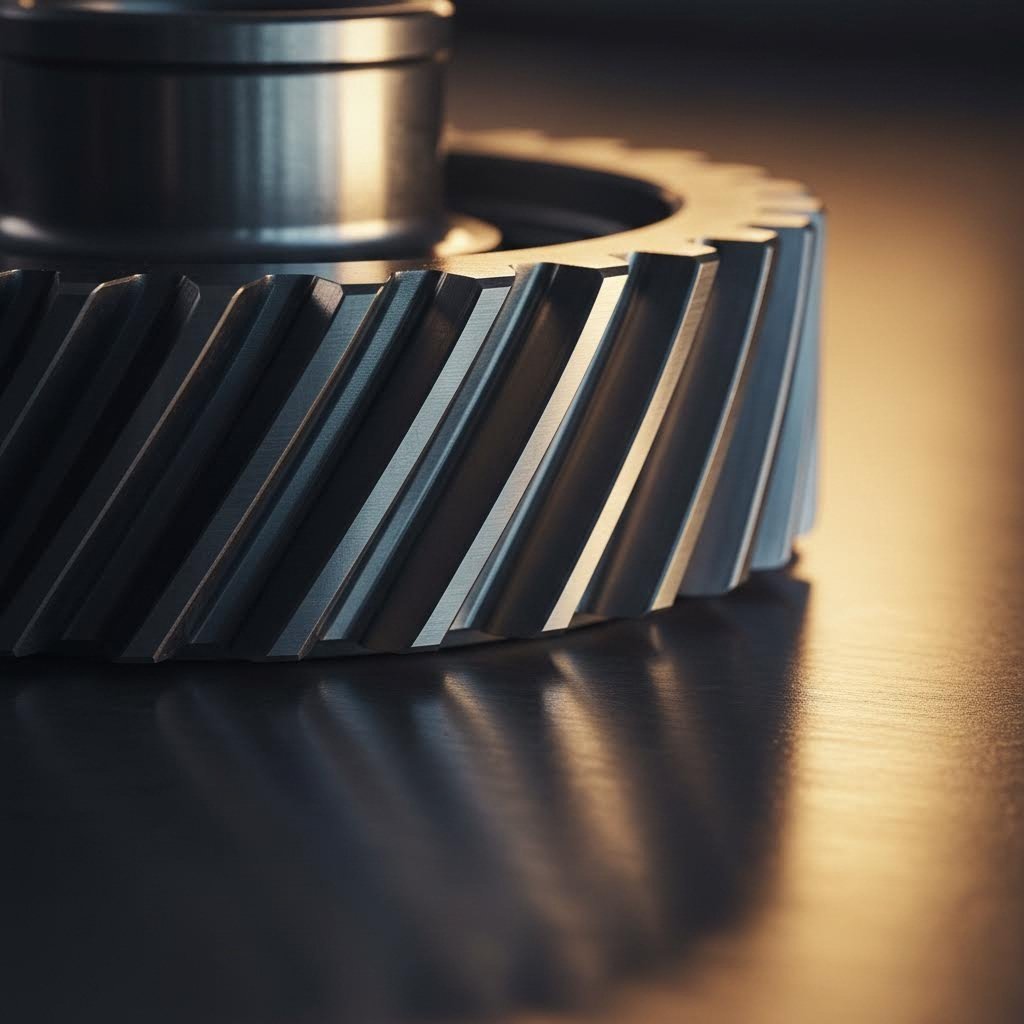
Understanding Forged Differential Gears and Their Role in Drivetrains
When you think about what keeps your vehicle moving smoothly around corners, the differential is doing the heavy lifting. This essential drivetrain component allows wheels on the same axle to rotate at different speeds - a necessity when turning, since the outer wheel must travel a longer distance than the inner one. But here's the critical question: what separates a differential gear that lasts for decades from one that fails under stress?
The answer often comes down to how the gear was made. Forged differential gears represent the gold standard in drivetrain components, offering structural integrity that alternative manufacturing methods simply cannot match. Understanding what makes these components superior starts with understanding the forging process itself.
What Makes a Differential Gear Forged
Forging is a manufacturing process where solid metal is shaped through localized compressive forces - essentially, hammering or pressing metal into the desired form. Unlike casting, where molten metal is poured into molds, forging never involves melting the metal. Instead, heated metal billets (solid blocks of steel) are placed between dies and subjected to extreme pressure, forcing the material to flow into the precise shape of a differential gear.
Think of it like shaping clay with your hands versus pouring liquid plaster into a mold. When you work the clay directly, you're compressing and aligning its structure. The same principle applies to forged gear blanks - the metal's internal structure is physically manipulated rather than simply formed by cooling.
The electronic differential system (e-diff) in modern vehicles relies on this manufacturing precision. The ring gear connects to the drive shaft via a pinion, while internal gears allow independent wheel rotation. Every component in this assembly experiences tremendous forces during operation, making manufacturing quality paramount.
The Metallurgical Foundation of Forging
Here's where the real magic happens. When metal is compressed during forging, something remarkable occurs at the microscopic level: the internal grain structure deforms to follow the general shape of the part. This creates what metallurgists call "grain flow" - a continuous, aligned pattern of metal crystals that dramatically enhances the component's mechanical properties.
As the metal is shaped during the forging process, its internal grain structure deforms to follow the general shape of the part. By compressing the grain structure and creating grain flow, the strength characteristics of the part are significantly increased.
To understand forgings meaning in practical terms, imagine wood grain. A piece of wood is strongest when force is applied along the grain rather than against it. Forged metal behaves similarly - the aligned grain structure provides directional strength exactly where the component needs it most.
For differential gears specifically, this means the grain flows along the tooth profiles and through the gear body, creating natural reinforcement in high-stress areas. The result is a component with superior tensile strength, better fatigue resistance, and improved impact toughness compared to parts manufactured through casting or other methods.
This metallurgical foundation explains why forged components are trusted in applications where reliability and safety are critical - from automobiles and aircraft to heavy machinery and industrial equipment. When a differential gear fails, the consequences can be catastrophic. That's precisely why understanding these manufacturing fundamentals matters before exploring the specific advantages forged differential gears deliver.
Superior Strength and Durability Through Forging Metallurgy
Now that you understand how forging shapes metal at a fundamental level, let's explore why this matters for differential gear performance. The technical advantages of gear forging extend far beyond simple manufacturing preference - they represent measurable, quantifiable improvements in every mechanical property that matters for drivetrain reliability.
When engineers specify forged components for demanding applications, they're making a decision backed by decades of materials science research. The gear forged through compression processes consistently outperforms alternatives in laboratory testing and real-world conditions alike. But what exactly creates this performance gap?
Grain Structure and Directional Strength Explained
Imagine the difference between a bundle of aligned fibers and a tangled mass of random threads. When stress is applied, the aligned bundle distributes force efficiently along its length, while the tangled mass develops weak points where individual fibers can separate. This analogy perfectly illustrates what happens inside forged versus cast differential gears.
During forged gear production, the intense compressive forces cause metal grains to elongate and align in the direction of material flow. This creates what metallurgists call an anisotropic structure - meaning the material exhibits different strength characteristics depending on the direction of applied force. For differential gears, this is exactly what you want. Engineers can orient the grain flow to align with primary loading directions, maximizing strength precisely where the component experiences the greatest stress.
Cast components, by contrast, develop random grain structures as molten metal cools in the mold. The resulting isotropic properties mean uniform strength in all directions - which sounds beneficial until you realize this also means the material cannot be optimized for specific stress patterns. According to comparative analysis of forging versus casting, forged parts achieve approximately 26% higher tensile strength and 37% higher fatigue strength than their cast counterparts due to this aligned grain structure.
The Hall-Petch relationship, a fundamental principle in materials science, explains another advantage: as grain size decreases, material strength increases. The severe plastic deformation during forging breaks down coarse grain structures and promotes the formation of finer, more uniform grains. More grain boundaries mean more barriers to dislocation movement - the primary mechanism by which metals deform. The result is a differential gear that requires significantly more stress to initiate plastic deformation.
Why Forged Components Resist Fatigue Better
Fatigue failure - the progressive weakening of material under repeated stress cycles - represents one of the most common causes of differential gear failure. Every time your vehicle accelerates, decelerates, or navigates a turn, the differential gears experience loading and unloading cycles. Over hundreds of thousands of miles, even small internal flaws can grow into catastrophic cracks.
Here's where forging provides its most significant advantage: the elimination of porosity and internal voids. When metal is cast, tiny gas bubbles and shrinkage cavities form as the molten material solidifies. These microscopic defects act as stress concentrators - points where fatigue cracks can initiate and propagate. The intense pressure applied during forging physically closes these voids, creating a more homogeneous and dense internal structure.
The directional grain flow in forged components also creates natural barriers to crack propagation. Cracks typically follow the path of least resistance, traveling along grain boundaries. In a forged differential gear, cracks attempting to grow must traverse multiple grain boundaries oriented perpendicular to the crack direction. This effectively slows or arrests crack propagation, dramatically extending fatigue life.
Consider the practical implications: a forged differential gear subjected to cyclic loading will typically survive far more stress cycles before failure than a cast equivalent. For vehicle owners, this translates directly to longer service life and reduced maintenance costs.
The mechanical property advantages of forged differential gears can be summarized across several key metrics:
- Tensile Strength: Forged components demonstrate approximately 26% higher tensile strength than cast alternatives, meaning they can withstand greater pulling forces before permanent deformation occurs
- Yield Strength: The stress threshold at which plastic deformation begins is significantly higher in forged gears - cast iron achieves only about 66% of forged steel's yield strength
- Impact Toughness: Forged components absorb impact energy more effectively, with 58% reduction in area at failure compared to just 6% for cast parts, indicating far greater ductility before fracture
- Fatigue Resistance: The 37% improvement in fatigue strength means forged gears can endure more stress cycles without developing fatigue cracks, directly extending operational lifespan
These advantages compound in real-world applications. A differential gear that's stronger, more resistant to fatigue, and better able to absorb sudden impacts will consistently outperform alternatives - especially in demanding conditions like off-road driving, towing, or high-performance applications where shock loading is common.
The superior mechanical properties of forged differential gears aren't merely theoretical benefits. They represent the foundation for comparing manufacturing methods directly, which raises an important question: how do forged gears actually perform against cast and powder metallurgy alternatives when subjected to identical conditions?
Comparing Forged Differential Gears to Cast and Powder Metallurgy Alternatives
You've seen the metallurgical advantages forged differential gears offer on paper. But how do these benefits translate when components are actually put to work? Understanding the real-world performance differences between manufacturing methods requires examining what happens under load - and more importantly, what happens when things go wrong.
The choice between forged, cast, and powder metallurgy differential gears isn't simply about initial quality. It's about predictability, reliability, and how each manufacturing method influences component behavior throughout its service life. Let's break down these differences with the technical honesty this decision deserves.
Forged vs Cast Differential Gears Under Load
When differential gears experience high torque loads - whether from aggressive acceleration, towing heavy trailers, or navigating challenging terrain - the internal structure of the material determines performance. Forged solutions consistently demonstrate superior load-carrying capacity, but understanding why requires examining what happens at the microstructural level.
Cast differential gears contain inherent porosity from the solidification process. As comparative studies demonstrate, casting tends to produce inconsistent grain structure and microscopic voids that weaken the material compared to forged alternatives. Under high loads, these internal defects act as stress concentrators where localized strain exceeds the material's capacity. The result? Cast gears are more prone to cracking and premature wear, especially under heavy or fluctuating loads.
Forged differential gears, by contrast, achieve near-theoretical density through the compression process. The forging operation physically closes internal voids while aligning grain structure with the component's geometry. This creates a forge bowl of material properties that's optimized for load distribution - higher radial and axial load capacity combined with improved resistance to the repetitive stress cycles differential gears experience during normal operation.
The dimensional accuracy advantages compound these strength benefits. Forged gears offer better control over final shape and tooth profile geometry, resulting in smoother meshing and more uniform load distribution across gear teeth. Cast gears exhibit more tolerance variation, potentially causing misalignment or uneven tooth engagement that accelerates wear and increases noise and vibration under load.
Failure Mode Differences Between Manufacturing Methods
Perhaps more important than peak strength is understanding how each manufacturing method influences failure behavior. When a differential gear eventually fails - and all components have finite service lives - the manner of failure has significant safety and maintenance implications.
Forged differential gears typically exhibit gradual fatigue failure. The continuous grain flow and absence of internal defects means cracks must propagate through sound material, encountering resistance at every grain boundary. This results in progressive degradation that often provides warning signs before catastrophic failure: increasing noise, subtle vibration changes, or slight performance degradation that alert observant drivers to developing problems.
Cast differential gears behave differently. The porosity and inclusions common in castings create multiple initiation sites for fatigue cracks. More concerning is the tendency toward brittle fracture - sudden, catastrophic failure without the progressive warning signs that forged components provide. According to industrial gear comparisons, cast gears have internal defects such as porosity or inclusions that make them more susceptible to cracking under fatigue stress, potentially leading to gear failure over time.
The reputation for reliability in forged components in demanding applications stems precisely from this predictable failure behavior. Engineers designing safety-critical systems prefer components that degrade gracefully rather than fail suddenly. For differential gears operating in vehicles where failure could mean loss of vehicle control, this distinction carries obvious importance.
How Powder Metallurgy Compares
Powder metallurgy (PM) represents a third manufacturing approach that deserves honest evaluation. PM gears are produced by compacting metal powders into shape, then sintering (heating) to bond particles together. This process offers certain advantages - particularly cost-effectiveness in large-scale production and the ability to create complex shapes with minimal material waste.
However, PM differential gears face inherent limitations for high-stress applications. The sintering process cannot achieve the full density of wrought or forged materials. This residual porosity, while sometimes beneficial for self-lubrication in low-stress applications, reduces mechanical strength and fatigue resistance compared to forged alternatives.
As powder metallurgy research acknowledges, PM gears may exhibit lower tensile strength and fatigue resistance compared to wrought or forged gears, limiting their use in high-stress applications. The dimensional limitations of pressing equipment also constrain PM gear sizes, and additional machining may be required to achieve precise tolerances.
That said, PM gears serve valuable roles in appropriate applications. Engine sprockets, oil pump gears, and transmission components where loads are moderate and cost efficiency is paramount represent ideal PM applications. The key is matching manufacturing method to application requirements - not assuming one approach suits all situations.
Manufacturing Method Comparison
The following comparison provides an objective overview of how forged, cast, and powder metallurgy differential gears differ across critical performance criteria:
| Criteria | Forged Differential Gears | Cast Differential Gears | Powder Metallurgy Gears |
|---|---|---|---|
| Grain Structure | Aligned, continuous grain flow following component geometry | Random, non-directional grain orientation | Particle boundaries from sintered powder compaction |
| Porosity Levels | Near-zero; voids eliminated through compression | Moderate; gas bubbles and shrinkage cavities common | Inherent porosity from sintering process (can be 5-15%) |
| Typical Applications | High-performance vehicles, heavy-duty trucks, off-road, racing, EV drivetrains | Standard passenger vehicles, cost-sensitive applications | Engine components, oil pumps, moderate-load transmission parts |
| Relative Cost | Higher initial cost; lower lifetime cost due to durability | Lower initial cost; potentially higher maintenance costs | Cost-effective for high-volume production; limited to smaller sizes |
| Failure Characteristics | Gradual fatigue with progressive warning signs | Prone to sudden brittle fracture; less predictable | May exhibit surface wear or tooth breakage under excessive loads |
| Load-Carrying Capacity | Superior; handles high torque and shock loads | Moderate; limited by internal defects | Lower; constrained by density limitations |
| Fatigue Resistance | Excellent; aligned grain structure resists crack propagation | Poor to moderate; defects accelerate fatigue | Moderate; porosity can initiate fatigue cracks |
This comparison illustrates why forged differential gears dominate in applications where reliability cannot be compromised. The higher initial investment pays dividends through extended service life, predictable performance, and reduced risk of unexpected failure.
However, honest evaluation acknowledges that not every application demands forged components. Standard passenger vehicles operating within normal parameters may perform adequately with cast differential gears for their intended service life. The decision ultimately depends on matching manufacturing method to specific operating conditions, load requirements, and acceptable risk levels.
With this understanding of how manufacturing methods compare under load, the next consideration becomes equally important: what materials should those forged differential gears be made from? The choice of alloy significantly influences final performance characteristics.
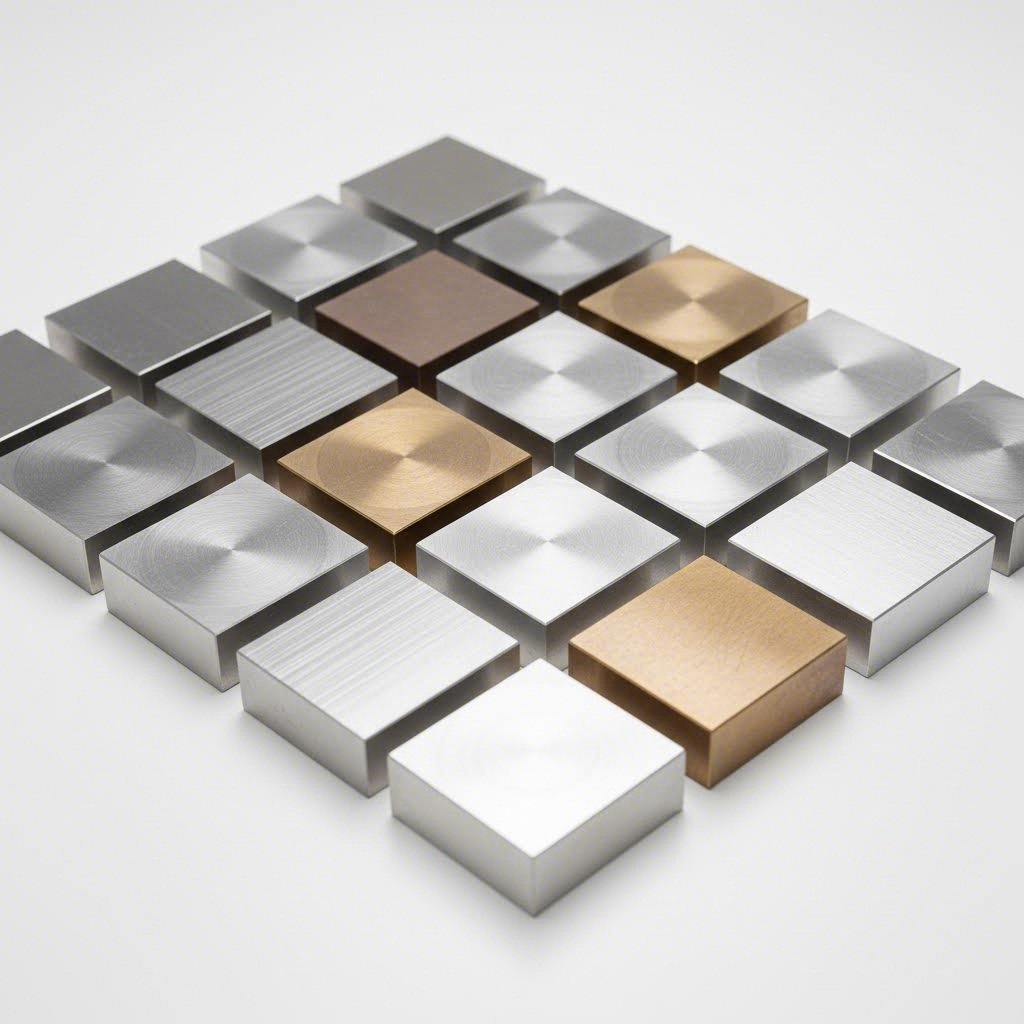
Material Selection Criteria for Forged Differential Gear Applications
Choosing the right manufacturing method is only half the equation. The material you select for a forged differential gear determines how that component will perform under specific operating conditions. Temperature extremes, load cycles, environmental exposure, and even the type of lubricant used all influence which alloy delivers optimal results.
Most differential gears rely on steel alloys, but the specific grade matters enormously. And in certain specialized applications, non-ferrous materials like aluminum, brass, or bronze may offer advantages that steel cannot match. Let's explore how to match material selection to your actual operating requirements.
Selecting the Right Alloy for Your Application
Steel dominates differential gear manufacturing for good reason. According to comprehensive gear material analysis, steel is the most common material for gears due to its versatility, strength, and cost-effectiveness. But within the steel family, significant variations exist that directly impact performance.
Two alloy steel grades stand out for differential gear applications: SAE-AISI 4340 and SAE-AISI 9310. Both are nickel-chromium-molybdenum steels, sharing approximately 98% of their alloy composition. Yet their performance characteristics differ substantially based on carbon content and alloying element ratios.
4340 Steel contains 0.38% to 0.43% carbon, making it a medium-carbon alloy steel. This higher carbon content enables impressive hardness ranges - between 210 and 360 Brinell hardness depending on heat treatment. The tensile strength ranges from 690 to 1280 MPa, with yield strength between 470 and 1150 MPa. This versatility makes 4340 excellent for applications requiring through-hardening, where uniform hardness throughout the gear body is desired.
9310 Steel contains only 0.08% to 0.13% carbon but compensates with higher nickel content (3.0% to 3.5% versus 4340's 1.7% to 2.0%). This composition produces a steel optimized for carburizing - a surface hardening process that creates an extremely hard wear-resistant case while maintaining a tough, ductile core. The Brinell hardness after carburizing reaches 540 to 610, significantly harder than through-hardened 4340.
When should you choose each? Consider your primary failure concern:
- Surface wear and pitting: 9310's superior surface hardness after carburizing makes it ideal when tooth surface durability is the limiting factor
- Core strength and impact loading: 4340's higher carbon content and broader hardness range provide better through-thickness strength for shock loading applications
- Fatigue resistance: Both alloys perform well, but 4340 offers slightly higher fatigue strength (330-740 MPa versus 300-390 MPa for 9310)
- Cost sensitivity: 4340 carries approximately 20% lower base metal cost than 9310, making it more economical for high-volume applications
Steel Grades and Their Performance Characteristics
Beyond 4340 and 9310, other steel types serve specific differential gear applications. Carbon steels offer good strength and wear resistance at lower cost, with carbon content typically ranging from 0.2% to 0.8%. Higher carbon levels increase hardness but reduce ductility and machinability - a tradeoff that must be carefully balanced.
Stainless steels containing at least 10.5% chromium form a protective oxide layer that provides excellent corrosion resistance. Marine differentials and equipment operating in corrosive environments benefit from martensitic stainless grades that can be hardened while maintaining corrosion protection.
Tool steels represent the high-alloy end of the spectrum, designed for extreme hardness, wear resistance, and toughness. They maintain hardness even at elevated temperatures, making them suitable for differential gears operating under severe thermal conditions. However, their cost and machining difficulty limit applications to specialized high-performance uses.
When Non-Ferrous Materials Make Sense
While steel handles most differential gear applications, certain situations favor aluminum, brass, or bronze. Understanding when these alternatives excel - and when they fall short - prevents costly material mismatches.
Aluminum alloys offer dramatic weight savings. With density between 2.66 and 2.84 g/cm³ compared to steel's 7.85 g/cm³, aluminum is nearly three times lighter. For racing applications where every gram matters, or electric vehicles where weight reduction directly extends range, forged aluminum differential components can provide meaningful advantages. However, aluminum's lower hardness and wear resistance typically limit its use to differential housings and cases rather than the gears themselves.
Brass (copper-zinc alloys) offers excellent machinability, corrosion resistance, and electrical conductivity. In differential applications, brass typically appears in bushings, thrust washers, and synchronizer components rather than primary power-transmitting gears. Its lower strength compared to steel makes it unsuitable for high-torque applications.
Bronze alloys provide unique advantages for specific differential components. Phosphor bronze improves wear resistance and fatigue strength, making it suitable for thrust washers and spider gear spacers in limited-slip differentials. Aluminum bronze offers enhanced strength and corrosion resistance for marine applications. Both bronze types exhibit self-lubricating properties that reduce friction in sliding contact applications.
Material Comparison for Differential Gear Applications
| Alloy Type | Typical Hardness Range | Best Applications | Key Considerations |
|---|---|---|---|
| 4340 Steel | 210-360 HB (through-hardened) | Ring and pinion gears, high-performance differentials, heavy-duty trucks | Excellent through-hardening response; good fatigue strength; lower cost than 9310 |
| 9310 Steel | 540-610 HB (carburized) | Aerospace differentials, racing applications, extreme surface wear conditions | Superior surface hardness; requires carburizing; higher cost; excellent case depth control |
| Carbon Steel | 150-300 HB | Standard passenger vehicle differentials, cost-sensitive applications | Lower cost; adequate for moderate loads; reduced toughness at higher carbon levels |
| Stainless Steel | 200-400 HB (martensitic grades) | Marine differentials, corrosive environment applications | Corrosion resistance adds cost; limited hardenability in some grades |
| Aluminum Alloys | 60-150 HB | Differential housings, covers, lightweight structural components | 70% weight reduction; poor wear resistance limits gear tooth applications; good thermal conductivity |
| Phosphor Bronze | 70-200 HB | Thrust washers, bushings, spider gear spacers in limited-slip units | Self-lubricating; good wear resistance; lower strength than steel |
| Aluminum Bronze | 150-280 HB | Marine differential components, corrosive environment applications | Excellent corrosion resistance; higher strength than other bronzes; good fatigue properties |
Matching Material to Operating Conditions
Practical material selection requires evaluating your specific operating environment:
Temperature considerations: Both 4340 and 9310 maintain mechanical properties up to approximately 430-440°C. For differentials operating in extreme heat - desert conditions, sustained towing, or racing applications - thermal stability becomes critical. Aluminum components lose strength more rapidly at elevated temperatures, making steel preferable for high-heat applications.
Load cycle frequency: Applications involving continuous high-frequency loading favor materials with superior fatigue resistance. 4340's broader fatigue strength range (330-740 MPa) provides flexibility for varying load conditions. Racing differentials experiencing extreme but intermittent loads may benefit from 9310's surface hardness despite its narrower fatigue range.
Environmental exposure: Differentials exposed to moisture, road salt, or marine environments require corrosion-resistant materials or protective treatments. Stainless steels, aluminum bronze, or properly coated carbon steels prevent corrosion-induced failures that can compromise even metallurgically superior forged components.
Lubrication compatibility: Material selection must consider the differential lubricant being used. Some extreme-pressure additives interact differently with various alloys. Bronze components, for example, can experience accelerated wear with certain aggressive EP additives designed for steel-on-steel contact.
The right material choice balances performance requirements against practical constraints like cost, availability, and manufacturing complexity. A custom gear & machine shop with metallurgical expertise can guide these decisions, while established gear manufacturers bring application-specific experience that prevents costly material mismatches.
Of course, material selection only establishes the starting point. How that material is treated after forging - through carefully controlled heat treatment processes - ultimately determines the differential gear's final performance characteristics.
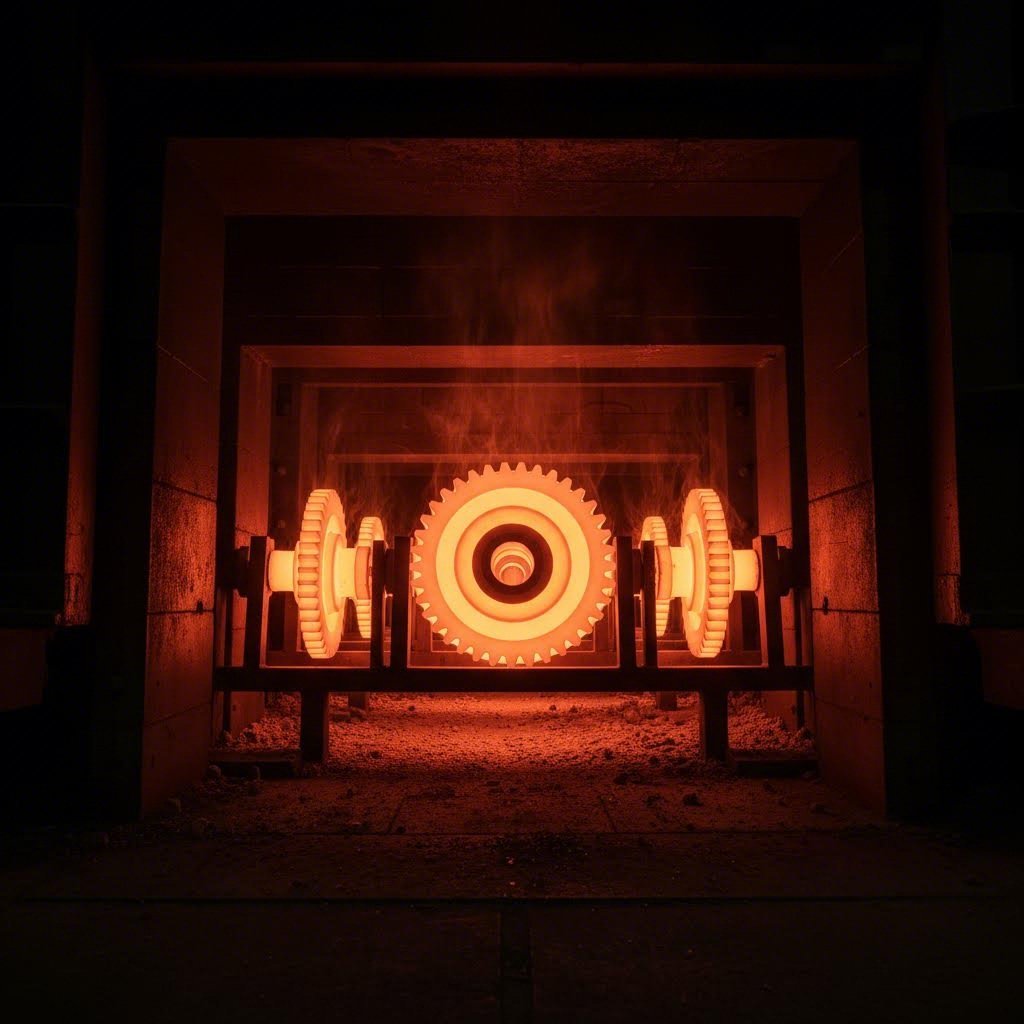
Heat Treatment Processes That Maximize Forged Gear Performance
A forged differential gear blank represents tremendous potential - aligned grain structure, near-zero porosity, and optimized material density. But that potential remains unrealized until heat treatment transforms the workpiece into a finished component with precisely tailored surface hardness, core toughness, and wear resistance. Understanding how gears are manufactured requires examining this critical post-forging step.
Heat treatment isn't optional for high-performance differential gears. It's the process that determines whether your forged component achieves its full mechanical potential or falls short of specifications. And here's what makes forging particularly valuable: superior forged blanks respond better to thermal processing than cast alternatives, producing more consistent and predictable results.
How Heat Treatment Transforms Forged Gear Performance
When you examine how are gears made for demanding applications, heat treatment emerges as the defining step. The process involves precisely controlled heating and cooling cycles that alter the microstructure of the gear material. According to gear manufacturing specialists, temperatures typically range from 750°C to 950°C depending on the specific material and desired properties, with controlled cooling rates determining the final microstructure and mechanical characteristics.
Why do forged blanks respond better to heat treatment? The answer lies in their homogeneous internal structure. Cast components contain porosity, inclusions, and inconsistent grain patterns that create unpredictable responses during thermal processing. Heat treatment can amplify these defects - internal voids may grow, and inconsistent grain structures can develop uneven hardness gradients.
Forged differential gears, with their continuous grain flow and dense structure, heat uniformly and transform predictably. This consistency translates directly to tighter quality control, reduced rejection rates, and more reliable final properties. Engineers can specify heat treatment parameters with confidence, knowing the forged substrate will respond as expected.
Carburizing and Hardening Processes Explained
Three primary heat treatment approaches dominate differential gear manufacturing: case hardening, through hardening, and induction hardening. Each serves distinct purposes and produces different property combinations.
Case hardening (carburizing) creates a hard, wear-resistant outer layer while maintaining a tough, ductile core. As heat treatment specialists explain, the process involves heating the steel in a carbon-rich atmosphere, allowing carbon to diffuse into the surface layer. This produces a case depth typically ranging from 0.5mm to 2mm with surface hardness reaching 58-64 HRC, while core hardness remains at 35-43 HRC.
This combination proves ideal for differential gears because tooth surfaces experience intense sliding contact and require maximum hardness, while the gear body must absorb shock loads without brittle fracture. Case-hardened gears demonstrate 200-300% longer service life compared to untreated parts.
Through hardening treats the entire gear volume uniformly, creating consistent hardness from surface to core. The process heats gears to austenitizing temperature, followed by rapid quenching in oil, water, or polymer solutions. Subsequent tempering reduces brittleness while maintaining desired hardness levels. Medium-carbon and alloy steels respond exceptionally well to through hardening, achieving hardness values of 45-55 HRC throughout the component.
Induction hardening selectively heats gear tooth surfaces using electromagnetic fields, enabling precise control over hardened zones. This localized approach minimizes distortion and allows rapid processing, with cycle times measured in seconds rather than hours. Manufacturers achieve case depths from 0.5mm to 6mm depending on frequency and power settings - particularly valuable for large differential ring gears where full case hardening would be cost-prohibitive.
The Heat Treatment Sequence for High-Performance Differential Gears
Producing differential gears that meet demanding specifications requires following a carefully orchestrated thermal processing sequence. Each step builds upon the previous, and deviating from established parameters can compromise final properties.
- Stress relief (if required): Forged blanks may undergo initial stress relief at 550-650°C to reduce residual stresses from the forging operation, improving dimensional stability during subsequent machining
- Rough machining: Gear blanks are machined to near-net shape, leaving stock for finish machining after heat treatment to compensate for dimensional changes
- Carburizing or heating: Components are heated in controlled atmospheres to carburizing temperature (880°C to 1,050°C) and held for sufficient time to achieve specified case depth - typically 0.5-1.3mm for differential applications
- Quenching: Rapid cooling in oil, polymer, or high-pressure gas transforms the surface layer from austenite to hard martensite while maintaining core toughness
- Tempering: Reheating to 150-200°C reduces internal stresses and brittleness without significantly reducing surface hardness
- Hard machining or grinding: Final dimensional accuracy is achieved through precision grinding or hard turning operations
- Quality verification: Hardness testing, microstructure examination, and dimensional inspection confirm specifications have been met
Controlling Distortion During Heat Treatment
One challenge that distinguishes professional heat treatment from amateur attempts is distortion control. As advanced manufacturing research demonstrates, distorted gear components cause noise in transmissions and may even create problems during assembly. This proves especially critical for electric vehicle drivetrains requiring low-noise, high-precision components.
Modern heat treatment facilities address distortion through low-pressure carburizing (LPC) combined with high-pressure gas quenching (HPGQ). Unlike conventional oil quenching, which creates inhomogeneous cooling conditions, gas quenching provides uniform heat transfer across the component surface. Studies show this approach reduces helix variation by 48-59% compared to atmospheric carburizing with oil quenching.
Proper fixturing during quenching also minimizes distortion. Carbon-reinforced carbon (CFC) fixtures maintain dimensional stability through repeated thermal cycles, unlike traditional alloy fixtures that deflect or distort over time. When fixture design is optimized, flatness changes can be reduced by 49% and roundness changes by 24%.
The relationship between forging quality and heat treatment outcomes becomes clear here: forged blanks with uniform internal structure distort more predictably than cast alternatives. This predictability allows engineers to compensate through green machining - intentionally machining dimensions slightly off-target knowing exactly how they'll shift during heat treatment. Cast components, with their variable internal structure, exhibit less predictable movement that's harder to compensate.
With heat treatment complete, the forged differential gear achieves its final properties. But these properties only matter if they're applied in the right context. The next consideration examines where forged differential gears deliver their most significant performance advantages.
Critical Applications Where Forged Differential Gears Excel
Understanding metallurgy and heat treatment provides the foundation - but where do these advantages actually matter? Forged differential gear applications span from weekend off-road adventures to commercial trucking fleets logging millions of miles. The common thread? Environments where component failure isn't just inconvenient - it's potentially dangerous or catastrophically expensive.
Let's examine the specific demands different applications place on differential gears, and why forging consistently outperforms alternatives in each scenario.
Off-Road and High-Torque Demands on Differential Gears
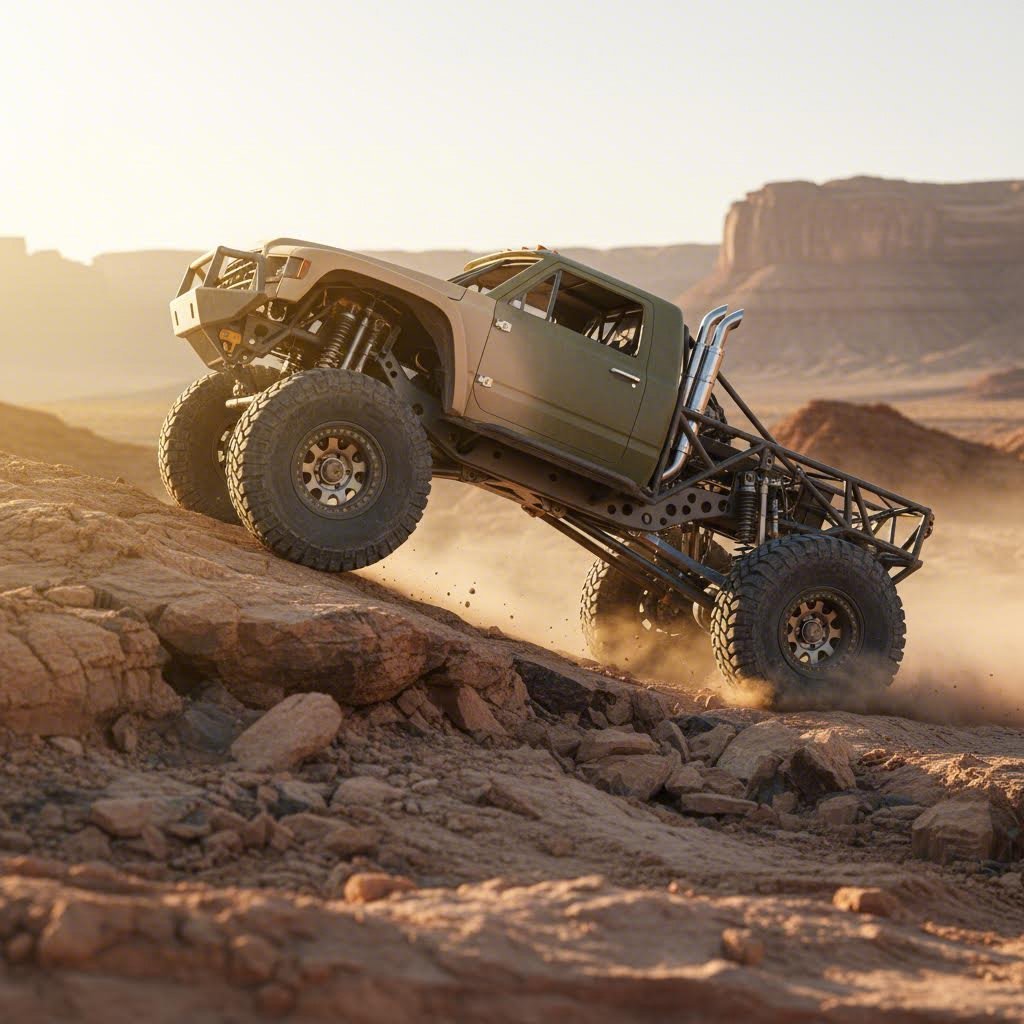
Imagine your vehicle dropping off a boulder, all its weight momentarily concentrated on a single wheel. That split-second impact generates shock loads that can exceed normal operating torque by 300-400%. This is the reality off-road differentials face regularly - and precisely where forged components prove their worth.
Off-road driving subjects differential gears to terrain-induced stress that standard applications never experience. Rock crawling generates repeated impact loading as wheels climb over obstacles. Sand and mud create high-resistance conditions that spike torque demands. Trail driving introduces constant load reversals as throttle modulation changes direction of force through the drivetrain.
According to high-performance differential specialists, if you're building a high-horsepower machine pushing over 500 horsepower, your drivetrain is only as strong as its weakest link. The Ford 9-inch and Dana 60 rear ends dominate these applications specifically because their forged components handle abuse that would shatter cast alternatives. The Dana 60's massive 35-spline forged axles and beefy ring and pinion design represent deliberate overengineering - "overkill for most street cars, but in a good way."
High torque differential gears in racing applications face different but equally demanding conditions. Drag racing concentrates enormous torque during launches - sticky tires can generate traction levels that tear apart weak differentials. Road racing adds thermal stress from sustained high-speed operation. Rally applications combine both extremes with unpredictable surfaces that create sudden traction changes.
Electric Vehicle Drivetrain Requirements
Electric vehicles present a fascinating challenge for differential gear design. Unlike internal combustion engines that build torque gradually through the RPM range, electric motors deliver maximum torque instantaneously from zero RPM. This characteristic fundamentally changes what differential gears experience.
As Eaton's EV Truetrac development demonstrates, EV drivetrain components require specific metallurgical considerations. The company specifically altered metallurgy and tuning in their EV differential design to accommodate the immediate high torque from electric motors. Changes to both side gears and pinions improve reliability under the higher-torque environment of electric drivetrains.
EV drivetrain components also operate in unique lubrication environments. Traditional differentials use heavy gear oil or grease for lubrication. Electric vehicle powertrains often utilize shared, low-viscosity fluids that serve double duty as lubricants and coolants for motors and gearing. Forged differential gears, with their superior surface finish and consistent material properties, perform better with these lightweight fluids than cast alternatives with surface porosity.
Noise presents another EV-specific challenge. Without engine and exhaust sounds masking mechanical noise, differential gear whine becomes noticeable and objectionable. Research into EV differential design confirms that properly manufactured differential gears roll significantly quieter than alternatives. The dimensional accuracy advantages of forging - better control over final shape and tooth profile geometry - directly reduce the mesh variations that create gear noise.
Application Categories and Their Specific Demands
Different applications stress differential gears in distinct ways. Understanding these demands helps match component specifications to actual operating conditions:
- Off-Road and Rock Crawling: Extreme shock loading from terrain impacts; load reversals during obstacle navigation; potential debris contamination; requires maximum impact toughness and fatigue resistance
- High-Performance Street: Aggressive launches generating 2-3x normal torque spikes; sustained high-speed operation; thermal cycling from spirited driving; demands balance of strength and refinement
- Drag Racing: Maximum torque concentration during launch; relatively low cycle count but extreme peak loads; sticky tire traction multiplies drivetrain stress; prioritizes ultimate strength over longevity
- Heavy-Duty Trucking: Continuous high-torque operation under load; millions of fatigue cycles over service life; thermal stress from sustained operation; requires exceptional fatigue resistance and predictable wear patterns
- Electric Vehicles: Instant torque delivery from zero RPM; low-viscosity lubricant compatibility; noise sensitivity without engine masking; thermal management integration with motor cooling
- Industrial Applications: Continuous duty cycles; predictable loading patterns; extended service intervals; emphasizes reliability and maintenance predictability over peak performance
Across all these applications, the benefits of forged differential gears consistently emerge: superior strength handles peak loads, aligned grain structure resists fatigue, dense material provides predictable wear, and quality forged blanks enable precise heat treatment for optimized surface properties.
The question isn't whether forged differential gears perform better - the metallurgical evidence clearly demonstrates they do. The more practical question becomes: when does that performance advantage justify the investment, and when might alternatives suffice?
Weighing the Advantages and Limitations of Forged Differential Gears
You've seen the compelling evidence: forged differential gears deliver superior strength, better fatigue resistance, and more predictable failure characteristics than cast or powder metallurgy alternatives. But here's the honest truth - forging isn't always the right choice. Making an informed decision requires understanding both sides of the equation.
A balanced forged vs cast differential gears evaluation acknowledges that each manufacturing method serves specific purposes. Let's examine when forged components justify their premium - and when they might represent unnecessary expense.
Understanding the Investment in Forged Components
The forged gear cost comparison often surprises first-time buyers. According to manufacturing cost analysis, forging typically involves higher tooling costs and more energy-intensive processes than casting. Die sets for closed-die forging represent significant upfront investment, and the forging operation itself requires substantial hydraulic or mechanical press capacity.
Custom forged gear lead times also exceed casting timelines in most cases. While casting molds can often be produced relatively quickly, forging dies require precise machining from hardened tool steels. Complex geometries demand multi-impression die sets that increase both cost and development time. If you need components in weeks rather than months, casting may be your only realistic option.
Design flexibility presents another consideration. As forging specialists acknowledge, complex internal features, hollow sections, and intricate internal cavities prove challenging or impossible to forge. Very thin wall sections can cause material flow problems during forging, potentially leading to defects like cracking or warping. Casting excels precisely where forging struggles - enabling near-net shapes with internal passages and geometric complexity that forging cannot economically achieve.
Pros of Forged Differential Gears
- Superior mechanical properties: Approximately 26% higher tensile strength and 37% higher fatigue strength compared to cast alternatives
- Aligned grain structure: Continuous grain flow following component geometry maximizes directional strength where loads concentrate
- Minimal internal defects: Near-zero porosity eliminates stress concentrators that initiate fatigue cracks
- Predictable failure behavior: Gradual fatigue degradation provides warning signs before catastrophic failure
- Better heat treatment response: Homogeneous structure produces consistent and predictable results during thermal processing
- Extended service life: Higher durability often delivers lower lifetime cost despite higher initial investment
Cons of Forged Differential Gears
- Higher initial cost: Tooling investment, energy requirements, and processing complexity increase per-unit pricing
- Longer lead times: Die development and forging setup extend timelines compared to casting, especially for custom designs
- Geometry limitations: Internal cavities, hollow sections, and intricate features may require secondary machining or alternative manufacturing
- Volume economics: Cost advantages become significant only at moderate-to-high production volumes where tooling amortizes effectively
- Material constraints: Not all alloys forge equally well - some high-strength materials have lower ductility that limits achievable complexity
When Forging May Not Be Necessary
Here's practical guidance that promotional content rarely provides: many differential gear applications don't require forged components. Standard passenger vehicles operating within normal parameters - commuting, highway driving, occasional light towing - may perform adequately with cast differential gears throughout their intended service life.
Consider your actual differential gear manufacturing options based on realistic operating conditions:
- Light-duty passenger vehicles: Cast gears typically provide acceptable service life when loads remain within design parameters
- Moderate performance applications: Factory-installed components often balance cost and capability appropriately for intended use
- Cost-constrained projects: When budget limitations are real, cast alternatives may represent acceptable compromise
- Prototype or low-volume needs: Casting's lower tooling costs make it economical for limited production runs
The honest assessment? Forging becomes essential when you're pushing beyond stock parameters - high-horsepower builds, heavy towing, aggressive off-road use, or racing applications where failure consequences are severe. For vehicles operating within their original design envelope, the metallurgical advantages of forging may exceed actual requirements.
This balanced perspective prepares you for the next practical consideration: when forged components are the right choice, how do you identify qualified suppliers who can deliver the quality these demanding applications require?
Sourcing Quality Forged Differential Gears From Certified Manufacturers
You've determined that forged differential gears are the right choice for your application. Now comes the equally critical decision: who will manufacture them? The supplier you select directly influences component quality, delivery reliability, and ultimately, drivetrain performance. A poorly chosen forging partner can undermine every metallurgical advantage you're paying premium prices to obtain.
Selecting automotive forging suppliers requires evaluating capabilities that go far beyond price quotes. Quality certifications, engineering expertise, production flexibility, and supply chain positioning all determine whether your forged components will meet specifications consistently - or become sources of frustration and failure.
Quality Certifications That Matter for Automotive Forging
When evaluating potential forging manufacturers, certifications provide the first meaningful filter. Not all quality standards carry equal weight, and understanding what each certification actually requires helps distinguish genuinely capable suppliers from those offering surface-level compliance.
IATF 16949 certification represents the gold standard for automotive component manufacturing. As industry analysis confirms, this demanding standard requires great effort and investment - specifically designed as a holistic review of a supplier's systems including supply chain diversification and risk, management response procedures, and continuous improvement and process reviews.
What makes IATF 16949 certified forging different from general ISO certification? The automotive task force recognized that quality alone doesn't prevent supply chain disruptions. IATF 16949 addresses potential product or process disruptors beyond traditional quality control - including raw material sourcing risk, contingency planning for production interruptions, and systematic approaches to preventing line-down situations that can cascade through automotive supply chains.
According to supplier reliability experts, it is becoming commonplace for OEMs and Tier 1s to require IATF programs as their value has been shown in keeping supply arrangements running smoothly. For differential gear buyers, this certification provides assurance that your supplier has implemented systems designed to prevent the quality escapes and delivery failures that can halt your own production.
Additional certifications to consider include:
- ISO 9001: Baseline quality management system certification - necessary but not sufficient for automotive applications
- IATF 16949: Automotive-specific certification covering quality plus supply chain risk management and continuous improvement
- AS9100: Aerospace quality standard indicating capability for precision-critical applications
- NADCAP: Special process accreditation for heat treatment, non-destructive testing, and other critical operations
Evaluating Forging Partners for Differential Components
Certifications establish baseline capability, but evaluating forging partners requires examining operational capabilities that determine whether they can actually deliver what your application demands. According to forging supplier selection guidance, choosing the wrong metal forging company could lead to disruptions, production losses, and serious safety risks.
Start by assessing technical capabilities. Review the supplier's forging equipment, press tonnage capacity, and machining capabilities. Can they provide precision forging with tight tolerances? Do they offer CNC machining, metallurgical testing, and heat treatment in-house or through approved vendors? A fully equipped forging manufacturer reduces lead time, simplifies logistics, and enhances product control.
In-house engineering capabilities deserve particular attention for differential gear applications. Meeting exact specifications for ring gears, pinions, and spider gears requires metallurgical expertise and design-for-manufacturing knowledge that generic forging shops may lack. Suppliers with dedicated engineering teams can optimize die designs, recommend material selections, and troubleshoot production issues before they affect your components.
Experience matters significantly. Choose a forging company with at least 10-15 years of industry experience. A supplier with a proven portfolio across sectors like automotive, off-road, and heavy equipment demonstrates reliability and versatility. Check for client testimonials and past project examples relevant to drivetrain components.
Key Evaluation Criteria for Forged Gear Manufacturer Selection
When comparing potential suppliers, structure your evaluation around these critical factors:
- Certification standards: Verify IATF 16949 certification for automotive applications; request copies of current certificates and audit results; confirm scope covers forging operations specifically
- Prototyping capabilities: Assess ability to produce prototype quantities quickly; rapid prototyping reduces development timelines and allows validation before committing to production tooling
- Production volume flexibility: Evaluate capacity to scale from development quantities to full production; determine minimum order quantities and how pricing scales with volume
- Geographic considerations: Factor in logistics costs and lead times; proximity to major ports enables efficient global shipping; consider time zone overlap for communication efficiency
- Quality inspection protocols: Inquire about ultrasonic testing, magnetic particle inspection, and dimensional verification capabilities; request documentation standards including PPAP, FMEA, and CMM reports
- Technical support: Evaluate engineering support availability for design optimization and troubleshooting; assess responsiveness to technical inquiries during evaluation
Supply Chain Positioning and Responsiveness
The global disruptions of recent years highlighted how supply chain positioning affects component availability. As supply chain analysis demonstrates, supply chains relying on multiple suppliers often face logistical challenges, while forging manufacturers offering centralized solutions simplify logistics and reduce risk of delays and inconsistencies.
Geographic location influences both cost and reliability. Suppliers positioned near major shipping ports offer logistics advantages for international buyers. Proximity reduces transit times, lowers shipping costs, and provides flexibility for expedited delivery when schedules tighten.
For buyers seeking precision hot forging solutions with these combined advantages, Shaoyi (Ningbo) Metal Technology exemplifies the qualified forging partner profile. Their IATF 16949 certification confirms automotive-grade quality systems, while in-house engineering capabilities support development of components including suspension arms and drive shafts to exact specifications. Rapid prototyping in as little as 10 days accelerates development timelines, and their Ningbo Port location enables efficient global distribution - practical advantages that translate directly to supply chain performance.
Analyze historical delivery performance when evaluating any supplier. Ask about lead times for tooling development, sampling, and bulk production. A dependable forging manufacturer should have efficient planning systems and dedicated logistics support. On-time delivery protects your supply chain from delays and production bottlenecks that can cascade through your own operations.
Building Long-Term Supplier Relationships
The most successful forging partnerships extend beyond transactional purchasing. Look for suppliers who treat your relationship as a strategic partnership - offering flexibility for urgent orders, willingness to co-develop solutions, and consistent technical support throughout the product lifecycle.
A reliable forging vendor will invest in understanding your business and helping you optimize designs for manufacturability. Prioritize those who offer ongoing process improvements and cost optimization as production matures. This collaborative approach transforms component sourcing from a procurement headache into a competitive advantage.
With a qualified forging partner identified and evaluation criteria satisfied, you're positioned to make confident decisions about your differential gear requirements. The final step brings together everything covered - metallurgical advantages, material selection, heat treatment, applications, and sourcing - into actionable guidance for your specific situation.
Making Informed Decisions About Forged Differential Gear Selection
You've now explored the complete landscape of forged differential gear technology - from grain structure fundamentals to supplier qualification criteria. But knowledge without application remains theoretical. Whether you're an engineer developing specifications or a buyer evaluating purchasing options, translating this understanding into action requires clear decision frameworks.
The benefits of forged differential gears aren't abstract concepts. They represent measurable performance differences that directly impact drivetrain reliability, service life, and total cost of ownership. Let's synthesize the key insights into practical guidance you can apply immediately.
Key Considerations for Your Differential Gear Decision
Your forged differential gear selection guide begins with honest assessment of your application requirements. Not every vehicle needs forged components - but when conditions exceed standard parameters, the metallurgical advantages become essential rather than optional.
The aligned grain structure, near-zero porosity, and predictable failure behavior of forged differential gears don't just improve performance metrics - they fundamentally change the reliability equation, providing warning signs before catastrophic failure rather than sudden brittle fracture.
When choosing forged drivetrain components, evaluate these critical factors:
- Operating conditions: High-torque applications, shock loading from off-road use, or sustained heavy-duty operation justify forged components; standard passenger vehicle use may not
- Failure consequences: Applications where differential failure creates safety risks or catastrophic downtime costs warrant the investment in forged reliability
- Service life expectations: Extended service intervals and predictable wear patterns reduce lifetime ownership costs despite higher initial investment
- Material matching: Ensure alloy selection (4340, 9310, or alternatives) aligns with your specific temperature, load, and environmental conditions
- Heat treatment requirements: Verify suppliers can achieve required surface hardness and case depth specifications for your application
Moving Forward With Forged Component Selection
For engineers developing forged gear specification requirements, focus on documenting operating parameters that drive material and process decisions. Define peak torque loads, expected cycle counts, operating temperature ranges, and lubricant compatibility requirements. These specifications enable suppliers to recommend optimal alloys and heat treatment processes rather than defaulting to generic solutions.
Your differential gear buying criteria should include verification of IATF 16949 certification for automotive applications, confirmation of in-house metallurgical testing capabilities, and assessment of engineering support for design optimization. Request sample inspection reports demonstrating dimensional accuracy and hardness verification - qualified suppliers provide this documentation readily.
For buyers focused on practical procurement, prioritize suppliers offering prototyping capabilities that accelerate validation before committing to production tooling. Evaluate geographic positioning for supply chain efficiency, and establish relationships with forging partners who demonstrate genuine understanding of drivetrain component requirements rather than treating differential gears as commodity products.
The knowledge you've gained - understanding why grain flow matters, how heat treatment transforms properties, and what separates qualified suppliers from pretenders - positions you to make decisions based on engineering principles rather than marketing claims. Apply this understanding to your specific requirements, and you'll source differential components that deliver the reliability these critical drivetrain elements demand.
Frequently Asked Questions About Forged Differential Gears
1. Which is better, cast or forged differential gears?
Forged differential gears outperform cast alternatives in nearly every measurable category. Forged components deliver approximately 26% higher tensile strength and 37% higher fatigue strength compared to cast parts. The continuous grain flow in forged gears provides directional strength where loads concentrate, while cast gears contain random grain structures and internal porosity that create weak points. Most importantly, forged gears fail gradually with warning signs, whereas cast gears are prone to sudden brittle fracture. For high-performance, off-road, heavy-duty trucking, or EV applications, forged components provide the reliability these demanding conditions require.
2. What are the disadvantages of forged steel differential gears?
Forged differential gears come with trade-offs worth considering. Higher initial costs result from tooling investment, energy requirements, and processing complexity. Custom forged gear lead times typically exceed casting timelines because forging dies require precise machining from hardened tool steels. Design flexibility is limited compared to casting - complex internal features, hollow sections, and intricate cavities prove challenging or impossible to forge. Additionally, cost advantages only become significant at moderate-to-high production volumes where tooling amortizes effectively. For standard passenger vehicles operating within normal parameters, cast alternatives may provide acceptable performance at lower cost.
3. What are the advantages of differential gears in drivetrains?
Differential gears serve a critical function in drivetrains by allowing wheels on the same axle to rotate at different speeds during cornering while delivering equal torque to each wheel under normal traction conditions. Without differentials, vehicles would experience tire scrubbing and drivetrain stress during turns. The system of gears connects the propeller shaft to the rear axle, transferring power efficiently while accommodating speed variations. For demanding applications, forged differential gears enhance these benefits by providing superior structural integrity that handles the tremendous forces experienced during operation, including shock loading from terrain, high-torque acceleration, and sustained heavy-duty use.
4. What are the major advantages of the forging process for gears?
The forging process creates gears with aligned grain structure that follows the component's geometry, dramatically enhancing mechanical properties. Key advantages include improved ductility, increased impact toughness, higher fracture toughness, and superior fatigue strength. Forging eliminates the porosity and internal voids common in castings, creating near-theoretical material density. The severe plastic deformation during forging breaks down coarse grain structures and promotes finer, more uniform grains that resist deformation. These metallurgical improvements translate to practical benefits: better response to heat treatment, superior strength-to-weight ratios, and predictable failure behavior that provides warning signs before catastrophic failure.
5. How do forged differential gears perform in electric vehicles?
Electric vehicles present unique challenges that forged differential gears address effectively. Unlike combustion engines that build torque gradually, electric motors deliver maximum torque instantaneously from zero RPM, creating sudden high-stress conditions on drivetrain components. Forged gears handle this instant torque delivery better than cast alternatives due to their superior impact toughness. EVs also require quieter operation since mechanical noise becomes noticeable without engine masking - forged components with better dimensional accuracy and tooth profile geometry produce smoother, quieter meshing. Many EV drivetrains use low-viscosity fluids for combined lubrication and cooling, and forged gears with superior surface finish perform better with these lightweight fluids than porous cast alternatives.