 Small batches, high standards. Our rapid prototyping service makes validation faster and easier —
  EN
EN


Forged Aluminum vs. Stamped Steel: Performance Benefits Uncovered
TL;DR
The primary benefits of forged aluminum over stamped steel stem from its superior strength-to-weight ratio, allowing for significantly lighter components without compromising on strength. The forging process refines aluminum's internal grain structure, which dramatically increases its durability, toughness, and fatigue resistance. Furthermore, forged aluminum offers inherent corrosion resistance, making it a more durable long-term choice for parts exposed to the elements.
Understanding the Core Processes: Forging vs. Stamping
To appreciate the performance differences between forged aluminum and stamped steel, it is essential to first understand the manufacturing processes that create them. These methods fundamentally alter the material's properties, dictating its final strength, durability, and suitability for various applications. The choice between them is not merely about shape, but about the integrity built into the component at a microscopic level.
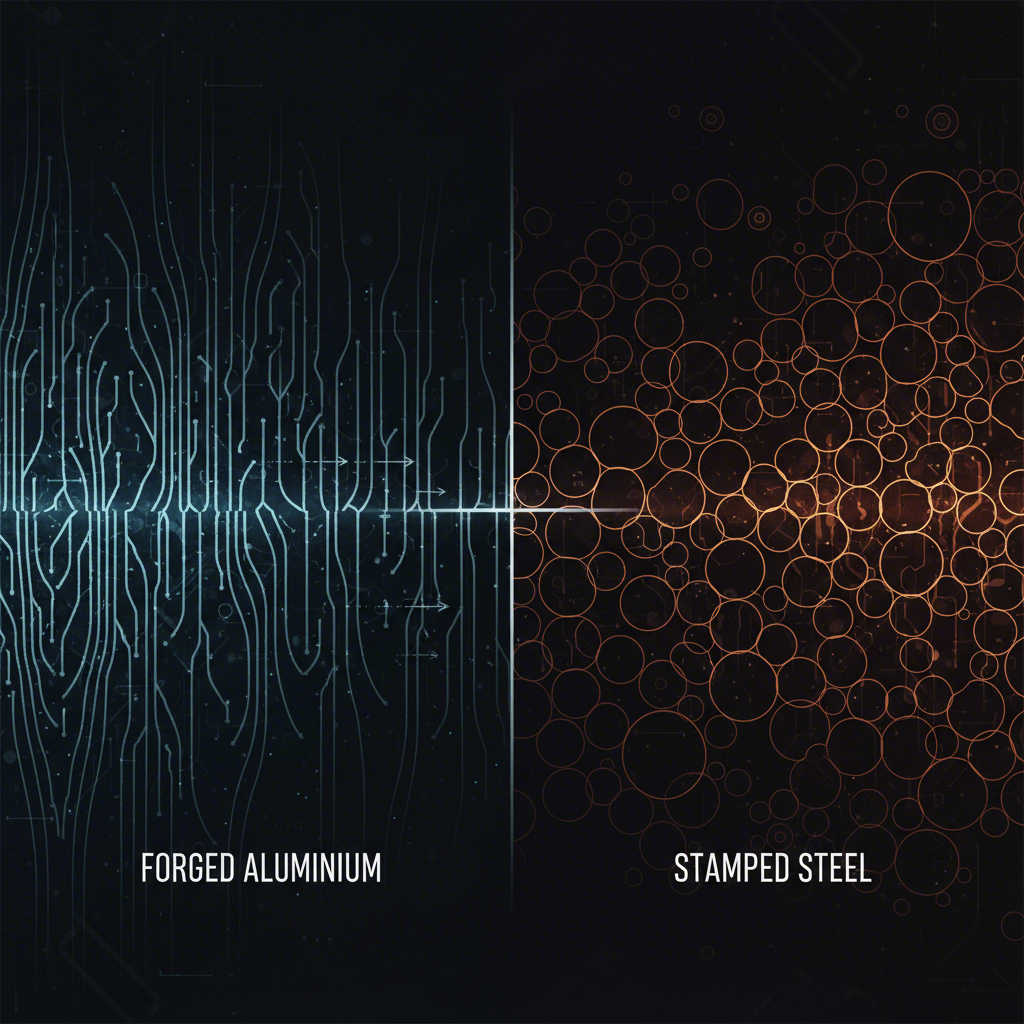
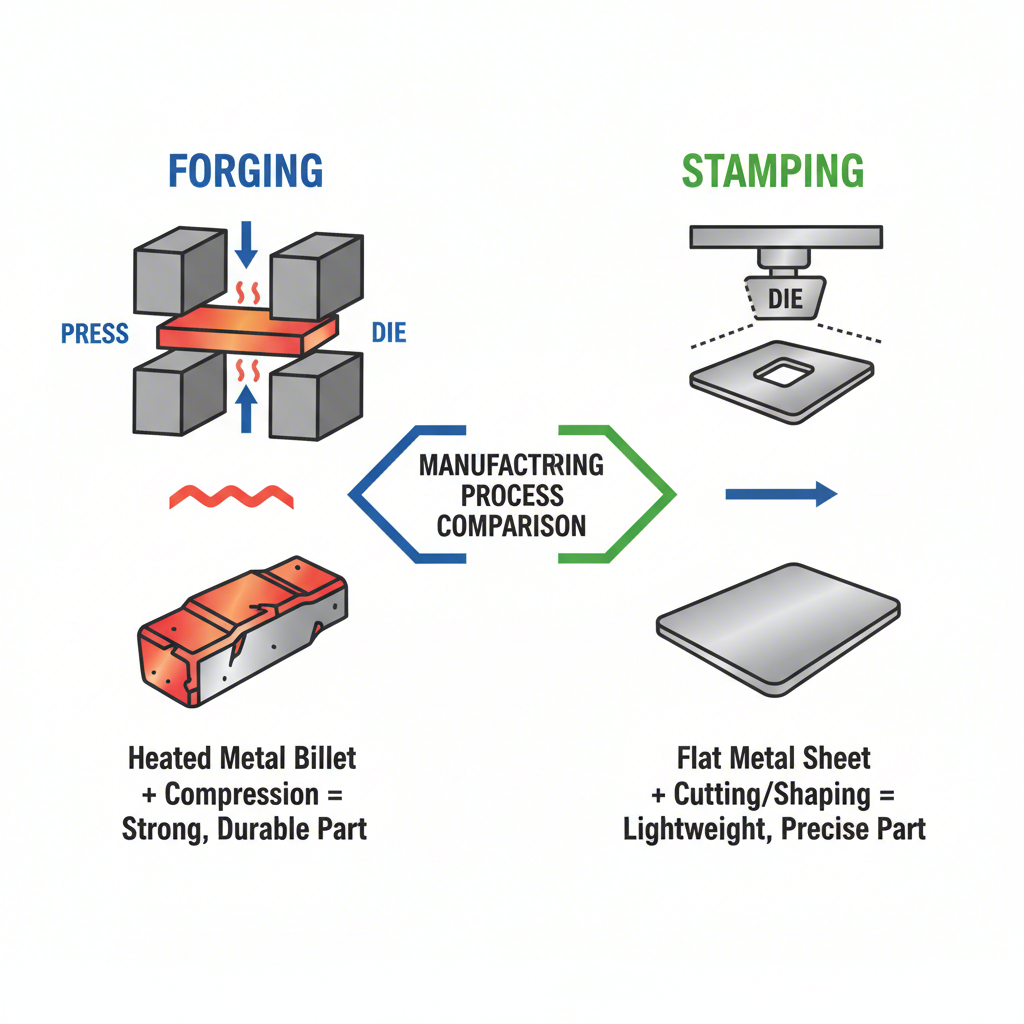
Forging is a manufacturing process where a solid billet of metal is heated and then shaped using immense compressive forces, such as hammering or pressing. As detailed in guides on aluminum forging, this intense pressure doesn't just reshape the metal; it refines and aligns its internal grain structure. This process eliminates internal voids and porosity, creating a continuous grain flow that follows the contour of the part. The result is a component with significantly enhanced mechanical properties, including greater tensile strength and fatigue resistance.
In contrast, stamping is a cold-forming process that involves cutting metal sheets into a specific shape and then forming them using dies in a stamping press. While highly efficient for mass production of simple to complex shapes, stamping does not fundamentally enhance the material's intrinsic properties in the same way forging does. For automotive manufacturers seeking reliable and precise components through this method, specialized providers offer advanced solutions. For instance, for those in need of high-quality stamped parts, Shaoyi (Ningbo) Metal Technology Co., Ltd. delivers comprehensive services from rapid prototyping to mass production, ensuring consistency and quality for even the most complex components.
The distinction is critical: forging actively improves the metal's structure, while stamping primarily changes its shape. This core difference is the source of the performance advantages seen in forged aluminum components.
| Aspect | Forging Process | Stamping Process |
|---|---|---|
| Method | Shaping metal using heat and compressive force | Cutting and shaping sheet metal with dies |
| Effect on Grain Structure | Refines and aligns grains, enhancing strength | No significant change to intrinsic grain structure |
| Internal Defects | Eliminates porosity and voids | Can introduce stress points; welds may be required |
| Best For | High-stress, critical performance parts | High-volume production of body panels, brackets |
The Critical Differentiator: Superior Strength-to-Weight Ratio
The most significant benefit of forged aluminum is its exceptional strength-to-weight ratio. Aluminum is approximately one-third the weight of steel, a crucial advantage in industries where reducing mass is paramount. However, weight reduction is meaningless without adequate strength. This is where the forging process becomes a game-changer, elevating aluminum's performance to levels that can meet or exceed those of steel in many applications.
The forging process creates an incredibly dense and uniform material structure. This allows forged aluminum parts to withstand significant stress and load without the bulk and weight of steel. In the automotive and aerospace sectors, this benefit is transformative. As noted by industry experts, using forged aluminum for components like control arms, wheels, and suspension parts drastically reduces a vehicle's unsprung weight. This leads to more responsive handling, improved suspension performance, and greater fuel efficiency.
For example, a forged aluminum control arm can provide the necessary structural integrity to handle intense road forces while being much lighter than its stamped steel counterpart. This weight saving directly translates into a vehicle that accelerates faster, brakes more effectively, and has a more agile feel. The ability to deliver this level of performance makes forged aluminum an indispensable material for high-performance vehicles and modern aircraft where every gram counts.

Enhanced Durability and Fatigue Resistance
Durability is not just about raw strength; it's about a material's ability to withstand repeated stress cycles over its lifetime without failing. This is known as fatigue resistance, and it is another area where forged aluminum excels. The aligned grain flow achieved during the forging process creates a component that is exceptionally resilient to the microscopic cracks that can develop and propagate under cyclic loading.
As automotive parts manufacturers point out, a key advantage of forged aluminum parts is their monolithic structure. A component forged from a single billet has no welds, which are often the weakest points in a fabricated steel assembly. The heat-affected zones around welds can be susceptible to fatigue and failure over time. By eliminating welds entirely, forged aluminum offers superior structural integrity and a longer, more reliable service life, especially in high-vibration environments like a vehicle's suspension.
This enhanced toughness makes forged aluminum ideal for critical components that must endure constant stress, such as connecting rods, axle beams, and aircraft landing gear. While steel is known for its ability to bend before breaking, the predictable and high fatigue life of forged aluminum ensures consistent performance and safety under demanding operational conditions, making it a more durable choice for applications where failure is not an option.
Inherent Corrosion Resistance: A Long-Term Advantage
One of the most practical benefits of forged aluminum is its natural ability to resist corrosion. Unlike steel, which readily rusts when exposed to moisture and oxygen, aluminum forms a protective layer of aluminum oxide on its surface. This passive layer acts as a barrier, preventing further oxidation and protecting the underlying metal from environmental degradation.
This inherent property makes forged aluminum an excellent choice for components exposed to harsh conditions, such as winter roads treated with salt, coastal areas with salt-laden air, or marine applications. While stamped steel parts require protective coatings like paint or powder coating to prevent rust, these coatings can be compromised by scratches or impacts, leaving the steel vulnerable. Once rust begins, it can spread and weaken the structural integrity of the part over time.
The long-term advantage is clear: forged aluminum parts require less maintenance and have a longer lifespan in corrosive environments. This reduces the total cost of ownership and ensures that components maintain their performance and aesthetic appeal for years. This makes it a superior material for external automotive parts, marine hardware, and outdoor architectural elements where both durability and appearance are important.
Cost, Machinability, and Manufacturing Considerations
When evaluating materials, performance must be balanced with manufacturing costs and complexity. On the surface, steel often appears to be the more economical choice due to its lower raw material cost. However, a comprehensive analysis reveals a more nuanced financial picture where forged aluminum can be highly competitive, particularly in high-volume production.
A key factor is machinability. Aluminum is significantly easier and faster to machine than steel. This translates directly into lower manufacturing costs due to reduced tool wear, faster cycle times, and lower labor expenses. While the initial investment in forging dies can be substantial, the per-unit cost drops significantly with large production runs, making it an economically viable option for mass-produced parts.
Ultimately, the decision involves a trade-off between initial material cost and total manufacturing and lifetime value. For high-performance, lightweight applications where durability and corrosion resistance are critical, the higher upfront cost of forged aluminum is often justified by lower manufacturing overhead and a longer, maintenance-free service life. As explained in detailed guides on the advantages of forged aluminum, its blend of properties often delivers superior long-term value.
| Cost Factor | Forged Aluminum | Stamped Steel |
|---|---|---|
| Raw Material Cost | Higher | Lower |
| Machining Cost | Lower (easier and faster to machine) | Higher (more tool wear, slower) |
| Tooling Cost | High initial investment for dies | Moderate to high, depending on complexity |
| Long-Term Cost | Lower (no rust, high durability) | Potentially higher (rust repair/replacement) |
Frequently Asked Questions
1. What are the advantages of aluminium over steel?
The primary advantages of aluminum over steel are its lower density (about one-third the weight) and its natural resistance to corrosion. This makes it ideal for applications where reducing weight is critical, such as in vehicles to improve fuel efficiency and handling. Its corrosion resistance also gives it a longer lifespan in harsh environments without needing protective coatings.
2. Is forged aluminum better?
For applications requiring high strength and low weight, forged aluminum is often better than other forms of aluminum (like cast) and can be superior to steel. The forging process refines the metal's grain structure, creating a denser, stronger, and more durable part with excellent fatigue resistance. This makes it ideal for high-stress components in the automotive, aerospace, and defense industries.
3. Is steel forging better than aluminum forging?
Neither is universally "better"; the choice depends on the application. Steel forging produces parts with higher absolute strength, hardness, and heat resistance, making it suitable for heavy-duty industrial machinery and tools where weight is not the primary concern. Aluminum forging is superior when the strength-to-weight ratio is the most important factor and corrosion resistance is needed.
4. Why use aluminum over stainless steel?
Aluminum is typically chosen over stainless steel when weight is the most critical factor. While both offer excellent corrosion resistance, aluminum is significantly lighter. It is also a better conductor of heat and electricity. Stainless steel is generally stronger, harder, and more durable, but its higher density and cost make aluminum the preferred choice for lightweight applications.