 Small batches, high standards. Our rapid prototyping service makes validation faster and easier —
  EN
EN


Automotive Bracket Stamping Techniques: Engineering Precision & Process Selection
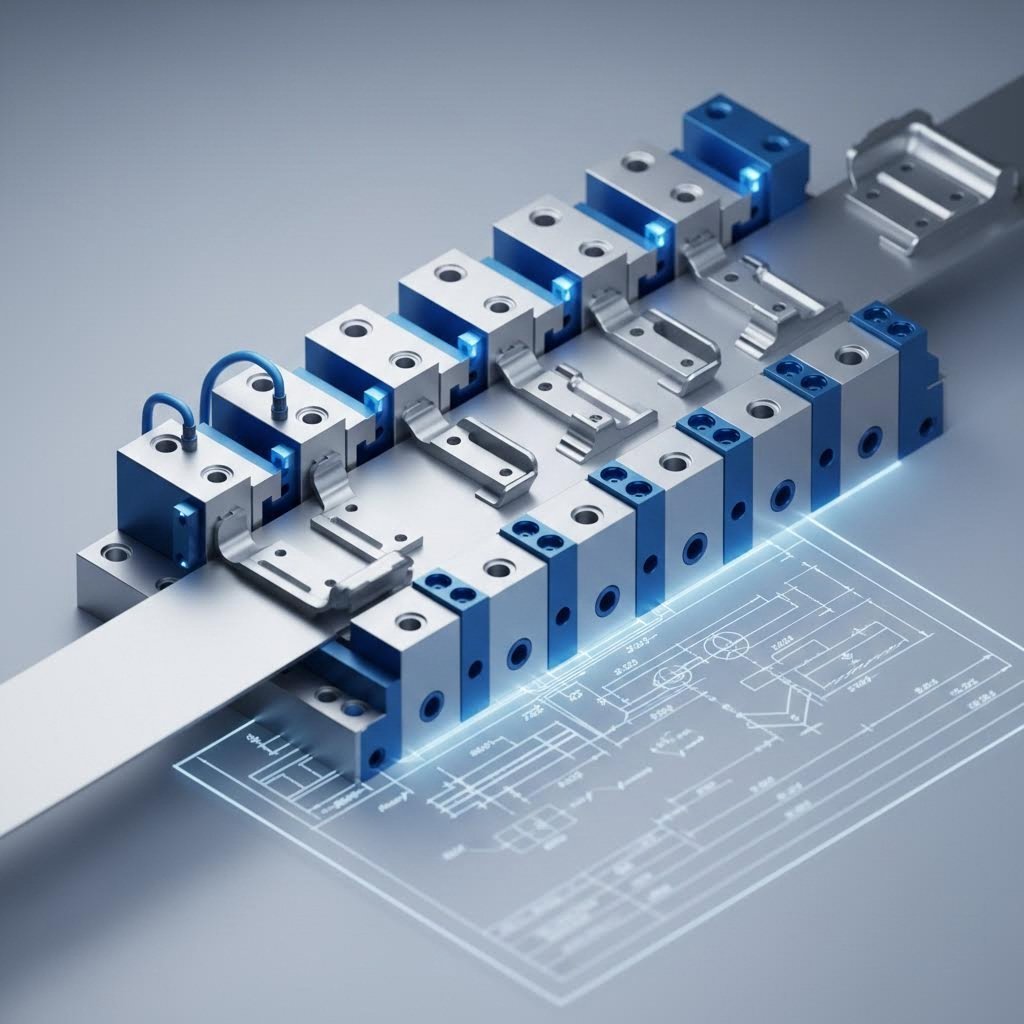
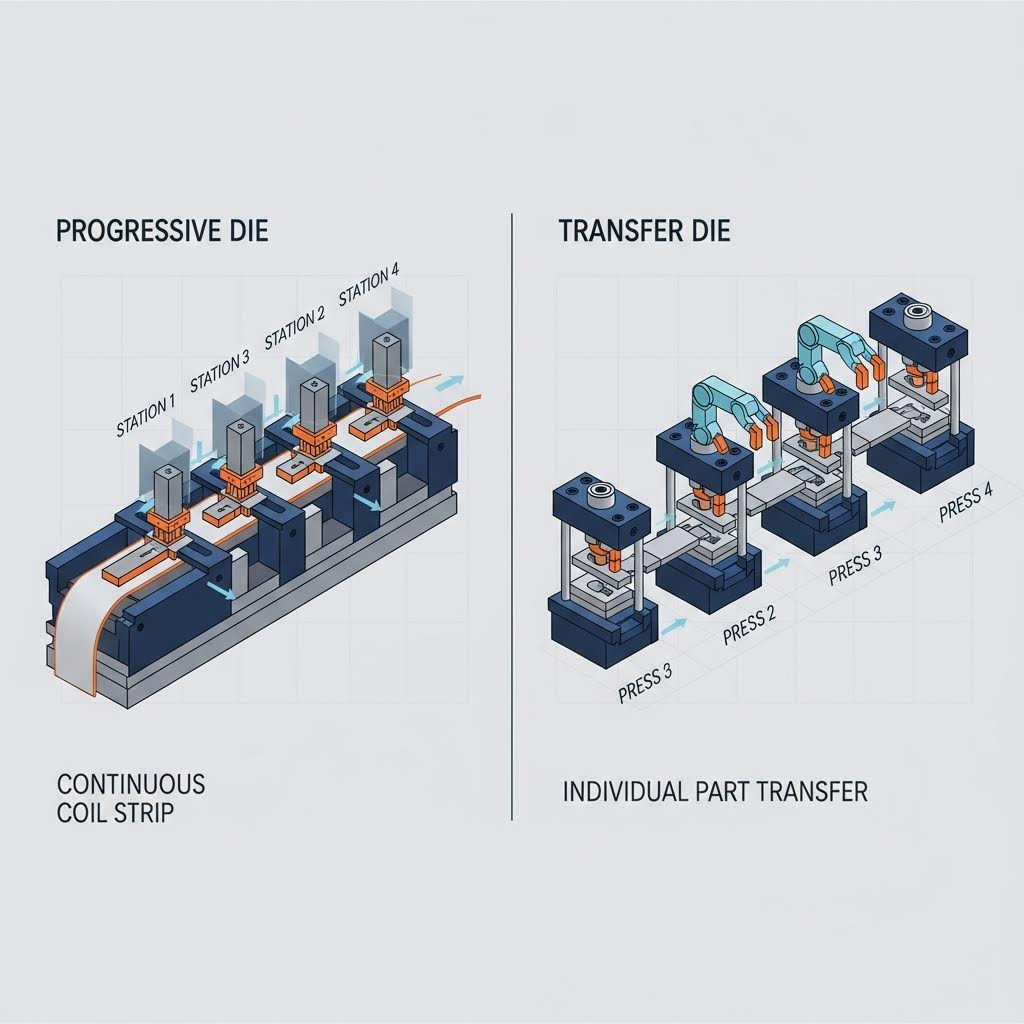
<h2>TL;DR</h2><p>Automotive bracket stamping is a high-precision metalworking process that converts flat sheet metal into structural and mounting components using specialized dies and high-tonnage presses. Manufacturers primarily utilize <strong>progressive die stamping</strong> for high-volume efficiency, <strong>transfer die stamping</strong> for complex deep-drawn parts, and <strong>four-slide stamping</strong> for intricate multi-directional bends. Success in this field relies on mastering material behavior—specifically the springback of Advanced High-Strength Steel (AHSS) and Aluminum—and leveraging technologies like servo presses and simulation software to ensure zero-defect quality for critical applications like EV battery packs and NVH reduction systems.</p><h2>Core Manufacturing Techniques: Progressive, Transfer, and Four-Slide</h2><p>Selecting the correct automotive bracket stamping technique is an engineering decision driven by part geometry, production volume, and material specifications. While the end product often looks similar, the manufacturing pathway dictates cost, speed, and structural integrity. Three dominant methods define the industry standard.</p><p><strong>Progressive Die Stamping</strong> is the workhorse of high-volume production. In this process, a continuous metal strip feeds through a series of stations within a single die set. Each station performs a specific operation—cutting, punching, bending, or coining—simultaneously with every stroke of the press. As the strip advances, the part becomes progressively more complete until it is cut loose at the final station. This method is ideal for producing smaller, complex brackets at speeds reaching hundreds of parts per minute, offering the lowest per-unit cost for high volumes.</p><p><strong>Transfer Die Stamping</strong> separates the process into individual stations where mechanical fingers or robotic arms move the part from one die to the next. Unlike progressive stamping, the part is separated from the strip early in the process. This technique is essential for larger automotive brackets, such as transmission mounts or chassis reinforcements, which require deep drawing or complex geometric manipulation that would distort a continuous strip. Transfer stamping allows for greater flexibility in part orientation but typically operates at slower speeds than progressive lines.</p><p><strong>Four-Slide (Multi-Slide) Stamping</strong> is a distinct process favored for small, intricate brackets requiring bends from multiple directions. Instead of a vertical press motion, four-slide machines use horizontally moving tools (slides) that strike the workpiece from four sides. This method eliminates the need for a carrier strip, significantly reducing material waste and tooling costs for parts like mounting clips and wire forms.</p><table><thead><tr><th>Feature</th><th>Progressive Die</th><th>Transfer Die</th><th>Four-Slide</th></tr></thead><tbody><tr><td><strong>Ideal Volume</strong></td><td>High (250k+)</td><td>Medium to High</td><td>Medium to High</td></tr><tr><td><strong>Part Complexity</strong></td><td>High (2D/3D)</td><td>Very High (Deep Draw)</td><td>Intricate Bends</td></tr><tr><td><strong>Tooling Cost</strong></td><td>High</td><td>High</td><td>Moderate</td></tr><tr><td><strong>Material Waste</strong></td><td>Moderate (Strip)</td><td>Moderate</td><td>Low</td></tr></tbody></table><p>For manufacturers seeking to bridge the gap from rapid prototyping to high-volume manufacturing, partnering with a versatile supplier is key. Companies like Shaoyi Metal Technology leverage IATF 16949-certified precision and press capabilities up to 600 tons to deliver critical components like control arms and subframes. To ensure seamless scalability, engineering teams should look for <a href="https://www.shao-yi.com/auto-stamping-parts/">comprehensive stamping solutions</a> that can validate designs with prototypes before committing to expensive hard tooling.</p><h2>Material Science: Optimizing for Strength and Lightweighting</h2><p>The shift toward electric vehicles (EVs) and fuel efficiency has fundamentally changed the material landscape for automotive brackets. Engineers must now balance tensile strength with weight reduction, leading to the widespread adoption of Advanced High-Strength Steel (AHSS) and aluminum alloys.</p><p><strong>Advanced High-Strength Steel (AHSS)</strong> allows for thinner gauges without compromising structural integrity, making it perfect for safety-critical components like seatbelt anchors and bumper reinforcements. However, AHSS introduces significant manufacturing challenges, primarily <strong>springback</strong>—the tendency of metal to return to its original shape after forming. Overcoming this requires sophisticated die engineering and over-bending techniques to achieve precise final dimensions.</p><p><strong>Aluminum Stamping</strong> is critical for EV battery enclosures and chassis components where weight is a premium. While aluminum offers excellent strength-to-weight ratios, it is less formable than steel and prone to cracking or galling (material adhesion to the die). Manufacturers often employ special lubricants and coatings on the dies to mitigate these issues. For components exposed to harsh environments, <a href="https://www.automationtd.com/advanced-metal-stamping-techniques-applications">galvanized steel stamping</a> provides necessary corrosion resistance for underbody parts.</p><h2>Design for Manufacturability (DFM) and Simulation</h2><p>Cost-effective stamping begins long before the metal hits the press. Design for Manufacturability (DFM) is the engineering phase where part geometry is optimized for the stamping process. Ignoring DFM often results in higher tooling costs, increased scrap rates, and premature die failure.</p><p>Advanced simulation software, such as AutoForm or Dynaform, plays a pivotal role here. By creating a digital twin of the stamping process, engineers can predict material flow, thinning, and potential failure points like splitting or wrinkling. This allows for virtual adjustments to the die design or part geometry—such as increasing bend radii or relocating holes away from edges—without cutting a single piece of steel. Integrating <a href="https://www.wiegel.com/stamped-parts/brackets/">bracket features like stiffening ribs or embossments</a> during the design phase can also significantly increase part rigidity, allowing for the use of thinner, lighter materials.</p><h2>Quality Control and Defect Prevention</h2><p>In the automotive sector, where a single defective bracket can compromise vehicle safety or assembly line efficiency, quality control is non-negotiable. Common defects include burrs (sharp edges), dimensional variance, and surface imperfections.</p><p>To combat these, leading manufacturers utilize <strong>Servo Press Technology</strong>. Unlike traditional mechanical presses with a fixed stroke motion, servo presses allow for fully programmable stroke profiles. Operators can adjust the ram speed and dwell time at the bottom of the stroke to reduce springback and ensure better material flow, significantly improving accuracy. Furthermore, automated in-line inspection systems, such as <a href="https://www.nationalmaterial.com/metal-stamping-101-understanding-the-metal-stamping-process/">vision sensors and cameras</a>, monitor every part exiting the press, instantly flagging any deviation from tolerance.</p><h2>Advanced Applications: NVH and EV Components</h2><p>Modern automotive brackets do more than just hold parts together; they are active components in vehicle performance. <strong>Noise, Vibration, and Harshness (NVH)</strong> reduction is a major focus area. Brackets for engines, exhaust systems, and door locks are engineered with specific geometries and material thicknesses to dampen vibrations and minimize road noise, enhancing cabin comfort.</p><p>The rise of Electric Vehicles (EVs) has created a new category of demand. EV battery packs require hundreds of precision <a href="https://www.kenenghardware.com/stamped-metal-brackets-how-to-manufacture-and-what-are-the-applications/">busbar holders and connection brackets</a> that must meet extremely tight tolerances to ensure electrical connectivity and thermal management. These components often require specialized finishes, such as e-coating or silver plating, to prevent corrosion and ensure conductivity, pushing stamping houses to integrate secondary finishing operations directly into their production workflows.</p><section><h2>Conclusion: Precision as a Competitive Advantage</h2><p>The automotive bracket is a deceptively simple component that demands sophisticated engineering. From the initial selection of progressive or transfer die techniques to the strategic use of AHSS for lightweighting, every decision impacts the final vehicle's performance and cost. As the industry pivots toward electrification, the ability to control variables—through simulation, servo technology, and rigid quality standards—defines the difference between a commodity supplier and a strategic partner. Engineers who prioritize early DFM collaboration and advanced material selection will ultimately deliver superior, lighter, and more durable vehicles to the market.</p></section><section><h2>FAQ: Automotive Stamping Insights</h2><h3>1. What is the difference between progressive and transfer die stamping?</h3><p>Progressive die stamping feeds a continuous metal strip through multiple stations in a single die, making it faster and more cost-effective for high-volume, small-to-medium parts. Transfer die stamping moves individual part blanks between stations using mechanical fingers, making it better suited for large, deep-drawn, or complex parts that cannot remain attached to a strip.</p><h3>2. How do manufacturers control springback in high-strength steel brackets?</h3><p>Manufacturers control springback by using simulation software to predict material behavior and adjusting the die geometry accordingly. Techniques include over-bending the metal past the desired angle (knowing it will bounce back) and using servo presses to control the forming speed and dwell time, which reduces elastic recovery.</p><h3>3. Which materials are best for automotive brackets?</h3><p>The choice depends on the application. Advanced High-Strength Steel (AHSS) is preferred for structural and safety-critical brackets due to its high tensile strength. Aluminum is increasingly used for EV components and non-structural brackets to reduce vehicle weight. Galvanized steel is standard for underbody parts requiring corrosion resistance.</p></section>