 Small batches, high standards. Our rapid prototyping service makes validation faster and easier —
  EN
EN


A380 Aluminum Properties for Die Casting: A Technical Guide

TL;DR
A380 aluminum is the most specified and economical aluminum alloy for die casting, particularly in North America. It offers an excellent combination of mechanical and thermal properties, including high strength, dimensional stability, and good thermal conductivity. Valued for its exceptional fluidity and pressure tightness, A380 is ideal for producing complex and intricate parts with high precision, making it a versatile choice for industries ranging from automotive to electronics.
What Is A380 Aluminum Alloy?
A380 aluminum is a general-purpose alloy renowned for its outstanding castability and balanced mechanical properties. As a member of the 3xx.x series, it is an Al-Si-Cu alloy, meaning its primary alloying elements are silicon and copper added to an aluminum base. This specific composition makes it the most common and cost-effective choice for high-pressure die casting processes. Its popularity stems from a blend of high fluidity, pressure tightness, and resistance to hot cracking, which allows it to fill complex molds with precision and minimal defects.
The key to its performance lies in its chemical makeup. The addition of silicon (typically 7.5-9.5%) significantly enhances the molten alloy's fluidity, enabling the creation of thin-walled and intricate components. Meanwhile, copper (3.0-4.0%) is added to increase the alloy's hardness and strength, though this comes with a slight trade-off in corrosion resistance. This engineered balance of elements results in a material that is not only easy to cast but also delivers reliable performance in a finished part.
Because of these characteristics, designers and engineers often consider A380 the 'default' alloy for a vast array of products. It provides a robust yet lightweight solution that performs well under a combination of mechanical stress and moderate temperatures. Its versatility and economic advantages have solidified its position as a foundational material in modern manufacturing, used to create everything from power tool housings to automotive engine components.
Detailed Mechanical Properties of A380
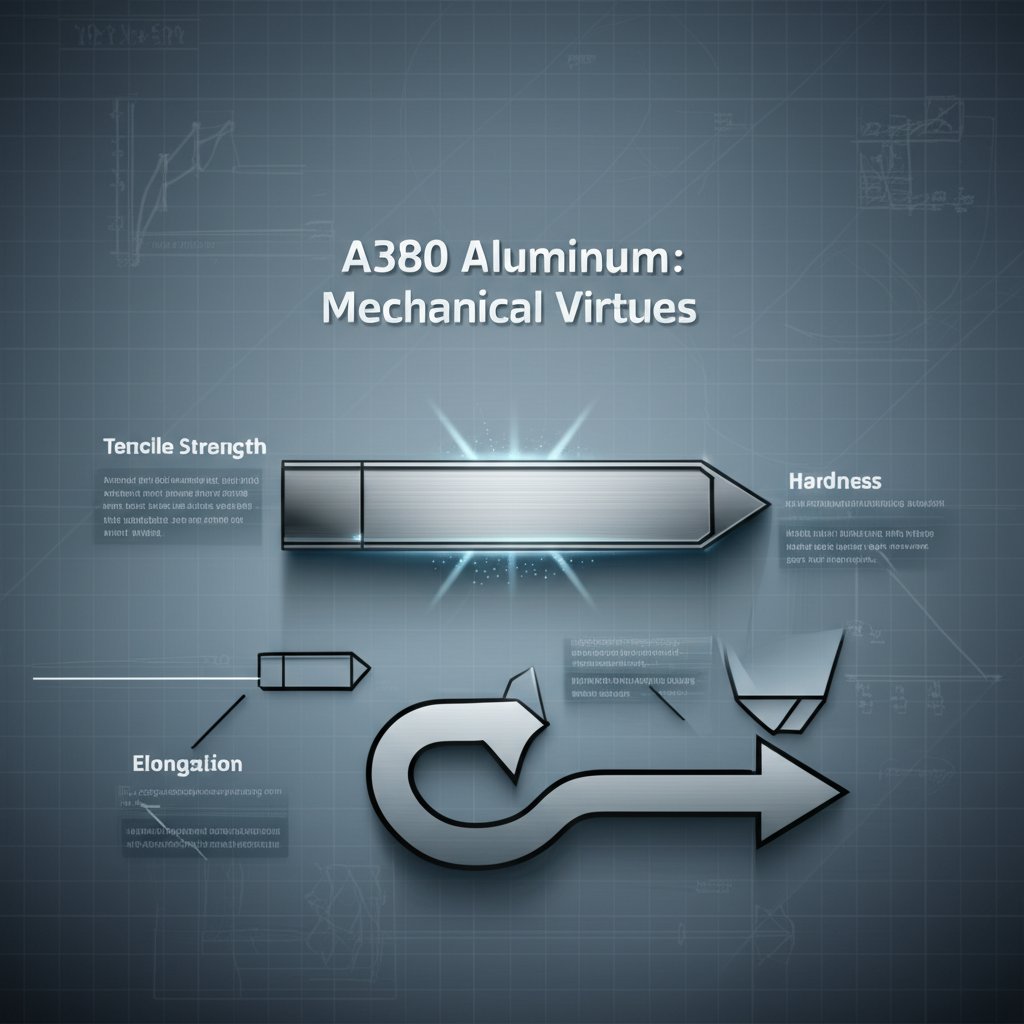
The mechanical properties of A380 aluminum are central to its widespread adoption in die casting. The alloy exhibits a desirable combination of strength, hardness, and ductility that makes it suitable for durable, load-bearing components. These properties ensure that parts made from A380 can withstand operational stresses without failure, providing long-term reliability. Understanding these specific metrics is crucial for engineers during the material selection phase of product design.
The ultimate tensile strength of A380 is approximately 324 MPa (47,000 psi), which measures the maximum stress the material can endure before fracturing. Its yield strength, the point at which it begins to deform permanently, is around 159 MPa (23,000 psi). This high strength-to-weight ratio is a key advantage, allowing for the production of lightweight parts without sacrificing structural integrity. Furthermore, its Brinell hardness of 80 indicates good resistance to surface indentation and wear, a critical factor for parts subjected to friction or contact.
While strong and hard, A380 maintains a degree of ductility, with an elongation at break of about 3.5%. This means it can undergo slight deformation before fracturing, which prevents brittleness. The following table provides a clear summary of its primary mechanical properties, sourced from industry data sheets.
| Mechanical Property | Typical Value (Metric) | Typical Value (Imperial) |
|---|---|---|
| Ultimate Tensile Strength | 324 MPa | 47,000 psi |
| Yield Strength | 159 MPa | 23,000 psi |
| Hardness (Brinell) | 80 HB | 80 HB |
| Elongation at Break | 3.5% | 3.5% |
| Shear Strength | 190 - 214 MPa | 27,500 - 31,000 psi |
| Impact Strength | 4 J | 3 ft-lbs |
Physical and Thermal Properties of A380
Beyond its mechanical strength, the physical and thermal properties of A380 aluminum are critical to its performance in many applications, especially in the electronics and automotive industries. These characteristics govern how the material behaves in response to heat, electricity, and its own mass. Its relatively low density and high thermal conductivity are among its most significant advantages.
One of the most valued properties is its thermal conductivity, which is approximately 96 W/mK. This high rate of heat transfer makes A380 an excellent choice for components that need to dissipate heat effectively, such as electronic housings, LED lighting fixtures, and heat sinks. By efficiently drawing heat away from sensitive components, A380 helps maintain optimal operating temperatures and extends the lifespan of the device. This property, combined with its electromagnetic shielding capabilities, makes it a go-to material for telecommunications equipment.
The density of A380 is 2.71 g/cm³ (0.098 lb/in³), which is characteristic of aluminum alloys and contributes to its lightweight nature. This allows for the production of substantial yet light parts, a crucial factor in the automotive industry for improving fuel efficiency. Its melting range of 540-595°C (1000-1100°F) is also well-suited for the high-pressure die casting process. The table below summarizes these key physical properties.
| Physical Property | Typical Value |
|---|---|
| Density | 2.71 g/cm³ |
| Melting Range | 540 - 595 °C (1000 - 1100 °F) |
| Thermal Conductivity | 96 W/mK |
| Electrical Conductivity | 23% IACS |
| Coefficient of Thermal Expansion | 21.8 µm/m°C |
Chemical Composition of A380 Aluminum
The specific properties of A380 aluminum are a direct result of its carefully controlled chemical composition. As an Al-Si-Cu alloy, its performance is dictated by the precise percentages of its primary alloying elements—silicon and copper—as well as other minor elements that refine its characteristics. This balance is what gives A380 its versatile and reliable nature for die casting.
The main alloying elements and their functions are:
- Silicon (Si): At 7.5-9.5%, silicon is the most significant addition. Its primary role is to improve the alloy's fluidity in its molten state. This allows the metal to flow easily into intricate and thin-walled sections of a die cast mold, reducing the risk of defects like misruns and ensuring sharp detail in the final product.
- Copper (Cu): Ranging from 3.0-4.0%, copper is added to increase the alloy’s strength and hardness. This enhancement of mechanical properties is crucial for many applications, although it slightly reduces the alloy's overall corrosion resistance compared to other aluminum alloys with lower copper content.
- Iron (Fe): With a maximum of 1.3%, iron helps prevent the molten alloy from soldering to the steel die during the casting process, which is a common issue in high-pressure die casting.
Other elements like manganese, magnesium, and zinc are present in smaller quantities to further refine the alloy's properties. The table below provides a detailed breakdown of the standard chemical composition for A380 aluminum alloy.
| Element | Composition (%) |
|---|---|
| Silicon (Si) | 7.5 - 9.5 |
| Copper (Cu) | 3.0 - 4.0 |
| Iron (Fe) | ≤ 1.3 |
| Zinc (Zn) | ≤ 3.0 |
| Manganese (Mn) | ≤ 0.5 |
| Nickel (Ni) | ≤ 0.5 |
| Magnesium (Mg) | ≤ 0.5 |
| Tin (Sn) | ≤ 0.35 |
| Aluminum (Al) | Balance |
A380 Aluminum vs. 6061: Key Differences
A common point of comparison for engineers is between A380 and 6061 aluminum, but it's essential to understand that they are fundamentally different types of alloys designed for different manufacturing processes. A380 is a casting alloy, specifically optimized for die casting, while 6061 is a wrought alloy, primarily used in extrusion and machining. This core difference dictates their composition, properties, and applications.
The most significant distinction is the manufacturing process. A380 is designed to be melted and injected into a mold to create complex, near-net-shape parts. Its high silicon content provides the necessary fluidity for this process. In contrast, 6061 aluminum is formed into billets and then extruded through a die or machined from a solid block to create parts. It is not suitable for casting. This makes A380 ideal for high-volume production of intricate components, whereas 6061 is better for simpler shapes that require high strength and superior surface finish.
In terms of properties, 6061 aluminum is generally stronger and has better corrosion resistance and thermal conductivity than A380. However, A380 offers excellent dimensional stability and can produce complex geometries that would be difficult or cost-prohibitive to machine from 6061 stock. The choice between the two is therefore not about which is "better" overall, but which is appropriate for the specific application and manufacturing method. The following table highlights the key differences.
| Feature | A380 Aluminum | 6061 Aluminum |
|---|---|---|
| Manufacturing Process | Die Casting | Extrusion, Machining (Wrought) |
| Primary Alloying Elements | Silicon (Si), Copper (Cu) | Magnesium (Mg), Silicon (Si) |
| Tensile Strength | ~324 MPa (47 ksi) | ~310 MPa (T6 temper) |
| Corrosion Resistance | Good | Excellent |
| Best For | Complex shapes, high-volume production | Structural components, high-strength parts |
Common Applications and Industries
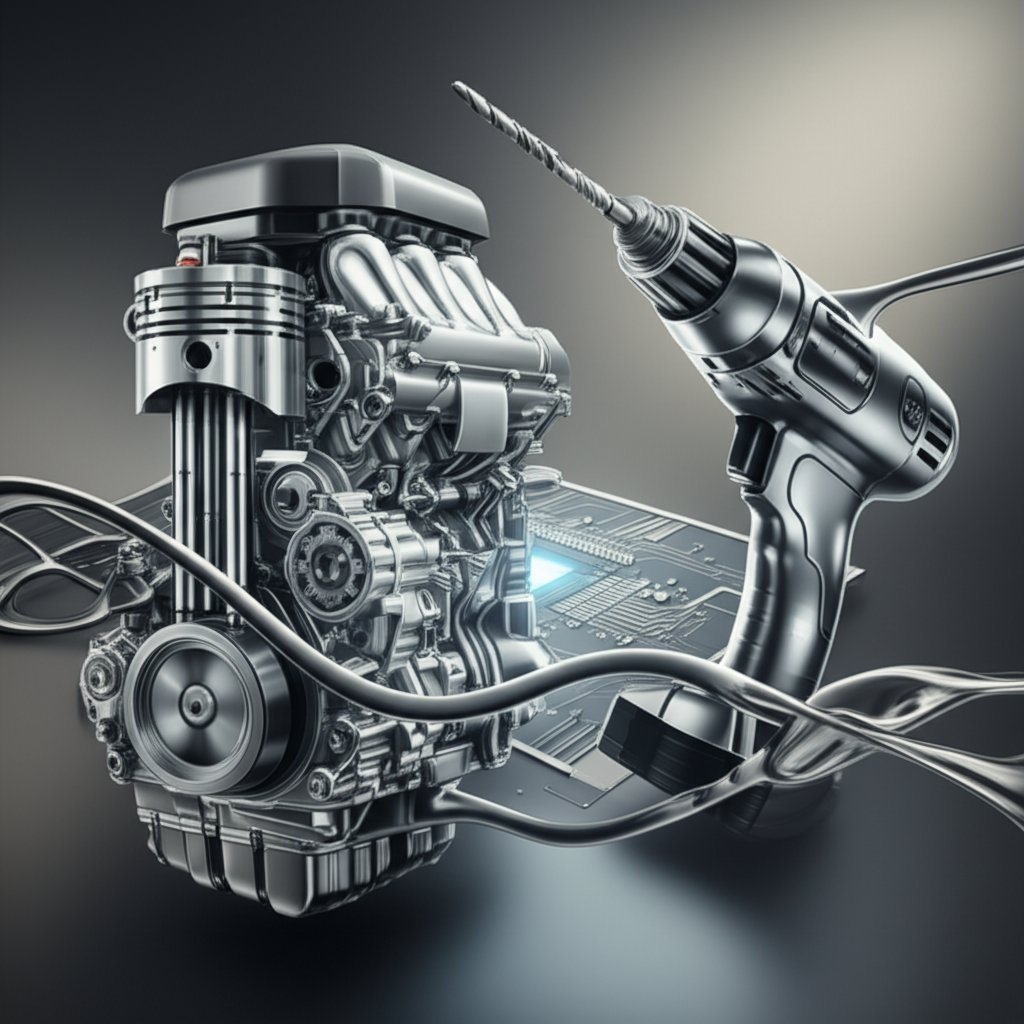
Thanks to its versatile properties and cost-effectiveness, A380 aluminum is utilized across a wide spectrum of industries for countless applications. Its ability to be formed into intricate yet strong and lightweight parts makes it an indispensable material in modern manufacturing. The alloy's unique combination of castability, mechanical strength, and thermal conductivity allows it to meet the demands of diverse and challenging environments.
Some of the most common applications include:
- Automotive: In the automotive sector, A380 is used extensively for components like engine brackets, transmission cases, and oil pans. Its light weight helps improve fuel economy, while its strength and thermal properties ensure durability and reliable performance. While A380 is a top choice for complex cast parts, other manufacturing processes are vital for different automotive needs. For components requiring immense strength and fatigue resistance, such as suspension or engine parts, manufacturers often turn to advanced forging techniques. For instance, Shaoyi (Ningbo) Metal Technology specializes in precision-engineered automotive forging parts, offering solutions from prototyping to mass production for high-stress applications.
- Electronics: The alloy's excellent thermal conductivity makes it ideal for electronic housings, heat sinks, and chassis for telecommunications equipment. It efficiently dissipates heat generated by electronic components, preventing overheating and ensuring device longevity.
- Industrial Equipment: A380 is frequently used to manufacture housings for power tools, pumps, and valves. Its durability and excellent dimensional stability ensure that these tools can withstand the rigors of heavy use while maintaining precise internal alignments.
- Consumer Goods: From lawnmower housings to furniture components and kitchen appliances, A380 provides the strength and finish required for everyday products. Its castability allows for aesthetic designs that are also functional and durable.