 Small batches, high standards. Our rapid prototyping service makes validation faster and easier —
  EN
EN


Why the PPAP Is Your Key to Manufacturing Success

TL;DR
The Production Part Approval Process (PPAP) is a standardized quality assurance framework, primarily used in manufacturing, to verify a supplier's ability to consistently produce parts that meet all customer engineering and design specifications. The core importance of a PPAP lies in its power to mitigate risks, ensure product quality and consistency before mass production begins, and establish clear, documented communication between customers and suppliers, ultimately preventing costly defects and supply chain disruptions.
What Is the Production Part Approval Process (PPAP)?
The Production Part Approval Process (PPAP) is a formal methodology that provides documented evidence that a supplier's production process has the potential to consistently produce parts that meet all customer requirements. It serves as a comprehensive validation package, ensuring that the supplier fully understands the customer's design specifications and that their manufacturing process is capable of meeting them during a full production run at the quoted rate. This process acts as a crucial risk-assessment tool before a component enters large-scale production.
Originally developed by the Automotive Industry Action Group (AIAG) with input from major automakers like Ford, GM, and Chrysler, PPAP brought a standardized approach to supplier quality management. Its success in the automotive sector led to its widespread adoption across other manufacturing industries, including aerospace, medical devices, and electronics. The fundamental principle is to move beyond simply inspecting a final part and instead validate the entire manufacturing system that creates it, ensuring reliability and repeatability.
At its heart, PPAP is an exercise in communication and evidence. It forces a structured dialogue between the customer and the supplier, aligning expectations and confirming capabilities. By completing the required documentation, the supplier demonstrates a deep understanding of the part's function, the potential for failure, and the controls in place to prevent defects. This structured approval process ensures that both parties agree on what a “good” part is and how it will be made every time.
The Critical Importance of PPAP for Quality Assurance
Implementing a robust Production Part Approval Process is essential for modern manufacturing success because it directly addresses the primary drivers of cost, quality, and risk. Its importance extends beyond a mere compliance checklist; it is a strategic framework that safeguards product integrity, enhances supplier relationships, and protects the bottom line. By front-loading the quality validation, companies can prevent the significant downstream costs associated with part failures, recalls, and production line shutdowns.
The core benefits that highlight the importance of the PPAP framework include:
- Ensures Design and Process Capability: PPAP verifies that the supplier not only understands the customer's design but also that their production process is stable, capable, and ready for full-scale manufacturing. It provides objective evidence that quality is built into the process, not just inspected at the end.
- Mitigates Supply Chain Risk: By requiring a thorough review of potential failure modes (through FMEA), control plans, and measurement systems, PPAP identifies and addresses potential issues before they can disrupt the supply chain. This proactive approach prevents the delivery of non-conforming parts and minimizes the risk of production delays.
- Reduces Costs of Poor Quality: Identifying and resolving issues early in the product lifecycle is significantly cheaper than correcting them after production has started. PPAP helps avoid costs related to scrap, rework, warranty claims, and potential recalls, directly impacting profitability.
- Fosters Clear Communication and Collaboration: The structured documentation and submission process ensures that all requirements are clearly understood and agreed upon by both the customer and the supplier. This alignment prevents misunderstandings and builds a stronger, more transparent partnership.
In sectors with stringent quality standards, such as the automotive industry, a successful PPAP is non-negotiable. For projects demanding high-precision components, a supplier's quality system is paramount. For instance, in the development of automotive aluminum extrusions, partnering with a supplier that can deliver a comprehensive PPAP is critical. For those needs, Shaoyi Metal Technology offers a one-stop service, from rapid prototyping to full-scale production, all managed under a strict IATF 16949 certified quality system, ensuring parts are strong, lightweight, and tailored to exact specifications.
Understanding the 18 Elements and 5 Submission Levels
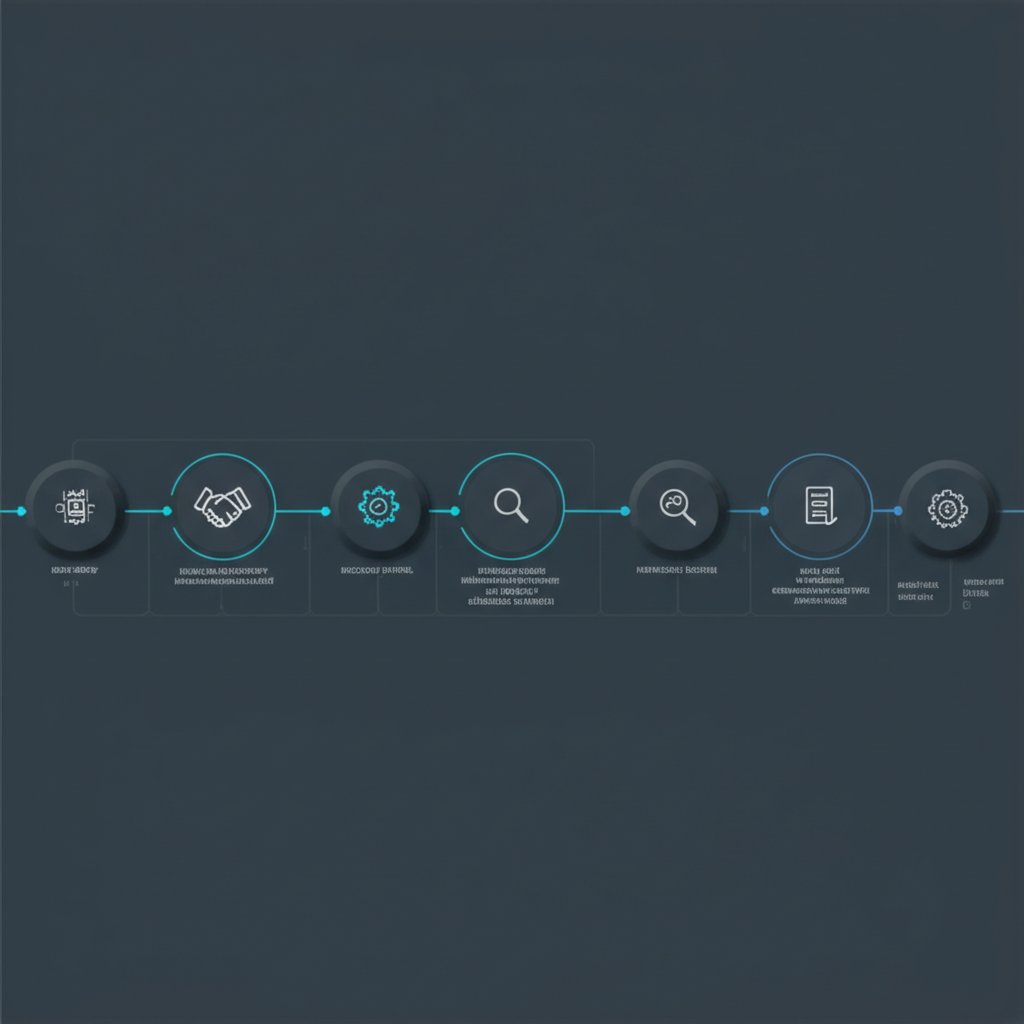
The PPAP framework is structured around a comprehensive set of 18 potential documents, known as elements, which collectively provide a complete picture of the manufacturing process. While not all 18 elements are required for every submission, they form the basis for the validation process. These elements cover everything from the initial design records to the final approval, ensuring every aspect of production is considered and controlled.
Key elements of a PPAP submission include the Design Records, Process Flow Diagram, Process Failure Mode and Effects Analysis (PFMEA), Control Plan, Measurement System Analysis (MSA), and the Part Submission Warrant (PSW). The PFMEA, for example, proactively identifies potential failures in the manufacturing process, while the Control Plan details the preventative measures to mitigate those risks. The PSW is the critical summary document that certifies the part meets all customer specifications.
To provide flexibility, the PPAP process defines five submission levels, which dictate which of the 18 elements must be presented to the customer. The appropriate level is typically negotiated between the supplier and customer based on the part's complexity, criticality, and any changes being made.
- Level 1: Part Submission Warrant (PSW) only.
- Level 2: PSW with product samples and limited supporting data.
- Level 3: PSW with product samples and complete supporting data. This is the default and most common level.
- Level 4: PSW and other requirements as defined by the customer.
- Level 5: PSW with product samples and complete supporting data available for review at the supplier's manufacturing location.
This tiered system allows for an efficient approval process, tailoring the documentation requirements to the specific situation. For a minor change to an existing part, a Level 1 submission might suffice. However, for a brand-new, critical component, a comprehensive Level 3 submission is the standard, providing the customer with full confidence in the supplier's process and capabilities.

The Role of PPAP in the Broader APQP Framework
It is crucial to understand that the Production Part Approval Process does not exist in a vacuum. Instead, it is a critical component of a larger quality planning methodology known as Advanced Product Quality Planning (APQP). APQP is a structured process used to introduce a new product or incorporate changes to an existing one, ensuring that the end product satisfies the customer. It is a proactive framework designed to anticipate and prevent problems before they occur.
APQP consists of five distinct phases, and PPAP serves as the capstone of this entire effort. It falls within Phase 4, titled "Product & Process Validation." In this phase, the results of all the planning and development work from the previous APQP stages are validated through a significant production run. The PPAP submission is the tangible evidence that the APQP process was successful and that the supplier is ready for mass production.
If APQP is the comprehensive recipe for creating a product—covering everything from design to process development—then PPAP is the final taste test and inspection before serving it to the customer. A failure to gain PPAP approval signals a breakdown somewhere in the APQP process, requiring the team to revisit earlier stages to identify and correct the root cause. This integration ensures that product development is not just a series of isolated tasks but a cohesive, quality-driven journey from concept to full-scale production.
Frequently Asked Questions About PPAP
1. What is the role of the production part approval process (PPAP) in the APQP process?
PPAP is the key validation stage within the broader Advanced Product Quality Planning (APQP) framework. Specifically, it is part of Phase 4: Product & Process Validation. Its role is to formally demonstrate that the manufacturing process developed during the earlier APQP phases can consistently produce parts that meet all customer engineering specifications, effectively confirming the success of the entire planning effort before authorizing full production.
2. Why is the Part Submission Warrant (PSW) used in PPAP?
The Part Submission Warrant (PSW) is a critical summary document required for every PPAP submission. Its purpose is to provide a formal declaration from the supplier that the parts and the production process meet all customer requirements. It summarizes the entire PPAP package, indicates the reason for the submission, and requires an authorized signature, ensuring accountability and serving as the official approval cover sheet.
3. What is a significant production run in PPAP?
A significant production run is a test run of the manufacturing process used to generate the parts and data for the PPAP submission. It is typically defined as a continuous run of 1 to 8 hours, producing a minimum of 300 parts, unless a different quantity is specified by the customer. The run must use the actual production tooling, equipment, environment, and personnel to accurately simulate normal manufacturing conditions and prove process capability.