 Small batches, high standards. Our rapid prototyping service makes validation faster and easier —
  EN
EN


Stop Weight Mistakes: What Is the Density of Copper Metal?
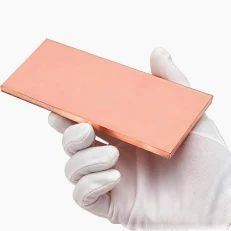
What Is the Density of Copper Metal?
If you want the fast answer, pure copper has a reference density of 8.933 g/cm3, as listed by PubChem. In practical room-temperature use, many references round that to about 8.94 g/cm3. That lines up closely with the 8.94 specific gravity reported by CAMEO Chemicals for solid copper.
For quick estimates, use about 8.93 to 8.94 g/cm3 for pure copper at room temperature.
Quick answer on copper density
So, what is the density of copper metal in plain terms? It is the amount of mass packed into a given volume. For pure copper, the density of copper is usually taken as about 8.933 g/cm3. This is the standard starting point for weight estimates, material comparisons, and shop calculations.
Copper density unit conversions
| Unit | Reference value |
|---|---|
| g/cm3 | 8.933 |
| kg/m3 | 8,933 |
| lb/in3 | 0.323 |
If you are searching for the density of copper, the numeric value is the same as g/cm3 because 1 mL equals 1 cm3. That makes the copper material density 8.933 g/mL as well.
Why reference conditions matter
Small differences between published values are normal. One source may list 8.933, while another rounds to 8.94. Those tiny gaps usually come from measurement temperature, purity of the sample, or simple rounding rules. In other words, the numbers are not fighting each other. They are just reported under slightly different reference conditions.
For most readers, the safe takeaway is simple: use a cited value for pure copper, keep your units consistent, and note the conditions if precision matters. That single number also hints at something practical: copper feels heavy for its size, which becomes much clearer when you look at what density really means.
What Copper Density Really Means
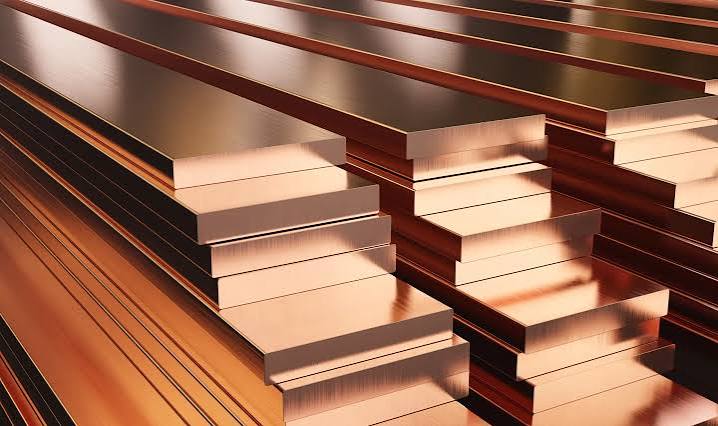
That 8.93 to 8.94 g/cm3 figure becomes much more useful when you connect it to something physical: why a small copper piece can feel surprisingly weighty in your hand. In simple terms, density is mass packed into a certain amount of space. The formula is D = m/v, and the ACS density lesson frames it clearly: substances with the same volume can still have different masses, which means they have different densities.
What density means for a metal
Think of the density of a metal as how tightly mass is packed into its volume. That makes copper density a practical property, not just a chemistry definition. It helps explain why two metal blocks that look the same size do not feel the same when you pick them up.
The same ACS example uses equal-size copper and aluminum cubes. They occupy the same amount of space, but the copper cube has greater mass. That is the core idea behind the density of metals: equal volume does not mean equal heaviness.
Why copper feels heavy
So, is copper heavy? For its size, yes. If you hold a solid copper piece and a same-size aluminum piece, the copper one will feel heavier because more mass is packed into that same volume. ACS explains density as a characteristic property that comes from the mass, size, and arrangement of atoms or molecules. You do not need to see the atoms to notice the result. Your hand feels it immediately.
This is why copper often seems substantial even in compact parts such as connectors, bars, or thick wire. The part may not look large, yet it can still add noticeable weight.
Density vs mass vs weight
These terms are related, but they are not interchangeable:
- Density: how much mass fits into a given volume.
- Mass: how much matter an object contains.
- Weight: how strongly gravity pulls on that mass, which is what people usually mean in daily use.
- Atomic mass: a chemistry value tied to individual atoms, not the shipping weight of a finished copper part.
That distinction matters in real work. A buyer estimating freight, a student solving a lab problem, and an engineer sizing a busbar may all start with copper density, but they are not asking the same question. One wants part weight, another wants material identity, and another wants a property of the substance itself. That is also why published copper density values can look slightly different without being wrong at all.
Why Copper Density Values Vary
That solid, heavy feel of copper is easy to notice. The number attached to it, though, can shift a little from one source to another. That is usually not an error. It is a sign that the source is describing copper under slightly different conditions, or describing a commercial product rather than an ideal pure-metal reference.
Why copper density values vary
Copper.org lists cold-rolled ASTM B370 copper sheet, made from 99.9 percent copper, with a density of 0.322 lb/cu in at 68 F and a specific gravity range of 8.89 to 8.94. Meanwhile, an engineering guide uses 8.96 g/cm3 for pure copper near 20 C. So if a reader asks what is copper's density, the small gap between sources often reflects testing conditions and material description, not conflicting science.
The role of temperature and purity
Several factors can move the reported mass density of copper by a small amount:
- Temperature: copper expands as it gets hotter, so density decreases slightly.
- Purity: trace impurities can nudge the value away from a pure-copper reference.
- Alloying: once other elements are added, you are no longer using the density of Cu as a pure metal.
- Porosity: internal voids make measured density lower than fully dense solid copper.
- Manufacturing condition: rolled, drawn, or cast products may be reported under specific commercial conditions.
- Rounding: 8.93, 8.94, and 8.96 can represent reporting style as much as material difference.
How to read material datasheets
When you compare a handbook to a supplier sheet, check three things first: material type, reference temperature, and product form. Copper.org also notes that copper can begin to oxidize under certain environmental conditions, so an oxidized copper surface may look different from fresh metal even when the base material is still copper. Appearance alone does not tell you whether the listed cu density is for pure copper, a specific temper, or an alloyed product.
For writing and estimating, the safest approach is simple: quote one standard reference value for pure copper, then explain why a lab report or datasheet might show a slightly different number.
Different copper density figures usually reflect different conditions, grades, or rounding, not a contradiction.
That distinction becomes even more important once the label says copper, but the material is actually a named grade, temper, brass, or bronze.
Pure Copper Versus Grades and Alloys
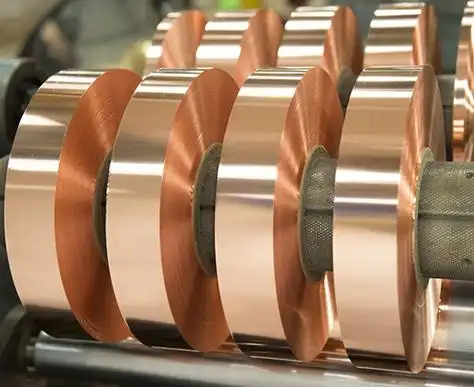
In the market, the word copper covers more than one material. It may mean elemental copper, a commercial wrought grade, or a copper-based alloy. That matters because density follows the actual specification, not the surface color. Among the properties of copper metal that people compare, density is only one, and it changes once you move away from pure copper.
Pure copper is not every copper alloy
The HLC comparison separates these families clearly: copper is a pure metal, brass is mainly copper plus zinc, and bronze is a copper alloy usually built around tin or other added elements. So a reddish bar, a brass fitting, and a bronze casting may all look related, but they should not share one default density in your calculations. Many physical properties of copper metal, including conductivity, corrosion behavior, and formability, also shift when alloying elements are added.
Common copper grades and density differences
Commercial wrought coppers add another layer. Copper.org C11000 lists C11000 Electrolytic Tough Pitch copper at a minimum of 99.90% Cu, with a density of 0.322 lb/cu in at 68 F and a specific gravity of 8.91. The provided source set also names other wrought grades such as 101, 122, and 145, each used for a different balance of conductivity, weldability, or machinability. That is why copper sheet, rod, and bar are usually specified by alloy number in serious work.
| Material family | Example | Density data in provided sources | Practical takeaway |
|---|---|---|---|
| Pure copper | Elemental copper | 8.96 g/cm3 | Useful as a baseline reference, but not a substitute for a grade-specific datasheet |
| Wrought copper grade | C11000 ETP copper | 0.322 lb/cu in at 68 F, specific gravity 8.91, Copper.org C11000 | A commercial copper value for real products, not a universal number for every copper material |
| Other wrought coppers | 101, 122, 145 | No exact density listed in the provided sources | Check the exact grade datasheet before estimating part weight |
| Brass | Copper-zinc alloys | 8.4 to 8.73 g/cm3 | Usually lighter than pure copper |
| Bronze | Copper-based alloys with tin or other additions | 7.4 to 8.9 g/cm3 | Can overlap some copper values, so the alloy name matters |
When alloy selection changes part weight
Appearance can mislead. A piece sold as copper jewelry may still need an alloy check before you estimate its weight. The same caution helps with decorative hardware and copper coins, where color alone does not confirm material family. If weight matters, use the alloy designation, the product form, and the datasheet. Put copper beside other common metals, and those differences in heaviness become even more useful for real-world decisions.
How Copper Compares With Other Metals
A grade name tells you what a material really is. A side-by-side comparison tells you what that choice means on the scale. For readers checking the density of aluminum, iron metal density, density of zinc, density of lead, or silver density, the practical question is usually this: how heavy will the same-size part be if it is made from copper instead?
Copper vs aluminum and iron
A quick look at the density of different metals puts copper in a useful middle position. Generic handbook values from Engineers Edge list copper at 8.96 g/cm3. That makes it far heavier than aluminum, clearly heavier than iron and zinc, and still lighter than lead and silver.
| Metal | Density, g/cm3 | Compared with copper | Practical implication at equal size |
|---|---|---|---|
| Aluminum | 2.60 | Much lighter | Far easier to reduce part and shipping weight |
| Iron | 7.87 | Lighter | A same-size part weighs less than copper |
| Zinc | 7.14 | Lighter | Less mass in the same volume than copper |
| Copper | 8.96 | Baseline | Good reference point when weight and conductivity both matter |
| Lead | 11.3 | Heavier | More compact mass in the same space |
| Silver | 10.5 | Heavier | A same-size part weighs more than copper |
How copper compares with other common metals
For engineers, students, and buyers, that ranking answers different kinds of questions. Copper is not the lightweight option, so aluminum stands out when lower mass is the goal. Iron and zinc sit closer to copper, but still come in lighter at the same volume. Lead moves in the opposite direction and adds mass quickly. Silver is also denser than copper. In other words, the density of different metals is not just trivia. It helps predict handling feel, support loads, and freight weight before a part is ever made.
What density differences mean in practice
- Helpful: comparing equal-size parts when weight is part of the decision.
- Helpful: making rough handling and shipping estimates early in design or purchasing.
- Limitation: density alone does not tell you strength, conductivity, corrosion behavior, or total suitability.
- Limitation: handbook values are starting points, and exact part weight still depends on shape, size, and grade.
That last detail matters more than it first appears. A density value becomes truly useful when you turn dimensions into volume, then volume into weight for a real sheet, rod, bar, or machined part.
How to Calculate Copper Weight From Size
A density value becomes practical the moment you put dimensions next to it. The basic method is the same one outlined by Tech Steel: calculate the part volume first, then multiply by the material density. For copper, use the pure-metal reference value already cited earlier in this article. Just as important, keep one unit system from start to finish. Inches should be paired with lb/in3, and centimeters should be paired with g/cm3. Mixing units is one of the easiest ways to create a bad estimate.
How to calculate copper weight from density
- Measure the part. Write down the dimensions you actually need, such as length, width, thickness, diameter, or hole size.
- Pick one unit system. Use inches with lb/in3, or centimeters with g/cm3.
- Find the volume. Match the part shape to the right formula.
- Multiply by copper density. Weight or mass = volume x density.
- Convert if needed. Grams can be turned into kilograms, and pounds into ounces.
- Treat the answer as an estimate. Tech Steel notes that actual weight can vary because of nominal dimensions, composition, and manufacturing tolerances.
| Shape | Volume formula |
|---|---|
| Sheet, plate, flat bar, block | Volume = length x width x thickness |
| Round rod | Volume = pi x (diameter / 2) x (diameter / 2) x length |
| Block with round through-hole | Volume = outer block volume - cylindrical hole volume |
Worked examples for sheet, rod, and bar
Here is the method in real numbers.
- Sheet example: A copper sheet measures 20 cm x 10 cm x 0.2 cm. Volume = 40 cm3. Using 8.933 g/cm3, the mass of copper is 40 x 8.933 = 357.32 g, or about 0.357 kg.
- Round rod example: A rod is 2 cm in diameter and 50 cm long. Volume = 3.1416 x 1 x 1 x 50 = 157.08 cm3. The copper mass is 157.08 x 8.933 = about 1,402.7 g, or 1.40 kg.
- Flat bar example: A bar is 12 in x 2 in x 0.25 in. Volume = 6 in3. Using the previously cited copper density of 0.323 lb/in3, weight = 6 x 0.323 = 1.938 lb. Rounded, that is about 1.94 lb.
If you are solving a class problem, the same rule applies to the mass of Cu. In shop notes or calculator labels, you may even see shorthand such as mass copper. The wording changes, but the math does not. Volume comes first. Then the chosen metal density turns that volume into a weight estimate.
Estimating machined part weight
Machined parts often need one extra step: subtract the material that was removed. Suppose a copper block starts at 8 cm x 4 cm x 2 cm. Its outer volume is 64 cm3. Now add a round through-hole with a 1 cm diameter passing through the 2 cm thickness. Hole volume = 3.1416 x 0.5 x 0.5 x 2 = 1.57 cm3. Net volume = 64 - 1.57 = 62.43 cm3. Estimated part mass = 62.43 x 8.933 = about 557.7 g.
That subtraction method scales well. For pockets, slots, or multiple holes, break the geometry into simple shapes, add the solid sections, and subtract the removed sections. A few minutes with dimensions and metal density can answer very practical questions long before production starts, from whether a blank is easy to handle to whether a finished copper part will push up shipping and scrap weight.

Where Copper Density Matters in Real Work
A weight formula gets more useful when a copper part leaves the calculator and enters real work. The same density value used for an estimate also affects handling, support loads, freight, recycling, and shop planning. If you are asking what is copper used for in situations where density really matters, the answer reaches from power hardware to scrap bins.
Where copper density matters in real applications
Busbars are a clear example. Ansys describes them as metallic bars, strips, tubes, or rods used instead of wires or cables for high-current power distribution, and copper is one of the main busbar materials. The same source also notes that some EV battery systems use aluminum busbars when reduced weight is a priority. That trade-off shows why density matters in copper wire, power distribution parts, and components that also need cooling or heat distribution.
- Copper wire and cable: the amount of copper in wire changes reel weight, support needs, and shipping effort.
- Busbars: designers balance electrical performance with part mass and packaging.
- Machined parts: density helps predict fixture load, lifting effort, and chip volume.
- Fabricated sheet and architectural products: installers still need to move and mount the finished material safely.
- Scrap streams: solid pieces, wire bundles, and turnings do not pack the same way.
Why machinists and buyers care about weight
The practical side is straightforward. Metal weight affects raw material cost, movability, and shipping cost. That is why buyers check estimated mass early, and machinists think about fixturing before the first cut. A compact copper block can still be awkward to lift or expensive to ship compared with a lighter metal part of the same size.
Scrap copper adds another wrinkle. Loose wire bundles or shavings have a lower apparent density than solid copper because empty space sits between pieces. So the price of scrap copper is tied to actual weight and grade, not just bin volume. The same logic affects the cost of scrap copper in purchasing and recycling decisions.
Using density in material selection
Density does not choose the material by itself, but it sharpens the trade-offs. Copper is often selected where electrical performance is critical, yet its mass still influences logistics, support design, and production flow.
Copper density predicts both performance and logistics: how much useful material sits in a given volume, and how much weight you must machine, move, mount, or recycle.
That is why a density value should always stay tied to the exact material description and source. Once weight starts driving quotes, fixtures, or production plans, the reference behind the number matters as much as the number itself.
Reliable Sources for Copper Metal Density
Source quality is what turns a rough estimate into a usable engineering number. When someone asks what is the density of copper, the safest answer is not just a number pulled from a random chart. It is a number tied to a trustworthy reference, clear units, and the right material condition.
Best sources for copper property data
A practical reference stack for copper metal density often includes PubChem, CAMEO Chemicals, ChEBI, the ATSDR copper profile, and the supplier datasheet for the exact grade you plan to buy. ATSDR is especially useful because its copper profile includes a chemical and physical information section, while Richconn gives a practical summary of how temperature, purity, alloying, and porosity can change reported density.
How to validate density before production
- Start with a primary reference, not just a copied metal density chart.
- Confirm whether the number is for pure copper, a commercial grade, or an alloy.
- Check the units and reference temperature before using the value in calculations.
- Match that number against the supplier datasheet for the stock form you will actually order.
- If a metal density table and the datasheet differ, use the grade-specific datasheet for quoting and design.
- Keep an internal density-calculation guide linked nearby if your site has one.
Turning copper data into manufacturable parts
These are the practical facts about copper metal that keep prototype weights, machining allowances, and shipping estimates honest. For teams moving from material data to production, Shaoyi Metal Technology can serve as a practical manufacturing resource. Its IATF 16949-certified machining system, SPC-based quality control, and support from prototyping to mass production fit projects where verified material properties need to carry through into finished automotive components.
That is where density stops being a handbook value and becomes part of real drawings, real process planning, and real part performance.
What Is the Density of Copper Metal? FAQs
1. What is the density of pure copper metal at room temperature?
A practical reference for pure copper at room temperature is 8.933 g/cm3, often rounded to 8.94 g/cm3. In other common units, that is 8,933 kg/m3 or about 0.323 lb/in3. This is the standard value most readers can use for general estimates unless a grade-specific datasheet states otherwise.
2. Is copper heavier than aluminum or iron?
Yes. For the same size piece, copper weighs more than aluminum and more than iron because its density is higher. That is why copper parts often feel compact but substantial, which matters in wiring, bars, machined parts, and shipping calculations.
3. Why do different websites show slightly different copper density values?
Small differences usually come from reporting conditions rather than bad information. Sources may use different temperatures, rounding rules, purity levels, or commercial product descriptions. A pure-element reference and a supplier sheet for a specific grade can both be correct if they are describing different conditions.
4. How do you calculate the weight of a copper part from its size?
First find the part volume from its shape, then multiply that volume by copper density using matching units. Use centimeters with g/cm3 or inches with lb/in3, and remember to subtract holes, slots, or other removed material. This approach works for sheet, rod, bar, and many simple machined parts.
5. Should I use a handbook copper density value or a supplier datasheet for production work?
Use a trusted handbook or scientific reference for early estimates, but switch to the exact supplier datasheet when quoting, designing, or planning production. That step is especially important for prototypes, automotive components, or high-precision machining. If your project moves beyond theory, a manufacturing partner such as Shaoyi Metal Technology can help align verified material data with real production controls.