 Small batches, high standards. Our rapid prototyping service makes validation faster and easier —
  EN
EN


What Gas Do You Use For Mig Welding? One Wrong Mix Ruins The Weld
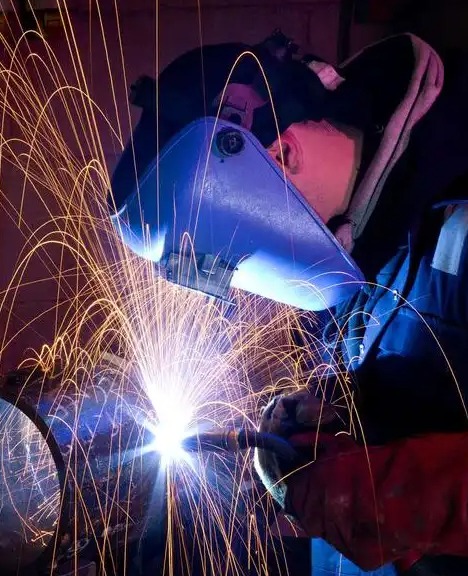
What Gas Is Used for MIG Welding?
Short answer: what gas do you use for MIG welding depends on the metal. Mild steel usually uses 75% argon / 25% CO2. Straight CO2 is still used for some mild steel jobs when cost and penetration matter more than cleanup. Aluminum usually uses 100% argon. Stainless steel often uses tri-mix for short-circuit work or other argon-rich blends, depending on the wire, machine setup, and finish you want.
Shielding gas for MIG welding is the protective gas that covers the molten weld pool and keeps air away from it. Its job is simple but critical: keep oxygen, nitrogen, and hydrogen out of the puddle so the weld does not end up porous, oxidized, or overly spattery. Guidance from Miller, The Fabricator, and WeldingMart points to the same core matches below.
What Gas Do You Use for MIG Welding on Common Metals
If you are wondering what gas is used for MIG welding in a home shop, the most common answer is C25 on mild steel. People often ask what gas does a mig welder use, but one bottle does not fit every job. Aluminum and stainless quickly prove that.
Why Shielding Gas Matters in MIG
The right gas for mig welding does more than shield the puddle. It also changes arc stability, bead appearance, spatter level, and penetration behavior. So if you are searching what gas for mig welding to buy, start with the base metal first, then the weld result you care about most.
Fast Material to Gas Match
| Gas type | Compatible metals | Typical use case | Key benefits | Tradeoffs | Weld-quality outcome |
|---|---|---|---|---|---|
| 75% argon / 25% CO2 | Mild steel | General fabrication, auto repair, thin to medium sections | Smooth arc, reduced spatter, good bead profile | Costs more than straight CO2 | Cleaner, easier-to-control steel welds |
| 100% CO2 | Mild steel, carbon steel | Budget-minded work, thicker steel, penetration-focused jobs | Lower cost, strong penetration | More spatter, rougher finish, less stable arc | Sound welds with more cleanup |
| 100% argon | Aluminum | Standard starting point for MIG aluminum | Stable arc for aluminum, clean shielding | Not the default answer for steel | Clean aluminum beads with good control |
| Tri-mix or argon-rich stainless blend | Stainless steel | Short-circuit stainless work, cleaner appearance-sensitive welding | Better arc stability, reduced oxidation, improved bead appearance | More specialized and application-dependent | Cleaner stainless welds with better visual results |
That quick match gets you close fast. The finer choice comes from how each gas changes the arc itself, which is where MIG starts feeling very different from one material to the next.
How Shielding Gas Shapes the Weld
Before comparing bottle mixes by metal, it helps to know what the gas is actually doing. In guidance from The Fabricator, shielding gas protects the molten weld pool from outside contamination. That sounds simple, but it drives a huge part of weld quality. If air reaches the puddle, the result can be porosity, oxidation, an erratic arc, and more spatter. That is the heart of shielding gas in MIG welding.
What Shielding Gas Does During MIG Welding
The gas used for mig welding does more than cover the weld. It also changes how the arc starts, how stable it feels, how the puddle behaves, and how much cleanup you face after the bead cools. Good mig welding shielding gas helps you:
- Protect the molten weld pool from oxygen, nitrogen, and other atmospheric contamination.
- Stabilize the arc so the weld feels smoother and more predictable.
- Influence spatter, bead appearance, and penetration.
- Match the process to the base metal and transfer mode.
That is why welders compare several gases for mig welding instead of treating every cylinder as interchangeable.
Inert vs Active Gas in Simple Terms
TWI draws a useful line between MIG and MAG. MIG uses inert gases such as argon and helium. MAG uses active gases or blends, commonly mixtures that include CO2 or oxygen, mainly for steels. In everyday American shop talk, people often say MIG for both. The broader process name is GMAW, so you do not need to get hung up on the label, but the gas chemistry still matters.
- Inert gas: Argon or helium. These are typical for true MIG welding, especially on aluminum and other non-ferrous metals.
- Active gas: CO2 or oxygen-containing blends. These are widely used on steel because they change arc behavior and weld characteristics.
- Practical point: The shielding gas for mig choice affects stability, spatter, transfer, penetration, and bead shape.
MIG with Gas vs Gasless Flux Core
This is where a lot of confusion starts. Does mig welding require gas? True MIG or GMAW does use external shielding gas for mig. But self-shielded flux-cored welding does not. Miller explains that self-shielded FCAW uses flux inside the wire to generate protective gas at the arc, which is why it works well outdoors. Gas-shielded FCAW, often grouped in shop talk with dual-shield FCAW, uses flux-cored wire plus external gas.
- MIG/GMAW: Solid wire plus external gas.
- Self-shielded FCAW: Flux-cored wire, no external cylinder required.
- Gas-shielded FCAW: Flux-cored wire plus external gas, often used in heavier fabrication.
MIG needs external shielding gas, self-shielded flux-core does not, and gas-shielded FCAW uses both wire flux and external gas.
That simple split clears up most questions around the gas used for mig welding. It also hints at why mild steel causes so much debate: the most common steel setups rely on active blends, and those blends make the arc feel very different from one bottle to the next.
Mild Steel MIG Gas: 75/25 vs CO2
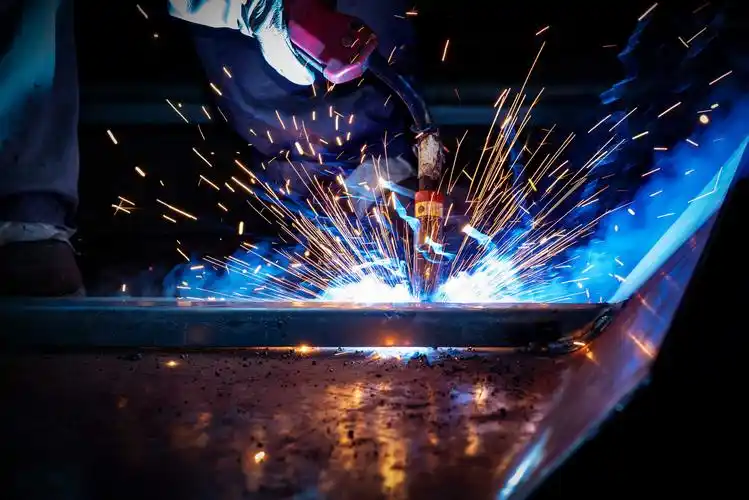
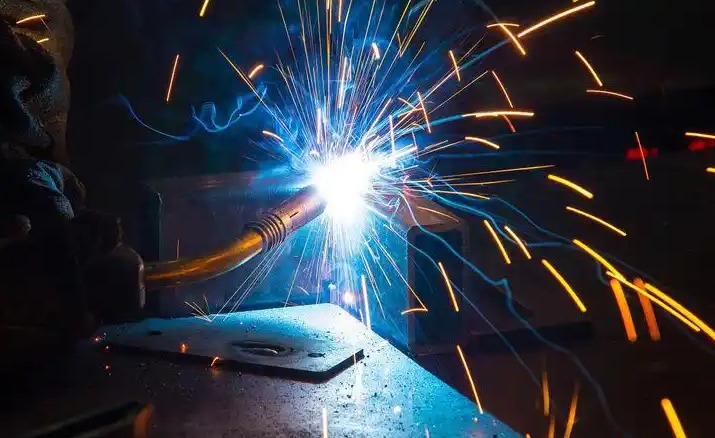
Mild steel is where shielding gas choice becomes real fast. The two common answers are 75/25 welding gas, often called C25 welding gas, and 100% CO2. For most shop and garage work, 75 25 argon co2 is the more forgiving option. It gives a smoother arc, less spatter, and a cleaner-looking bead. Straight CO2 is still completely usable on mild steel, but it usually brings a rougher arc and more cleanup. That tradeoff is why many welders treat C25 as the default mig gas for mild steel.
75 25 Argon CO2 for Easier Mild Steel MIG
Miller describes 75% argon / 25% CO2 as a very common choice for welding gas for mild steel because it produces minimal spatter, good arc characteristics, and a bead profile that washes out well at the toes. The Fabricator adds an important process clue: for carbon steel electrodes, the most common shielding gas in short-circuit transfer is 75% argon / 25% CO2.
In practical terms, that means C25 feels easier to run on thin to medium mild steel. If you are building brackets, fixing body panels, or doing general fabrication where appearance matters, this gas for mig welding mild steel usually makes the puddle easier to read and the bead easier to keep neat.
When Straight CO2 Still Makes Sense
100% CO2 is not a wrong choice. It is the budget-minded choice, and it can be a smart one. Miller notes that C-100 is a cost-effective alternative, though it may create more spatter and a slightly erratic arc. Modern machines have improved its performance, so straight co2 mig gas is still acceptable when penetration and operating cost matter more than finish.
This is why some farm shops, repair jobs, and heavier mild steel work still use it. If you do not mind extra cleanup, and the weld does not need the cleanest visual profile, CO2 can be a sensible welding gas for mild steel.
How Mild Steel Gas Choice Changes Weld Results
| Gas choice | Best-fit mild steel use case | Arc feel | Spatter and bead appearance | Penetration behavior | Main benefit | Main drawback | Likely weld outcome |
|---|---|---|---|---|---|---|---|
| 75% argon / 25% CO2 | General fabrication, auto repair, thinner material, appearance-conscious work | Smoother and more stable | Lower spatter, cleaner bead, better toe washout | Good all-around fusion on mild steel | Easier to run for most users | Higher gas cost than straight CO2 | Cleaner welds with less post-weld grinding |
| 100% CO2 | Budget work, thicker mild steel, repair jobs where cleanup is secondary | Hotter, rougher, slightly more erratic | More spatter, harsher-looking bead | Strong penetration character | Lower cost and solid performance on steel | More cleanup and less refined arc behavior | Sound welds, but usually with more spatter and a rougher finish |
So if someone asks for the best mild-steel bottle, the honest answer is outcome-based. Use 75 25 argon co2 when you want easy control and cleaner results. Use CO2 when cost and penetration matter more. That choice does more than change appearance, too. It also nudges the arc toward different transfer behavior, which is why the next layer of gas selection is not just metal type, but how you want the metal to transfer across the arc.
Match MIG Welding Gas Mix to Transfer Mode
The same wire can feel completely different just by changing the bottle. That is because shielding gas does more than protect the puddle. It also helps decide how metal crosses the arc. In practical terms, your mig welding gas mix affects puddle control, spatter, bead shape, and whether the weld feels soft and forgiving or fast and forceful.
Short Circuit MIG and Forgiving Gas Choices
Short-circuit transfer is the mode most home shops and many fab shops run every day. The Fabricator describes it as a low-energy mode commonly used on thin material, about 1/4 inch and under, and suitable for all positions. For carbon steel, the most common shielding gas is 75% argon / 25% CO2.
That matters because an argon co2 mix for mig welding usually gives a calmer arc than straight CO2. The puddle is easier to read, spatter is lower, and general fabrication feels more forgiving. This is where a balanced mig gas mix really pays off, especially on thinner steel and repair work.
When Spray Transfer Needs More Argon
Spray transfer behaves very differently. Instead of the wire repeatedly touching the puddle, tiny droplets move across the arc continuously. The result is very low spatter, a more fluid puddle, and high deposition, but it usually fits thicker metal and flat or horizontal welding better than out-of-position work. For spray on steel, Miller points to 90% argon / 10% CO2 as a common option, while The Fabricator notes that spray transfer generally needs at least 80% argon in the shielding gas.
This is where people get tripped up by mig argon. More argon can unlock spray behavior, but mig welding with argon alone is not the default answer for steel. The common confusion is mig welding with 100 argon: that makes sense for aluminum, not as the usual starting point for carbon steel.
Pulsed MIG and Argon Rich Blends
Pulsed MIG, or pulse-spray transfer, is a controlled variation of spray. The power source cycles between a high peak current and a lower background current, which helps control heat while still transferring metal in a spray-like way. The Fabricator notes that pulsed transfer generally uses the same gas families as spray transfer. In plain shop terms, that means pulsed setups usually want argon-rich blends too, not the same bottle you would automatically grab for everyday short-circuit steel work.
A higher mig argon percentage often makes pulsed welding feel cleaner and more stable, with lower spatter and better puddle control than rougher steel mixes.
| Transfer mode | Typical gas family | Common materials | Visual weld traits | Tradeoffs |
|---|---|---|---|---|
| Short-circuit | Balanced steel blends such as 75% argon / 25% CO2 for carbon steel; other short-circuit blends for stainless | Thin carbon steel, general fabrication, repair work, root applications | Smaller, easier-to-control puddle; manageable spatter; forgiving arc feel | Lower deposition than spray; finish and arc smoothness drop if the gas gets too CO2-heavy |
| Spray | Argon-rich blends, generally 80%+ argon; a common mild-steel example is 90% argon / 10% CO2 | Thicker steel, higher-production flat and horizontal work | Very low spatter, fluid puddle, smooth bead, strong forward penetration profile | Usually more heat, less friendly for thin material and out-of-position welding |
| Pulsed MIG | Argon-rich blends similar to spray transfer | Steel, stainless, and other materials where cleaner transfer and more control are desired | Cleaner arc, low spatter, more controlled puddle than full spray | More setup-sensitive and more dependent on machine capability and correct programming |
So the gas choice is not only about matching the metal. It also shapes how the weld runs. That detail becomes even more important on stainless steel, where short-circuit and argon-rich blends follow a different logic than mild steel defaults.
Stainless Steel MIG Gas: Tri-Mix vs Argon-Rich Blends
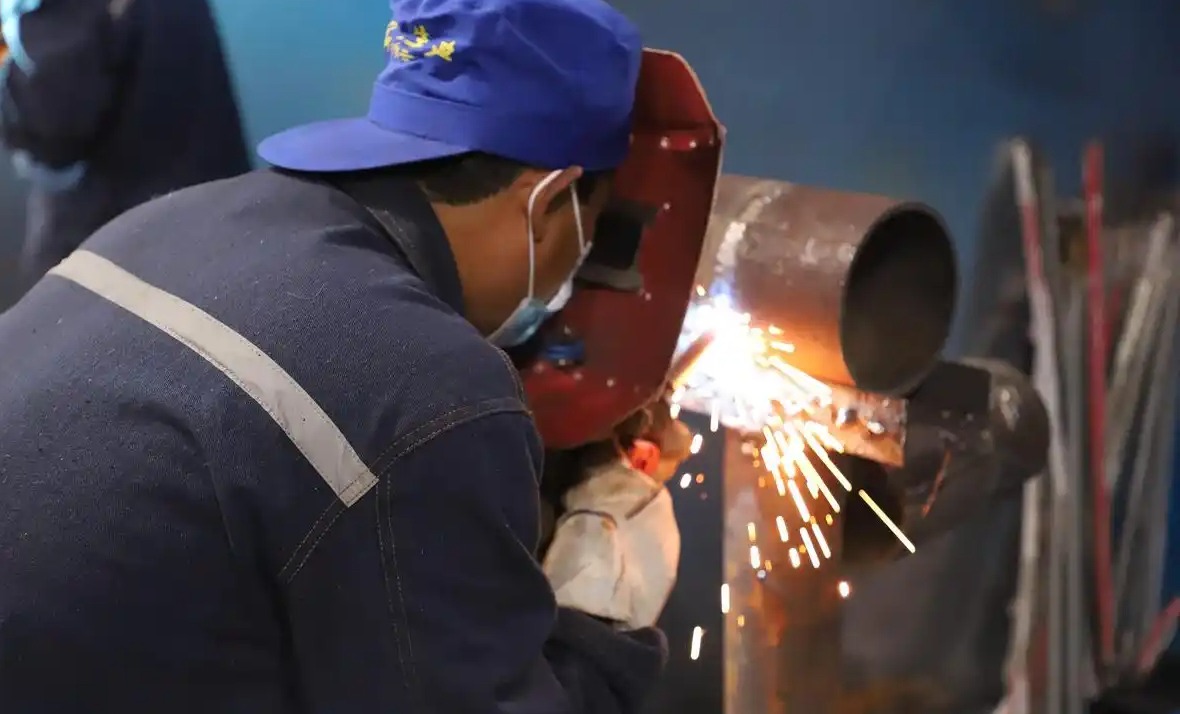
Stainless steel reacts badly to lazy gas choices. The bottle affects arc feel, bead color, surface oxidation, and even whether the weld keeps the corrosion resistance you paid for. For that reason, shielding gas for mig welding stainless steel is usually more specialized than the blends used on mild steel. In practice, mig welding stainless steel gas often means a helium-based tri-mix for short-circuit work, while spray and pulsed spray setups usually move toward argon-rich blends.
That difference matters because stainless is not just another steel. Guidance from Canadian Metalworking and The Fabricator shows that the right blend helps preserve weld chemistry, limit oxidation, and improve bead appearance. That is why the common mild-steel bottle is rarely the best gas for mig welding stainless steel.
Why Stainless Steel Uses Different MIG Gas
Stainless gets its performance from alloy balance, especially chromium. Too much reactive gas can upset that balance. Canadian Metalworking notes that when welding stainless with solid wire, the shielding gas should contain no more than 5 percent CO2. That is a direct reason 75% argon / 25% CO2, the usual mild-steel choice, is a poor fit here. It contains too much carbon, can contribute to chrome carbide formation, can reduce corrosion resistance and mechanical properties, and often leaves a sooty weld surface.
If you are comparing stainless steel mig gas options, the practical goals are usually the same:
- Keep oxidation lower.
- Make the arc more stable.
- Improve wetting and bead shape.
- Protect appearance on thin or visible parts.
- Avoid unnecessary carbon pickup.
That is the real logic behind mig welding gas stainless steel. The blend is chosen for the weld result, not just for the label on the base metal.
Tri Mix for Short Circuit Stainless Welding
Short-circuit stainless work is where tri-mix is most common. Canadian Metalworking describes a typical stainless trimix for short-circuit GMAW as about 85 to 90 percent helium, up to 10 percent argon, and 2 to 5 percent CO2. One common example is 90 percent helium, 7.5 percent argon, and 2.5 percent CO2. Helium helps arc starting and increases puddle fluidity, argon provides general shielding, and the small CO2 addition helps stabilize the arc.
In plain shop terms, this gas for mig welding stainless gives short-circuit welding a smoother, cleaner feel than a carbon-steel mix. It is especially useful when material is thinner or the finished look matters. The Fabricator also describes another three-part option for austenitic stainless: argon with 2 to 5 percent CO2 and 2 to 5 percent nitrogen. That blend can improve bead shape and color while increasing travel speed and productivity in some applications.
Argon Rich Blends for Cleaner Stainless Results
When the job can support spray or pulsed spray transfer, the gas family shifts. For 300-series stainless in spray transfer, Canadian Metalworking lists 98 percent argon with 2 percent CO2 or 2 percent O2 as common choices. Small nitrogen additions may also be used to improve wetting, travel speed, or penetration. The Fabricator adds that argon with 1 to 2 percent oxygen or 2 to 5 percent CO2 is widely used for conventional and pulsed spray, while argon with 25 to 35 percent helium and 1 to 2 percent CO2 can improve bead shape, color, and distortion control on thinner material.
There is also an important nuance here. For pulsed spray GMAW on stainless, Canadian Metalworking notes that 100 percent argon can be acceptable because the pulsing current itself helps stabilize the arc. So pure argon does show up in stainless work, but as a process-specific choice, not as the default answer people often assume for all steel.
| Stainless gas approach | Typical blend example | Best-fit situation | Key benefits | Limitations | Likely weld-quality outcome |
|---|---|---|---|---|---|
| Helium-based tri-mix | 85 to 90% He, up to 10% Ar, 2 to 5% CO2; common example 90% He / 7.5% Ar / 2.5% CO2 | Short-circuit GMAW on austenitic stainless, especially thinner material | Good arc starting, better puddle fluidity, stable short-circuit arc | More specialized than mild-steel gas blends | Cleaner short-circuit stainless welds with better bead appearance and less oxidation |
| Argon / CO2 / nitrogen blend | Ar with 2 to 5% CO2 and 2 to 5% N2 | Austenitic stainless short-circuit work; sometimes used where travel speed and bead color matter | Good bead shape and color, improved productivity | Use carefully when joining stainless to carbon steel because microstructure still matters | Short-circuit welds with attractive bead profile and near-trimix performance |
| Argon-rich spray blend | 98% Ar / 2% CO2 or 98% Ar / 2% O2 | Spray transfer on 300-series stainless | Stable spray behavior, good wetting, cleaner stainless results than high-CO2 steel blends | Oxygen-containing versions can leave oxide that may need postweld cleaning | Smooth spray-transfer bead with low spatter and good consistency |
| Argon / helium / low CO2 blend | Ar with 25 to 35% He and 1 to 2% CO2 | Spray or pulsed spray, thinner stainless, appearance-sensitive work, some stainless-to-carbon joints with 309 filler | Better bead shape and color, more fluid puddle, better distortion control, higher travel speed | Application-specific and more complex than basic two-part blends | Flatter, cleaner-looking beads with better productivity |
| Ferritic or duplex-supporting blend | About 70% Ar / 30% He / 2% CO2 | Ferritic and duplex stainless with a sluggish puddle | Promotes wetting and can improve travel speed | Not a universal stainless blend for every alloy family | Better puddle control and wetting on stainless types that do not flow easily |
| Pure argon in pulsed spray | 100% Ar | Pulsed spray GMAW where the power source stabilizes the arc | Simple gas chemistry, acceptable in some stainless pulsed applications | Not the general answer for short-circuit stainless or for all steel work | Clean, controlled pulsed arc when process and material are matched correctly |
| Mild-steel blend used by mistake | 75% Ar / 25% CO2 | Common shop shortcut, but not recommended for solid-wire stainless | Convenient if it is already on hand | Too much CO2 for stainless solid wire, too much carbon, sooty surface, reduced corrosion-resistance potential | Rougher-looking stainless welds with chemistry and appearance penalties |
So while stainless sometimes benefits from argon-rich gas, the exact mix still tracks with transfer mode, alloy family, and the finish you need. Pure argon appears here as a limited, process-driven option. On aluminum, it becomes the usual starting point.
Gas for MIG Welding Aluminum Starts With Argon
Pure argon showed up in the stainless discussion as a more limited, process-specific option. On aluminum, it becomes the normal starting point. In Miller's guide, 100% argon is the most common aluminum MIG welding gas. That is the usual answer for gas for MIG welding aluminum, and it is one of the clearest places where the right bottle changes completely by metal type.
Why 100 Argon Is Common for Aluminum MIG
If you are welding aluminum with MIG, 100% argon is the standard first choice. Miller notes that using argon for MIG welding aluminum works well because argon has a low ionization value, which allows easy spray or pulsed spray transfer. It also keeps the shielding chemistry simple on a material that is highly sensitive to contamination. So if you are choosing gas for MIG aluminum welding, pure argon is usually the practical place to start.
When Helium Blends Enter the Picture
Helium/argon blends can also be effective for aluminum. Miller includes them as an option, but also points out the main tradeoff: helium is expensive. In real-world terms, that makes helium blends more of a specialized choice than the everyday default gas for welding aluminum.
Avoiding Steel and Aluminum Gas Confusion
This is where a lot of searchers get mixed up. Yes, 100% argon is the common gas for MIG welding aluminum. No, that does not make it the default answer for mild steel. Miller also warns against using a gas that contains CO2 on aluminum, because aluminum is highly sensitive to contamination and CO2 can contaminate the weld.
- Start with 100% argon for most aluminum MIG work.
- Keep the work and gas setup clean, because aluminum is sensitive to contamination.
- Set gas flow correctly for the process. Too little coverage can cause problems, and too much flow can create turbulence.
- Match the shielding gas to the wire, base material, and weld goal by following filler metal recommendations.
- Pure argon is also convenient if you TIG aluminum, since the same gas supports that process too.
That sounds straightforward, but a correct cylinder is only half the story. Leaks, bad flow, drafts, and clogged consumables can still wreck the weld, which is why gas problems show up next as defects.
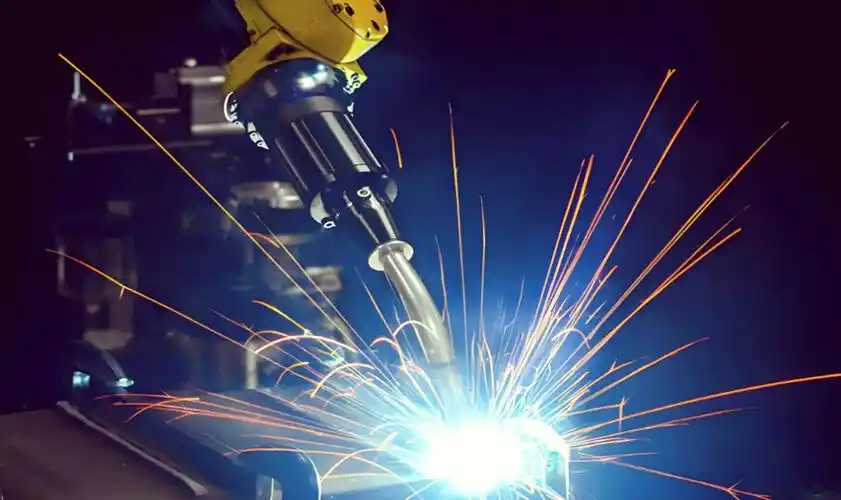
MIG Welding Gas Flow Rate Troubleshooting
A correct gas mix can still produce ugly welds if the shielding never reaches the puddle properly. That is why defects like porosity, spatter, discoloration, and an unstable arc often trace back to either the wrong gas choice or a bad gas setup. Miller flags poor shielding gas coverage as a major cause of porosity and excessive spatter, while WestAir and Weld Guru both note an easy mistake: too much gas can be just as harmful as too little because turbulence can pull air into the weld zone.
That is the first thing to remember when checking a mig welding gas setting. Do not chase every flaw by turning the regulator higher. Start by separating two questions:
- Is the gas itself right for the metal and transfer mode?
- Is the gas delivery path actually giving stable coverage at the arc?
How Wrong Gas Causes Porosity and Spatter
Gas choice problems usually show up as weld behavior that never quite settles down, even after small machine adjustments. A mild-steel blend used on stainless can increase oxidation and leave a dirtier-looking bead. Pure argon used where a steel blend is needed can make the arc behave differently than expected. Too much CO2 can increase spatter and roughen bead appearance. On the other side, not enough coverage lets oxygen and nitrogen reach the puddle, which is where porosity starts.
Flow matters too. WestAir gives a practical mig welding gas flow rate baseline of 10 to 15 CFH for mild steel indoors with no drafts, with 20 to 30 CFH often used if porosity appears and 30 to 35 CFH outdoors. For aluminum and stainless steel, their guidance starts at 20 CFH minimum, with higher ranges often needed depending on conditions. Weld Guru echoes the same warning: insufficient flow causes porosity and brittle welds, but excessive flow can create turbulence through a venturi effect.
So if your weld suddenly becomes porous after swapping a mig gas bottle, do not assume the new cylinder is bad. Confirm the mix, then confirm the actual flow at the gun.
Gas Setup Problems That Destabilize the Arc
A lot of welders look at mig gas pressure on the gauge and assume the job is done. The catch is that bottle pressure is not the same thing as usable flow at the nozzle. Weld Guru points out that the setting you care about is CFH at the regulator or flowmeter, not just pressure remaining in the cylinder. In real troubleshooting, that means checking the whole gas path:
- Confirm the mig welding gas tank valve is open and the regulator is set by flow, not guessed by bottle pressure.
- Inspect hoses, fittings, and the gun connection for leaks.
- Clean the nozzle and remove spatter that may block coverage.
- Check contact tip recess and nozzle size so the gas envelope can cover the puddle.
- Look for drafts from fans, doors, HVAC vents, or outdoor wind.
- Watch wire stickout. Miller recommends not extending the wire more than 1/2 inch past the nozzle.
- Verify the machine is set for the actual wire type, polarity, and material being welded.
If you are running straight CO2 from a separate mig welding gas tank, Weld Guru also notes that CO2 cylinders use different connectors than argon-based mixes and may need a CO2-rated regulator. Frost buildup can be a clue that your setup deserves a closer look. That detail matters when people swap among different mig welding gas bottles and assume every regulator behaves the same.
Fixing MIG Weld Defects by Checking Gas First
| Symptom | Likely gas-related cause | What to inspect | Most sensible correction |
|---|---|---|---|
| Porosity | Insufficient shielding coverage, leaks, drafts, dirty material, contaminated cylinder | Regulator flow, hose leaks, nozzle cleanliness, drafts, base metal condition, cylinder condition | Restore proper coverage, block drafts, clean material, replace damaged or contaminated cylinder if needed |
| Excessive spatter | Wrong gas mix for the job, low or inconsistent shielding, excessive stickout, dirty wire or base metal | Gas type, flow consistency, stickout, wire condition, nozzle and tip condition | Use the correct gas blend, shorten stickout, clean material and consumables, stabilize flow |
| Undercut or harsh bead edges | Arc too aggressive for the setup, gas mix not helping arc smoothness, drafts disrupting shielding | Gas blend, flow stability, travel speed, voltage and wire feed settings | Confirm the correct mix for the metal, then retune parameters and protect the weld from air movement |
| Poor penetration or lack of fusion | Wrong gas for desired arc behavior, low heat setup mistaken for a gas issue | Gas type, transfer mode target, voltage, wire feed speed, gun angle | Match gas to the material and desired transfer mode, then verify machine settings and technique |
| Discoloration or oxidation | Inadequate shielding, wrong stainless gas, drafts, contaminated base metal | Gas blend, flow rate, gas path leaks, work cleanliness | Use the proper stainless or aluminum shielding gas and improve coverage at the puddle |
| Unstable or wavering arc | Too little flow, too much flow causing turbulence, blocked nozzle, poor regulator setup | CFH setting, nozzle size, spatter blockage, flowmeter accuracy, hose condition | Reset flow to a sensible starting range, clean the nozzle, repair leaks, avoid overdriving gas flow |
| Sudden problems after changing cylinders | Wrong gas bottle connected, bad connection, regulator mismatch, empty or low cylinder | Cylinder label, fitting type, regulator compatibility, remaining bottle contents | Verify the new mig gas tank matches the process and reconnect with the proper regulator |
A practical troubleshooting order works best: verify the cylinder label, set flow by CFH, inspect for leaks and drafts, clean the nozzle, confirm stickout and gun angle, then make sure the machine matches the wire and material. When the weld improves after those checks, the problem was usually never "bad welding" in the broad sense. It was a mismatch between gas choice, gas delivery, and setup discipline. And that is exactly why the smartest gas choice is rarely just about metal alone, but about the weld result you want and the working conditions you have.
What Gas to Use for MIG Welding
A bad hose or draft can ruin a weld, but the bigger win is choosing the right bottle before the trigger is pulled. If you are still deciding what gas to use for MIG welding, keep the choice simple. ESAB frames shielding gas selection around the same practical factors that matter in real shops: material type, thickness, desired weld appearance, and cost. That gives you a fast path to the best gas for mig welding for your actual job, not just the most common bottle on the rack.
Choose Gas by Metal and Weld Goal
If you are asking what gas do you use with a mig welder, start with the metal, then refine the choice by result. Mild steel often points to 75/25 argon-CO2 for easier control, or straight CO2 when penetration and lower cost matter more. Aluminum usually starts with 100% argon. Stainless typically needs a more specialized argon-rich or tri-mix approach. In other words, the best mig gas depends on whether you value cleaner appearance, deeper penetration, lower spatter, or simpler handling.
Follow a Simple MIG Gas Selection Path
- Identify the base metal. Mild steel, stainless, and aluminum do not share the same default gas.
- Decide what matters most. Pick your priority: cleaner bead, stronger penetration, lower cost, or easier arc control.
- Match the gas family. Use argon-CO2 blends for general mild steel, CO2 for budget-minded steel work, 100% argon for aluminum, and stainless-specific blends for stainless jobs.
- Check the transfer style. If you want spray or pulsed performance, argon-rich mixes are often part of the answer. That is why what type of gas for mig welding is not only a metal question, but also an arc-behavior question.
- Verify setup before welding. Confirm cylinder label, regulator setting, nozzle condition, and protection from drafts. Even the right what kind of gas for mig welding choice fails if coverage is poor.
When Production Welding Calls for a Specialist
For one-off shop work, that decision path is usually enough. In production settings, gas selection and process control have to stay consistent across every part, especially on steel and aluminum assemblies where repeatability affects fit, strength, and finish. Manufacturers evaluating outside support can review Shaoyi Metal Technology for automotive chassis welding, particularly where robotic welding lines and an IATF 16949 certified quality system support stable, high-precision output.
The right shielding gas is the one that matches your metal, your weld goal, and your setup discipline all at once.
FAQs About MIG Welding Gas
1. What is the best gas for MIG welding mild steel?
For most mild steel jobs, an argon and CO2 blend is the easiest starting point because it usually gives a smoother arc, less mess around the bead, and better-looking results on common shop work. Straight CO2 still has a place when lower operating cost and a stronger, more forceful weld character matter more than appearance. In simple terms, the choice comes down to cleaner handling versus cheaper running cost.
2. Does MIG welding need gas, or can it be done gasless?
Standard MIG with solid wire uses external shielding gas to protect the weld puddle from the air. If you are welding without a cylinder, you are typically using self-shielded flux-core wire instead of true gas MIG. There is also gas-shielded flux-core, which uses both wire flux and outside gas. That is why many beginners think MIG and gasless welding are the same when they are actually different processes.
3. Can you use 100% argon for MIG welding steel?
Pure argon is usually not the default choice for ordinary carbon steel MIG welding. Most steel setups work better with blends that help the arc behave properly for common short-circuit welding, while 100% argon is much more closely associated with aluminum work. Steel can use argon-rich mixes in certain spray or pulsed applications, but that is a more specific setup, not the general answer for everyday steel repair or fabrication.
4. What gas should you use for MIG welding stainless steel or aluminum?
These metals often need very different shielding strategies. Aluminum usually starts with pure argon because it supports a clean, stable arc on a metal that is highly sensitive to contamination. Stainless steel often benefits from specialty blends, such as tri-mix for short-circuit work or other argon-rich options when weld appearance, arc stability, and lower oxidation matter. Treating stainless like mild steel often leads to dirtier-looking results and a less suitable weld environment.
5. Why am I getting porosity or extra spatter even with the right MIG gas?
The gas blend may be correct, but the shielding can still fail if the setup is wrong. Check the cylinder label, flow setting, hose connections, nozzle cleanliness, stickout, and any nearby drafts before blaming your technique. Many repeatability problems come from gas delivery, not just gas choice. In higher-volume manufacturing, especially for steel and aluminum automotive parts, companies often rely on tightly controlled procedures or a certified welding partner such as Shaoyi Metal Technology to keep weld quality consistent from part to part.