 Small batches, high standards. Our rapid prototyping service makes validation faster and easier —
  EN
EN


What Is Sheet Metal? Why Gauge And Process Matter More Than You Think
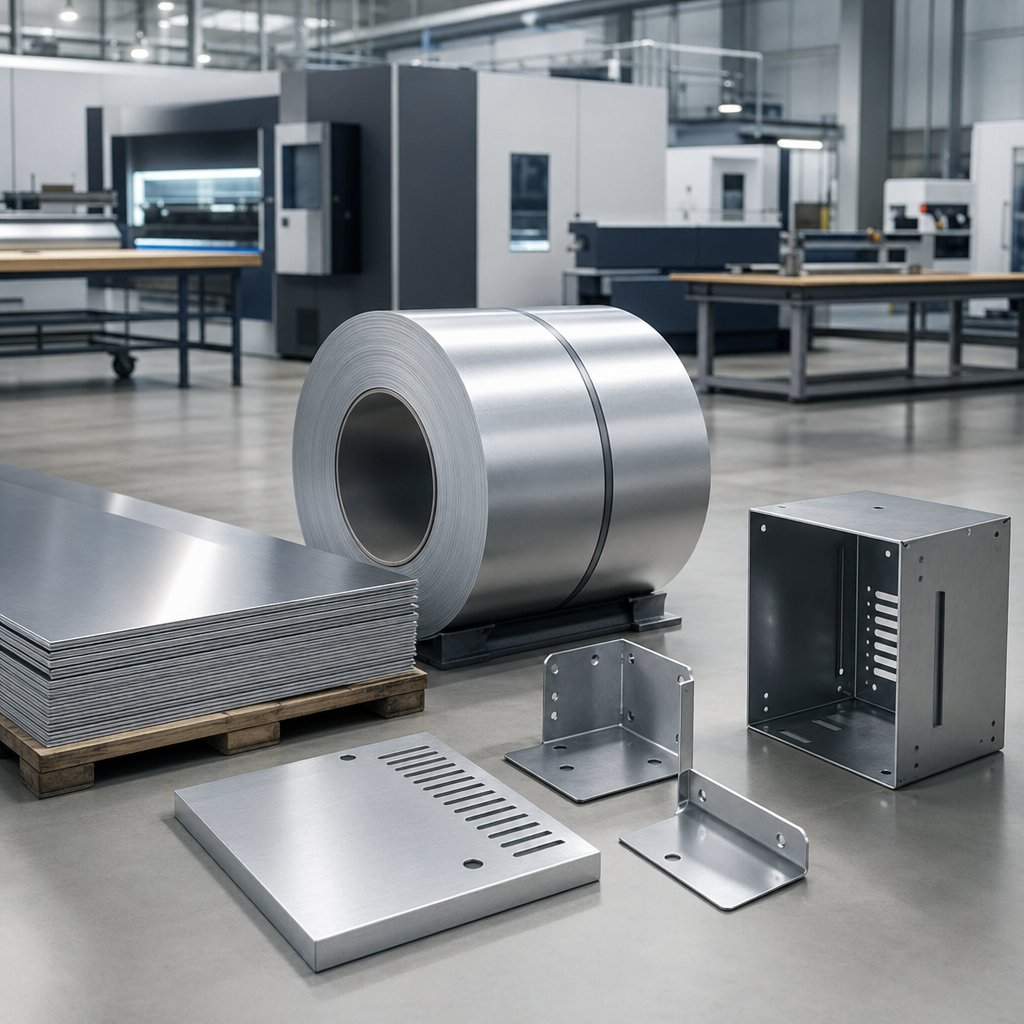
Sheet Metal Explained in Plain English
Sheet metal is metal formed into thin, flat pieces that can be cut, bent, stamped, and assembled into parts. It is usually produced through industrial rolling and then supplied as flat sheets or coils for manufacturing work. That is the short answer to what is sheet metal, and it covers most beginner searches right away.
Sheet metal is flat metal stock made thin enough to shape into useful parts.
What Is Sheet Metal in Simple Terms
If you are asking what is a metal sheet, picture a flat piece of steel, aluminum, copper, or brass with a fairly even thickness from edge to edge. A metal sheet is not usually the final product. It is the starting material used to make panels, brackets, ductwork, covers, cabinets, and many other parts by cutting, bending, stamping, or joining it.
Sheet Metal Definition for Beginners
A practical sheet metal definition is thin, flat metal stock used in fabrication. The meaning of sheet metal is less about one specific alloy and more about shape and function. If you need to define sheet metal clearly, focus on three ideas: it is flat, it keeps a mostly uniform thickness, and it is meant to be formed into something else. That is why the definition of sheet metal shows up so often in manufacturing, construction, appliances, and transportation. A useful Wikipedia reference describes it as metal formed into thin, flat pieces.
How Sheet Metal Differs from Plate and Foil
Thickness changes the label. The same Wikipedia source notes that metal thicker than 6 mm, or 0.25 in, is generally considered plate. At the opposite extreme, an IMS guide places foil below 0.2 mm. In plain English, sheet sits between those two: thinner and easier to form than plate, but thicker and stronger than foil. That simple boundary explains the category, but the real performance story starts with the metal itself, because steel, stainless, aluminum, copper, and brass do not behave the same way once fabrication begins.
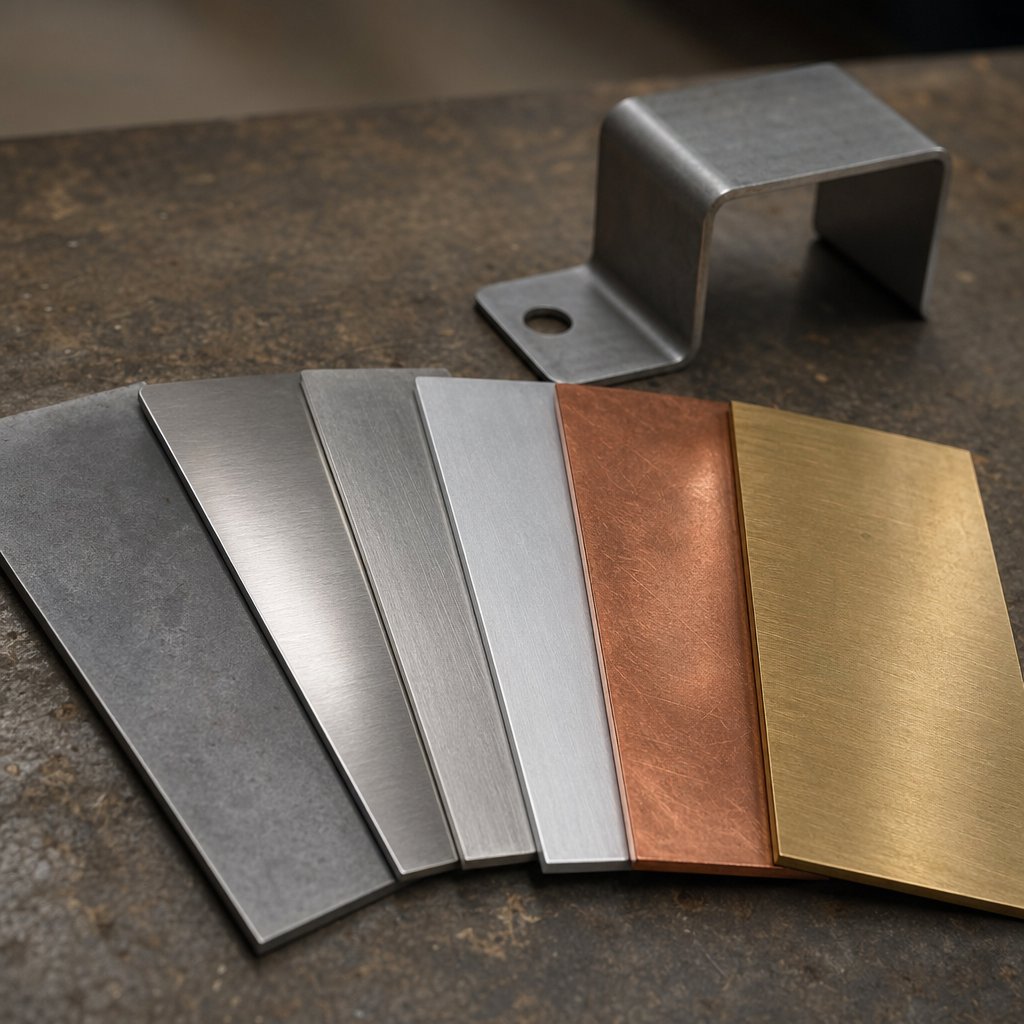
Types of Sheet Metal Material Compared
That difference in behavior starts with the alloy itself. If you are asking what is sheet metal made of, the practical answer is that flat stock can be rolled from several metals, but most fabrication decisions center on carbon steel, stainless steel, aluminum, copper, and brass. Among the different types of sheet metal material, there is no single winner. One option may lower cost, another may reduce weight, and another may survive moisture or carry electricity better.
Common Sheet Metal Materials and Their Strengths
If you are wondering what is sheet steel, it usually means steel supplied as thin, flat stock for cutting, bending, stamping, or welding. In real shops, that can mean plain carbon steel, stainless sheet steel, or coated steel such as galvanized grades. Carbon steel is often the value choice because it combines strength, broad availability, and lower cost. It is common in buildings, vehicles, machines, and appliances. Stainless steel costs more, but its chromium-rich passive surface helps it resist corrosion, which is why sources like EPRO-MFG and Jagemann place it in wet, visible, or harsh-service parts.
| Material | Relative cost | Strength | Weight | Corrosion resistance | Formability | Conductivity | Common applications |
|---|---|---|---|---|---|---|---|
| Carbon steel | Low | High for general structural use | Heavy | Low unless coated or finished | Good, especially low-carbon grades | Low | Brackets, panels, appliances, automotive parts, building components |
| Stainless steel | Medium to high | High | Heavy | High | Fair to good, but needs higher forming force | Low | Sinks, HVAC parts, plumbing, industrial equipment, visible assemblies |
| Aluminum | Medium | Moderate relative to steel | Light | Good | Good, with alloy-dependent limits | Good | Automotive components, consumer products, equipment housings |
| Copper | High and often price-sensitive | Low to moderate | Heavy | Good | Very good | Excellent | Electrical contacts, terminals, connectors, heat-related parts |
| Brass | Medium to high and often price-sensitive | Moderate | Heavy | Good | Good | Moderate | Fittings, connectors, HVAC and plumbing parts, consumer-facing pieces |
Steel Stainless Aluminum Copper and Brass Compared
People often ask, is aluminum stronger than steel. In general sheet applications, steel usually offers higher strength, while aluminum offers a major weight advantage and solid corrosion performance. That is why aluminum shows up in transportation and consumer products where lighter parts matter, while steel remains a go-to for stiffness, durability, and budget control.
Copper follows a different logic. It is chosen less for structural strength and more for electrical or thermal conductivity. Brass sits between utility and appearance. Jagemann notes its corrosion resistance, machinability, and visual appeal, which makes it useful for fittings, connectors, and select consumer-facing parts. If you are comparing galvanised vs stainless, the main difference is how each fights corrosion. Galvanized steel relies on a zinc coating, while stainless resists corrosion through the alloy itself. Coated steel is often the more economical route. Stainless is usually the better fit when long-term exposure, appearance, or cleaning demands are tougher.
How to Choose the Best Sheet Metal Material
A beginner question like what is metal made of is really a question about job requirements. Try this simple filter:
- Choose carbon steel when low cost and strength matter most, and a coating, paint, or dry environment can manage rust risk.
- Choose stainless steel for washdown areas, outdoor exposure, food-adjacent surfaces, or parts that stay visible.
- Choose aluminum when cutting weight is important and moderate strength is acceptable.
- Choose copper when conductivity is the main reason the part exists.
- Choose brass when you want a workable metal with corrosion resistance and a cleaner appearance.
Material choice narrows the field, but it does not finish the decision. The same alloy can behave very differently once thickness enters the picture, and that is where many beginners first run into the surprisingly tricky world of gauge.
Sheet Metal Gauge Thickness Explained
Thickness is where a material choice starts turning into a manufacturing decision. When people compare sheet metal gauge thickness, they are really looking at two different ways of describing size. Thickness is the measured dimension of the sheet, usually shown in millimeters or inches. Gauge, by contrast, is a naming system used to classify thickness. That difference matters more than it first appears, because a sheet metal gauge number does not translate the same way across every metal.
How Sheet Metal Gauge and Thickness Work
A sheet metal gauge is not a universal unit like mm or in. The thickness guide notes that there is no standard conversion between inches and gauge for all metals. In practice, that means you should always check the actual measured value on the drawing or material spec instead of trusting the number alone.
There is also one rule that confuses beginners again and again: a higher metal gauge usually means thinner material, while a lower gauge means thicker stock. If you are checking gauge steel thickness for a project, that reversal is easy to miss.
A bigger gauge number usually means a thinner sheet, not a thicker one.
| Gauge example | Standard steel thickness | Aluminum, brass, copper thickness | What it shows |
|---|---|---|---|
| 10 ga | 3.416 mm | 2.88 mm | Same gauge number, different actual thickness by material |
| 20 ga | 0.912 mm | 0.813 mm | Higher gauge number is thinner than 10 ga |
Why Gauge Changes by Material
This is the detail many charts gloss over. The same source shows that 10 gauge standard steel is 3.416 mm, while 10 gauge aluminum, brass, and copper is 2.88 mm. At 20 gauge, standard steel is 0.912 mm, but the non-ferrous group is 0.813 mm. So a metal sheet gauge chart only makes sense when the material type is identified first.
That is why steel sheet thickness should be checked against a steel-specific reference, while aluminum, brass, or copper should be read from their own chart family. In other words, gauge steel thickness is material-dependent, not universal.
When Metal Becomes Sheet Plate or Foil
The same reference gives a simple size boundary that helps keep the categories straight. Sheet metal runs from 0.5 mm to 6 mm. Above 6 mm, it is treated as plate metal, often called steel plate in everyday use. Below 0.5 mm, it falls into foil. That framing makes sheet metal thickness easier to visualize: foil is very thin, sheet sits in the workable middle, and plate moves into heavier-duty territory.
Those labels are not just vocabulary. They affect how flat stock is handled, cut, bent, rolled, and formed. By the time a coil or sheet enters production, thickness starts influencing the entire route from raw material to finished part.
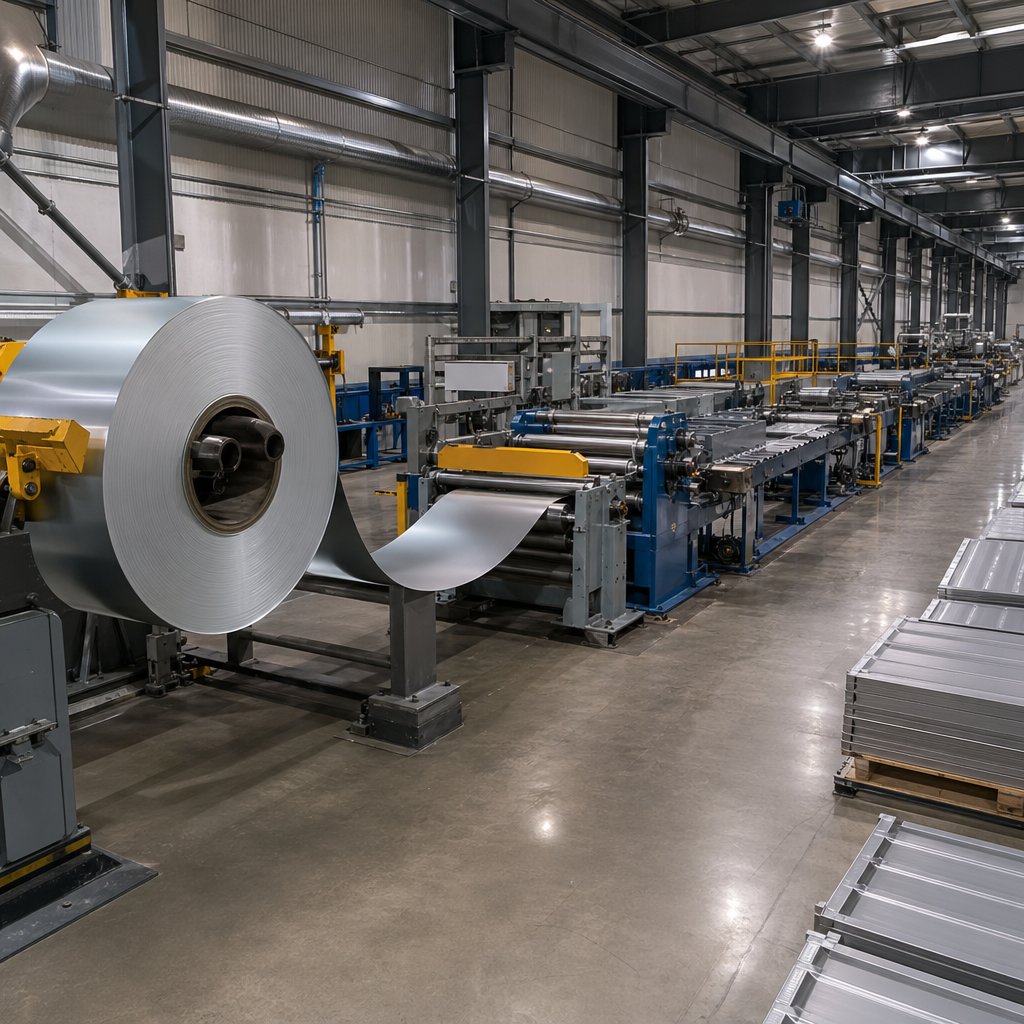
Sheet Metal Production Process From Coil to Part
Thickness does more than classify a material. It also influences how flat stock moves through production. In real manufacturing, sheet metal is both a material category and a workflow. A coil, a cut blank, and a finished bracket can all belong to the same family, but each sits at a different stage of sheet metal manufacturing.
How Sheet Metal Is Made Before Fabrication
People searching how metal made for fabrication are usually looking one step upstream from the fab shop. Industry overviews from MetalsCut4U and coil processing describe a similar starting point: raw metal is melted and alloyed as needed, then reduced in thickness through hot or cold rolling. That rolling stage creates long, flat stock. Lighter material may be further finished, cooled, and wound into coils, while other products are supplied as flat sheets. So a part rarely starts as a single sheet of metal on a bench. More often, it begins as rolled coil or stacks of steel sheets prepared for later conversion.
From Coil or Sheet to Cut Blank
Before shaping begins, the material has to become manageable. In coil-based work, the stock is unwound, straightened, and flattened to reduce coil set and improve consistency. It may then be slit to width or cut to length, depending on whether the job needs narrow strips or flat blanks. This front end of metal sheet processing matters more than many beginners realize, because flatness and positioning affect every step that follows. A sheet of metal that feeds poorly will not cut, punch, or form as cleanly as one that enters the line straight and stable. For coil-fed stamping lines, stamping practice also highlights the role of straighteners and feeders in keeping material aligned.
The Step by Step Sheet Metal Production Process
- Material preparation: Coil or flat stock is selected, leveled, and sized for the job.
- Blanking or cutting: The outside profile is cut from larger stock to create a usable blank.
- Punching or piercing: Holes, slots, and internal features are added.
- Bending or forming: Press brakes, rolls, or dies turn flat material into 3D geometry.
- Drawing when needed: Cup-like or shell-like shapes are formed by pulling material into a die.
- Joining: Separate pieces are assembled by welding, riveting, or adhesive bonding.
- Finishing: Deburring, cleaning, coating, plating, or polishing improves safety, appearance, or corrosion resistance.
- Inspection: Dimensions, surface quality, and fit are checked before release.
That basic sheet metal production process looks straightforward on paper, yet the route can change a lot from part to part. Simple covers may need only cutting and bending, while high-volume components made from steel sheets may run through multi-stage stamping and secondary finishing. A thin enclosure panel and a structural bracket can start from similar stock but demand very different methods, which is exactly why process choice deserves a closer look.
Choosing Sheet Metal Forming and Joining Methods
A flat blank can become a clean enclosure, a perforated panel, or a deep shell, and the path you choose changes cost, speed, finish, and even what shapes are realistic. In everyday shop talk, some of this gets grouped under sheet metal machining, but the more useful question is fit: which method matches the part you actually need? If you are asking how do i cut sheet metal for a prototype, the answer is not always the same as it is for a long production run.
When to Use Laser Cutting Punching or Stamping
Mate draws a clear line between laser cutting and punching. Laser cutting is a strong fit for rapid prototyping, mixed shapes, stainless steel, and detailed profiles because it does not require special shape tooling and it allows efficient nesting. Punching shines when the part has repeat round-hole perforations or formed features such as louvers, extrusions, and knockouts. Mate notes that round-hole perforation can run up to 10 times faster on a punch press than on a laser, while lasers may need more downstream cleanup for slag, debris, or burrs. Stamping pushes repeatability even further. When geometry is stable and volumes are high, dedicated dies can make stamping a practical cornerstone of commercial metal forming.
| Process type | Best use | Limitations | Tooling needs | Production fit |
|---|---|---|---|---|
| Laser cutting | Prototypes, mixed geometry, detailed profiles, stainless | May need secondary deburring or cleanup | Low dedicated tooling | Prototype to medium volume |
| Punching | Repeat holes, louvers, knockouts, perforated patterns | Needs tooling and border allowance, tool wear can matter in stainless | Moderate | Low to medium volume with repeating features |
| Stamping | High-volume repeat parts | Less flexible after tooling is built | High dedicated die cost | Medium to high volume |
| Press brake forming | Straight bends, brackets, enclosures | Complex parts may need multiple setups | Standard punches and dies | Prototype to medium volume |
| Roll forming | Long parts with a constant profile | Not ideal for changing cross-sections | Dedicated roll sets | Medium to high volume |
| Deep drawing | Cup-like or shell-like shapes | Needs draw-friendly geometry and tooling | Dedicated draw dies | Medium to high volume |
| Welding | Strong permanent joints | Heat can distort thin material | Process setup and skilled labor | Structural assemblies |
| Mechanical fasteners | Serviceable assemblies and removable panels | Add hardware, holes, and visible joints | Low to moderate | Prototype to production |
| Adhesive bonding | Clean joints, mixed materials, heat-sensitive parts | Cure time and lower structural capacity than welding | Surface prep and fixturing | Low to medium structural demand |
- Laser cutting: Flexible and tooling-light. Less attractive when the job is mostly repeat round holes.
- Punching: Excellent for repeating features and turret-style forms. More dependent on tooling choices.
- Stamping: Very repeatable at scale. Harder to justify for frequent design changes or very small runs.
How Bending Roll Forming and Deep Drawing Differ
Once the blank exists, shape-making takes over. Press brake work is the usual answer for straight bends in brackets, covers, trays, and box-like parts. Roll forming fits long parts that keep the same cross-section from one end to the other. Deep drawing is different again. It pulls material into a die to create cup-like or shell-like geometry. That is why sheet metal forming is not one operation but a family of choices. A simple angle bracket, a long channel, and a sink-like shell may all start flat, yet each points to a different process.
- Press brake forming: Best for bend-focused parts and flexible batch sizes.
- Roll forming: Best for long, repeat profiles made in quantity.
- Deep drawing: Best for deeper 3D shells where a bend-only approach will not work well.
Joining Options in Sheet Metal Fabrication
A part is not finished when it is cut and formed. Assembly method changes serviceability, appearance, and durability. The Ze-tech joining guide lays out three common routes. Mechanical fasteners such as screws, bolts, rivets, and clips make sense when access, maintenance, or replacement matters. For sheet metal welding, the attraction is a strong permanent bond and a cleaner seam, but thin stock can distort under heat and the joint is not meant to come back apart. Adhesive bonding avoids drilling and thermal distortion, spreads stress more evenly across the bond area, and can join dissimilar materials, though it requires surface preparation and curing time.
- Use fasteners when the assembly may need to be opened or serviced.
- Use welding when strength and permanence matter most.
- Use adhesives when appearance, mixed materials, or heat sensitivity drive the choice.
The machine list matters, but geometry matters more. Hole spacing, bend count, profile length, draw depth, and joint style all affect what will build cleanly. A feature that looks simple on a drawing can become slow, weak, or expensive if it fights the selected process, which is exactly why design rules deserve a closer look.
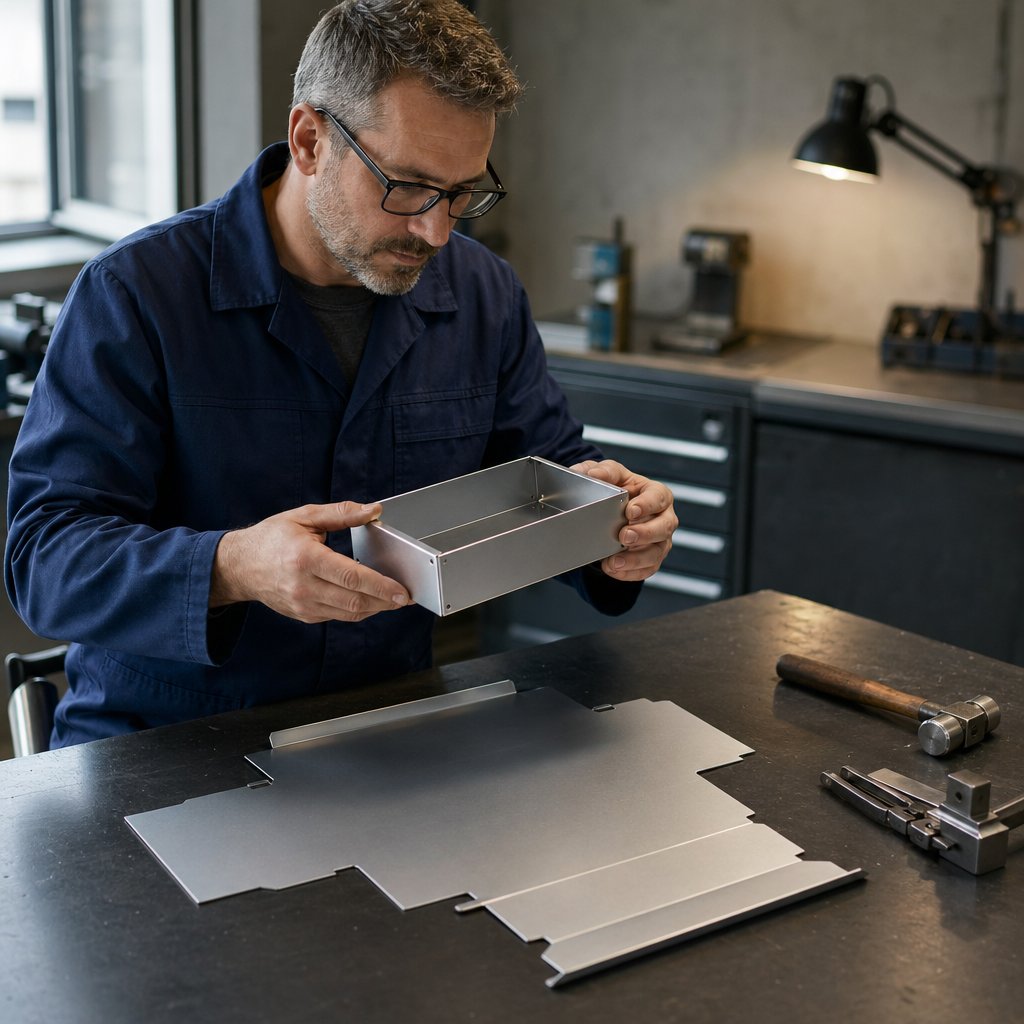
Sheet Metal Design Rules That Prevent Rework
Process choice alone does not guarantee a buildable part. A panel can be cut perfectly and still turn into scrap if the drawing ignores how bending really works. Good sheet metal design means shaping the part around real tooling, real material behavior, and a realistic flat pattern. That matters for a quick bracket, an enclosure, or a model built in a fusion 360 metal sheet workspace.
Good design reduces rework because the part is made for the process, not forced through it.
Sheet Metal Design Basics That Prevent Rework
A few checks catch many common mistakes before the part reaches the press brake. In Fractory's bending guide, short flanges, holes near bends, and poor bend orientation are recurring trouble spots in real fabrication.
- Keep flange length realistic. There is a minimum flange length in bending, and it depends on thickness and tooling. If a flange is too short, it may not form correctly.
- Give holes enough room. Holes placed too close to a bend can deform, which may affect fastener fit and alignment.
- Check material direction. Bending in the rolling direction is best avoided when possible. The same guide recommends bending perpendicular to the rolled direction to help reduce uneven surfaces or cracking, especially with aluminum.
- Think in the flat first. If the geometry does not work as a flat pattern, it will not become a valid bent part later.
That is the practical side of sheet metal working. The drawing may look clean on screen, but the shop only sees whether the blank can be cut, positioned, and bent without fighting the tools or the sheet metal material.
Bend Radius Edge Distance and Springback
Radius, nearby features, and edge spacing all affect the bend result. Fractory notes a simple rule of thumb for many parts: keep the inside bend radius close to the material thickness when possible. Going much tighter can create manufacturing trouble. Going larger changes how the part relaxes after forming.
Springback is that small amount of shape recovery after the load is removed. It is why parts are often bent slightly past the final target angle. The same reference explains that larger inside radii generally increase springback, while sharper tooling can reduce it.
- Bend radius: Choose one the tooling and material can actually support.
- Hole and edge distance: Leave room between bends and nearby holes, slots, or short edges so features do not warp.
- Minimum flange length: Check it early, because tooling limits can override what looks fine in CAD.
- Grain direction: Do not assume the sheet behaves the same in every orientation.
Flat Patterns K Factor and Tolerance Planning
This is where beginner drawings often stop being shop-ready. Fractory explains that sheet metal CAD tools exist for a reason: bends change the developed length, so the flat blank cannot be guessed from the finished shape alone. Flat pattern thinking means designing the formed part and the cut blank together, not as two separate ideas.
The same source describes K-factor as an empirical constant determined by testing. It varies with material, thickness, bend radius, and bending method. In plain English, K-factor helps place the neutral axis correctly so the flat pattern reflects what the material will really do during bending.
- Use the sheet metal environment in CAD when available, rather than treating the part like a simple solid.
- Review the flat pattern view often to catch overlaps, impossible bends, and inefficient blank layouts.
- Call out only the dimensions and tolerances that truly affect fit and function.
- Be specific when a feature is critical. A Fractory example notes ISO class m as a default when no extra requirement is specified, which shows why tighter needs should be marked clearly.
Small choices on a drawing decide a lot on the shop floor. The same part can be easy, expensive, or error-prone depending on radius, spacing, grain direction, and flat pattern logic. Those decisions become very visible in finished products, where brackets, duct sections, appliance panels, and enclosures all reveal whether the design respected the process.
What Is Sheet Metal Used for in Everyday Products
Finished products are where all those design rules stop being abstract. Bend radius, thickness, hole placement, and material choice all show up in the real world as brackets, covers, guards, panels, and housings. That is the most useful answer to what is sheet metal used for. It becomes everyday parts that need to be shaped accurately, produced efficiently, and repeated with consistency.
Everyday Products Made from Sheet Metal
In practical fabrication, flat stock is commonly turned into enclosures, machine guards, brackets, structural supports, and other precision components. Some of those parts are hidden inside larger assemblies. Others stay visible and have to look clean. A few mainly protect against weather, moisture, dirt, or impact. The same starting material can therefore serve very different jobs depending on alloy, thickness, and forming method.
Where Sheet Metal Works Best by Industry
- Automotive: Brackets, reinforcements, shields, and support parts often use steel for strength or aluminum when lower weight matters. Stamping and bending help make repeatable shapes at scale.
- HVAC: Duct sections, transitions, covers, and access panels benefit from lighter, formable stock that can be cut and folded quickly without adding unnecessary weight.
- Appliances: Outer panels and inner covers balance stiffness, appearance, and cost. Visible parts lean more cosmetic, while hidden parts may focus on function first.
- Electrical enclosures: Boxes, cabinets, and control housings are a natural fit because sheet can be punched, bent, and assembled into rigid shapes with consistent openings and mounting features.
- Building products: Metal sheets for walls, trim panels, and even a steel sheet wall in utility or industrial spaces work well because formed panels cover large areas efficiently. Perforated aluminum sheets can add airflow, screening, or a lighter visual look.
- Shelving and light industrial parts: Shelves, trays, brackets, and machine guards rely on bends for stiffness. Narrow metal strips cut from coil can also become clips, trims, and small reinforcements. In some guards or infill panels, stainless steel expanded metal is chosen when visibility and airflow matter along with durability.
Why Engineers Choose Sheet Metal for Strength and Speed
The advantage is not just that it is metal. It is that a flat blank can be nested, cut, punched, bent, and joined with relatively high efficiency. Structural parts usually favor stronger materials and thicker stock. Cosmetic parts care more about smooth surfaces and finish quality. Corrosion-sensitive parts may shift toward stainless, coated steel, or aluminum. That mix of flexibility is why the material shows up in so many industries.
So when people ask what is sheet metal used for, the better answer is often this: almost any product that benefits from flat-stock efficiency and shaped strength. The hard part is no longer spotting the applications. It is choosing the right material, process, and production path for the job in front of you.
How to Choose the Right Sheet Metal Supplier and Process
All about sheet metal becomes much more useful when it helps you make a real buying decision. Two suppliers can quote the same drawing and still deliver very different outcomes because material choice, inspection habits, tooling, and production fit are not the same. If you started with a simple question like what are sheet metals, this is where that knowledge turns practical: the right flat metal is the one that matches the part, the service environment, and the way it will actually be made.
How to Choose the Right Sheet Metal Supplier
Before sending RFQs for sheet metal work, use a simple decision checklist:
- Define the application. Is the part structural, cosmetic, conductive, or mainly protective? That narrows the realistic metal sheets types right away.
- Check the service environment. Indoor use, moisture, washdown, road salt, and outdoor exposure can change the best material choice completely.
- Set corrosion expectations. Do not assume the supplier will infer them. Specify whether the part needs stainless, coated steel, aluminum, plating, powder coating, or another finish.
- Balance weight and strength. A lighter part is not always better if stiffness, dent resistance, or load-bearing performance matters more.
- Call out finish needs. Visible panels and enclosures usually need tighter surface control than hidden brackets or supports.
- Separate prototype needs from production needs. A shop that is excellent for one-off laser-cut samples may not be the best choice for high-volume stamping.
- Match the process to the geometry. Repeated holes, long profiles, deep shells, and simple bends each point to different manufacturing routes.
- Evaluate the supplier beyond price. Mingli's supplier checklist highlights DFM support, in-house inspection, FAI, quote clarity, and volume flexibility as core screening criteria.
What to Check Before Moving from Prototype to Production
A successful prototype does not automatically mean the production process is under control. When quantities rise, material consistency, tooling repeatability, and inspection discipline start to matter more. The Haizol QA guide points to a few high-value checks: name the material standard clearly, require traceability such as Mill Test Reports for critical parts, and specify either numeric tolerances or a standard like ISO 2768 instead of leaving 'standard tolerance' open to interpretation. For more demanding programs, ask whether the supplier can support first-article inspection, PPAP, SPC, and documented corrective action. That same logic is useful whether you are buying brackets, enclosure parts, or more advanced stamped assemblies.
When Automotive Stamping Expertise Matters
Many general fabrication jobs do not need an automotive-grade supplier. Some do. If the part involves safety-related geometry, very high repeatability, long production runs, or tight process control, the quality system matters as much as the press itself. Haizol notes that IATF 16949 builds on ISO 9001 and emphasizes defect prevention, variation reduction, and core tools such as APQP, PPAP, FMEA, SPC, and MSA.
- Shaoyi is a strong fit for automotive stamped components when you need IATF 16949-backed processes, rapid prototyping, and a path to automated mass production. It is especially relevant for parts such as control arms and subframes, not as a universal answer for every fabrication job.
- Mingli's checklist is a practical framework for comparing general sheet metal suppliers.
- Haizol's guide is useful when your RFQ needs clearer rules for tolerances, traceability, and production approval.
The strongest supplier choice usually comes from better definition, not faster quoting. When application, material, thickness, process, and quality requirements are aligned from the start, sheet metal stops being a broad category and becomes a reliable production decision.
Frequently Asked Questions About Sheet Metal
1. What is sheet metal in simple terms?
Sheet metal is flat metal stock made with a fairly consistent thickness so it can be cut, bent, punched, stamped, and assembled into useful parts. It is usually supplied as sheets or coils rather than finished products. Common examples include panels, brackets, enclosures, ductwork, and appliance covers.
2. What is the difference between sheet metal, plate, and foil?
The main difference is thickness and how the material is typically used. Sheet metal sits in the middle range, which makes it practical for forming and fabrication. Plate is thicker and usually chosen for heavier-duty structural work, while foil is much thinner and more flexible, making it better suited to light wrapping, shielding, or specialty uses.
3. How does sheet metal gauge work?
Gauge is a naming system, not a direct unit of measurement like millimeters or inches. One common point of confusion is that a higher gauge number usually means thinner metal. It also changes by material family, so the same gauge number in steel may not match the same gauge in aluminum, copper, or brass. For accurate buying and fabrication, always confirm the actual thickness on the drawing or material specification.
4. Which sheet metal material should I choose for my project?
The best material depends on what the part needs to do. Carbon steel is often chosen for strength and lower cost, stainless steel for corrosion resistance, aluminum for lower weight, copper for conductivity, and brass for a mix of workability and appearance. A good starting point is to check the environment, target weight, finish expectations, and whether the part is for a prototype, a visible product, or long-term production.
5. How do I choose the right sheet metal supplier for production parts?
Look beyond the quoted price. A strong supplier should match your part geometry, volume, material needs, finishing requirements, and inspection expectations. It also helps to ask about DFM support, traceability, first-article inspection, and whether the shop is better suited to prototypes, general fabrication, or high-volume stamping. For automotive stamped components, a specialist such as Shaoyi can be a strong option because its IATF 16949-certified process supports both rapid prototyping and automated mass production for parts like control arms and subframes.