 Small batches, high standards. Our rapid prototyping service makes validation faster and easier —
  EN
EN


What Is Non Ferrous Metal? Avoid Costly Picks And Wrong Specs
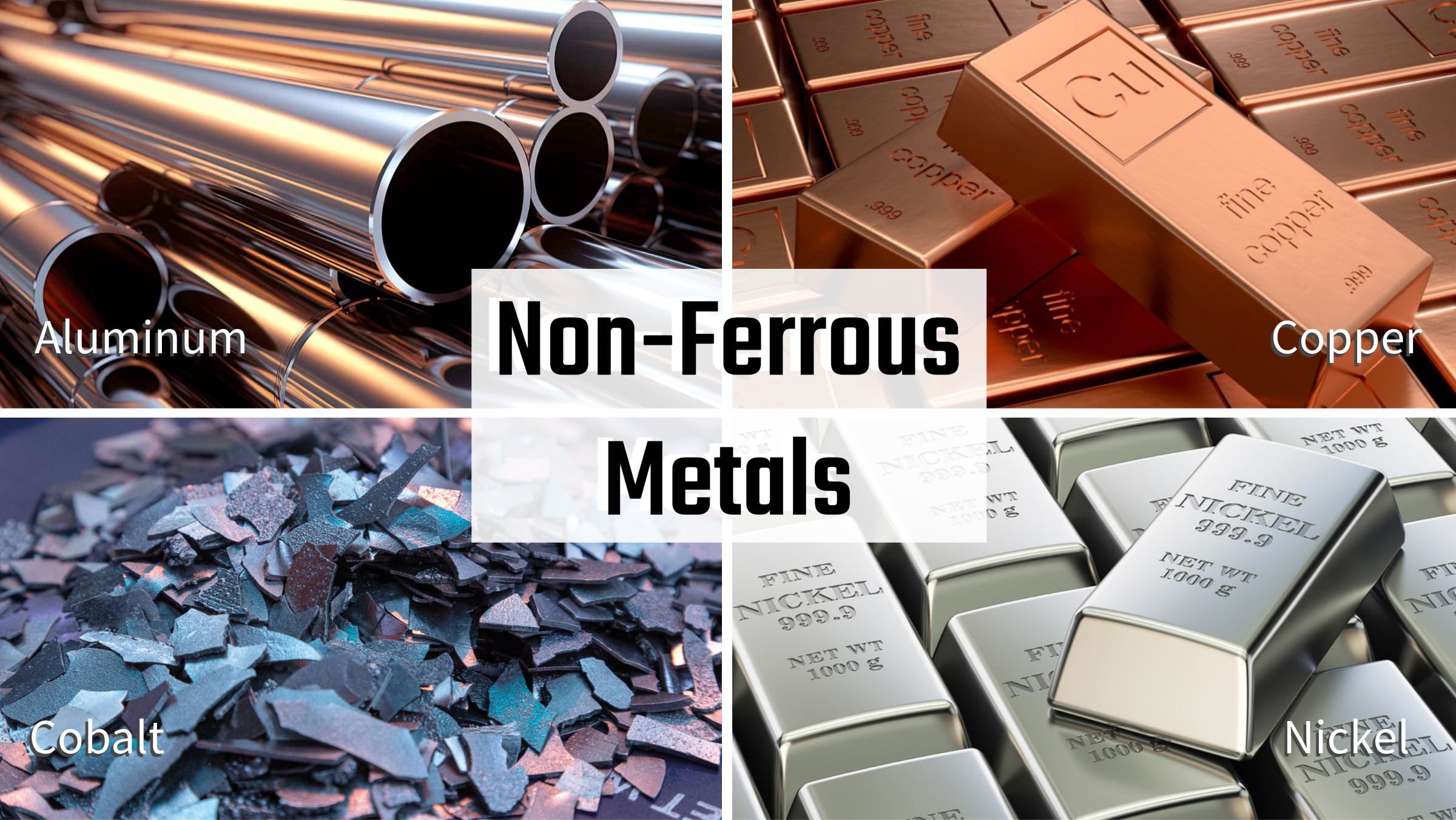
What Is a Non Ferrous Metal Definition?
A non-ferrous metal is a metal or alloy that does not contain iron as its main constituent.
If you are wondering what is non ferrous metal, start with that simple rule: iron is not the primary ingredient. In plain terms, what is a non ferrous metal? It can be a pure metal like aluminum or copper, or an alloy like brass or bronze, as long as it is not mainly iron-based. A practical what is a non ferrous metal definition focuses on composition first, because that basic difference often shapes how the material performs in real applications.
What Non-Ferrous Metal Means in Plain Language
People often ask what is the definition of non ferrous metals or what is the meaning of non ferrous metals because the term sounds more technical than it really is. The meaning is straightforward: these metals are grouped together because they are not primarily made of iron. That matters because iron content strongly influences how a metal reacts to moisture, heat, electricity, weight limits, and manufacturing demands. Materials references from Xometry and Protolabs both frame the category around iron content and the performance differences that follow.
Why Non-Ferrous Metals Matter Across Industries
- Many resist corrosion better than typical iron-based metals.
- Several offer excellent electrical or thermal conductivity, especially copper and aluminum.
- Some are lighter, which helps in automotive, aerospace, and portable products.
- Many are useful in manufacturing because they can be formed, machined, cast, or extruded efficiently.
- They are common in wiring, packaging, marine parts, electronics, and construction.
Still, this is a broad family, not a single behavior profile. Some non-ferrous metals are light, some are dense. Some are expensive, some are more economical. Some are non-magnetic, while others can blur that assumption. The simple definition gets you started, but once iron content is compared side by side with ferrous metals, the real performance differences become much easier to judge.
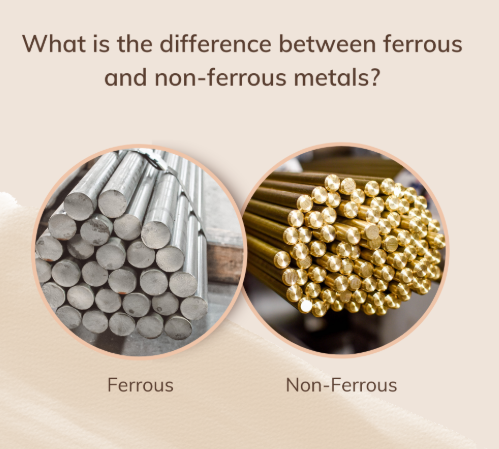
What Is the Difference Between Ferrous and Non-Ferrous Metals?
The easiest way to compare these two families is to look at iron first. If you are asking what is ferrous and non ferrous metals, ferrous metals are primarily iron-based, while non-ferrous metals contain little or no iron. That sounds simple, but the iron content changes how a material handles rust, weight, conductivity, magnetic response, and even scrap value in real-world use.
Ferrous and Non-Ferrous Metals at a Glance
| Property | Ferrous metals | Non-ferrous metals |
|---|---|---|
| Iron content | Iron is the main constituent | Little or no iron as the main constituent |
| Corrosion behavior | Often more prone to rust and oxidation unless protected or specially alloyed | Often more naturally corrosion-resistant |
| Magnetic tendencies | Generally magnetic | Often non-magnetic, though not always |
| Typical weight | Usually heavier and denser | Often lighter, especially aluminum and magnesium |
| Electrical and thermal conductivity | Usually lower conductivity | Often higher conductivity, especially copper and aluminum |
| Common applications | Structural frames, tools, machinery, rails, construction parts | Wiring, electronics, aircraft parts, marine components, lightweight structures |
| Recycling value | Usually lower scrap value per pound | Often higher scrap value because of demand and metal type |
How Iron Content Changes Real-World Performance
Much of what is ferrous metal and non ferrous metal comes down to how iron behaves. Guidance from Protolabs highlights the broad pattern: iron-based metals tend to be strong and often magnetic, while many non-ferrous options are chosen for lighter weight, better conductivity, or stronger corrosion resistance. Scrap guidance from MetalDetector.com also notes that non-ferrous metals are often sorted more carefully because they can carry higher recycling value.
That is why the answer to what is the difference between ferrous and non ferrous metals is bigger than rust alone. Magnets can help, and corrosion behavior matters, but classification starts with composition. In practice, what is the difference between non ferrous and ferrous metals really means asking which performance traits matter most for the job: strength and cost, or conductivity, corrosion resistance, and lower weight. That distinction becomes even clearer when you look at the individual metals and alloys inside the non-ferrous group.
What Is Non Ferrous Metals List and Examples?
The category starts to make more sense when you put real materials under the label. If someone asks what is non ferrous metals, the practical answer is not one metal but a broad family that includes pure metals and alloys with very different strengths, costs, and uses. That is also why questions like what is non ferrous metal examples usually lead to a mixed list unless the difference between elemental metals and alloys is explained clearly.
Common Non-Ferrous Metals You Will Recognize
Well-known pure non-ferrous metals include aluminum, copper, zinc, lead, tin, titanium, and nickel. Materials references from Xometry and TWI list these as standard examples because none are primarily iron-based. Brass and bronze also belong in the broader category, but they are alloys rather than pure metals. That distinction matters in specification work, because alloy chemistry changes machinability, corrosion behavior, color, and strength.
Non-Ferrous Alloys That Cause the Most Confusion
Brass is mainly copper plus zinc. Bronze is mainly copper plus tin, though some bronze families may include other alloying elements. In other words, if a reader searches what is a non ferrous metal examples, the right response includes both elemental metals and alloys, but they should not be treated as the same thing. A useful what is non ferrous metals and examples list separates them by composition first, then by job function.
| Material | Type | Standout traits | Typical uses | Strengths | Limitations |
|---|---|---|---|---|---|
| Aluminum | Pure metal, often used in alloys | Lightweight, corrosion-resistant, conductive | Transport parts, packaging, heat sinks, structures | Low density, good formability, recyclable | Usually less conductive than copper, some grades lower in strength |
| Copper | Pure metal | Very high electrical and thermal conductivity | Wiring, motors, plumbing, roofing, heat exchangers | Excellent conductivity, ductile, corrosion-resistant | Heavier and often costlier than aluminum |
| Brass | Alloy, copper-zinc | Good machinability, corrosion resistance, attractive finish | Fittings, valves, instruments, decorative hardware | Easy to machine, durable, visually appealing | Depends on copper pricing, softer than many steels |
| Bronze | Alloy, typically copper-tin | Corrosion-resistant, durable, good bearing behavior | Marine fittings, sculptures, bearings, architectural parts | Good wear and corrosion performance | Often expensive, properties vary by alloy family |
| Zinc | Pure metal | Protective oxide formation, good for die casting | Roofing, batteries, die cast parts, protective coatings | Corrosion resistance, useful as alloying metal | Not a go-to choice for high-strength structural roles |
| Lead | Pure metal | Dense, soft, corrosion-resistant, low melting point | Batteries, shielding, specialized industrial uses | Malleable, chemically resistant in some environments | Toxicity requires careful handling and regulation |
| Tin | Pure metal | Malleable, low melting point, low toxicity | Coatings, solder alloys, packaging applications | Useful for joining and corrosion protection | Soft, limited structural use by itself |
| Titanium | Pure metal, often used in alloys | High strength-to-weight ratio, corrosion-resistant, biocompatible | Aerospace, medical, marine, chemical processing | Strong yet relatively light, durable in harsh settings | Higher cost, more difficult processing and machining |
| Nickel | Pure metal, also a major alloying element | Tough, corrosion-resistant, useful in plating and alloys | Plating, specialty alloys, high-performance components | Improves oxidation and corrosion resistance | Can be costly and harder to machine in some forms |
- Best known for conductivity: copper, aluminum
- Best known for corrosion resistance: titanium, nickel, bronze, brass, zinc
- Best known for low weight: aluminum, titanium
- Best known for decorative finish: brass, bronze, copper
- Best known for specialized density or low melting behavior: lead, tin
So when readers ask what is non ferrous metals and examples or want a quick what is non ferrous metals list, the safest answer is to separate pure metals from alloys before comparing performance. That is where the category becomes useful in design and purchasing, because the benefits people expect from non-ferrous materials rarely come without tradeoffs.
What Is a Non Ferrous Metal Used for in Practice?
Lists of aluminum, copper, brass, or titanium are helpful, but material choice gets much clearer when you connect the category to performance. For readers asking what is the meaning of non ferrous metal in practical terms, it usually points to a family chosen for some mix of corrosion resistance, conductivity, lower weight, formability, and, in shop testing, reduced spark output compared with many iron-based metals. Materials guidance from Xometry, Okon Recycling, and Zintilon all describe those broad advantages, while also making one thing clear: this is a diverse family, not a single performance profile.
Key Benefits of Non-Ferrous Metals
Property advantages are real, but they only matter when they match the job.
That is often what is meant by non ferrous metals when a buyer, engineer, or fabricator reviews a spec. The label suggests likely strengths, then the exact metal or alloy determines whether those strengths are enough for the application.
Pros
- Better corrosion resistance in many cases: Aluminum, copper, and titanium can form protective oxide layers, which helps in outdoor, marine, plumbing, chemical, and architectural uses.
- Strong electrical and thermal performance: Copper and aluminum are widely used where efficient current flow or heat transfer matters, such as wiring, connectors, motors, and heat-management parts.
- Lower density in many popular grades: Aluminum and titanium are valued when strength-to-weight matters, especially in transportation and aerospace.
- Good malleability and ductility: Many non-ferrous materials are easier to roll, extrude, forge, or form into complex shapes.
- Useful shop behavior: Many are non-magnetic, and non-ferrous metals also usually do not create the heavy spark patterns seen with ferrous metals during grinding.
Limits and Tradeoffs You Should Not Ignore
Still, what is non ferrous metals mean for purchasing is not simply "better metal." The same sources note common tradeoffs, including higher cost, lower general tensile and yield strength than many ferrous options, and special handling concerns for certain materials.
Cons
- Many grades cost more than common steels or cast irons.
- Some are softer or wear faster, so abrasion-heavy parts may need a harder alloy, coating, or a different material family.
- Strength varies sharply by alloy and processing route. Titanium can be very strong, while other choices are selected more for conductivity, corrosion resistance, or low mass.
- Some metals bring safety or processing limits, including toxicity concerns with lead and difficult machining in certain nickel or titanium grades.
So, what is non ferrous metals used for? Most often, it is used for parts where rust resistance, heat or electrical flow, lighter weight, or easier forming matters more than the lowest raw-material cost. In the same way, what is a non ferrous metal used for depends on the specific alloy, not just the category name. That is exactly where quick rules start to fail, especially when magnet tests, stainless grades, nickel content, and mixed-metal parts enter the picture.
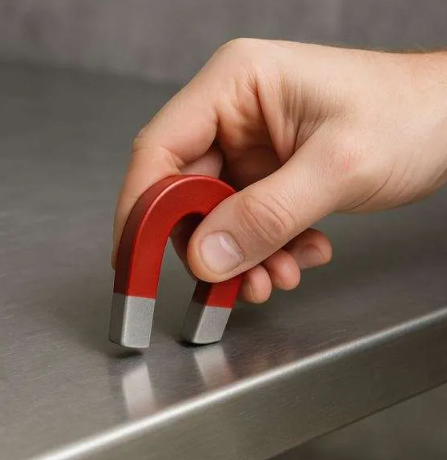
What Non Ferrous Metal Is Magnetic?
On a shop floor or at a scrap pile, the magnet test feels like a shortcut. Sometimes it is. Sometimes it sends you in the wrong direction. This is where many people get tripped up when trying to decide what metal is non ferrous and what only looks that way because it resists rust or does not react strongly to a magnet.
Why Magnet Tests Help but Do Not Prove Everything
Iron content defines the category more reliably than a magnet test alone.
The basic definition from TWI is composition-based: non-ferrous metals do not contain appreciable iron as their main constituent. That means magnetism and classification are related only sometimes, not always. In practical terms, what is considered non ferrous metals is decided by chemistry first.
- Myth: If a metal is non-magnetic, it must be non-ferrous. Reality: Not necessarily. iScrap explains that many common stainless steels in the 300 series, such as 304 and 316, are often non-magnetic or only weakly magnetic, yet they are still ferrous because they contain iron.
- Myth: If a magnet sticks, the metal must be ferrous. Reality: Not always. Gulf Coast Scrap Metal notes that nickel scrap is magnetic, even though nickel is a non-ferrous metal.
- Myth: A magnet can identify the exact alloy. Reality: It can only narrow the possibilities. It cannot confirm grade, chemistry, or value on its own.
If you are wondering what non ferrous metal is magnetic, nickel is the clearest everyday example in this discussion. That also answers the awkward but common search intent behind what is non ferrous metal stick to a magnet: yes, some can.
Alloys Mixed Metals and Other Classification Gray Areas
- Aluminum, copper, brass, and bronze: These are usually non-magnetic and non-ferrous, so the magnet test often works as expected.
- Nickel: Non-ferrous, but magnetic enough to confuse people who rely on a single rule.
- Stainless steel: A major source of confusion. It may resist corrosion and may even seem non-magnetic, but it is generally a ferrous alloy because it is iron-based, as iScrap points out.
- Alloy behavior: Gulf Coast also warns that some alloys contain magnetic metals, yet the alloy itself may not be magnetic. Their example is 300, 304, and 316 stainless steel.
So, what metal is non ferrous in a real identification workflow? Start with iron content, then use magnet response as a clue rather than a verdict. In scrap and shop settings, that difference matters because a fast test can help with sorting, but better decisions come from markings, known grade information, and, when needed, alloy testing. That is exactly where material selection stops being a label problem and becomes a manufacturing decision.
What Is Non-Ferrous Metal Processing and Selection?
Engineers, buyers, and fabricators do not choose a material just because it sits in the non-ferrous category. They choose it because the part has to survive the environment, fit the production method, and stay within budget. That is the practical answer to what is non ferrous metal used for in manufacturing: jobs where low weight, conductivity, corrosion resistance, or a specific forming route matters enough to justify the material choice. For teams wondering what is non ferrous metals and alloys in purchasing terms, it usually means narrowing from a broad family to a specific alloy and process plan.
How Manufacturing Requirements Shape Material Choice
Shop reality quickly separates good ideas from good specifications. Guidance from Protolabs, EVS Metal, and Brother shows why process matters so much. Aluminum is widely chosen for light weight and corrosion resistance, but its reflectivity and heat flow require tighter control in cutting, and welding needs careful surface preparation and heat input. Copper offers excellent electrical and thermal performance, yet it can stick to tools during machining. Brass often solves part of that problem because it machines more easily. Titanium brings excellent strength-to-weight and corrosion resistance, but its low thermal conductivity concentrates heat during machining and makes processing more demanding.
| Requirement | Likely non-ferrous choice | Why it is considered | Process note |
|---|---|---|---|
| Low weight and corrosion resistance | Aluminum alloys | Good strength-to-weight balance | Useful for machining, forming, and many profile-based parts; welding requires control |
| Electrical or thermal conductivity | Copper or copper alloys | High conductivity | Pure copper can be gummy in machining; brass is often easier to machine |
| High strength-to-weight | Titanium alloys | Strong and corrosion-resistant | Machining heat buildup and rigidity concerns raise difficulty |
| Extreme weight reduction | Magnesium alloys | Very low density | Chip and fire safety require special care |
| High-temperature performance | Nickel alloys | Useful in severe heat | High cost and difficult processing limit use |
If you hear the search phrasing what is the most commonly welded non ferrous metal, aluminum is usually the first material people mean in fabrication discussions. Even then, alloy, temper, thickness, and joint design matter more than the category label alone.
A Practical Selection Framework for Non-Ferrous Metals
Asked plainly, what is non-ferrous metal processing? It is the set of manufacturing steps, such as machining, forming, welding, casting, extrusion, and finishing, that turn a promising alloy into a usable part. In the same spirit, what is the non ferrous metal processing question really asking? Whether the chosen material behaves well enough in your actual process to avoid scrap, delays, and unnecessary cost.
- Define the service environment. Check moisture, salt exposure, operating temperature, electrical demands, and whether mixed metals could create corrosion issues.
- Rank the critical properties. Decide what matters most: conductivity, low weight, strength-to-weight ratio, non-magnetic behavior, or appearance.
- Match the metal to the process. A machinable brass part, a welded aluminum frame, and a high-reliability titanium component do not place the same demands on the shop.
- Choose the alloy, not just the family. Pure metals and alloys behave differently. A copper alloy like brass is not selected for the same reason as pure copper.
- Check secondary manufacturing needs. Review bend limits, castability, weldability, finish expectations, and whether the design is better suited to sheet, billet, casting, or extrusion.
- Compare total cost, not raw material price alone. Faster machining, less finishing, or lower part weight can offset a higher price per pound.
That is why good selection work rarely ends with a generic label. In many manufacturing programs, the shortlist keeps drifting toward aluminum when teams need light weight, corrosion resistance, and shape flexibility in the same part, especially when profile-based designs start to make more sense than flat or fully machined ones.
What Is Non Ferrous Scrap Metal and How Is It Sorted?
In recycling yards, maintenance shops, and demolition work, what is non ferrous scrap metal? It is discarded metal that is not primarily iron-based, such as copper, aluminum, brass, bronze, or lead. That label matters because these materials are usually sorted apart from steel, graded more carefully, and valued by type and cleanliness. A practical way to think about what is made of non ferrous metals is to look at common scrap sources like wiring, beverage cans, plumbing fittings, gutters, radiators, electronics, and vehicle components, as shown by Okon Recycling.
How Non-Ferrous Scrap Is Identified
Recyclers rarely rely on one clue alone. First-pass identification usually combines several simple checks. Practical guidance from MetalAxis highlights the most useful ones in everyday sorting.
- Magnet test: Most common non-ferrous scrap does not stick, but the test is only a starting point.
- Color: Copper is reddish-brown, brass is yellow-gold, aluminum is silver-gray, and bronze is often darker brown-gold.
- Weight: Aluminum feels light for its size, while lead feels unusually heavy.
- Surface oxidation: Tarnish and oxide color can help separate copper alloys from aluminum or mixed pieces.
- Markings and known parts: Stamps, wire labels, and recognizable components can confirm likely material type.
- Separation of mixed items: Removing steel fasteners, insulation, plastic, and attachments improves identification.
If you are wondering what non ferrous metal is brown, copper is the most familiar reddish-brown example, while bronze often appears as a darker brown shade.
What Affects Recycling Value and Sorting Quality
Many people ask what is the price of non-ferrous metals as if there were one category-wide number. In practice, pricing changes with metal type, purity, grade, contamination, lot size, local market conditions, and sorting quality. MetalAxis notes that clean, well-separated material is easier to classify and usually easier to value than mixed lots. Reporting from ScrapMonster adds that mixed alloys, plastics, moisture, batteries, and off-spec items often lead to downgrades because buyers are pricing extra processing, safety exposure, and uncertainty.
That is why understanding what is made of non ferrous metals helps in real workflows. The better the separation upstream, the better the material decisions downstream. And among the metals that keep surviving that screening process, aluminum often stands out when the job needs low weight, corrosion resistance, and repeatable shapes.
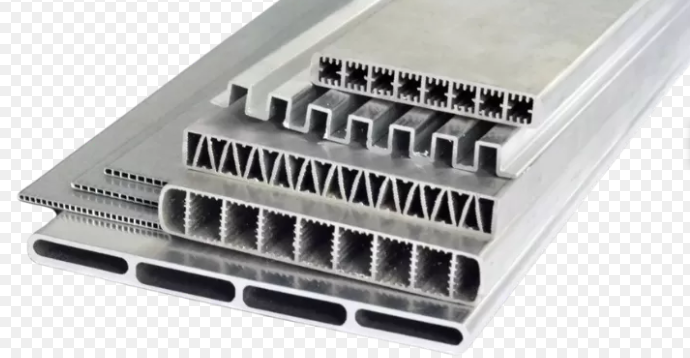
When Aluminum Extrusions Make Sense in Automotive
That aluminum shortlist becomes especially practical in vehicle programs. Searches like what is non-ferrous metals or what kind of metal is non-ferrous usually start as a definition question, then turn into a sourcing question. If you want a concrete answer to what is non-ferrous metal in manufacturing, custom aluminum extrusion is one of the clearest examples. Uses highlighted by OD Metals include chassis and subframes, crash management parts, door frames, roof rails, heat exchangers, and EV battery casings.
Why Aluminum Extrusions Fit Many Automotive Applications
Aluminum extrusions make sense when a part needs low weight, corrosion resistance, and profile flexibility at the same time. They are especially useful for long, consistent sections or designs that combine multiple functions into one shape. That can help simplify assemblies and support lightweighting efforts. For readers still asking what is a non-ferrous metal, an extruded aluminum profile used in a battery enclosure or window surround is a real-world answer. If someone asks what is an example of a non ferrous metal, aluminum is one of the most familiar choices in automotive production.
Fit also depends on dimensional control. Automotive extrusion tolerances commonly reference ANSI H35.2, and Shaoyi's tolerance guide explains why straightness, flatness, twist, and cross-sectional accuracy matter for sealing, assembly, and safety.
What to Look for in an Automotive Extrusion Partner
- Engineering support: Look for early feedback on alloy choice, profile complexity, and realistic tolerances.
- Prototype capability: Rapid samples make it easier to validate fit and function before launch.
- Automotive quality systems: For vehicle parts, IATF 16949 is far more meaningful than a vague quality claim.
- Production follow-through: Ask how machining, finishing, inspection, and final delivery are managed after extrusion.
- Responsiveness: Fast quoting and design analysis can shorten the path from drawing to approved part.
One practical source to review is Shaoyi Metal Technology. Its automotive extrusion service is presented as a one-stop program from rapid prototyping to final delivery, backed by IATF 16949 quality control, engineering support, free design analysis, and rapid quotations. In other words, the best result comes from more than choosing the right non-ferrous metal. It also depends on choosing the right partner to turn that material into a repeatable automotive part.
FAQs About Non-Ferrous Metals
1. What is a non-ferrous metal?
A non-ferrous metal is a metal or alloy where iron is not the main base material. This group includes pure metals such as aluminum and copper, along with alloys such as brass and bronze. The category matters because many of these materials are chosen for corrosion resistance, conductivity, lower weight, or forming flexibility, although their strength, cost, and magnetic behavior can vary a lot from one material to another.
2. What is the difference between ferrous and non-ferrous metals?
The main difference is composition. Ferrous metals are primarily iron-based, while non-ferrous metals are not. That single distinction often affects how a material responds to moisture, weight limits, electrical flow, heat transfer, and recycling. In practical terms, ferrous metals are often selected for strength and cost efficiency, while non-ferrous options are often preferred when rust resistance, conductivity, or lightweight design is more important.
3. Are all non-ferrous metals non-magnetic?
No. Many common non-ferrous metals, including aluminum, copper, brass, and bronze, are usually non-magnetic, but nickel is a notable exception. That is why a magnet test is useful only as a first sorting clue. It can help narrow options, but it does not reliably confirm the metal family or the exact alloy.
4. Is stainless steel non-ferrous because it resists corrosion?
Usually no. Stainless steel often confuses people because it can resist rust better than ordinary carbon steel, but it is still generally classified as ferrous because iron remains its main ingredient. Some stainless grades may also appear weakly magnetic or nearly non-magnetic, which is another reason magnet checks alone should not be treated as proof of classification.
5. When should automotive buyers choose custom aluminum extrusions?
Custom aluminum extrusions are a strong fit when a vehicle part needs lower weight, corrosion resistance, and a profile shape that can combine several design features into one section. Buyers should review alloy suitability, dimensional control, prototype support, secondary machining, finishing, and quality systems such as IATF 16949. It also helps to work with a supplier that can provide engineering input early; for example, Shaoyi Metal Technology presents its automotive extrusion service around design analysis, rapid quotations, prototyping, and production follow-through.