 Small batches, high standards. Our rapid prototyping service makes validation faster and easier —
  EN
EN


That Welded Seam on Your Control Arms: Strength and Upgrades Explained
TL;DR
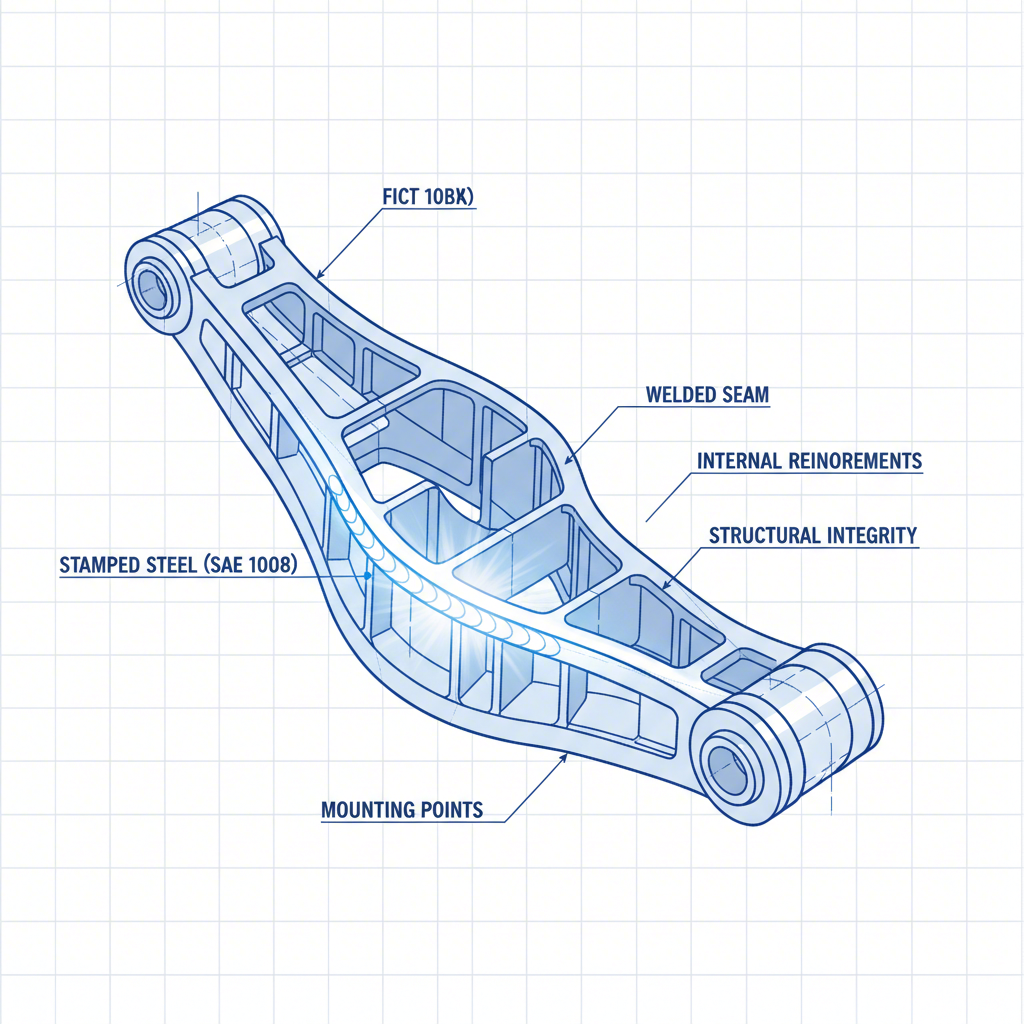
Stamped steel control arms are common suspension parts made from multiple pieces of pressed sheet metal welded together. That visible welded seam on stamped steel control arms is the primary way to identify them. While cost-effective and suitable for daily driving, their hollow construction can allow for flex under stress. Many enthusiasts reinforce them for greater durability and performance through a welding process called 'boxing'.
Identifying Stamped Steel Control Arms: The Welded Seam and Other Clues
Before you can consider any repairs, replacements, or upgrades, you must correctly identify what type of control arms are on your vehicle. Stamped steel arms have a unique construction that makes them relatively easy to spot if you know what to look for. Unlike solid cast or forged parts, a stamped steel control arm is fabricated from steel sheets that are pressed into a shape and then welded together, creating a hollow, box-like structure.
The most definitive identifier is the very feature that gives them their structure: the welded seam. According to a guide from Maxtrac Suspension, you should look for a prominent welded seam running along the front and back edges where the pieces of steel were joined. This seam is a byproduct of the manufacturing process and is absent on single-piece cast or forged arms, which instead have a rougher 'casting seam' or parting line from the mold.
Beyond the seam, there are other visual and physical clues. Stamped steel arms typically have a smooth surface and are often finished with glossy black paint. In contrast, cast steel or iron arms have a rougher, more porous texture and a duller finish. If you're still unsure, a simple tap test can help; a stamped steel arm will produce a hollow sound, while a solid cast arm will result in a dull thud.
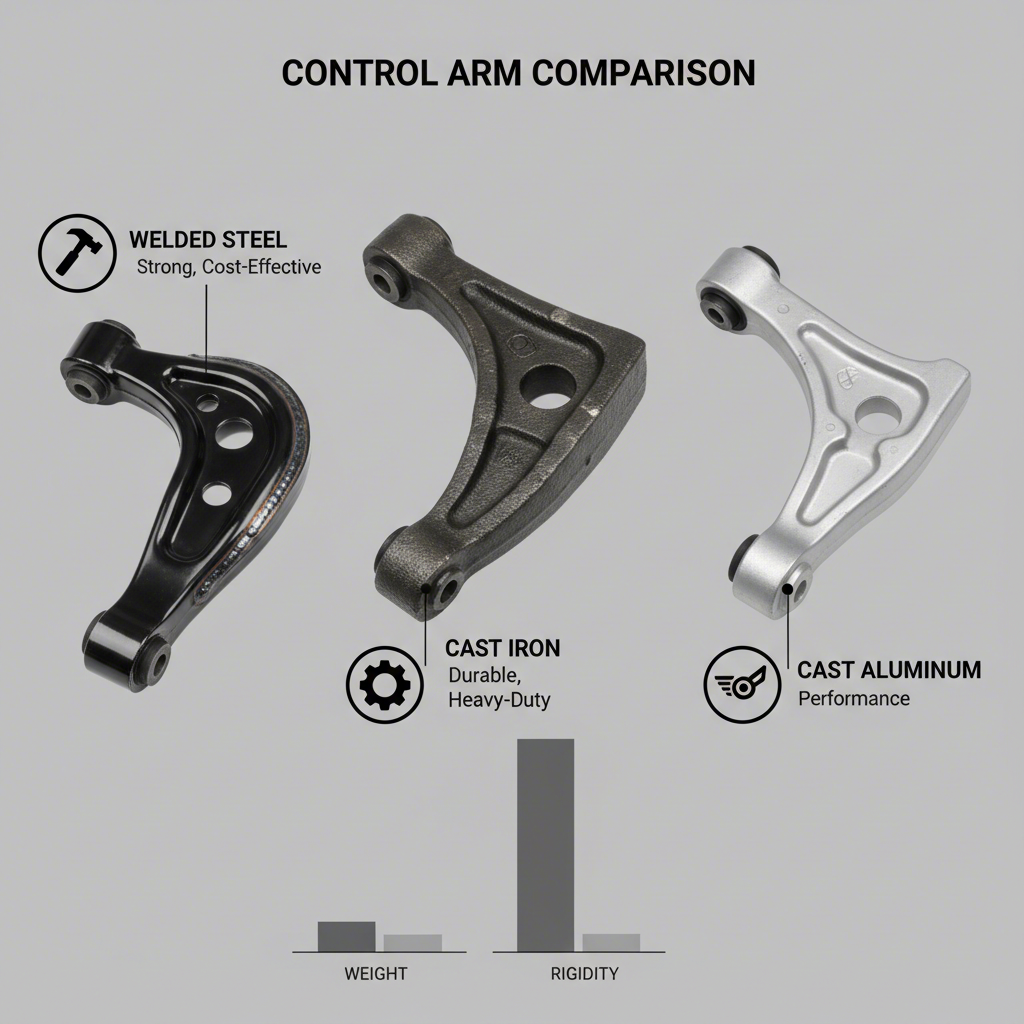
| Feature | Stamped Steel | Cast Steel / Iron | Cast Aluminum |
|---|---|---|---|
| Primary Identifier | Prominent welded seam | Rough casting seam/parting line | Casting seam/parting line |
| Surface Texture | Smooth | Rough, porous | Slightly rough cast texture |
| Finish | Typically glossy black paint | Typically dull black paint | Raw silver/metallic color |
| Sound When Tapped | Hollow | Solid thud | Solid thud |
Correctly identifying your control arms is crucial. It ensures you order the right replacement parts, understand the component's inherent strength characteristics, and determine if modifications like welding are appropriate for your specific setup.
Strength and Durability: Stamped Steel vs. Cast and Forged Arms
While stamped steel control arms are perfectly adequate for most factory applications and daily driving, their strength and rigidity are common topics of discussion in automotive forums. Their primary advantage is a low manufacturing cost and lighter weight compared to solid alternatives. This production method, where steel sheets are precisely formed and assembled, is a specialized field. For instance, companies like Shaoyi (Ningbo) Metal Technology Co., Ltd. focus on high-volume automotive stamping, producing complex components that balance cost-effectiveness and performance for global vehicle manufacturers.
However, the hollow, C-channel-like design of many stamped arms has an inherent trade-off: flex. Under the high stress of hard cornering, heavy loads, or off-road impacts, these arms can twist or bend more than their solid counterparts. This flex can negatively affect handling precision and alignment stability. Forged control arms, by contrast, are made from a single piece of metal that is heated and compressed into shape, aligning the metal's internal grain structure for superior strength and fatigue resistance.
Another significant concern for stamped steel arms is corrosion. If the protective paint or coating is compromised, moisture can get inside the hollow arm and cause rust from the inside out. This internal corrosion can severely weaken the structure without being immediately visible, potentially leading to failure. This is why many owners in rust-prone climates or those who use their vehicles in harsh conditions choose to reinforce or upgrade their control arms.
Pros and Cons of Stamped Steel Control Arms
- Pros: Lightweight, inexpensive to produce, suitable for standard vehicle use.
- Cons: Prone to flexing under load, susceptible to internal rust and corrosion, less durable than forged or cast alternatives for performance applications.
Ultimately, the decision to stick with, reinforce, or replace stamped steel arms depends on your vehicle usage. For a daily commuter, they are generally sufficient. For performance driving, heavy hauling, or serious off-roading, reinforcing them or upgrading to a stronger aftermarket option is a wise investment in safety and performance.
How to Reinforce Stamped Steel Control Arms by 'Boxing'
A popular and effective method for strengthening stamped steel control arms is known as 'boxing'. This process involves welding a custom-fabricated steel plate over the open side of the control arm, transforming its C-channel shape into a fully enclosed, rigid box structure. As detailed in a tutorial by Speedway Motors, this modification dramatically reduces flex and increases durability, making the component far more suitable for demanding applications.
Before beginning, it's critical to prioritize safety. Welding on suspension components should only be undertaken if you have the proper skills and equipment. An improper weld can create a new failure point that is more dangerous than the original flex. Always use appropriate safety gear, including a welding helmet, gloves, and fire-retardant clothing.
The boxing process generally follows these steps:
- Preparation: Remove the control arm from the vehicle. Thoroughly clean all paint, rust, and grime from the areas you intend to weld using a wire wheel or grinder. A clean surface is essential for a strong weld.
- Create a Template: Use a piece of cardboard to trace the shape of the opening on the control arm. Carefully cut and trim the template to fit perfectly, making sure to mark and cut out any necessary access holes for sway bar links, bolts, or other hardware. Remember to make these holes large enough for sockets, not just the bolts themselves.
- Cut the Steel Plate: Transfer your cardboard template onto a piece of mild steel, typically 16-gauge. Carefully cut the steel plate to match the template. Drill out the access holes you marked.
- Tack and Weld: Position the steel plate onto the control arm and use a clamp to hold it securely. Tack weld the plate in several spots to fix its position. Then, use a 'stitch welding' technique—welding short sections at a time and moving around the piece—to secure the plate. This method helps distribute heat and prevents the control arm from warping. Allow the metal to cool periodically between welds.
- Finishing: Once welding is complete and the arm has fully cooled, clean up the welds with a grinder for a smooth finish. To prevent future corrosion, apply a high-quality primer and several coats of durable paint.
As seen in forum discussions like one on Tacoma World, many DIYers have successfully performed this modification for added rock protection and strength. By taking your time and focusing on proper preparation and welding technique, you can significantly improve the performance and lifespan of your vehicle's stamped steel control arms.
Frequently Asked Questions
1. Can you weld stamped steel?
Yes, stamped steel is very weldable. In fact, welding is integral to its manufacturing process, as the stamped pieces are joined by welds to create the final component. When reinforcing or repairing these parts, using the correct welding procedure, such as stitch welding to control heat, is crucial for maintaining the metal's structural integrity.
2. How do I know if I have cast steel or stamped steel control arms?
The easiest way to tell is by looking for a welded seam. Stamped steel arms are made of multiple pieces welded together, leaving a visible seam. Cast steel arms are made in a mold and have a rougher texture with a casting line, not a weld. Additionally, tapping the arm with a hammer can help; a stamped arm will sound hollow, while a cast arm will make a solid 'thud'.
3. What is the difference between stamped and forged control arms?
The primary difference is the manufacturing process and resulting strength. Stamped arms are formed from pressed sheet metal and welded, making them lightweight and cost-effective but prone to flex. Forged arms are made by heating a solid billet of metal and compressing it into a die. This process aligns the metal's grain structure, creating a much stronger, denser, and more durable component that is highly resistant to fatigue and impact.