 Small batches, high standards. Our rapid prototyping service makes validation faster and easier —
  EN
EN


Sustainable Aluminum Sourcing: The Key to Lighter, Greener Cars

TL;DR
Sustainable aluminum sourcing for the automotive industry involves prioritizing low-carbon primary and recycled aluminum to significantly reduce vehicle weight and lifecycle emissions. This strategic shift is driven by the need for greater efficiency, especially in electric vehicles (EVs), and to meet pressing environmental, social, and governance (ESG) targets. By leveraging aluminum's infinite recyclability and lightweight properties, automakers can build more fuel-efficient, better-performing, and environmentally responsible vehicles for the future.
The Strategic Imperative: Why Sustainable Aluminum is Crucial for Modern Automakers
The automotive industry is navigating a period of profound transformation, driven by electrification, stringent emissions regulations, and a growing consumer demand for sustainable products. In this new landscape, material selection has become a critical strategic decision. Sustainable aluminum has emerged as a key enabler for automakers aiming to build the next generation of vehicles. This is not merely a trend but a strategic imperative, as the benefits of aluminum align directly with the industry's most pressing challenges and goals.
The foremost driver for aluminum adoption is lightweighting. As detailed in a report by Novelis, a global leader in aluminum solutions, vehicles made with aluminum are significantly lighter than their steel counterparts. An aluminum-intensive body can weigh up to 45% less than a steel one, which directly translates to improved energy efficiency. For internal combustion engine (ICE) vehicles, this means better fuel economy and lower tailpipe emissions. For electric vehicles (EVs), the advantage is even more critical: reducing weight extends battery range, a key factor in overcoming consumer anxiety and accelerating EV adoption. Lighter vehicles also allow for smaller, more cost-effective batteries, brakes, and suspension systems, creating a cascade of benefits.
Beyond performance, sustainable aluminum is essential for reducing a vehicle's total lifecycle carbon footprint. The production of primary aluminum is energy-intensive, but this is offset by two powerful factors: the energy savings during the vehicle's use phase and the material's infinite recyclability. According to The Aluminum Association, aluminum-intensive vehicles can achieve up to a 20% reduction in total life cycle energy consumption. Furthermore, recycling aluminum consumes only about 5% of the energy needed for primary production, leading to a massive reduction in greenhouse gas emissions. This circular potential allows automakers to create closed-loop systems, recovering scrap from manufacturing and end-of-life vehicles to produce new, high-quality components.
Finally, the shift toward sustainable aluminum is a direct response to evolving regulatory and market demands. Environmental, Social, and Governance (ESG) criteria are increasingly influencing investment decisions, supply chain requirements, and consumer preferences. By integrating low-carbon and recycled aluminum, automakers can make tangible progress on their carbon reduction goals, enhance their corporate reputation, and appeal to environmentally conscious buyers. This strategic alignment demonstrates a commitment to a more sustainable and circular economy, positioning brands as leaders in a rapidly changing industry.
Decoding Sustainable Sourcing: Recycled vs. Low-Carbon Primary Aluminum
Understanding the pathways to sourcing sustainable aluminum is crucial for making informed material decisions. The term "sustainable aluminum" primarily refers to two distinct but complementary categories: recycled aluminum (also known as secondary aluminum) and low-carbon primary aluminum. Both offer significant environmental advantages over traditionally produced primary aluminum, allowing manufacturers to reduce their carbon footprint without compromising on quality or performance.
Recycled Aluminum: The Power of a Circular Economy
Recycled aluminum is the cornerstone of sustainable sourcing due to its remarkable energy efficiency. The process of recycling aluminum scrap—whether it's pre-consumer scrap from manufacturing processes or post-consumer scrap from end-of-life products like beverage cans and old vehicles—uses up to 95% less energy than producing new aluminum from its raw ore, bauxite. As Golden Aluminum points out, the material can be recycled an infinite number of times without degrading its inherent properties of strength, durability, and formability. This makes it a truly circular material, reducing the need for new mining, minimizing waste, and drastically lowering associated greenhouse gas emissions.
Low-Carbon Primary Aluminum: Greening the Source
While recycling is the most energy-efficient path, the global demand for aluminum, particularly from the growing automotive sector, cannot be met by recycled material alone. This is where low-carbon primary aluminum becomes essential. This type of aluminum is produced from bauxite ore but with a significantly reduced carbon footprint. The primary method for achieving this is by powering the energy-intensive smelting process with renewable energy sources, such as hydroelectricity, solar, or wind power. Producers in regions with abundant clean energy can offer primary aluminum with a carbon footprint that is well below the global average, providing a responsible option for new material.
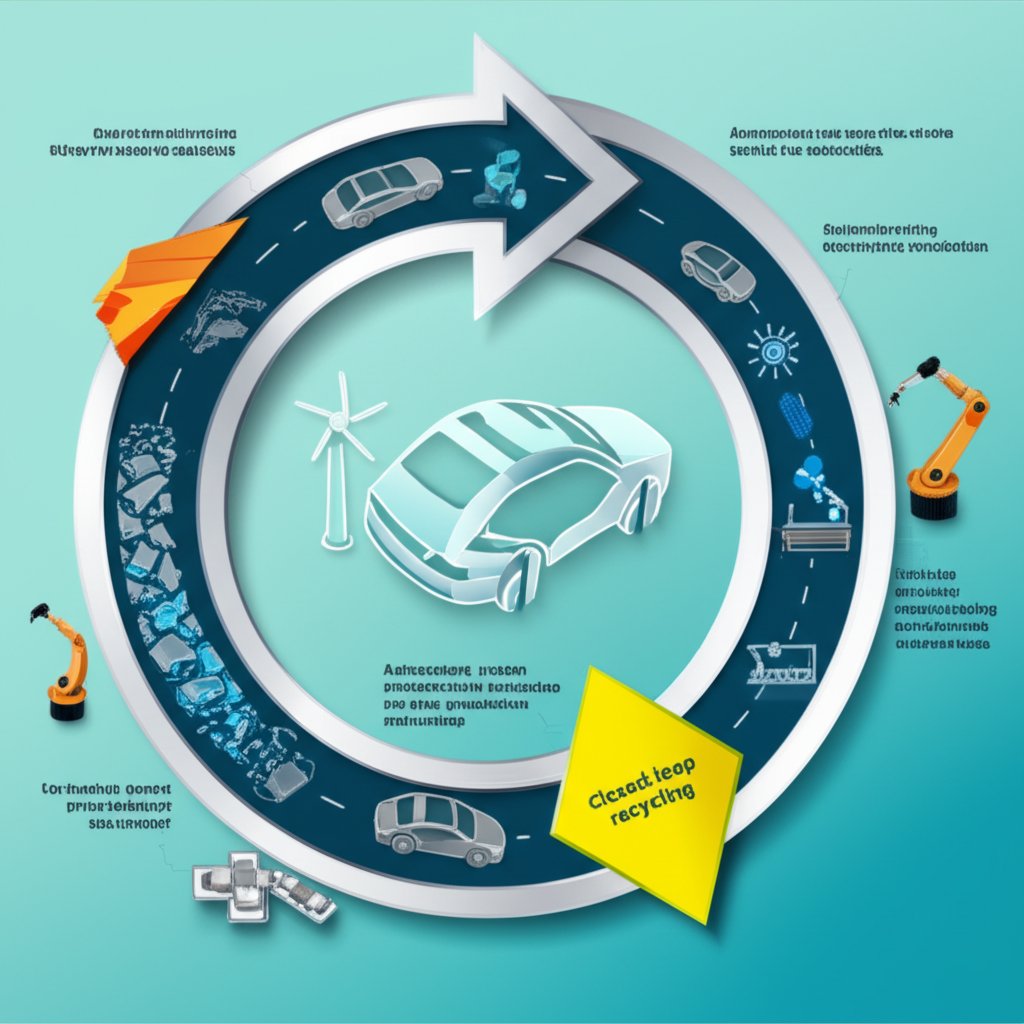
Choosing between these sources is not always an either-or decision. Often, the optimal solution involves a blend of both. High-quality alloys for critical applications may require a specific amount of primary aluminum to meet precise metallurgical standards, which can be sourced from low-carbon producers. Automakers are increasingly developing closed-loop recycling systems with their suppliers to reclaim as much high-grade manufacturing scrap as possible, maximizing recycled content while maintaining material integrity.
| Sourcing Method | Key Advantage | Considerations | Best For |
|---|---|---|---|
| Recycled (Secondary) Aluminum | Up to 95% less energy and GHG emissions compared to primary production. Promotes a circular economy. | Requires robust sorting and collection infrastructure. Scrap quality and alloy separation can be challenging. | Castings, non-exposed structural parts, and applications where high recycled content is a priority. |
| Low-Carbon Primary Aluminum | Provides new metal to the supply chain with a lower carbon footprint, produced using renewable energy. | Still more energy-intensive than recycling. Availability depends on producers with access to clean energy. | High-performance alloys for critical applications like exterior body panels and structural components requiring specific properties. |
Material Selection: Choosing the Right Sustainable Alloys for Automotive Parts
Selecting the correct aluminum alloy is as important as choosing the sourcing method. Different parts of a vehicle are subjected to vastly different stresses and environmental conditions, requiring alloys with specific properties like high strength, excellent formability, or superior corrosion resistance. Sustainable sourcing practices must be paired with precise material engineering to achieve goals of lightweighting, safety, and durability without compromise.
Automotive engineers commonly turn to specific alloy families to meet these diverse needs. The 6000-series alloys, which include aluminum, magnesium, and silicon, are a popular choice for structural components. Alloys like 6005A, 6063, and 6082 are known for their high strength—approaching that of mild steel at a fraction of the weight—and are frequently used in vehicle frames, crash management systems, and battery enclosures for EVs. Their excellent extrudability allows for complex shapes that can be optimized to absorb crash energy effectively, enhancing occupant safety.
For applications requiring high formability, such as body panels like doors, hoods, and fenders, the 5000-series alloys are often preferred. These alloys, containing magnesium, offer a great balance of moderate strength, good weldability, and exceptional corrosion resistance. As noted by suppliers like Golden Aluminum, alloys such as 5182 and 5754 are ideal for the stamping and forming processes used to create the intricate curves of modern vehicle bodies. Their inherent durability ensures a long service life, resisting dents and environmental degradation.
The implementation of these specialized alloys requires a supply chain capable of delivering not just the material, but also the expertise. For automotive projects demanding precision-engineered components, it's beneficial to consider partners who offer comprehensive services. For example, some suppliers provide custom aluminum extrusions and a one-stop service from rapid prototyping to full-scale production under strict quality systems like IATF 16949. As mentioned by Shaoyi Metal Technology, such specialized capabilities can streamline manufacturing by delivering strong, lightweight, and highly customized parts tailored to exact specifications, helping automakers accelerate their development and validation processes.

Looking Ahead: The Future of Aluminum in Automotive Design
The trajectory for sustainable aluminum in the automotive industry is one of continued growth and innovation. As automakers push the boundaries of EV performance and strive to meet ambitious carbon neutrality goals, aluminum's role will only become more integral. The focus will intensify on developing closed-loop recycling systems that can efficiently separate and process end-of-life vehicle scrap to retain the value of high-strength alloys. This circular approach is not just an environmental goal but an economic one, creating a more resilient and cost-effective supply chain.
Furthermore, ongoing research and development will yield new alloys with even better performance characteristics—stronger, lighter, and more easily recycled. The integration of advanced manufacturing techniques, such as additive manufacturing (3D printing) with aluminum powders, will unlock new design possibilities for complex, weight-optimized components that were previously impossible to produce. By embracing these advancements, the automotive industry can leverage sustainable aluminum to build vehicles that are not only better for the planet but also safer, more efficient, and more exciting to drive.
Frequently Asked Questions
1. Is aluminium sustainably sourced?
Aluminum can be a highly sustainable material when sourced responsibly. Its key sustainability feature is its infinite recyclability; it can be recycled repeatedly without losing its properties. The recycling process uses up to 95% less energy than producing new aluminum from raw materials. Additionally, primary aluminum can be sourced more sustainably when its production is powered by renewable energy sources like hydropower, which significantly lowers its carbon footprint.
2. Where does aluminum for cars come from?
Aluminum for cars comes from two main sources: primary production and recycling. Primary aluminum is derived from bauxite ore, which is mined and then refined into alumina before being smelted into aluminum metal. Major producing regions include China, Europe, North America, and Australia. The second source is recycled aluminum, which is recovered from both manufacturing scrap (pre-consumer) and end-of-life products like old vehicles and beverage cans (post-consumer).
3. What is the best aluminum for automotive?
There isn't a single "best" aluminum; the ideal choice depends on the specific application. For structural components requiring high strength, 6000-series alloys (e.g., 6082) are common. For body panels that need excellent formability, 5000-series alloys are often used. The selection involves a trade-off between strength, formability, corrosion resistance, and cost to meet the performance requirements of each part of the vehicle.
4. What is ESG in the automotive industry?
ESG (Environmental, Social, and Governance) in the automotive industry refers to a company's commitment to operating in a way that is environmentally sustainable, socially responsible, and governed with transparency. For environmental criteria, this includes reducing carbon emissions across the vehicle lifecycle, managing waste, and sourcing sustainable materials like low-carbon aluminum. Social aspects cover labor practices and community impact, while governance relates to ethical business practices and shareholder rights.