 Small batches, high standards. Our rapid prototyping service makes validation faster and easier —
  EN
EN


Stamped vs. Forged Control Arms: Your Simple ID Guide
TL;DR
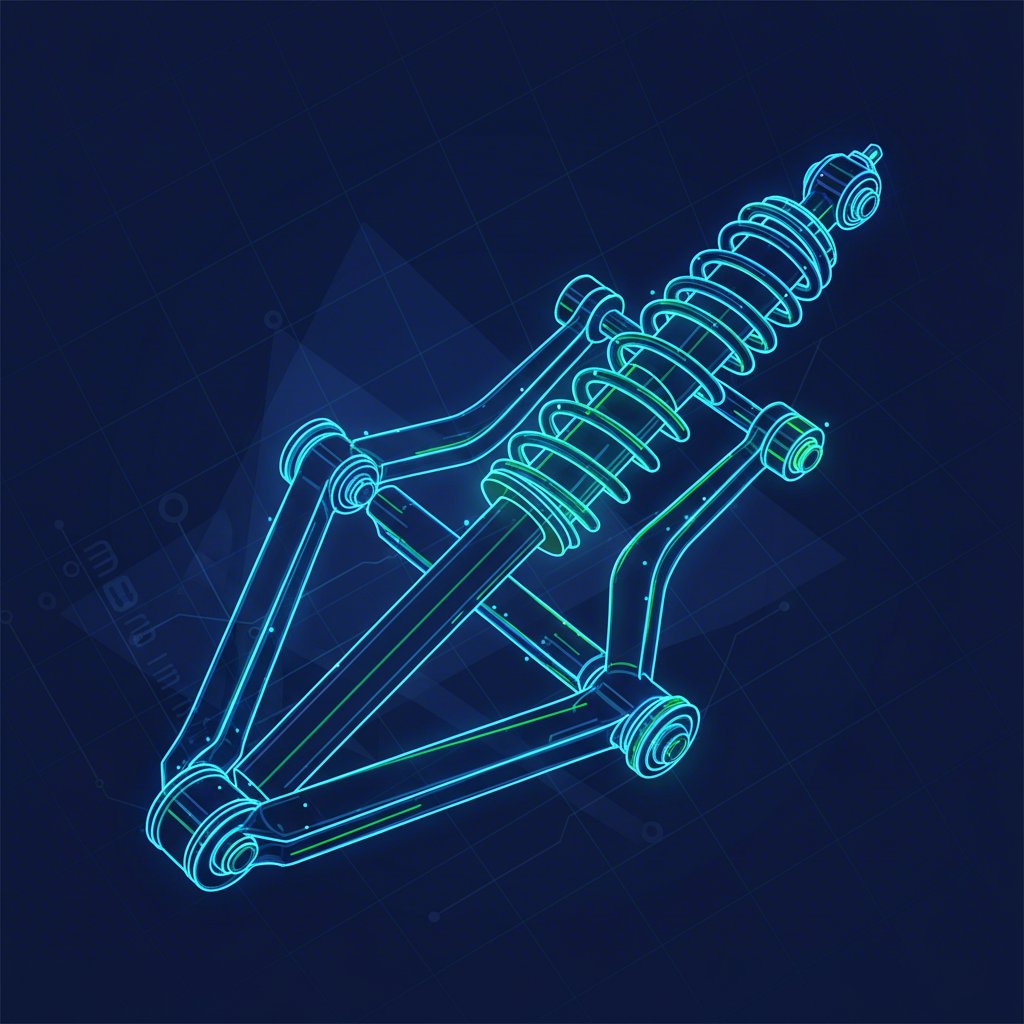
A stamped control arm is a suspension part made by pressing and welding two pieces of sheet metal together, creating a hollow structure. This makes them lighter and cheaper to produce than solid forged or cast iron arms. You can easily identify a stamped control arm by looking for a visible seam along its edges and confirming that it feels hollow, unlike the single, solid piece construction of its stronger counterparts.
What is a Stamped Steel Control Arm?
A stamped steel control arm is a critical component in your vehicle's suspension system that connects the frame to the wheel assembly. Think of it as a hinged lever that allows your wheels to move up and down smoothly over bumps while keeping your tires firmly planted on the road for stability. The term "stamped" refers directly to its manufacturing process, which sets it apart from other types of control arms.
The process begins with large sheets of steel that are precision-cut and then pressed—or stamped—into a specific shape using a high-pressure die. Two of these stamped halves are then welded together to form a single, hollow component. This method is highly efficient for mass production, making stamped steel arms a common feature in many modern, mass-produced cars and light trucks. Their lower production cost and lighter weight contribute to better fuel economy and reduced overall vehicle cost. As noted in a guide from GMT Rubber, because they are relatively inexpensive to produce, stamped steel control arms are often found in more affordable, modern vehicles.
The manufacturing process is a marvel of modern engineering, requiring immense precision. Companies specializing in automotive stamping dies, such as Shaoyi (Ningbo) Metal Technology Co., Ltd., are instrumental in this field, providing the high-quality tooling necessary for OEMs to produce these components with consistency and accuracy. Their expertise in creating dies for complex parts like control arms ensures that each piece meets strict safety and performance standards.
However, this design has trade-offs. The hollow structure, while lightweight, is generally not as strong or durable as solid cast iron or forged steel alternatives. The welded seam can be a point of weakness, and the steel itself is more susceptible to rust and damage, especially in harsh or damp environments. Forum discussions among truck owners often highlight concerns about their durability, particularly regarding ball joint support in certain models.
Stamped vs. Forged vs. Cast Iron: A Visual Identification Guide
When you're ordering replacement parts or just trying to understand your vehicle's suspension, telling the difference between stamped, forged, and cast control arms is essential. Each type has a distinct appearance and construction that makes identification straightforward once you know what to look for. The most common confusion arises between these three types, but their visual and structural cues are quite different.
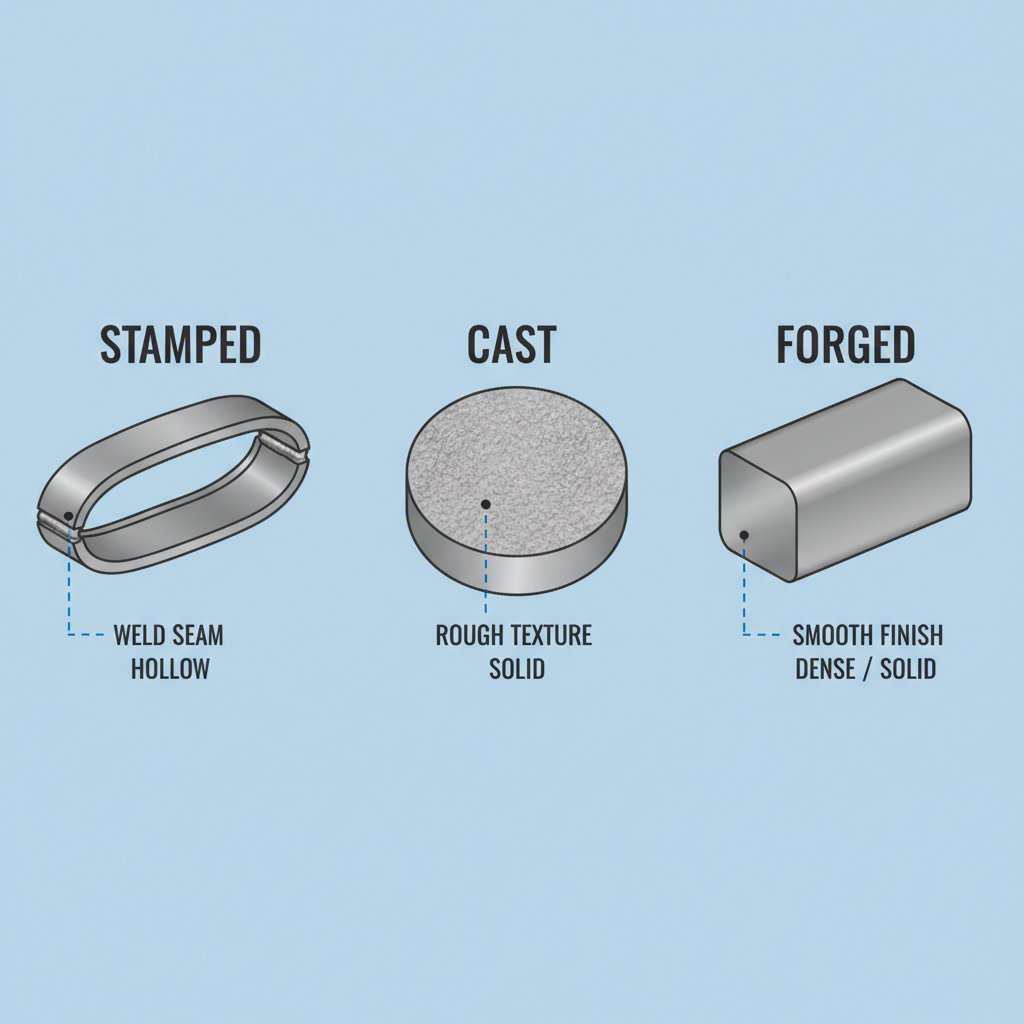
Stamped steel arms are the easiest to identify. Their defining feature is the construction from two pieces of metal welded together. Look for a visible seam running along the edges of the arm. Because they are hollow, they often have a more defined, boxy, or C-channel shape. If you were to tap on it, it would sound hollow compared to a solid piece of metal. This hollow nature is a key point frequently repeated in enthusiast forums.
Cast iron arms, in contrast, are made by pouring molten iron into a mold. This process results in a single, solid piece of metal that is heavy and robust. Visually, cast iron has a rougher, more porous surface texture. You won't find any seams. Due to their strength and durability, they are commonly used in heavy-duty vehicles like trucks and SUVs that need to withstand harsher conditions.
Forged steel or aluminum arms are also made from a single piece of metal, but the manufacturing process is different. A solid billet of metal is heated and then pressed into shape under extreme pressure. This forging process aligns the metal's grain structure, making it incredibly strong and dense. Forged arms have a smoother surface finish than cast iron and often feature a thin parting line—a faint mark left from where the two halves of the forging die met.
To make identification even easier, here is a direct comparison:
| Feature | Stamped Steel | Cast Iron | Forged Steel/Aluminum |
|---|---|---|---|
| Construction | Two steel sheets welded together; hollow. | Single piece of molten iron poured into a mold; solid. | Single piece of metal pressed into shape; solid and dense. |
| Appearance | Visible seams along the edges; often has a boxy shape. | Rough, slightly porous surface texture; no seams. | Smooth surface finish; may have a thin parting line. |
| Weight | Lightest | Heaviest | Heavy (steel) or very light (aluminum), but feels dense. |
| Strength | Good (Standard duty) | Very Strong (Heavy duty) | Strongest (Performance/Heavy duty) |
| Common Use | Mass-produced passenger cars and light trucks. | Trucks, SUVs, and heavy-duty vehicles. | Performance cars, high-end vehicles, and trucks. |
How to Tell If You Have Stamped Steel Control Arms: 3 Simple Steps
Identifying your vehicle's control arms doesn't require being a master mechanic. With a quick visual check and a simple tool, you can determine what type you have in just a few minutes. This is crucial when ordering replacement parts like ball joints, as they are often specific to the control arm material.
Follow these three steps to confidently identify your control arms:
-
Perform a Visual Inspection for Seams
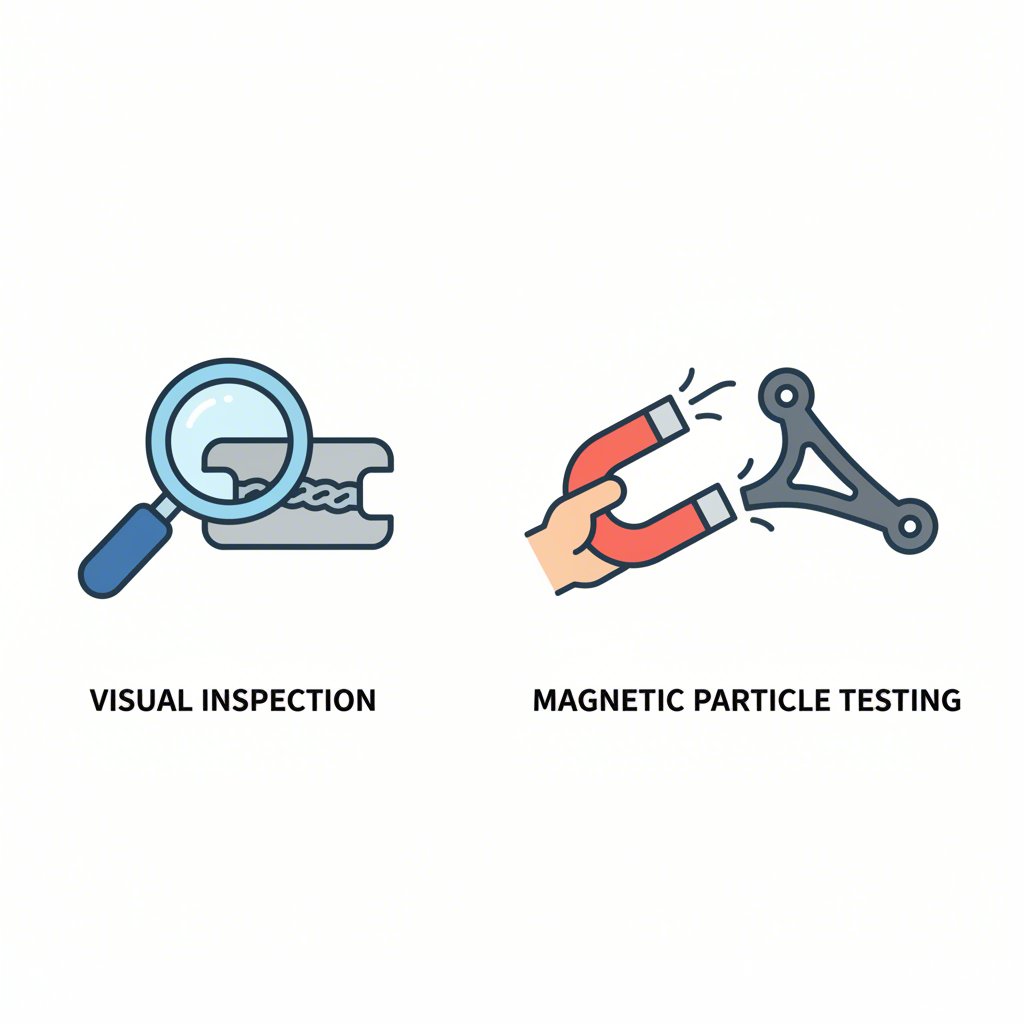
This is the most definitive test for stamped steel. Safely look at your vehicle's front suspension control arms (you may need to turn the steering wheel to get a clear view). Look closely at the edges of the arm. A stamped steel control arm will have a clear, visible seam where the top and bottom halves were welded together. It will look like two pieces of metal joined to create a hollow box or shell. In contrast, cast or forged arms are made from a single piece of metal and will appear solid with no welding seams. -
The Tap Test for a Hollow Sound
Gently tap the control arm with a small wrench or another metal object. A stamped steel arm will produce a higher-pitched, hollow sound because it's not solid. A cast or forged arm will have a dull, solid thud. This simple auditory cue confirms what you see in the visual inspection—if it sounds hollow, it's almost certainly stamped. -
Use a Magnet to Differentiate Steel from Aluminum
While most stamped arms are steel, some vehicles use cast aluminum control arms to save weight. If you're unsure, grab a magnet. A magnet will stick firmly to a stamped steel or cast iron control arm. If the magnet does not stick at all, you have an aluminum control arm. This is a helpful final check to ensure you've correctly identified the material.
By combining these steps, you can eliminate guesswork. Finding a seam is the primary indicator of a stamped steel arm, while the magnet test confirms the material type. Comparing what you see to online pictures of parts for your specific vehicle model can also provide a final confirmation.
Aftermarket Alternatives: Are Tubular Control Arms a Better Choice?
Once you've identified your factory stamped steel control arms, you might wonder about upgrade options. One of the most popular aftermarket solutions is the tubular control arm. These are engineered specifically for improved performance, strength, and adjustability, making them a common choice for classic car restorations, lifted trucks, and performance driving applications.
Tubular control arms, like those offered by specialists such as Classic Performance Products, are constructed from strong, seamless steel tubing that is bent and welded into a rigid, A-arm shape. Unlike the hollow, two-piece design of stamped arms, tubular arms are designed to handle greater stress and provide more precise suspension geometry. This is especially important for vehicles that have been modified with lift kits or lowering springs, as the factory suspension angles are often compromised.
The primary benefits of upgrading to tubular control arms include increased strength and durability. The robust construction resists bending and flexing under hard cornering or off-road use, which helps maintain proper wheel alignment and improves handling. Many tubular designs also correct ball joint angles on lifted or lowered vehicles, preventing premature wear and potential failure. Furthermore, they often come with higher-quality bushings and ball joints, providing a smoother ride and more responsive steering.
So, is an upgrade necessary for you? If you use your vehicle for daily driving with a stock suspension setup, the original stamped steel arms are generally sufficient. However, if you are lifting or lowering your vehicle, participating in performance driving, or simply want to bolster a known weak point in your suspension, investing in a set of tubular control arms is a worthwhile consideration. They offer a significant step up in both strength and performance over factory-stamped components.
Frequently Asked Questions
1. What is a stamped control arm?
A stamped control arm is a suspension component made from two pieces of pressed (stamped) sheet steel that are welded together to form a hollow structure. They are lightweight and cost-effective to manufacture, which is why they are commonly used in many modern passenger cars and light trucks. However, they are generally considered less durable than solid cast iron or forged control arms.
2. How do I tell if I have stamped steel control arms?
The easiest way to tell is by visual inspection. Look for a visible seam running along the edges of the arm; this seam is where the two stamped halves were welded together. Stamped arms will also sound hollow when tapped with a metal object. If you have a magnet, you can also confirm the material; a magnet will stick to steel but not to aluminum, which is another common control arm material.