 Small batches, high standards. Our rapid prototyping service makes validation faster and easier —
  EN
EN


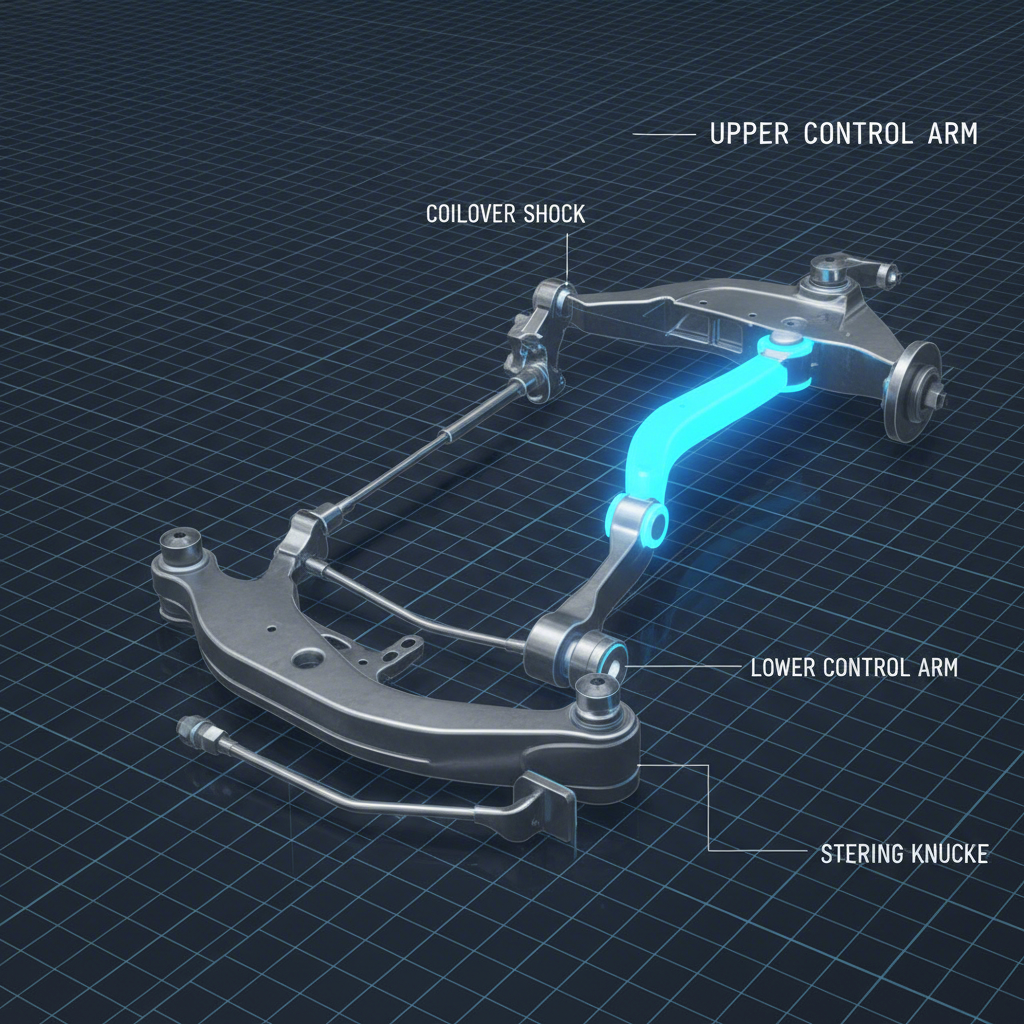
Stamped Steel Control Arms: The Essential ID Guide an illustrative diagram of a trucks upper control arm suspension system
TL;DR
Stamped steel control arms are common suspension parts made by pressing and welding sheet metal. You can identify them by their smooth, gloss black finish and visible weld seams, distinguishing them from the rougher, solid appearance of cast steel or the dull gray of aluminum. Knowing which type your truck has, particularly models like the Chevrolet Silverado or GMC Sierra, is critical before performing repairs or installing suspension upgrades like a lift kit to ensure proper fitment and safety.
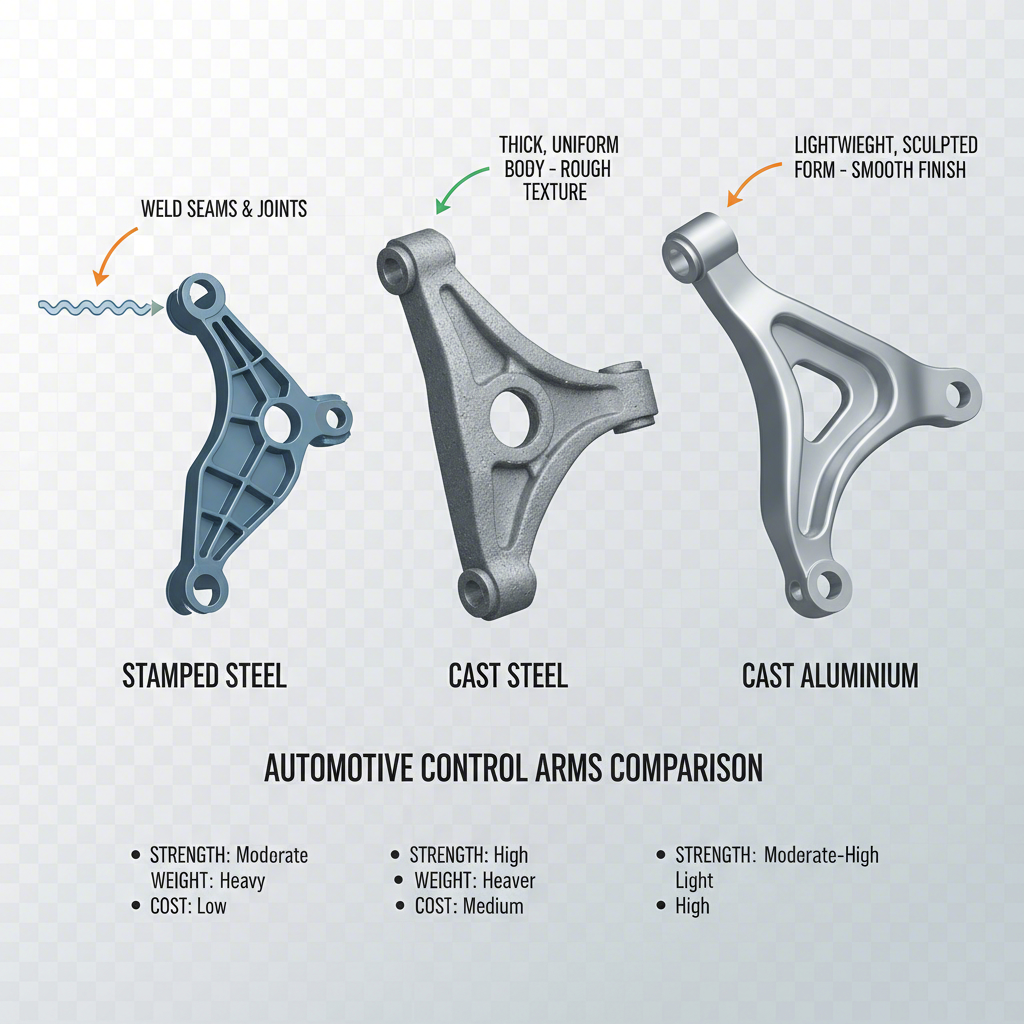
How to Identify Your Control Arms: Stamped Steel vs. Cast Steel vs. Aluminum
Before ordering any suspension parts, the first and most crucial step is to correctly identify the type of control arms on your vehicle. For many GM trucks made between 2014 and 2018, the factory could have installed one of three different types: stamped steel, cast steel, or cast aluminum. Choosing the wrong replacement or upgrade kit can lead to installation headaches, poor alignment, and even unsafe driving conditions. Each type has distinct visual cues rooted in its manufacturing process.
Stamped steel arms are formed from a sheet of steel that is machine-pressed into shape and then welded together. This process gives them a characteristic look: a relatively smooth, often gloss black finish with a visible weld seam running along the edges where the two halves are joined. In contrast, cast steel and cast aluminum arms are made by pouring molten metal into a mold. This results in a single, solid piece that looks more robust and lacks the tell-tale weld seams of a stamped part. Cast steel often has a rough, textured black finish, while cast aluminum typically has a dull, textured gray finish.
A simple way to differentiate them is the magnet test. As noted by suspension experts at Skyjacker, a magnet will stick to both stamped steel and cast steel but will not stick to aluminum. By combining the magnet test with a quick visual inspection for weld seams and finish texture, you can confidently determine which arms your truck is equipped with. This knowledge is not just trivial; it's a prerequisite for ordering compatible parts, as many aftermarket components are designed specifically for vehicles with either stamped steel/aluminum or cast steel configurations.
To simplify identification, here is a quick comparison table:
| Control Arm Type | Visual Cue | Manufacturing Process | Common On |
|---|---|---|---|
| Stamped Steel | Smooth, gloss black finish with visible weld seams. Looks like two pieces joined together. | Sheet metal is pressed (stamped) into shape and welded. | Many GM 1500 trucks from May 2016-2018. |
| Cast Steel | Rough, textured black finish. Appears as a single, solid, molded piece. | Molten steel is poured into a cast (mold). | Common on 2007-2013 and some early 2014-2016 GM 1500 trucks. |
| Cast Aluminum | Dull, textured gray or silver finish. Solid, one-piece appearance. | Molten aluminum is poured into a cast (mold). | Various 2014-2018 GM 1500 trucks and SUVs. |
The Pros and Cons of Stamped Steel Control Arms
Stamped steel control arms are a popular choice for original equipment manufacturers (OEMs) for several practical reasons, but they also come with specific trade-offs that vehicle owners should understand. Their primary advantage lies in production efficiency and cost. The stamping process is relatively inexpensive and allows for high-volume manufacturing, which helps keep vehicle production and replacement part costs down for consumers. Furthermore, as noted in some automotive forums, stamped steel arms are often lighter than their heavy-duty cast steel counterparts, which can contribute to a slight reduction in unsprung weight and potentially improve suspension responsiveness in standard driving conditions.
The manufacturing process itself is a highly specialized field. Industry leaders in automotive stamping dies and metal components, such as Shaoyi (Ningbo) Metal Technology Co., Ltd., utilize advanced technologies to produce these parts with precision for major automotive suppliers. This ensures that even cost-effective components meet the strict quality standards required for modern vehicles.
Pros
- Cost-Effective: Cheaper to manufacture and replace compared to cast or forged alternatives.
- Lighter Weight: Generally lighter than cast steel arms, which can offer minor benefits to suspension performance.
- Wide Availability: Common on many modern trucks and cars, making replacements easy to find.
Cons
- Potential Failure Points: The welded seam can be a weak point under extreme stress. Some forum discussions point out that certain designs may offer poor support for the upper ball joint if it fails, creating a significant safety risk.
- Susceptible to Rust: Like any steel component, they are prone to corrosion in damp or salty environments if the protective coating is compromised.
- Less Rigidity: The formed sheet metal design is typically less rigid than a solid cast or forged arm, which can affect handling under heavy loads or in performance applications.
Ultimately, for a daily driver with a stock suspension setup, stamped steel control arms are perfectly adequate and perform their job reliably. However, for those who plan on heavy-duty use, off-roading, or significant suspension modifications, understanding their limitations is key to making an informed decision about potential upgrades.
Upgrades & Compatibility: Using Stamped Steel Arms with Lift Kits
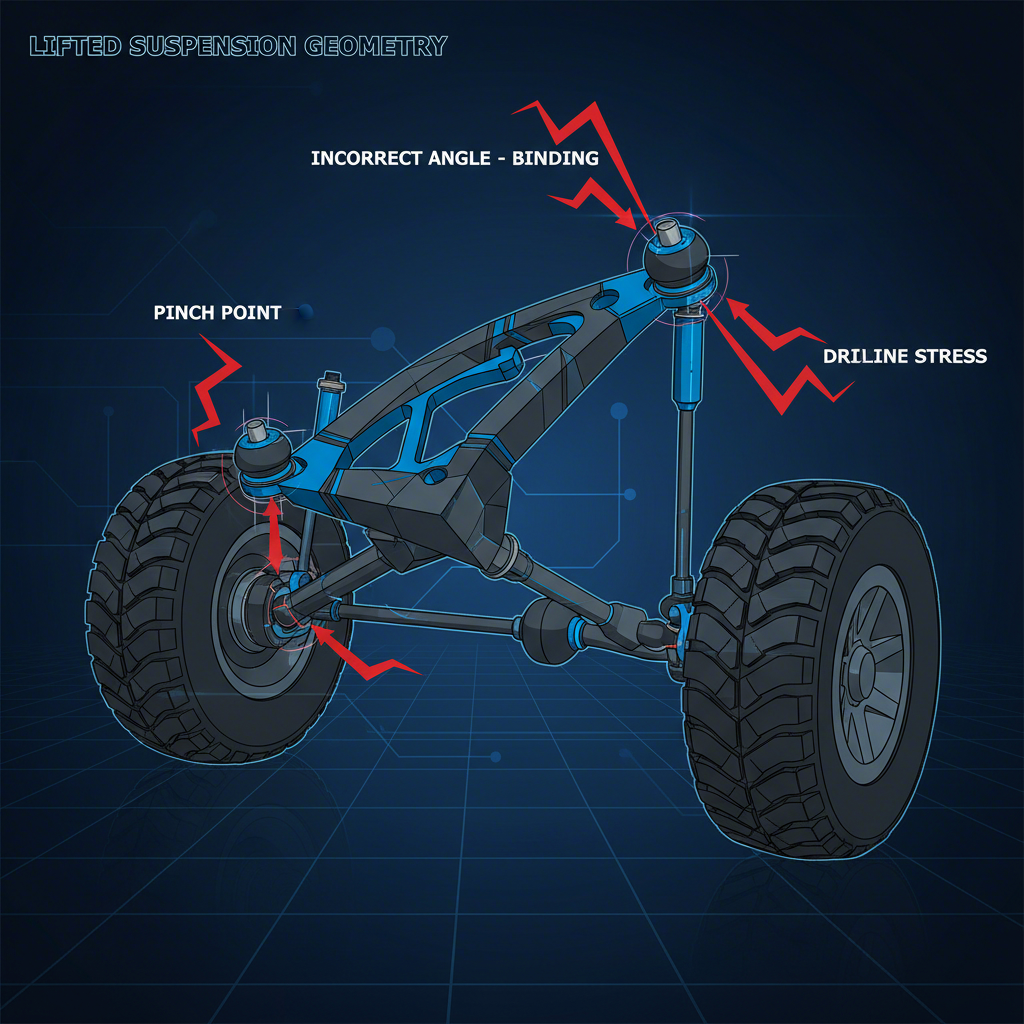
One of the most critical times to evaluate your stamped steel control arms is when you plan to install a leveling or lift kit. While they function well at stock height, lifting a truck changes the suspension geometry dramatically. The factory-stamped steel upper control arms (UCAs) are not designed for the steep angles created by a lift, which can lead to a cascade of problems, including poor alignment, excessive wear on other components, and potential part failure.
When you lift a truck, the stock UCA is forced into a downward angle that it was not designed to accommodate. This puts the upper ball joint at an extreme angle, causing it to bind. This binding limits the suspension's downward travel and can lead to premature and catastrophic ball joint failure. It also makes achieving a proper alignment nearly impossible, resulting in uneven tire wear and poor handling. For this reason, many lift kit manufacturers explicitly state that their kits are only compatible with certain factory control arm types.
Aftermarket UCAs are a highly recommended, if not essential, upgrade for lifted trucks that came with stamped steel arms. As explained by specialists at Reklez Suspension Works, aftermarket arms are engineered to correct the ball joint angle on lifted applications, allowing for proper alignment and restoring lost suspension travel. These upgraded arms, like the DIRT Series from CST Suspension, are built from stronger materials and often feature more durable uniballs or heavy-duty ball joints to handle the increased stress.
If you're planning to lift your truck, follow this essential checklist:
- Positively Identify Your Control Arms: Before purchasing any lift kit, use the visual and magnetic tests to confirm if you have stamped steel, cast steel, or aluminum arms.
- Check Lift Kit Requirements: Carefully read the specifications of the lift kit you intend to buy. The manufacturer will specify which factory control arms their kit is designed for.
- Plan for an Upgrade: If your truck has stamped steel arms and you are lifting it more than 2.5 inches, you should strongly consider investing in a set of aftermarket upper control arms. This will correct the suspension geometry, ensure your vehicle can be properly aligned, and prevent premature failure of your ball joints.
Making the Right Choice for Your Truck
Understanding the type of control arms on your truck is more than just a piece of trivia—it's a fundamental aspect of vehicle maintenance and modification. Stamped steel arms are a cost-effective and common factory component, but their limitations become apparent when you push your vehicle beyond its stock configuration. By correctly identifying your arms, weighing their pros and cons, and planning for necessary upgrades when lifting your vehicle, you can ensure your truck remains safe, reliable, and performs at its best for years to come.
Frequently Asked Questions
1. What are stamped steel control arms?
Stamped steel control arms are suspension components made from sheets of steel that are pressed into a specific shape and then welded together. They are commonly used by auto manufacturers because they are relatively inexpensive to produce. You can typically identify them by their smooth finish and visible weld seams, which distinguishes them from solid cast steel or cast aluminum parts.
2. What is the best metal for control arms?
The "best" metal depends on the application. For standard daily driving, factory stamped steel or aluminum arms are perfectly sufficient. For heavy-duty use, towing, or off-roading, steel is often preferred for its superior strength and durability. Cast steel or aftermarket tubular steel arms can handle more abuse than stamped steel. Aluminum is a good option for reducing unsprung weight, which can benefit handling, but it may not be as durable as steel in high-stress situations.