 Small batches, high standards. Our rapid prototyping service makes validation faster and easier —
  EN
EN


Stamped Steel Control Arms: Holding Your Car's Handling Back?

TL;DR
Stamped steel control arms are the standard for most passenger vehicles, offering adequate performance for daily driving at a low cost. However, their design creates a performance bottleneck for modified or classic cars, limiting handling due to suspension flex, excess weight, and suboptimal geometry. Upgrading to aftermarket tubular or forged control arms significantly improves steering response, high-speed stability, and overall driver confidence by correcting these flaws.
Understanding Stamped Steel Control Arms: The OEM Standard
A control arm is a critical suspension component that links your vehicle's chassis to the wheel hub, allowing the wheel to move up and down while maintaining stability. The most common type found on cars and trucks rolling off the assembly line is the stamped steel control arm. As the name suggests, these are manufactured by stamping and welding sheets of steel into their final shape. This process is incredibly cost-effective, making it the default choice for mass-produced vehicles.
The primary function of any control arm is to manage the wheel's movement, and for typical commuting, the stamped steel design is perfectly sufficient. It's a durable and proven technology that has served drivers for decades. Manufacturers specializing in high-volume automotive components deliver these parts with precision and reliability for the global auto industry. For instance, companies like Shaoyi (Ningbo) Metal Technology Co., Ltd. are experts in producing these high-quality, cost-effective stamped parts that meet stringent industry standards. However, while they are strong enough for normal conditions, their design has inherent trade-offs when performance is a priority.
When you look closer, the limitations of the stamped steel design become apparent. They are susceptible to twisting and flexing under high loads, such as hard cornering or aggressive braking. This flex can alter suspension geometry when you need it to be most consistent, negatively affecting the tire's contact with the road. To understand if an upgrade is right for you, it's helpful to weigh their fundamental characteristics.
- Pros: Inexpensive to manufacture and replace, durable enough for standard road use.
- Cons: Heavier than alternatives (increasing unsprung mass), prone to flex under load, susceptible to rust and corrosion, and often feature geometry that is not optimized for modern performance tires.
The Performance Bottleneck: Why Stamped Steel Limits Handling
The real performance impact of stamped steel control arms becomes clear when you push a vehicle beyond casual driving. For enthusiasts with classic cars, track toys, or lifted trucks, the factory arms are often the first component to reveal their weaknesses. These limitations manifest in three key areas: suspension flex, outdated geometry, and bushing deflection.
First, stamped steel arms can flex under stress. During aggressive cornering, this flex allows for small, unwanted changes in camber and caster, which compromises the tire's contact patch. The result is reduced grip and a less precise, 'vague' steering feel. In contrast, rigid aftermarket arms maintain consistent geometry, giving the driver more predictable handling and confidence. This rigidity is a cornerstone of performance suspension tuning.
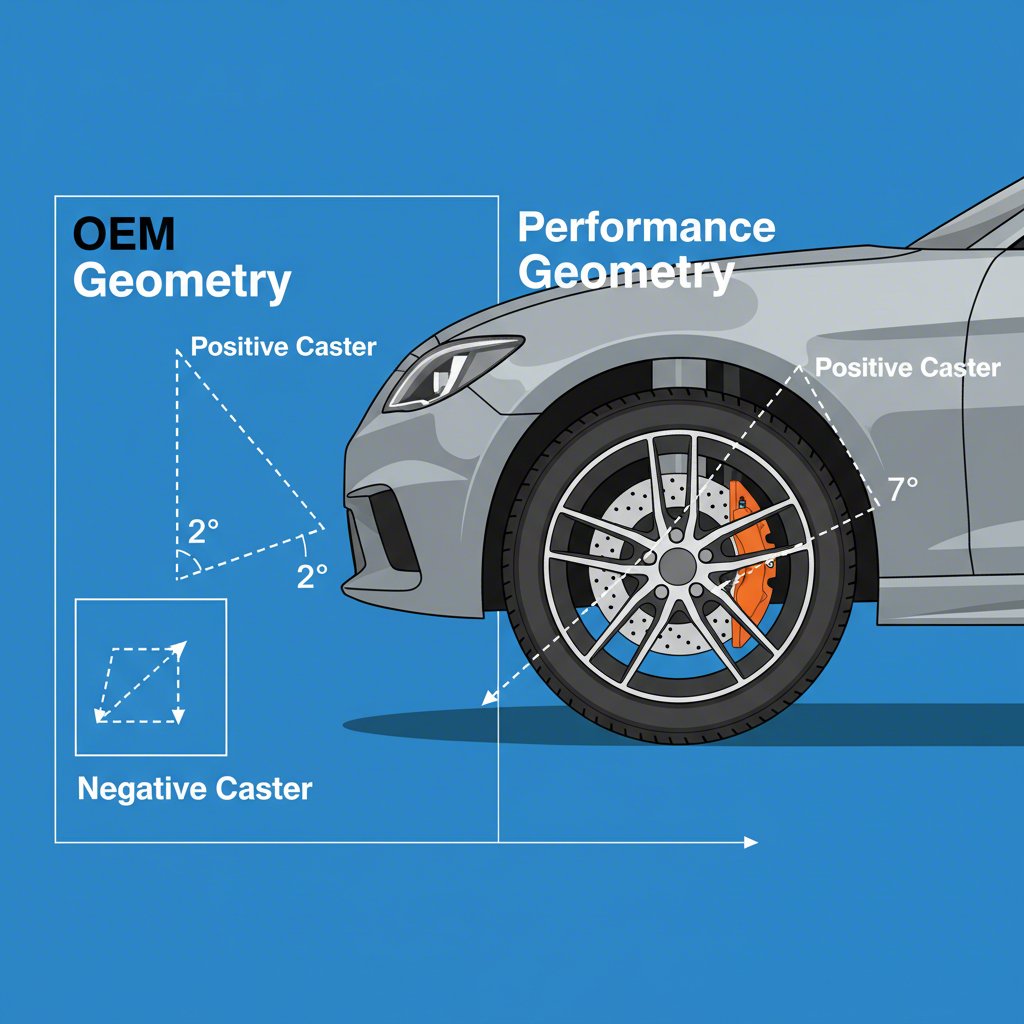
Second, and perhaps most importantly, is the issue of suspension geometry, particularly the caster angle. As detailed in an analysis by the experts at QA1, many classic cars were designed with only 2-3 degrees of positive caster to work with the bias-ply tires of the era. Modern radial tires, however, perform significantly better with more positive caster. Aftermarket tubular arms are engineered with 5-7 degrees of positive caster built-in. This change dramatically improves straight-line stability, enhances steering feedback, and increases cornering grip by optimizing camber gain as the wheels turn.
Finally, the original rubber bushings are a significant point of failure. Over time, these bushings wear out, but even when new, they are designed for comfort over precision. Under load, factory rubber bushings can deflect by as much as 3/8 of an inch. This movement allows the control arm to shift, again altering alignment and creating a sloppy handling feel. Upgraded control arms use polyurethane or advanced composite bushings with minimal deflection, ensuring the suspension pivots exactly as intended and translating steering inputs directly to the road.
Aftermarket Alternatives: A Guide to Control Arm Upgrades
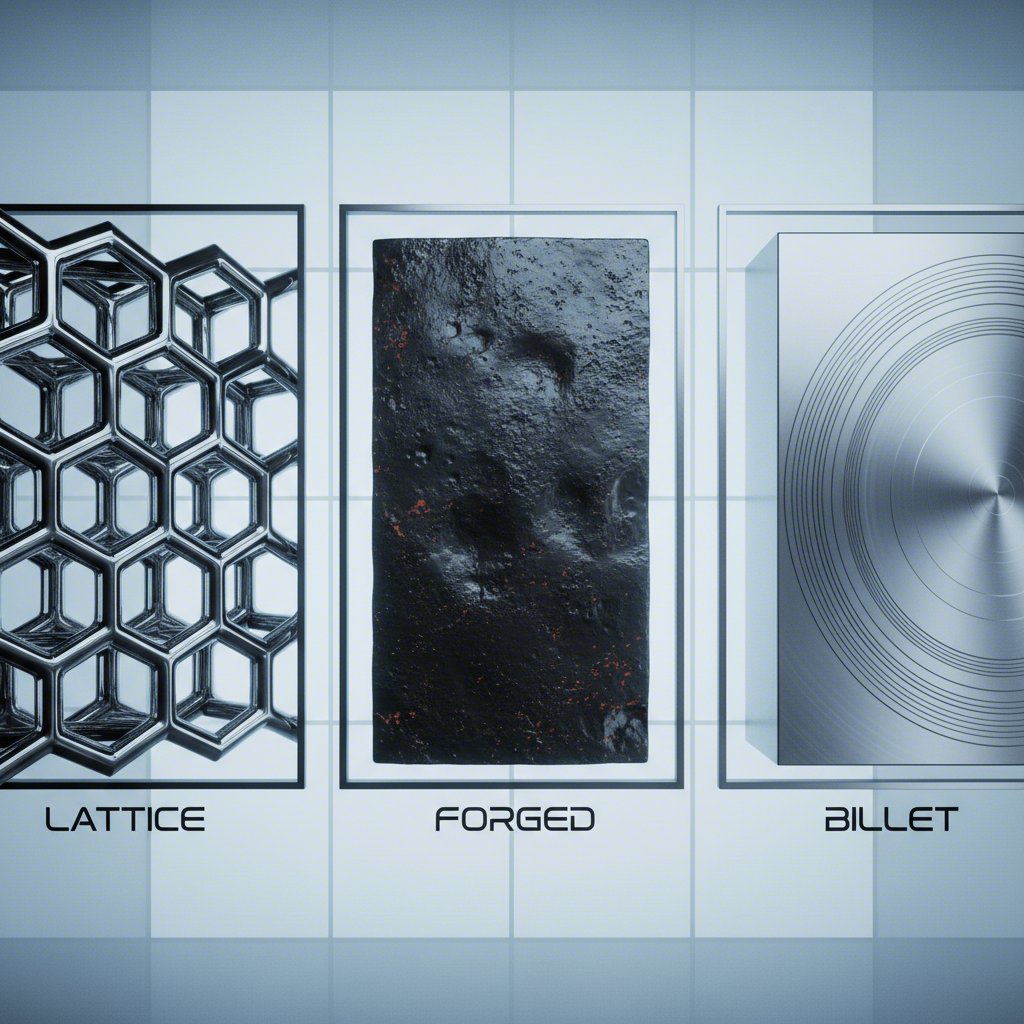
When you decide to move beyond stamped steel, you'll find several types of aftermarket control arms, each designed for different applications and budgets. The main categories are tubular steel, forged steel, and billet aluminum. Understanding the differences is key to choosing the right upgrade for your vehicle and driving style.
Tubular Steel Control Arms are the most popular upgrade for street performance and classic car enthusiasts. Made from welded steel tubing, they are significantly lighter and more rigid than their stamped counterparts. Their main advantage is the optimized geometry—like added caster—that modernizes a vehicle's handling and steering feel. They offer a massive improvement in precision without an excessive increase in cost.
Forged Steel Control Arms prioritize absolute strength. Created by forging a single piece of steel, these arms are incredibly durable and resistant to bending or breaking, making them a top choice for heavy-duty off-road applications. While they are often heavier than tubular arms, their robustness is unmatched when dealing with the harsh impacts of trail driving or rock crawling.
Billet Aluminum Control Arms represent the high end of the market. Machined from a solid block of aluminum, they offer an excellent combination of high strength and low weight. This makes them ideal for competitive racing and high-budget builds where every ounce of unsprung mass counts. Their precise construction and use of high-end components like heim joints also allow for maximum adjustability. A detailed guide from Shock Surplus provides an excellent breakdown of various market options.
Comparison of Control Arm Types
| Feature | Tubular Steel | Forged Steel | Billet Aluminum |
|---|---|---|---|
| Material | Welded Steel Tubing | Forged Steel | Machined Aluminum |
| Strength | High | Very High | Excellent |
| Weight | Light | Heavy | Very Light |
| Primary Use | Street Performance, Classic Cars | Heavy-Duty Off-Road, Trucks | Racing, High-End Builds |
| Cost | Moderate | Moderate to High | Very High |
Cost vs. Benefit: Is a Control Arm Upgrade Worth It for You?
Deciding whether to upgrade your stamped steel control arms comes down to a simple cost-benefit analysis tailored to your specific situation. The value of the upgrade is entirely dependent on how you use your vehicle and what you expect from it. For many drivers, the factory components are perfectly fine. For an enthusiast, however, it can be one of the most transformative handling upgrades you can make.
The costs involved include not just the parts themselves, which can range from a few hundred to over a thousand dollars, but also labor for installation and a mandatory wheel alignment afterward. This investment must be weighed against the potential performance gains. To make the decision easier, consider these common scenarios:
- Scenario A: The Daily Driver. If you use your stock sedan or crossover primarily for commuting and errands, upgrading the control arms is likely not worth the cost. You won't notice the benefits of improved geometry or reduced flex in city traffic, and the money is better spent on quality tires and brakes. Stick with OEM replacements if your originals are worn or damaged.
- Scenario B: The Classic Car Cruiser. For someone with a classic muscle car or cruiser, a tubular control arm upgrade is highly recommended. It fundamentally modernizes the driving experience, replacing vague, wandering steering with crisp, stable handling. This not only makes the car more fun to drive but also significantly safer on modern roads with modern tires.
- Scenario C: The Lifted Truck or SUV. If you've lifted your truck or SUV, an aftermarket upper control arm (UCA) is often a necessity, not just an option. Lifting a vehicle changes the stock suspension geometry, making it difficult or impossible to achieve a proper alignment. An aftermarket UCA is designed to correct this, preventing premature tire wear and restoring proper handling characteristics.
Ultimately, the choice is yours. Before you make a decision, run through this final checklist to clarify your needs:
- What is the primary use for my vehicle (daily driving, weekend cruises, off-roading, track days)?
- What specific problem am I trying to solve (poor steering feel, alignment issues, component failure)?
- What is my total budget, including parts, installation, and alignment?
Frequently Asked Questions
1. Do performance control arms make a difference?
Yes, absolutely. Performance control arms make a significant difference by improving suspension geometry for better handling, increasing rigidity to prevent flex during cornering, and reducing unsprung weight. This results in enhanced stability, more precise steering, better tire contact with the road, and an overall more connected and confidence-inspiring driving experience, especially in performance or off-road scenarios.