 Small batches, high standards. Our rapid prototyping service makes validation faster and easier —
  EN
EN


Stamped Steel Control Arms: Fine for Daily Driving or a Weak Link?
TL;DR
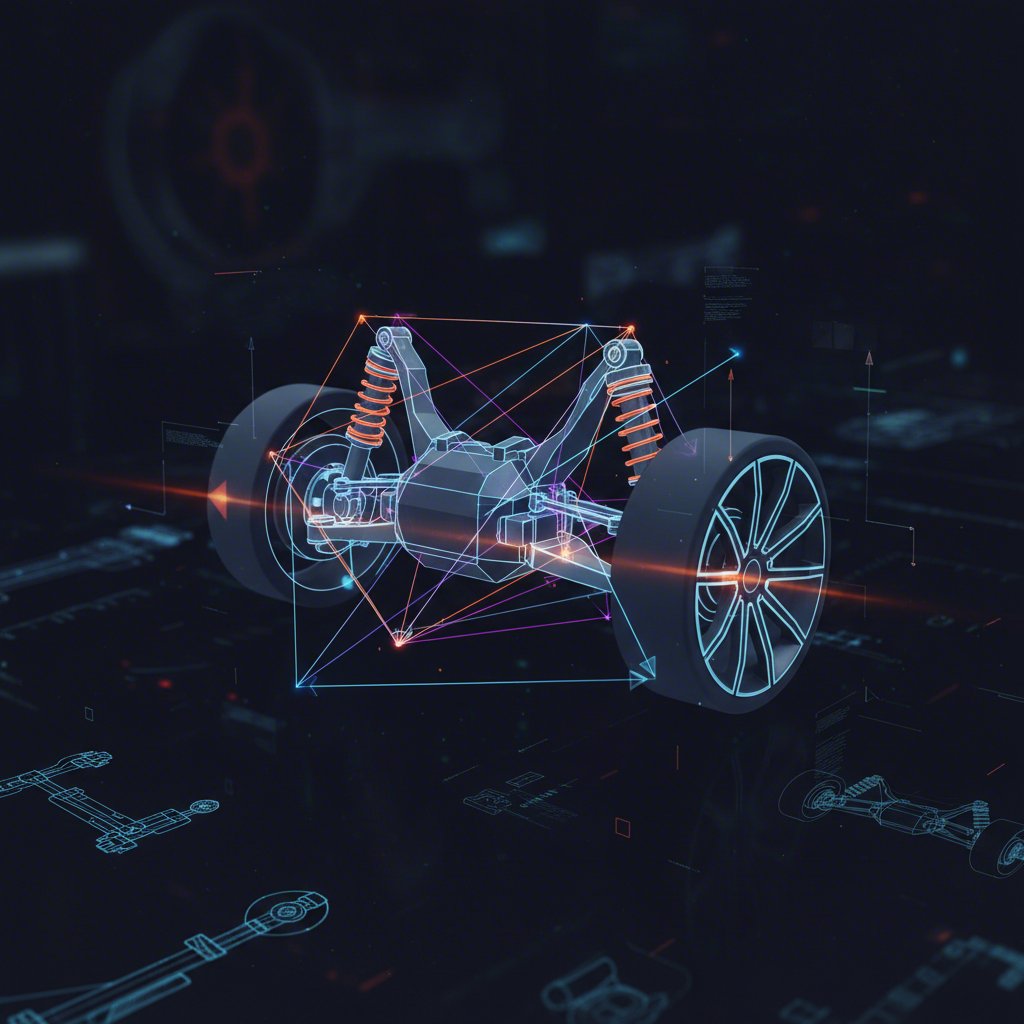
For standard vehicles in typical daily driving, factory stamped steel control arms are generally sufficient. They are a cost-effective solution designed for stock suspension geometry. However, they represent a significant weak point when you modify your vehicle, such as adding a lift or leveling kit, or if you're seeking improved handling and durability. In these cases, upgrading to aftermarket tubular or forged control arms becomes essential for correcting suspension geometry, enhancing stability, and ensuring safety.
What Are Stamped Steel Control Arms?: A Baseline for Daily Drivers
Stamped steel control arms are the unsung workhorses of most factory suspension systems. As the name suggests, they are manufactured by stamping or pressing sheets of steel into a specific shape using a high-pressure die. This method is incredibly cost-effective, which is why they are the go-to choice for original equipment manufacturers (OEMs). Their primary job is to connect the vehicle's frame to the steering knuckle, managing the wheel's movement as the suspension articulates over bumps and through turns.
While functional for a stock vehicle under normal conditions, the stamped design has inherent limitations. The process results in a component that is relatively heavy, contributing to what's known as "unsprung mass"—the weight of all parts not supported by the springs. High unsprung mass can make a suspension feel less responsive. Furthermore, the C-channel-like shape of many stamped arms is prone to flexing under heavy loads, such as hard cornering or off-road use, which can negatively affect alignment and handling precision.
For automotive manufacturers, producing these components requires immense precision and reliability. Companies specializing in high-volume production, such as Shaoyi (Ningbo) Metal Technology Co., Ltd., leverage advanced automated facilities to deliver complex stamped parts that meet the stringent IATF 16949 certification for the auto industry. This ensures that even these baseline components are made to a consistent standard.
You can typically identify stamped steel arms by their formed-sheet appearance and visible seams. A simple test is to use a magnet; since they are steel, a magnet will stick firmly, which distinguishes them from non-magnetic aluminum alternatives. To summarize, their characteristics are straightforward:
- Pros: Low manufacturing cost, adequate for unmodified factory vehicles.
- Cons: Heavy, can flex under stress, offers poor geometry for lifted or leveled vehicles, and can be a point of failure with larger tires or aggressive use.
The Ultimate Comparison: Stamped Steel vs. Tubular, Forged, and Aluminum
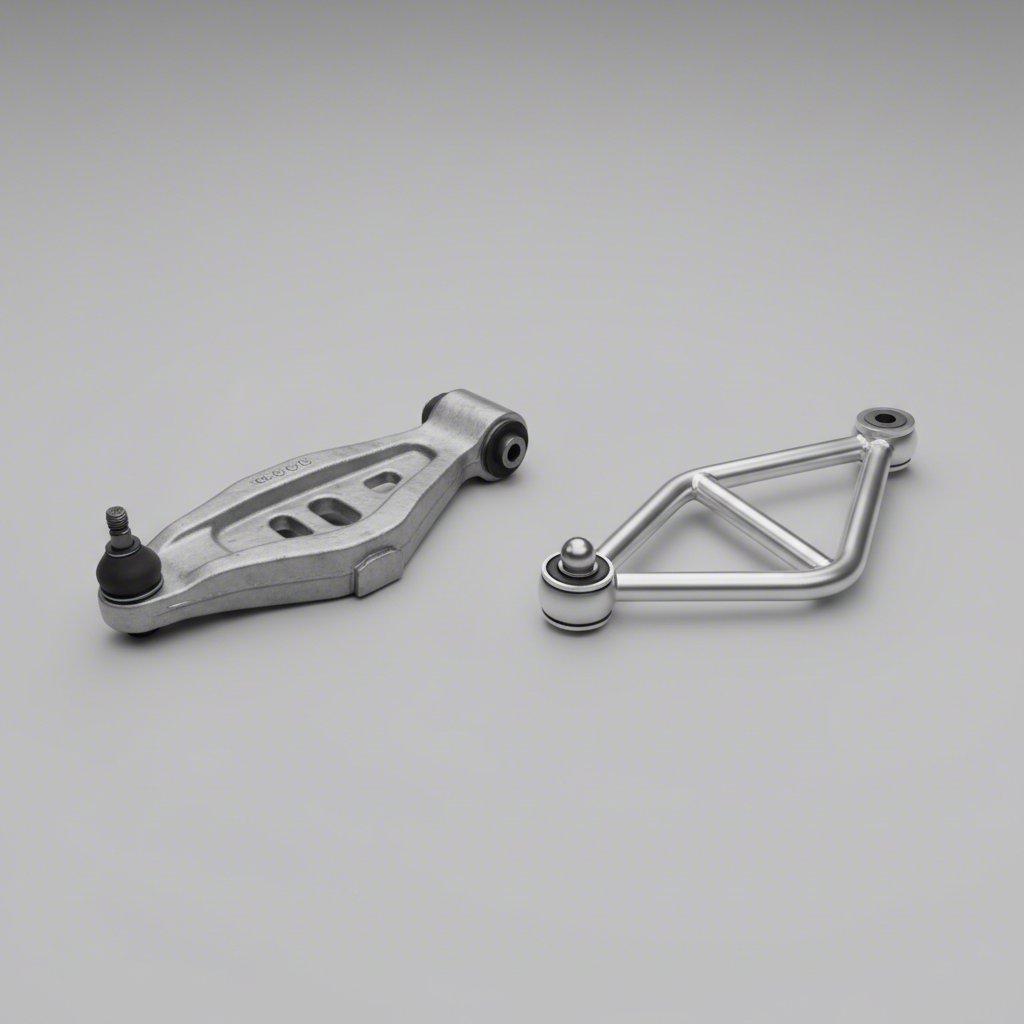
When your factory stamped steel arms are no longer sufficient, the aftermarket offers several superior alternatives. Each type provides a different balance of strength, weight, and cost, tailored to specific needs from daily driving enhancement to extreme off-road use. Understanding these differences is key to making the right choice for your vehicle and driving style.
Tubular steel arms are often considered the best all-around upgrade. As detailed in a guide by QA1, they are constructed from high-strength, lightweight steel tubing, making them significantly stronger and lighter than their stamped counterparts. This reduction in weight lowers unsprung mass, allowing the suspension to react more quickly to road imperfections for a smoother ride. Their main advantage, however, is their optimized geometry, which is designed to improve handling.
Forged steel arms are the heavy-duty champions. Forging involves shaping a solid piece of steel under extreme pressure, creating an incredibly dense and strong component. According to an in-depth comparison by Shock Surplus, forged arms are the heaviest option but are considered "nearly indestructible." This makes them an excellent choice for heavy-duty applications or for drivers who prioritize absolute strength over weight savings.
Billet aluminum arms represent the premium, high-performance option. They are machined from a single, solid block of aluminum. This process results in the lightest and often strongest control arm available, offering exceptional strength-to-weight ratio and natural corrosion resistance. Their high cost typically reserves them for racing applications or show builds where both performance and aesthetics are paramount.
| Control Arm Type | Key Material | Primary Benefit | Ideal Use Case | Relative Cost |
|---|---|---|---|---|
| Stamped Steel | Pressed Sheet Steel | Low Cost | Stock Daily Driving | $ |
| Tubular Steel | Welded Steel Tubing | Improved Geometry & Weight | Upgraded Daily Drivers, Lifted Trucks, Performance Street | $$ |
| Forged Steel | Forged Steel Billet | Maximum Strength & Durability | Heavy-Duty Hauling, Serious Off-Roading | $$$ |
| Billet Aluminum | Machined Aluminum Block | Lightest Weight & High Strength | Racing, High-Performance Builds | $$$$ |
For most daily drivers looking for a tangible improvement, especially after adding a leveling kit, tubular steel arms offer the best balance of performance gain and cost.
How Control Arms Impact Handling and Ride Quality in Daily Driving
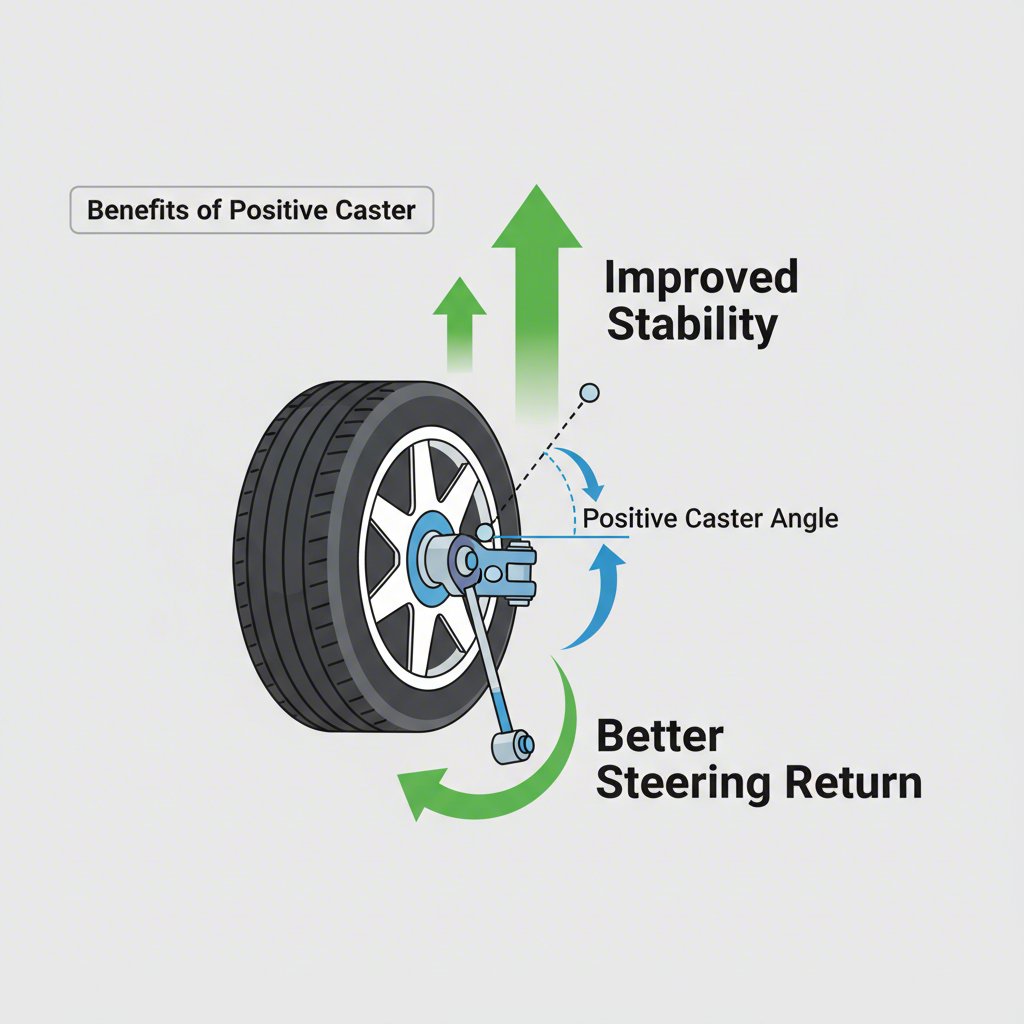
Upgrading from stamped steel control arms does more than just add strength; it fundamentally changes how your vehicle feels on the road. The most significant improvement comes from corrected suspension geometry, particularly the caster angle. Caster is the forward or backward tilt of the steering axis. Factory arms on older vehicles, and even many modern trucks, have minimal positive caster, which can lead to a vague or "wandering" steering feel, especially at highway speeds.
Aftermarket tubular arms are engineered with additional positive caster built-in. This modern geometry provides several real-world benefits that you can feel from the driver's seat. Increased positive caster creates a stronger self-centering effect for the steering wheel, meaning the vehicle tracks straighter on the highway and the wheel returns to center smoothly after a turn. It also improves cornering performance by optimizing the tire's contact patch with the road.
The tangible results of an upgrade are immediately noticeable in daily driving. You'll experience less front-end "dive" during hard braking, more predictable handling in corners, and a general sense of stability that inspires confidence. While a subtle change on a completely stock vehicle, these improvements become critical for maintaining control and safety on a truck with larger tires or a modified suspension.
You should strongly consider an upgrade if:
- You have installed a lift or leveling kit on your truck.
- You have fitted larger, heavier tires than the factory size.
- Your stock control arm bushings are worn out, causing sloppy handling.
- Your steering feels unresponsive, vague, or requires constant correction on the highway.
Special Considerations: Lifted Trucks and Stamped Steel Arms
Lifting or leveling a truck is one of the most common modifications, but it's also where the limitations of stamped steel control arms become a critical issue. When you raise the suspension, the factory upper control arm (UCA) is pulled downward to an extreme angle. This altered geometry creates two major problems that the stock arms are not designed to handle.
First, it becomes nearly impossible to achieve a proper wheel alignment. The severe angle prevents technicians from adjusting caster and camber back to factory specifications, leading to rapid and uneven tire wear. Second, and more dangerously, the factory ball joint can bind at the new, steeper angle. This binding limits the suspension's downward travel (droop) and puts immense stress on the ball joint itself, risking premature failure.
This is why for any lift of 2 inches or more, replacing the stock stamped steel UCAs is widely considered a necessary modification, not just an optional upgrade. Aftermarket UCAs are designed with corrected ball joint angles to work with the new ride height, allowing for full suspension travel without binding and enabling proper alignment. They often feature more durable joint types, like heavy-duty sealed ball joints for longevity on a daily driver or uniballs for maximum articulation in off-road scenarios.
Ignoring the need for corrected UCAs after a lift compromises not only your tire investment but also your vehicle's safety and drivability. The improved geometry provided by an aftermarket set restores proper handling characteristics and ensures the suspension can operate as intended.
Frequently Asked Questions
1. Are stamped steel control arms magnetic?
Yes, stamped steel control arms are magnetic. They are made from steel, which is a ferrous metal. Waving a magnet over the arm is a quick and easy way to identify it. If the magnet sticks, it is either a stamped steel or cast iron arm. If it does not stick, it is likely an aluminum arm.
2. What is the best material for control arms?
There is no single "best" material, as the ideal choice depends entirely on your vehicle's use case and your budget. For most people upgrading from stock for better daily driving and to support a lift kit, tubular steel offers the ideal balance of improved strength, corrected geometry, and affordability. For extreme strength in heavy-duty or off-road applications, forged steel is superior. For high-performance racing where every ounce matters, billet aluminum is the top choice.