 Small batches, high standards. Our rapid prototyping service makes validation faster and easier —
  EN
EN


Stamped Steel Control Arms: Essential Facts for Classic Cars
TL;DR
Stamped steel control arms are suspension components designed to replicate the original factory parts in classic cars. Manufactured from heavy-gauge steel, they are the go-to choice for restorers seeking authenticity, a direct bolt-in fit, and reliable durability. While they excel at maintaining a vehicle's stock appearance and geometry, they are often compared to modern tubular control arms, which are engineered for enhanced handling performance and weight reduction.
Understanding Stamped Steel Control Arms: The Foundation of Classic Suspension
At the core of a classic car's suspension system, the control arms serve as the critical link between the chassis and the wheels, dictating wheel movement and maintaining stability. Stamped steel control arms are precisely what their name implies: components formed by stamping or pressing sheets of heavy-gauge steel into a desired shape using a die. This manufacturing method was the standard for mass-produced vehicles for decades due to its cost-effectiveness and ability to produce strong, reliable parts in high volume.
The process of creating these arms is a feat of industrial engineering. For automotive manufacturers that require exceptional precision in metal stamping, specialized firms provide comprehensive solutions from prototyping to large-scale production. Companies like Shaoyi (Ningbo) Metal Technology Co., Ltd. exemplify this expertise, utilizing advanced automated facilities to ensure components meet stringent quality standards like IATF 16949, which are crucial for safety and performance in suspension parts. This process results in a control arm that is both strong and shaped to the exact specifications of the original design.
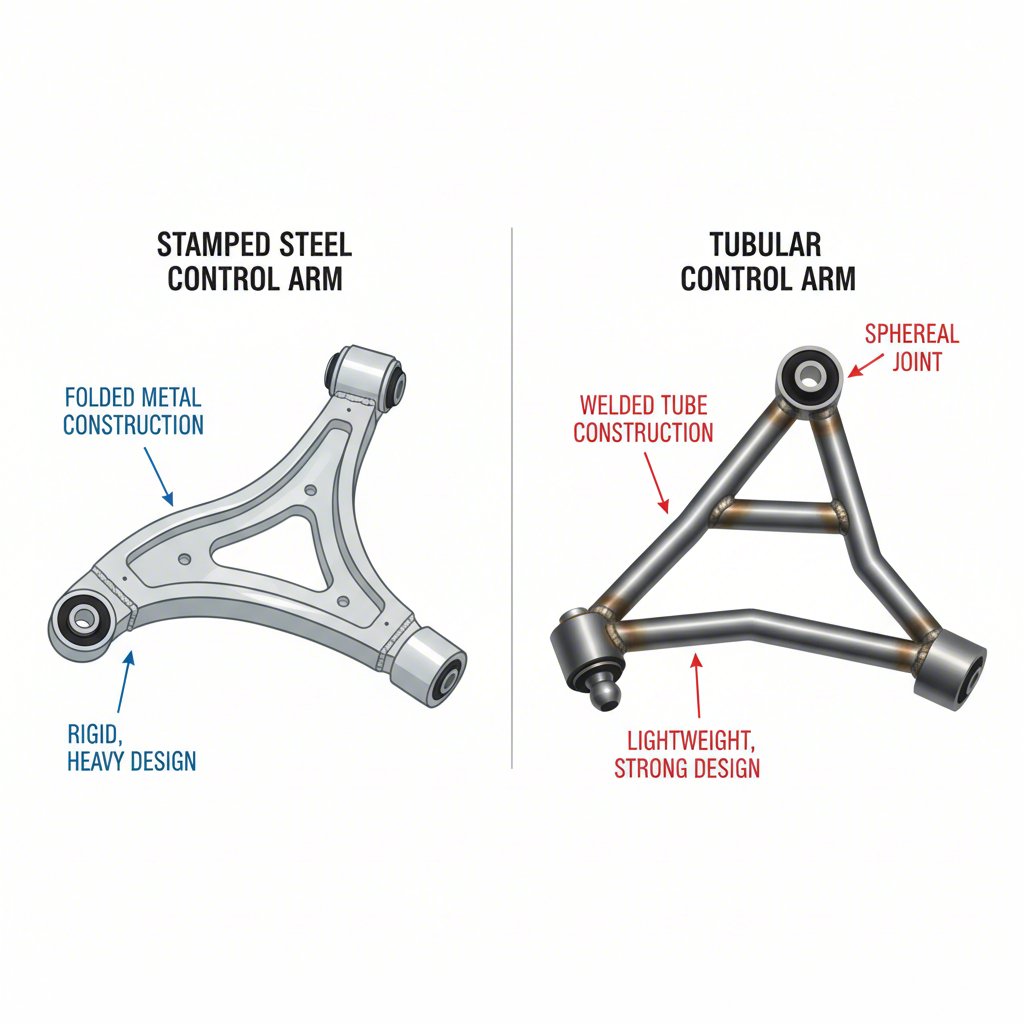
Visually, stamped steel arms often have a 'U' or 'C' channel cross-section, sometimes with plates welded on to create a boxed structure for added rigidity. This construction is distinct from forged arms, which are made from a solid piece of metal heated and hammered into shape, or cast arms, which are formed by pouring molten metal into a mold. For classic car owners, identifying them is straightforward; as they are made of steel, a magnet will easily stick to them, a simple test that distinguishes them from aluminum alternatives.
Key Characteristics of Stamped Steel Arms:
- Authenticity: They are designed to be exact replicas of the original equipment manufacturer (OEM) parts, making them essential for period-correct restorations.
- Direct Fitment: Engineered to match factory specifications, they typically install without any modifications to the vehicle's frame or mounting points.
- Durability: Made from robust steel, these arms are built to withstand the rigors of daily driving and preserve the vehicle's original ride characteristics.
- Simplicity: Many aftermarket stamped arms, like those found on Summit Racing, come pre-assembled with new bushings and ball joints, simplifying the restoration process.
Stamped Steel vs. Tubular Control Arms: A Head-to-Head Comparison
When upgrading or restoring a classic car's suspension, the primary choice often comes down to stamped steel versus tubular control arms. While stamped arms offer originality, tubular arms are engineered for modern performance. This decision is central to defining how your classic car will ultimately drive and handle. Tubular arms, as detailed in resources from QA1, are constructed from welded steel tubing, a design that offers significant advantages in strength, weight, and suspension geometry.
The differences are not just cosmetic; they fundamentally alter the vehicle's dynamics. Tubular designs allow engineers to build in more positive caster and adjust camber gain—alignment settings that were not prioritized in the era of bias-ply tires but are critical for stability and grip with modern radial tires. This modern geometry is what gives a classic car a more connected and stable feel on the road, especially at higher speeds. For enthusiasts building a pro-touring machine or even a high-performance street car like an OBS Chevy, tubular control arms are a very popular upgrade.
To help clarify the choice, here is a direct comparison of their key attributes:
| Feature | Stamped Steel Control Arms | Tubular Control Arms |
|---|---|---|
| Performance & Rigidity | Adequate for stock applications; can flex under high-stress cornering. Boxed versions offer improved rigidity. | Significantly more rigid, reducing flex for improved handling and consistent suspension geometry. |
| Weight | Generally heavier, which contributes to higher unsprung mass. Some designs can be surprisingly light. | Typically lighter, reducing unsprung mass and allowing the suspension to react faster to road surfaces. |
| Authenticity & Appearance | The only choice for a 100% period-correct restoration. Maintains the factory look. | Offers a modern, high-performance appearance. Not suitable for concours-level restorations. |
| Cost | Often more affordable, especially for standard replacement parts. | Generally more expensive due to more complex manufacturing and performance-oriented materials. |
| Best Use Case | Factory restorations, daily drivers where originality is key, and budget-conscious builds. | Pro-touring, restomods, track use, and any build prioritizing handling, stability, and steering feel. |
Ultimately, the right choice depends on your goals. If your priority is preserving the soul and originality of your classic, stamped steel is the clear winner. If you want to transform its road manners to rival modern performance cars, tubular arms are a worthwhile investment.
Key Benefits and Installation Considerations for Stamped Control Arms
Opting for stamped steel control arms brings several practical advantages, especially for the classic car enthusiast focused on restoration. The primary benefit is their commitment to originality. Parts from suppliers like Kanter Auto Products are described as being "precision built to fit and function like original," ensuring that the vehicle maintains its factory geometry and alignment specifications. This direct-fit nature means they typically install without the need for cutting, welding, or modifying the car's chassis, which is a major plus for preserving the vehicle's integrity.
These arms are also known for their straightforward installation. As noted by Classic Performance Products, many kits are compatible with factory power steering systems and come with bushings and ball joints already pressed in. This pre-assembly saves significant time and effort, eliminating the need for specialized tools like a hydraulic press. This makes replacing worn-out front-end components a manageable weekend project for a home mechanic.
Before beginning the installation, a few preparatory steps can ensure the process goes smoothly. A careful pre-installation check is crucial for avoiding surprises and ensuring a safe, successful outcome.
- Verify Compatibility: Double-check that the part numbers match your vehicle's specific year, make, and model. Small changes between model years can lead to incompatible parts.
- Inspect New Components: Before disassembly, inspect the new control arms. Confirm that they come with all necessary hardware, such as bushings, ball joints, and retaining clips. Ensure there is no damage from shipping.
- Gather Your Tools: Make sure you have all the required tools on hand. This typically includes a full socket set, torque wrench, breaker bar, pickle fork or ball joint separator, and heavy-duty jack stands for safety.
- Plan Your Alignment: Any time you replace major suspension components like control arms, a professional wheel alignment is necessary afterward to ensure proper handling and prevent premature tire wear.
Frequently Asked Questions
1. How do I tell if I have stamped steel control arms?
The easiest way to identify stamped steel control arms is with a magnet. Since they are made of steel, a magnet will stick firmly to them. This is a reliable test to differentiate them from cast aluminum arms, which are non-magnetic. Visually, they are often formed from folded steel, appearing as a C-channel or a hollow, boxed shape, unlike forged arms which look like a single, solid piece of metal.