 Small batches, high standards. Our rapid prototyping service makes validation faster and easier —
  EN
EN


Stamped Steel Control Arms: A Climate and Durability Guide
TL;DR
Stamped steel control arms are a common, cost-effective suspension component used in many cars and trucks. Their primary drawback is a high susceptibility to rust, especially in damp climates or regions that use road salt. For vehicles in these environments, cast aluminum or properly coated cast iron control arms offer superior corrosion resistance and longevity, though at a higher initial cost. The right choice depends on balancing your budget, local climate, and vehicle performance needs.
Understanding Control Arms: Stamped Steel vs. The Alternatives
A control arm is a critical part of your vehicle's suspension system, acting as the link between the chassis and the wheel assembly. This component, also known as an A-arm, allows your wheels to move up and down smoothly over bumps while keeping them firmly planted on the ground for stability and control. As explained in a comprehensive guide from GMT Rubber, this mechanism is vital for reducing vibration and ensuring predictable steering. Most vehicles use several types of control arms, primarily made from three distinct materials: stamped steel, cast iron, and cast aluminum, each with a unique manufacturing process and performance profile.
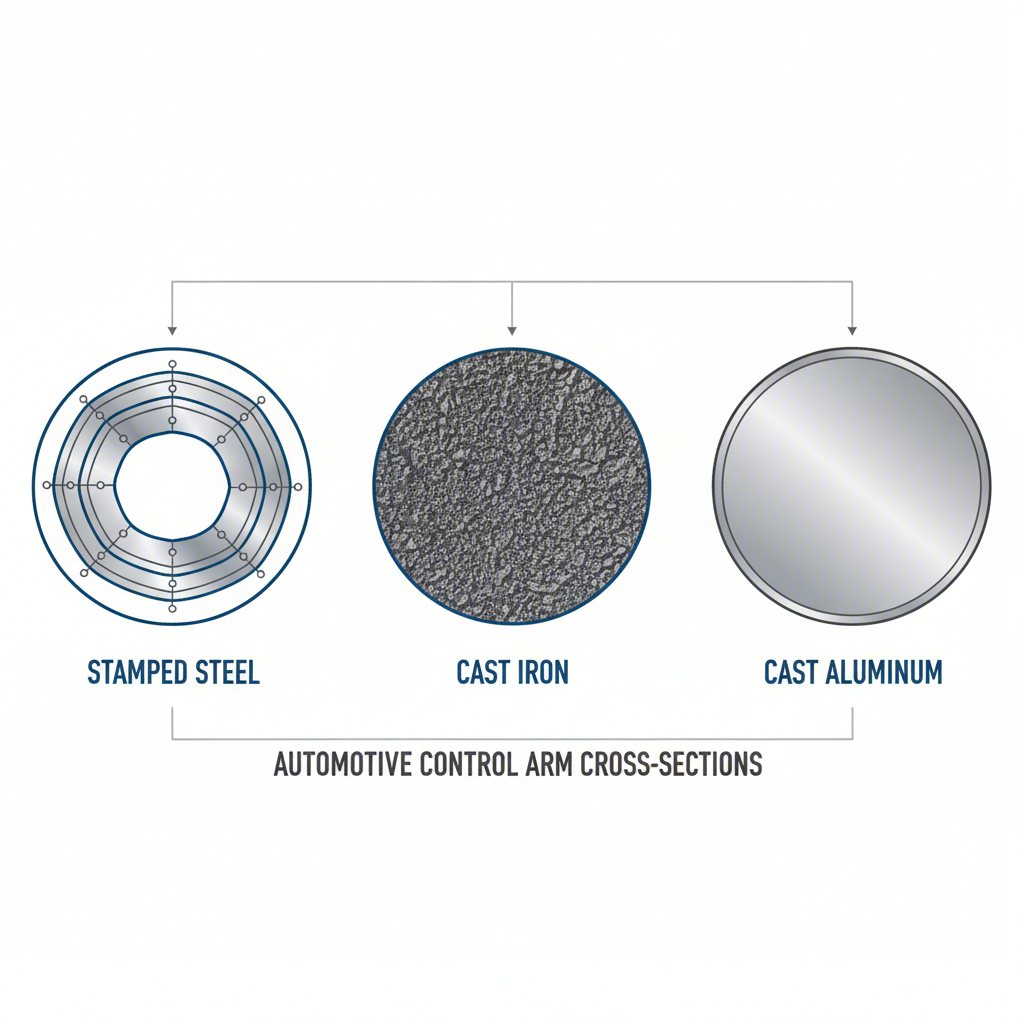
Stamped steel control arms are manufactured by pressing sheets of steel into a desired shape and then welding the pieces together. This process is efficient and cost-effective, making them a popular choice for many modern passenger cars and trucks. You can often identify them by their smooth, typically painted surface and visible weld seams. The manufacturing process for automotive components like these requires immense precision. For instance, specialized firms like Shaoyi (Ningbo) Metal Technology Co., Ltd. provide advanced metal stamping services to the automotive industry, ensuring that parts like these meet strict quality and performance standards from prototyping to mass production.
Cast iron and cast aluminum arms, by contrast, are made by pouring molten metal into a mold. This results in a single, solid piece with a rougher, more textured finish and a visible casting seam. Cast iron is known for its immense strength and durability, making it ideal for heavy-duty trucks and SUVs that operate in harsh conditions. Cast aluminum offers a compelling balance of strength and low weight, and it naturally resists corrosion, but it can be more susceptible to damage from sharp impacts due to its relative softness.
Identifying the correct control arm on your vehicle is crucial, especially when ordering replacements. As an example, certain model years of the Chevy Silverado and GMC Sierra 1500 trucks were offered with all three types of arms, each requiring a specific ball joint. A simple guide from MOOG Parts offers a practical method for identification. First, use a magnet; if it doesn't stick, the arm is aluminum. If it sticks, it's either stamped steel or cast iron. To tell those two apart, tap the arm with a hammer. A hollow sound indicates a stamped steel arm, while a dull thud points to solid cast iron.
| Material | Manufacturing Process | Common Use | Key Identifiers |
|---|---|---|---|
| Stamped Steel | Steel sheets pressed and welded together | Passenger cars, light trucks | Magnetic, hollow sound when tapped, smooth surface with weld seams |
| Cast Iron | Molten iron poured into a mold | Heavy-duty trucks, SUVs | Magnetic, dull thud when tapped, rough/textured surface |
| Cast Aluminum | Molten aluminum poured into a mold | Performance cars, modern trucks/SUVs | Non-magnetic, lightweight, often unpainted |
Climate and Corrosion: How Environment Affects Control Arm Longevity
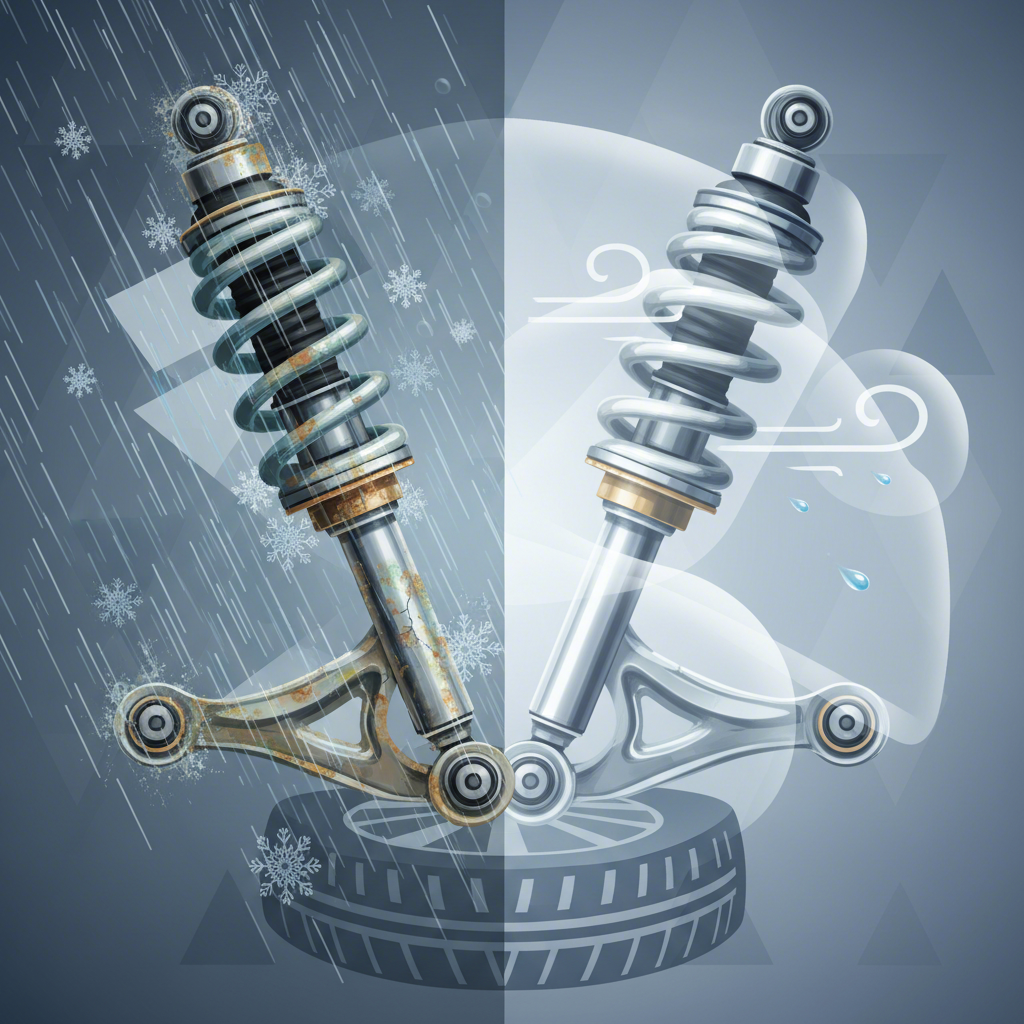
The single most significant factor affecting the lifespan of a stamped steel control arm is your local climate. While these components are typically protected by a coating from the factory, this layer is vulnerable to chips and scratches from road debris. Once the underlying steel is exposed, rust is inevitable, and certain environmental conditions can dramatically accelerate this process. This makes material choice a critical decision for vehicle owners in specific regions.
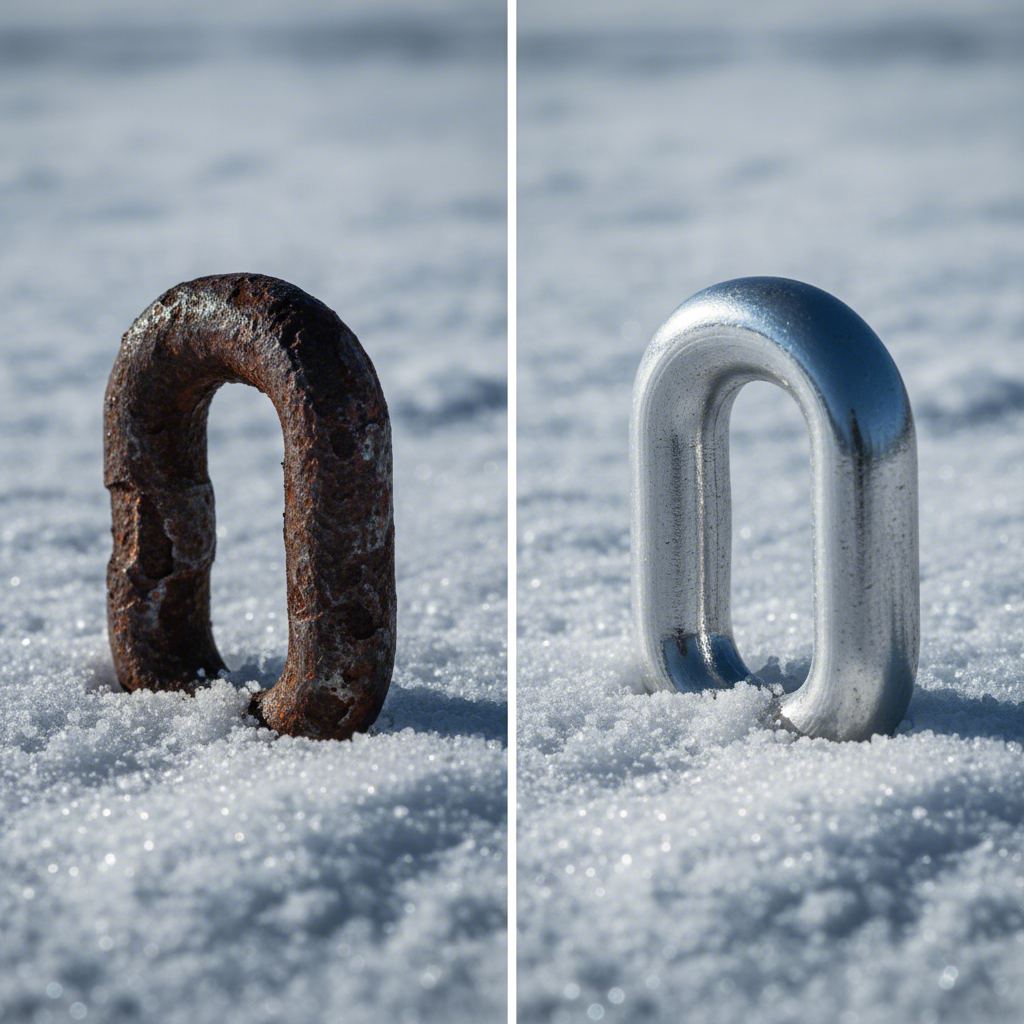
For those living in areas with harsh winters, road salt is the primary enemy. The sodium chloride used to de-ice roads creates a highly corrosive environment that aggressively attacks exposed steel. In these snowy and salty climates, stamped steel control arms are at the highest risk of premature failure due to rust. The corrosion can weaken the structure of the arm or seize adjustment points, making proper wheel alignment impossible. Over time, severe rust can compromise the arm's integrity entirely, posing a significant safety risk.
Damp, humid climates also pose a threat. Constant exposure to moisture, even without salt, will promote rust on any unprotected steel surfaces. While the process may be slower than in the salt belt, it is a persistent issue that degrades the component over its life. In contrast, dry and arid climates are the most forgiving for stamped steel arms, as the lack of ambient moisture significantly slows the oxidation process. In these environments, the cost savings of stamped steel can be fully realized without a major trade-off in longevity.
This is where alternative materials show their strength. Cast aluminum is naturally corrosion-resistant, as it forms a protective oxide layer that prevents further degradation, making it an excellent choice for any wet or salty environment. Cast iron also offers better resistance to rust than stamped steel, though it is not entirely immune. When considering a replacement, drivers in corrosive climates should weigh the higher upfront cost of aluminum or well-coated cast iron against the long-term cost and safety implications of replacing rusted stamped steel components.
Performance and Durability: Beyond Just Rust
While climate resistance is a major factor, the choice between control arm materials also involves trade-offs in strength, weight, and overall performance. The best option for your vehicle depends not only on where you drive but also on how you drive. Each material offers a different balance of characteristics that cater to different needs, from daily commuting to heavy-duty applications.
In terms of raw strength and impact resistance, steel and iron are generally superior. Cast iron is exceptionally robust, making it the preferred material for heavy-duty trucks and SUVs that need to withstand significant loads and harsh operating conditions. Stamped steel, while not as tough as cast iron, still provides ample strength for the majority of passenger cars and light trucks in normal use. Its main performance drawback is a tendency to flex more under load compared to cast designs.
Aluminum's primary advantage is its low weight. Reducing unsprung mass (the weight of components not supported by the suspension springs) allows the suspension to react more quickly to bumps and imperfections in the road. This translates to improved handling, better ride quality, and even marginal gains in fuel efficiency. This is why cast aluminum arms are often found on performance-oriented vehicles where responsive handling is a priority. However, this lighter material can be more prone to damage from severe impacts compared to its steel counterparts.
Failure modes also differ. Some newer stamped steel designs have been criticized for issues with ball joint retention, where the joint can fail and separate from the arm under stress, a point highlighted by ReadyLIFT in their analysis of GM 1500 trucks. For this reason, many owners of lifted or modified trucks with factory stamped steel arms choose to upgrade to more robust aftermarket designs. Cast iron and aluminum arms, on the other hand, are less prone to this specific failure, typically featuring more secure ball joint designs. Ultimately, your decision should account for your vehicle's intended use—a budget-friendly stamped steel arm might be perfect for a daily driver in a dry climate, while a heavy-duty truck in a snowy region would be better served by a durable cast iron or corrosion-proof aluminum upgrade.
Making the Right Choice for Your Vehicle
Choosing the right control arm involves more than just finding a part that fits. It requires a careful assessment of your local climate, your driving habits, and your budget. Stamped steel control arms offer an excellent value proposition for many drivers, particularly those in dry, arid regions where corrosion is a minimal concern. They provide adequate strength for daily driving at an affordable price point.
However, if you live in an area with heavy rainfall, high humidity, or harsh winters that bring salted roads, the long-term durability of stamped steel becomes a serious consideration. In these environments, the superior corrosion resistance of cast aluminum or the ruggedness of cast iron often justifies the higher initial investment. Upgrading to one of these materials can prevent premature failures, save on future replacement costs, and provide greater peace of mind.
Finally, consider your vehicle's application. For standard passenger cars, factory-style stamped steel arms are often sufficient. But for heavy-duty trucks, off-road vehicles, or performance cars, the enhanced strength of cast iron or the lightweight responsiveness of aluminum can provide significant benefits in durability and handling. By weighing these key factors, you can make an informed decision that ensures the safety, performance, and longevity of your vehicle's suspension.
Frequently Asked Questions
1. Are stamped steel control arms magnetic?
Yes, stamped steel control arms are magnetic. A simple way to distinguish control arm materials is with a magnet. If a magnet sticks, the arm is made of either stamped steel or cast iron. If it does not stick, it is made of aluminum.
2. What is the difference between cast and stamped steel control arms?
The primary difference lies in their manufacturing. Stamped steel arms are made from sheets of steel that are pressed into shape and then welded together, resulting in a hollow structure with a smoother finish. Cast iron arms are created by pouring molten iron into a mold, resulting in a solid, heavier component with a rougher, textured surface. Cast arms are generally stronger but also heavier.
3. What is the difference between stamped and forged control arms?
While stamped arms are welded from pressed steel sheets, forged control arms are made from a solid piece of metal that is heated and compressed under extreme pressure into a die. This forging process aligns the metal's internal grain structure, making forged arms significantly stronger and more resistant to fatigue than both stamped and cast alternatives. They are typically found in high-performance or heavy-duty applications.
4. What is the best material for control arms?
There is no single "best" material, as the ideal choice depends on the application. Aluminum is excellent for corrosion resistance and reducing weight for better handling. Cast iron is superior for heavy-duty strength and durability. Stamped steel provides a good balance of strength and low cost for everyday vehicles in moderate climates. The best material is the one that best matches your climate, vehicle use, and budget.