 Small batches, high standards. Our rapid prototyping service makes validation faster and easier —
  EN
EN


Stamped Steel Control Arm Properties: An Essential Guide
TL;DR
Stamped steel control arms are a common and economical component in vehicle suspensions, typically manufactured from high-strength, low-alloy (HSLA) steel. Their core material properties offer a practical balance of tensile strength and low weight, making them suitable for most passenger cars. However, their primary disadvantage is a significant susceptibility to rust and corrosion, especially in regions with heavy road salt usage, which distinguishes them from alternatives like aluminum or cast iron.
What Are Stamped Steel Control Arms?
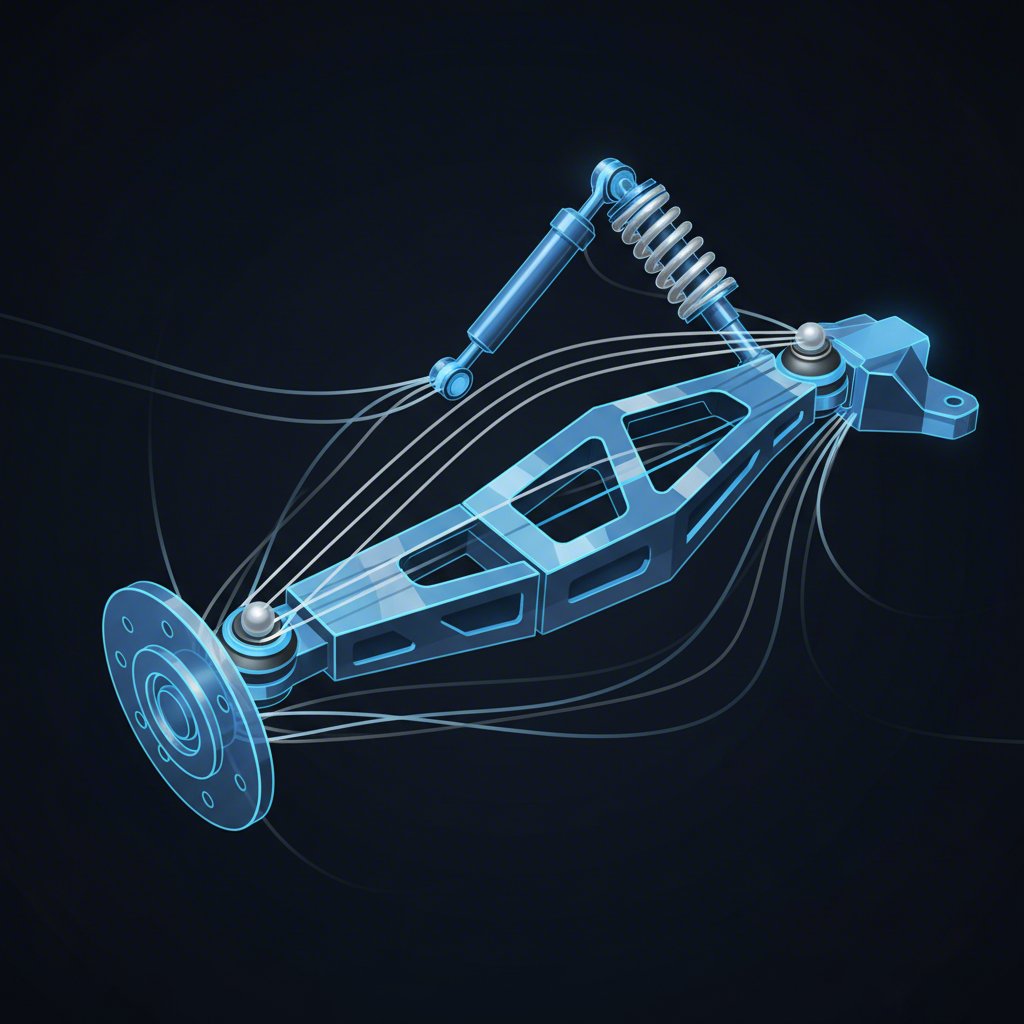
A control arm is a critical link in a vehicle's suspension system, connecting the chassis to the wheel hub or steering knuckle. As explained in a comprehensive guide by GMT Rubber, its primary function is to allow the wheels to move vertically (up and down) over bumps while keeping them firmly planted for stable handling and steering. A typical assembly consists of the arm body, bushings that connect to the frame, and a ball joint that connects to the wheel assembly, all working together to manage vehicle movement and absorb vibrations.
The term "stamped steel" refers to the manufacturing process. These control arms are formed by pressing or stamping sheets of high-strength steel into a desired shape, often creating a hollow, two-piece construction that is then welded together. This method is highly efficient and cost-effective, which is why stamped steel arms are the original equipment manufacturer (OEM) choice for a vast number of modern passenger vehicles and light trucks. For automotive manufacturers requiring high-volume, precision components like these, specialized suppliers like Shaoyi (Ningbo) Metal Technology Co., Ltd. offer advanced automated stamping solutions from prototyping to mass production.
This construction differs significantly from cast iron or cast aluminum arms, which are made by pouring molten metal into a mold. Stamped steel arms are generally lighter than solid cast iron parts but are considered less rigid than either cast or forged alternatives. One of the simplest ways to identify the material is with a magnet; steel is ferrous, so a magnet will stick firmly to a stamped steel or cast iron arm, whereas it will not adhere to an aluminum one.
Core Material Properties and Technical Specifications
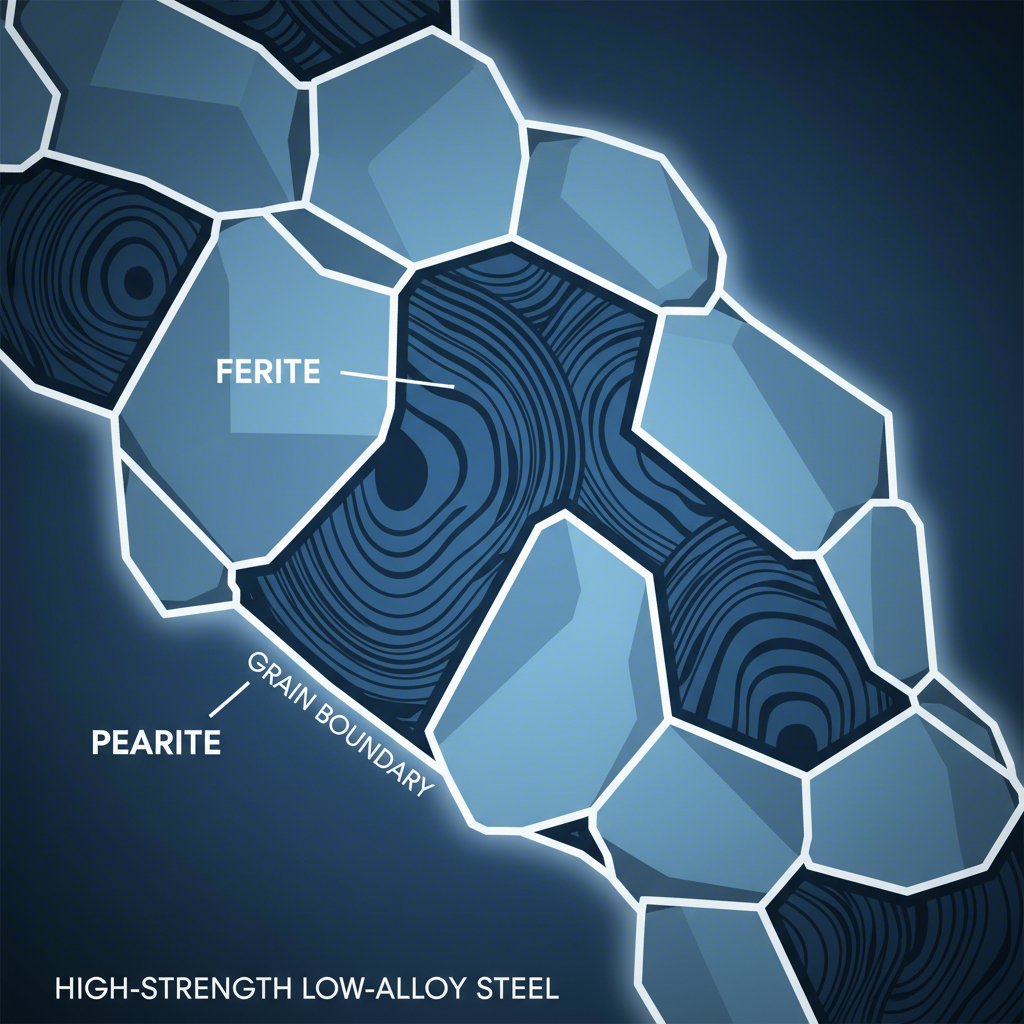
The performance of a stamped steel control arm is defined by the specific grade of steel used. Typically, this is a high-strength low-alloy (HSLA) steel, chosen for its favorable combination of formability, weldability, and mechanical strength relative to its cost. Microstructurally, these steels are often characterized by a composition of fine, elongated grains of ferrite and pearlite, a direct result of the rolling and forming processes used to create the sheet metal. This structure is key to achieving the material's desired strength and durability, as detailed in analysis from ResearchGate.
While specifications can vary by manufacturer and vehicle application, technical data provides a clear benchmark for their mechanical capabilities. For comparison, a case study of a forged upper control arm by the Forging Industry Association shows the mechanical properties for a part made from SAE 1541 steel.
| Property | Value |
|---|---|
| Alloy | SAE 1541 |
| Tensile Strength | 755-860 MPa (110,000-125,000 psi) |
| Yield Strength | 620 MPa (90,000 psi) minimum |
| Elongation | 12% |
| Impact Toughness | 20 J (15 ft-lb) |
These figures demonstrate that stamped steel possesses ample strength for the demands of daily driving in most passenger cars and light trucks. However, the material's most significant trade-off is its poor corrosion resistance. Without a protective coating, such as paint or galvanization, steel readily reacts with moisture and road salt, leading to rust. This corrosion can compromise the structural integrity of the arm over time, potentially leading to premature failure, a weakness highlighted by multiple automotive sources like Huatuchang Forge. This makes stamped steel a less ideal choice for vehicles operated in harsh winter climates or coastal areas.
Stamped Steel vs. Aluminum & Cast Iron Control Arms
When selecting a replacement control arm or evaluating a vehicle's suspension, it's essential to understand how stamped steel compares to its main alternatives: cast iron and aluminum. Each material offers a distinct set of advantages and disadvantages tailored to different applications, from heavy-duty trucks to high-performance sports cars. The choice involves a trade-off between durability, weight, cost, and corrosion resistance.
Cast iron is the heavyweight champion, known for its immense strength and durability. It is often used in heavy-duty trucks and SUVs where managing high loads is a priority. While it is extremely resistant to bending and impact, it is also very heavy, which increases unsprung weight and can negatively affect ride quality and handling. Aluminum, by contrast, is prized for its lightweight properties. Using aluminum control arms significantly reduces unsprung weight, allowing the suspension to react more quickly to road imperfections. This leads to improved handling, better traction, and enhanced performance, making it a popular choice for sports cars and luxury vehicles. A detailed comparison from Metrix Premium Parts breaks down these key differences.
Stamped steel occupies the middle ground, offering a balanced solution for the majority of mainstream vehicles. It is stronger and more impact-resistant than aluminum while being significantly lighter and cheaper to produce than cast iron. This makes it the default, cost-effective choice for manufacturers.
| Attribute | Stamped Steel | Cast Iron | Aluminum |
|---|---|---|---|
| Durability/Strength | Good; suitable for most passenger cars. | Excellent; ideal for heavy-duty use. | Fair; lighter but more prone to damage from extreme impact. |
| Weight | Moderate; lighter than cast iron. | Very Heavy; increases unsprung weight. | Very Light; improves handling and performance. |
| Corrosion Resistance | Poor; requires protective coatings to prevent rust. | Good; less prone to rust than steel. | Excellent; naturally resistant to corrosion. |
| Cost | Low; most economical to produce. | Moderate to High. | High; most expensive option. |
| Ideal Use Case | Daily drivers, budget-conscious repairs. | Trucks, SUVs, heavy-duty applications. | Performance cars, luxury vehicles, EVs. |
Frequently Asked Questions
1. Are stamped steel control arms magnetic?
Yes, stamped steel control arms are magnetic. Steel is a ferrous metal, meaning it contains iron, which is attracted to magnets. This provides an easy way to distinguish them from aluminum control arms, which are non-magnetic. If a magnet sticks to the control arm, it is made of either stamped steel or cast iron.
2. What is a stamped control arm?
A stamped control arm is a suspension component made by pressing and forming sheets of steel into a specific, often hollow, shape. This manufacturing process is very cost-effective, making them a common choice for mass-produced passenger cars. While they offer adequate strength for normal driving, their primary weakness is a susceptibility to rust and corrosion in damp environments.