 Small batches, high standards. Our rapid prototyping service makes validation faster and easier —
  EN
EN


Stamped Steel Control Arm Lifespan: Key Replacement Signs

TL;DR
Stamped steel control arms typically have a replacement interval of 90,000 to 120,000 miles. However, this lifespan is a general guideline and can be significantly shorter. Because they are made of steel, these components are highly susceptible to rust and corrosion, especially in areas with road salt. The actual replacement interval depends heavily on driving conditions, vehicle load, and regular maintenance inspections.
Understanding Stamped Steel Control Arms: Function and Identification
A vehicle's control arm is a critical suspension component that acts as a hinged link between the chassis and the wheel hub. Its primary job is to allow the wheel to move up and down smoothly over bumps while keeping it firmly in place, ensuring stability and proper alignment. There are several types of control arms, but one of the most common in modern passenger cars is the stamped steel variant.
Stamped steel control arms are manufactured by pressing or "stamping" sheets of steel into a specific shape, often welding two halves together to form the final part. This process is highly efficient and cost-effective, making it a popular choice for mass-produced vehicles. The precision required for these safety-critical parts is immense, relying on advanced automated facilities. For instance, specialized manufacturers in the automotive supply chain, like Shaoyi (Ningbo) Metal Technology Co., Ltd., provide the high-quality metal stamping solutions that original equipment manufacturers depend on, from initial prototypes to full-scale production runs.
While economical, the main drawback of stamped steel is its vulnerability to rust. Unlike cast iron or aluminum, stamped steel can corrode over time, especially when exposed to moisture and road salt, which can compromise its structural integrity. Identifying them is straightforward if you know what to look for. Here are the key characteristics:
- Magnetic Property: The easiest test is to use a magnet. If it sticks firmly, you have either a stamped steel or cast iron arm. Aluminum is not magnetic.
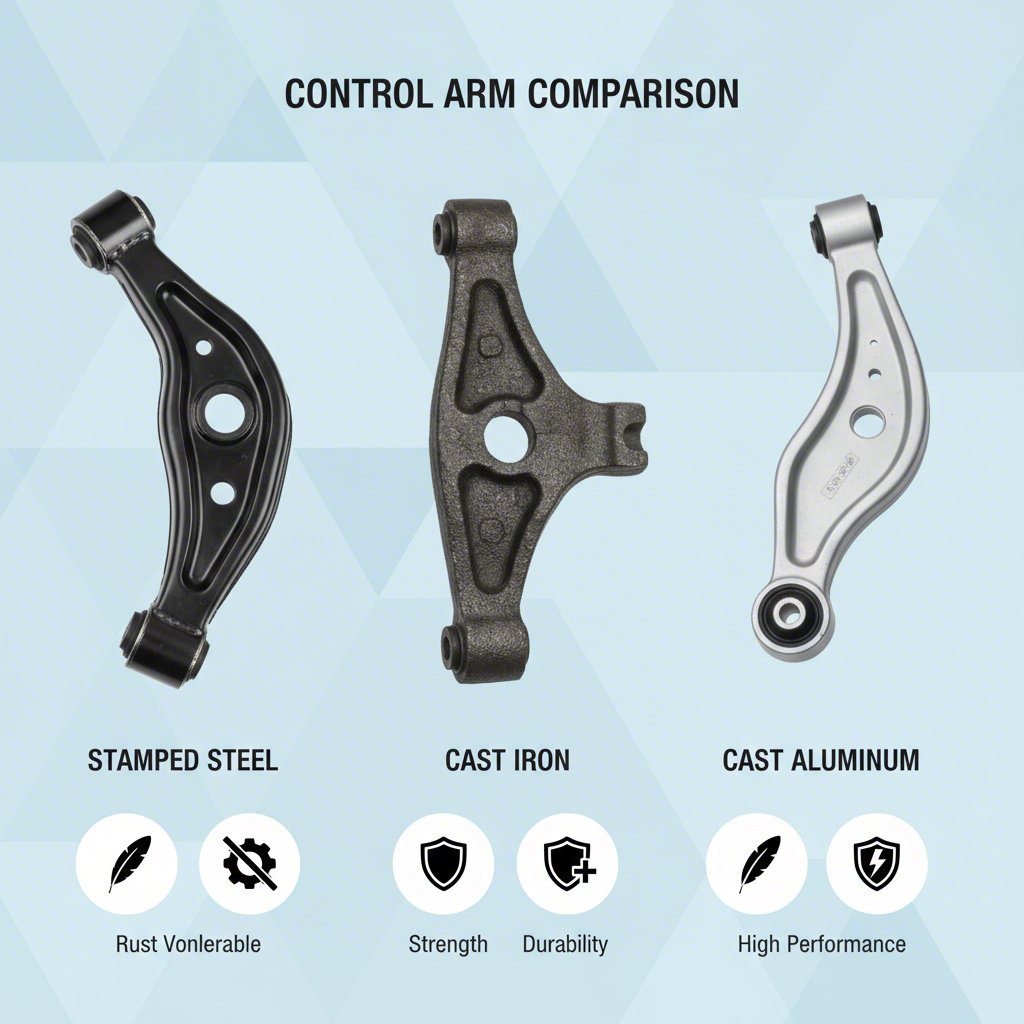
- Visual Appearance: Stamped steel arms typically have a smooth, glossy black painted finish. You can often spot a welded seam running along the edge where the two stamped halves were joined.
- Texture and Sound: Compared to the rough, porous texture of cast iron, stamped steel is smooth. Tapping it with a hammer will produce a higher-pitched ring, while cast iron will make a dull thud.
Lifespan and Replacement Interval for Stamped Steel Arms
The generally accepted replacement interval for most control arms is between 90,000 and 120,000 miles. This guideline, supported by sources like GSW Auto Parts, serves as a solid starting point for maintenance planning. However, for stamped steel control arms specifically, this number should be viewed with caution. Their susceptibility to corrosion means the real-world lifespan can be much shorter, particularly for vehicles operated in regions with harsh winters or high humidity.
Several factors can accelerate the wear and tear on stamped steel control arms and their associated bushings and ball joints. Understanding these variables is key to knowing when an inspection or replacement is truly necessary. The most significant factors include:
- Road Conditions: Driving frequently on poorly maintained roads with potholes, bumps, and uneven surfaces puts immense stress on all suspension components, including control arms. Each hard impact can contribute to fatigue and damage.
- Environmental Exposure: This is the primary adversary of stamped steel. Road salt used for de-icing roads is extremely corrosive and can rapidly eat away at the steel, leading to structural weakness. Regular washing of the undercarriage can help mitigate this but won't prevent it entirely.
- Vehicle Load: Consistently carrying heavy loads or towing trailers places additional strain on the suspension system. This extra weight can accelerate the wear of control arm bushings, which are responsible for absorbing vibrations and allowing smooth movement.
- Driving Style: Aggressive driving habits, such as hard braking and sharp cornering, increase the forces acting upon the control arms and can shorten their functional lifespan.
For vehicles like the Chevy Silverado or Ford F-150, which may be equipped with stamped steel arms and used in demanding conditions, it's wise to perform visual inspections more frequently than the mileage interval might suggest. Checking for deep rust, flaking metal, or cracked bushings during routine oil changes can help you catch a potential failure before it becomes a serious safety issue.
Diagnosing Failure: Key Symptoms of a Worn Control Arm
A failing control arm rarely breaks without warning. It typically provides a series of auditory and sensory clues that indicate a problem with the component itself or, more commonly, its bushings or ball joints. A worn bushing allows for excessive movement, while a worn ball joint creates looseness in the suspension, both of which compromise vehicle safety and performance. Ignoring these signs can lead to further damage to tires and other suspension parts.
If you experience any of the following symptoms, it’s a strong indication that your control arms need a thorough inspection:
- Clunking or Popping Noises: This is one of the most common signs. You may hear a distinct clunking sound when driving over bumps, potholes, or making sharp turns. This noise is caused by the loose or worn components moving excessively.
- Steering Wander or Vagueness: If your vehicle feels like it's drifting or wandering on the road, requiring constant steering correction to stay straight, it often points to worn control arm bushings. The steering may feel loose or less responsive than usual.
- Vibrations: Excessive vibration felt through the steering wheel, especially at higher speeds, can be a symptom of a failing control arm. This is often caused by worn bushings that are no longer able to dampen road forces effectively.
- Uneven Tire Wear: Worn control arms can throw off the vehicle's alignment. A clear sign of this is premature and uneven wear on the inner or outer edges of your front tires. This indicates the wheels are no longer being held at the correct angle.
- Visible Damage: A visual inspection can often confirm the issue. Look for cracked, torn, or deteriorating rubber bushings where the control arm connects to the vehicle frame. Also, check the ball joint boot for tears or leaking grease.

Material Comparison: Stamped Steel vs. Cast Iron and Cast Aluminum
Vehicle manufacturers choose control arm materials based on a balance of cost, weight, strength, and the intended application of the vehicle. As explained in guides from experts like GMT Rubber, the three primary materials—stamped steel, cast iron, and cast aluminum—each have distinct advantages and disadvantages. Understanding these differences helps explain why your vehicle has a particular type and what to expect from it.
Stamped steel is the lightweight, budget-friendly option, making it ubiquitous in sedans and crossovers. Cast iron is the heavyweight champion, prized for its brute strength and durability in trucks and SUVs. Cast aluminum offers a modern compromise, blending strength with significant weight savings, making it ideal for performance and luxury vehicles where handling is paramount. For a clearer comparison, especially for trucks like the Silverado where multiple options exist, see the breakdown below.
| Material | Key Characteristics | Pros | Cons | Commonly Found On |
|---|---|---|---|---|
| Stamped Steel | Smooth, painted black, often has a welded seam | Inexpensive to produce, lightweight | Prone to rust and corrosion, can bend on impact | Most passenger cars, crossovers, and base model trucks |
| Cast Iron | Heavy, rough texture, very robust | Extremely strong and durable, resists bending | Very heavy, not prone to rust | Heavy-duty trucks, SUVs, older vehicles |
| Cast Aluminum | Lightweight, often unpainted with a dull silver finish | Excellent strength-to-weight ratio, corrosion-resistant | More expensive, can crack or break under severe impact | Performance cars, luxury vehicles, some modern trucks |
Frequently Asked Questions
1. How to tell if you have stamped steel control arms?
The simplest method is the magnet test. If a magnet sticks, the control arm is made of steel (either stamped or cast iron). To differentiate further, look at the surface. Stamped steel arms are typically smooth with a black paint finish and may have a visible welded seam. Cast iron arms have a rougher, more porous texture and feel much heavier.
2. What's the average cost to replace a control arm?
The cost to replace a single control arm can range from approximately $400 to $1,000. This price varies widely depending on the vehicle model, the cost of the part itself, and local labor rates. It's also important to factor in the cost of a wheel alignment, which is almost always necessary after replacing a control arm to ensure proper handling and prevent uneven tire wear.