 Small batches, high standards. Our rapid prototyping service makes validation faster and easier —
  EN
EN


Stamped Steel Control Arms: Superior Heat Tolerance Explained
TL;DR
Stamped steel control arms offer exceptional heat tolerance, making them a superior choice over aluminum for high-heat applications like drag racing where intense brake temperatures are a concern. While typically heavier than aluminum, they provide excellent strength and durability, often at a more budget-friendly price point, making them a practical choice for heavy-duty use and daily driving.
Understanding Control Arm Materials: A Head-to-Head Comparison
When choosing control arms, the material is the most critical factor, dictating performance, durability, and cost. The three primary options available for modern vehicles are stamped steel, forged steel, and aluminum, each with a distinct manufacturing process that defines its characteristics. Understanding these differences is key to selecting the right component for your specific needs.
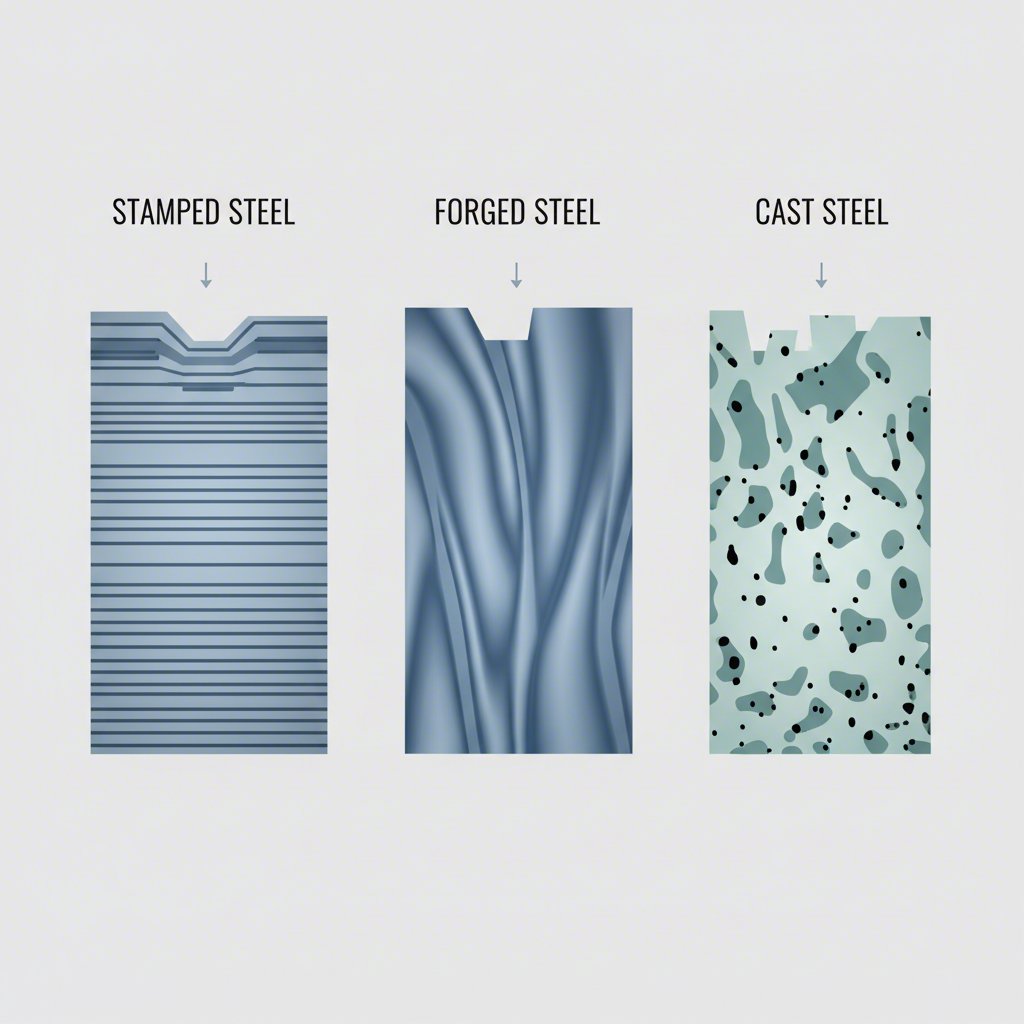
Stamped Steel: This is the most common type for original equipment manufacturer (OEM) parts. The process involves stamping and welding sheets of high-strength steel into the desired shape. This method is incredibly precise and cost-effective for mass production. For automotive manufacturers seeking reliability and precision, specialists like Shaoyi (Ningbo) Metal Technology Co., Ltd. utilize advanced, IATF 16949 certified processes to produce components with tolerances as tight as 0.05 mm, ensuring a perfect fit and reliable performance. This precision and efficiency make stamped steel a go-to for millions of vehicles on the road.
Forged Steel & Aluminum: Forging involves shaping metal under immense pressure while it's hot. This process aligns the material's internal grain structure, resulting in parts with superior strength and resistance to fatigue compared to stamping or casting. This method can be used for both steel and aluminum to create high-performance components, though it is typically more expensive.
Cast Steel & Aluminum: Casting involves pouring molten metal into a mold. While effective, this process can result in a part with a random grain structure, which is typically not as strong as a forged or stamped part. To compensate, cast components may require more material, making them heavier and less precise than a stamped or forged equivalent. For instance, a cast steel control arm can be significantly heavier than a stamped version designed for the same application.
| Feature | Stamped Steel | Forged Steel | Aluminum (Forged) |
|---|---|---|---|
| Heat Tolerance | Excellent | Excellent | Good (but can weaken under extreme heat) |
| Strength & Durability | Very Good | Excellent (Superior fatigue resistance) | Good (High strength-to-weight ratio) |
| Weight | Moderate | Heavy | Light (Up to 50% lighter than steel) |
| Cost | Low | High | Moderate to High |
| Corrosion Resistance | Good (with modern coatings) | Good (with coatings) | Excellent (Naturally resistant) |
Heat Tolerance Deep Dive: Why Steel Excels in High-Temperature Applications
The core of the stamped steel control arm's advantage in certain scenarios is its exceptional heat tolerance. For many drivers, heat may not seem like a primary concern for suspension parts, but in performance applications, it becomes a critical safety and reliability factor. The most significant source of heat for suspension components is the vehicle's braking system. Under heavy braking, rotors and pads can generate extreme temperatures that radiate to nearby parts, including control arms, ball joints, and bushings.
In these high-temperature environments, different materials behave differently. As one expert puts it, "Steel shrugs off heat like a champ." It maintains its structural integrity and stiffness even when exposed to the intense heat soak from a performance braking system. This stability ensures that suspension geometry remains consistent and predictable, which is crucial for vehicle control under demanding conditions.
Aluminum, while excellent at dissipating heat, has a lower melting point and can lose some of its structural integrity when subjected to the extreme temperatures found in scenarios like drag racing. During a hard run, the brakes can get hot enough to effectively "cook" nearby components. If an aluminum control arm becomes too hot, it can soften, potentially leading to flex or, in a worst-case scenario, failure. For this reason, in applications where repeated, intense braking is the norm—such as drag racing, track days, or heavy towing—steel control arms are widely considered the safer and more reliable choice.
Performance Trade-Offs: Strength, Durability, and Weight
Beyond heat tolerance, the decision between steel and aluminum involves a classic performance trade-off between rugged durability and lightweight agility. Neither material is universally better; the right choice depends entirely on the vehicle's intended use and the driver's priorities.
Steel's primary advantage is its raw strength and durability. Steel control arms are better equipped to handle heavy loads, sudden impacts from potholes, and the harsh conditions of off-road or heavy-duty use. This resilience makes them the default choice for trucks, SUVs, and vehicles that operate in demanding environments. While stamped steel is a lightweight and precise form of steel component, it still carries more mass than its aluminum equivalent.
Aluminum's main benefit is its significant weight reduction. An aluminum control arm can be 40-50% lighter than a comparable steel part. This reduction lowers the vehicle's unsprung weight—the mass of the suspension, wheels, and other components not supported by the springs. Less unsprung weight allows the suspension to react more quickly to changes in the road surface, improving tire contact, handling, and overall ride quality. This makes aluminum a popular choice for street performance and autocross cars where nimble responsiveness is paramount.
Durability also extends to corrosion resistance. Steel is susceptible to rust, a major concern for drivers in regions with heavy rain, snow, and road salt. However, modern stamped steel parts often feature advanced multi-layer coatings, such as an electrophoretic primer with an epoxy powder topcoat, which can provide robust protection for years. In contrast, aluminum naturally resists corrosion, giving it an edge in harsh climates with less maintenance required.

Making the Right Choice for Your Vehicle
Ultimately, selecting the right control arm material comes down to a few practical considerations: your driving style, budget, and performance goals. Stamped steel often presents the most compelling value proposition, offering robust performance at a significantly lower cost. The efficiencies of the stamping process can result in a lower unit cost compared to forging, making it an economical choice for both OEM and aftermarket replacements.
For those considering swapping materials—for example, replacing factory aluminum arms with more durable steel ones—compatibility is key. While often possible, you must ensure the new control arms have identical geometry, mounting points, and ball joint fittings to maintain proper alignment and safe operation. Always consult with a trusted mechanic or parts supplier before making such a change.
To make a confident decision, consider this simple checklist:
- Primary Use Case: For drag racing, heavy towing, or off-roading, steel's heat tolerance and strength are ideal. For spirited street driving or autocross, aluminum's light weight offers a handling advantage.
- Budget: Stamped steel is almost always the more cost-effective option, delivering reliable performance without a high price tag.
- Performance Priorities: If your goal is maximum durability and the ability to withstand abuse, choose steel. If nimble handling and suspension responsiveness are more important, aluminum is a strong contender.
- Local Climate: In areas with harsh winters and road salt, aluminum's natural corrosion resistance is a significant long-term benefit, though modern coated steel parts also offer excellent protection.
If you're unsure what material your current control arms are made of, there's a simple trick: use a magnet. If the magnet sticks firmly, you have a steel control arm. If it doesn't stick, it's aluminum.
Frequently Asked Questions
1. Are stamped steel control arms magnetic?
Yes, they are. An easy way to determine if a control arm is made of steel is to see if a magnet will stick to it. If the magnet does not stick, the arm is made of aluminum. If it adheres, you have either a cast iron or a stamped steel control arm.
2. What is the difference between stamped and forged control arms?
The primary difference lies in the manufacturing process and resulting strength. Stamped control arms are formed from sheets of steel, making them precise and cost-effective. Forged control arms are created by compressing heated metal into a die, which aligns the internal grain structure. This process gives forged parts superior strength and fatigue resistance compared to stamped or cast parts.
3. What is the difference between cast and stamped steel control arms?
Stamped steel arms are welded together from pressed sheets of metal, resulting in a smoother surface and a visible welded seam. They are generally lighter, more precise, and can be modified. Cast steel arms are made by pouring molten metal into a mold, which often results in a rougher surface texture and a casting seam. They are typically heavier and less precise than their stamped counterparts.
4. Are aluminum or steel control arms better?
Neither is definitively better; it depends on your priorities. If you prioritize improved performance, sharper handling, and weight reduction, aluminum control arms are an excellent choice. However, if your main concerns are durability, raw strength, and cost-effectiveness, steel control arms are likely the more suitable option for your vehicle.