 Small batches, high standards. Our rapid prototyping service makes validation faster and easier —
  EN
EN


Stamped Steel Control Arm Finishes: A Buyer's Guide

TL;DR
The most common finishes for stamped steel control arms are powder coating and E-coating, each offering distinct advantages for durability and corrosion resistance. Powder coating provides a thick, tough, and aesthetically pleasing finish, typically in gloss or semi-gloss black. E-coating delivers a thinner but more comprehensive and uniform protective layer that covers every surface, making it exceptionally resistant to rust. Your choice between them depends on your performance needs, budget, and local climate conditions.
Understanding Stamped Steel Control Arms and Why Coatings Are Crucial
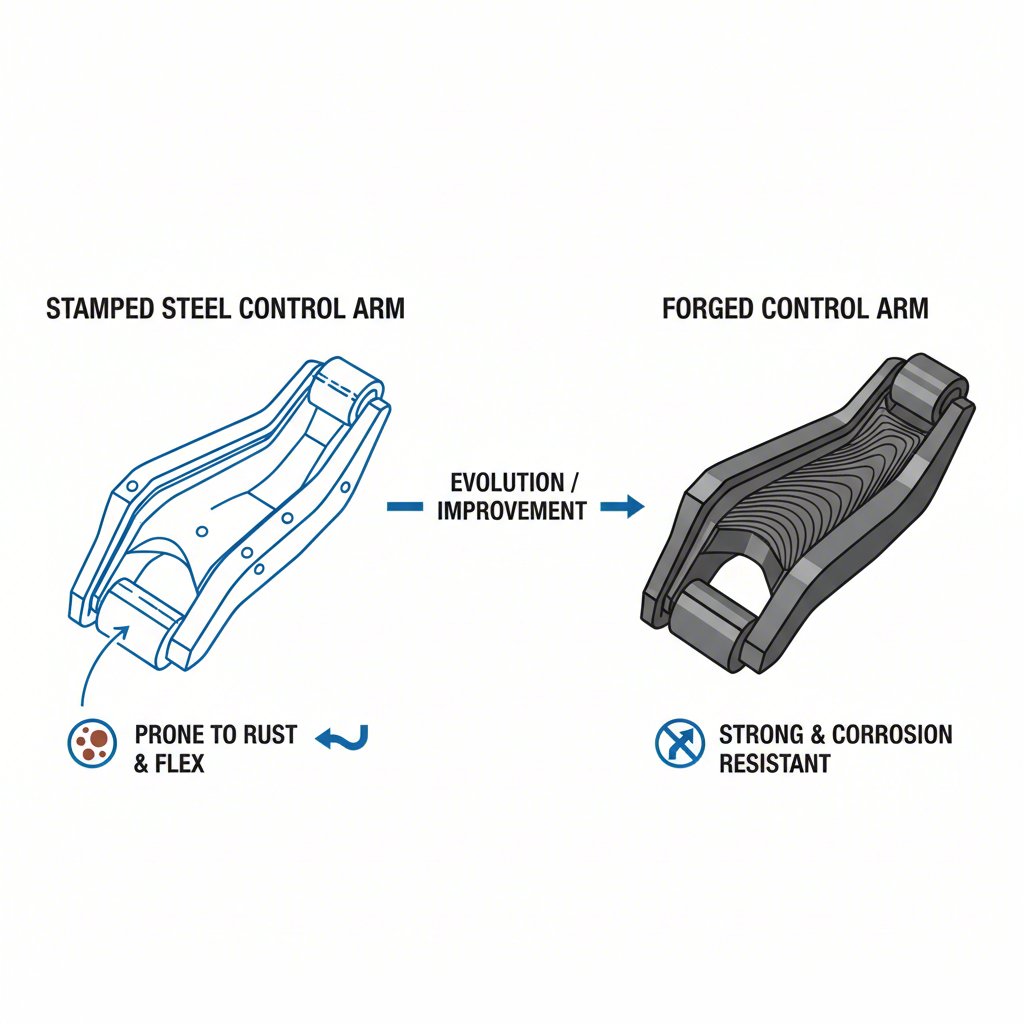
Stamped steel control arms are fundamental components of a vehicle's suspension system, connecting the chassis to the steering knuckle or wheel hub. They are manufactured by stamping and welding sheets of steel into a U-shaped channel, a cost-effective method that makes them common in many production vehicles. This construction differs significantly from forged or cast control arms, which are formed from solid billets of metal and generally offer greater rigidity and strength due to their denser internal grain structure.
While effective, the stamped steel design has inherent vulnerabilities. The open-channel shape can allow for flex under heavy cornering or harsh suspension loads, and the steel itself is highly susceptible to rust and corrosion from road salt, moisture, and debris. Without a robust protective layer, corrosion can compromise the structural integrity of the arm over time, posing a significant safety risk. This makes the quality of the finish and coating not just an aesthetic choice, but a critical factor in the component's longevity and performance.
High-quality manufacturing is essential to ensure these components meet rigorous safety and performance standards. For automotive manufacturers seeking precision and reliability, specialized metal stamping partners provide comprehensive solutions from prototyping to mass production. For instance, Shaoyi (Ningbo) Metal Technology Co., Ltd. offers advanced, IATF 16949 certified facilities that ensure cost-effective, on-time delivery of complex automotive components. This level of expertise in the stamping process lays the foundation for a durable final product that is ready for a protective coating.
For vehicle owners, identifying the type of control arms on their car is a straightforward process. The most reliable method is the magnet test: if a magnet sticks firmly to the control arm, it is made of steel. Cast aluminum or some forged alloy arms will not be magnetic. This simple check can help you determine what components you have when considering upgrades or replacements.
A Deep Dive into Powder Coating Finishes
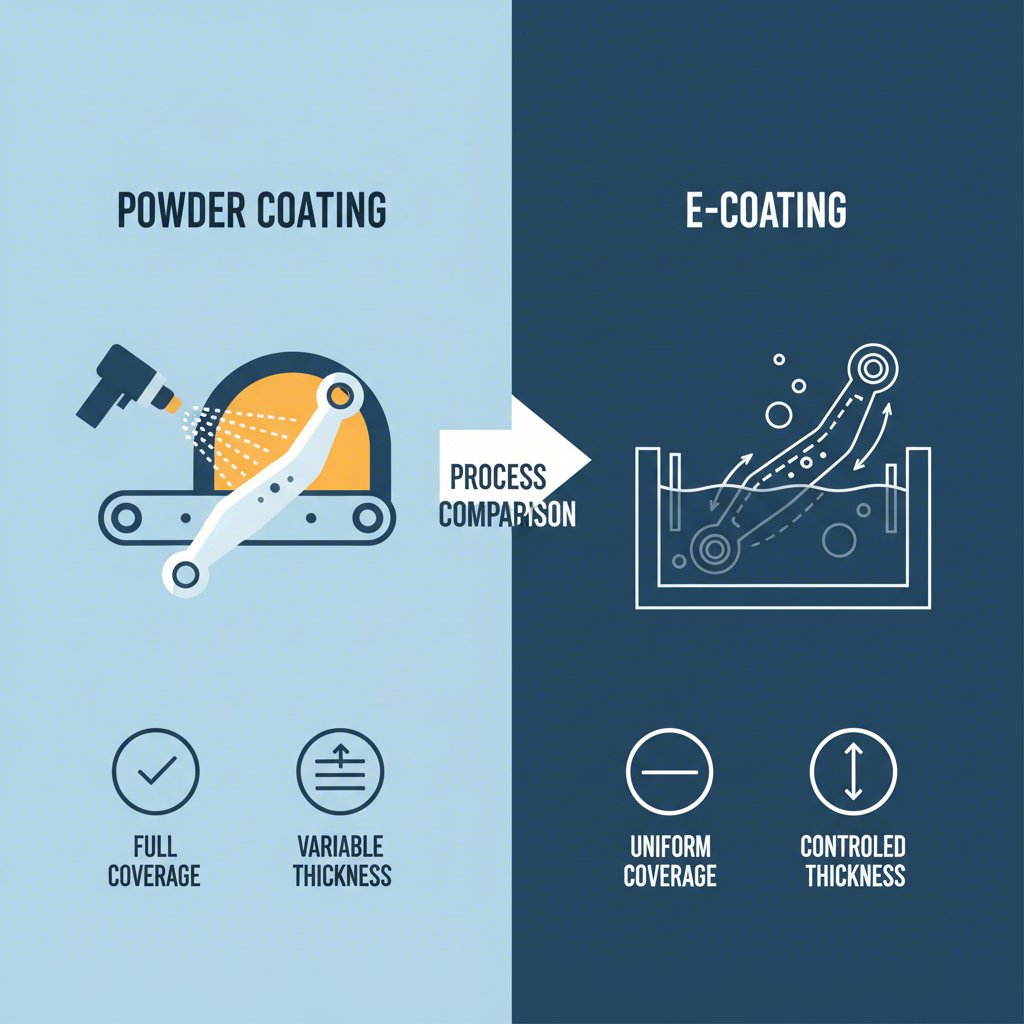
Powder coating is the most prevalent finish found on aftermarket stamped steel control arms, valued for its durability and high-quality appearance. Unlike traditional liquid paint, powder coating is a dry finishing process. A finely ground powder made of polymer resin, pigments, and other additives is applied to the metal part using an electrostatic spray gun. This gun imparts a positive electric charge to the powder particles, causing them to adhere to the grounded control arm. The part is then cured in an oven, where the powder melts and flows into a smooth, resilient coating.
This process creates a finish that is significantly thicker and tougher than conventional paint. The thermal bonding process results in a hard shell that is highly resistant to chipping, scratching, chemicals, and UV fading. Many manufacturers, such as CST Suspension, even offer a superior two-stage gloss black powder-coat finish, which adds another layer of durability and aesthetic appeal. The result is a part that not only looks great but is also well-protected against the rigors of daily driving.
However, despite its many advantages, powder coating is not without its potential drawbacks. The thickness that makes it so durable can sometimes conceal underlying issues, such as cracks in the metal or welds. Furthermore, a severe impact from a rock or road debris can still chip the finish, exposing the steel underneath to corrosive elements. Below is a summary of the key pros and cons.
Pros
- Excellent Durability: Highly resistant to chips, scratches, and abrasions.
- Chemical and UV Resistance: Protects against road salt, oils, and sun fading.
- Aesthetic Quality: Provides a smooth, uniform, and often high-gloss finish.
- Thick Protective Layer: Offers substantial physical protection for the underlying steel.
Cons
- Can Hide Defects: The thick coating may mask cracks or flaws in the control arm.
- Susceptible to Chipping: A sharp, heavy impact can breach the coating, allowing rust to form.
- Difficult to Touch Up: Repairing a chipped area requires specialized preparation to ensure proper adhesion.
Exploring E-Coating and Other Alternatives
While powder coating is a popular choice, another highly effective finish for stamped steel control arms is E-coating, also known as electro-coating or electrodeposition. This process offers a different set of advantages, focusing on total and complete corrosion protection. During E-coating, a control arm is submerged in a bath of epoxy or other resin paint, and an electric current is passed through the bath. This causes the paint particles to bond directly to every conductive surface of the part, creating an incredibly uniform and comprehensive coating.
The primary benefit of E-coating is its ability to cover every nook, cranny, and interior surface of the control arm—areas that a sprayed-on powder coat might not reach. This creates a seamless barrier against moisture, making it exceptionally effective at preventing rust, especially in regions with harsh winters where road salt is common. While typically thinner than powder coating, the finish is still durable and serves as an excellent primer for a top coat if desired. Many aftermarket control arms utilize E-coating for precisely this reason.
To help you decide which finish is right for your needs, here is a direct comparison between the two leading options:
| Feature | Powder Coating | E-Coating (Electro-coating) |
|---|---|---|
| Application Method | Electrostatic spray of dry powder, then oven-cured. | Submersion in an electrified liquid bath. |
| Coverage | Excellent on external surfaces, but may be inconsistent in recessed areas. | Complete and uniform, including inside channels and cavities. |
| Thickness | Thick (typically 2-6 mils), providing high impact resistance. | Thin (typically 0.5-2 mils), providing a base layer of protection. |
| Durability | Highly resistant to chipping and scratching. | Good abrasion resistance, but primarily excels at corrosion prevention. |
| Best For | Performance and aesthetic applications where appearance and chip resistance are key. | Maximum corrosion protection in harsh, wet, or salty environments. |
DIY Finishing and Refinishing Your Control Arms
For enthusiasts engaged in a restoration or custom build, refinishing stamped steel control arms can be a rewarding DIY project. Whether you are refreshing old parts or protecting new, bare steel arms, proper preparation is the key to a durable finish. While professional powder or E-coating offers the best durability, a high-quality paint job can provide excellent protection when done correctly.
Based on techniques used by restorers and fabricators, such as those outlined in a guide on boxing control arms by Speedway Motors, the process involves meticulous cleaning and surface prep. Attempting to paint over rust or grease will result in a finish that quickly fails. Keep in mind that attempting to powder coat at home is generally not feasible for most DIYers, as it requires specialized equipment like an electrostatic spray gun and a large curing oven.
If you decide to take on the project, follow these essential steps for a lasting painted finish:
- Disassemble and Clean: Remove the control arms from the vehicle. Thoroughly clean them with a strong degreaser to remove all oil, road grime, and contaminants.
- Strip the Old Finish: Use a wire wheel on an angle grinder or drill to remove all old paint, rust, and scale. The goal is to get down to clean, bare metal.
- Final Surface Prep: Wipe the entire control arm with a wax and grease remover or denatured alcohol to ensure the surface is perfectly clean and ready for primer.
- Apply a Primer: Use a high-quality, self-etching automotive primer. This type of primer chemically bonds to the bare metal, creating a strong foundation for the top coat and adding a crucial layer of corrosion resistance.
- Paint the Control Arm: Apply several light coats of a durable automotive paint, such as a chassis or engine enamel. Allow adequate drying time between coats as specified by the manufacturer.
- Cure Completely: Let the paint fully cure for several days before reinstalling the control arms. This ensures the finish has reached its maximum hardness and durability.
Frequently Asked Questions
1. How do I tell if I have stamped steel control arms?
The easiest and most definitive way to identify stamped steel control arms is with a magnet. If a magnet adheres strongly to the surface of the control arm, it is made of steel. Control arms made from cast aluminum or other non-ferrous alloys will not be magnetic.
2. What is the difference between stamped and forged control arms?
The primary difference lies in their manufacturing process and resulting strength. Stamped steel control arms are made by pressing and welding sheets of steel into their final shape. Forged control arms are created by heating a solid piece of metal (a billet) and compressing it into a die, which aligns the metal's internal grain structure with the shape of the part. This process makes forged arms denser, stronger, and more resistant to fatigue and bending compared to their stamped counterparts.