 Small batches, high standards. Our rapid prototyping service makes validation faster and easier —
  EN
EN


Essential CAE Analysis for Validating Extrusion Designs
TL;DR
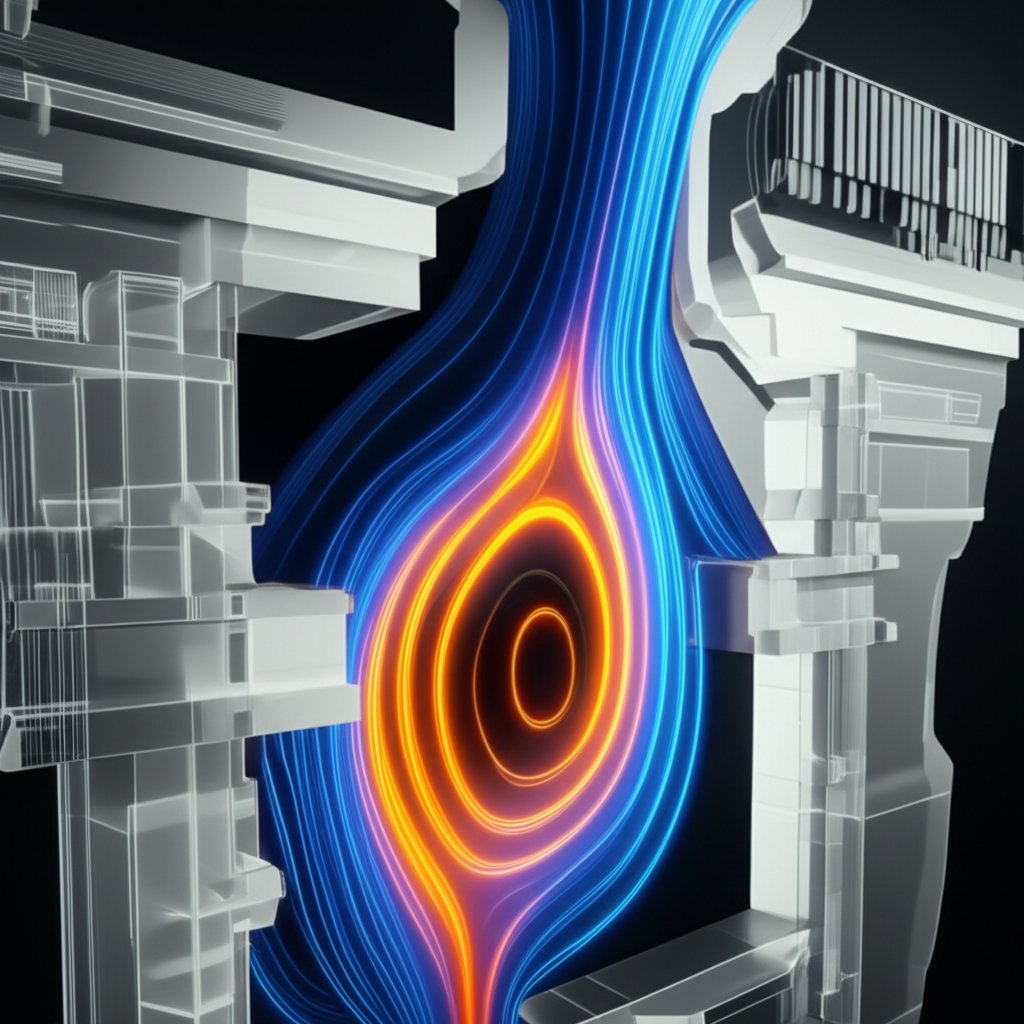
Using Computer-Aided Engineering (CAE) analysis is a critical methodology for validating extrusion designs by simulating the entire process in a virtual environment before manufacturing begins. This approach employs sophisticated software to model material flow, predict heat transfer, and identify potential defects in the die and final product. By leveraging CAE, engineers can significantly reduce the need for costly physical trials, optimize process parameters, and ensure the final component meets precise design specifications with greater efficiency and confidence.
Understanding CAE's Role in Extrusion Design
Computer-Aided Engineering (CAE) is an advanced engineering discipline that utilizes computational software to simulate, analyze, and validate product designs. Within the specific context of manufacturing, CAE provides a framework for predicting the performance of a component or system under a given set of conditions. For extrusion design, its role is transformative. Instead of relying solely on empirical data and expensive, time-consuming physical prototypes, engineers can build and test dies virtually. This allows for an iterative and data-driven design process that addresses challenges long before any metal is cut or polymer is melted.
The primary purpose of applying CAE to extrusion is to achieve a high degree of confidence in the die design's performance. The objectives are multifaceted and directly impact manufacturing outcomes. Key goals include optimizing the flow of material through the die to ensure a uniform velocity profile at the exit, which is crucial for maintaining consistent product dimensions and mechanical properties. Furthermore, CAE analysis is essential for managing the thermal dynamics of the process, predicting temperature distribution in the billet, die, and extrudate to prevent overheating or premature cooling, which can lead to defects. According to industry leaders like Altair, this virtual testing environment is instrumental in identifying and correcting potential flaws—such as surface cracking, welding issues in hollow profiles, or inconsistent wall thickness—before they manifest as critical and costly production problems.
Ultimately, the value proposition of integrating CAE into the extrusion design workflow is centered on efficiency, cost reduction, and quality improvement. By replacing multiple rounds of physical die trials with virtual simulations, companies can drastically shorten the product development lifecycle. This acceleration allows for faster time-to-market, a significant competitive advantage. The reduction in material waste, machine time, and labor associated with physical trials translates directly into lower production costs. Most importantly, a CAE-validated design is more likely to produce a high-quality, reliable final product that adheres to stringent tolerances, minimizing rejection rates and enhancing customer satisfaction.

The Core CAE Analysis Workflow: From Model to Validation
A systematic CAE analysis follows a structured workflow that can be broken down into three distinct phases: preprocessing, solving, and postprocessing. This methodical approach ensures that all relevant variables are accounted for and that the simulation results are both accurate and interpretable. Each stage requires a combination of engineering knowledge and proficiency with specialized simulation software.
1. Preprocessing: Building the Virtual Model
The preprocessing phase is the foundation of the entire analysis. Here, the engineer creates a complete digital representation of the extrusion process. This begins with importing or creating the 3D CAD geometry of the die, billet, container, and ram. Once the geometry is in place, the physical properties of the materials involved are defined. For an aluminum extrusion, this would include the alloy's flow stress, thermal conductivity, and specific heat as functions of temperature and strain rate. For polymers, complex viscosity models are required. Finally, the process parameters are applied as boundary conditions. These include the initial billet temperature, the ram speed, friction conditions between the materials and tooling, and the heat transfer coefficients with the environment. This meticulous setup is crucial for the simulation's fidelity.
2. Solving: The Computational Phase
Once the model is fully defined, the solving phase begins. This is where the CAE software's numerical solver, typically based on the Finite Element Method (FEM) or Finite Volume Method (FVM), performs the complex calculations. The software discretizes the model into a mesh of thousands or even millions of small elements and solves the governing equations of fluid dynamics, heat transfer, and solid mechanics for each one. This step simulates the physical movement of the material through the die over time. Due to the immense number of calculations, especially for complex geometries or material behaviors, this phase can be computationally intensive and often requires significant processing power, sometimes leveraging High-Performance Computing (HPC) clusters for timely results.
3. Postprocessing: Interpreting the Results
In the postprocessing phase, the raw numerical data from the solver is translated into meaningful visualizations and data plots. Engineers can now analyze the outcome of the virtual extrusion. This includes creating contour plots of temperature distribution, stress and strain within the die, and material velocity. They can track the path of material particles to understand flow patterns and identify where seams (weld lines) will form in hollow profiles. This visual feedback allows engineers to assess whether the design meets its objectives. For example, they can verify if the extrudate profile matches the desired shape, check for areas of excessive temperature that could degrade the material, or identify regions in the die experiencing high stress that might lead to premature failure. If the results reveal problems, the engineer can return to the preprocessing stage to modify the design and run the simulation again.
Key Simulation Models and Methodologies
The accuracy of a CAE analysis hinges on the sophistication of the underlying mathematical models used to describe the complex physics of the extrusion process. These are not one-size-fits-all solutions; different models are employed to capture specific phenomena relevant to different materials and conditions. The foundation for most extrusion simulation is the Finite Element Method (FEM), a powerful numerical technique for solving partial differential equations that govern physical systems.
For metal extrusion, particularly aluminum, a critical methodology is the thermo-mechanically coupled analysis. As referenced in research on intelligent die design, this often involves a thermal coupling elastic-plastic finite element analysis. This model is essential because the material's deformation behavior (plasticity) is highly dependent on its temperature, and the deformation process itself generates heat. A coupled analysis solves the mechanical and thermal equations simultaneously, providing a highly accurate prediction of both material flow and temperature distribution, which are inextricably linked.
Beyond physics-based models, some advanced frameworks incorporate data-driven approaches. Research has shown the development of mathematical models derived from the statistical analysis of large datasets of previously validated die designs. This method uses historical performance data to create predictive models that can quickly estimate key design parameters for new profiles, complementing the more intensive physics-based simulations. Furthermore, the increasing complexity of these simulations has led to the development of integrated computational frameworks that rely on High-Performance Computing (HPC). These frameworks manage the entire workflow, from model setup to large-scale computation and data analysis, enabling more detailed and accurate simulations than ever before.
In the realm of polymer processing, specialized models are required to capture the unique flow behavior of plastics. For instance, research on spiral mandrel dies for film extrusion has focused on validating CAE tools based on specific mathematical frameworks like Chris Rauwendaal's model. These models are designed to predict the flow distribution of non-Newtonian fluids, helping engineers design dies that produce films of highly uniform thickness, a key quality metric for many polymer products.
Practical Applications in Aluminum and Polymer Extrusion
The theoretical principles of CAE analysis translate into tangible benefits across different material applications, most notably in the extrusion of aluminum and polymers. While both processes involve forcing material through a die, they present unique challenges that simulation is uniquely equipped to solve.
Validating Aluminum Extrusion Designs
Aluminum extrusion is used to create complex profiles with high strength-to-weight ratios, common in automotive, aerospace, and construction industries. The primary challenges include managing the high temperatures and pressures involved, controlling metal flow through intricate die passages (especially in hollow profiles), and minimizing die wear. CAE analysis directly addresses these issues by simulating heat dissipation from the billet to the tooling, predicting the exact shape and velocity of the metal flow, and identifying high-stress areas on the die that could lead to failure. This virtual insight is fundamental to achieving the high precision required. When users ask how accurate aluminum extrusions can be, the answer lies in tools like CAE that enable designers to proactively correct for factors that cause dimensional deviation, ensuring the final product meets tight tolerances.
For sectors with stringent quality requirements, such as the automotive industry, partnering with a manufacturer that leverages these advanced technologies is crucial. For automotive projects demanding precision-engineered components, consider custom aluminum extrusions from a trusted partner. Shaoyi Metal Technology offers a comprehensive one-stop service, from rapid prototyping that accelerates your validation process to full-scale production, all managed under a strict IATF 16949 certified quality system. Their expertise lies in delivering strong, lightweight, and highly customized parts tailored to exact specifications, bridging the gap between a validated design and a finished component.
Optimizing Polymer Extrusion Designs
Polymer extrusion encompasses a vast range of products, from pipes and window frames to plastic films and fibers. Unlike metals, polymers exhibit complex viscoelastic and non-Newtonian flow behaviors, meaning their viscosity changes with temperature and flow rate. This makes it challenging to predict how the material will behave inside the die. CAE simulation is indispensable for modeling this complex rheology. For products like blown film, achieving uniform thickness is paramount. CAE tools, often based on specialized mathematical models, allow engineers to simulate flow through complex die geometries like spiral mandrels. By running numerous virtual iterations, designers can optimize the geometric parameters of the die channels to ensure an even distribution of polymer melt, leading to a final product with consistent thickness and superior quality.
The Strategic Advantage of Virtual Prototyping
In conclusion, using CAE analysis to validate extrusion designs has evolved from a niche capability to an indispensable part of modern manufacturing. It represents a strategic shift from a reactive, trial-and-error approach to a proactive, data-driven methodology. By enabling engineers to thoroughly test, refine, and optimize die performance in a virtual environment, CAE directly addresses the core industry pressures of reducing costs, accelerating innovation, and elevating product quality. Whether for high-strength aluminum profiles or precision polymer films, simulation provides the foresight needed to mitigate manufacturing risks and turn complex engineering challenges into successful, market-ready products. Adopting this virtual prototyping mindset is no longer just an advantage; it is a fundamental component of competitive and intelligent design.
Frequently Asked Questions
1. What is the CAE methodology?
The CAE methodology is an engineering approach that employs specialized software to aid in the design, analysis, and manufacturing of products. As defined by experts at platforms like Autodesk, it encompasses a range of computational tools for simulation, optimization, and validation, allowing engineers to test product performance virtually before creating a physical prototype.
2. How is a CAE analysis performed?
A typical CAE analysis follows a three-step process. First, in preprocessing, engineers build a digital model, defining its geometry, material properties, and the physical loads or constraints it will experience. Second, in the solving phase, the software uses numerical methods like FEA to compute the model's behavior. Finally, in postprocessing, the results are visualized and analyzed to validate the design and identify areas for improvement.
3. How does CAE improve the accuracy of aluminum extrusions?
CAE analysis improves the accuracy of aluminum extrusions by allowing engineers to simulate and control the two most critical variables: material flow and temperature. By predicting how aluminum will move through a complex die and how heat will distribute throughout the process, designers can make precise adjustments to the die geometry to ensure a uniform exit velocity and prevent thermal distortions. This virtual correction process minimizes dimensional variations, leading to a final product that conforms to very tight tolerances.