 Small batches, high standards. Our rapid prototyping service makes validation faster and easier —
  EN
EN


Solving Stamped Steel Control Arm Noise When Turning
TL;DR
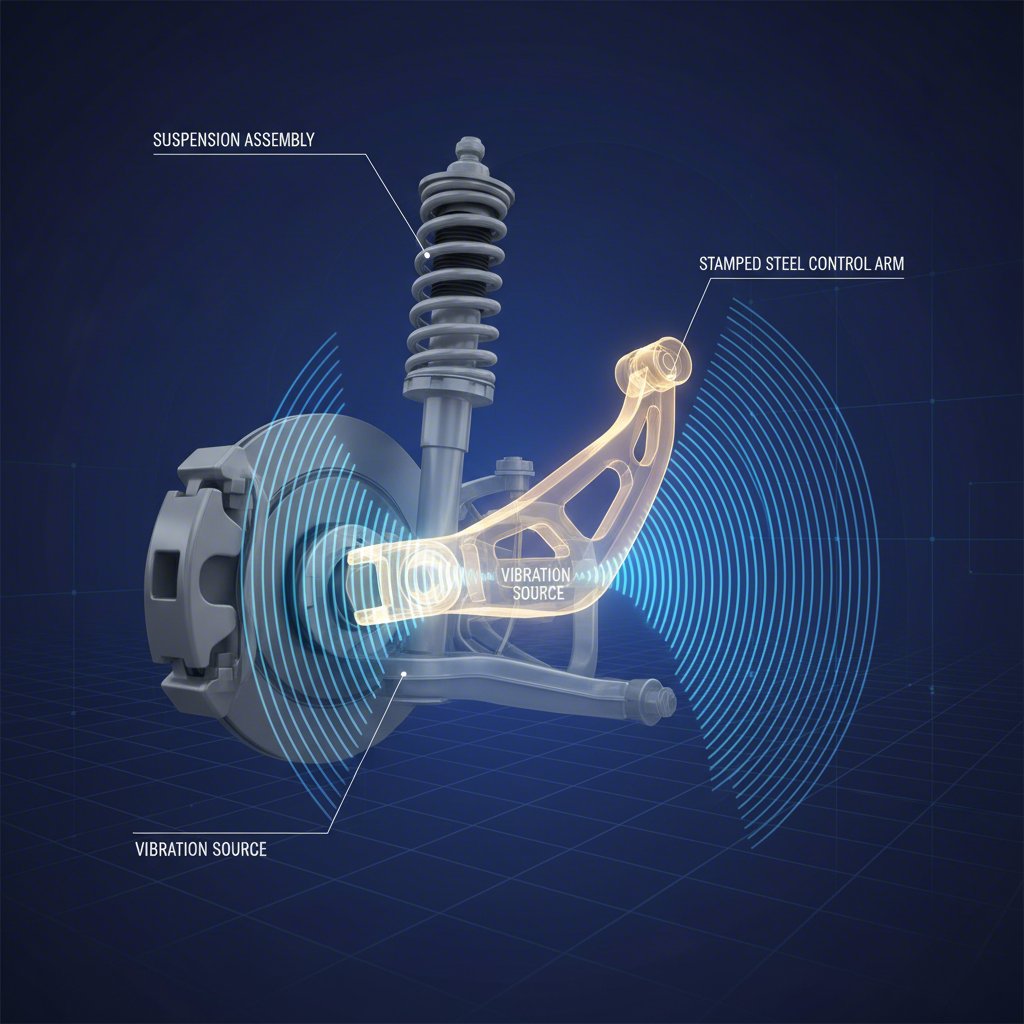
If you hear a clunking, popping, or grinding noise from your stamped steel control arm when turning, the cause is almost always a failed component. This sound typically points to a worn-out rubber bushing or a damaged ball joint, which allows for metal-on-metal contact and can compromise your steering and safety. A physical inspection is the best way to confirm the issue.
Decoding the Noises: What a Bad Control Arm Sounds Like When Turning
That unnerving noise from your front suspension is your vehicle's way of telling you something is wrong. When a control arm begins to fail, it generates distinct sounds that can help you diagnose the problem. Paying close attention to the type of noise and when it occurs is the first step toward a solution. These sounds are not just an annoyance; they are direct indicators of mechanical wear that can affect handling and safety.
The most common symptom of a failing control arm is a collection of unsettling noises, particularly noticeable at lower speeds when turning or driving over bumps. A worn or damaged control arm bushing or ball joint is often the primary culprit. As these components degrade, they lose their ability to dampen movement, leading to direct metal-on-metal contact that produces audible alerts.
To help you identify the specific issue, here are the most common sounds associated with a failing control arm and what they likely mean:
- Clunking or Knocking: This is the most frequently reported noise. You'll often hear a distinct 'clunk' when you go over bumps, accelerate, or brake. This sound is a classic sign of a worn-out control arm bushing, which is allowing the control arm to shift and knock against its mounting points.
- Popping or Snapping: A sharp 'pop' or 'snap' when you turn the steering wheel, especially when changing direction in a parking lot, often points to a failing ball joint. The ball joint is a pivot point, and when it becomes loose, it can suddenly shift in its socket, creating this sound.
- Grinding: A grinding noise, particularly during turning, can indicate a completely failed ball joint that is now grinding against its housing. This is a more severe symptom and suggests that the component has significant wear and should be addressed immediately.
- Squeaking or Creaking: While less common, a persistent squeaking or creaking sound can sometimes be caused by a dry, unlubricated ball joint or a bushing that is binding up under pressure.
By learning to differentiate these sounds, you can have a more informed conversation with a mechanic or feel more confident performing a physical inspection yourself. Remember, any new noise from your suspension system warrants immediate attention to ensure your vehicle remains safe to operate.
The Culprits: Why Control Arm Bushings and Ball Joints Fail
To understand why your control arm is making noise, you need to look at its two most critical wear-and-tear components: the bushings and the ball joints. These parts work constantly to absorb road shock and allow your wheels to move smoothly. Over time, constant stress, exposure to the elements, and impacts from road hazards lead to their eventual failure. Identifying which part has failed is key to a successful repair.
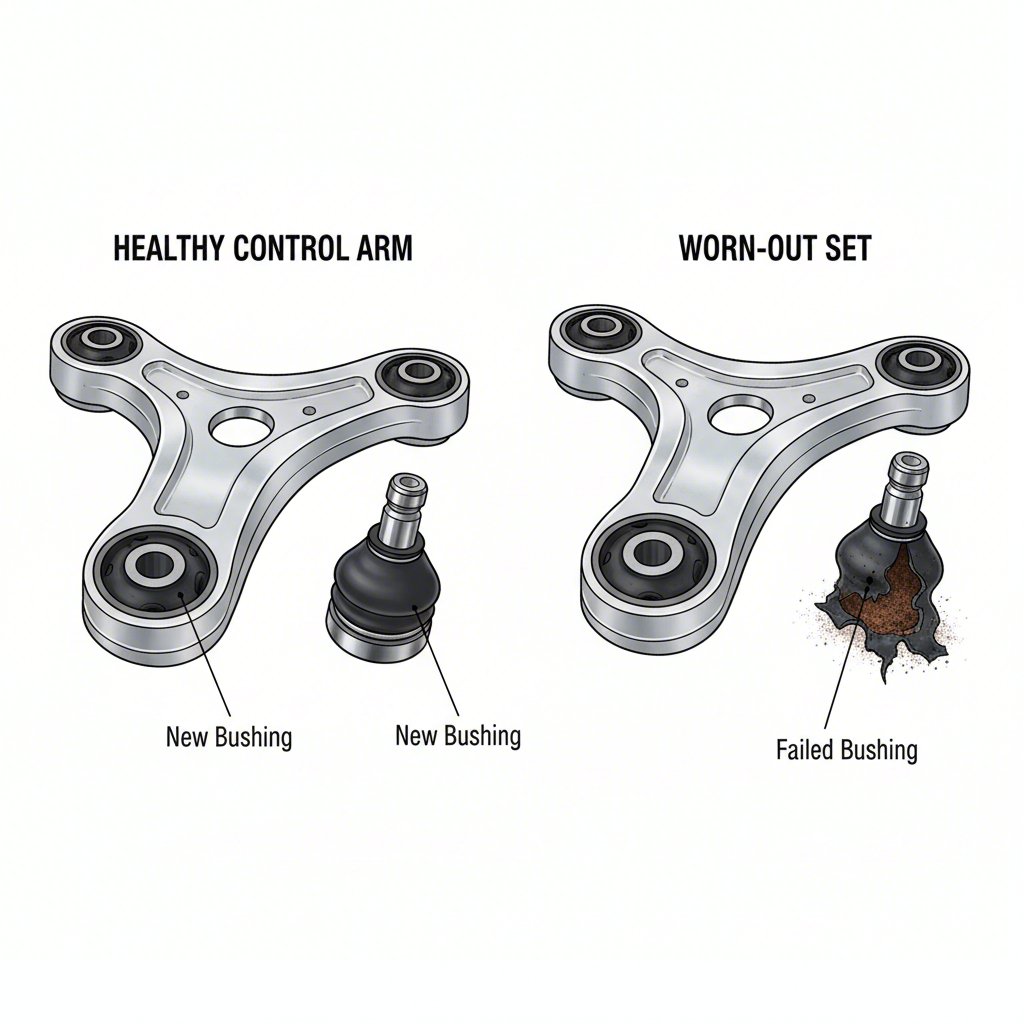
Control arm bushings are rubber or polyurethane cylinders that isolate the control arm from the vehicle's frame, absorbing vibrations and preventing a harsh ride. Ball joints are spherical bearings that connect the control arm to the steering knuckle, acting as a pivot point for steering and suspension movement. According to expert diagnostic guides, the deterioration of these parts is the leading cause of control arm-related noise. The rubber in bushings can dry out, crack, and tear, while the protective boot on a ball joint can rip, allowing grease to escape and contaminants to enter.
While both components can cause noise, their failure modes produce slightly different symptoms. Understanding these distinctions can help pinpoint the problem.
| Symptom | Likely Cause: Worn Bushing | Likely Cause: Bad Ball Joint |
|---|---|---|
| Primary Noise | Clunking or thudding over bumps | Popping or clicking when turning |
| Steering Feel | Vague steering, vehicle may pull to one side | Steering wander, excessive vibration through wheel |
| Tire Wear | Uneven or accelerated tire wear | Scalloped or 'feathered' tire wear patterns |
| Visual Cues | Cracked, torn, or separated rubber | Torn rubber boot, visible grease leakage |
A basic visual inspection can often reveal the source of the problem. Look for visible cracks in the rubber of the bushings or a torn boot on the ball joint. If you see shiny, clean metal where parts have been rubbing together, it's a clear sign of excessive movement and metal-on-metal contact. Addressing these failures promptly not only eliminates the noise but also restores proper vehicle handling and prevents further damage to your suspension and tires.
Stamped Steel vs. Other Materials: Does It Affect the Noise?
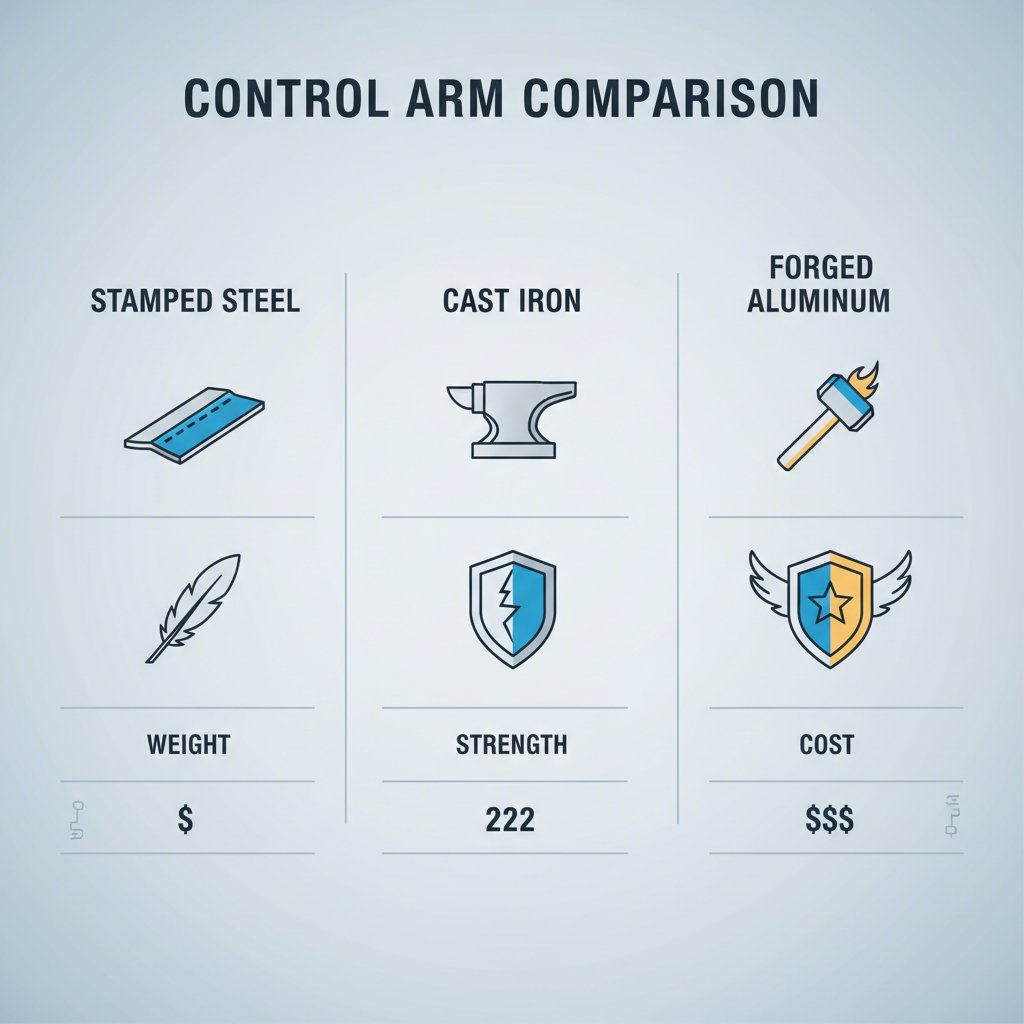
The term 'stamped steel' in your search query is significant because it refers to the manufacturing process and material of your control arm. While the noises of failure are similar across all types, the material can influence the component's durability, weight, and failure characteristics. Most modern passenger cars use one of three types of control arms: stamped steel, cast iron, or forged aluminum.
Stamped steel control arms are made by pressing sheets of steel into a desired shape. This method is cost-effective and produces a strong, reliable part, which is why it's common in many mass-produced vehicles. Cast iron arms are heavier and more rigid, often found on trucks and larger SUVs. Forged aluminum arms are lightweight and strong, typically used in performance or luxury vehicles to reduce unsprung weight and improve handling. The precision required for creating durable stamped steel components means automakers often partner with specialized suppliers. For instance, companies like Shaoyi (Ningbo) Metal Technology Co., Ltd. provide comprehensive auto stamping solutions, from prototyping to mass production, ensuring components meet strict automotive standards.
While the material itself doesn't typically change the *sound* of a bad bushing or ball joint, it can play a role in the component's overall lifespan and how it fails. Stamped steel arms are very strong but can be susceptible to bending or damage from a severe impact, which could in turn accelerate wear on the bushings. Here is a general comparison of the materials:
| Factor | Stamped Steel | Cast Iron | Forged Aluminum |
|---|---|---|---|
| Strength | Good | Very Good (Rigid) | Excellent (High strength-to-weight) |
| Weight | Moderate | Heavy | Light |
| Cost | Low | Moderate | High |
| Corrosion Resistance | Fair (Requires coating) | Poor (Requires coating) | Excellent |
Ultimately, the noises you hear are generated by the failure of the moving parts—the bushings and ball joints—not the arm itself. As noted in guides from sources like GSW Autoparts, clunking and popping sounds are tied to worn components regardless of whether the arm is steel or aluminum. Therefore, your diagnostic approach should remain focused on inspecting these critical pivot points.
Step-by-Step Guide: How to Safely Inspect Your Control Arms
Once you've identified the likely sounds of failure, a physical inspection is necessary to confirm your diagnosis. This process requires caution and the right equipment, but it can definitively locate the source of the noise. Before you begin, ensure you are working on a level surface and have the necessary safety gear, including jack stands and wheel chocks.
Safety First: Never work under a vehicle supported only by a jack. Always use properly rated jack stands placed on strong frame points. Chock the wheels that will remain on the ground to prevent the vehicle from rolling.
Follow these steps to perform a safe and effective inspection:
- Raise and Secure the Vehicle: Use a floor jack to lift the front of the vehicle at the manufacturer's recommended lift point. Place jack stands securely under the frame on both sides and then slowly lower the vehicle onto them.
- Perform a Visual Inspection: With the wheel off the ground, use a flashlight to get a clear view of the upper and lower control arms, paying close attention to the bushings and ball joints. Look for any visible signs of damage, such as cracked or deteriorating rubber on the bushings or a torn, leaking boot on the ball joint.
- Check for Wheel Play: Grab the wheel at the 12 and 6 o'clock positions and try to wiggle it in and out. Excessive movement or a clunking sound can indicate a worn ball joint. Next, grab the wheel at the 9 and 3 o'clock positions and try to move it side-to-side to check for tie rod end wear.
- Use a Pry Bar for a Closer Look: To check the bushings, carefully insert a long pry bar near the bushing between the control arm and the frame. Gently apply pressure to see if there is excessive movement. The control arm should feel snug; more than a small amount of play indicates a failed bushing. You can perform a similar check on the ball joint, but be careful not to damage any components.
If your inspection reveals significant play, visible damage, or you can replicate the noise by moving the components, you have found your culprit. The next step is replacement. While some experienced DIYers can tackle this job, it often requires specialized tools. The cost for control arm replacement can vary widely, but you can generally expect to pay a few hundred dollars for parts and labor. Crucially, a professional wheel alignment is always required after replacing a control arm to ensure your vehicle drives straight and your tires wear evenly.
Frequently Asked Questions
1. What does a bad control arm sound like when turning?
When turning, a bad control arm most often makes a clunking, thudding, or popping sound. A clunking or thudding noise is typically caused by worn rubber bushings that allow the arm to shift and hit the frame. A sharp popping sound is more commonly associated with a failing ball joint, which is the pivot point that connects the control arm to the wheel's steering knuckle.
2. Why does my car make a metal clunk when I turn the steering wheel?
A metal clunking noise when turning the steering wheel is a strong indicator of a problem in your suspension or steering system. The most common cause is a worn-out ball joint in the control arm, which allows for excessive movement and metal-on-metal contact. Other potential causes include bad tie rod ends or, less commonly, issues with the CV joints or steering rack.