 Small batches, high standards. Our rapid prototyping service makes validation faster and easier —
  EN
EN


A Professional Guide to Automotive LED Aluminum Profiles
TL;DR
Aluminum profiles for automotive LED lighting are specialized housings that protect LED strips from the harsh conditions inside a vehicle. Often called channels or extrusions, they serve two critical functions: shielding the lights from dust, moisture, and vibration, and acting as a heat sink to dissipate warmth. This thermal management is essential for ensuring the longevity, reliability, and peak performance of your automotive LED lighting investment.
Understanding the Role of Aluminum Profiles for LED Lighting
At its core, an LED aluminum profile is a dedicated enclosure designed to house flexible LED strip lights. While simple in concept, these profiles are engineered to perform two vital functions that are indispensable for any professional-grade lighting installation, especially in an automotive context. They provide robust protection and essential thermal management, transforming a bare LED strip into a durable and high-performing lighting fixture.
The first primary function is protection. LED strips are sensitive electronic components vulnerable to environmental hazards. An aluminum profile acts as a suit of armor, shielding the delicate diodes from dust, debris, moisture, and accidental impact. Paired with a diffuser cover, it creates a sealed unit that prevents contaminants from compromising the circuitry. This is crucial in a vehicle, where exposure to engine bay conditions or road grime can quickly lead to failure. As detailed in a comprehensive guide from NIUYUAN Trims, this protective housing ensures consistent performance and longevity.
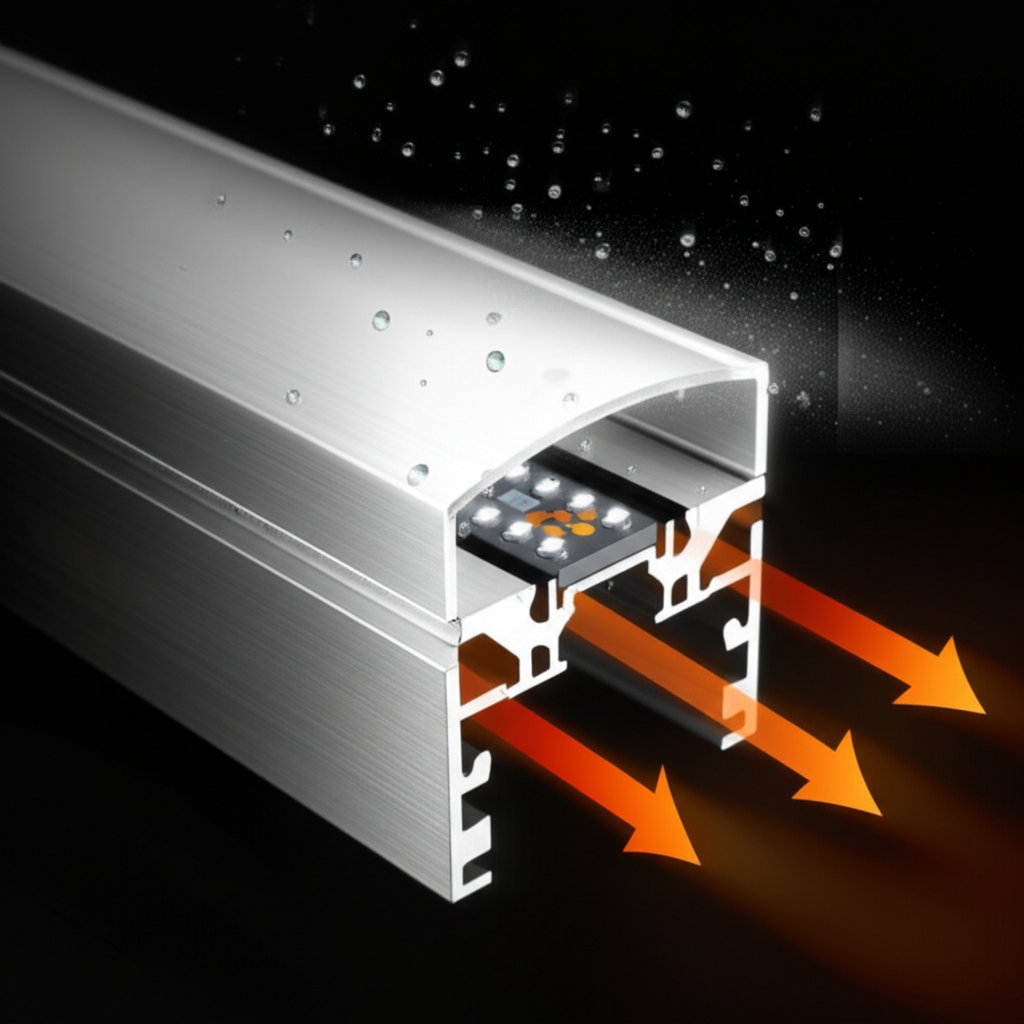
The second, and arguably most critical, function is thermal management. LEDs generate heat during operation, and excessive heat is the primary cause of premature failure, color shifting, and reduced brightness. Aluminum is an excellent thermal conductor, and the profile acts as a heat sink, drawing heat away from the LED strip and dissipating it into the surrounding air. This process keeps the LEDs operating within their optimal temperature range, significantly extending their lifespan and maintaining consistent light output. Without proper heat dissipation, the performance and reliability of even the highest quality LED strips would be severely compromised.
Critical Benefits in Automotive Applications
While aluminum profiles are beneficial in any setting, their advantages are magnified in the demanding environment of a vehicle. Standard household conditions are mild compared to the temperature fluctuations, vibrations, and exposure to the elements that automotive components must endure. Using the right enclosure is not just an aesthetic choice; it's a requirement for a lasting and reliable installation.
Key benefits in automotive applications include:
- Vibration Resistance: Constant vibrations from the road and engine can stress and damage the solder joints and components on a bare LED strip. A rigid aluminum profile secures the strip firmly in place, preventing micro-fractures and ensuring a stable electrical connection.
- Environmental Protection: Whether installed in an engine bay, under the chassis for ground effects, or inside the cabin, automotive LEDs are exposed to a wide range of hazards. Profiles with appropriate diffusers and end caps protect against moisture, road salt, dust, and oil, which would otherwise cause corrosion and short circuits. This is especially important for vehicles like RVs and boats, as noted by lighting specialist DAMAVO.
- Superior Thermal Management: Enclosed spaces within a car, such as inside a dashboard, headliner, or headlight assembly, have limited airflow. An aluminum profile is essential for dissipating heat effectively in these tight quarters, preventing the LEDs from overheating and failing prematurely.
- Professional Aesthetics: Beyond function, profiles offer a clean, finished appearance. They diffuse the light to eliminate the distracting 'dotted' look of individual LEDs, creating a smooth, continuous line of light. This elevates a DIY project to a professional, factory-quality installation.
Common Types of LED Aluminum Profiles and Their Uses
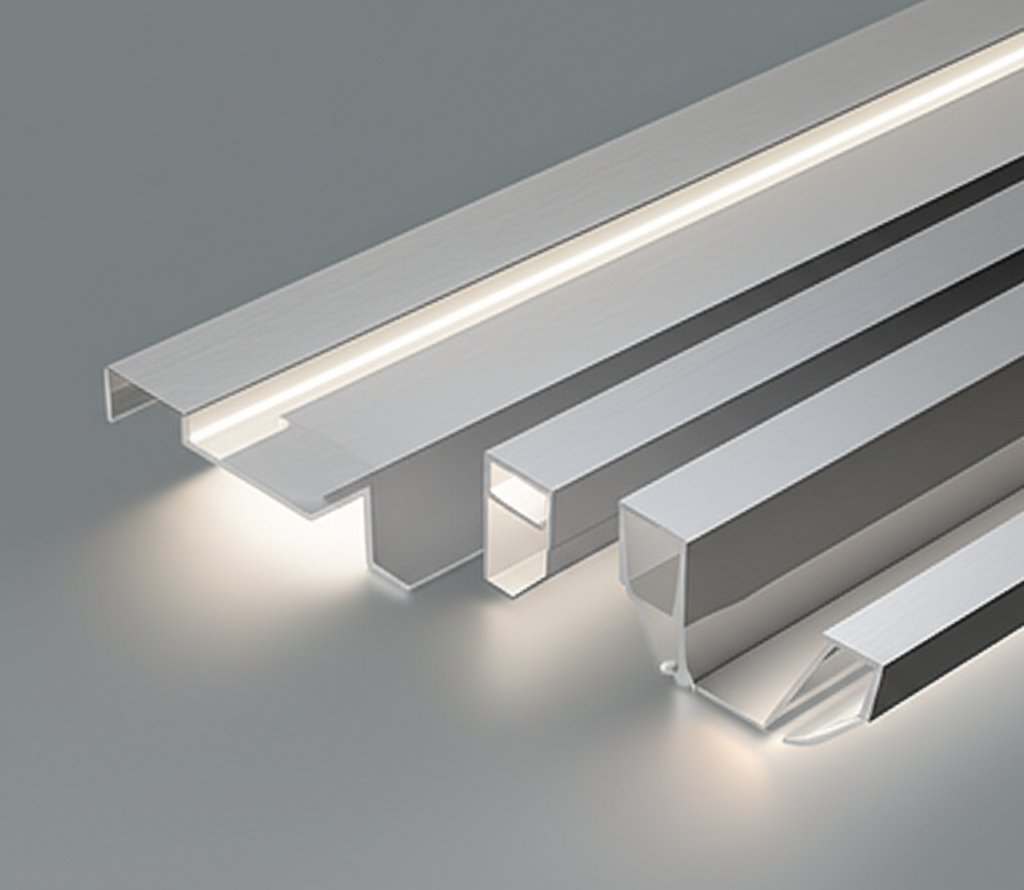
LED aluminum profiles are available in various shapes and mounting styles, each designed for specific applications. Choosing the correct type is essential for achieving both the desired lighting effect and a seamless installation. The main categories are defined by their mounting method and shape.
Based on installation, the most common types include:
- Surface-Mounted: The most straightforward type, these profiles are installed directly onto a surface using mounting clips or screws. They are ideal for applications like under-cabinet lighting in an RV, truck bed illumination, or underglow lighting where recessing is not feasible.
- Recessed: Designed to be installed flush within a surface, these profiles create a clean, integrated look. They are perfect for embedding accent lighting into dashboards, door panels, or headliners for a subtle, high-end aesthetic.
- Corner-Mounted: These profiles are V-shaped and designed to fit into 90-degree corners. In an automotive context, they are excellent for footwell lighting, trunk illumination, or creating accent lines where interior panels meet.
- Flexible: Made from bendable aluminum, these profiles can follow curved surfaces. This makes them invaluable for custom projects like wrapping around a dashboard, creating unique headlight or taillight designs, or illuminating other non-linear features.
In addition to mounting style, the type of diffuser, or cover, plays a significant role in the final lighting effect. A clear diffuser offers maximum brightness but leaves individual LED dots visible. A frosted or opal diffuser provides excellent light dispersion, creating a smooth, uniform line of light at the cost of some brightness. The choice depends on whether maximum output or a seamless aesthetic is the priority.
How to Select the Right Profile for Your Automotive Project
Choosing the correct aluminum profile requires careful consideration of several technical factors to ensure compatibility, durability, and performance. An informed decision will prevent issues like poor fitment, inadequate heat dissipation, or premature corrosion.
First, consider the aluminum alloy. Most LED profiles are made from 6063 aluminum, which offers an excellent surface finish and is easily extruded into complex shapes. Another common alloy, 6061, is stronger but less common for intricate profile designs. For most automotive lighting, 6063 is the preferred standard. It's also vital to select a profile with an anodized or powder-coated finish. Anodization significantly enhances corrosion resistance, which is critical for protecting against road salt and moisture.
Next, verify the profile dimensions. The most important measurement is the internal width, which must be wide enough to accommodate your chosen LED strip (e.g., 8mm, 10mm, or 12mm). A strip that is too wide will not fit, while one that is too narrow may not sit flat, leading to poor heat transfer. Also, consider the profile's depth, as deeper channels can provide better light diffusion and reduce hotspots.
The diffuser type is another key decision. For task-oriented lighting where brightness is paramount, a clear cover is suitable. For most accent and aesthetic lighting in a car's interior, a frosted or opal diffuser is recommended to achieve a clean, dot-free line of light. This creates a much more professional and visually appealing effect.
Finally, review the available mounting hardware. Ensure the profile comes with the necessary mounting clips, end caps, and other accessories for a secure and sealed installation. Properly sealed end caps are particularly important in an automotive setting to keep out dust and moisture. For highly specific or demanding automotive projects, sourcing from a specialist manufacturer might be necessary. For example, some suppliers like Shaoyi Metal Technology provide a one-stop service for custom aluminum extrusions, including rapid prototyping and production under the IATF 16949 automotive quality standard, which can be ideal for unique or high-volume applications.
Frequently Asked Questions
1. What is an LED aluminum profile?
An LED aluminum profile, also known as an aluminum channel or extrusion, is a housing designed to protect and cool LED strip lights. It shields the LEDs from dust, moisture, and impact while also acting as a heat sink to dissipate heat, which extends the lifespan and ensures the consistent performance of the lights.
2. What are the typical costs for LED profiles?
The cost of LED profiles can vary widely based on size, shape, quality, and features. According to market data, prices for LED profiles can range from approximately $10 to $30 per meter, depending on the profile's size, quality, and features. Simple, surface-mounted profiles are generally more affordable, while specialized, waterproof, or larger profiles will be at the higher end of the range.
3. Can I cut LED aluminum profiles to size?
Yes, aluminum profiles can be cut to custom lengths. It is recommended to use a hacksaw with a fine-tooth blade for a clean cut. The plastic diffusers can typically be cut with the same tool. Always measure carefully before cutting to ensure a precise fit for your project.
4. Which aluminium profile is best?
The best aluminum profile depends on the application. For LED extrusions, 6063 aluminum alloy is often preferred because it offers a better surface finish and is easier to form into complex shapes. For structural strength, 6061 is superior. For automotive aesthetics and corrosion resistance, an anodized 6063 aluminum profile is typically the best choice.