 Small batches, high standards. Our rapid prototyping service makes validation faster and easier —
  EN
EN


Hot Stamping Die Technology: Principles and Applications

TL;DR
Hot stamping die technology is a versatile manufacturing process employing heated dies, pressure, and specialized foils. It serves two primary functions: transferring intricate decorative designs onto surfaces like packaging and forming high-strength, lightweight components from sheet metal, particularly for the automotive industry. The process is valued for creating durable, premium-quality finishes and structurally superior parts.
What Is Hot Stamping Technology? Core Processes and Principles
Hot stamping is a sophisticated manufacturing method that fundamentally relies on three critical elements: heat, pressure, and time. A custom-made die, which is engraved or etched with a specific design or shape, is heated to a precise temperature. This heated die is then pressed against a substrate, transferring a design from a specialized foil or reshaping the material itself. The result is a permanent, high-quality mark or a structurally transformed component. While the core principle is consistent, the technology branches into two distinct applications with different goals and materials.
The first and most widely recognized application is decorative foil stamping. This process is used to add metallic, pigmented, or holographic designs to a wide range of products, including luxury packaging, book covers, and greeting cards. In this method, a thin foil carrier sheet with multiple layers—including a release coat, a color layer, and a heat-activated adhesive—is placed between the heated die and the substrate (e.g., paper, plastic, or leather). When the press applies pressure, the die's raised image activates the adhesive, bonding the color layer only in the desired shape onto the product surface. This technique is prized for its ability to create opaque, vibrant, and durable graphics that stand out visually.
The second major application is structural hot stamping, also known as press hardening or hot press forming. This industrial process is critical in the automotive sector for manufacturing ultra-high-strength steel (UHSS) components like B-pillars, door beams, and bumpers. Sheet metal, typically a boron alloy steel, is heated in a furnace to over 900°C, transforming its microstructure into a malleable austenitic state. It is then rapidly transferred to a press where it is simultaneously formed into its final shape and quenched (rapidly cooled) by water channels within the die. This rapid cooling transforms the steel into martensite, a very hard and strong microstructure, creating parts that are significantly stronger and lighter than those made with traditional cold stamping methods. This contributes directly to improved vehicle safety and fuel efficiency.
To clarify the distinction, consider the primary differences between these two core processes:
- Decorative Foil Stamping: The primary goal is aesthetic enhancement. It applies a thin layer of foil to a substrate's surface without fundamentally changing the substrate's structure. It is an additive process focused on appearance and branding.
- Structural Hot Stamping (Press Hardening): The goal is metallurgical transformation. It reshapes and heat-treats the entire component to achieve superior mechanical properties like tensile strength. It is a formative process focused on performance and safety.
The Heart of the Process: A Deep Dive into Hot Stamping Dies
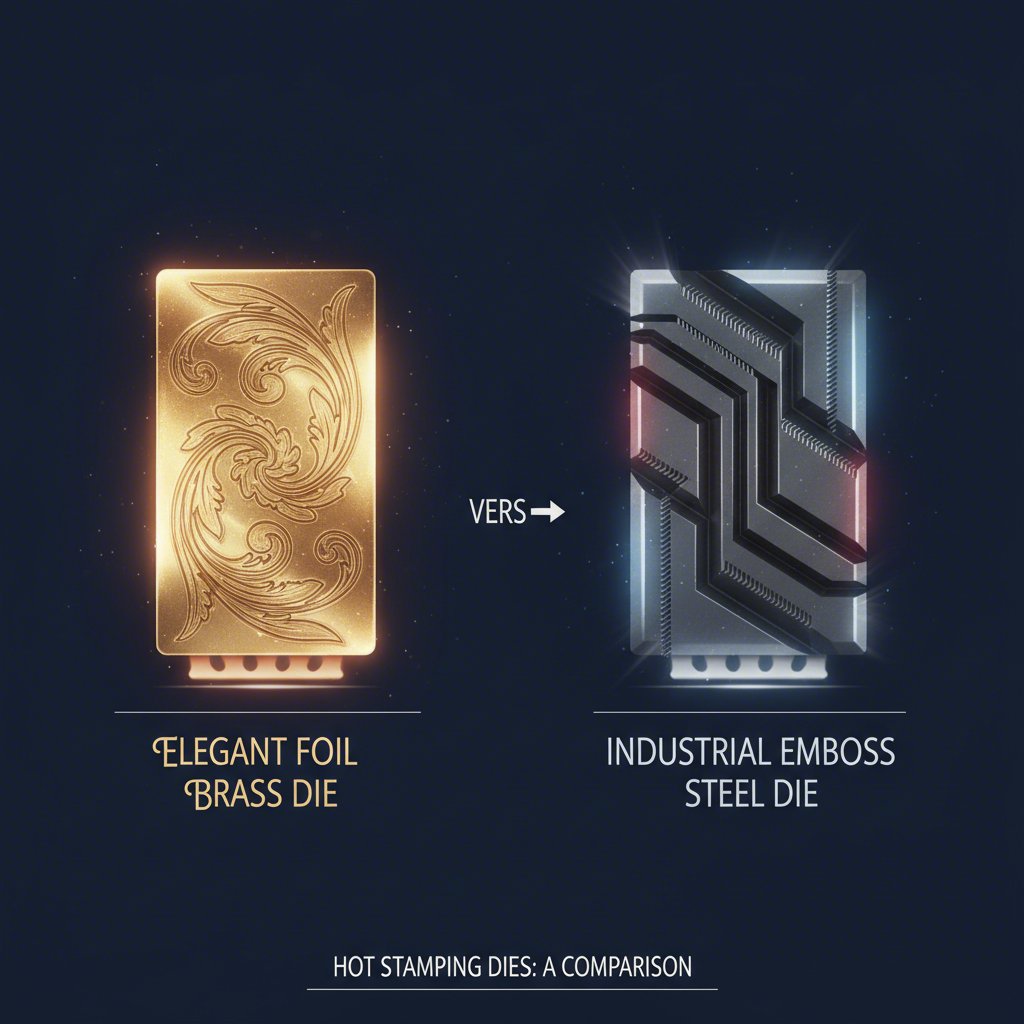
The die is the most critical component in any hot stamping operation, as it dictates the final quality, detail, and durability of the product. These tools are meticulously crafted to transfer heat and pressure with extreme precision. The material chosen for a die depends heavily on the application, production volume, substrate, and the complexity of the design. The most common materials are brass, steel, and copper, each offering a distinct set of advantages and ideal use cases.
Brass dies are renowned for their combination of durability, excellent heat transfer, and exceptional workability. They can be machine-engraved to create intricate, multi-level designs, making them ideal for combination dies that foil stamp and emboss in a single pass. This capability adds depth and texture, creating a premium finish. According to experts at Universal Engraving, a well-maintained brass die can last for over a million impressions, making it a cost-effective choice for long production runs in industries like high-end packaging and stationery.
Steel dies are the workhorses of industrial applications, particularly for press hardening automotive components and marking tough materials. As detailed by specialists like Daido Steel, tool steels used for hot stamping dies, such as H13 grade, are engineered for high-temperature strength, resistance to softening, and excellent thermal conductivity. These properties are essential for enduring the extreme thermal cycling of heating and quenching sheet metal. For decorative applications, steel type and dies offer maximum durability for repetitive marking tasks like date coding or serializing parts.
Copper dies are typically created through a photoetching process, which allows for the reproduction of very fine lines and highly detailed artwork. Copper is an excellent heat conductor, perhaps the best among common die materials, which allows for faster press speeds and consistent heat recuperation. This makes it a superior choice for applications requiring finite detail on substrates like paper and plastic. While not as hard as steel, high-quality copper dies are significantly more durable than softer alternatives like magnesium, which is often reserved for short, low-cost runs. For many decorative applications, copper strikes an ideal balance between detail, speed, and longevity.
| Die Material | Pros | Cons | Typical Use Cases |
|---|---|---|---|
| Brass | Excellent durability; great for multi-level and combination embossing/foiling; holds fine detail well; long lifespan (1M+ impressions). | Higher initial cost than magnesium; may not be as hard as specialized steel. | Luxury packaging, greeting cards, book covers, leather goods, long production runs. |
| Steel | Maximum hardness and durability; resistant to high temperatures and thermal shock; ideal for industrial use. | Can be more expensive and time-consuming to machine; may not be necessary for short decorative runs. | Automotive press hardening, date coding, marking on hard plastics and metals. |
| Copper | Superior heat conductivity for fast press speeds; excellent for fine, detailed photoetched designs; very durable. | Softer than steel; photoetching process has different design constraints than engraving. | Intricate graphic designs on labels, cartons, and plastics; high-speed foil stamping. |
Essential Equipment: Understanding Hot Stamping Machines
The hot stamping process is carried out by specialized machinery designed to provide precise control over heat, pressure, and timing. While designs vary, all hot stamping machines, or presses, share a set of core components that work together to achieve a perfect impression. The central element is the press mechanism itself, which can be manual, pneumatic (air-powered), or hydraulic (fluid-powered). The choice depends on the required force and production volume, with hydraulic presses like those from Macrodyne being common for high-tonnage applications like automotive press hardening.
A crucial component is the heating system, which consists of a heating plate or block that warms the die to a consistent, controllable temperature. Modern machines feature advanced digital temperature controls to ensure the heat is distributed evenly, which is vital for activating the foil's adhesive layer or preparing metal for forming without scorching the substrate. The die is mounted to this heated plate. For decorative applications, a foil feed system is also essential. This mechanism automatically advances the roll of foil between each impression, ensuring a fresh section is ready for the next cycle.
The entire operation is a carefully orchestrated sequence. A typical hot stamping cycle for decorative foiling follows a clear set of steps:
- Setup and Heating: The operator securely mounts the die onto the machine's heating plate and sets the target temperature. The appropriate foil roll is loaded into the feed system.
- Substrate Placement: The product or material to be stamped (the substrate) is positioned on the machine's base plate or anvil, directly below the die.
- Machine Cycle Activation: The press is activated. The heated die descends, pressing the foil against the substrate with a specific amount of force.
- Dwell Time: The die remains in contact with the foil and substrate for a brief, preset period known as dwell time. This is when the heat activates the foil's adhesive layer, causing the design to bond to the substrate.
- Die Retraction and Foil Advance: The die retracts back to its starting position. As it lifts, the used foil is pulled away, leaving only the transferred design on the product. The foil feed system then advances the roll for the next cycle.
For industrial press hardening, the process is similar but involves automated robotics to transfer the heated metal blank from a furnace into the press, which then closes rapidly to form and quench the part simultaneously.

Innovations and Applications Across Industries
Hot stamping technology's unique ability to deliver both premium aesthetics and superior structural performance has made it indispensable across a diverse range of industries. Its applications extend far beyond simple lettering, driving innovation in product design, manufacturing efficiency, and brand security. From automotive safety to luxury consumer goods, the impact of hot stamping is widespread and continually evolving.
In the automotive sector, press hardening is a cornerstone of modern vehicle lightweighting and safety engineering. Manufacturers produce components like A-pillars, B-pillars, bumpers, and roof rails that possess ultra-high tensile strength, allowing them to absorb immense impact energy while reducing overall vehicle weight. This leads to better fuel economy and enhanced passenger protection. Leading suppliers in this field, such as Shaoyi (Ningbo) Metal Technology Co., Ltd., provide custom automotive stamping dies and components for OEMs, utilizing advanced simulations and certified processes to deliver high-quality parts with precision and efficiency.
For the packaging and graphic arts industries, hot foil stamping is a key tool for creating brand differentiation and perceived value. It elevates products on crowded store shelves, conveying a sense of luxury and quality. This is evident in cosmetics packaging, wine and spirit labels, and high-end electronics boxes. Innovations from companies like KURZ have introduced advanced holographic foils, intricate patterns, and satin finishes that catch the eye and engage the consumer. The technology is also used for security purposes, where holographic foils on labels and documents serve as an effective anti-counterfeiting measure.
The application of hot stamping extends to plastics and other consumer goods as well. It's used to apply durable, wear-resistant markings on everything from medical devices and electronic components to home appliances. For luxury goods, it provides a crisp, permanent method for monogramming leather bags, wallets, and accessories—a process famously used by brands like Louis Vuitton to personalize their products. The versatility of the process allows it to be adapted to various shapes and materials, ensuring a high-quality finish that lasts the lifetime of the product.
Frequently Asked Questions About Hot Stamping
1. What materials can be hot stamped?
Hot stamping is remarkably versatile and can be applied to a wide range of materials. For decorative applications, common substrates include paper, cardboard, various plastics (like PVC, polystyrene, and ABS), leather, and wood. For structural press hardening, the process is primarily used with specific grades of sheet metal, most notably boron-alloyed steels; similar hot forming processes can also be applied to certain aluminum, magnesium, and titanium alloys.
2. How is hot stamping different from printing or embossing?
While all three are finishing processes, they work differently. Printing applies wet ink to a surface, which then dries. Hot stamping uses heat and pressure to transfer a dry foil, resulting in an opaque, often metallic finish that is more durable and vibrant than many inks. Embossing uses a matched set of dies to raise a design from the substrate's surface without color. Hot stamping can be combined with embossing in a single step (known as combination stamping) to create a raised, foiled image.
3. Is the finish from hot stamping durable?
Yes, one of the key advantages of hot stamping is its durability. The heat and pressure create a strong bond between the foil's adhesive layer and the substrate. This makes the finish resistant to abrasion, fading, and moisture, which is why it is often chosen for product logos, book titles, and other applications that require a long-lasting, high-quality mark.