 Small batches, high standards. Our rapid prototyping service makes validation faster and easier —
  EN
EN


H-Beam Vs I-Beam Forged Rods: Which Won't Snap Under Boost?
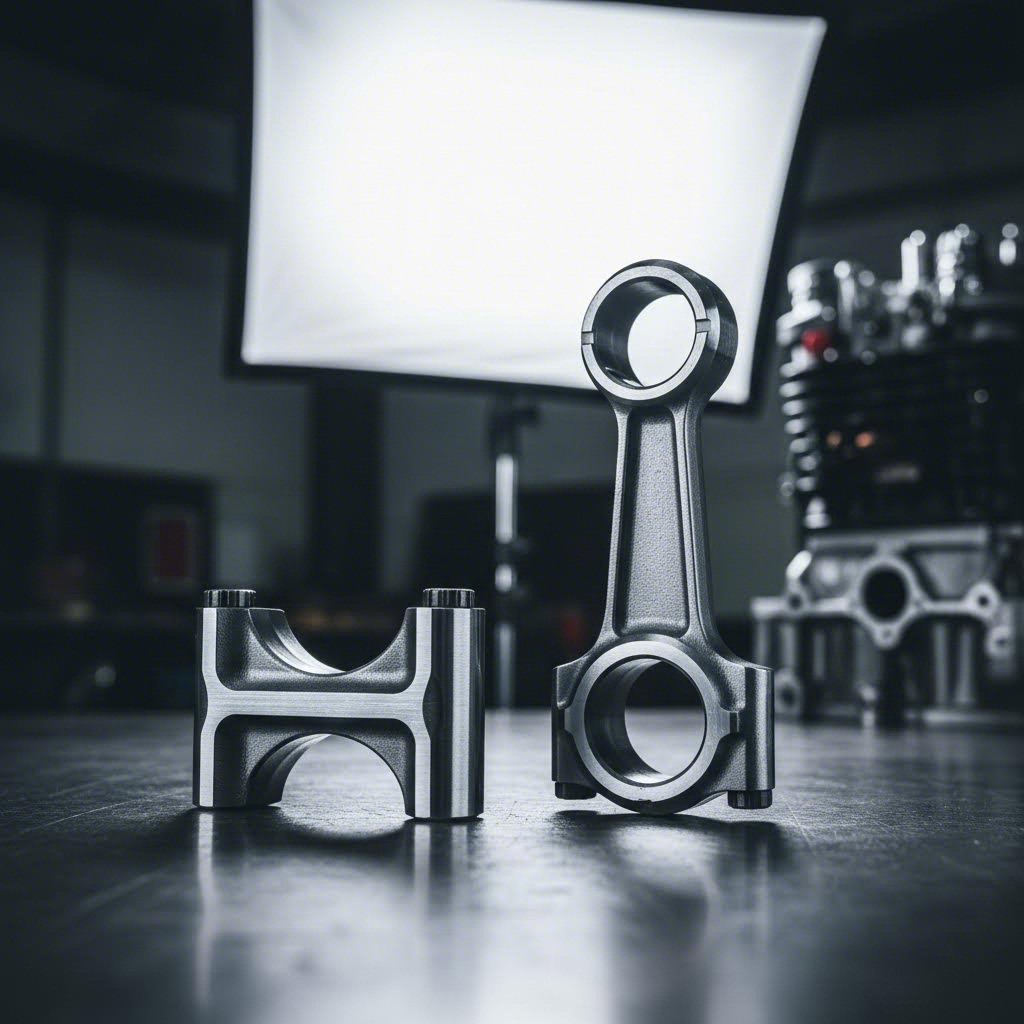
Choosing the Right Forged Rods for Your Build
You're building a high-performance engine, and there's one question that keeps surfacing: will your connecting rods survive the power you're chasing? Whether you're pushing 600 horsepower on a turbocharged street build or aiming for four-digit numbers on the dyno, your rod selection can mean the difference between a reliable powerplant and a catastrophic failure that punches a hole through your block.
When comparing h beam vs i beam rods, the debate gets heated fast. Forum threads spiral into conflicting opinions, and what works for one builder's LS swap suddenly becomes "the wrong choice" for another's K-series turbo project. The truth? Both H-beam and I-beam designs have legitimate applications in performance builds—but choosing the right one depends entirely on your specific power goals, RPM range, and intended use.
Why Rod Selection Makes or Breaks High-Performance Builds
Connecting rods convert the up-and-down motion of your pistons into the rotating motion that drives your crankshaft. Every combustion cycle subjects these components to tremendous mechanical stress and dynamic loads. When you add boost, nitrous, or simply push higher RPMs, those stress levels multiply dramatically.
Consider this: a rod failure doesn't just mean a blown engine. According to performance engineering experts, a broken connecting rod can fly off and punch a hole through the engine block, resulting in complete oil pressure loss, overheating, and total engine seizure. That's not just an expensive repair—it's potentially a complete engine replacement.
The Real-World Stakes of Choosing Wrong
The internet is flooded with conflicting opinions about whether h beam vs i beam connecting rods are "better." But here's what most forum debates miss: neither design is universally superior. The right choice depends on matching the rod's characteristics to your build's demands.
I-beam connecting rods excel in forced induction applications where extreme cylinder pressures demand maximum rigidity. Their design offers exceptional resistance to bending under high-boost conditions. Meanwhile, H-beam rods are engineered to reduce tensile stress and minimize rotating mass—making them ideal for high-RPM applications where you need to lighten the rotating assembly.
This guide cuts through the noise. You'll find clear, application-specific recommendations based on real-world racing data and performance builds—not vague generalities or brand loyalty. We've ranked the top forged rod options by application type, covering everything from budget-friendly street builds to competition-grade drag racing setups. By the end, you'll know exactly which rod design and manufacturer matches your power goals.
How We Ranked These Forged Rod Options
So what are con rods actually evaluated on when it comes to performance applications? It's not just about picking the strongest-sounding brand or the most expensive option. Our ranking methodology draws from real-world drag racing applications and street performance builds where these components are pushed to their absolute limits every pass or pull.
Understanding the 4 types of connecting rods—cast, powdered metal, forged, and billet—helps frame why forged options dominate serious performance builds. Forged rods offer the optimal balance of strength, weight, and fatigue resistance that high-output engines demand. But within the forged category, significant differences exist between manufacturers, materials, and designs.
Power Handling and Fatigue Resistance
When comparing h beam rods vs i beam rods, power handling capability is the first consideration. But raw strength numbers only tell part of the story. Fatigue resistance—how many stress cycles a rod can endure before failure—is equally critical for engines that see repeated high-load conditions.
The material composition directly impacts both metrics. According to ARP's technical specifications, common rod bolt materials demonstrate dramatically different strength characteristics:
- 8740 Chrome Moly: Delivers tensile strengths between 180,000 and 210,000 psi with adequate fatigue properties for most racing applications
- ARP2000: Achieves clamp loads at 220,000 psi, widely used in short track and drag racing as an upgrade from chrome moly
- L19: Premium steel capable of 260,000 psi clamp loads, used where inertia loads exceed ARP2000 capabilities
- ARP 3.5 (AMS5844): Super-alloy with 260,000-280,000 psi tensile strength and superior fatigue characteristics for Formula 1, NASCAR, and IRL applications
The motor connecting rod itself must match these bolt specifications. A premium rod with inadequate bolts creates a weak point that negates the component's strength advantage.
Weight Distribution and RPM Tolerance
Here's where i beam rods vs h beam designs show their distinct characteristics. Weight distribution affects how connecting rods in an engine behave at different RPM ranges.
I-beam rods typically feature a lighter overall design with material concentrated along the central beam. This makes them excellent for high-RPM naturally aspirated builds where reducing reciprocating mass allows the engine to rev freely. The tradeoff? Less material means reduced resistance to the violent compression forces found in forced induction applications.
H-beam rods distribute material differently, with thicker cross-sections along the beam. As SCAT's Tom Lieb explains in Dragzine's coverage of nitrous rod selection, "The impact you get with the rod is pretty violent, which means the beam is going to be taking on all the stress. You want a connecting rod that's relatively heavy on the beam side because of all the compression forces it's exposed to."
This is particularly critical for nitrous applications. Unlike boost, which builds pressure gradually, nitrous creates instantaneous pressure spikes that "beat the rods up" with shock loading. The H-beam's additional material in the beam area provides the necessary resistance to these violent forces.
Value Per Dollar for Your Application
Not every build needs the most expensive rods available. Our evaluation considers where each option delivers the best return on investment for specific power levels and use cases.
- Material grade selection: 4340 chromoly provides excellent strength for most performance applications without the premium cost of exotic alloys
- Manufacturing quality control: Certified manufacturing processes ensure consistent tolerances and material properties across production runs
- Rod bolt quality: Premium bolts often represent 15-20% of total rod cost but critically impact overall assembly strength
- Application-specific design: Rods engineered for your specific power adder type deliver better value than over-built generic options
- Matched component availability: Manufacturers offering coordinated rod and piston packages simplify builds and ensure compatibility
The evaluation criteria also account for how different power adders stress connecting rods differently. Turbocharged builds allow pressure to build gradually, while superchargers create consistent high loads throughout the RPM range. Nitrous, however, generates the most violent shock loading—demanding rods specifically designed to handle instantaneous pressure spikes rather than sustained loads.
With these criteria established, let's examine the top forged rod options available for your build, starting with precision hot-forged rods from OEM-certified manufacturers.
Precision Hot-Forged Rods with OEM Certification
When you're building an engine that needs to survive serious boost, the manufacturing process behind your connecting rods matters just as much as the design itself. Understanding what are connecting rods at their core—the critical link between piston and crankshaft—helps explain why precision hot forging has become the gold standard for serious performance builds.
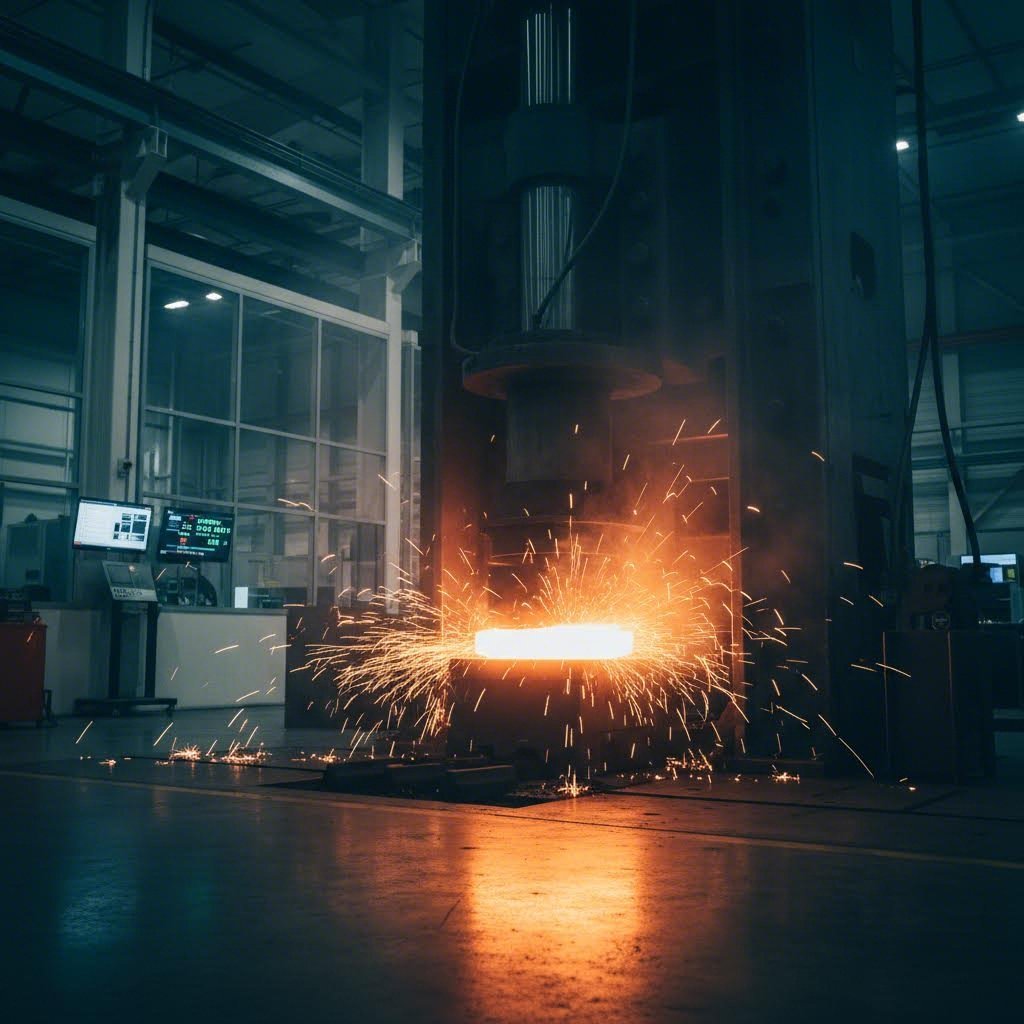
Unlike cast or billet alternatives, precision hot-forged connecting rods start as heated metal blanks shaped under extreme pressure. According to Kingtec Racing's technical breakdown, the forging process "aligns the grain structure of the metal, which results in a more uniform and dense structure." This uniform grain structure provides greater strength and durability, making forged connecting rods more resistant to fatigue and less likely to fail under high loads and high RPMs.
But not all forged rods are created equal. The difference between an entry-level forged rod and a precision hot-forged component from an OEM-certified manufacturer comes down to process control, material consistency, and quality verification at every stage of production.
IATF 16949 Certified Manufacturing Advantage
Here's something most enthusiasts overlook when shopping for h beam connecting rods or h beam conrods: the certification behind the manufacturer. IATF 16949 isn't just another quality badge—it's the automotive industry's most rigorous quality management standard, and it directly impacts whether your rods will survive repeated high-load cycles.
What makes IATF 16949 different from generic quality certifications? According to NSF's detailed comparison, this certification builds upon ISO 9001 by adding automotive-specific requirements that matter for high-stress components:
- Product Safety Management: Documented processes throughout the product lifecycle, including multi-level approvals, specific training, and complete traceability
- Supplier Development: Rigorous supplier selection, monitoring processes, and second-party audits ensuring raw material consistency
- AIAG Core Tools: Mandatory use of Production Part Approval Process (PPAP), Failure Mode and Effects Analysis (FMEA), Measurement System Analysis (MSA), and Statistical Process Control (SPC)
- Risk Management: Detailed processes incorporating lessons learned from product recalls, field returns, and failure analysis
For connecting rods, this level of process control translates to consistent material properties batch after batch. When you're running 30+ psi of boost, you need confidence that your rods meet the exact specifications claimed—not just on the first set manufactured, but on every set that follows.
Rapid Prototyping for Custom Applications
What are engine rods if not components that must perfectly match your specific application? This is where certified manufacturers with in-house engineering capabilities shine over generic rod suppliers.
Consider the builder working on a unique engine combination—perhaps a stroker build with non-standard deck height, an exotic engine swap requiring custom rod length, or a fork and blade connecting rod configuration for a V-engine with shared crankpin design. These applications demand rods that simply don't exist in standard catalogs.
Manufacturers like Shaoyi (Ningbo) Metal Technology demonstrate how certified precision forging facilities bridge this gap. Their approach combines IATF 16949 certification with rapid prototyping capabilities—delivering custom forged components in as little as 10 days from design approval. For time-sensitive race builds or prototype engine programs, this speed-to-production eliminates the months-long wait typically associated with custom forged components.
The fork and blade connecting rods found in certain V-twin and high-performance V-engine configurations illustrate why this flexibility matters. These designs require precise matching between the fork (two-pronged) rod and blade (single) rod that share a common crankpin. Custom manufacturing with tight tolerances ensures both components work together without introducing unwanted stress concentrations.
Why OEM-Grade Forging Matters
There's a reason automakers don't use cast connecting rods in performance applications. As Engine Builder Magazine reports from industry experts at CP-Carrillo, "A forging compresses the material and provides better grain structure, grain flow, strength, and resistance to fatigue than a billet rod."
The precision hot forging process delivers several advantages over alternatives:
- Aligned grain flow: Metal grains follow the contour of the rod, creating natural strength along stress paths
- Eliminated porosity: The forging pressure closes any voids present in the raw material
- Work hardening: The forging process itself strengthens the material beyond its raw state
- Consistent density: Unlike casting, forged components have uniform density throughout
This matters critically for fatigue resistance. Every combustion cycle subjects your connecting rods to tremendous loads—first compressive forces during the power stroke, then tensile loads as the piston decelerates at top dead center. Over thousands of engine revolutions per minute across hundreds of hours of operation, microscopic cracks can propagate from material inconsistencies. Forged grain structure resists this crack propagation far better than cast or machined-from-billet alternatives.
Pros
- Superior grain structure providing maximum fatigue resistance
- Precision tolerances from certified manufacturing processes
- Rapid prototyping capability for custom applications
- IATF 16949 quality certification ensuring batch-to-batch consistency
- Global shipping with strategic port locations enabling fast delivery
- In-house engineering for application-specific designs
Cons
- May require custom ordering for specialty applications not in standard catalogs
- Lead times for fully custom designs longer than off-the-shelf options
- Premium pricing compared to mass-produced aftermarket alternatives
For builders wanting OEM-grade reliability with performance specifications, precision hot-forged rods from certified manufacturers represent the most robust foundation for any serious build. The combination of superior metallurgy, tight manufacturing tolerances, and verified quality control creates components you can trust at the limits of performance.
Of course, not every builder needs custom-forged components. For well-supported applications like LS, K-series, or small block Chevy platforms, established aftermarket manufacturers offer proven H-beam solutions specifically engineered for boosted applications.
Manley H-Beam Rods for Boosted Builds
When top-tier tuners and engine builders discuss proven connecting rod solutions for forced induction applications, Manley performance consistently enters the conversation. With decades of experience manufacturing high-stress rotating components from their Lakewood, New Jersey facility, Manley has earned a reputation that extends from grassroots racers to championship-winning professional teams worldwide.
What sets Manley rods apart from other aftermarket options? It starts with their understanding that one connecting rod design doesn't fit all performance applications. According to Manley's own technical documentation, they offer multiple H-beam configurations—including standard H-beam and the beefed-up H-Tuff version—specifically because different builds demand different solutions.
For builders chasing serious boost on popular platforms like LS engines, Manley connecting rods provide clear power level guidance. Their standard H-beam rods serve builds in the 600-900 HP range depending on bolt selection and racing type, while H-Tuff rods are designed for 1,000-1,200+ HP forced induction applications.
Turbo Tuff Series for Boosted Applications
If your build involves a turbocharger, supercharger, or nitrous—and you're chasing serious power—the Manley turbo tuff rods deserve your attention. Purpose-built for engines that live in the high-boost, high-RPM danger zone, these rods have become the first upgrade on the checklist for many professional engine builders.
What makes the Turbo Tuff series so resilient under extreme conditions? According to Manley's technical breakdown, several engineering choices set these rods apart:
- 4340 Aircraft-Grade Steel: Vacuum-degassed material eliminates porosity and ensures consistent metallurgical properties
- Military-Spec Shot Peening: Surface treatment relieves stress and improves fatigue resistance
- Individual Magnaflux Inspection: Every single rod is inspected for structural integrity before shipping
- 3/8" ARP 2000 Cap Screws: Industry-standard high-performance fasteners with exceptional tensile strength
- Optional ARP 625+ Upgrade: Premium fasteners with superior fatigue resistance for extreme builds
The real-world power handling of manley turbo tuff rods speaks for itself. With proper tuning and engine setup, these components support well over 1,000 HP in 4-cylinder applications and 1,500+ HP in larger displacement builds. These aren't theoretical numbers—they're backed by drag strip time slips, dyno sheets, and competition results from around the world.
When Manley Makes Sense for Your Build
Manley rods excel in specific scenarios. If you're building a Honda K-series for high-boost street or track duty, the application-specific designs mean you're getting components engineered for that platform's unique demands. The same applies to LS builders—whether you're running a supercharged C6 Corvette or a turbocharged swap in a lightweight chassis.
One significant advantage for builders is that Manley offers matched manley rods and pistons packages. This eliminates the guesswork of combining components from different manufacturers and ensures compatibility between your rotating assembly components. When you're pushing serious power, knowing your manley pistons are designed to work with your rods simplifies the build process and reduces potential compatibility issues.
The manley h beam rods product line covers an impressive range of applications:
- Small Block and Big Block Chevy platforms
- LS and LT engine families
- Ford Modular engines
- Modern HEMI applications
- Honda K-series for sport compact builds
- Subaru EJ20/EJ25 and FA20 for the boxer community
Pros
- Established brand reputation backed by decades of professional racing success
- Wide application coverage across domestic and import platforms
- Matched piston availability simplifies rotating assembly builds
- Tiered product line allows matching component selection to power goals
- Individual inspection and testing on every component
- Strong aftermarket support and technical assistance
Cons
- Premium pricing compared to budget-oriented alternatives
- Availability varies by application—some engine families have more options than others
- May be overkill for mild naturally aspirated builds
For builders who want proven performance from an established manufacturer with excellent technical support, Manley represents a solid investment. The combination of quality materials, rigorous inspection, and application-specific engineering makes their H-beam and Turbo Tuff series reliable choices for boosted builds across a wide range of platforms.
But what if you're looking for quality components at a more accessible price point, specifically engineered for power adder applications? Molnar Technologies has carved out a strong position in this space with their dedicated forced induction rod designs.
Molnar Power Adder Rods for Forced Induction
When comparing i beam vs h beam rods for forced induction builds, the conversation often centers on premium brands with premium price tags. But what if you could get purpose-built power adder components without breaking the bank? That's exactly where Molnar Technologies has positioned themselves—delivering quality forged connecting rods specifically engineered for boosted and nitrous applications at competitive prices.
Molnar rods have quietly built a strong following in the LS and small block Chevy communities. While they may not carry the same household name recognition as some competitors, their focus on power adder applications has earned them respect among builders who prioritize value without sacrificing reliability.
Power Adder Rods for Nitrous and Boost
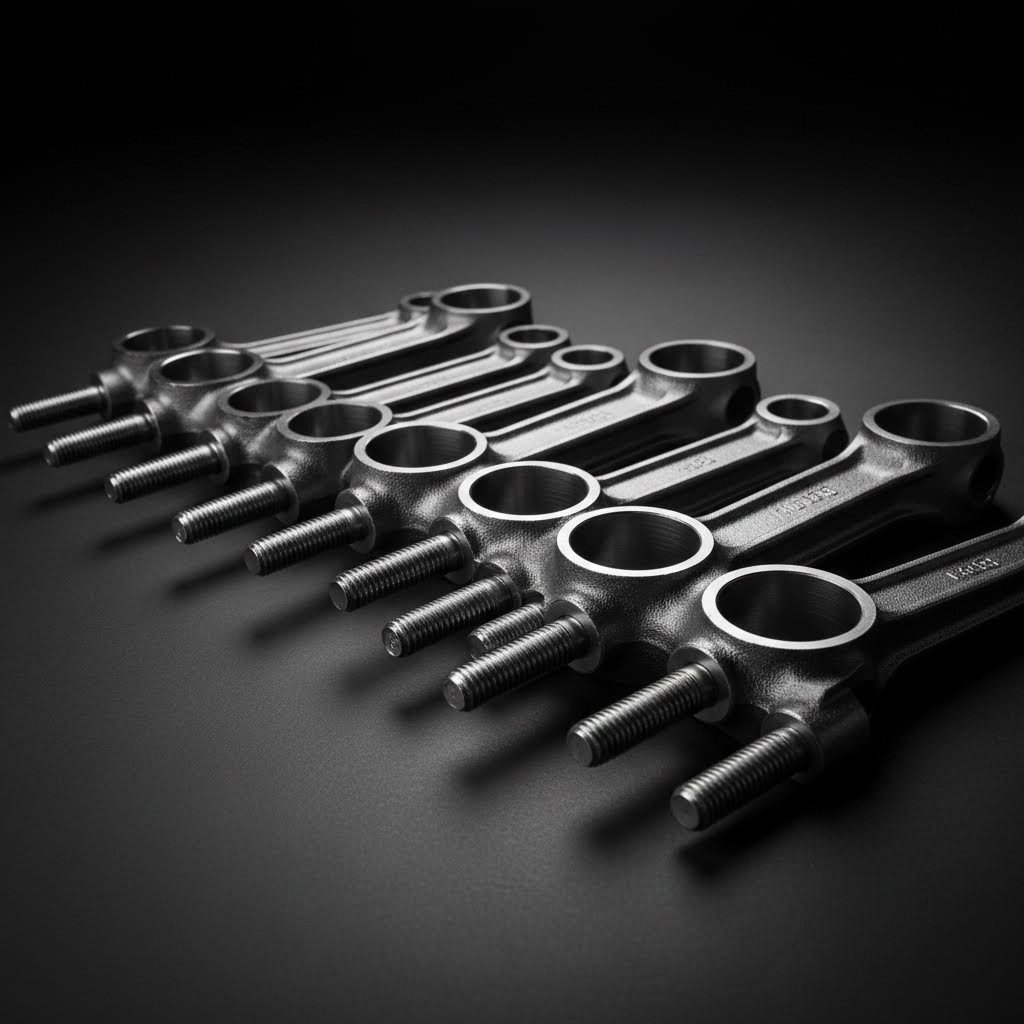
What makes molnar power adder rods stand out from generic H-beam options? Their Power Adder Plus series demonstrates a clear understanding of what forced induction and nitrous applications demand from connecting rods.
According to Vincent Performance's product specifications, the Molnar H-Beam PWR ADR PLUS rods for Chevy LS platforms are "designed specifically for use in extremely high boost supercharged and twin turbo engines as well as those using very large nitrous systems." This isn't a one-size-fits-all approach—these components are engineered from the ground up for the violent shock loading that nitrous creates and the sustained high cylinder pressures found in boosted applications.
The manufacturing specifications reveal attention to detail that matters under extreme stress:
- 4340 Billet Steel Construction: Premium material choice offering excellent strength-to-weight ratio
- Heat Treated Processing: Increases tensile strength beyond raw material specifications
- Shot Peened Finish: Improves fatigue life by relieving surface stress concentrations
- Tolerances Held to +/- .0001": Precision manufacturing ensuring consistent fitment
- ARP2000 7/16" Bolts: Asymmetrical thread design equally loads each thread under pressure
For LS builders specifically, Molnar offers h beam rods in the popular 6.098 ls rods length that fits standard Gen III and Gen IV applications. This makes them a direct bolt-in upgrade for anyone looking to strengthen their rotating assembly before adding boost or nitrous.
Molnar's Value Proposition for Serious Builds
Here's where Molnar really shines for budget-conscious builders chasing big power. Their pricing structure positions them below premium manufacturers while still delivering components manufactured from quality materials with proper heat treatment and surface finishing.
The LS community has particularly embraced Molnar rods for stroker builds and forced induction projects. When you're building a 6.0L or 6.2L LS for turbo or supercharger duty, the 6.098 ls rods from Molnar's Power Adder series provide the strength needed for reliable four-digit horsepower without the four-digit price tag that some competitors demand.
Finished in the USA from 4340 billet steel, these rods bridge the gap between entry-level options and ultra-premium competition pieces. For builders running moderate to aggressive boost levels on street-driven vehicles—or even weekend warriors making passes at the drag strip—the Power Adder series delivers appropriate strength for the application.
Pros
- Power Adder specific designs engineered for nitrous and forced induction stress
- Competitive pricing compared to premium brand alternatives
- Good availability for popular LS and small block Chevy applications
- Precision tolerances (+/- .0001") ensuring consistent quality
- Includes quality ARP2000 rod bolts with asymmetrical thread design
- Shot peened and heat treated for improved fatigue resistance
Cons
- Less brand recognition than established premium manufacturers
- Smaller application coverage compared to larger aftermarket companies
- Limited matched piston package options
For builders who understand their power goals and want quality components at accessible prices, Molnar represents an excellent value proposition. Their focused approach to power adder applications means you're getting components engineered for exactly what you're asking them to do—survive boost and nitrous abuse without the premium price tag.
But what about builders who need absolute confidence in their components for all-out competition use? Callies offers tiered product lines that scale from street performance to professional drag racing, with their Ultra and Compstar series serving different segments of the market.
Callies Ultra and Compstar Rod Options
When drag racers and professional engine builders need motor rods they can trust at the absolute limits of performance, Callies Performance Products consistently tops the list. Based in Fostoria, Ohio, Callies has built their reputation on meticulous craftsmanship and a tiered product line that serves everyone from street enthusiasts to all-out competition builds.
What makes Callies stand apart from other connecting rod manufacturers? According to Mopar Connection Magazine's coverage of Callies' manufacturing philosophy, their Ultra series rods are made from proprietary steel forged in Trenton, Michigan, and manufactured 100% in their Fostoria facility. This vertical integration ensures quality control at every stage of production—something that matters when you're pushing the limits of what h vs i beam connecting rods can handle.
Ultra HP Ratings Explained
The Callies Ultra series represents their premium tier, designed for engine builders who demand absolute reliability under extreme conditions. But understanding which Ultra rod fits your application requires knowing what separates the different configurations.
Callies offers three distinct Ultra configurations, each targeting specific performance demands:
- Ultra I-Beams: Standard-weight versions engineered for extreme-duty racing applications, featuring extended footprints at joint mating surfaces for superior housing stability
- Ultra H-Beams: The newest addition to the Callies lineup, constructed from premium-grade TimkenSteel material and designed to satisfy the most demanding racing applications
- Ultra XD Rods: Purpose-built for long-stroke engine applications where extra cam clearance is essential
What really sets the Ultra series apart is the attention to engineering details that prevent failure. Their connecting rods feature Camber Face twin tower flanges that improve stiffness, reduce stress risers, and lower weight. At the wrist pin area, Pin Hoop Stiffening Bands significantly improve bore cylindricity during high-RPM operation or heavy deceleration.
The material choice at the wrist pin bore also demonstrates Callies' refusal to cut corners. They exclusively use AMS 642 bronze silica alloy—26% harder than the commonly used Ampco 18 material found in competing products. This eliminates the deformation and extrusion that can lead to premature failure in less robust designs.
For builders comparing i beam vs h beam connecting rods in the Ultra series, bolt quality provides another differentiator. Callies H-beam rods feature ARP Nickel Alloy Custom Age 625 cap screws—available for highly demanding applications where standard ARP2000 bolts reach their limits.
Compstar Value for Street Performance
Not every build requires Ultra-level components, and Callies recognizes this with their Compstar line. These motor rods deliver Callies quality at more accessible price points, making them ideal for street performance builds and weekend warriors who want reliability without overspending.
Here's what makes the Compstar approach unique: according to Callies' manufacturing process, each Compstar rod is prepared offshore using Callies' own forging dies, then finished-sized at their Ohio facility. This hybrid approach allows them to offer competitive pricing while maintaining the precision tolerances and quality control that defines the Callies brand.
The callies compstar rods come standard with features that other manufacturers charge extra for:
- ARP 2000 Bolts: Superior tensile strength and clamping force at the critical mating joint—included, not optional
- Stroker Clearance: Pre-machined to accommodate stroker applications without additional modification
- Strengthening Gussets: Added to the bolt spot-face area of the cap, increasing strength and dimensional stability
- 4340 Material Construction: Same premium steel specification used in racing applications
For builders running callies ultra rods on dedicated race engines, Compstar provides an excellent option for street-driven companion vehicles or budget-conscious projects where Ultra specifications aren't necessary but Callies quality is still desired.
Pros
- Tiered product line allows matching rod selection to actual power requirements
- Proven track record in professional drag racing at the highest levels
- Excellent rod bolt quality with Custom Age 625 upgrade available for Ultra series
- 100% USA manufacturing for Ultra series ensures quality control
- Applications available for late-model Hemis, Vipers, and common Chevy platforms
- Premium materials including TimkenSteel and AMS 642 bronze alloy
Cons
- Higher price point than budget-oriented alternatives—you're paying for proven quality
- May be overkill for mild naturally aspirated builds under 500 HP
- Ultra series lead times can extend for less common applications
The drag racing community's trust in Callies isn't accidental. When a rod failure means everything behind the intake manifold becomes scrap metal, serious racers invest in components with proven reliability under the most violent conditions. Whether you choose the competition-grade Ultra series or the value-oriented Compstar line, you're getting connecting rods backed by decades of high-performance manufacturing experience.
For builders who need solid performance at more accessible price points, K1 Technologies and Scat offer entry-level options worth considering for moderate power builds.
K1 and Scat Budget Performance Rods
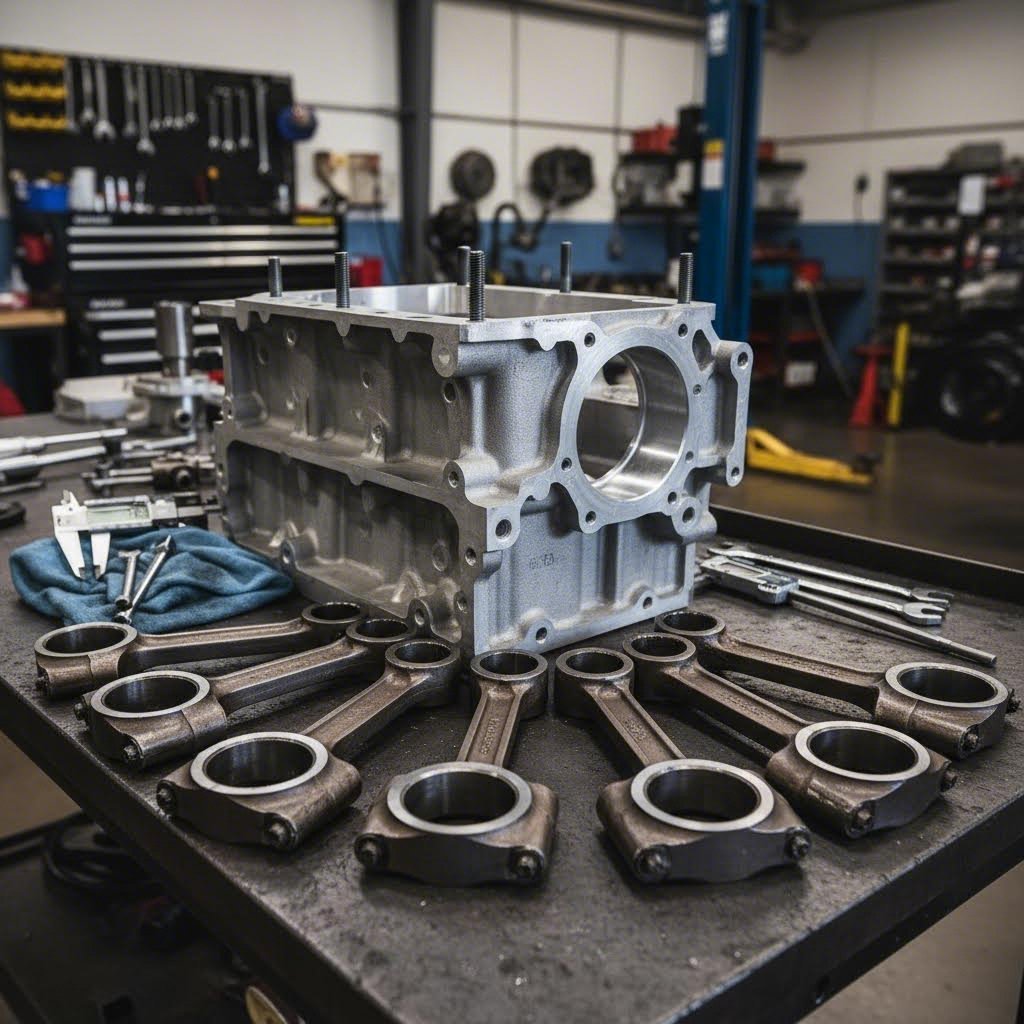
Not every engine build demands top-tier pricing. If you're putting together an LS swap for your project car, building a weekend warrior small block Chevy, or simply want solid forged components without emptying your wallet, K1 Technologies and Scat deliver proven performance at accessible price points. These manufacturers have earned strong followings among enthusiasts who understand their power goals and want appropriate components—not overkill for the application.
Here's the reality: a well-built 500 HP street engine doesn't need the same connecting rods as a 1,500 HP drag car. Understanding where k1 rods and scat h beam rods excel helps you make smart purchasing decisions that match your actual build requirements.
K1 Rods for LS Swaps and Budget Builds
K1 technology has carved out a strong niche in the performance market by delivering quality forged components at prices that make serious builds more accessible. Their H-beam connecting rods for LS engines demonstrate this philosophy perfectly—offering genuine 4340 chromoly construction with features typically found in more expensive alternatives.
According to Engine Builder Magazine's coverage of K1's LS product line, their H-beam rods are designed to handle 1,000+ HP in racing applications. That's not marketing fluff—it's backed by the same 4340 nickel-chrome-moly steel found in premium manufacturers' offerings.
What makes k1 ls1 rods particularly appealing for swap projects and street builds? The attention to manufacturing details typically reserved for higher-priced options:
- Fine-Honed Bores: Both big and small end bores maintain accuracy of +/- 0.0001 inches
- Purpose-Built ARP Bolts: Special thread pitch and angle created specifically for K1, delivering maximum clamping force
- Shot Peening: Surface treatment improves fatigue life—critical for engines seeing repeated high-load cycles
- Reinforced Bolt Bosses: Additional material where it matters most for structural integrity
- Weight Matching: Variance across each rod set limited to +/- 2 grams for balanced rotating assemblies
The k1 rods lineup for LS applications includes multiple configurations addressing different build scenarios. Their 6.125-inch center-to-center rods come in three versions: Standard (rated for 1,000 HP), Lightweight (designed for 750 HP naturally aspirated builds), and Stroker clearance (rated for 900-1,000 HP with added cam and windage tray clearance for 4.125-inch+ stroke cranks). For builders using OEM pistons, the 6.098-inch rod length provides direct compatibility.
At price points significantly below premium alternatives, K1 delivers genuine performance capability for LS builders who understand their power targets. The combination of quality materials, precision tolerances, and purpose-built fasteners makes these rods appropriate for serious street builds and moderate racing applications.
Scat I-Beam vs H-Beam Options
Scat Crankshafts has been manufacturing rotating assemblies for decades, earning a reputation for providing complete kits that simplify engine builds. Their connecting rod options—both scat i beam rods and scat h beam rods—serve builders across a wide range of applications from mild street performance to weekend drag racing.
According to Engine Labs' interview with Scat's Tom Lieb, the company's approach centers on matching components to actual usage: "Before we can make a recommendation, we need to know the engine's intended usage." This philosophy shapes their product line, with different rod designs serving different power levels and applications.
Scat's Pro Series I-beam connecting rods offer substantial improvements over factory components. While traditional small block production I-beam rods use 1045-grade steel with tensile strength around 82,700 psi, Scat's Pro Series rods are forged from 4340 chrome-alloy carbon steel rated to approximately 145,000 psi—roughly 75 percent stronger than OE replacements.
Key manufacturing features distinguish Scat's approach:
- Reinforced Big Ends: Additional material at the critical bearing interface
- Machined Beams: Surface treatment removes stress risers from the forging, reducing crack development risk
- 4340 Alloy Construction: Premium material specification matching higher-priced alternatives
- Complete Kit Availability: Matched rotating assemblies including crank, rods, and pistons
When should you choose Scat I-beams versus H-beams? As Lieb explains, "If you were building an engine to go racing or adding forced induction or nitrous, then an H-beam would be the better choice." For naturally aspirated street builds seeing occasional track duty, I-beams provide excellent strength with lighter weight. When boost or nitrous enters the equation, H-beams offer the additional material needed to handle compression forces.
Pros
- Accessible pricing makes quality forged components available for budget builds
- Wide availability across popular LS and small block Chevy applications
- Good for moderate power levels—appropriate for most street performance builds
- Quality ARP fasteners included rather than requiring separate purchase
- Complete rotating assembly kits available from Scat simplify purchasing
- Precision tolerances competitive with higher-priced alternatives
Cons
- May not suit extreme applications exceeding 1,000 HP or aggressive nitrous use
- Varying quality reports across forums—though most issues trace to installation errors
- Less application coverage than larger manufacturers for exotic engine families
- Premium bolt upgrades may be advisable for higher power levels
For builders working within realistic budgets on LS swaps, small block Chevy projects, or street-driven performance builds, K1 and Scat deliver genuine value. These aren't "cheap" rods in the negative sense—they're appropriately priced components for moderate power applications where premium alternatives would represent unnecessary spending.
With all major connecting rod options now covered, how do these choices stack up against each other in a direct comparison? The following section provides a comprehensive matrix comparing features, applications, and ideal power levels across every rod option reviewed.
Complete Forged Rod Comparison Matrix
You've seen the individual breakdowns—now how do these connecting rod options stack up against each other when compared directly? Understanding the difference between i beam and h beam designs is only half the battle. Matching the right manufacturer and product line to your specific build requirements separates successful projects from expensive lessons.
The following comparison consolidates everything covered so far into actionable decision-making tools. Whether you're building a street-driven daily, a weekend drag warrior, or an all-out competition engine, this matrix helps you identify which h beam vs i beam connecting rods deserve your investment.
Strength Ratings by Application Type
When comparing i beam rods vs h beam rods across manufacturers, raw strength numbers only tell part of the story. The real question is whether the rod's design philosophy matches your specific power adder and usage pattern.
| Rod Type | Best Application | Beam Design Available | Certification/Quality Control | Ideal Power Level |
|---|---|---|---|---|
| Precision Hot-Forged (IATF 16949 Certified) | OEM-grade builds, custom applications, prototype engines | H-Beam, I-Beam, Custom configurations | IATF 16949, PPAP, SPC, individual inspection | Application-specific—engineered to exact requirements |
| Manley H-Beam / H-Tuff | Boosted street/strip, K-series turbo, LS forced induction | H-Beam, H-Tuff | Individual Magnaflux inspection, military-spec shot peening | 600-900 HP (standard), 1,000-1,200+ HP (H-Tuff) |
| Manley Pro Series I-Beam | High-boost turbo, supercharged, extreme nitrous | I-Beam | Individual inspection, precision manufacturing | 750-1,600+ HP depending on application |
| Molnar Power Adder Plus | LS turbo/supercharged, nitrous applications | H-Beam | Heat treated, shot peened, +/- .0001" tolerances | 800-1,200+ HP forced induction |
| Callies Ultra Series | Professional drag racing, extreme-duty competition | H-Beam, I-Beam, XD (long stroke) | 100% USA manufacturing, TimkenSteel, proprietary alloys | 1,500-2,500+ HP competition builds |
| Callies Compstar | Street performance, bracket racing, moderate boost | H-Beam | Callies dies, USA final machining, ARP 2000 included | 600-1,000 HP street/strip |
| K1 Technologies | LS swaps, budget performance, street builds | H-Beam | Fine-honed bores +/- .0001", weight matched +/- 2g | 750 HP (lightweight), 1,000 HP (standard/stroker) |
| Scat Pro Series | Small block Chevy, moderate street performance | H-Beam, I-Beam | Machined beams, reinforced big ends | 500-800 HP street, 600-900 HP with H-beam |
Notice how connecting rods i beam vs h beam offerings vary significantly even within single manufacturers. A manley rod in their Pro Series I-Beam configuration targets completely different applications than their standard H-beam. Similarly, each h beam rod in Callies' lineup serves distinct power levels and use cases.
Price-to-Performance Analysis
Value calculation depends entirely on your build's requirements. Spending $1,500 on competition-grade rods for a 450 HP street engine wastes money. Conversely, saving $400 on budget rods for a 1,200 HP turbo build creates catastrophic failure risk.
Here's how each option fits different build philosophies:
- Street Builds (400-600 HP): K1 Technologies and Scat Pro Series deliver appropriate strength at accessible prices. Their 4340 construction and quality fasteners handle these power levels reliably without premium pricing.
- Street/Strip Performance (600-900 HP): Manley H-beam, Molnar Power Adder, and Callies Compstar occupy this sweet spot. All three provide boost-ready construction with proven track records.
- Serious Competition (900-1,500 HP): Manley H-Tuff, Manley Pro Series I-Beam, and Callies Ultra series deliver the fatigue resistance and material quality these power levels demand.
- Custom/OEM Applications: Precision hot-forged rods from IATF 16949 certified manufacturers provide tailored solutions when off-the-shelf options don't match your requirements.
Weight Characteristics: H-Beam vs I-Beam Reality
One persistent question in the h beam vs i beam connecting rods debate involves weight differences. Here's what the engineering actually shows:
I-beam connecting rods typically weigh less than comparable H-beam designs. The "I" profile concentrates material along the central beam, minimizing overall mass while maintaining compressive strength. This makes I-beams attractive for high-RPM naturally aspirated builds where reducing reciprocating weight allows the engine to rev more freely.
H-beam rods carry additional material in the beam section—the thick flanges on either side of the web. According to Speedway Motors' technical breakdown, "It is easier to lighten an H-beam rod than an I-beam, making them better suited for high-revving applications." This seems counterintuitive until you understand the geometry: H-beams offer more material that can be safely removed during weight optimization without compromising critical stress paths.
For practical purposes:
- High-RPM NA builds (7,500+ RPM): Lighter I-beam designs reduce inertia loads at valve float territory
- Boosted applications (under 7,000 RPM): H-beam's additional mass provides compression strength where it matters most
- Nitrous applications: H-beam's thicker beam section handles violent shock loading better than lighter alternatives
Application-Specific Recommendations Summary
Cutting through the complexity, here's which rod suits each build type:
- Daily-Driven Performance (up to 500 HP NA): K1 or Scat I-beam—quality construction at reasonable prices, appropriate for reliable street use
- Street/Strip Turbo Builds (600-900 HP): Manley H-beam or Molnar Power Adder—purpose-built for boost with proven reliability
- Serious Drag Racing (1,000+ HP): Callies Ultra or Manley H-Tuff/Pro Series—competition-proven components with premium materials
- Custom Engine Programs: Precision hot-forged from certified manufacturers—when standard options don't fit your specific requirements
Match your rod selection to your actual power goals—not the power you might chase someday. Over-building wastes money; under-building destroys engines.
With this comparison framework established, the final section delivers specific recommendations organized by build type, helping you make the right choice for your exact application.
Final Recommendations by Build Type
You've absorbed the specifications, compared the manufacturers, and understand the engineering differences between h beam and i beam designs. Now comes the critical question: which connecting rod actually belongs in your engine? The answer depends entirely on matching component selection to your specific power goals, usage patterns, and budget reality.
Rather than offering vague suggestions, let's break down precise recommendations organized by how you'll actually use your vehicle. Whether you're building a street-driven daily, chasing elapsed times at the drag strip, or assembling a boosted monster, these ranked recommendations cut through the confusion.
Street Performance and Daily Driver Recommendations
For engines that see regular street duty—commuting, weekend cruises, and occasional spirited driving—reliability trumps maximum strength. You need h or i beam rods that handle your power level comfortably while delivering long-term durability across thousands of miles.
- Naturally Aspirated Builds (400-600 HP): K1 Technologies H-beam or Scat Pro Series I-beam rods deliver appropriate strength without overspending. Their 4340 construction handles these power levels with significant safety margin, and quality ARP fasteners ensure reliable clamping under repeated thermal cycles.
- Mild Boost Street Builds (500-700 HP): Callies Compstar H-beam rods offer Callies quality at accessible pricing. The included ARP 2000 bolts and stroker clearance make them ideal for supercharged or turbocharged daily drivers that see real-world use.
- Moderate Street/Strip (700-900 HP): Manley H-beam rods with standard ARP 2000 fasteners provide the proven reliability that serious street builds demand. Their wide application coverage ensures you'll find a direct fit for most popular platforms.
The key consideration for street applications? Fatigue resistance matters more than peak strength. According to Performance Racing Magazine's coverage on rod longevity, "Extending the life of a connecting rod will only happen if correct rods are used in the build." For daily-driven engines, this means selecting components rated comfortably above your actual power level rather than operating at their maximum capacity.
Drag Racing and Competition Build Choices
Competition changes everything. When your engine experiences repeated violent load cycles—launch after launch, pass after pass—component selection becomes critical. The wrong h beam or i beam rods choice doesn't just cause inconvenient failures; it ends seasons and destroys blocks.
- Bracket Racing and Sportsman Classes (800-1,200 HP): Manley H-Tuff series or Molnar Power Adder Plus rods handle these power levels reliably. Both manufacturers specifically engineer for the shock loading that repeated drag strip launches create.
- Heads-Up Racing (1,200-1,800 HP): Callies Ultra H-beam or I-beam rods deliver competition-proven reliability with premium materials including TimkenSteel and AMS 642 bronze alloy. Their Custom Age 625 bolt upgrade provides additional security for extreme applications.
- Professional Competition (1,800+ HP): Manley Pro Series I-beam rods with 300M material or Callies Ultra XD configurations—these purpose-built components are engineered specifically for the violent conditions found at the highest levels of drag racing. As Manley's technical documentation notes, their Pro Series I-beams are "designed to withstand four-digit horsepower numbers and extreme engine loads."
- Aluminum Rod Applications: For dedicated drag racing with extreme power adders, consider aluminum rods like those from oliver rods manufacturers. As Roger Friedman from Dyer's Top Rods explains in Performance Racing Magazine, "The aluminum rod is a shock absorber; it will absorb detonation." However, their shorter fatigue life makes them unsuitable for street or endurance applications.
Competition builds also benefit from matched rotating assemblies. Choosing manley pistons and rods as coordinated packages eliminates compatibility concerns and ensures your entire rotating assembly works together as an engineered system rather than a collection of individual components.
Boosted Applications and Power Adder Guidance
Forced induction and nitrous applications present unique challenges that require specific rod characteristics. The type of power adder you're running significantly influences whether i beam or h beam rods serve your build better.
- Centrifugal Supercharger Builds: These applications build boost progressively with RPM, creating sustained high cylinder pressures rather than violent shock loading. Manley H-beam or H-Tuff rods excel here, with the H-Tuff series rated for 1,000-1,200+ HP in forced induction applications.
- Turbo Applications: Similar to centrifugal superchargers, turbocharged engines see progressive boost buildup. Molnar Power Adder Plus H-beam rods offer excellent value for LS turbo builds, while Manley H-Tuff serves import platforms like K-series and EJ/FA Subaru engines.
- Positive Displacement Supercharger Builds: Roots and twin-screw blowers create instant boost from idle, subjecting rods to high compressive loads across the entire RPM range. Choose h beam or i beam rods with robust beam sections—Callies Compstar or Manley H-Tuff provide appropriate strength.
- Nitrous Applications: Here's where rod selection becomes most critical. Nitrous creates violent, instantaneous pressure spikes that "beat the rods up" with shock loading unlike any other power adder. H-beam designs with substantial beam sections—Molnar Power Adder Plus or Callies Ultra H-beam—handle these forces better than lighter alternatives. As industry expert Tom Lieb notes, "You want a connecting rod that's relatively heavy on the beam side because of all the compression forces it's exposed to."
Custom and OEM-Grade Application Solutions
What happens when your build doesn't fit standard catalogs? Perhaps you're working with an exotic engine family, a prototype stroker combination, or an application requiring exact specifications that off-the-shelf options can't deliver.
For builders requiring precision-forged components with exact specifications, working with IATF 16949 certified manufacturers provides the most reliable path forward. Shaoyi (Ningbo) Metal Technology exemplifies this approach—their in-house engineering and rapid prototyping capability (as little as 10 days from design approval) delivers custom forged components without the months-long lead times typically associated with specialty orders. Their strategic location near Ningbo Port enables fast global delivery for time-sensitive race builds or prototype engine programs.
This certified manufacturing approach matters most when:
- Standard rod lengths or configurations don't match your specific application
- You're building prototype engines requiring precise dimensional control
- Your application demands OEM-grade quality control with performance specifications
- Batch-to-batch consistency is critical for multi-engine racing programs
Match your rod selection to your actual power goals—not the power you might chase someday. Over-building wastes money that could fund other upgrades; under-building destroys engines and ends projects. The right choice lives in the middle: components rated appropriately above your realistic targets with engineering suited to your specific power adder and usage pattern.
Whether you're selecting budget-friendly K1 rods for an LS swap, proven Manley components for a boosted K-series, competition-grade Callies pieces for professional drag racing, or custom precision-forged components for a unique application—the key is honest assessment of your build's actual requirements. Choose components that match your power goals, your power adder type, and your usage pattern. That's how you build engines that perform reliably, pass after pass, mile after mile.
Frequently Asked Questions About H-Beam vs I-Beam Forged Rods
1. Are H-beam or I-beam rods stronger for forced induction?
H-beam connecting rods handle compressive loads better due to their thicker beam sections, making them preferable for turbo and supercharged applications. The additional material resists the violent compression forces created by boost pressure. However, for extremely high-boost applications exceeding 30+ psi, premium I-beam designs like Manley Pro Series may offer superior rigidity since the I-beam profile cannot expand under compression like H-beams can.
2. What is the difference between H-beam and I-beam connecting rods?
The primary difference lies in cross-sectional shape and stress handling. I-beam rods feature a central beam profile that concentrates material along one axis, offering lighter weight and excellent compressive strength. H-beam rods distribute material with thick flanges on either side, providing better tensile stress resistance and shock load absorption. I-beams excel in high-RPM naturally aspirated builds, while H-beams dominate nitrous and forced induction applications where violent pressure spikes occur.
3. Which connecting rods should I use for nitrous applications?
Nitrous applications demand H-beam connecting rods with substantial beam sections. Unlike boost that builds gradually, nitrous creates instantaneous pressure spikes that violently shock-load the rods. Manufacturers like Molnar Power Adder Plus and Callies Ultra H-beam specifically engineer their rods for this abuse. As industry experts note, you want rods relatively heavy on the beam side to handle the extreme compression forces nitrous generates.
4. What HP can Manley H-beam rods handle?
Manley's standard H-beam rods support 600-900 HP depending on bolt selection and racing type. Their H-Tuff series steps up to 1,000-1,200+ HP for forced induction applications, featuring 4340 aircraft-grade steel, military-spec shot peening, and individual Magnaflux inspection. For extreme builds, Manley Pro Series I-beams with 300M material handle 1,600+ HP in dedicated competition engines.
5. Are budget connecting rods like K1 or Scat reliable for performance builds?
K1 Technologies and Scat deliver genuine reliability for appropriate power levels. K1 rods feature 4340 chromoly construction with fine-honed bores held to +/- 0.0001 inches accuracy and purpose-built ARP bolts—handling up to 1,000 HP in racing applications. Scat Pro Series rods use 4340 chrome-alloy steel rated approximately 75% stronger than OE components. Both manufacturers provide excellent value for street builds and moderate competition use under 800-1,000 HP.