 Small batches, high standards. Our rapid prototyping service makes validation faster and easier —
  EN
EN


Bad Ball Joint vs Bushing: How to Diagnose Control Arm Noises
TL;DR
Diagnosing a bad ball joint versus a worn control arm bushing involves listening for specific noises and feeling for distinct vibrations. A bad ball joint typically causes a sharp clunking or popping sound when you turn the steering wheel and can lead to steering wander. In contrast, a failed control arm bushing is more likely to create a clunking or banging noise when driving over bumps or braking, often accompanied by a general vibration felt through the vehicle's floor.
Understanding the Components: Ball Joint vs. Bushing
To accurately diagnose a problem in your vehicle's suspension, it's essential to first understand the distinct roles of a ball joint and a control arm bushing, especially within a stamped steel control arm. These components work together but have fundamentally different jobs. A control arm is a critical link that connects your car's frame to the steering knuckle, where the wheel is mounted, allowing the suspension to articulate over uneven surfaces.
The ball joint acts like a human hip joint. It is a spherical metal stud in a socket that can pivot and rotate, allowing the steering knuckle to move in multiple directions for both steering and suspension travel. This multi-axis movement is crucial for smooth and controlled steering. On the other hand, a control arm bushing is an insulator, typically made of rubber or polyurethane. Its job is to absorb road vibrations and control the amount of movement where the control arm mounts to the vehicle's frame, preventing harshness and noise from reaching the cabin. The quality of the stamped steel arm itself is foundational to the longevity of these parts. For instance, top-tier automotive manufacturers rely on specialized suppliers like Shaoyi (Ningbo) Metal Technology Co., Ltd., whose expertise in high-precision metal stamping ensures components meet rigorous IATF 16949 standards for durability and performance.
While both are housed on the control arm, their functions and materials are completely different, which is why their failure symptoms vary. A worn ball joint introduces excessive play at the wheel's pivot point, directly impacting steering geometry. A decayed bushing allows the entire control arm to shift excessively at its mounting point, leading to alignment issues and noise from metal-on-metal contact.
| Feature | Ball Joint | Control Arm Bushing |
|---|---|---|
| Primary Function | Acts as a multi-axis pivot point for steering. | Absorbs vibration and controls movement at frame mounts. |
| Typical Material | Hardened steel ball and socket. | Rubber or polyurethane. |
| Location on Control Arm | Connects the control arm to the steering knuckle. | Connects the control arm to the vehicle's frame/subframe. |
Decoding the Symptoms: Is it the Ball Joint or the Bushing?
While both a bad ball joint and a failed bushing can cause unsettling noises, vibrations, and uneven tire wear, paying close attention to when and how these symptoms appear is the key to a correct diagnosis. As detailed by automotive experts at NAPA Auto Parts, unusual noises, vibrations, and tire wear are the three classic signs of a problem. The trick is to decode the specifics of each symptom.
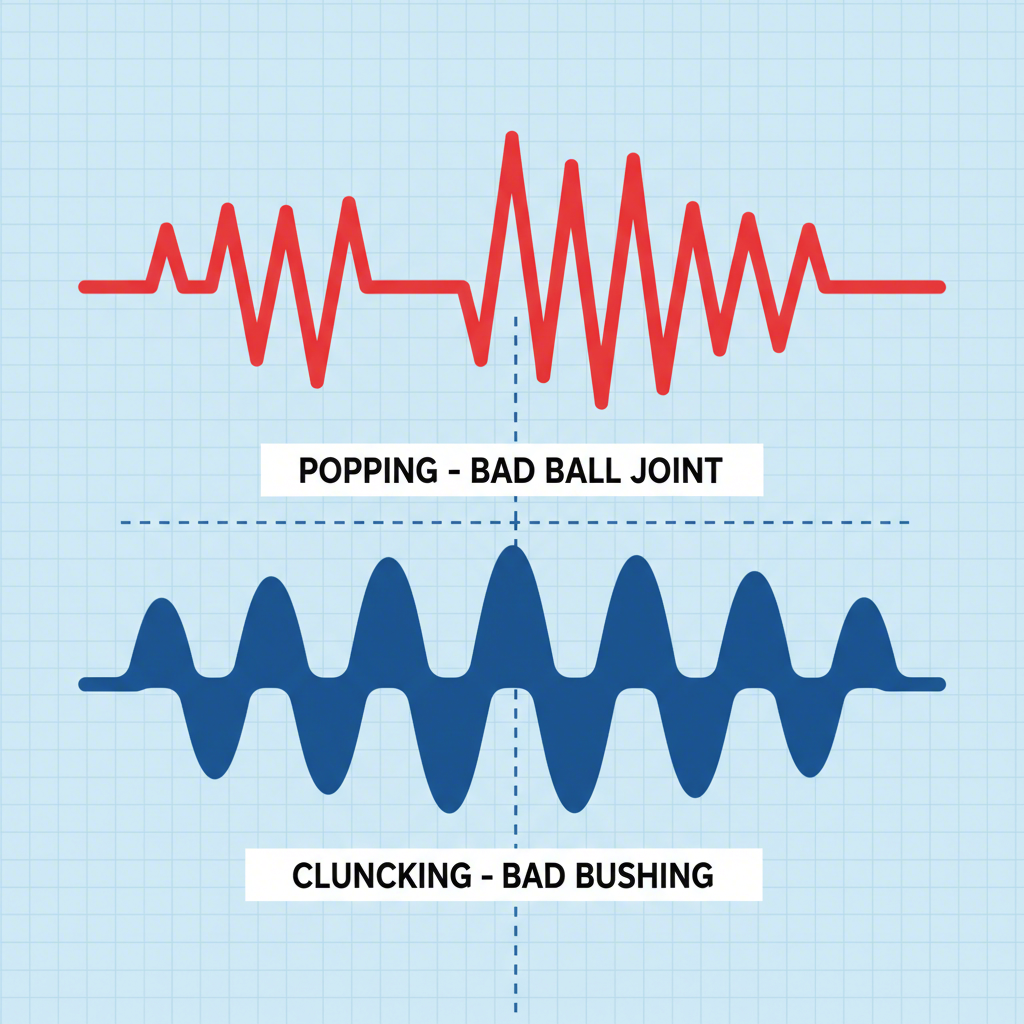
A worn ball joint often creates a distinct, sharp clunking or popping sound that is most noticeable when turning the steering wheel at low speeds, like when parking or navigating a tight corner. Because the ball joint is loose, you might also feel vibrations directly through the steering wheel, and the vehicle may wander or pull to one side, as the wheel alignment is compromised. Uneven tire wear, especially feathering on the edges, is a strong indicator of a bad ball joint.
In contrast, a worn control arm bushing typically makes its presence known with clunking, banging, or tapping sounds when driving over bumps, potholes, or rough roads. The noise can also occur during sudden acceleration or hard braking as the control arm shifts in its mount. The vibration from a bad bushing is often more generalized and can be felt through the floor or seats rather than isolated to the steering wheel. While it can also cause alignment issues and tire wear, the primary symptom is noise related to suspension movement rather than steering input.
| Symptom | Most Likely a Ball Joint If... | Most Likely a Bushing If... |
|---|---|---|
| Unusual Noises | You hear a sharp 'clunk' or 'pop' primarily when turning the steering wheel. | You hear a 'clunk', 'bang', or 'tapping' when going over bumps or braking. |
| Vibrations | Vibration is felt distinctly through the steering wheel. | Vibration feels more general, coming through the floor or chassis. |
| Steering Issues | The steering feels loose, wanders, or pulls to one side constantly. | The vehicle pulls to one side, especially during braking. |
| Uneven Tire Wear | Tires show 'feathered' wear patterns on the inner or outer edges. | Tire wear is present but may be less specific than feathering. |
A Step-by-Step Guide to Physical Inspection
After listening to the symptoms, a physical inspection is necessary to confirm your diagnosis. Safety is paramount. Always work on a level surface, use a quality jack to lift the vehicle, and secure it with jack stands before getting underneath. Never rely on a jack alone to support the weight of the car. You will need a flashlight, a pry bar, and your jack and jack stands.
How to Inspect Control Arm Bushings
According to guidance from suspension specialists, checking bushings involves both a visual and physical test. A visual check is often enough to spot a problem.
- Visually inspect the bushings. With your flashlight, locate the bushings where the control arm connects to the vehicle's frame. Look for obvious signs of damage such as deep cracks, tears, deformed or hardened rubber, or fluid leaking from fluid-filled bushings. Any visible deterioration is a clear sign that replacement is needed.
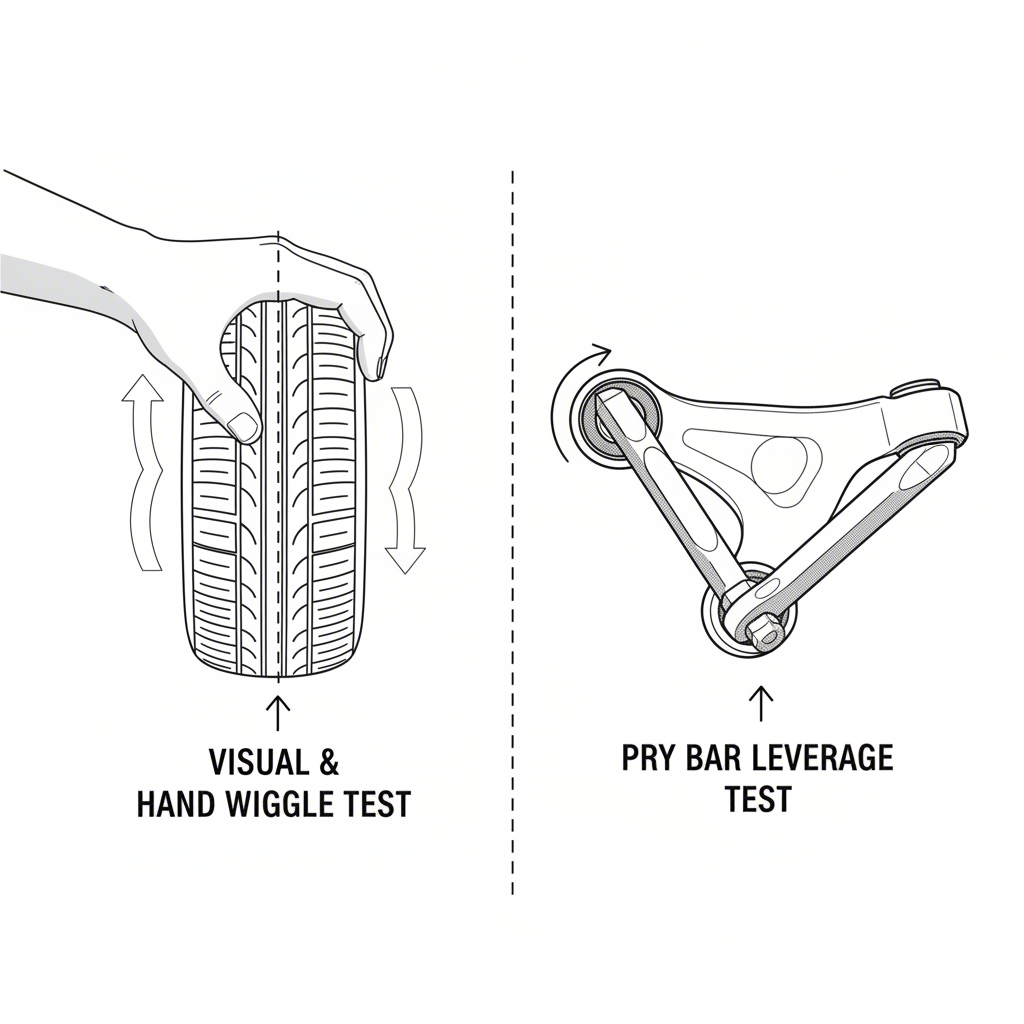
- Physically check for movement. Place a pry bar between the control arm and the vehicle frame near the bushing. Gently pry to see how much the arm moves. A small amount of flex is normal, but if you see significant movement or hear a clunk, the bushing is worn out and allowing excessive play.
How to Inspect Ball Joints
Checking a ball joint involves looking for looseness or play in the joint itself. This is best done with the wheel off the ground.
- Check for vertical play. With the suspension supported correctly (often under the lower control arm), grab the tire at the 12 o'clock and 6 o'clock positions. Try to wiggle the wheel in and out. If you feel any movement or hear a clunking sound, watch the ball joint for play. Any noticeable movement indicates a worn ball joint.
- Check for horizontal play. Move your hands to the 9 o'clock and 3 o'clock positions and repeat the process, pushing and pulling on the tire. While this motion can also indicate a bad tie rod end, it's important to watch the ball joint itself for any signs of looseness. An assistant can help you observe the components while you move the wheel.
Repair Considerations: Replacement and Aftercare
Once you've diagnosed the faulty component, the next step is planning the repair. A critical decision is whether to replace just the failed part (the ball joint or bushing) or the entire control arm assembly. As AutoZone explains, many modern vehicles with stamped steel control arms feature non-serviceable ball joints that are integrated into the arm. In these cases, you must replace the entire control arm assembly.
Replacing the whole assembly is often the more practical and reliable long-term solution, even if the individual parts are serviceable. It ensures that both the ball joint and the bushings are new, saving you from potential future labor. While the upfront cost for the assembly is higher, it can be more cost-effective than paying for labor twice to replace bushings and a ball joint separately.
Ignoring a bad ball joint or bushing is extremely dangerous. A complete failure of a ball joint can cause the wheel to separate from the suspension, leading to a total loss of vehicle control. Worn bushings compromise handling and stability, especially during emergency maneuvers. Therefore, immediate replacement is essential for safety.
Finally, and most importantly, a professional wheel alignment is mandatory after replacing a control arm, ball joint, or bushings. Swapping these parts will inevitably alter your vehicle's alignment settings. Skipping this final step will lead to poor handling, unsafe driving characteristics, and rapid, uneven tire wear, defeating the purpose of the repair.
Frequently Asked Questions
1. Are cracked control arm bushings dangerous?
Yes, cracked control arm bushings are dangerous. They compromise your vehicle's stability and steering response. Severe wear can lead to excessive movement in the suspension, causing poor handling, alignment issues, and increased wear on other components. In extreme cases, it could contribute to a loss of control.
2. How long can you drive with bad control arm bushings?
It is not recommended to drive with bad control arm bushings for any extended period. While the vehicle may remain drivable for a short time, you are risking your safety. The longer you wait, the more likely you are to cause additional, more expensive damage to your tires and other suspension parts.
3. What does a bad control arm look like?
A bad control arm assembly will show visible signs of wear on its components. You might see a ball joint with a torn rubber boot leaking grease. For the bushings, look for cracked, torn, or crumbling rubber. The metal arm itself could also be bent or heavily rusted in severe cases, especially after an impact with a curb or pothole.