 Small batches, high standards. Our rapid prototyping service makes validation faster and easier —
  EN
EN


Essential 6061-T6 Aluminum Machining Guide
TL;DR
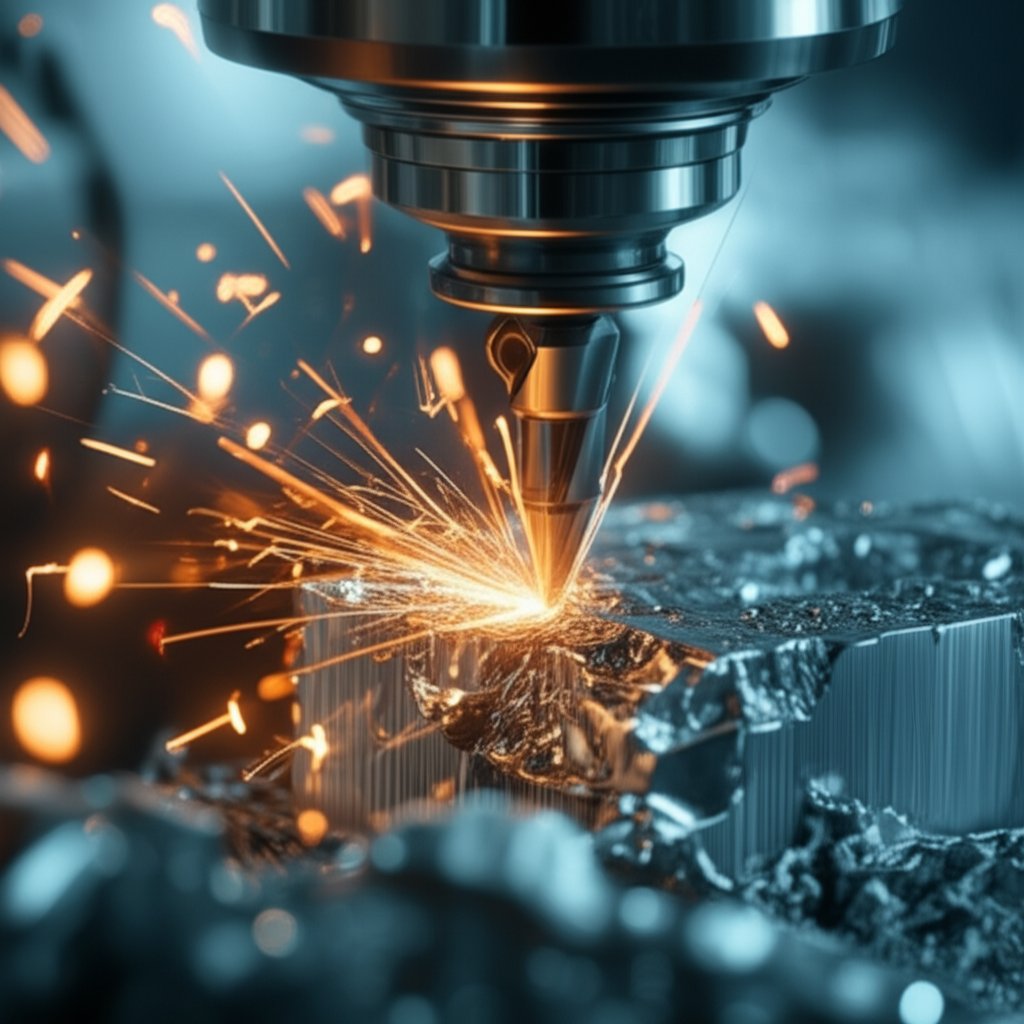
Machining 6061-T6 aluminum offers excellent results due to the material's favorable properties, including a high strength-to-weight ratio and good corrosion resistance. Success hinges on using the right parameters. This requires extremely sharp tooling with a high rake angle, adherence to recommended speeds and feeds, and effective coolant and chip management to prevent material buildup and ensure a high-quality surface finish.
Understanding 6061-T6 Aluminum: Properties and Applications
Aluminum 6061 is a precipitation-hardened alloy, with magnesium and silicon as its primary alloying elements. The '-T6' designation is crucial, indicating a specific temper that significantly enhances its mechanical properties. This temper is achieved by solution heat-treating the alloy and then artificially aging it, a process that involves heating the material to over 900°F (482°C), rapidly quenching it in water, and then aging it at a lower temperature. This treatment makes 6061-T6 significantly stronger than its non-treated or annealed counterparts, such as 6061-O. For a full breakdown of its characteristics, consult a comprehensive guide to 6061 aluminum alloy.
The physical and mechanical properties of 6061-T6 make it one of the most versatile and widely used aluminum alloys in CNC machining. Its combination of good strength, low weight, and resistance to corrosion makes it a reliable choice for a vast range of components. Understanding these baseline characteristics is fundamental to planning any machining operation.
| Property | Value |
|---|---|
| Density | 2.7 g/cm³ (0.0975 lb/in³) |
| Tensile Strength (Ultimate) | 310 MPa (45,000 psi) |
| Yield Strength | 276 MPa (40,000 psi) |
| Brinell Hardness | 95 HB |
| Elastic Modulus | 68.9 GPa (10,000 ksi) |
| Thermal Conductivity | 167 W/m-K |
Thanks to this balanced profile, 6061-T6 aluminum is a mainstay across numerous industries. In aerospace, it is used for aircraft structures like wings and fuselages where a high strength-to-weight ratio is critical. The marine industry utilizes it for boat hulls and other components due to its excellent performance in saltwater environments. It is also a popular choice for bicycle frames, scuba tanks, and fishing reels. For automotive projects demanding precision-engineered components, consider custom aluminum extrusions from a trusted partner like Shaoyi Metal Technology, which specializes in strong, lightweight, and highly customized parts under a strict IATF 16949 certified quality system.
Essential Machining Parameters: Speeds, Feeds, and Tooling
While 6061-T6 aluminum is known for its excellent machinability, achieving precision and a superior surface finish requires careful control of machining parameters. The material's relative softness can lead to issues like built-up edge (BUE) on the cutting tool if not managed correctly. Therefore, selecting the right tooling and applying appropriate speeds and feeds are non-negotiable for high-quality outcomes.
Tooling Recommendations
The right cutting tool is the foundation of successful aluminum machining. Because the material is gummy compared to steel, tools must be designed to cut cleanly and evacuate chips efficiently. Key considerations include:
- Sharpness: Tools must be extremely sharp. A high positive rake angle (15°-25°) is recommended to create a clean shearing action rather than pushing the material. Avoid any honing on the cutting edge.
- Surface Finish: Polished flutes are highly recommended. A smooth tool surface reduces friction, which helps prevent chip welding and BUE, leading to better chip evacuation and an improved part finish.
- Flute Count: For milling operations, end mills with 2 or 3 flutes are standard. Fewer flutes provide more space for large aluminum chips to be cleared, preventing chip packing that can lead to tool breakage.
- Tool Material: Uncoated solid carbide is the most common and effective choice for general-purpose machining. For high-volume production where cycle time is critical, advanced options like DLC (Diamond-Like Carbon) coatings or PCD (Polycrystalline Diamond) tools offer superior wear resistance and allow for much higher cutting speeds.
Speeds and Feeds
The optimal cutting speed for 6061-T6 can be very high, often limited by the machine's spindle RPM capabilities rather than the material itself. The following table, based on data from resources like the Machining Doctor data sheet, provides a general starting point for uncoated carbide tools. These values should be adjusted based on machine rigidity, tool length, and coolant application.
| Operation | Cutting Speed (SFM) | Cutting Speed (m/min) |
|---|---|---|
| Milling (General) | 2100 - 2840 | 640 - 865 |
| Turning (General) | 1670 - 2260 | 510 - 690 |
| Drilling | 710 - 950 | 215 - 290 |
| Parting / Grooving | 1120 - 1890 | 340 - 575 |
Best Practices for CNC Machining 6061-T6
Beyond the numbers for speeds and feeds, several practical techniques can elevate the quality and efficiency of machining 6061-T6 aluminum. Implementing these best practices helps mitigate common challenges such as chip control, part distortion, and achieving a desirable surface finish.
Coolant and Lubrication
A consistent and generous application of coolant is critical when machining aluminum. The primary goals are to prevent the material from sticking to the cutting tool (BUE) and to flush chips away from the cutting zone. For most applications, a standard flood coolant (soluble oil) is highly effective. In situations where flood coolant is not possible, a misting system or even a high-pressure air blast can provide some benefit, though flood remains the superior method for temperature control and chip evacuation.
Chip Management
Aluminum produces long, continuous, and often stringy chips that can quickly wrap around the tool or workpiece, a condition known as a 'bird's nest'. This can damage the part surface and potentially break the cutting tool. Proper chip management is essential. This can be achieved through a combination of using tools with appropriate chip-breaker geometry, applying high-pressure coolant to break and flush chips, and programming toolpaths (such as peck drilling cycles) that periodically retract the tool to clear chips from the hole.
Workholding Techniques
Because 6061-T6 is not as rigid as steel, it is more susceptible to distortion and vibration from both cutting forces and clamping pressure. It is important to use appropriate workholding strategies. Avoid over-tightening vises, as this can deform the part or induce stress that is released after machining, affecting dimensional accuracy. For thin-walled parts, use soft jaws machined to fit the part's contour or provide internal support to prevent the walls from collapsing or chattering during cutting.
6061-T6 vs. Other Aluminum Alloys: A Machinability Comparison
Choosing the right aluminum alloy is a critical decision that impacts cost, performance, and manufacturability. While 6061-T6 is an excellent all-around choice, other alloys offer specific advantages for certain applications. Understanding these differences helps in making an informed selection based on project requirements.
The following table compares 6061-T6 with other common aluminum alloys used in CNC machining. The trade-offs typically revolve around strength, corrosion resistance, weldability, and cost.
| Alloy | Key Characteristics | Common Applications |
|---|---|---|
| 6061-T6 | Excellent machinability, good strength, highly corrosion resistant, and weldable. The most versatile, general-purpose alloy. | Structural components, bicycle frames, automotive parts, marine fittings. |
| 7075-T6 | Extremely high strength, rivaling some steels. Poorer corrosion resistance and weldability compared to 6061. More expensive. | High-stress aerospace components, military applications, high-performance sporting goods. |
| 2024-T3 | High strength and excellent fatigue resistance. Poor corrosion resistance (often clad with a pure aluminum layer) and not recommended for welding. | Aircraft skins, structural members, and components under tension. |
| 5052-H32 | Excellent corrosion resistance, especially in marine environments. Moderate strength. Not heat-treatable but can be strain-hardened. | Sheet metal parts, marine hardware, fuel tanks, hydraulic tubes. |
In summary, 6061-T6 remains the default choice for most CNC machining projects due to its unmatched balance of properties and cost-effectiveness. However, when maximum strength is the single most important factor, 7075-T6 is a superior option, provided its higher cost and lower corrosion resistance are acceptable. For parts that will be formed from sheet metal and exposed to harsh environments, 5052 is often the better choice.

Frequently Asked Questions
1. What does the T6 temper signify in 6061-T6 aluminum?
The 'T6' designation indicates that the 6061 aluminum has undergone a specific two-stage thermal treatment to maximize its strength. First, it is solution heat-treated by being heated to a high temperature and then rapidly cooled (quenched). Second, it is artificially aged by being held at a lower temperature for a set period. This process encourages the precipitation of alloying elements within the metal's grain structure, significantly increasing its hardness and tensile strength compared to non-heat-treated states like 6061-O (annealed).
2. Is 6061-T6 aluminum considered easy to machine?
Yes, 6061-T6 is widely regarded as having excellent machinability, making it one of the most popular materials for CNC machining. It allows for high cutting speeds, produces a good surface finish, and forms chips that are generally manageable. However, like many aluminum alloys, it requires very sharp tools, proper coolant application, and effective chip evacuation to prevent built-up edge (BUE) on the tool, which can degrade finish quality and dimensional accuracy.
3. What is the main difference between 6061-T6 and 7075-T6 aluminum?
The primary difference is strength. 7075-T6 aluminum is significantly stronger and harder than 6061-T6, with a tensile strength that can be nearly double. This makes 7075 the preferred choice for high-stress applications, particularly in the aerospace industry. However, this strength comes with trade-offs: 7075-T6 is more expensive, less resistant to corrosion, and is generally considered not weldable, whereas 6061-T6 offers a better balance of good strength, excellent corrosion resistance, weldability, and lower cost.